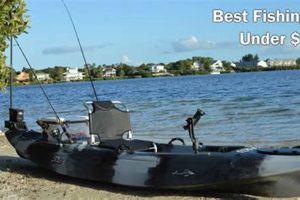
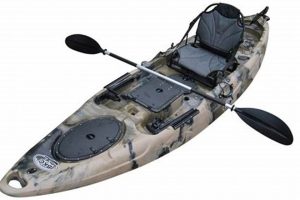
A top-rated motorized fishing kayak from the 2021 model year represents the pinnacle of kayak design for anglers seeking powered propulsion. These kayaks combined stability, fishing-specific features, and integrated motor systems, offering advantages over both traditional paddle kayaks and larger motorized boats. This specific timeframe is relevant because technological advancements, consumer reviews, and market trends converged to define a distinct class of fishing kayaks.
Motorized kayaks provide significant advantages for anglers. They cover more water with less physical exertion, enabling access to distant fishing spots and allowing anglers to conserve energy for fishing. The integration of a motor also provides advantages in challenging conditions, such as strong currents or wind. In 2021, this technology reached a maturity level where motors were quieter, more efficient, and better integrated into kayak designs. This created a sought-after combination of performance and fishability.
Understanding the key characteristics of leading 2021 models informs purchasing decisions and provides valuable context for evaluating current options. The following sections will delve into the specific features, performance metrics, and top contenders that defined the best motorized fishing kayaks of 2021.
Tips for Selecting a 2021 Motorized Fishing Kayak
Choosing a motorized fishing kayak requires careful consideration of various factors. These tips provide guidance for navigating the selection process, focusing on relevant aspects for 2021 models.
Tip 1: Prioritize Stability and Weight Capacity: Look for kayaks designed for stability, especially in challenging conditions. Evaluate weight capacity to ensure it accommodates angler weight, gear, and the motor system.
Tip 2: Research Motor Compatibility and Performance: Different kayaks accommodate specific motor types and sizes. Thoroughly investigate motor compatibility, power, and battery life to match fishing needs and desired range.
Tip 3: Consider Fishing-Specific Features: Prioritize features such as rod holders, tackle storage, and mounting options for fish finders. Evaluate their placement and usability for optimal fishing efficiency.
Tip 4: Assess Hull Design and Performance: Different hull designs offer varying performance characteristics in terms of speed, tracking, and maneuverability. Research suitable hull types based on intended fishing environments.
Tip 5: Factor in Transportation and Storage: Evaluate the kayak’s size and weight for transportability. Consider storage solutions based on available space and the kayak’s dimensions.
Tip 6: Review Expert and User Feedback: Consult professional reviews and user experiences from 2021 to gain insights into real-world performance, potential issues, and long-term durability.
Tip 7: Compare Pricing and Value: Analyze pricing in relation to features, performance, and brand reputation. Seek optimal value without compromising on essential qualities.
By considering these factors, prospective buyers can make informed decisions aligned with their specific fishing requirements and preferences, maximizing the benefits of a motorized fishing kayak from the 2021 model year.
The insights provided throughout this article equip prospective buyers with the knowledge necessary to evaluate and select the ideal motorized fishing kayak from 2021, ultimately enhancing their fishing experience.
1. Motor Integration

Motor integration played a crucial role in defining the best motorized fishing kayaks of 2021. Effective integration impacts several key performance aspects, including maneuverability, efficiency, and overall user experience. Kayaks with well-integrated motors offer superior control, allowing for precise adjustments in speed and direction. This is particularly advantageous for navigating tight spots, combating currents, or maintaining position while fishing. Furthermore, seamless motor integration minimizes noise and vibration, crucial for stealthy angling and a more enjoyable experience on the water.
Several 2021 models exemplified exemplary motor integration. The Old Town Sportsman Autopilot, for instance, featured a fully integrated GPS-guided motor system, allowing for hands-free navigation and automated control. Models like the Hobie Mirage Pro Angler 14 offered pedal-powered propulsion systems with optional motor upgrades, providing flexibility and versatility. The Native Watercraft Slayer Propel 13, another prominent 2021 model, incorporated a pedal-drive system that could be augmented with a seamlessly integrated electric motor. These examples demonstrate the variety of integration approaches manufacturers employed to enhance the fishing experience.
Evaluating motor integration requires considering factors beyond mere presence. Placement, control mechanisms, and compatibility with the kayak’s hull design all contribute to overall performance. Poor integration can lead to reduced efficiency, increased noise, and compromised handling. Understanding these nuances provides valuable insights when assessing the merits of different motorized fishing kayaks from 2021. The advancements in motor integration evident in these models significantly contributed to their recognition as top contenders in their class. This characteristic remains a pivotal factor in evaluating motorized kayak performance and continues to drive innovation in kayak design.
2. Stability and Tracking

Stability and tracking are paramount for a positive experience in a motorized fishing kayak, especially for models from 2021 when advancements in motor technology began to push the boundaries of kayak fishing. A stable platform provides a secure foundation for casting, reeling, and landing fish, while effective tracking ensures efficient movement and minimizes course correction efforts, particularly crucial with the added weight and power of a motor. These factors directly influence angler comfort, safety, and overall fishing success.
- Primary Stability (at rest):
Primary stability refers to a kayak’s resistance to tipping when stationary. A wider hull typically provides greater initial stability, crucial for remaining upright while casting or reeling. In 2021, many top motorized fishing kayaks featured wider, flatter hulls designed specifically for enhanced primary stability, catering to anglers who prioritized a secure platform. This characteristic was essential for anglers fishing in calm waters or focusing on techniques requiring minimal movement.
- Secondary Stability (when angled):
Secondary stability describes a kayak’s stability when leaned or tilted, essential for maneuvering and handling rough water. Kayaks with rounded or flared hulls often offer superior secondary stability, allowing for controlled leaning and reducing the likelihood of capsizing. Top 2021 models often incorporated design elements that balanced primary and secondary stability to provide a secure yet maneuverable platform for various fishing conditions. This balance allowed anglers to confidently navigate challenging waters while maintaining a secure feel.
- Tracking Performance:
Tracking refers to a kayak’s ability to maintain a straight course. Longer kayaks generally track better than shorter ones, requiring less effort to stay on course. 2021 models frequently incorporated design features like pronounced keels or tracking fins to enhance tracking performance, counteracting the influence of wind and current, particularly relevant for motorized kayaks capable of higher speeds. Improved tracking translates to more efficient movement and reduced fatigue, especially during longer fishing trips.
- Impact of Motor Placement and Weight:
The placement and weight of the motor significantly impact both stability and tracking. Motors positioned lower and closer to the center of gravity contribute to greater stability, while balanced weight distribution optimizes tracking performance. Leading 2021 motorized fishing kayaks demonstrated careful consideration of these factors, integrating motor systems in a way that minimized negative impacts on stability and tracking. This consideration differentiated top models from those that experienced performance compromises due to motor integration.
The interplay of these factors primary and secondary stability, tracking performance, and the influence of motor integration determined how well a 2021 motorized fishing kayak performed on the water. Models that excelled in these areas provided anglers with a confident and efficient platform, maximizing their fishing experience. These elements remain crucial considerations for evaluating any fishing kayak, highlighting the enduring relevance of stability and tracking in the context of motorized kayak design.
3. Fishing Features

Dedicated fishing features distinguish top-tier motorized fishing kayaks from recreational models. In 2021, manufacturers incorporated various features to enhance angling efficiency and overall experience. These features played a pivotal role in determining the “best” designation for a motorized fishing kayak in that year. Analyzing these features provides valuable insight into the evolution of kayak fishing and the priorities of anglers.
- Rod Holders:
Multiple rod holders, strategically positioned for easy access and varying fishing techniques, are essential. Flush-mounted rod holders minimize interference with paddling or casting, while adjustable rod holders accommodate different rod lengths and angling styles. Leading 2021 models like the Hobie Mirage Pro Angler 14 and the Old Town Predator PDL offered a variety of rod holder configurations to cater to diverse fishing preferences. The number, type, and placement of rod holders directly impacted fishing versatility.
- Tackle Storage:
Ample and organized tackle storage is crucial for efficient lure and bait management. Dry storage compartments protect sensitive gear from water damage, while readily accessible compartments streamline lure changes and tackle adjustments. Kayaks like the Wilderness Systems A.T.A.K 140 and the Perception Pescador Pro 12.0 featured well-designed tackle storage systems in 2021, enhancing on-the-water organization and reducing time spent searching for gear. Efficient tackle storage contributes directly to maximizing fishing time.
- Fish Finder Mounts:
Integrated mounting points or dedicated areas for fish finders are essential for anglers relying on electronics to locate fish. Stable and conveniently located mounts allow for easy viewing and operation of fish finders without compromising kayak stability. Many 2021 models, including the FeelFree Lure 11.5 V2 and the Vibe Sea Ghost 130, offered pre-installed transducer scuppers and wiring channels, simplifying fish finder installation and enhancing the overall fishing experience. The ease of fish finder integration influenced the overall appeal of a fishing kayak.
- Other Features:
Additional features, such as anchor trolleys, paddle holders, and gear tracks, further enhance fishing functionality. Anchor trolleys enable precise anchor control, while paddle holders secure paddles and free up hands for fishing. Gear tracks provide versatile mounting points for accessories like cameras, GPS units, and additional rod holders. Models like the Jackson Kayak Kraken 15.5 and the NuCanoe Frontier 12 offered various such features in 2021, catering to diverse angling needs and enhancing customization options. These supplementary features contributed to a more refined and tailored fishing experience.
The integration and quality of these fishing features directly influenced the overall performance and desirability of motorized fishing kayaks in 2021. Models that prioritized these aspects provided anglers with a significant advantage on the water, contributing to their “best” status. The thoughtful inclusion of fishing-specific features demonstrates a manufacturer’s commitment to the angling community and provides valuable criteria for evaluating and comparing different kayak models.
4. Battery Life & Range

Battery life and range are critical factors in evaluating motorized fishing kayaks, particularly for 2021 models, which saw advancements in motor and battery technologies. These aspects directly influence the usable fishing time and accessible area, impacting the overall effectiveness and enjoyment of a fishing trip. Longer battery life translates to extended fishing sessions without the need for recharging, while greater range allows anglers to explore distant fishing spots and cover more water. Understanding the relationship between battery capacity, motor power consumption, and range is crucial for selecting a kayak that aligns with specific fishing needs.
In 2021, several manufacturers prioritized battery technology and integration. For example, the Hobie Mirage Pro Angler 14 with the eVolve motor offered extended range capabilities due to its efficient motor and higher-capacity battery options. Similarly, the Old Town Sportsman Autopilot series integrated advanced battery management systems that optimized power consumption and provided real-time range estimations based on speed and usage patterns. These examples illustrate the growing importance of battery technology in shaping the landscape of motorized fishing kayaks. Choosing a kayak with inadequate battery life or range could significantly limit fishing opportunities, underscoring the practical significance of these factors. Direct-drive motors generally offered greater efficiency compared to propeller-driven systems, influencing range and run time.
The advancements in battery technology and motor efficiency evident in 2021 models significantly impacted the overall assessment of “best” motorized fishing kayaks. Evaluating battery life and range requires careful consideration of intended fishing locations, typical trip duration, and desired fishing style. Analyzing manufacturer specifications, independent reviews, and user feedback provides valuable insights into real-world performance and helps prospective buyers make informed decisions. Understanding the limitations and potential of battery technology remains essential for maximizing the benefits of a motorized fishing kayak. The interplay between battery life, range, and overall kayak performance continues to drive innovation in the industry, shaping the future of motorized kayak fishing.
5. Hull Design & Durability
Hull design and durability are fundamental to the performance and longevity of a motorized fishing kayak, particularly concerning 2021 models, which showcased a variety of innovative designs. Hull design dictates how a kayak interacts with the water, influencing speed, stability, maneuverability, and tracking. Durability ensures the kayak can withstand the rigors of fishing environments, including impacts, abrasion, and exposure to the elements. For a 2021 motorized fishing kayak to be considered among the “best,” its hull must excel in both design and durability, providing a platform optimized for fishing performance and long-term reliability. Different hull designs cater to specific fishing styles and water conditions. For instance, a flatter hull provides enhanced stability for calm waters, while a V-shaped hull offers better tracking and performance in choppy conditions. Understanding these design variations and their impact on performance is crucial for informed decision-making. The use of high-quality materials like rotomolded polyethylene contributed to the durability of top 2021 models, ensuring resistance to impacts and UV degradation.
Durability extends beyond material selection. Construction methods, reinforcement techniques, and overall build quality contribute to a kayak’s ability to withstand the stresses of regular use and challenging environments. Kayaks designed for use with motors must accommodate the added weight and stress exerted by the propulsion system without compromising structural integrity. In 2021, leading manufacturers employed robust construction methods and reinforced key areas to ensure long-term durability. For example, the Wilderness Systems A.T.A.K 140, known for its robust build, featured a reinforced motor mount and transom area, ensuring it could handle the stresses of a powerful motor. The Hobie Mirage Pro Angler 14, with its rotomolded polyethylene hull, offered exceptional impact resistance and durability, essential for navigating shallow waters and rocky shorelines. These examples highlight the practical significance of durability in real-world fishing scenarios.
The interplay between hull design and durability significantly influenced the performance and longevity of motorized fishing kayaks in 2021. A well-designed, durable hull provides the foundation for an efficient, stable, and reliable fishing platform. Evaluating hull design requires considering intended fishing environments, preferred fishing styles, and desired performance characteristics. Assessing durability involves examining materials, construction methods, and manufacturer reputation. The convergence of these factors contributes significantly to determining the “best” motorized fishing kayak of 2021. Understanding these principles provides a framework for evaluating kayak quality and making informed purchasing decisions that align with individual fishing needs and long-term expectations.
Frequently Asked Questions about the Best Motorized Fishing Kayaks of 2021
This section addresses common inquiries regarding top-performing motorized fishing kayaks from the 2021 model year. The information provided aims to clarify key aspects and assist prospective buyers in making informed decisions.
Question 1: What were the most significant advancements in motorized fishing kayaks in 2021?
2021 witnessed notable advancements in motor integration, battery technology, and fishing-specific features. Quieter, more efficient motors, longer-lasting batteries, and enhanced integration of fishing accessories contributed to improved performance and user experience.
Question 2: How did pricing compare for top-rated motorized fishing kayaks in 2021?
Pricing varied significantly based on features, brand, and motor type. Higher-end models with advanced features and integrated GPS commanded premium prices, while more budget-friendly options offered essential functionality at lower price points.
Question 3: Were there specific battery types that were prevalent in 2021 models?
Lithium-ion batteries were the dominant battery type in 2021 due to their higher energy density, lighter weight, and longer lifespan compared to traditional lead-acid batteries. Variations in battery capacity and voltage influenced range and motor performance.
Question 4: How did pedal-powered kayaks compare to purely motor-driven kayaks in 2021?
Pedal-powered kayaks offered an alternative propulsion method, providing exercise and allowing for hands-free fishing. Some models offered the option to add a motor, providing versatility. Purely motor-driven kayaks prioritized range and convenience for longer trips and challenging conditions.
Question 5: What safety considerations are relevant to motorized fishing kayaks from 2021?
Standard kayak safety practices apply, including wearing a personal flotation device, carrying communication devices, and being aware of weather conditions. Additional considerations for motorized kayaks include proper battery handling and adherence to local regulations regarding motorized watercraft.
Question 6: Where could consumers find reliable reviews and comparisons of 2021 motorized fishing kayaks?
Reputable fishing publications, online forums, and retailer websites provided valuable resources for researching and comparing 2021 models. Seeking diverse sources allowed for a comprehensive understanding of performance characteristics, strengths, and weaknesses.
Careful consideration of these frequently asked questions enhances understanding of the key features and performance characteristics that defined the best motorized fishing kayaks of 2021. This information empowers prospective buyers to make informed choices aligned with individual fishing needs and preferences.
Further exploration of specific models and in-depth comparisons provide a more nuanced understanding of the motorized fishing kayak landscape in 2021.
Conclusion
Top-performing motorized fishing kayaks of 2021 represented a significant step forward in kayak angling. Advancements in motor integration, battery technology, and specialized fishing features distinguished these models. Careful consideration of hull design, stability, tracking, and load capacity proved essential for maximizing on-the-water performance. Analysis of expert reviews and user feedback from that period provides valuable insights into the strengths and weaknesses of various models. The integration of advanced electronics and GPS capabilities further enhanced fishing efficiency and navigation. Ultimately, the best motorized fishing kayaks of 2021 offered anglers a compelling combination of performance, fishability, and technological innovation.
The legacy of 2021’s leading motorized fishing kayaks continues to influence contemporary kayak design and feature development. Understanding the key characteristics that defined these models provides a valuable framework for evaluating current options and anticipating future innovations in the realm of kayak fishing. The pursuit of enhanced performance, efficiency, and angler-focused design remains a driving force in the evolution of motorized fishing kayaks.