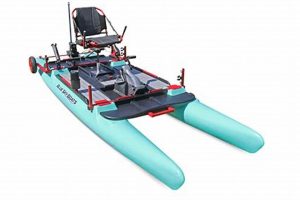
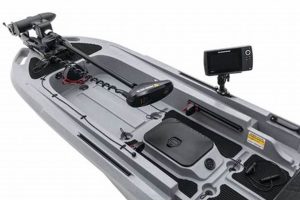
This modular watercraft system, designed specifically for angling, offers a unique approach to kayak ownership and transport. Its sectional design allows for easy assembly and disassembly, facilitating storage and transportation in smaller spaces, including standard vehicles. This modularity also offers versatility, allowing users to configure the kayak for different water conditions or fishing styles by adding or removing sections.
The portability and adaptability of this system address common barriers to kayak fishing, such as storage limitations and transportation challenges. This innovative design democratizes the sport, making it more accessible to individuals without ample storage space or specialized vehicles. The ability to customize the kayak’s length and configuration contributes to improved performance and comfort in diverse environments. This approach to kayak design represents a significant departure from traditional single-piece hulls and has broadened the possibilities for kayak anglers.
The following sections will delve into specific features, advantages, and potential drawbacks of this modular kayak system, providing readers with a comprehensive understanding of its capabilities and suitability for various fishing scenarios.
Tips for Modular Kayak Fishing
Effective use of a modular kayak system requires an understanding of its unique characteristics. The following tips offer guidance for maximizing performance and safety on the water.
Tip 1: Practice Assembly and Disassembly: Familiarization with the connection system is crucial before venturing onto the water. Repeated practice ensures swift and secure assembly and disassembly, saving valuable time and minimizing frustration.
Tip 2: Secure Gear Properly: Utilize integrated storage compartments and appropriate tie-down points to secure fishing gear and essential equipment. This prevents loss and ensures accessibility while maintaining stability.
Tip 3: Consider Water Conditions: Choose the appropriate kayak configuration based on anticipated water conditions. Shorter configurations offer enhanced maneuverability in tight spaces, while longer configurations provide greater tracking and stability in open water.
Tip 4: Understand Weight Capacity: Adhere to the manufacturer’s specified weight capacity, including the combined weight of the paddler, gear, and any potential catch. Exceeding the limit compromises stability and safety.
Tip 5: Check Connections Regularly: Before each outing, inspect the connection points between sections to ensure they are secure and properly engaged. This precaution prevents unexpected separation on the water.
Tip 6: Dress Appropriately for Conditions: Wear appropriate clothing and safety gear, including a personal flotation device (PFD), suitable for the prevailing weather and water conditions. Preparedness enhances safety and comfort.
Tip 7: Plan Your Route: Research and plan your fishing route, considering factors such as water currents, tides, and potential hazards. Thorough planning contributes to a safer and more productive fishing experience.
By adhering to these guidelines, anglers can optimize their modular kayak fishing experience, ensuring both safety and enjoyment on the water. These practices contribute to a more efficient, comfortable, and successful outing.
These tips provide a solid foundation for successful modular kayak fishing. The following section concludes with a summary of key considerations and reinforces the benefits of this innovative system.
1. Modular Design
The modular design of the Point 65 fishing kayak system distinguishes it from traditional single-piece kayaks. This innovative approach offers significant advantages regarding portability, storage, and versatility, transforming the kayak fishing experience.
- Portability and Storage
The sectional nature of the kayak allows for disassembly into smaller, more manageable components. This simplifies transportation and storage, eliminating the need for specialized roof racks or large storage spaces. The compact size of the disassembled sections allows for storage in apartments, closets, or even the trunk of a car, expanding access to kayak fishing for individuals with limited storage options.
- Versatility and Customization
Modular design allows for configuration adjustments based on specific fishing needs and water conditions. Adding or removing sections alters the kayak’s length and performance characteristics. A shorter configuration may be preferable for navigating narrow waterways, while a longer setup offers improved tracking in open water. This adaptability enhances the kayak’s suitability for diverse fishing environments and styles.
- Durability and Maintenance
The modular design can simplify maintenance and repair processes. Damaged sections can be replaced individually, reducing repair costs and downtime compared to repairing or replacing an entire single-piece hull. This modularity contributes to the longevity and overall value of the kayak system.
- Stability and Performance
While modularity enhances portability and versatility, it’s crucial to consider its impact on stability and performance. The connection points between sections require careful attention to ensure a rigid and stable platform. Properly assembled, the kayak provides sufficient stability for fishing activities. However, understanding the performance characteristics of different configurations is essential for optimizing efficiency and safety on the water.
The modular design of the Point 65 system addresses several key challenges associated with traditional kayak ownership and use. By facilitating convenient transportation, storage, and customization, this innovative approach expands access to kayak fishing and enhances the overall angling experience.
2. Portability

Portability represents a defining characteristic of the Point 65 modular kayak system, directly addressing a significant challenge associated with traditional kayak ownership and transport. The ability to disassemble the kayak into smaller sections dramatically reduces its overall bulk, simplifying transport and storage. This eliminates the need for specialized roof racks or trailers, enabling transport in most standard vehicles. Individuals residing in apartments or lacking dedicated storage space benefit significantly from this portability, expanding access to kayak fishing and broadening participation in the sport. For instance, a user can transport the disassembled sections in a compact car, assemble the kayak at the launch site, and then disassemble it for return transport, eliminating the storage and transportation constraints associated with traditional, single-piece kayaks.
The practical implications of this enhanced portability extend beyond individual convenience. It facilitates access to remote or less accessible fishing locations. Kayak anglers are no longer limited to easily accessible launch points and can explore more secluded waters, expanding fishing opportunities and potentially improving catch rates. Furthermore, the ease of transport encourages more frequent outings, fostering greater enjoyment and deeper engagement with the sport. This increased accessibility contributes to the growth and development of kayak fishing communities.
In summary, the modular design and resulting portability of the Point 65 system redefine the boundaries of kayak fishing accessibility. By overcoming traditional transportation and storage limitations, this innovative approach empowers a wider range of individuals to experience the sport, fostering growth and facilitating exploration of diverse fishing environments. This portability directly translates into increased opportunities, convenience, and overall enjoyment for kayak anglers of all skill levels.
3. Stability

Stability is a critical performance attribute for fishing kayaks, directly influencing angling success and overall safety. For the Point 65 modular kayak system, stability considerations are particularly relevant due to its sectional design. Understanding the factors that contribute to stability in this context is essential for informed decision-making and safe operation on the water.
- Hull Design and Configuration
The hull design of each section and the chosen configuration significantly impact stability. A wider hull generally provides greater initial stability, reducing the likelihood of tipping. Longer configurations tend to offer improved tracking and resistance to turning, enhancing stability in open water. Shorter configurations, while more maneuverable, may be less stable in rough conditions. The specific hull design of Point 65 kayaks, often incorporating a multi-chine or flat-bottom profile, contributes to their overall stability.
- Connection System Integrity
The integrity of the connection system between kayak sections plays a crucial role in overall stability. Secure and properly engaged connections ensure a rigid and unified platform, minimizing flex and potential instability. Regular inspection and maintenance of the connection system are vital for maintaining structural integrity and ensuring consistent performance on the water.
- Weight Distribution and Capacity
Proper weight distribution within the kayak is essential for maintaining balance and stability. Distributing gear evenly and keeping the center of gravity low minimizes the risk of tipping. Adhering to the manufacturer’s specified weight capacity, including the combined weight of the paddler, gear, and any catch, is crucial for safe operation. Exceeding the weight limit compromises stability and increases the risk of capsizing.
- Water Conditions and Paddler Skill
External factors such as water conditions and paddler skill also influence stability. Rough water, strong currents, and wind can significantly impact stability, requiring increased vigilance and paddling expertise. Experienced paddlers can often compensate for challenging conditions through skilled maneuvering and weight shifting. Understanding the limitations of the kayak and one’s own paddling abilities in various water conditions is paramount for safe operation.
The stability of a Point 65 fishing kayak is a complex interplay of design, assembly, loading, and environmental factors. By understanding these factors and adopting appropriate precautions, anglers can maximize stability and ensure a safe and productive fishing experience. Careful consideration of these elements contributes significantly to confident handling and overall enjoyment on the water, allowing for a more focused and successful fishing outing.
4. Versatility

Versatility distinguishes the Point 65 fishing kayak system from traditional single-piece designs. This adaptability stems from the modular design, enabling configuration adjustments to suit diverse fishing environments and styles. The ability to add or remove sections alters the kayak’s length, impacting performance characteristics and expanding its suitability for various water conditions. For instance, a shorter configuration excels in navigating narrow creeks and rivers, providing enhanced maneuverability for accessing secluded fishing spots. Conversely, a longer configuration offers improved tracking and stability in open water or larger lakes, beneficial for trolling or covering greater distances. This adaptability extends beyond length adjustments. Some models accommodate specialized modules for specific fishing activities, such as stand-up fishing platforms or additional storage compartments. This inherent modularity allows anglers to tailor the kayak to their precise needs, maximizing efficiency and enjoyment on the water.
The practical implications of this versatility are substantial. Anglers can adapt to changing conditions or target specific species without requiring multiple kayaks. A single modular system can transition from a compact, nimble craft for navigating tight spaces to a stable, open-water platform for offshore fishing. This adaptability reduces equipment costs and storage requirements, simplifying logistical considerations. Furthermore, the versatility of the Point 65 system allows anglers to explore diverse fishing disciplines. From freshwater bass fishing in shallow rivers to saltwater trolling in coastal waters, the modular design accommodates a wide range of fishing styles. This adaptability broadens angling horizons and encourages exploration of new techniques and environments.
In conclusion, the versatility of the Point 65 fishing kayak system represents a significant advancement in kayak design. This adaptability empowers anglers to optimize their experience across diverse fishing scenarios, maximizing efficiency, and expanding access to a broader range of environments and techniques. The modular design, facilitating length adjustments and specialized configurations, underscores the system’s inherent flexibility, transforming the kayak from a specialized tool into a highly adaptable platform for diverse fishing pursuits.
5. Performance
Performance in a fishing kayak encompasses several key attributes: speed, tracking, maneuverability, and stability. The modular design of the Point 65 system directly influences each of these performance characteristics. The chosen configurationspecifically the kayak’s lengthplays a crucial role. Longer configurations generally exhibit improved tracking and glide, beneficial for covering distance efficiently in open water. A shorter assembled length enhances maneuverability, enabling navigation through tight spaces, such as narrow creeks or rivers choked with vegetation. For example, a solo angler targeting bass in a shallow, winding river would benefit from a shorter, more agile configuration. Conversely, an angler trolling for offshore species would prioritize the tracking and speed provided by a longer assembly.
Beyond length, the hull design of each section contributes to overall performance. Features such as a multi-chine hull or a defined keel influence tracking and stability. The width of the kayak affects both initial stability and speed. Wider kayaks tend to be more stable but may sacrifice some speed. The chosen paddle, personal paddling technique, and prevailing water conditions also play significant roles. Strong currents or wind can significantly impact tracking and speed, regardless of the kayak’s configuration. Understanding the interplay of these factors allows anglers to optimize performance for specific fishing scenarios. For instance, an angler facing strong headwinds might opt for a shorter configuration to minimize wind resistance and maintain better control.
Ultimately, performance in a Point 65 fishing kayak is a function of configuration, hull design, and environmental factors. Recognizing the impact of these elements allows anglers to make informed decisions regarding assembly length and paddling technique, maximizing efficiency and success on the water. Choosing the appropriate configuration for the intended fishing environment and understanding the inherent performance characteristics of each setup are crucial for a productive and enjoyable fishing experience.
Frequently Asked Questions
This section addresses common inquiries regarding modular fishing kayak systems, providing concise and informative responses to facilitate informed decision-making.
Question 1: How durable are the connection points between kayak sections?
The connection systems are designed for robust performance and undergo rigorous testing. They utilize high-strength materials and secure locking mechanisms to ensure a rigid and reliable connection, capable of withstanding the stresses of regular use in various water conditions. However, regular inspection and maintenance are recommended to ensure long-term durability and optimal performance.
Question 2: How does the modular design impact tracking and speed compared to a traditional single-piece kayak?
While slight performance variations may exist between modular and single-piece kayaks, the impact is often minimal, particularly in longer configurations. Properly assembled modular kayaks exhibit comparable tracking and speed, especially in calm water conditions. The chosen configuration and hull design influence performance more significantly than the modularity itself.
Question 3: What is the weight capacity of a typical modular fishing kayak?
Weight capacity varies depending on the specific model and configuration. Manufacturers provide detailed specifications outlining the maximum recommended weight, including the combined weight of the paddler, gear, and any potential catch. Adhering to these guidelines is crucial for maintaining stability and ensuring safe operation.
Question 4: Are modular kayaks suitable for use in rough water conditions?
Suitability for rough water depends on the specific model, configuration, and paddler experience. While some modular kayaks are designed for sheltered waters, others perform admirably in moderate chop or ocean swells. Choosing the appropriate configuration and understanding the kayak’s limitations are crucial for safe operation in any water conditions.
Question 5: How difficult is it to assemble and disassemble a modular kayak?
Assembly and disassembly are typically straightforward processes, designed for ease of use. Most systems utilize intuitive connection mechanisms that require minimal effort. Practice assembling and disassembling the kayak before venturing onto the water ensures familiarity and efficiency.
Question 6: What maintenance is required for a modular fishing kayak?
Regular maintenance includes rinsing the kayak with fresh water after each use, particularly after exposure to saltwater, and inspecting the connection points for wear or damage. Proper storage in a protected environment prolongs the lifespan of the kayak and ensures optimal performance.
Understanding these key aspects of modular fishing kayak systems empowers potential users to make informed decisions based on individual needs and intended usage. Careful consideration of these factors contributes to a safe, enjoyable, and productive kayak fishing experience.
The following section explores various accessories and modifications that enhance the functionality and performance of modular fishing kayaks.
Conclusion
This exploration of the Point 65 fishing kayak system has highlighted its innovative modular design, emphasizing portability, versatility, and adaptability. Key features, including the sectional construction, connection system, and configurable length, contribute to a unique angling experience. The system’s portability addresses transportation and storage challenges, expanding accessibility to kayak fishing. Versatility allows adaptation to diverse fishing environments and styles, enhancing overall functionality. Performance considerations, including speed, tracking, and stability, are influenced by chosen configurations and environmental factors.
The Point 65 fishing kayak system represents a significant evolution in kayak design, offering distinct advantages for anglers seeking portability, versatility, and adaptability. Continued innovation in modular kayak technology promises further enhancements, expanding possibilities and refining the angling experience. Potential users are encouraged to carefully consider individual needs and evaluate how this system’s unique features align with specific fishing goals.