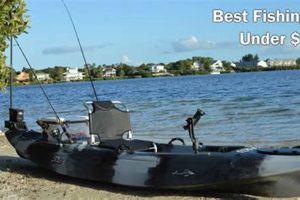
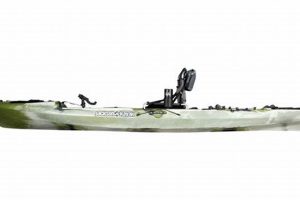
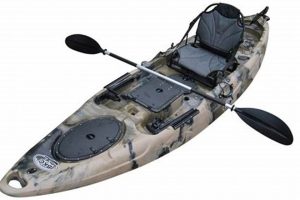
Anglers seeking affordable watercraft often explore budget-friendly options that provide adequate stability, features, and durability. This category of vessels typically includes smaller, sit-on-top kayaks constructed from durable, lightweight materials like high-density polyethylene (HDPE). These kayaks are often equipped with basic features like rod holders, storage compartments, and paddle rests, catering specifically to the needs of recreational fishing.
The availability of reasonably priced fishing kayaks has significantly democratized the sport, allowing a wider range of individuals to experience angling from a kayak. This affordability factor opens up opportunities for newcomers to experiment with the sport without a substantial initial investment. Historically, kayak fishing was often associated with higher costs, but the rise of accessible options has broadened participation and facilitated growth within the angling community.
This discussion will further delve into key factors for selecting suitable vessels within this price range, covering aspects such as hull design, weight capacity, essential features, and reputable manufacturers. Additional topics will include recommended accessories, safety considerations, and maintenance practices to ensure longevity and optimal performance.
Tips for Selecting Fishing Kayaks Within a Budget
Careful consideration of several key factors can ensure angler satisfaction and optimal performance when choosing a fishing kayak within a specific price range.
Tip 1: Prioritize Stability over Speed: Wider, shorter hulls generally offer greater stability, a crucial aspect for fishing, particularly for beginners. While narrower kayaks are faster, stability contributes significantly to comfort and safety, especially when casting or reeling in fish.
Tip 2: Evaluate Weight Capacity Carefully: The kayak’s weight capacity should comfortably accommodate the angler’s weight, fishing gear, and any potential catch. Exceeding the weight limit compromises stability and performance.
Tip 3: Consider Essential Features: Focus on necessary features like rod holders, storage compartments, and a comfortable seat. Prioritizing essential features over superfluous add-ons helps maximize value within a budget.
Tip 4: Research Reputable Manufacturers: Opting for kayaks from established manufacturers often signifies better quality control, warranty coverage, and customer support. Thorough research can identify brands known for producing durable and reliable kayaks.
Tip 5: Assess Material Durability: High-density polyethylene (HDPE) is a common and durable material suitable for fishing kayaks. Understanding the material’s properties contributes to making an informed decision about long-term durability.
Tip 6: Inspect for Build Quality: Carefully examine the kayak for any manufacturing defects or inconsistencies before purchase. Look for smooth seams, secure fittings, and a robust overall construction.
Adhering to these guidelines allows prospective kayak anglers to make informed decisions, balancing performance, features, and budget considerations. A well-chosen kayak can enhance fishing enjoyment and contribute to successful angling experiences.
These tips provide a solid foundation for selecting a budget-friendly fishing kayak. The subsequent section will delve into further considerations, encompassing essential accessories, safety protocols, and maintenance best practices.
1. Stability

Stability stands as a paramount consideration in the selection of a fishing kayak, particularly within a budget. Compromised stability negatively impacts angling effectiveness and safety. Kayak instability can lead to difficulties in casting, reeling, and landing fish, increasing the risk of capsizing. Within the sub-$600 price range, stability is often influenced by hull design. Wider, flatter hulls generally offer enhanced primary stability (initial resistance to tipping), while longer hulls provide better secondary stability (resistance to capsizing once tilted). Shorter, wider kayaks are generally more stable than longer, narrower models. For example, a wider, sit-on-top kayak provides a more stable platform for casting compared to a narrow, sit-inside model, crucial when targeting fish from a seated position. This is especially important for anglers fishing in moving water or challenging conditions commonly encountered within a limited budget.
Budget-friendly kayaks frequently utilize design elements like pontoon hulls or wider beams to enhance stability. While these designs may sacrifice some speed or maneuverability, they prioritize stability, a crucial factor for anglers focused on fishing rather than high-speed paddling. An angler fishing in a calm lake requires less inherent stability than an angler navigating choppy coastal waters. Therefore, evaluating intended fishing environments is vital when prioritizing stability within a budget. A kayak angler frequently shifting body weight during casting or landing fish benefits significantly from a highly stable platform, minimizing the risk of tipping, particularly in budget-friendly kayaks where higher-end stability features might be absent.
Prioritizing stability within the context of budget-friendly fishing kayaks directly influences angling success and safety. Understanding the relationship between hull design, intended use, and stability allows for informed decision-making within a specific price range. While budgetary constraints might limit access to high-end materials or advanced stability systems, careful consideration of kayak dimensions and hull design remains essential for achieving satisfactory stability for safe and effective fishing.
2. Weight Capacity

Weight capacity represents a critical factor influencing the performance and safety of fishing kayaks, particularly within the sub-$600 price range. This specification dictates the maximum combined weight of the angler, gear, and any potential catch the kayak can safely support. Exceeding this limit compromises stability, maneuverability, and freeboard (the distance between the waterline and the top edge of the hull), increasing the risk of capsizing. Kayaks within this price range often feature weight capacities ranging from 250 to 400 pounds. Careful consideration of individual angler weight, anticipated gear load, and potential catch weight is crucial for selecting a kayak with adequate capacity. For instance, an angler weighing 200 pounds carrying 50 pounds of gear necessitates a kayak with a minimum weight capacity of 250 pounds. Targeting larger fish species requires factoring in potential catch weight, further influencing the minimum acceptable weight capacity.
Manufacturers determine weight capacity through rigorous testing and calculations. This figure represents the maximum safe load under ideal conditions. Real-world conditions, such as wind, waves, and uneven weight distribution, can further impact effective weight capacity. Therefore, selecting a kayak with a weight capacity slightly exceeding calculated needs provides a safety margin. Understanding the relationship between weight capacity, kayak volume, and hull design contributes to informed decision-making. Larger kayaks with greater volume generally support higher weight capacities but may sacrifice maneuverability. Within the sub-$600 price range, manufacturers often balance weight capacity with affordability, utilizing materials and construction techniques that optimize load-bearing capabilities without drastically increasing cost. A kayak with insufficient weight capacity sits lower in the water, reducing freeboard and increasing the likelihood of water ingress. Conversely, a kayak with excessive weight capacity for the intended load may be less maneuverable and responsive.
Matching weight capacity to individual needs within a specific budget ensures safe and efficient kayak fishing. Careful consideration of angler weight, gear, potential catch, and anticipated fishing conditions enables selection of a suitable kayak within the desired price range. Prioritizing weight capacity alongside other key features such as stability and maneuverability allows anglers to make informed purchasing decisions that enhance both safety and angling performance.
3. Essential Features

Essential features distinguish fishing kayaks from recreational models, enhancing angling effectiveness and overall experience. Within the $600 price range, careful consideration of these features maximizes value and ensures suitability for intended fishing styles. Prioritizing essential features over non-essential additions allows anglers to acquire well-equipped kayaks without exceeding budgetary constraints.
- Rod Holders
Rod holders secure fishing rods, freeing hands for paddling, baiting, and landing fish. Flush-mounted rod holders offer a streamlined profile minimizing snag potential, while adjustable rod holders offer versatility for various fishing techniques. Budget-friendly kayaks often include two or more rod holders. Their inclusion significantly enhances fishing convenience compared to kayaks lacking dedicated rod storage.
- Storage Options
Storage compartments accommodate tackle boxes, gear, and personal items, crucial for longer fishing trips. Dry storage compartments protect sensitive items from water damage, while open storage areas offer quick access to frequently used equipment. Examples include tank wells with bungee cords for securing larger items or smaller hatches for tackle boxes. Ample storage contributes to organized and efficient fishing excursions, especially valuable in budget-friendly kayaks where space might be limited.
- Seating Comfort
Comfortable seating enhances endurance during extended fishing trips. Adjustable seating systems allow for personalized positioning, promoting comfort and reducing fatigue. Padded seats and adjustable backrests contribute to a more comfortable fishing experience. Prioritizing seat comfort, even in budget-friendly kayaks, significantly impacts overall enjoyment and reduces physical strain during long hours on the water.
- Paddle Holders/Rests
Paddle holders or rests secure paddles when not in use, preventing loss and freeing hands for fishing activities. Simple bungee cords or molded recesses serve this purpose effectively. While seemingly minor, this feature enhances convenience and safety by preventing paddle drift and interference during fishing. Their presence on budget-friendly models simplifies paddle management and enhances overall fishing experience.
These essential features contribute significantly to the functionality and enjoyment of fishing kayaks within the $600 price range. While budget constraints might limit the availability of higher-end features, prioritizing these core elements ensures a satisfactory and productive fishing experience. Understanding their role and importance empowers informed decision-making, enabling anglers to select kayaks well-equipped for their specific needs and fishing styles within a defined budget.
4. Material Durability

Material durability significantly impacts the lifespan and overall value proposition of fishing kayaks, especially within the $600 price range. Kayaks in this category frequently utilize high-density polyethylene (HDPE), a thermoplastic known for its impact resistance, UV stability, and relatively low cost. HDPE’s resilience against impacts, abrasion, and UV degradation makes it suitable for navigating various water conditions and enduring regular use, important considerations for budget-conscious anglers. While less expensive than composites or rotomolded plastics, HDPE offers a balance of durability and affordability, crucial in this price segment. For example, an HDPE kayak can withstand minor collisions with rocks or submerged obstacles without sustaining significant damage, unlike less durable materials that might crack or puncture under similar circumstances. This durability translates to a longer lifespan, maximizing the return on investment for budget-minded purchasers.
While HDPE remains prevalent, other materials like single-layer polyethylene and inflatable materials occasionally appear in this price bracket. Single-layer polyethylene, while less expensive, generally offers reduced durability compared to HDPE. Inflatable kayaks, typically constructed from reinforced PVC or other durable fabrics, offer portability and ease of storage, but puncture resistance and overall longevity remain key considerations. Understanding the trade-offs between material cost, durability, and performance is essential for informed decision-making. Anglers prioritizing long-term durability within a limited budget often favor HDPE kayaks, accepting potential trade-offs in weight and performance compared to higher-priced alternatives. Choosing an inflatable kayak prioritizes portability and storage convenience, but necessitates greater care to avoid punctures or abrasion. Selecting a single-layer polyethylene kayak emphasizes affordability but might require accepting a potentially shorter lifespan due to reduced material resilience.
Material selection directly impacts the long-term viability and overall value of fishing kayaks within a budget. Recognizing the balance between cost and durability inherent in various materials empowers informed purchase decisions. Prioritizing durability ensures extended lifespan and consistent performance, ultimately maximizing value within the $600 price range. While material durability represents a crucial consideration, a comprehensive evaluation should also encompass factors like stability, weight capacity, and essential features to ensure alignment with individual angling needs and preferences.
5. Manufacturer Reputation
Manufacturer reputation plays a crucial role in the selection of fishing kayaks, especially within the $600 budget range. A reputable manufacturer often signifies consistent quality control, reliable customer service, readily available replacement parts, and potentially better warranty coverage. These factors contribute significantly to long-term satisfaction and minimize potential issues arising from manufacturing defects or design flaws. Investing in a kayak from a reputable manufacturer, even within a budget, can mitigate risks and enhance the overall ownership experience. Conversely, opting for lesser-known brands with questionable reputations might compromise quality, durability, and post-purchase support.
- Warranty and Customer Support
Reputable kayak manufacturers typically offer comprehensive warranties covering manufacturing defects and material failures. Reliable customer support facilitates efficient resolution of potential issues, minimizing downtime and frustration. For instance, a manufacturer known for responsive customer service can quickly address warranty claims or provide technical assistance, whereas a less reputable brand might offer limited or unresponsive support, potentially leaving customers stranded with unresolved problems. This becomes particularly crucial within the $600 price range where budget constraints amplify the impact of any product defects or malfunctions.
- Build Quality and Material Selection
Established manufacturers often prioritize quality control, employing robust construction techniques and selecting durable materials. This results in kayaks better equipped to withstand regular use, impacts, and environmental exposure. For example, a reputable manufacturer might utilize higher-grade HDPE with superior UV resistance, ensuring longer lifespan compared to a lesser-known brand employing lower-quality materials prone to cracking or fading. This attention to detail, even in budget-friendly models, enhances long-term value and minimizes the risk of premature failure.
- Resale Value
Kayaks from reputable manufacturers often retain higher resale value, providing a potential return on investment should the owner decide to upgrade or sell. This factor becomes particularly relevant in the budget segment, as a kayak with better resale value minimizes potential financial losses when transitioning to a different model. A well-maintained kayak from a respected brand often commands a higher price in the used market compared to a similar kayak from a less reputable source, offering budget-conscious buyers a potential avenue for recouping some of their initial investment.
- Community and Online Resources
Reputable manufacturers often cultivate active online communities and provide comprehensive product documentation, offering valuable resources for troubleshooting, maintenance, and modification. This access to information and peer support enhances the ownership experience and facilitates informed decision-making regarding upgrades or repairs. A strong online community can provide invaluable tips, advice, and solutions to common problems, whereas lesser-known brands might lack such support networks, leaving owners to navigate issues independently. This becomes particularly relevant in the budget segment, where access to reliable information and community support can significantly enhance the overall kayak ownership experience.
Prioritizing manufacturer reputation when selecting a fishing kayak within the $600 budget range offers significant long-term benefits. While initial cost remains a primary consideration, opting for a reputable brand often translates to enhanced durability, better customer support, and potentially higher resale value, contributing to a more satisfying and cost-effective ownership experience. Evaluating manufacturer reputation alongside other crucial factors like stability, weight capacity, and essential features empowers informed decision-making, ensuring the selected kayak aligns with individual needs, budget, and long-term angling goals.
6. Target Fish Species
Target fish species significantly influence kayak selection, especially within a budget. Different species inhabit diverse environments requiring specific kayak characteristics. Aligning kayak choice with target species maximizes angling effectiveness and overall success while adhering to budgetary constraints. Understanding the relationship between target species and kayak features ensures informed decision-making within the $600 price range.
- Species Size and Fighting Strength
Larger, stronger fish necessitate kayaks with higher weight capacities and enhanced stability. Targeting smaller panfish in calm ponds allows for smaller, lighter kayaks, whereas pursuing larger game fish like catfish or striped bass requires more robust, stable platforms capable of handling stronger runs and heavier weights. Within a limited budget, balancing stability and weight capacity against cost becomes crucial. A smaller, less stable kayak might suffice for smaller species, but targeting larger fish requires prioritizing stability and capacity, potentially influencing material choices and overall kayak size to remain within budget.
- Fishing Environment
Fishing location significantly impacts kayak choice. Calm lakes and ponds allow for shorter, wider, more stable kayaks, while rivers or coastal areas with currents and waves necessitate longer, more maneuverable kayaks with higher tracking capabilities. Budget constraints often dictate material choices and feature sets. An angler targeting species in sheltered waters can prioritize stability and affordability, while those fishing in challenging environments must balance maneuverability, stability, and cost, potentially requiring compromises within the $600 price range.
- Fishing Techniques
Trolling requires kayaks with good tracking and stability, while sight fishing necessitates maneuverability and a lower profile. Stand-up fishing benefits from a wider, more stable platform. Budget-friendly kayaks rarely specialize in all techniques. Anglers prioritizing trolling within a budget might choose a longer, more stable kayak, sacrificing maneuverability. Conversely, sight fishing prioritizes maneuverability and a lower profile, potentially compromising stability or storage capacity in budget-friendly models.
- Transportation and Storage
Kayak size and weight influence transportation and storage requirements. Smaller, lighter kayaks transport easily on car roof racks, while larger kayaks require trailers or specialized vehicles. Inflatable kayaks offer convenient storage and transport but require inflation and deflation before and after use. Budget limitations often dictate transportability. Anglers with limited storage or transportation options might prioritize smaller, inflatable kayaks, accepting potential trade-offs in durability or performance compared to larger, more robust hard-shell kayaks within the same price range.
Considering target fish species and associated fishing styles within the context of a $600 budget empowers informed kayak selection. Balancing desired features with budgetary constraints requires careful evaluation of species-specific needs, fishing environments, and transportation logistics. Prioritizing essential features aligned with target species maximizes angling success and overall satisfaction within a defined price range. A well-chosen kayak enhances fishing experiences and ensures compatibility with the intended angling pursuits, even within budgetary limitations.
Frequently Asked Questions
This section addresses common inquiries regarding fishing kayaks available within a $600 budget.
Question 1: What are the most important features to prioritize in a fishing kayak under $600?
Stability, weight capacity, and storage options are key considerations. Rod holders and a comfortable seat also enhance the angling experience within this price range.
Question 2: Are fishing kayaks under $600 suitable for ocean use?
While some models might handle calm coastal waters, specialized ocean kayaks often exceed this budget. Careful evaluation of kayak specifications and intended use is crucial. Open-ocean angling requires features like higher weight capacities, enhanced stability, and specialized safety equipment, often exceeding the price limitations of this category. Anglers targeting nearshore or protected coastal areas might find suitable options within this price range, but thorough research and adherence to safety precautions remain essential.
Question 3: How does one determine the appropriate weight capacity for a fishing kayak?
Calculate the combined weight of the angler, all fishing gear, and potential catch. Selecting a kayak with a weight capacity exceeding this combined weight ensures optimal performance and safety. Always consult manufacturer specifications for accurate weight capacity limits and adhere to recommended guidelines.
Question 4: What are the primary differences between sit-on-top and sit-inside kayaks for fishing within this price range?
Sit-on-top kayaks generally offer superior stability and ease of entry/exit, making them popular for fishing. Sit-inside kayaks provide better protection from the elements but might feel more restrictive. Within the $600 budget range, sit-on-top kayaks often dominate the fishing kayak segment due to their stability and affordability, while sit-inside models are less common within this price point and typically lack specialized fishing features.
Question 5: What maintenance is required for a fishing kayak under $600?
Regular rinsing with fresh water after each use, especially in saltwater environments, helps prevent corrosion and material degradation. Proper storage out of direct sunlight prolongs lifespan. Periodic inspection of hardware and hull integrity ensures long-term performance and safety. These maintenance practices apply to kayaks across various price points, including budget-friendly options, and contribute significantly to their longevity.
Question 6: Can essential accessories, such as a paddle and life vest, be acquired within a $600 total budget?
Budget allocation for essential safety gear and accessories is crucial. While some retailers offer package deals including basic paddles and life vests, allocating a portion of the budget for higher-quality accessories enhances safety and performance. Prioritizing safety equipment and essential accessories like paddles, life vests, and bilge pumps remains paramount, even within a restricted budget. Exploring bundled deals or sales can help maximize value and ensure essential safety gear fits within the overall financial constraints.
Careful consideration of these frequently asked questions empowers informed decisions regarding fishing kayak selection and ownership within a defined budget. Prioritizing safety, essential features, and appropriate kayak type enhances angling experiences and ensures suitability for intended fishing environments and target species.
Further research into specific kayak models and manufacturer reputations within the $600 price range is recommended before making a final purchase decision. Consulting online reviews, angler forums, and expert resources provides valuable insights and facilitates informed selection.
Fishing Kayaks Under $600
Careful evaluation of key features like stability, weight capacity, material durability, and manufacturer reputation empowers informed purchasing decisions within the $600 fishing kayak market. Prioritizing essential features aligned with target fish species and intended fishing environments maximizes angling effectiveness and overall satisfaction within budgetary constraints. Understanding the trade-offs between cost, performance, and durability allows anglers to select kayaks optimized for individual needs and angling styles. Thorough research and consideration of factors discussed herein contribute significantly to acquiring a suitable and reliable fishing kayak within a defined budget.
The availability of quality fishing kayaks within the $600 price range has significantly broadened access to the sport. Continued innovation in kayak design and manufacturing processes promises further advancements in affordability, features, and performance, potentially expanding angling opportunities for a wider audience. Diligent research and informed decision-making remain crucial for maximizing value and ensuring long-term satisfaction with kayak fishing within a defined budget.