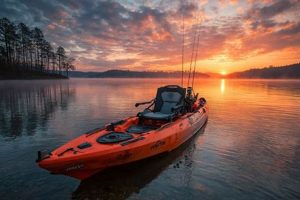
Specialized small watercraft designed for angling in marine environments offer stability, portability, and access to shallow or otherwise difficult-to-reach fishing grounds. These vessels are often equipped with features like rod holders, livewells, and specialized storage compartments for tackle and gear.
Ocean fishing from these purpose-built boats provides a unique and rewarding experience. Their maneuverability allows anglers to navigate close to shorelines, reefs, and other productive areas. This approach offers a more intimate connection with the marine environment and often results in greater success compared to shore-based fishing or larger vessels restricted to deeper waters. The low profile and quiet operation can also be advantageous for approaching wary fish. Furthermore, the relatively low cost and ease of transport and storage make them an accessible option for many fishing enthusiasts.
This discussion will explore key aspects of selecting and using these vessels, including design considerations, essential features, safety precautions, and popular fishing techniques.
Tips for Ocean Kayak Fishing
Successful ocean kayak fishing requires careful planning and preparation. The following tips offer guidance for a safe and productive experience.
Tip 1: Choose the Right Kayak: Selecting a suitable vessel is paramount. Longer, wider kayaks offer greater stability in open water, while shorter kayaks provide better maneuverability in tighter spaces like mangroves or rocky shorelines. Consider features like rod holders, storage compartments, and rudder systems based on individual fishing styles and needs.
Tip 2: Prioritize Safety: Always wear a personal flotation device (PFD). Check weather conditions before heading out and avoid venturing into rough seas or strong currents. Carry a communication device, such as a VHF radio or a waterproofed mobile phone, for emergencies.
Tip 3: Plan Your Route: Research potential fishing spots beforehand and map out a route. Consider tides, currents, and potential hazards. Inform someone on shore of your planned itinerary and estimated return time.
Tip 4: Use Appropriate Tackle and Gear: Saltwater fishing requires specialized tackle and gear. Choose rods, reels, and lines designed for the target species and the ocean environment. Corrosion-resistant materials are essential.
Tip 5: Practice Proper Kayaking Techniques: Develop proficient paddling skills and learn how to maneuver the kayak efficiently in various conditions. Practice self-rescue techniques in calm water before venturing into the ocean.
Tip 6: Respect the Environment: Adhere to local fishing regulations and practice catch-and-release whenever possible. Dispose of fishing line and other waste responsibly to minimize environmental impact.
Tip 7: Be Aware of Marine Life: Maintain a safe distance from marine mammals and other wildlife. Be mindful of potential interactions with sharks and other potentially dangerous species.
By following these tips, anglers can enhance their safety and increase their chances of a successful and enjoyable ocean kayak fishing experience.
This information provides foundational knowledge for venturing into ocean kayak fishing. Further research into specific techniques, regional regulations, and local conditions is strongly recommended.
1. Stability

Stability is a critical factor in ocean kayak fishing, directly impacting safety and fishing effectiveness. A stable platform allows anglers to cast, reel, and land fish without compromising balance, especially in challenging conditions such as chop, swells, or currents. Understanding the factors influencing stability is crucial for selecting a suitable kayak and enjoying a safe and productive fishing experience.
- Hull Design
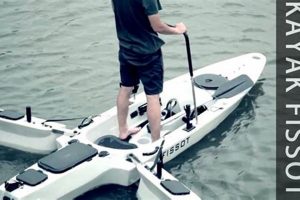
Hull design significantly influences stability. Wider hulls and those with a flatter bottom provide greater initial stability, making them less prone to tipping. However, they can be slower and less maneuverable. Narrower, V-shaped hulls offer better tracking and speed but are less stable initially. Specialized hull designs, such as pontoon hulls or tri-hulls, maximize stability but may compromise performance in other areas. Selecting a hull design involves balancing stability needs with desired performance characteristics.
- Center of Gravity
A lower center of gravity contributes to greater stability. Anglers can lower their center of gravity by sitting lower in the kayak and distributing weight evenly. Adding weight to the bottom of the kayak, such as tackle or ballast, can further enhance stability. Proper weight distribution is essential for maintaining balance and preventing capsizing.
- Water Conditions
Calm water conditions generally offer greater stability than rough seas or strong currents. Wind, waves, and currents can destabilize a kayak, requiring increased vigilance and potentially specialized paddling techniques. Understanding how different water conditions impact stability is crucial for making informed decisions about where and when to fish.
- Kayak Length and Width
Longer kayaks generally track better and offer more storage space, but they can be less maneuverable. Wider kayaks provide greater initial stability, while narrower kayaks are typically faster and more responsive. The length and width must be considered in conjunction with hull design and intended use to optimize stability and performance.
Careful consideration of these factors contributes significantly to a safe and productive fishing experience. Prioritizing stability, particularly in the dynamic ocean environment, enhances angler safety and allows for more effective fishing techniques, ultimately increasing the likelihood of success.
2. Maneuverability

Maneuverability is a critical aspect of ocean kayak fishing, enabling anglers to navigate diverse marine environments effectively. It dictates the ability to position the vessel precisely for optimal casting, access shallow or confined areas, and respond efficiently to changing conditions such as currents, tides, and wind. The degree of maneuverability required depends on the specific fishing environment and target species. For example, navigating tight mangrove channels or rocky coastlines demands greater maneuverability than trolling in open water.
Several factors influence kayak maneuverability. Shorter kayaks generally turn more quickly than longer ones, allowing for agile navigation in confined spaces. Hull design also plays a significant role. A kayak with a pronounced keel or tracking fin will track straight and resist turning, beneficial for open water paddling but less so for maneuvering in tight spots. Conversely, a flatter-bottomed hull without a keel or fin will turn more easily but may be less stable. Rudder systems can enhance maneuverability, particularly in windy conditions or strong currents, providing greater directional control. Furthermore, paddle type and technique significantly affect maneuverability; shorter paddles with a wider blade surface area provide more power for quick turns, while longer, narrower blades are better suited for straight-line paddling.
Understanding the factors influencing maneuverability allows anglers to select a kayak suited to their specific fishing needs and environment. Balancing maneuverability with stability and other performance characteristics is essential for a successful and enjoyable fishing experience. While exceptional maneuverability might be advantageous in certain situations, it often comes at the expense of stability or tracking performance. A well-informed angler will carefully consider these trade-offs to choose a vessel that optimally balances performance characteristics for their intended fishing style and location.
3. Storage Capacity

Adequate storage capacity is essential for ocean kayak fishing, enabling anglers to carry necessary gear and provisions for a safe and productive outing. The ability to stow fishing tackle, safety equipment, personal items, and potentially caught fish significantly impacts both comfort and practicality. Insufficient storage can lead to a cluttered deck, hindering movement and fishing activities, while ample storage allows for organized and efficient access to essential items.
- Types of Storage
Kayaks designed for fishing typically offer various storage options, including hatches, tank wells, and bungee systems. Hatches provide sealed compartments for protecting sensitive items from water damage, ideal for electronics, wallets, and first-aid kits. Tank wells, open areas often located at the bow or stern, are suitable for larger items like tackle boxes or coolers. Bungee systems offer quick and easy access to frequently used items, such as paddles or spare rods. The specific types and configuration of storage compartments vary depending on the kayak model and intended use.
- Capacity Considerations
The required storage capacity depends on the duration of the fishing trip, the type of gear being used, and the target species. Longer expeditions necessitate greater capacity for food, water, and additional gear. Anglers targeting larger fish may require more robust storage solutions for handling heavier catches. Careful consideration of anticipated needs helps determine the appropriate storage capacity for a given fishing scenario.
- Weight Distribution
Proper weight distribution is crucial for maintaining stability and performance. Distributing weight evenly throughout the kayak prevents imbalances that can compromise maneuverability and increase the risk of capsizing. Heavy items should be placed lower in the kayak and towards the center, while lighter items can be stored in the extremities. Understanding weight distribution principles ensures optimal kayak performance and enhances safety.
- Accessibility
Easy access to stored items is essential, especially in dynamic ocean conditions. Well-designed storage compartments allow anglers to retrieve necessary gear quickly and efficiently without compromising balance or disrupting fishing activities. Features like strategically placed hatches and readily accessible bungee systems contribute to a smoother and more productive fishing experience.
Optimizing storage capacity enhances both safety and efficiency in ocean kayak fishing. Anglers should carefully evaluate their specific needs and choose a kayak with sufficient and appropriately configured storage solutions. Effective organization and proper weight distribution within the storage compartments further contribute to a comfortable and productive fishing experience, allowing anglers to focus on the task at hand and maximize their chances of success.
4. Specialized Features
Kayaks designed specifically for ocean fishing often incorporate specialized features that enhance functionality, safety, and overall fishing success. These features cater to the unique demands of the marine environment and the specific needs of anglers. Understanding these features and their benefits contributes to informed decision-making when selecting a fishing kayak.
- Rod Holders
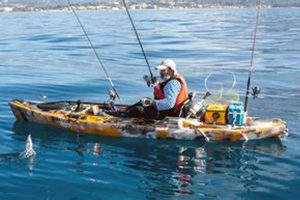
Rod holders secure fishing rods, allowing anglers to manage multiple lines or keep rods readily accessible while paddling or attending to other tasks. Various types of rod holders exist, including flush-mounted, adjustable, and rotating models. The number and configuration of rod holders should align with individual fishing styles and preferences.
- Livewells
Livewells are integrated tanks designed to keep caught fish alive and healthy. These are particularly important for anglers practicing catch and release or those targeting species requiring live bait. Livewells typically feature aeration systems and drain plugs for easy water exchange. Size and placement of livewells vary depending on the kayak model and intended use.
- Tackle Storage
Dedicated tackle storage compartments provide organized and readily accessible storage for lures, hooks, lines, and other essential fishing gear. These compartments often feature dividers, trays, and specialized holders for optimizing space and preventing tangling. Efficient tackle storage enhances fishing efficiency by minimizing time spent searching for specific items.
- Anchor Systems
Anchor systems allow anglers to maintain position in specific fishing locations, crucial in areas with currents or wind. Anchor trolleys facilitate controlled deployment and retrieval of the anchor, preventing entanglement and facilitating precise positioning. The type and size of the anchor system depend on the typical fishing environment and water depth.
These specialized features contribute significantly to the effectiveness and enjoyment of ocean kayak fishing. Selecting a kayak equipped with the appropriate features enhances angler comfort, safety, and fishing success, ultimately leading to a more rewarding experience on the water. While the specific features required may vary depending on individual fishing styles and target species, understanding the benefits and functionality of these specialized features allows anglers to make informed decisions and optimize their kayak setup for specific needs.
5. Durability (Saltwater)

Durability in saltwater environments is paramount for kayaks designed for ocean fishing. The corrosive nature of saltwater, coupled with exposure to UV radiation and the physical demands of the marine environment, necessitates robust construction and specialized materials to ensure longevity and reliable performance. Compromised durability can lead to structural failures, leaks, and equipment malfunctions, jeopardizing both safety and the overall fishing experience.
- Material Selection
Kayak construction materials significantly influence saltwater durability. High-density polyethylene (HDPE) is a common choice due to its impact resistance, UV stability, and affordability. Thermoformed plastics, such as ABS and ASA, offer enhanced rigidity and durability but often come at a higher price point. Composite materials, like fiberglass and carbon fiber, provide superior strength and performance but require more meticulous care and maintenance to prevent saltwater damage. Choosing appropriate materials is fundamental to ensuring long-term durability in the harsh marine environment.
- Corrosion Resistance
Metal components, such as hardware, fittings, and rudder systems, are particularly susceptible to corrosion in saltwater. Stainless steel, specifically marine-grade stainless steel, offers superior corrosion resistance and is essential for components exposed to saltwater. Regular rinsing and periodic lubrication of metal parts further mitigate corrosion and prolong lifespan. Neglecting corrosion prevention can lead to equipment failure and compromise safety.
- UV Protection
Prolonged exposure to ultraviolet (UV) radiation can degrade kayak materials, causing fading, brittleness, and reduced structural integrity. Kayaks constructed with UV-resistant materials or treated with UV-protective coatings offer enhanced durability in sunny marine environments. Storing kayaks out of direct sunlight when not in use further minimizes UV damage and prolongs their lifespan.
- Maintenance and Care
Proper maintenance and care are crucial for preserving saltwater durability. Regularly rinsing the kayak with fresh water after each use removes salt deposits and minimizes corrosion. Inspecting and addressing minor damage promptly prevents further deterioration. Storing the kayak properly, preferably out of direct sunlight and protected from the elements, contributes significantly to its overall longevity.
Investing in a durable, saltwater-resistant kayak is essential for safe and successful ocean fishing. Careful consideration of material selection, corrosion resistance, UV protection, and ongoing maintenance ensures long-term performance and minimizes the risk of equipment failure in the demanding marine environment. Prioritizing durability ultimately enhances the overall fishing experience by providing a reliable and dependable vessel capable of withstanding the rigors of ocean use.
Frequently Asked Questions
This section addresses common inquiries regarding the selection and utilization of kayaks specifically designed for ocean fishing. Understanding these key aspects contributes to informed decision-making and enhanced safety and performance on the water.
Question 1: What type of kayak is best suited for ocean fishing?
Optimal kayak selection depends on individual fishing styles, target species, and prevailing water conditions. Sit-on-top kayaks offer inherent stability and self-bailing capabilities advantageous in rough seas. Longer kayaks provide better tracking in open water, while shorter kayaks offer superior maneuverability in confined areas. Pedal-driven kayaks allow hands-free fishing, facilitating techniques like trolling or casting in currents.
Question 2: What essential safety equipment is required for ocean kayak fishing?
Essential safety gear includes a personal flotation device (PFD), a VHF radio or waterproofed mobile phone for communication, a signaling device such as a whistle or flare, a first-aid kit, and navigation tools like a compass or GPS. A bilge pump and paddle leash are also recommended. Checking weather conditions before departure and informing someone of the intended route and return time are crucial safety precautions.
Question 3: How does one choose the appropriate paddle for ocean kayaking?
Paddle selection depends on factors including kayak width, angler height, and paddling style. Longer paddles generate more power per stroke but require greater reach, while shorter paddles offer better control in rough conditions. Blade shape also influences performance, with wider blades providing more power and narrower blades offering greater efficiency.
Question 4: What fishing techniques are effective from a kayak in the ocean?
Effective techniques include trolling, drifting, casting, and jigging. Trolling involves dragging lures behind the moving kayak. Drifting allows natural currents to carry the kayak while presenting bait or lures. Casting targets specific areas with lures or bait. Jigging involves vertically presenting lures to attract fish near the bottom.
Question 5: How should one handle challenging weather conditions while kayak fishing in the ocean?
Checking weather forecasts before departure is crucial. Avoiding strong winds, rough seas, and lightning storms is paramount. If unexpected adverse weather arises, seeking sheltered waters, paddling perpendicular to waves, and deploying an anchor are recommended strategies. Prioritizing safety and returning to shore promptly are crucial in challenging conditions.
Question 6: What are the regulations regarding kayak fishing in the ocean?
Regulations vary by location and often include licensing requirements, catch limits, and size restrictions for specific species. Researching and adhering to local regulations is the angler’s responsibility. Awareness of marine protected areas and restrictions on fishing gear or methods is essential for responsible and legal fishing practices.
Careful consideration of these frequently asked questions enhances angler preparedness, promotes safe practices, and contributes to a more enjoyable and productive ocean kayak fishing experience. Further research into specific techniques, regional regulations, and local conditions is strongly encouraged.
Further exploration of specific kayak models and fishing techniques provides additional insights for optimizing ocean fishing experiences.
Conclusion
Specialized kayaks designed for ocean fishing offer a unique and rewarding approach to angling. Careful consideration of factors like stability, maneuverability, storage capacity, specialized features, and durability ensures optimal vessel selection for individual needs and target species. Prioritizing safety through proper planning, equipment utilization, and adherence to regulations is paramount for a successful experience. Understanding design elements, fishing techniques, and environmental awareness contributes to responsible and productive engagement with the marine environment.
Ocean kayak fishing presents a dynamic intersection of human ingenuity, athleticism, and environmental interaction. Continued exploration of specialized equipment and techniques promises further enhancement of this rewarding pursuit. Respect for marine ecosystems and responsible angling practices remain essential for the preservation of these valuable resources for future generations.