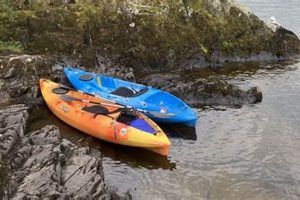
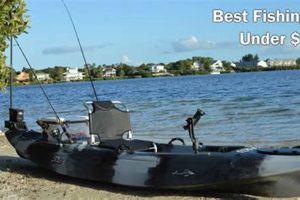
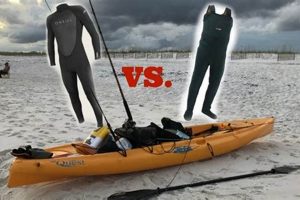
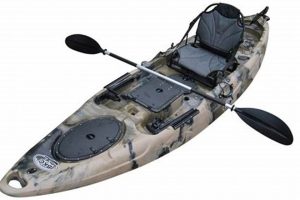
Kayaks designed specifically for angling and launched during the 2018 model year represent a notable point in the evolution of fishing-specific watercraft. These vessels typically incorporated features like rod holders, specialized storage compartments, and improved stability designed to enhance the angler’s experience. An example might include a sit-on-top kayak with integrated mounting tracks for accessories and a comfortable, elevated seat.
The 2018 period saw continued growth in the popularity of kayak fishing, driven by increased accessibility and affordability. Manufacturers responded by refining designs and incorporating new materials and technologies to improve performance and comfort. This era represents a significant step towards the highly specialized fishing kayaks available today. These advancements offered anglers enhanced stability, greater storage capacity, and a more comfortable fishing experience, making the sport more accessible and enjoyable.
This article will explore various aspects of these 2018-era fishing kayaks, examining key features, popular models, and the factors that contributed to their significance in the broader context of kayak fishing. Subsequent sections will delve into specific models, manufacturing innovations, and the lasting impact of these designs.
Tips for Selecting a 2018-Model Fishing Kayak
Choosing a suitable kayak from the 2018 model year requires careful consideration of several key factors. The following tips provide guidance for making an informed decision.
Tip 1: Evaluate Hull Design: Different hull designs offer varying stability and maneuverability. A wider, flatter hull provides enhanced stability, crucial for stand-up fishing, while a longer, narrower hull tracks better and covers distance more efficiently. Consider the primary fishing environment (calm lakes versus flowing rivers) and preferred fishing style when evaluating hull design.
Tip 2: Assess Storage Capacity: Adequate storage is essential for carrying tackle, safety gear, and personal items. Consider the volume and accessibility of storage compartments, as well as dedicated areas for rods and other equipment.
Tip 3: Examine Seat Comfort: Long hours on the water necessitate a comfortable and supportive seat. Look for adjustable features and breathable materials to maximize comfort and reduce fatigue.
Tip 4: Inspect Rod Holders and Mounting Tracks: Dedicated rod holders and strategically placed mounting tracks are vital for effective fishing. Ensure the kayak offers sufficient rod storage and customization options for accessories like fish finders and GPS units.
Tip 5: Consider Propulsion Options: Kayaks may offer paddle propulsion, pedal drives, or even motor integration. Choose a propulsion system that aligns with physical capabilities and desired fishing style.
Tip 6: Research Manufacturer Reputation and Reviews: Researching the manufacturer’s reputation and reading reviews from other anglers can provide valuable insights into the kayak’s performance, durability, and overall value.
Tip 7: Set a Budget: Establish a realistic budget before beginning the search to narrow down options and avoid overspending. Factor in the cost of essential accessories like paddles, life vests, and safety equipment.
By carefully evaluating these factors, anglers can select a 2018-model fishing kayak that best suits their individual needs and preferences, enhancing their overall fishing experience.
This information provides a foundation for making an informed purchase decision. The following sections will further explore specific models and features of 2018 fishing kayaks.
1. Stability

Stability is a paramount consideration in fishing kayak design, particularly for models released in 2018. A stable platform is essential for casting, reeling, landing fish, and crucial for stand-up fishing, a popular technique gaining traction during that period. A stable kayak provides anglers with confidence and enhances safety on the water. This section explores various facets contributing to kayak stability in 2018 models.
- Hull Design:
Hull design significantly influences stability. Wider, flatter hulls generally provide greater primary stability (initial resistance to tipping), ideal for calm waters and stand-up fishing. Pontoon-style hulls, also prevalent, offered exceptional stability, although often at the expense of maneuverability. Conversely, narrower hulls offer better tracking and speed but sacrifice some stability. 2018 models frequently incorporated design elements that balanced stability with performance, catering to diverse fishing styles.
- Center of Gravity:
A lower center of gravity contributes to increased stability. In 2018 kayak designs, this was often achieved through features like lower seating positions and strategic weight distribution within the hull. The placement of fishing gear and the angler’s body position also influence the center of gravity and overall stability.
- Outriggers and Stabilizers:
While less common in standard 2018 models, add-on outriggers and stabilizers could significantly enhance stability. These additions provided extra support, particularly beneficial for anglers seeking enhanced stability for stand-up fishing or in challenging conditions. Their growing availability in 2018 further expanded options for kayak anglers.
- Kayak Width and Length:
Wider kayaks inherently offer more initial stability than narrower models. Shorter kayaks tend to be more maneuverable but can be less stable than longer designs. 2018 models offered a diverse range of sizes, enabling anglers to select a kayak with dimensions suited to their individual needs and the intended fishing environment. This diversity was a hallmark of the 2018 market, catering to diverse preferences and fishing styles.
The emphasis on stability in 2018 fishing kayaks reflects the evolving demands of anglers seeking enhanced performance and versatility. By addressing stability through various design elements, manufacturers created kayaks capable of supporting diverse fishing techniques and providing a secure and confident platform on the water. These advancements solidified the kayak’s position as a versatile and effective fishing platform.
2. Storage Solutions

Effective storage solutions are integral to the functionality of fishing kayaks, particularly for 2018 models. These kayaks catered to anglers’ increasing demands for specialized storage options to accommodate tackle, gear, and personal items, maximizing organization and efficiency on the water. This section explores the key facets of storage solutions relevant to 2018 fishing kayaks.
- Tank Wells:
Tank wells, typically located behind the seat, provided ample space for larger items like tackle boxes, coolers, and dry bags. Their open design allowed for easy access and customization with crates and organizers. 2018 models often featured larger and more strategically shaped tank wells to maximize usable space and accommodate diverse gear configurations.
- Dry Storage Compartments:
Sealed dry storage compartments offered protection from water damage for essential items like phones, wallets, and electronics. These compartments varied in size and location across different 2018 models, reflecting diverse angler needs and preferences. Their inclusion became increasingly standard in 2018, reflecting a heightened emphasis on gear protection.
- Rod Holders and Storage:
Dedicated rod holders and storage systems were crucial features in 2018 fishing kayaks. Flush-mounted rod holders secured rods during paddling, while adjustable or rotating rod holders allowed for active fishing. Some models also integrated rod storage systems within the hull, offering protection and organization for multiple rods.
- Side Storage and Bungee Systems:
Smaller storage areas, often located along the sides of the kayak, provided quick access to frequently used items like pliers, lures, and tools. Bungee systems secured these items, preventing loss and ensuring they remained readily available. The strategic placement and accessibility of these storage options were key considerations in 2018 designs.
The variety and innovation in storage solutions present in 2018 fishing kayaks underscore the focus on angler-specific needs and the pursuit of enhanced on-the-water organization and efficiency. These advancements transformed the kayak fishing experience, making it more convenient and enabling anglers to carry and access their gear effectively. The continued development and refinement of these storage solutions remain central to modern fishing kayak design.
3. Propulsion Systems
Propulsion systems played a pivotal role in the evolution of fishing kayaks, particularly during the 2018 model year. The choice of propulsion directly impacts an angler’s experience, influencing speed, maneuverability, and fatigue. 2018 witnessed a diversification of propulsion options, catering to various fishing styles and preferences. This section examines the prevalent propulsion systems available in 2018 fishing kayaks.
- Paddle Propulsion:
Traditional paddle propulsion remained a cornerstone of kayak fishing in 2018. Paddle-powered kayaks offered affordability, simplicity, and versatility. Different paddle designs and kayaking techniques allowed for nuanced control over speed and maneuverability. While requiring physical exertion, paddling offered a direct connection with the water and remained a popular choice for anglers valuing exercise and traditional methods.
- Pedal Drives:
Pedal-powered kayaks gained significant traction in 2018, offering hands-free fishing and increased efficiency over longer distances. These systems utilized either propeller-based or fin-based propulsion mechanisms. While generally more expensive than paddle kayaks, pedal drives provided a distinct advantage for anglers seeking to cover more water or requiring hands-free operation for techniques like trolling or fly fishing.
- Motorized Kayaks:
Motorized kayaks, though less common than paddle or pedal-driven models, offered an alternative propulsion method in 2018. Electric motors provided enhanced speed and range, allowing anglers to access distant fishing spots with reduced effort. Considerations included battery life, weight capacity, and potential regulations regarding motorized watercraft in specific fishing areas.
- Combination Systems:
Some innovative 2018 models offered hybrid propulsion systems, combining elements of paddle and pedal or motor power. These designs provided flexibility, enabling anglers to switch between propulsion methods based on changing conditions or fishing requirements. This versatility was a significant selling point for anglers seeking adaptability in their fishing approach.
The diversity of propulsion systems available in 2018 fishing kayaks highlights the ongoing innovation within the industry and the increasing specialization of these vessels to accommodate diverse fishing styles. The choice of propulsion remained a crucial factor in kayak selection, influencing angler performance, comfort, and overall fishing experience. This evolution of propulsion systems continued to shape the future of kayak fishing, pushing boundaries and creating new possibilities on the water.
4. Hull Designs

Hull designs played a crucial role in defining the performance characteristics of fishing kayaks in 2018. The hull’s shape directly influenced stability, maneuverability, speed, and tracking, impacting an angler’s ability to navigate various water conditions and fishing styles effectively. Understanding the nuances of different hull designs prevalent in 2018 provides valuable context for evaluating these kayaks.
Several prominent hull designs characterized 2018 fishing kayaks. The pontoons hulls, known for exceptional stability, particularly benefitted stand-up fishing but often compromised maneuverability. Flat bottom hulls, also prioritizing stability, offered a balanced approach, suitable for calmer waters. Tunnel hulls improved tracking and glide, valuable for covering distances efficiently on open water, but provided less stability. Displacement hulls excelled in tracking and speed, making them ideal for paddling longer distances, however, these were less common in fishing kayak designs due to lower stability. Finally, the versatile multi-chine hulls balanced stability and tracking, representing a compromise ideal for diverse fishing environments and styles. For example, a 2018 sit-on-top fishing kayak designed for coastal fishing might have employed a multi-chine hull to manage both waves and calmer inshore areas effectively.
Selecting the appropriate hull design significantly impacted the angler’s experience. Considerations included the intended fishing environment (calm lakes, rivers, or open ocean), fishing style (casting, trolling, or still fishing), and the angler’s preference for stability versus speed. The diversity of hull designs offered in 2018 reflected the growing specialization within the fishing kayak market, catering to the specific demands of various angling disciplines. This understanding of hull design principles provides a critical framework for evaluating and selecting a fishing kayak from the 2018 era, facilitating informed decision-making and enhancing on-the-water performance.
5. Material Technology
Material technology played a significant role in shaping the performance, durability, and affordability of fishing kayaks in 2018. Advancements in materials science led to the development of kayaks that were lighter, stronger, and more resistant to wear and tear, enhancing the overall fishing experience. Understanding the materials employed in 2018 models is crucial for evaluating their long-term value and suitability for different fishing environments.
- Polyethylene (HDPE & MDPE):
High-density polyethylene (HDPE) and medium-density polyethylene (MDPE) remained the most common materials used in kayak construction during 2018. HDPE offered excellent impact resistance and durability, making it suitable for rugged environments. MDPE provided a balance between durability and affordability. These materials were rotational molded to create the kayak’s hull, providing a seamless, one-piece construction. While heavier than other materials, polyethylene kayaks offered excellent value and resilience.
- Thermoformed ABS:
Thermoformed ABS (acrylonitrile butadiene styrene) offered a lighter and stiffer alternative to polyethylene. Kayaks constructed from this material were often lighter and more performance-oriented. The thermoforming process allowed for more complex hull shapes and designs, potentially enhancing speed and maneuverability. However, ABS kayaks could be more susceptible to damage from impacts compared to polyethylene.
- Composites (Fiberglass and Carbon Fiber):
Composite materials, such as fiberglass and carbon fiber, were used in some higher-end fishing kayaks in 2018. These materials offered significant weight savings and increased stiffness, resulting in improved performance and efficiency. Fiberglass kayaks provided a good balance between performance and cost, while carbon fiber represented the premium option, offering the lightest and stiffest construction but at a higher price point.
- Inflatable Kayaks:
Inflatable kayaks, typically constructed from durable PVC or other synthetic materials, gained popularity in 2018 due to their portability and ease of storage. Advancements in materials and construction techniques improved their rigidity and performance, making them a viable option for some fishing applications. While generally less durable than rigid kayaks, inflatables offered a convenient and space-saving alternative, particularly for anglers with limited storage space or transportation options.
The choice of material significantly influenced the performance, durability, and cost of 2018 fishing kayaks. Understanding the properties of each material allows for informed evaluation of these kayaks, considering factors like weight capacity, intended use, and budget constraints. The advancements in material technology during this period contributed to the diversification of fishing kayaks, catering to a broader range of anglers and fishing styles, and laying the groundwork for further innovation in kayak construction.
Frequently Asked Questions
This section addresses common inquiries regarding fishing kayaks from the 2018 model year, providing concise and informative responses to assist consumers in making informed decisions.
Question 1: What were the typical price ranges for fishing kayaks in 2018?
Prices varied significantly based on features, materials, and brand. Entry-level models typically ranged from $500 to $1000, while higher-end kayaks with advanced features and materials could exceed $2000.
Question 2: Were there significant differences between sit-on-top and sit-inside fishing kayaks in 2018?
Yes, sit-on-top kayaks offered enhanced stability and ease of entry/exit, making them popular for warmer climates and fishing styles requiring frequent movement. Sit-inside kayaks provided better protection from the elements and often tracked better in the water, making them suitable for colder conditions or longer paddling distances.
Question 3: How did pedal-powered kayaks compare to paddle kayaks in 2018?
Pedal kayaks offered hands-free fishing and greater speed and efficiency over longer distances, but came at a higher price point. Paddle kayaks remained a popular choice for their affordability, simplicity, and versatility.
Question 4: What were the key advancements in fishing kayak technology observed in 2018 models?
Notable advancements included improvements in hull designs for enhanced stability, more integrated storage solutions, and the increasing popularity of pedal-drive systems. Material technology continued to evolve, offering lighter and more durable construction options.
Question 5: What factors should one consider when choosing a used 2018 fishing kayak?
Carefully inspect the hull for damage, assess the condition of any included accessories, and research the kayak’s history and maintenance records. Consider the kayak’s features and compatibility with the intended fishing style and environment.
Question 6: Where can one find reliable reviews and comparisons of 2018 fishing kayaks?
Online forums, paddling communities, and specialized kayak fishing websites can provide valuable insights from owners and experts, offering real-world perspectives on the performance and durability of different models.
Understanding these common questions and their answers provides a valuable foundation for evaluating 2018 fishing kayaks. Thorough research and consideration of individual needs will ultimately guide the selection process.
The next section will delve deeper into specific models and brands that were prominent in the 2018 fishing kayak market.
Fishing Kayak 2018
This exploration of fishing kayaks from the 2018 model year has highlighted key advancements in design, features, and materials. The convergence of improved stability, specialized storage solutions, and diverse propulsion systems significantly enhanced the angling experience. Hull designs catered to various fishing styles and environments, while material innovations offered increased durability and performance. Understanding these aspects provides a valuable framework for evaluating kayaks from this era.
The 2018 period represents a pivotal point in the evolution of fishing kayaks, laying the groundwork for continued innovation and specialization within the industry. Further research into specific models and manufacturer offerings will empower informed purchasing decisions, connecting anglers with the optimal equipment to pursue their passion on the water. The legacy of 2018 fishing kayaks continues to shape the landscape of modern kayak angling.