A premium, purpose-built small watercraft designed for anglers and hunters offers stability, stealth, and specialized features like rod holders, gear tracks, and camouflage. Such vessels provide access to shallow waters and secluded hunting grounds often inaccessible by larger boats, enabling close-range fishing and hunting opportunities.
Choosing appropriate watercraft for these outdoor pursuits significantly enhances the experience and potential for success. The ability to navigate quietly and efficiently through various water environments, coupled with features designed to accommodate hunting and fishing gear, improves both comfort and effectiveness. This specialized design reflects a growing recognition of the unique needs of sportsmen and women seeking closer interaction with nature and demanding specific functionalities from their equipment.
This article will delve into the key features that distinguish superior kayaks designed for fishing and hunting, exploring aspects such as hull design, propulsion systems, storage capacity, and essential accessories. It will also address safety considerations and offer guidance on selecting the optimal vessel based on individual needs and intended use.
Tips for Selecting a Kayak for Fishing and Hunting
Choosing appropriate watercraft for combined fishing and hunting excursions requires careful consideration of several key factors. These tips offer guidance for selecting a vessel optimized for both activities.
Tip 1: Prioritize Stability: A stable hull design is paramount, especially when casting, reeling, or taking aim. Wider kayaks and those with a flatter bottom offer increased stability compared to narrower, more agile designs.
Tip 2: Consider Propulsion: Paddle kayaks provide quiet, stealthy movement ideal for approaching wildlife, while pedal-powered kayaks offer hands-free operation and increased speed for covering larger areas.
Tip 3: Evaluate Storage Capacity: Ample storage is essential for carrying fishing and hunting gear. Look for dedicated compartments, bungee cords, and gear tracks for securing equipment.
Tip 4: Choose Camouflage Wisely: Camouflage patterns can enhance stealth, allowing closer approaches to fish and game. Select a pattern that blends with the typical hunting or fishing environment.
Tip 5: Factor in Weight Capacity: Ensure the kayak’s weight capacity accommodates the combined weight of the user, gear, and potential harvest.
Tip 6: Assess Seat Comfort: Extended periods on the water necessitate a comfortable and supportive seat. Look for adjustable seating systems and breathable materials.
Tip 7: Inspect Rod Holders and Gear Tracks: Dedicated rod holders and gear tracks facilitate organized storage and easy access to fishing rods and other essential equipment.
Careful consideration of these factors will ensure the selection of a kayak that optimizes both comfort and effectiveness for combined fishing and hunting adventures. A properly outfitted vessel enhances safety and provides the specialized functionality required for successful outings.
By applying these tips, individuals can confidently select a kayak that caters to their specific needs and elevates their fishing and hunting experiences. The subsequent sections will explore specific kayak models and accessories to further assist in the decision-making process.
1. Stability

Stability is a critical factor in selecting a kayak for fishing and hunting. A stable platform is essential for casting lines, reeling in fish, taking aim, and making accurate shots. Compromised stability can lead to capsizing, equipment loss, and potentially dangerous situations, particularly in challenging weather conditions or when handling large catches or game.
- Primary Stability:
Primary stability refers to a kayak’s initial resistance to tipping. A wider, flatter hull design generally provides higher primary stability, making it ideal for calm water conditions and activities requiring minimal movement. A wider kayak provides a more stable platform for casting fishing rods or taking aim with a hunting bow, increasing the likelihood of accurate shots and successful retrieves.
- Secondary Stability:
Secondary stability refers to a kayak’s resistance to tipping at greater angles of lean. This comes into play during maneuvering, navigating rougher waters, or when encountering unexpected shifts in weight distribution, such as when landing a fish. Kayaks with rounded or flared hulls offer greater secondary stability, allowing for confident recovery from leans and reducing the risk of capsize during dynamic movements associated with fishing and hunting activities.
- Hull Design Impact:
The hull design significantly influences both primary and secondary stability. Flat-bottomed hulls maximize primary stability, while rounded or pontoon hulls offer enhanced secondary stability. Specialized designs, such as catamaran hulls, offer a unique combination of both. Understanding the relationship between hull design and stability is essential for selecting a kayak suited to the specific fishing and hunting environments and the user’s experience level.
- Weight Distribution and Center of Gravity:
Proper weight distribution within the kayak is crucial for maintaining optimal stability. Distributing gear evenly and keeping the center of gravity low enhances balance and reduces the likelihood of tipping. Securing heavier items close to the center of the kayak and utilizing dedicated storage compartments contributes to enhanced stability during movement and maneuvering while engaging in fishing or hunting activities.
Ultimately, the optimal level of stability depends on the intended use and the specific conditions encountered. A kayak prioritized for fishing and hunting in calm waters may prioritize primary stability, while one intended for rougher conditions or more dynamic movements might prioritize secondary stability. Careful evaluation of these factors ensures the selection of a kayak that provides a safe and stable platform for both fishing and hunting activities.
2. Storage Capacity

Adequate storage capacity is paramount when selecting a kayak for combined fishing and hunting excursions. These activities necessitate carrying a variety of specialized equipment, including rods, reels, tackle boxes, ammunition, hunting blinds, and safety gear. Insufficient storage can lead to a cluttered cockpit, hindering movement and compromising safety, while also limiting the range and duration of expeditions.
- Dedicated Compartments:
Purpose-built compartments offer organized storage for specific items, protecting sensitive equipment like electronics and optics from water damage. Examples include waterproof hatches for storing ammunition or electronic devices, and recessed tackle trays for keeping lures and hooks organized and readily accessible.
- Tank Wells and Bungee Systems:
Open storage areas, such as tank wells, combined with secure bungee systems, provide versatile storage for larger items like dry bags, coolers, and hunting blinds. Bungee cords allow for quick access to frequently used items while ensuring they remain secured during transport.
- Gear Tracks and Mounting Points:
Gear tracks and mounting points offer customizable storage solutions, allowing users to attach rod holders, fish finders, camera mounts, and other accessories. This adaptability allows for personalized configurations tailored to individual fishing and hunting needs.
- Weight Capacity Considerations:
Maximum weight capacity directly impacts the amount of gear that can be safely carried. Exceeding this limit compromises stability and maneuverability, increasing the risk of capsizing. Calculating the combined weight of the user, essential gear, and potential harvest is crucial when assessing storage capacity needs.
Careful consideration of storage capacity is therefore essential for ensuring safe, efficient, and successful fishing and hunting trips. A well-organized kayak allows for easy access to essential equipment, maximizing both comfort and effectiveness in the field. Prioritizing appropriate storage solutions enhances safety and contributes significantly to a positive and productive outdoor experience.
3. Propulsion System
Propulsion systems significantly influence a kayak’s suitability for fishing and hunting. Selecting the appropriate system depends on factors such as the intended environment, fishing style, and hunting approach. Each propulsion method offers distinct advantages and disadvantages requiring careful consideration.
Paddle Propulsion: Traditional paddle kayaks offer excellent stealth and maneuverability, crucial for approaching wildlife undetected. Paddling allows for precise control in shallow water and tight spaces, ideal for navigating complex waterways and accessing secluded hunting or fishing spots. However, paddling requires physical exertion, potentially limiting range and causing fatigue, particularly during extended trips or challenging conditions. A paddle kayak benefits hunters requiring silent movement in marshy environments and anglers targeting fish in shallow, vegetated areas.
Pedal Propulsion: Pedal-powered kayaks offer hands-free operation, allowing anglers to focus on fishing techniques and hunters to maintain readiness for a shot. Pedal drives typically provide greater speed and efficiency compared to paddling, enabling covering larger distances and reaching distant locations more quickly. This can be advantageous for trolling or exploring extensive waterways. However, pedal systems can be heavier and more complex than paddles, potentially impacting maneuverability in tight spaces and increasing the overall weight of the kayak. Pedal kayaks are well-suited for anglers trolling open water or hunters needing to cover larger distances to reach optimal hunting grounds.
Motorized Propulsion: Motorized kayaks offer the greatest speed and range, allowing for rapid travel across large bodies of water. This can be particularly beneficial for accessing remote fishing areas or covering significant distances while hunting waterfowl. However, motors introduce noise and vibration, potentially spooking wildlife and diminishing stealth. Regulations regarding motorized watercraft in certain areas may also restrict their use. Motorized kayaks are best suited for anglers targeting offshore fishing grounds or hunters requiring access to distant waterways inaccessible by other means.
Choosing the correct propulsion system is a critical factor in optimizing kayak performance for fishing and hunting. Careful evaluation of the intended environment, fishing or hunting style, and desired level of stealth and speed allows for informed decision-making. Matching the propulsion system to specific needs enhances efficiency, maximizes effectiveness, and contributes to a safe and successful outdoor experience.
4. Camouflage and Stealth
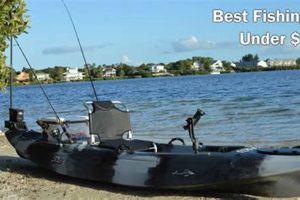
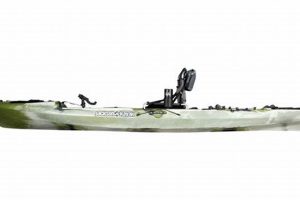
Camouflage and stealth play crucial roles in optimizing a kayak for fishing and hunting. These elements directly influence the ability to approach target species undetected, maximizing opportunities for successful catches and ethical harvests. The effectiveness of camouflage depends on the environment and target species. For instance, a mottled green-brown camouflage pattern suits vegetated areas, while a lighter, more open pattern might be preferable in open water or against a backdrop of rocks and sand. Likewise, stealth extends beyond visual concealment to encompass minimizing noise and movement. A kayaks color, finish, and design contribute to its overall stealth profile.
Specific camouflage patterns and materials can enhance a kayak’s ability to blend seamlessly into the surrounding environment. Matte finishes minimize reflections and glare, reducing visibility to fish and game. Sound-dampening materials and design features minimize noise generated by movement and paddle strokes, further enhancing stealth. Consider a hunter pursuing waterfowl in a marsh environment. A kayak with a camouflage pattern mimicking the reeds and grasses provides effective concealment, allowing closer approach without alarming the birds. Similarly, an angler fishing in a clear lake might opt for a kayak with a subdued, natural color scheme that blends with the water and shadows, minimizing disturbance to fish below the surface.
Effective camouflage and stealth significantly increase the likelihood of successful fishing and hunting expeditions. By minimizing disturbance and maximizing opportunities for close-range encounters, these factors contribute directly to ethical and sustainable harvesting practices. Selecting appropriate camouflage patterns and incorporating stealth-enhancing features into kayak design represent crucial considerations for optimizing performance and minimizing environmental impact. This understanding underscores the importance of considering the interplay between equipment, environment, and target species when selecting and utilizing a kayak for fishing and hunting activities.
5. Specialized Features
Specialized features distinguish kayaks designed for fishing and hunting from recreational models. These features enhance functionality, efficiency, and overall success in these specialized pursuits. Careful consideration of these features is essential when selecting a kayak optimized for combined fishing and hunting expeditions.
- Rod Holders and Tackle Storage:
Integrated rod holders and tackle storage systems are crucial for anglers. Flush-mounted rod holders secure rods during transit and allow for hands-free operation while paddling or maneuvering. Dedicated tackle storage compartments keep lures, hooks, and other small items organized and readily accessible, maximizing fishing efficiency. For example, adjustable rod holders accommodate different fishing styles, while sealed tackle boxes protect gear from water damage.
- Gear Tracks and Mounting Points:
Gear tracks and mounting points offer versatility and customization options. These systems allow for the attachment of fish finders, GPS units, camera mounts, and other accessories, enhancing both fishing and hunting capabilities. For instance, a hunter might mount a spotlight for navigating in low-light conditions, while an angler might attach a rod holder extension for improved trolling.
- Anchor Systems and Stake-Out Poles:
Anchor systems and stake-out poles provide stability in specific locations, crucial for both fishing and hunting. Anchors maintain position in deeper water, while stake-out poles secure the kayak in shallow areas, allowing for stationary fishing or hunting from a fixed vantage point. This is particularly useful in areas with current or wind, or when targeting specific fish or game locations.
- Specialized Seating and Comfort Features:
Comfortable seating enhances endurance and reduces fatigue during long hours on the water. Adjustable seats with lumbar support and breathable materials improve comfort and stability, particularly important during extended fishing or hunting trips. Features like elevated seating positions improve visibility and facilitate casting or shooting. Comfortable seating directly impacts the ability to remain focused and effective during prolonged excursions.
These specialized features, while not universally essential, significantly enhance the functionality and effectiveness of a kayak for fishing and hunting. Selecting a kayak equipped with features tailored to individual needs and preferences optimizes performance and contributes to a more successful and enjoyable outdoor experience. The strategic integration of these features transforms a standard kayak into a specialized vessel capable of meeting the unique demands of combined fishing and hunting adventures.
Frequently Asked Questions
This section addresses common inquiries regarding kayaks designed for fishing and hunting, providing concise and informative responses to facilitate informed decision-making.
Question 1: What hull design is most stable for a fishing and hunting kayak?
Wider, flatter hulls generally offer greater primary stability, ideal for calm water and stationary activities like casting or shooting. Pontoon or tunnel hulls provide enhanced secondary stability, beneficial in rougher conditions or when maneuvering with uneven weight distribution.
Question 2: How much storage capacity is recommended for combined fishing and hunting trips?
Storage needs depend on the duration and type of trip. Longer expeditions or those involving specialized equipment require greater capacity. Prioritize kayaks with dedicated compartments, tank wells, and gear tracks to accommodate essential gear and potential harvest.
Question 3: Is a pedal-powered kayak always preferable to a paddle kayak for fishing and hunting?
Not necessarily. Pedal kayaks offer hands-free operation and speed but can be less maneuverable and stealthy than paddle kayaks. Paddle propulsion excels in shallow water and environments requiring quiet movement, while pedal drives excel in open water and covering longer distances.
Question 4: What camouflage pattern is most effective for kayak fishing and hunting?
Effectiveness depends on the specific environment. Mottled green-brown patterns suit vegetated areas, while lighter, more open patterns are suitable for open water or rocky terrain. Matching the camouflage to the surrounding environment enhances concealment.
Question 5: Are specialized features like rod holders and gear tracks essential for a fishing and hunting kayak?
While not strictly essential, specialized features significantly enhance convenience and efficiency. Rod holders secure rods, gear tracks allow customization, and anchor systems provide stability. These features contribute to a more organized and productive experience.
Question 6: What safety considerations are paramount when using a kayak for fishing and hunting?
Always wear a personal flotation device (PFD). Inform someone of trip plans and expected return time. Carry essential safety gear, including a whistle, signaling device, and first-aid kit. Be aware of weather conditions and water hazards.
Careful consideration of these frequently asked questions contributes significantly to making informed decisions when selecting and utilizing a kayak for fishing and hunting. Prioritizing safety, functionality, and environmental awareness ensures a rewarding and responsible outdoor experience.
For further guidance on selecting the ideal kayak, consult expert resources and specialized retailers. Hands-on experience and product demonstrations can offer valuable insights before making a final purchase decision.
Conclusion
Optimal kayak selection for combined fishing and hunting hinges on a comprehensive understanding of key factors influencing performance and safety. Stability, storage capacity, propulsion systems, camouflage, and specialized features contribute significantly to a successful and enjoyable experience. Careful consideration of these elements, coupled with an assessment of individual needs and intended environments, empowers informed decision-making.
Investing in appropriate watercraft enhances both safety and effectiveness in the pursuit of these outdoor activities. A well-equipped kayak provides a stable and efficient platform for accessing remote locations and engaging with nature. Prioritizing thoughtful selection contributes not only to successful harvests but also to a deeper appreciation for the natural world and responsible stewardship of its resources.