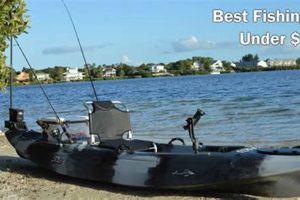
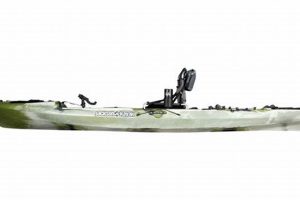
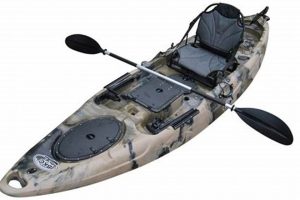
Optimal kayak length for fishing depends on several factors, including the type of water being fished (calm lakes vs. open ocean), the angler’s size and weight, storage capacity needs, and desired maneuverability versus tracking performance. For example, shorter kayaks (under 10 feet) are typically more agile and easier to maneuver in tight spaces like creeks and rivers, while longer kayaks (over 12 feet) offer better tracking and speed for covering larger distances on open water. The ideal length balances stability, speed, and ease of transport.
Selecting the appropriate kayak size significantly impacts fishing success and overall enjoyment. A properly sized vessel provides stability and comfort, allowing anglers to focus on fishing rather than constantly battling instability or fatigue. Historically, fishing kayaks were often adapted from general-purpose designs. However, the increasing popularity of kayak fishing has led to the development of specialized kayaks with features optimized for fishing, including rod holders, storage compartments, and even pedal-powered propulsion systems. This evolution underscores the importance of choosing a kayak specifically designed for fishing and matched to the angler’s needs and the intended fishing environment.
Factors such as hull design (sit-on-top vs. sit-inside), kayak width, and weight capacity also play crucial roles in overall performance and should be considered alongside length when choosing a fishing kayak. These considerations will be explored further in the following sections.
Tips for Choosing the Right Kayak Length for Fishing
Selecting the optimal kayak length significantly impacts fishing success. Careful consideration of individual needs and intended fishing environments is essential.
Tip 1: Prioritize Stability: Shorter kayaks generally offer greater initial stability, making them suitable for calm waters and anglers new to kayaking. Wider hulls also contribute to stability.
Tip 2: Consider Maneuverability: Shorter kayaks excel in maneuverability, allowing for easier navigation in tight spaces like creeks, rivers, and mangrove tunnels. This is crucial for anglers targeting specific locations or needing to navigate obstacles.
Tip 3: Evaluate Tracking Performance: Longer kayaks track better, maintaining a straight course with less effort. This is advantageous for covering distances on open water like lakes and oceans.
Tip 4: Factor in Storage Needs: Longer kayaks typically offer more storage space for fishing gear, tackle boxes, and even larger catches. Assess storage requirements based on the type and duration of fishing trips.
Tip 5: Account for Angler Size and Weight: Kayaks have weight capacities that must be respected for safety and performance. Larger anglers may require longer, wider kayaks with higher weight limits.
Tip 6: Think About Transportation and Storage: Longer kayaks can be more challenging to transport and store. Consider vehicle capacity and available storage space when making a decision.
Tip 7: Test Before You Buy: Whenever possible, try out different kayak lengths and styles before purchasing. This allows anglers to experience firsthand how each performs in the water and assess its suitability for their needs.
By carefully evaluating these factors, anglers can select a kayak length that maximizes both comfort and fishing effectiveness. The appropriate length contributes significantly to a positive and productive fishing experience.
Ultimately, the “best” length is subjective and depends on individual needs and preferences. This guide provides a framework for informed decision-making.
1. Stability

Stability represents a critical factor influencing optimal kayak length for fishing. Kayak stability directly affects angler comfort, safety, and fishing effectiveness. A stable platform enables anglers to cast, reel, and land fish without compromising balance. Conversely, instability can lead to fatigue, difficulty fishing effectively, and even capsizing, particularly in challenging conditions. Shorter, wider kayaks generally exhibit greater initial stability, making them well-suited for calm waters and novice anglers. Longer, narrower kayaks prioritize speed and tracking but may sacrifice some initial stability. For example, a shorter kayak (under 10 feet) provides a stable platform for fishing in sheltered bays or slow-moving rivers, while a longer kayak (over 12 feet) might feel unstable in these environments but excel in open water scenarios. The relationship between stability and kayak length involves a trade-off between maneuverability and tracking performance, underscoring the need to prioritize stability needs based on intended fishing locations and angler experience.
Hull design also plays a significant role in stability. Flat-bottomed hulls offer excellent initial stability, making them ideal for calm water fishing. Rounded hulls, while less stable initially, provide better performance in rougher conditions and enhance maneuverability. Pontoon hulls, with their exceptional stability, cater specifically to anglers prioritizing a stable platform, even at the expense of some speed and maneuverability. Understanding the interplay between hull design and length allows anglers to fine-tune stability characteristics to suit their needs and fishing style. For instance, an angler fishing from a standing position requires a wider and more stable platform than one remaining seated, influencing the optimal length and hull design selection. Furthermore, carrying heavy gear or larger catches impacts stability, emphasizing the importance of considering total weight capacity when evaluating kayak length and stability characteristics.
Ultimately, selecting the appropriate kayak length for fishing requires careful consideration of stability requirements. Prioritizing stability ensures angler comfort and safety, promoting a positive and productive fishing experience. A well-balanced approach acknowledges the inherent trade-offs between stability, maneuverability, and tracking performance. Evaluating intended fishing locations, angler experience, and anticipated gear load allows for informed decision-making, ensuring the chosen kayak length maximizes stability without compromising other essential performance characteristics.
2. Maneuverability

Maneuverability represents a critical factor in determining the optimal kayak length for fishing. It dictates the ease with which a kayak can be turned, positioned, and navigated through various water conditions. Shorter kayaks generally offer superior maneuverability due to their reduced length and consequently smaller turning radius. This allows for quick adjustments in direction and precise navigation through tight spaces, such as narrow creeks, winding rivers, or areas with dense vegetation or obstacles. Conversely, longer kayaks, while offering advantages in speed and tracking, can be more challenging to maneuver quickly in confined areas. The relationship between kayak length and maneuverability presents a trade-off; shorter lengths enhance agility, while longer lengths prioritize straight-line performance. For example, navigating a shallow, mangrove-lined creek requires a highly maneuverable kayak, often shorter than 12 feet, to effectively navigate tight turns and avoid obstacles. In contrast, fishing on a large, open lake necessitates less maneuverability, making longer kayaks a viable option.
The importance of maneuverability as a component of selecting the best length for a fishing kayak depends heavily on the intended fishing environment. In situations requiring frequent changes in direction or navigation through complex waterways, maneuverability becomes paramount. Consider a scenario where an angler pursues fish in a river with numerous bends and fallen trees. A highly maneuverable kayak allows for quick adjustments to follow the fish or navigate around obstacles, significantly enhancing fishing success. However, in open water scenarios where maintaining a straight course is more important, maneuverability becomes less critical. Therefore, understanding the intended fishing environment is crucial for prioritizing maneuverability when selecting a kayak length. Fishing in areas with strong currents or tidal flows also highlights the importance of maneuverability, as quick adjustments are often needed to maintain position or avoid hazards.
Selecting a kayak length based on maneuverability requirements significantly impacts fishing effectiveness and overall experience. Prioritizing maneuverability in appropriate environments allows anglers to access prime fishing spots, navigate challenging waterways, and react quickly to changing conditions. However, recognizing the trade-off between maneuverability and tracking performance is essential for informed decision-making. Balancing these characteristics based on individual fishing styles and target environments ensures the chosen kayak length optimizes performance and enjoyment. This understanding empowers anglers to choose kayaks suited to their specific needs, resulting in a more productive and enjoyable fishing experience.
3. Tracking
Tracking, the ability of a kayak to maintain a straight course with minimal corrective strokes, plays a crucial role in determining the optimal length for a fishing kayak. Longer kayaks generally exhibit superior tracking due to their increased waterline length. This longer contact area with the water provides more directional stability, allowing the kayak to glide smoothly in a straight line with less effort. Conversely, shorter kayaks, while offering advantages in maneuverability, tend to deviate from a straight path more readily, requiring frequent corrective strokes. This difference stems from the shorter waterline length and the resulting reduced resistance to turning. The relationship between kayak length and tracking performance represents a fundamental trade-off: longer kayaks excel in tracking, while shorter kayaks prioritize agility. For instance, paddling across a large lake or covering significant distances in open water necessitates a kayak with excellent tracking to minimize fatigue and maximize efficiency. A longer kayak, typically exceeding 12 feet, proves advantageous in these scenarios. However, fishing in narrow, winding streams requires frequent course adjustments, making a shorter, more maneuverable kayak a preferable choice despite its reduced tracking performance.
The significance of tracking as a component of selecting the best length for a fishing kayak depends on the specific fishing environment and the angler’s priorities. In situations where covering long distances or maintaining a consistent heading is essential, such as trolling or paddling against wind or current, tracking becomes paramount. Consider a scenario where an angler trolls for fish along a shoreline. A kayak with excellent tracking allows the angler to maintain a desired course with minimal effort, focusing on fishing rather than constantly correcting direction. Conversely, in environments requiring frequent turns and maneuvering, tracking becomes less critical. An angler fishing in a densely vegetated area or navigating tight corners prioritizes maneuverability over tracking. Therefore, understanding the interplay between tracking and kayak length is essential for choosing a kayak suited to specific fishing styles and target environments. For example, kayak anglers fishing in offshore environments, where maintaining a straight course through waves and currents is crucial, will prioritize tracking performance.
Choosing a kayak length based on tracking requirements significantly influences fishing efficiency and overall experience. Prioritizing tracking in appropriate environments allows anglers to cover greater distances with less effort, conserve energy, and maintain desired courses in challenging conditions. However, recognizing the inherent trade-off between tracking and maneuverability is crucial for informed decision-making. Balancing these characteristics based on individual fishing styles and target locations ensures the selected kayak length optimizes performance and enjoyment. This understanding enables anglers to choose kayaks tailored to their specific needs, ultimately leading to more successful and enjoyable fishing trips.
4. Storage Capacity
Storage capacity represents a crucial factor influencing the optimal kayak length for fishing. Kayak fishing often necessitates carrying a substantial amount of gear, including rods, reels, tackle boxes, safety equipment, and potentially food and water for longer trips. A kayak with inadequate storage can hinder fishing effectiveness and compromise safety. Longer kayaks generally offer greater storage capacity due to their larger size. This increased volume allows for more dedicated storage compartments, larger hatches, and greater deck space for securing gear. Shorter kayaks, while often prioritizing maneuverability, may compromise on storage space. The relationship between kayak length and storage capacity presents a trade-off: longer kayaks offer ample storage, while shorter kayaks maximize agility. For example, a multi-day fishing expedition requires significant storage for camping gear, food, and water, necessitating a longer kayak. Conversely, a short fishing trip in a small pond requires minimal gear, making a shorter kayak with less storage a viable option.
The importance of storage capacity as a component of selecting the best length for a fishing kayak depends on the type and duration of fishing trips. Anglers undertaking longer expeditions or targeting larger species require more gear and thus prioritize storage capacity. Consider a scenario where an angler plans a week-long kayak fishing trip in a remote area. A longer kayak with ample storage becomes essential for carrying all necessary supplies and equipment. Conversely, an angler fishing for a few hours in a local lake requires less storage and might prioritize maneuverability over maximum storage capacity. Furthermore, different fishing styles influence storage needs. Fly fishing often involves carrying multiple rods and specialized gear, necessitating more storage than simpler fishing techniques. Therefore, understanding individual fishing styles and anticipated gear requirements is crucial for prioritizing storage capacity when evaluating kayak lengths. For example, anglers targeting large game fish may require specialized equipment like gaffs and larger tackle boxes, influencing storage needs and consequently kayak length.
Selecting a kayak length based on storage capacity requirements significantly impacts fishing practicality and overall success. Prioritizing storage in appropriate situations allows anglers to carry all necessary gear comfortably and safely, enhancing fishing effectiveness and enjoyment. However, recognizing the balance between storage capacity and other performance characteristics, such as maneuverability and tracking, is crucial for informed decision-making. Matching storage needs with intended fishing activities and trip durations ensures the chosen kayak length optimizes functionality and performance. This understanding empowers anglers to choose kayaks tailored to their individual needs and fishing styles, ultimately contributing to more productive and fulfilling fishing experiences.
5. Angler Size
Angler size, encompassing both height and weight, significantly influences the optimal kayak length for fishing. Kayak dimensions must accommodate the angler comfortably and safely, ensuring efficient paddling and overall stability. Weight capacity, a critical safety consideration, directly relates to angler weight and any additional gear. Exceeding the weight capacity compromises stability and can lead to capsizing. Longer kayaks generally possess higher weight capacities due to their larger size and displacement. Taller anglers benefit from longer kayaks that provide adequate legroom and prevent cramped paddling positions, which can lead to discomfort and reduced efficiency. A taller individual in a short kayak may experience restricted leg movement, hindering paddling power and overall control. Conversely, a shorter angler in an excessively long kayak may struggle to maneuver effectively. The relationship between angler size and kayak length involves finding a balance that ensures comfort, stability, and efficient paddling.
Consider an angler weighing 250 pounds with gear totaling 50 pounds. This combined weight of 300 pounds necessitates a kayak with a weight capacity exceeding this value. A longer kayak, typically 12 feet or more, often provides the necessary capacity. Furthermore, a taller angler, over six feet tall, requires sufficient legroom within the kayak’s cockpit. A shorter kayak may restrict leg movement and compromise paddling efficiency, while a longer kayak offers the necessary space for comfortable and effective paddling. Conversely, a smaller angler might find a shorter kayak more manageable and easier to maneuver, while a longer kayak could feel cumbersome. Matching kayak length to angler size optimizes comfort, stability, and paddling efficiency, contributing to a more enjoyable and productive fishing experience. Neglecting angler size considerations can lead to instability, discomfort, and reduced performance. For instance, an angler exceeding the kayak’s weight capacity risks capsizing, particularly in challenging conditions. Similarly, inadequate legroom compromises paddling efficiency and can lead to fatigue and discomfort.
Selecting a kayak length appropriate for angler size is paramount for safety, comfort, and efficient paddling. Understanding the relationship between angler dimensions and kayak dimensions enables informed decision-making. Prioritizing these considerations ensures a stable, comfortable, and efficient paddling experience, maximizing fishing enjoyment and success. Failing to account for angler size can negatively impact performance, comfort, and safety. Therefore, careful consideration of angler size is essential when selecting a fishing kayak to ensure a positive and productive on-the-water experience.
6. Transportation

Transportation logistics significantly influence fishing kayak selection. Kayak length directly impacts ease of transport, affecting practicality and overall fishing experience. Considerations range from vehicle type to storage solutions, impacting pre- and post-fishing logistics.
- Vehicle Type and Capacity
Vehicle dimensions and carrying capacity dictate transportable kayak lengths. Roof racks accommodate longer kayaks, while shorter kayaks might fit inside larger vehicles or truck beds. Smaller vehicles may necessitate shorter kayaks or specialized trailers. Matching kayak length to vehicle capacity ensures safe and legal transport.
- Storage Solutions
Kayak storage during transport and between fishing trips requires planning. Longer kayaks require more storage space. Options include roof racks, trailers, dedicated kayak storage systems, or indoor storage. Storage space availability influences practical kayak length choices. Limited storage may necessitate shorter, more easily manageable kayaks.
- Portability and Handling
Kayak weight and length influence portability. Longer, heavier kayaks require more effort to load, unload, and carry. Shorter, lighter kayaks offer greater portability, especially for individuals launching solo. Physical limitations or challenging launch sites necessitate prioritizing portability when selecting kayak length.
- Travel Distance and Terrain
Travel distance and terrain complexity to fishing destinations influence kayak transport decisions. Longer distances may necessitate more secure and aerodynamic transport solutions, such as roof racks with dedicated kayak carriers. Rough terrain may require trailers or robust roof rack systems. Travel logistics influence practical kayak length based on transport feasibility and safety.
Careful consideration of transportation logistics is essential when selecting a fishing kayak. Balancing kayak length with vehicle capacity, storage solutions, portability needs, and travel considerations ensures seamless transport, maximizing fishing time and overall enjoyment. Choosing an appropriate length simplifies transport and enhances overall fishing experience.
7. Target Fishing Location

Target fishing location represents a primary determinant in selecting the optimal fishing kayak length. The environment’s characteristics, including water type, size, and prevalent conditions, directly influence kayak suitability. Navigating a narrow creek demands different kayak attributes than traversing open ocean waters. Careful consideration of target location ensures appropriate kayak selection, maximizing fishing effectiveness and safety.
- Calm Lakes and Ponds
Calm lakes and ponds, characterized by minimal current and sheltered conditions, offer versatility in kayak choice. Shorter kayaks (under 12 feet) excel in maneuverability, facilitating navigation through vegetation and exploration of shallow areas. Stability is paramount, allowing anglers to stand and cast comfortably. Longer kayaks, while viable, may sacrifice maneuverability. Focus remains on stability and ease of movement within confined spaces.
- Slow-Moving Rivers and Creeks
Slow-moving rivers and creeks demand maneuverability due to winding waterways and potential obstacles like fallen trees. Shorter kayaks (under 12 feet) navigate tight turns effectively and provide access to shallower areas. Stability remains important, although tracking becomes less critical than in open water. Maneuverability to negotiate obstacles and access prime fishing spots takes precedence.
- Large Lakes and Open Water
Large lakes and open water necessitate longer kayaks (over 12 feet) prioritizing tracking and speed. Covering greater distances efficiently requires a kayak that maintains a straight course with minimal effort. Stability, while important, often involves a trade-off with speed and tracking. Kayaks designed for open water typically prioritize speed and tracking over extreme stability. Rough water conditions further emphasize the need for length and tracking performance.
- Ocean and Coastal Fishing
Ocean and coastal fishing environments present unique challenges, demanding specific kayak characteristics. Longer kayaks (over 14 feet), often specialized for ocean use, handle waves and currents effectively. Stability in rough conditions is paramount, alongside ample storage for safety gear and potential catches. Shorter kayaks are generally unsuitable for open ocean conditions due to stability and safety concerns. Specialized features like rudders and higher weight capacities become crucial in these demanding environments.
Matching kayak length to target fishing location directly impacts fishing success and safety. Analyzing anticipated water conditions, required maneuverability, and necessary speed and tracking performance informs optimal length selection. Prioritizing these factors ensures a kayak suited to the specific environment, enhancing fishing effectiveness and promoting a safe and enjoyable experience.
Frequently Asked Questions
This section addresses common inquiries regarding optimal fishing kayak length selection.
Question 1: What is the absolute best length for a fishing kayak?
No single “best” length exists. Optimal length depends on individual needs, fishing style, and target environment. Factors like angler size, storage requirements, and desired maneuverability versus tracking influence ideal length selection.
Question 2: Are shorter kayaks always more stable than longer kayaks?
Generally, shorter kayaks offer greater initial stability, making them suitable for calm waters and novice kayakers. However, stability also depends on hull design and width. Longer kayaks can achieve excellent secondary stability, performing well in rougher conditions once momentum is established.
Question 3: Can a longer kayak be used in rivers and creeks?
While possible, longer kayaks may prove cumbersome in narrow, winding waterways. Their length can hinder maneuverability, making navigation through tight turns and around obstacles challenging. Shorter kayaks are generally preferred for rivers and creeks due to their superior agility.
Question 4: How does kayak length affect speed?
Longer kayaks typically possess higher potential speeds due to their increased waterline length. This allows them to glide more efficiently through the water with less resistance. However, achieving higher speeds also requires greater paddling effort and technique.
Question 5: What is the relationship between kayak length and weight capacity?
Longer kayaks generally have higher weight capacities due to their increased size and volume. Weight capacity represents the maximum combined weight of the angler, gear, and any potential catch the kayak can safely support. Exceeding weight capacity compromises stability and increases the risk of capsizing.
Question 6: Is it difficult to transport a longer fishing kayak?
Transporting longer kayaks can present challenges depending on vehicle type and available storage space. Roof racks, trailers, or specialized kayak carriers may be necessary. Shorter kayaks are generally easier to transport and store, often fitting inside larger vehicles or requiring less specialized equipment.
Careful consideration of these factors ensures informed decision-making regarding appropriate kayak length selection. Prioritizing individual needs and target fishing environments leads to optimal kayak choice, enhancing fishing experiences.
The subsequent section delves deeper into specific kayak features and their contributions to fishing performance.
Optimal Kayak Length for Fishing
Optimal kayak length for fishing remains a multifaceted consideration, influenced by a complex interplay of factors. This exploration has highlighted the crucial roles of angler size and weight, intended fishing environment, storage needs, and desired balance between maneuverability and tracking performance. No single ideal length exists; rather, the optimal choice emerges from careful evaluation of individual requirements and anticipated fishing conditions. Calm lakes and ponds often favor shorter, more stable kayaks, while open ocean or large lakes necessitate longer kayaks prioritizing speed and tracking. Furthermore, transportation and storage logistics play significant roles in practical length considerations. Angler comfort and safety remain paramount, dictating weight capacity adherence and appropriate kayak dimensions.
Ultimately, informed decision-making regarding optimal fishing kayak length empowers anglers to maximize both enjoyment and effectiveness on the water. Careful consideration of these interconnected factors ensures a kayak choice tailored to specific needs and fishing styles, promoting successful and fulfilling fishing experiences. Continual advancements in kayak design and technology further expand available options, underscoring the importance of ongoing research and informed selection processes for optimal performance and enjoyment in the evolving landscape of kayak fishing.