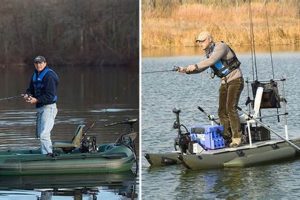
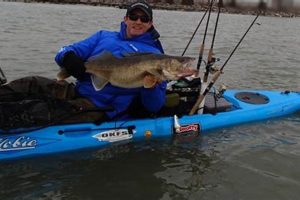
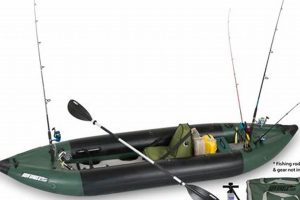
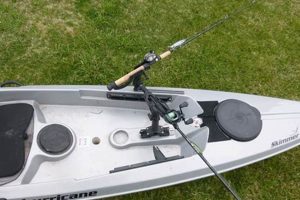
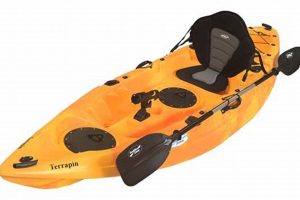
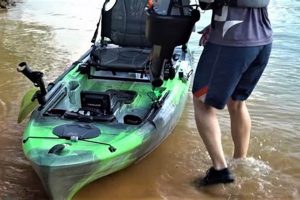
Specialized retailers offer a wide selection of equipment and vessels designed for anglers. These businesses typically provide everything from rods, reels, lines, and lures to specialized kayaks outfitted for fishing. A kayak designed for fishing often includes features like rod holders, storage compartments for tackle, and even anchor trolleys. For example, one might find a sit-on-top kayak with a high weight capacity and ample deck space ideal for navigating shallow waters and providing stability while casting.
Access to a comprehensive inventory of both equipment and watercraft offers significant advantages to fishing enthusiasts. It allows anglers to select the ideal combination of gear and vessel for their specific needs, whether targeting particular species or fishing in specific environments. Historically, anglers often had to source equipment and boats from separate vendors, potentially leading to compatibility issues or a less-than-optimal setup. The modern approach of combined retail streamlines the process, saving time and potentially improving the overall fishing experience.
This discussion will further explore the advantages of specialized fishing kayaks, including their design features, maneuverability, and suitability for various fishing styles. The selection and effective use of appropriate fishing gear will also be examined, highlighting the importance of matching rods, reels, and lines to the targeted fish species and fishing environment. Finally, the role of specialized retailers in providing expertise and guidance to anglers will be considered.
Essential Tips for Kayak Fishing
Effective kayak fishing requires careful planning and preparation. The following tips offer guidance for maximizing success and safety on the water.
Tip 1: Choose the Right Kayak: Kayak selection depends on the intended fishing environment and personal preferences. Sit-on-top kayaks offer stability and ease of entry/exit, making them suitable for calmer waters. Sit-inside kayaks offer better protection from the elements and greater speed, making them appropriate for larger bodies of water or colder climates.
Tip 2: Organize Tackle Effectively: Efficient tackle organization is crucial in the limited space of a kayak. Utilize tackle boxes with adjustable compartments and consider mounting rod holders for easy access to frequently used equipment.
Tip 3: Prioritize Safety Equipment: Always wear a personal flotation device (PFD). Carry a whistle, signaling device, and first-aid kit. Inform someone of your fishing plans, including location and expected return time.
Tip 4: Practice Paddle Strokes: Mastering efficient paddle strokes conserves energy and allows for precise maneuvering. Practice different strokes for forward propulsion, turning, and maintaining position in currents.
Tip 5: Understand Local Regulations: Familiarize oneself with fishing license requirements, catch limits, and any specific regulations for the area being fished.
Tip 6: Check Weather Conditions: Always check the weather forecast before heading out. Avoid fishing in thunderstorms, high winds, or fog. Be aware of changing conditions while on the water.
Tip 7: Respect the Environment: Practice Leave No Trace principles. Pack out all trash, avoid disturbing wildlife, and minimize impact on the natural environment.
By adhering to these guidelines, anglers can enhance their kayak fishing experience while prioritizing safety and environmental responsibility. Proper planning and preparation contribute significantly to a successful and enjoyable outing.
This information provides a foundation for successful kayak fishing. Subsequent sections will explore advanced techniques for specific species and environments.
1. Kayak Selection

Kayak selection represents a critical component within the broader context of “fishing tackle unlimited kayaks.” The choice of kayak directly influences an angler’s effectiveness, safety, and overall experience. Consider the cause-and-effect relationship: an improperly chosen kayak can limit access to desired fishing locations, hinder maneuverability, and compromise stability, all of which negatively impact fishing success. Conversely, a well-chosen kayak enhances the angler’s ability to navigate specific environments, present lures effectively, and manage fish landings safely. For example, a shorter, wider kayak provides greater stability for fishing in calm ponds or slow-moving rivers, while a longer, narrower kayak offers the speed and tracking necessary for traversing larger lakes or coastal waters. Selecting a kayak with appropriate storage capacity and strategically placed rod holders also directly influences tackle organization and accessibility.
The practical significance of kayak selection extends beyond mere convenience. Consider a fly fisherman targeting trout in a fast-flowing river. A sit-on-top kayak with a higher center of gravity might prove unstable in such conditions, potentially leading to capsizing and equipment loss. A sit-inside kayak designed for river running, however, offers the stability, maneuverability, and lower profile necessary for navigating challenging currents and approaching fish discreetly. Similarly, an angler pursuing large saltwater species requires a kayak with sufficient stability and storage capacity to handle heavy tackle and potential trophy catches. Ignoring these considerations can compromise safety and diminish the likelihood of success.
In summary, kayak selection acts as a cornerstone for effective and enjoyable kayak fishing. It requires careful consideration of the target species, fishing environment, and individual angler needs. Understanding the nuanced relationship between kayak selection and other components of the “fishing tackle unlimited kayaks” concept empowers anglers to make informed decisions, optimizing their fishing experience while prioritizing safety and efficiency.
2. Tackle Organization

Effective tackle organization represents a critical component of successful kayak fishing. Within the context of “fishing tackle unlimited kayaks,” efficient tackle management directly impacts an angler’s ability to quickly adapt to changing conditions and maximize fishing time. A disorganized kayak can lead to wasted time searching for essential gear, tangled lines, and lost opportunities. Conversely, a well-organized system streamlines the fishing process, allowing for seamless transitions between techniques and enhancing overall efficiency.
- Accessibility of Essential Gear
Rapid access to frequently used items like lures, hooks, and weights is paramount. Consider a scenario where an angler hooks a fish and needs to quickly change lures to match the prey’s feeding behavior. Fumbling through a disorganized tackle box wastes valuable time and can result in a lost fish. Utilizing compartmentalized tackle boxes, clear labeling systems, and strategically placed storage solutions within the kayak ensures essential gear remains readily accessible. This preparedness allows anglers to respond efficiently to changing conditions, maximizing their chances of success.
- Preventing Tangled Lines and Equipment Damage
Loose hooks, swivels, and lines can easily become entangled in the confined space of a kayak. Such tangles not only waste time but can also damage equipment and lead to frustration. Implementing line management systems, utilizing specialized tackle boxes with dividers and compartments, and securing loose items prevents tangles and protects valuable gear. This proactive approach preserves equipment integrity and contributes to a smoother, more enjoyable fishing experience.
- Maximizing Space Utilization
Kayaks offer limited storage space, necessitating efficient organization. Bulky or improperly stored tackle consumes valuable space and can impede movement within the kayak. Employing space-saving storage solutions like stackable containers, waterproof bags, and specialized kayak crates maximizes available space and ensures a clutter-free environment. This efficient space utilization allows anglers to carry a wider variety of tackle without compromising stability or maneuverability.
- Adaptability to Different Fishing Techniques
Anglers often employ various techniques throughout a single outing, requiring different tackle configurations. A well-organized system allows for seamless transitions between techniques, such as switching from trolling to bottom fishing. This adaptability is crucial for maximizing fishing versatility and responding effectively to changing fish behavior or environmental conditions. Modular tackle systems and clearly labeled storage compartments facilitate quick and efficient transitions, ensuring anglers remain prepared for any fishing scenario.
In conclusion, effective tackle organization contributes significantly to the overall success and enjoyment of kayak fishing. By optimizing accessibility, preventing tangles, maximizing space utilization, and facilitating adaptability, anglers can focus on the core elements of the “fishing tackle unlimited kayaks” concept: enjoying the sport and maximizing their catch potential. A well-organized kayak becomes an extension of the angler, enabling efficient and productive fishing experiences.
3. Safety Gear

Safety gear represents a non-negotiable aspect of “fishing tackle unlimited kayaks,” inextricably linked to responsible angling practices. The inherent risks associated with on-the-water activities necessitate a proactive approach to safety. Cause and effect relationships underscore this connection: neglecting essential safety precautions can lead to preventable accidents, injuries, or even fatalities. Conversely, prioritizing safety gear and procedures mitigates risks and promotes a secure environment for enjoyable fishing experiences. A properly fitted personal flotation device (PFD), for instance, can be the difference between a minor mishap and a life-threatening situation, especially in the event of capsizing or unexpected immersion in cold water. Similarly, carrying a communication device, such as a VHF radio or a waterproofed cell phone, enables anglers to call for assistance in emergencies.
Consider the scenario of an angler venturing into unfamiliar waters. Unforeseen hazards, such as submerged debris or sudden changes in weather, can pose significant risks. A readily accessible first-aid kit equipped to handle common fishing-related injuries, like hook punctures or line cuts, becomes invaluable in such situations. Furthermore, navigational tools, including a compass and GPS device, become essential for maintaining orientation and ensuring safe passage, especially in challenging conditions like fog or low visibility. Practical application of these principles underscores the importance of integrating safety gear into the “fishing tackle unlimited kayaks” concept. An angler drifting offshore might encounter strong currents or unexpected engine failure. Carrying a sea anchor allows for controlled drift and prevents the kayak from being swept out to sea, providing valuable time for rescue or self-recovery.
In summary, integrating appropriate safety gear into the “fishing tackle unlimited kayaks” framework is not merely a recommendation but a fundamental requirement. The potential consequences of neglecting safety protocols underscore the significance of this connection. Prioritizing safety enhances not only personal well-being but also the overall enjoyment and sustainability of the sport. Understanding the inherent risks associated with kayak fishing and adopting a proactive approach to safety ensures a responsible and fulfilling angling experience.
4. Paddle Techniques

Paddle techniques constitute a fundamental skill set within the “fishing tackle unlimited kayaks” framework. Effective paddling directly influences boat control, positioning, and stealth, all critical elements for successful angling. Inefficient or improper paddling techniques can spook fish, limit access to prime fishing locations, and compromise stability. Conversely, mastering essential paddle strokes enables anglers to navigate efficiently, maintain optimal positioning, and approach fish discreetly, maximizing opportunities for a successful catch.
- Forward Stroke
The forward stroke propels the kayak forward, serving as the foundation for efficient movement. A proper forward stroke utilizes core body rotation and engages larger muscle groups for sustained paddling. Consider a scenario where an angler needs to cover a significant distance to reach a promising fishing spot. A strong, efficient forward stroke conserves energy and minimizes travel time, allowing more time for actual fishing. Conversely, a weak or improper stroke wastes energy and prolongs travel time, potentially impacting fishing success. Within the context of “fishing tackle unlimited kayaks,” mastering the forward stroke enables anglers to reach desired locations efficiently, maximizing their time on the water.
- Reverse Stroke
The reverse stroke stops forward momentum and allows for controlled backward movement. This technique becomes crucial for maneuvering in tight spaces, avoiding obstacles, or backing away from snags. Imagine an angler navigating a narrow, debris-filled creek. The reverse stroke enables precise control, preventing collisions and potential damage to the kayak. In the broader context of “fishing tackle unlimited kayaks,” mastering the reverse stroke enhances maneuverability and safety, contributing to a more controlled and enjoyable fishing experience.
- Sweep Stroke
Sweep strokes facilitate turning and maneuvering. These strokes involve a wide, arcing motion, pivoting the kayak efficiently. Consider an angler needing to quickly change direction to follow a moving school of fish. A well-executed sweep stroke allows for rapid and controlled turns, keeping the angler positioned for optimal casting. Within the “fishing tackle unlimited kayaks” context, the sweep stroke enhances agility and responsiveness, essential for targeting mobile fish species.
- Draw Stroke
The draw stroke moves the kayak sideways, enabling precise positioning near structure or cover. This technique proves particularly useful for anglers targeting fish holding near docks, overhanging branches, or other shoreline features. A precise draw stroke allows the angler to maintain a close proximity to the target area without disturbing the fish. In the context of “fishing tackle unlimited kayaks,” the draw stroke provides a tactical advantage, enabling anglers to access difficult-to-reach fishing spots and present lures with greater accuracy.
Mastery of these fundamental paddle strokes forms the cornerstone of efficient and effective kayak fishing. Within the “fishing tackle unlimited kayaks” paradigm, proficient paddling enhances boat control, expands access to fishing locations, and improves stealth, ultimately maximizing angling success. By integrating these techniques into their skill set, anglers transform their kayak from a mere vessel into an extension of their angling prowess, enhancing the overall fishing experience.
5. Fishing Regulations
Adherence to fishing regulations represents a critical component within the “fishing tackle unlimited kayaks” framework. Regulations, encompassing licensing requirements, catch limits, size restrictions, and seasonal closures, function as safeguards for sustainable fisheries management. Cause-and-effect relationships underscore this connection: disregarding regulations can lead to overfishing, depletion of fish populations, and damage to aquatic ecosystems. Conversely, compliance with established rules contributes to the long-term health and viability of fish stocks, ensuring the enjoyment of the sport for future generations. For example, observing catch limits for a particular species prevents overharvesting, allowing the population to replenish naturally. Similarly, adhering to size restrictions protects younger fish, allowing them to reach maturity and contribute to the breeding population. Ignoring these regulations can disrupt the delicate balance of aquatic ecosystems and jeopardize the future of the fishery.
The practical significance of understanding fishing regulations extends beyond mere compliance. Consider an angler targeting a specific species in a designated conservation area. Awareness of specific regulations for that area, such as gear restrictions or designated no-fishing zones, becomes crucial for responsible angling. Using prohibited gear or fishing in restricted areas not only violates regulations but can also damage sensitive habitats and disrupt fish spawning grounds. Furthermore, possessing accurate knowledge of licensing requirements and seasonal closures ensures legal compliance and avoids potential penalties. For instance, an angler fishing for salmon during a closed season not only risks a fine but also undermines conservation efforts designed to protect spawning fish. Integrating an understanding of fishing regulations into the “fishing tackle unlimited kayaks” concept promotes ethical angling practices and contributes to the sustainability of the sport.
In summary, adherence to fishing regulations constitutes an integral aspect of responsible kayak fishing. The potential ecological consequences of non-compliance underscore the importance of this connection. Integrating a thorough understanding of applicable regulations into the “fishing tackle unlimited kayaks” framework ensures not only legal compliance but also contributes to the long-term health and sustainability of aquatic ecosystems. Respecting established rules and limits safeguards fish populations and preserves the enjoyment of the sport for future generations, reinforcing the ethical and environmental responsibility inherent in sustainable angling practices.
6. Weather Conditions
Weather conditions represent a crucial factor within the “fishing tackle unlimited kayaks” framework, directly influencing safety and fishing success. Cause-and-effect relationships underscore this connection: ignoring adverse weather can lead to dangerous situations, equipment damage, and unproductive fishing trips. Conversely, understanding and adapting to prevailing weather patterns enhances safety, optimizes fishing strategies, and contributes to a more enjoyable experience. For instance, strong winds can create challenging paddling conditions, especially for less experienced kayakers, increasing the risk of capsizing. Similarly, lightning storms pose a significant threat to anglers on open water. Conversely, recognizing favorable weather patterns, such as stable barometric pressure or optimal water temperatures, can significantly improve fishing success.
The practical implications of considering weather conditions extend beyond mere comfort. Consider an angler planning a multi-day kayak fishing trip. Consulting marine weather forecasts becomes essential for identifying potential hazards, such as approaching storms or high-wind advisories. This proactive approach allows for informed decision-making, including adjusting trip schedules, seeking alternative fishing locations, or postponing the outing altogether. Furthermore, understanding the influence of weather on fish behavior becomes a valuable asset. For instance, fishing during periods of stable weather and moderate temperatures often yields better results than fishing during extreme heat or cold, as fish activity levels fluctuate with environmental conditions. Integrating weather awareness into the “fishing tackle unlimited kayaks” concept empowers anglers to make informed decisions, optimizing their fishing strategy while prioritizing safety.
In summary, integrating weather awareness into the “fishing tackle unlimited kayaks” framework represents a cornerstone of responsible angling. The potential consequences of ignoring weather conditions underscore the importance of this connection. Prioritizing weather awareness contributes significantly to both safety and fishing success, ensuring a more informed and enjoyable experience. Understanding the dynamic relationship between weather patterns and angling outcomes empowers anglers to adapt their strategies, maximizing their chances of success while minimizing risks associated with unpredictable weather events.
7. Environmental Respect
Environmental respect represents a crucial ethical dimension within the “fishing tackle unlimited kayaks” framework. Responsible angling necessitates a mindful approach to minimizing environmental impact and preserving the integrity of aquatic ecosystems. The cause-and-effect relationship between human actions and environmental consequences underscores this connection: neglecting environmental considerations can lead to habitat degradation, pollution, and disruption of delicate ecological balances. Conversely, adopting environmentally conscious practices contributes to the long-term health and sustainability of aquatic environments, ensuring the enjoyment of the sport for future generations.
- Leave No Trace Principles
Adhering to Leave No Trace principles forms the foundation of environmentally responsible kayak fishing. These principles emphasize minimizing human impact by packing out all trash, avoiding disturbing vegetation, and respecting wildlife. Consider an angler discarding fishing line or plastic bait packaging in the water. This seemingly small act contributes to plastic pollution, endangering aquatic life and degrading water quality. Conversely, diligently collecting and disposing of all trash, even biodegradable materials, preserves the natural beauty and ecological integrity of the fishing environment. Within the context of “fishing tackle unlimited kayaks,” embracing Leave No Trace principles demonstrates a commitment to responsible stewardship and ensures the preservation of pristine fishing locations.
- Respecting Aquatic Habitats
Kayak fishing provides access to sensitive aquatic habitats, requiring careful navigation and mindful interaction with the environment. Dragging kayaks across shallow gravel beds, for instance, can damage fish spawning areas and disrupt delicate plant life. Similarly, anchoring in sensitive coral reefs can cause irreparable harm to these fragile ecosystems. Conversely, utilizing designated launch areas, employing proper anchoring techniques, and avoiding contact with sensitive habitats minimizes disturbance and preserves the ecological integrity of these areas. Within the “fishing tackle unlimited kayaks” framework, respecting aquatic habitats demonstrates an understanding of ecological interconnectedness and contributes to the long-term health of these valuable environments.
- Responsible Waste Disposal
Proper disposal of fishing-related waste, including used fishing line, discarded lures, and bait containers, represents a critical component of environmental respect. Improperly disposed fishing line can entangle wildlife, causing injury or death. Similarly, discarded lead sinkers and hooks can leach toxins into the water, posing a threat to aquatic organisms. Conversely, utilizing designated recycling bins for fishing line and properly disposing of other fishing waste minimizes environmental contamination and protects wildlife. In the context of “fishing tackle unlimited kayaks,” responsible waste disposal demonstrates a commitment to minimizing pollution and preserving the health of aquatic ecosystems.
- Promoting Conservation Awareness
Educating fellow anglers about environmental stewardship and promoting conservation awareness extends the impact of individual actions. Sharing best practices for minimizing environmental impact, advocating for responsible fishing regulations, and supporting conservation organizations amplifies the collective effort to protect aquatic resources. For example, an angler educating others about the importance of using barbless hooks not only reduces fish injury but also promotes a culture of conservation within the angling community. Within the “fishing tackle unlimited kayaks” framework, promoting conservation awareness fosters a sense of shared responsibility and contributes to the long-term sustainability of the sport.
In conclusion, integrating environmental respect into the “fishing tackle unlimited kayaks” concept elevates the sport beyond mere recreation, transforming it into a form of environmental stewardship. By embracing Leave No Trace principles, respecting aquatic habitats, practicing responsible waste disposal, and promoting conservation awareness, anglers contribute to the preservation of healthy and vibrant aquatic ecosystems. This mindful approach ensures the enjoyment of kayak fishing for future generations, reinforcing the interconnectedness between responsible angling and environmental sustainability.
Frequently Asked Questions
This FAQ section addresses common inquiries regarding the selection, use, and maintenance of fishing kayaks and associated tackle.
Question 1: What type of kayak is best suited for fishing in rivers?
Shorter, wider kayaks with a sit-on-top design generally offer superior stability and maneuverability in river environments. These features enhance control in currents and facilitate easier casting in confined spaces. Sit-inside kayaks, while offering greater protection from the elements, may prove less maneuverable in tight river bends or shallow, rocky areas.
Question 2: How does one choose the appropriate fishing rod and reel combination for kayak fishing?
Rod and reel selection depends on the target species and fishing techniques employed. Shorter rods, typically between 6 and 7 feet, offer better control and maneuverability within the confines of a kayak. For smaller fish species like panfish or trout, lighter rods and reels suffice. Larger game fish necessitate heavier rods and reels with higher line capacity.
Question 3: What essential safety equipment should always be carried on a fishing kayak?
Essential safety equipment includes a properly fitted personal flotation device (PFD), a whistle or other signaling device, a first-aid kit, and a communication device such as a VHF radio or waterproofed cell phone. A bilge pump, paddle leash, and throw rope also enhance safety. Informing someone of fishing plans, including location and expected return time, is also a critical safety precaution.
Question 4: How should fishing tackle be organized on a kayak to maximize efficiency?
Effective tackle organization utilizes compartmentalized tackle boxes, waterproof storage bags, and designated storage areas within the kayak. Prioritizing readily accessible storage for frequently used items like lures, hooks, and line minimizes time spent searching for gear and maximizes fishing time. Securing tackle boxes and other equipment prevents shifting during movement and potential loss overboard.
Question 5: What factors should be considered when choosing a fishing kayak paddle?
Paddle selection depends on factors such as kayak width, angler height, and paddling style. Longer paddles generally provide greater leverage and efficiency, while shorter paddles offer enhanced maneuverability in tight spaces. Lightweight paddles reduce fatigue during extended paddling sessions. Paddle material and blade shape also influence performance characteristics.
Question 6: What environmental considerations should kayak anglers prioritize?
Minimizing environmental impact involves adhering to Leave No Trace principles, packing out all trash, avoiding disturbance of aquatic vegetation and wildlife, and properly disposing of fishing line and other waste. Respecting designated fishing areas and adhering to catch limits and size restrictions ensures the sustainability of fish populations and preserves the natural environment.
Understanding these fundamental aspects of kayak fishing enhances safety, improves efficiency, and contributes to a more enjoyable and responsible angling experience.
The following section will delve into advanced techniques for specific fishing scenarios and target species.
Fishing Tackle Unlimited Kayaks
Exploration of the “fishing tackle unlimited kayaks” concept reveals the intricate interplay between equipment selection, angling techniques, and environmental stewardship. Careful consideration of kayak design, efficient tackle organization, and appropriate safety gear directly influence angling success and overall safety. Furthermore, adherence to fishing regulations and respect for aquatic ecosystems ensure the long-term sustainability of the sport. Mastery of paddling techniques and an understanding of weather patterns further enhance efficiency and safety on the water. Each component contributes to a holistic approach, optimizing the kayak fishing experience while minimizing environmental impact.
The future of kayak fishing hinges on the continued adoption of responsible angling practices. Prioritizing environmental awareness, promoting sustainable fishing techniques, and fostering a culture of respect for aquatic ecosystems will ensure the preservation of this rewarding pursuit for generations to come. Continued exploration of innovative kayak designs, advancements in fishing tackle technology, and a deepening understanding of fish behavior promise to further enhance the kayak fishing experience while upholding the principles of conservation and environmental responsibility. The “fishing tackle unlimited kayaks” concept, therefore, represents not merely a recreational activity but a commitment to responsible engagement with the natural world.