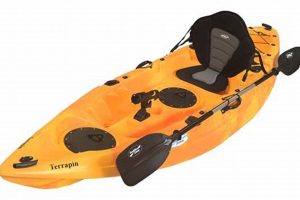
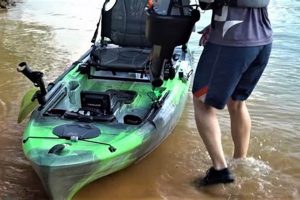
Small, human-powered watercraft designed for angling offer distinct advantages. Kayaks, characterized by their closed decks and paddle propulsion, provide maneuverability and stealth. Pontoon boats, relying on buoyant tubes and often incorporating an outboard motor, prioritize stability and load capacity. These vessels provide anglers with access to diverse fishing locations, from shallow coves to open waters.
Anglers appreciate the compact nature and portability of these craft, enabling access to secluded fisheries often unreachable by larger boats. Their smaller size contributes to a closer-to-nature experience, minimizing environmental impact and offering a quiet, personalized approach to fishing. This approach resonates with a growing awareness of sustainable angling practices. Historically, similar small vessels have been utilized for fishing for centuries, demonstrating the enduring appeal of this intimate connection with the water.
Further exploration will delve into specific features, advantages, and disadvantages of individual vessel types, enabling anglers to make informed decisions based on their individual needs and preferences. Topics to be covered include propulsion systems, hull designs, specialized fishing features, safety considerations, and the selection of appropriate gear.
Tips for Choosing and Using Small Fishing Vessels
Careful selection and proper utilization of small fishing vessels contribute significantly to a successful and enjoyable angling experience. The following tips offer guidance for both novice and experienced anglers.
Tip 1: Prioritize Stability and Maneuverability: Vessel stability is paramount for safety and effective casting. Maneuverability facilitates access to desirable fishing spots, particularly in confined areas. Consider the target fishing environment and choose a vessel offering an optimal balance.
Tip 2: Assess Weight Capacity: Account for the combined weight of anglers, gear, and potential catch. Exceeding the recommended weight capacity compromises stability and safety.
Tip 3: Consider Propulsion Options: Paddles offer quiet, environmentally friendly propulsion suitable for calm waters. Motors provide increased speed and range, beneficial for covering larger distances or contending with currents.
Tip 4: Evaluate Storage Capacity: Ample storage is essential for tackle, safety equipment, and personal belongings. Consider specialized storage solutions for rods, reels, and other fishing gear.
Tip 5: Emphasize Safety Equipment: Prioritize personal flotation devices, signaling devices, and navigation tools. Adherence to safety regulations ensures a secure and responsible angling experience.
Tip 6: Research Fishing Features: Specialized features, such as rod holders, livewells, and anchor systems, enhance angling efficiency. Evaluate the specific needs of the angler and choose a vessel offering suitable features.
Tip 7: Practice Proper Launching and Retrieval Techniques: Familiarize oneself with the proper techniques for launching and retrieving the vessel, ensuring smooth transitions and minimizing the risk of damage or injury.
Implementing these tips contributes to a safe, efficient, and rewarding fishing experience. Careful consideration of these factors empowers anglers to make informed decisions and maximize their time on the water.
The subsequent conclusion will synthesize the key information presented, reinforcing the importance of deliberate vessel selection and responsible angling practices.
1. Stability

Stability is a critical factor influencing the safety and effectiveness of fishing kayaks and pontoon boats. A stable vessel provides a secure platform for casting, reeling, and landing fish, while minimizing the risk of capsizing or tipping. Various factors contribute to vessel stability, impacting angler comfort and confidence on the water.
- Center of Gravity
A lower center of gravity enhances stability. Kayaks generally have a lower center of gravity than pontoon boats due to their design and seating position. Anglers in kayaks sit closer to the waterline, improving stability. Conversely, the elevated seating position on pontoon boats raises the center of gravity, potentially making them more susceptible to tipping, especially with uneven weight distribution. Maintaining a low center of gravity through mindful weight distribution is essential for both vessel types.
- Hull Design
Hull design significantly impacts stability. Kayaks typically feature a V-shaped or flat hull, offering varying degrees of stability and maneuverability. Wider, flatter hulls provide greater initial stability, while narrower, V-shaped hulls offer enhanced tracking and performance in rougher waters. Pontoon boats rely on multiple buoyant tubes to provide stability. The wider spacing between tubes enhances stability, while larger tube diameters increase buoyancy and load capacity. Understanding the relationship between hull design and stability is crucial for vessel selection.
- Water Conditions
Calm water conditions contribute to increased stability for both kayaks and pontoon boats. Wind, waves, and currents can significantly impact stability, particularly for smaller vessels. Kayaks, due to their lower profile, are generally less affected by wind than pontoon boats, which present a larger surface area. Anglers should exercise caution and adjust their fishing strategies based on prevailing water conditions. Awareness of potential hazards, such as boat wakes or rapidly changing weather, is essential for maintaining stability.
- Weight Distribution
Proper weight distribution plays a vital role in maintaining stability. Evenly distributing gear and passengers within the vessel minimizes the risk of tipping. In kayaks, keeping weight centered and low enhances stability. On pontoon boats, distributing weight evenly across the deck maintains balance. Shifting weight suddenly can destabilize the vessel, highlighting the importance of deliberate movements and secure storage of gear.
Ultimately, understanding the interplay of these factors allows anglers to make informed decisions regarding vessel selection and operation, prioritizing stability for a safe and enjoyable fishing experience. Evaluating stability characteristics in the context of intended fishing locations and conditions empowers anglers to choose the most suitable watercraft for their individual needs and preferences.
2. Maneuverability

Maneuverability is a crucial aspect of fishing vessel selection, directly impacting an angler’s ability to navigate diverse water environments and access prime fishing locations. Effective maneuvering enables anglers to position themselves strategically, respond to changing conditions, and explore a wider range of fishing opportunities. The following facets illuminate the components, examples, and implications of maneuverability within the context of fishing kayaks and pontoon boats.
- Vessel Length and Width
Shorter vessels generally offer enhanced maneuverability, particularly in tight quarters such as narrow creeks, shallow coves, and weed-choked areas. Kayaks, often shorter than pontoon boats, excel in these environments, allowing anglers to navigate intricate waterways with relative ease. Longer pontoon boats, while offering stability and space, may be less agile in confined spaces. Width also plays a role; narrower kayaks turn more quickly than wider ones, while wider pontoon boats sacrifice maneuverability for stability.
- Propulsion System
The propulsion system significantly influences maneuverability. Kayaks, propelled by paddles, offer precise control and the ability to change direction quickly. Pontoon boats, often equipped with outboard motors, provide greater speed and range but may sacrifice maneuverability in tight spaces. The size and power of the motor also affect turning radius and responsiveness. Electric trolling motors offer finer control than larger gas-powered outboards, enhancing maneuverability in shallow water and around structure.
- Hull Design
Hull design impacts tracking and turning performance. Kayaks with a pronounced keel or tracking fin tend to track straighter, requiring more effort to turn. Flat-bottomed kayaks turn more easily but may be less stable. Pontoon boats, due to their multiple hulls, have a larger turning radius than kayaks. The shape and configuration of the pontoons influence their responsiveness to steering input.
- Water Conditions
Water conditions, such as current, wind, and waves, can significantly impact maneuverability. Strong currents and winds can make maneuvering challenging, especially for smaller vessels. Kayaks, with their lower profile, are generally less affected by wind than pontoon boats. Pontoon boats, due to their larger surface area, may be more susceptible to drift in windy conditions. Anglers must adapt their maneuvering techniques based on prevailing conditions.
Considering these factors allows anglers to select a vessel that best suits their intended fishing environment and style. Balancing maneuverability with other essential characteristics, such as stability and capacity, ensures a safe and productive fishing experience. Prioritizing maneuverability empowers anglers to access diverse fishing locations and effectively target specific species, ultimately maximizing their angling success.
3. Propulsion
Propulsion methods significantly influence the fishing experience from small watercraft. Choosing an appropriate propulsion system impacts access to fishing grounds, angling techniques, and overall enjoyment. Understanding available options enables informed decisions aligned with individual needs and preferences.
- Paddle Power
Paddles offer a quiet, non-motorized approach well-suited to calm waters and stealth approaches. Kayak paddles, typically double-bladed, provide efficient propulsion and maneuverability. Varied blade shapes and lengths cater to diverse paddling styles and water conditions. Paddle propulsion fosters a closer connection with the environment, minimizing disturbance to fish and enhancing the immersive experience. However, it limits range and speed, restricting access to distant fishing spots, particularly against currents or wind.
- Pedal Drives
Pedal-powered systems provide a hands-free propulsion alternative, allowing anglers to maintain fishing readiness while navigating. Rotating pedals drive underwater fins or propellers, offering efficient and relatively quiet propulsion. This frees hands for casting and reeling, increasing angling efficiency. Pedal drives excel in calm to moderate conditions but may be less effective in strong currents or vegetation-dense areas. Maintenance and potential complexity are additional considerations.
- Electric Motors
Electric trolling motors offer enhanced speed and range, expanding access to fishing locations and facilitating navigation against currents or wind. Variable speed control allows for precise adjustments, catering to diverse fishing techniques. Quieter than gas-powered outboards, they minimize disturbance to fish and maintain a peaceful angling experience. However, battery life and charging requirements necessitate planning and potentially limit extended trips. Weight and mounting considerations influence vessel performance and stability.
- Gas Outboard Motors
Gas-powered outboard motors provide significant power and range, enabling access to distant fishing grounds and rapid movement across larger bodies of water. They offer versatility for various fishing styles, from trolling to quickly repositioning. However, they introduce noise and exhaust emissions, potentially impacting the angling experience and environment. Fuel consumption, maintenance requirements, and higher initial costs are additional factors to consider. Their size and weight may also influence vessel stability and maneuverability.
The choice of propulsion system fundamentally shapes the fishing experience from small watercraft. Carefully evaluating factors such as fishing style, target species, water conditions, and budget enables anglers to select the most appropriate propulsion method. Balancing speed and range with stealth, environmental impact, and cost considerations ensures a productive and enjoyable angling experience.
4. Capacity

Capacity, encompassing weight and storage, significantly influences the functionality and safety of fishing kayaks and pontoon boats. Understanding capacity limitations and optimizing utilization are crucial for a successful angling experience. Weight capacity dictates the maximum combined weight of anglers, gear, and potential catch the vessel can safely support. Exceeding this limit compromises stability, increasing the risk of capsizing or swamping. Storage capacity dictates the available space for tackle, safety equipment, and personal belongings. Adequate storage ensures essential gear remains readily accessible and protected from the elements.
Kayaks, typically designed for one or two anglers, offer limited weight and storage capacity compared to pontoon boats. Their compact design prioritizes maneuverability and portability over carrying large loads. Anglers utilizing kayaks must prioritize essential gear and minimize extraneous items. Weight distribution within the kayak significantly influences stability, requiring careful balancing. Pontoon boats, often accommodating larger groups and heavier loads, provide greater flexibility for gear and passengers. Their larger deck space and multiple storage compartments facilitate organized gear storage and transport. However, even with higher weight capacities, proper weight distribution remains essential for maintaining stability and optimal performance.
Careful consideration of capacity requirements is paramount when selecting a fishing kayak or pontoon boat. Evaluating anticipated loads, including the number of anglers, gear requirements, and potential catch weight, ensures safe and effective vessel operation. Prioritizing capacity appropriate to the intended fishing style and environment enhances angling success and overall enjoyment. Overlooking capacity limitations compromises safety and can lead to equipment damage or loss, highlighting the practical significance of understanding this critical aspect of vessel selection.
5. Portability

Portability significantly influences the accessibility and versatility of fishing kayaks and pontoon boats. Transporting these vessels to and from fishing locations presents logistical considerations impacting angling opportunities. Ease of transport expands access to diverse waterways, from remote ponds and secluded rivers to larger lakes and coastal areas. Kayaks, due to their lighter weight and compact design, often offer greater portability than pontoon boats. Many kayaks can be easily car-topped or transported using small trailers, enabling access to locations inaccessible to larger, trailered boats. This portability expands fishing opportunities, allowing anglers to explore a wider range of waterways and target specific species in diverse habitats. Inflatable kayaks further enhance portability, packing down into manageable sizes for storage and transport.
Pontoon boats, generally larger and heavier than kayaks, present greater transportation challenges. While smaller pontoon boats may be transported on trailers, larger models require specialized trailers and towing vehicles. This can limit access to certain fishing locations, particularly those with restricted launch sites or challenging terrain. Modular designs and detachable components enhance portability for some pontoon boat models, facilitating transport and storage. However, assembly and disassembly processes introduce additional time and effort considerations. The portability factor influences decisions regarding fishing locations and target species. Anglers seeking access to remote or difficult-to-reach areas may prioritize the portability of kayaks. Those prioritizing stability and capacity for larger groups may opt for the increased space and features of pontoon boats, accepting potential portability limitations.
Understanding the portability characteristics of each vessel type empowers anglers to make informed decisions aligned with their fishing preferences and logistical constraints. Evaluating transportation options, including vehicle compatibility, trailer requirements, and storage solutions, ensures efficient and convenient vessel transport. Balancing portability with other essential factors, such as stability, capacity, and propulsion, allows anglers to optimize their fishing experience. Prioritizing portability expands access to diverse fishing opportunities, ultimately enriching the angling experience and promoting exploration of new waterways.
Frequently Asked Questions
This section addresses common inquiries regarding the selection and use of small fishing vessels, offering concise and informative responses to facilitate informed decision-making.
Question 1: What are the primary advantages of fishing from a small, human-powered vessel compared to a larger motorized boat?
Smaller vessels offer access to shallow or confined waters often unreachable by larger boats, providing a closer-to-nature experience and minimizing environmental impact. Reduced operational costs and simplified maintenance contribute to their appeal.
Question 2: How does one determine the appropriate size and type of small fishing vessel?
Selection depends on individual needs and intended use. Factors include the number of anglers, target fishing locations, desired features, transportation constraints, and budget considerations. Research and comparison of various models are recommended.
Question 3: What safety precautions should be taken when fishing from a small vessel?
Wearing a personal flotation device is paramount. Carrying essential safety equipment, including a signaling device, first-aid kit, and navigation tools, is crucial. Checking weather forecasts before embarking and adhering to boating regulations enhance safety.
Question 4: What are the key differences in fishing experiences between a kayak and a pontoon boat?
Kayaks offer maneuverability and a closer connection with the water, suitable for calm conditions and individual anglers. Pontoon boats provide stability and capacity for larger groups or gear-intensive fishing styles, but may be less maneuverable in tight spaces.
Question 5: How does one maintain and store a small fishing vessel?
Regular cleaning and inspection prevent deterioration. Proper storage practices, including protection from sunlight and extreme temperatures, prolong vessel lifespan. Following manufacturer recommendations for specific maintenance procedures ensures optimal performance and longevity.
Question 6: What are the essential accessories for enhancing the fishing experience from a small vessel?
Essential accessories include rod holders, anchor systems, fish finders, livewells, and appropriate storage solutions for tackle and gear. Selection depends on individual fishing styles and target species. Prioritizing safety equipment remains paramount.
Careful consideration of these frequently asked questions empowers anglers to make informed decisions and enjoy safe and productive fishing experiences. Consulting with experienced anglers or retailers provides additional guidance tailored to specific needs.
Further sections will delve into advanced techniques and specialized equipment for optimizing angling success from small fishing vessels. Stay tuned for detailed explorations of specific fishing styles and target species.
Fishing Kayak or Pontoon
Careful consideration of vessel characteristicsstability, maneuverability, propulsion, capacity, and portabilityinforms appropriate selection. Matching these attributes to individual angling styles, target species, and fishing environments optimizes the angling experience. Whether leveraging the nimble maneuverability of a kayak or the stable platform of a pontoon boat, informed decision-making is paramount.
Ultimately, successful angling relies on a harmonious relationship between angler, equipment, and environment. Thoughtful vessel selection contributes significantly to this dynamic, enhancing both angling effectiveness and overall enjoyment. Continued exploration of advanced techniques and specialized equipment promises further refinement of this rewarding pursuit.