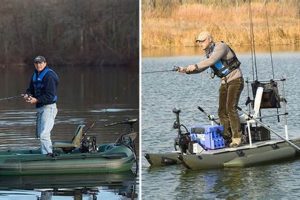
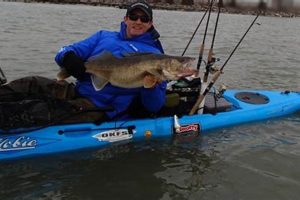
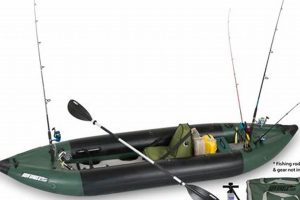
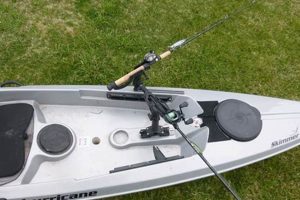
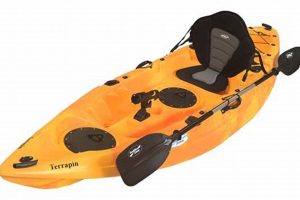
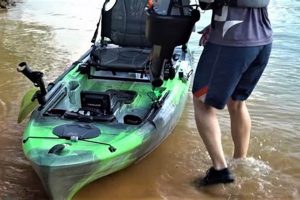
Choosing between a motorized vessel and a human-powered watercraft for angling presents distinct advantages and disadvantages. A larger, engine-driven craft offers speed, stability, and the capacity to carry substantial gear and multiple anglers over longer distances. Conversely, a smaller, paddle-powered vessel provides access to shallow, secluded waters, requires less financial investment, and offers a closer connection to the environment. The selection hinges on individual preferences, fishing style, target species, and budgetary constraints.
The dichotomy between these two approaches to fishing reflects a broader evolution in angling practices. Historically, fishing was primarily a means of sustenance, utilizing readily available materials and human power. As technology advanced, motorized boats revolutionized the industry, enabling commercial fishing on a larger scale and extending recreational fishing to deeper waters. However, the simplicity and affordability of human-powered watercraft retain their appeal, especially for anglers seeking a more intimate and environmentally conscious experience. This choice highlights the diverse nature of modern angling, catering to a broad spectrum of preferences and priorities.
This exploration will delve into the specifics of each option, considering factors such as cost, maintenance, fishability, environmental impact, and safety considerations to provide readers with a comprehensive understanding of the nuances involved in choosing the right vessel for their fishing needs.
Tips for Choosing Between a Fishing Boat and a Kayak
Selecting the appropriate watercraft for angling requires careful consideration of various factors. The following tips offer guidance for navigating this decision-making process.
Tip 1: Define Fishing Style and Target Species. Offshore angling for large pelagic fish demands the stability and range of a motorized boat. Conversely, targeting smaller species in shallow waters or rivers favors the maneuverability and stealth of a kayak.
Tip 2: Assess Budgetary Constraints. Motorized vessels entail significant upfront costs and ongoing expenses, including fuel, maintenance, and storage. Kayaks offer a more budget-friendly entry point to fishing.
Tip 3: Consider Transportation and Storage. Boats often require trailers and dedicated storage facilities, adding logistical complexity. Kayaks offer easier transport and storage options.
Tip 4: Evaluate Physical Capabilities and Experience. Kayaking requires a certain level of physical fitness and paddling skills. Operating a motorized boat necessitates specialized knowledge of navigation and safety regulations.
Tip 5: Prioritize Safety Considerations. Both options require adherence to safety protocols, including wearing appropriate life vests and carrying essential safety equipment. Motorized boats demand additional safety measures related to engine operation and navigation.
Tip 6: Factor in Environmental Impact. Kayaks offer a more environmentally friendly approach, minimizing noise and water pollution. Consider the environmental footprint when choosing a motorized vessel.
Tip 7: Research Local Regulations. Familiarize oneself with local fishing regulations and licensing requirements for both motorized and non-motorized watercraft.
By carefully weighing these considerations, anglers can select the watercraft best suited to their individual needs and preferences, maximizing their enjoyment and success on the water.
These insights should empower informed decision-making, leading to a more rewarding and sustainable fishing experience. The concluding section will synthesize these points, offering final recommendations for choosing the optimal fishing platform.
1. Capacity

Capacity, encompassing both passenger and gear volume, plays a pivotal role in the fishing boat versus kayak decision. Anglers must carefully evaluate their needs regarding the number of individuals and the quantity of equipment they intend to carry. This evaluation directly impacts comfort, safety, and overall fishing efficacy.
- Passenger Capacity
Fishing boats accommodate multiple passengers, often ranging from two to six or more, depending on the size and design of the vessel. This allows for group outings and shared experiences. Kayaks, primarily designed for individual use, limit passenger capacity to one or occasionally two with tandem models. This distinction influences social aspects and logistical planning for fishing trips.
- Gear Capacity
Fishing boats provide ample storage for rods, reels, tackle boxes, coolers, and other fishing accessories. Larger vessels may even include livewells and fish holds. This expanded capacity enables diverse fishing techniques and longer expeditions. Kayaks offer limited storage, necessitating careful selection of essential gear. Specialized kayak fishing models incorporate built-in rod holders and storage compartments to maximize space utilization.
- Weight Capacity
Weight capacity considerations encompass both passengers and gear. Exceeding the recommended weight limit for any vessel compromises stability and safety. Fishing boats typically possess higher weight capacities than kayaks, allowing for heavier loads and larger catches. Kayak anglers must meticulously balance weight distribution to maintain stability and prevent capsizing.
- Space and Comfort
Beyond sheer volume, available space and comfort influence the fishing experience. Fishing boats provide room for movement, seating, and shelter from the elements. Kayaks, by nature of their smaller size, offer less personal space. Anglers choosing kayaks prioritize maneuverability and access to confined waterways over comfort and expansive movement.
The capacity discrepancies between fishing boats and kayaks significantly impact the type of fishing pursued. Anglers seeking social fishing experiences, extended trips, or diverse fishing techniques often favor the greater capacity of a fishing boat. Those prioritizing solitude, access to shallow waters, and a minimalist approach benefit from the compact nature and maneuverability of a kayak. The optimal choice depends on individual preferences and specific fishing objectives.
2. Speed/Range

Speed and range represent critical factors differentiating fishing boats and kayaks. A fishing boat’s motorized propulsion enables rapid traversal of larger bodies of water and access to distant fishing grounds. This expanded range opens opportunities for diverse fishing experiences, from offshore deep-sea angling to exploring distant islands and coves. Conversely, kayaks rely on human power, limiting speed and range. This restriction confines kayak fishing primarily to calmer, smaller bodies of water, such as lakes, rivers, and sheltered coastal areas. While kayaks may not cover vast distances, their limited range encourages a slower, more deliberate approach to fishing, fostering a deeper connection with the immediate environment.
The impact of speed and range extends beyond mere distance covered. A fishing boat’s speed allows anglers to quickly relocate to more productive fishing spots based on changing conditions or real-time information. This adaptability enhances fishing success. Kayak anglers, constrained by slower speeds, must strategically plan their routes and fishing locations in advance, adapting to conditions within a more limited radius. Consider a scenario where fish are actively biting several miles offshore. Boat anglers can quickly reach this area, maximizing fishing time. Kayak anglers, however, would be unable to reach such distant locations efficiently. Conversely, navigating shallow, vegetated areas favors the kayak’s maneuverability, where a motorized boat’s larger size and deeper draft would prove impractical. Understanding these trade-offs becomes crucial for successful angling.
Ultimately, the choice between a fishing boat and a kayak hinges on prioritizing speed and range versus maneuverability and intimate engagement with the environment. Anglers seeking to cover large distances, access distant fishing grounds, and adapt quickly to changing conditions benefit from the speed and range offered by fishing boats. Those prioritizing a slower, more focused approach in calmer, shallower waters find kayaks more suitable. Recognizing the inherent limitations and advantages of each vessel in terms of speed and range empowers informed decision-making, leading to a more rewarding and productive fishing experience.
3. Maneuverability
Maneuverability represents a critical differentiator between fishing boats and kayaks, significantly impacting access to fishing grounds and overall angling effectiveness. Navigating tight spaces, shallow waters, and complex environments requires distinct capabilities. Understanding these nuances informs strategic decision-making when selecting between a motorized vessel and a human-powered watercraft for fishing.
- Shallow Water Access
Kayaks, with their shallow draft and compact design, excel in navigating shallow creeks, rivers, and backwater areas inaccessible to larger fishing boats. This advantage allows kayak anglers to target species inhabiting these environments and exploit secluded fishing spots. Conversely, fishing boats require deeper water for safe passage, limiting their access to such areas.
- Navigating Complex Structures
Kayaks’ maneuverability shines when navigating around fallen trees, submerged vegetation, and other obstacles commonly found in rivers and near-shore environments. Their agile nature allows for precise positioning and efficient movement within confined spaces. Fishing boats, due to their size and turning radius, face challenges in such environments.
- Current and Wind Resistance
Kayaks, propelled by human power, experience greater susceptibility to currents and wind than motorized fishing boats. Strong currents or headwinds can significantly impede progress and require greater physical exertion. Fishing boats, equipped with engines, easily overcome these challenges, offering greater control and stability in adverse conditions.
- Precision and Stealth
Kayaks’ smaller size and quiet operation offer superior stealth when approaching fish, particularly in clear, shallow water. This advantage allows anglers to get closer to their target without spooking them. Fishing boats, with their larger profiles and engine noise, may inadvertently alert fish, especially in shallower environments.
Maneuverability considerations directly influence the types of fishing environments accessible and the effectiveness of various angling techniques. Kayak anglers benefit from accessing shallow, complex environments, achieving precise positioning, and maintaining a stealthy approach, enhancing their chances of success in specific scenarios. While fishing boats may lack the same level of maneuverability in tight spaces, their ability to overcome currents, wind, and cover larger distances broadens their fishing range and adaptability to varied conditions. Ultimately, understanding these trade-offs allows anglers to choose the most suitable vessel for their targeted species and preferred fishing style.
4. Cost
Cost represents a significant factor influencing the decision between a fishing boat and a kayak. A comprehensive cost analysis extends beyond the initial purchase price, encompassing recurring expenses associated with ownership and operation. Understanding these financial implications proves crucial for informed decision-making and long-term budget planning.
- Initial Purchase Price
Fishing boats command substantially higher initial purchase prices than kayaks. The price range for fishing boats varies considerably based on size, features, and engine power. Kayaks, while significantly more affordable upfront, also exhibit price variations depending on materials, design, and included accessories. This initial investment represents a substantial financial commitment, particularly for boat ownership.
- Ongoing Maintenance and Repairs
Fishing boats require regular maintenance, including engine servicing, hull cleaning, and electronic system upkeep. These recurring costs contribute significantly to the overall ownership expense. Kayaks, with fewer mechanical components, demand less frequent and less costly maintenance, primarily involving cleaning and occasional repairs to minor damage. This disparity in maintenance requirements significantly impacts long-term affordability.
- Operational Costs
Operating a fishing boat incurs fuel costs, launch fees, and potential mooring or storage fees. These recurring operational expenses contribute significantly to the overall cost of boat ownership. Kayaks, requiring no fuel and minimal storage space, present significantly lower operational costs. This distinction in operational expenses influences the long-term financial commitment associated with each option.
- Accessories and Gear
Both fishing boats and kayaks necessitate specific accessories and gear. Fishing boats require safety equipment, navigation electronics, fishing rods, reels, and tackle. Kayaks necessitate paddles, life vests, and specialized fishing gear. While the cost of accessories and gear varies depending on individual preferences and fishing styles, these additional expenses contribute to the overall investment for both options. Careful consideration of essential gear within budget constraints proves crucial.
The cumulative cost of purchasing, maintaining, and operating a fishing boat significantly exceeds that of a kayak. While kayaks present a lower barrier to entry and reduced long-term expenses, fishing boats offer expanded capabilities and access to different fishing environments. A thorough cost analysis, considering both immediate and long-term financial implications, empowers informed decision-making aligned with individual budget constraints and fishing objectives. Choosing between a fishing boat and a kayak necessitates balancing financial resources with desired fishing experiences and long-term ownership commitments.
5. Maintenance

Maintenance requirements represent a crucial distinction between fishing boats and kayaks, impacting both the time commitment and financial investment associated with ownership. Regular upkeep ensures optimal performance, prolongs the lifespan of the vessel, and contributes significantly to safety on the water. Understanding the specific maintenance demands of each option informs responsible decision-making and ensures a sustainable approach to recreational fishing.
- Engine Maintenance
Fishing boats, equipped with combustion engines, necessitate regular engine servicing, including oil changes, filter replacements, and periodic tune-ups. These procedures require specialized knowledge or professional assistance, incurring associated costs. Kayaks, lacking motorized components, eliminate the complexities and expenses of engine maintenance entirely. This disparity in engine-related upkeep represents a significant differentiator in terms of both time commitment and financial investment.
- Hull Care and Cleaning
Both fishing boats and kayaks require regular cleaning to remove algae, barnacles, and other marine growth that can accumulate on the hull. Fishing boat hulls, often constructed from fiberglass or aluminum, may require waxing and polishing to maintain their finish and protect against corrosion. Kayak hulls, typically made from polyethylene or composites, require less intensive cleaning and maintenance. Diligent hull care preserves the vessel’s appearance, performance, and longevity.
- Storage and Winterization
Proper storage practices safeguard both fishing boats and kayaks from damage during periods of non-use, particularly during winter months. Fishing boats may require winterization procedures, including draining the engine and protecting sensitive components from freezing temperatures. Kayaks require less extensive winterization, primarily involving cleaning and storing them in a protected environment. Appropriate storage practices mitigate the risk of damage and extend the lifespan of the vessel.
- Repair and Replacement of Parts
Fishing boats, with their complex systems and mechanical components, present a higher likelihood of requiring repairs and part replacements compared to kayaks. Engine malfunctions, electrical issues, and damage to the hull or other structural components can lead to significant repair costs. Kayaks, due to their simpler construction, generally incur lower repair costs and require less frequent part replacements. This difference in repair frequency and cost contributes to the overall maintenance demands of each vessel type.
The disparity in maintenance requirements between fishing boats and kayaks directly correlates with the complexity and cost associated with each option. While fishing boats offer enhanced capabilities, they demand greater attention to maintenance, incurring both time and financial investment. Kayaks, offering simplicity and lower maintenance demands, appeal to those seeking a less demanding ownership experience. A thorough assessment of maintenance requirements ensures informed decision-making, aligning expectations with the long-term commitment associated with owning and operating each type of vessel.
6. Accessibility

Accessibility, in the context of fishing, encompasses the ease and convenience of transporting, launching, and storing watercraft. Significant differences exist between fishing boats and kayaks regarding these logistical considerations. Evaluating accessibility requirements informs practical decision-making based on individual circumstances and available resources. Factors such as vehicle type, storage space, and physical capabilities influence the practicality of each option.
- Transportation
Transporting fishing boats typically requires a trailer and a vehicle capable of towing. This necessitates appropriate towing capacity, trailer hitch installation, and adherence to traffic regulations for towing oversized loads. Kayaks, due to their smaller size and lighter weight, offer greater transport flexibility. Roof racks, trailers, or even inside transport within larger vehicles facilitate kayak transportation. This ease of transport expands access to diverse launch points and reduces reliance on specialized towing equipment.
- Launching
Launching a fishing boat often involves accessing boat ramps and navigating the complexities of maneuvering trailers in potentially crowded areas. This process can prove challenging, especially for novice boat owners. Kayaks, due to their lighter weight and simpler design, launch easily from various locations, including shores, docks, and even shallow water access points. This simplified launching process reduces logistical barriers and expands access to diverse fishing locations.
- Storage
Storing fishing boats necessitates dedicated space, either on a trailer in a driveway or yard, or in a designated boat storage facility. This storage requirement incurs associated costs and logistical considerations. Kayaks, due to their compact size, require minimal storage space. Garages, sheds, or even designated areas within a home easily accommodate kayak storage. This reduced storage footprint simplifies logistical planning and minimizes associated costs.
- Physical Demands
Handling and maneuvering fishing boats, particularly larger models, often requires considerable physical effort. Launching, retrieving, and docking larger boats may present challenges for individuals with physical limitations. Kayaks, while requiring physical exertion for paddling, generally present lower physical demands for transport and handling. This consideration becomes particularly relevant for individuals with limited mobility or strength. Choosing between a fishing boat and a kayak requires assessing individual physical capabilities and logistical constraints.
Accessibility considerations play a pivotal role in choosing between a fishing boat and a kayak. Evaluating transportation, launching, storage, and physical demands associated with each option allows anglers to select the vessel best suited to their individual circumstances and available resources. Balancing convenience, logistical feasibility, and personal capabilities ensures a more enjoyable and sustainable fishing experience.
7. Environmental Impact
The environmental impact of recreational fishing activities warrants careful consideration. Choosing between a fishing boat and a kayak presents distinct implications for ecological sustainability. Analyzing fuel consumption, noise pollution, habitat disturbance, and potential for water contamination reveals the environmental footprint associated with each option, guiding anglers toward more responsible practices.
- Fuel Consumption and Emissions
Fishing boats, reliant on combustion engines, consume fossil fuels, contributing to greenhouse gas emissions and air pollution. The scale of these emissions varies depending on engine size, age, and operational efficiency. Kayaks, powered by human energy, produce no direct emissions, offering a significantly lower carbon footprint. This difference in fuel consumption represents a key environmental consideration when choosing between motorized and human-powered watercraft.
- Noise Pollution
Motorized fishing boats generate noise pollution that disrupts aquatic ecosystems. Engine noise can interfere with marine animal communication, breeding patterns, and predator-prey interactions. Kayaks operate silently, minimizing noise pollution and its associated negative impacts on aquatic life. This contrast in noise levels underscores the ecological benefits of human-powered watercraft.
- Habitat Disturbance
Fishing boats, particularly larger vessels, can disturb sensitive habitats through propeller wash and physical contact with bottom structures in shallow areas. This disturbance can damage seagrass beds, coral reefs, and other vital ecosystems. Kayaks, with their shallower draft and smaller size, minimize habitat disturbance, allowing for less intrusive navigation in sensitive environments. This difference in physical impact highlights the ecological advantages of kayaks in preserving delicate aquatic ecosystems.
- Water Contamination
Fuel leaks, oil spills, and improper disposal of fishing gear from motorized boats contribute to water contamination, posing risks to aquatic life and human health. Kayaks, lacking fuel or oil systems, eliminate these contamination risks. Careful adherence to responsible fishing practices minimizes the potential for environmental damage associated with both vessel types, promoting sustainable angling for future generations.
Choosing between a fishing boat and a kayak presents a clear trade-off between convenience and environmental responsibility. While fishing boats offer speed, range, and capacity advantages, they incur a greater environmental cost. Kayaks, while limited in range and capacity, minimize environmental impact, offering a more sustainable approach to recreational fishing. Anglers must weigh these considerations carefully, selecting the vessel that aligns with their fishing objectives while minimizing their ecological footprint.
Frequently Asked Questions
This section addresses common inquiries regarding the choice between fishing boats and kayaks, providing concise and informative responses to facilitate informed decision-making.
Question 1: Which option is better for beginners?
Kayaks generally present a lower barrier to entry for beginners due to their simpler operation, lower cost, and easier accessibility. However, novice anglers should prioritize safety education and proper training regardless of vessel choice.
Question 2: What type of fishing is best suited for each vessel?
Kayaks excel in shallow water fishing, targeting species such as bass, panfish, and trout in rivers, lakes, and sheltered coastal areas. Fishing boats offer versatility for various fishing styles, including offshore angling, deep-sea fishing, and trolling in larger bodies of water.
Question 3: How does weather impact the choice between a fishing boat and a kayak?
Kayaks are more susceptible to wind and currents, limiting their use in adverse weather conditions. Fishing boats offer greater stability and control in rough waters but require careful navigation and adherence to safety protocols in challenging weather.
Question 4: What safety precautions should be considered for each vessel?
Essential safety precautions for both kayaks and fishing boats include wearing personal flotation devices, carrying communication devices, informing someone of fishing plans, and checking weather forecasts before embarking. Fishing boats require additional safety considerations related to navigation, engine operation, and adherence to boating regulations.
Question 5: What is the average lifespan of a fishing boat versus a kayak?
A fishing boat’s lifespan varies significantly depending on construction materials, maintenance practices, and usage. With proper care, a well-maintained fishing boat can last for several decades. Kayaks, typically constructed from durable polyethylene or composites, also offer considerable longevity with proper maintenance.
Question 6: Which option offers better value for the investment?
Determining value depends on individual priorities and fishing objectives. Kayaks offer a lower initial investment and reduced operating costs, providing excellent value for anglers seeking accessibility and affordability. Fishing boats represent a larger financial commitment but offer enhanced capabilities, extended range, and greater capacity, providing value for those prioritizing these features.
Careful consideration of these frequently asked questions empowers informed decision-making, aligning individual needs and preferences with the appropriate vessel for a safe and rewarding fishing experience.
This concludes the comparison of fishing boats and kayaks. The subsequent section will provide a summary of key findings and offer final recommendations.
Fishing Boat vs Kayak
The “fishing boat vs kayak” dilemma represents a fundamental decision for anglers. This exploration has highlighted the key differentiators between these two primary watercraft options. Factors such as cost, maintenance, accessibility, capacity, speed/range, maneuverability, and environmental impact contribute significantly to the decision-making process. Each vessel caters to distinct fishing styles, preferences, and budgetary considerations. Kayaks offer affordability, maneuverability, and a low environmental impact, ideal for anglers seeking a close-to-nature experience in calmer waters. Fishing boats provide greater capacity, speed, range, and stability, enabling access to diverse fishing grounds and accommodating larger groups. Ultimately, the optimal choice depends on a careful assessment of individual needs, priorities, and desired fishing experiences.
Choosing the appropriate fishing platform contributes significantly to both enjoyment and success on the water. A thorough understanding of the inherent advantages and limitations of each vessel type empowers informed decisions, fostering responsible angling practices and promoting sustainable interactions with aquatic environments. This knowledge equips anglers to make choices that maximize their fishing experience while minimizing environmental impact. The decision between a fishing boat and a kayak ultimately shapes the nature of one’s engagement with the aquatic world, influencing not only fishing outcomes but also the overall experience of connecting with nature.