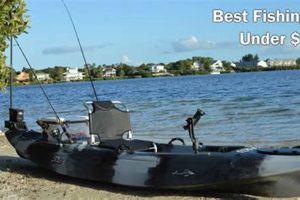
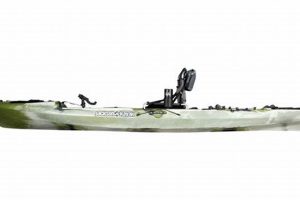
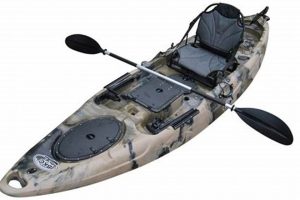
High-quality fishing kayaks are not necessarily expensive. Affordable options designed for angling often incorporate features such as rod holders, storage compartments, and comfortable seating. These kayaks prioritize stability and maneuverability, essential characteristics for a successful fishing experience. An example would be a sit-on-top kayak constructed from durable, lightweight materials, equipped with multiple rod holders and ample storage for tackle and gear, offered at a price point accessible to recreational anglers.
Selecting an affordable fishing kayak opens up opportunities for enjoying the sport without a significant financial investment. This accessibility allows more individuals to experience the tranquility and excitement of fishing from a kayak. Historically, fishing kayaks were specialized and expensive, but advances in manufacturing and materials have led to a wider range of affordable options, democratizing the activity and increasing its popularity. This availability encourages participation in outdoor recreation and promotes appreciation for natural environments.
The subsequent sections will explore key factors to consider when choosing an affordable fishing kayak, including hull design, materials, features, and reputable brands. This information empowers consumers to make informed decisions, balancing performance, durability, and budget constraints.
Tips for Selecting Affordable Fishing Kayaks
Acquiring a suitable fishing kayak on a budget requires careful consideration of various factors. The following tips offer guidance for selecting a kayak that balances performance, features, and affordability.
Tip 1: Prioritize Stability and Maneuverability: Stability is crucial for casting and reeling in fish, while maneuverability allows for efficient navigation through waterways. Shorter, wider kayaks generally offer greater stability, while longer, narrower kayaks excel in tracking and speed. Consider the intended fishing environment and choose a hull design that balances these attributes appropriately.
Tip 2: Evaluate Construction Materials: Durable materials contribute to the kayak’s longevity. High-density polyethylene (HDPE) offers a robust and affordable option, while lighter, more expensive materials like fiberglass or composites provide enhanced performance. Consider the trade-offs between cost, weight, and durability.
Tip 3: Assess Essential Features: Focus on essential features like rod holders, storage compartments, and a comfortable seat. Prioritize features directly related to fishing functionality over non-essential add-ons that might increase the cost. Consider adjustable seating for prolonged comfort.
Tip 4: Research Reputable Brands: Reputable brands often offer better quality control, warranties, and customer support. Researching established manufacturers ensures a higher likelihood of acquiring a reliable and durable kayak. Seek online reviews and compare offerings from different brands.
Tip 5: Consider Used Kayaks: Exploring the used kayak market can yield significant savings. Inspect used kayaks carefully for signs of damage or wear. Purchasing from a reputable seller or individual can mitigate risks associated with buying used equipment.
Tip 6: Think About Transportation and Storage: Factor in the kayak’s weight and dimensions when considering transportation and storage. Ensure adequate storage space and the ability to transport the kayak to and from fishing locations. Roof racks and kayak carts can facilitate transportation.
Tip 7: Set a Realistic Budget: Establish a firm budget before beginning the search. This prevents overspending and helps narrow down options. Factor in additional costs such as paddles, life vests, and fishing gear.
By carefully considering these tips, individuals can acquire affordable fishing kayaks that meet their specific needs and preferences, enabling them to enjoy the sport without exceeding budgetary constraints.
The following section will offer a concluding perspective on selecting the ideal affordable fishing kayak.
1. Stability

Stability forms a cornerstone of a positive fishing kayak experience, particularly crucial for budget-conscious consumers. Compromised stability negatively impacts casting accuracy, fish retrieval, and overall safety, especially in challenging conditions. A stable platform allows anglers to focus on fishing techniques rather than constantly correcting balance. For budget-friendly kayaks, stability is paramount as these kayaks often utilize simpler hull designs and lighter materials. For instance, a wider, flatter hull, commonly found in affordable recreational kayaks, enhances stability compared to a narrower, V-shaped hull designed for speed. This inherent stability makes these budget-friendly options suitable for calmer waters and less experienced paddlers.
The importance of stability is further magnified when considering the added weight and movement associated with fishing activities. Casting, reeling, and landing fish introduce dynamic forces that can destabilize a kayak. A stable platform minimizes these effects, enabling anglers to maintain balance and control. Consider the scenario of landing a larger fish; a stable kayak allows for maneuverability and leverage during the retrieval process, mitigating the risk of capsizing. This inherent stability translates directly to enhanced safety and a more enjoyable fishing experience, especially important for individuals new to kayak fishing and operating within budget constraints.
In conclusion, stability stands as a critical factor when selecting affordable fishing kayaks. Prioritizing stability ensures a safe, comfortable, and productive fishing experience. Understanding the relationship between hull design, materials, and stability empowers consumers to make informed decisions aligned with their budget and intended fishing environment. While features and accessories contribute to the overall fishing experience, a stable platform remains fundamental for all anglers, particularly those seeking cost-effective options. Investing in a stable, budget-friendly kayak lays the foundation for successful and enjoyable fishing excursions.
2. Maneuverability

Maneuverability plays a critical role in the value proposition of budget-friendly fishing kayaks. Efficient navigation through various water conditions directly impacts fishing success. A highly maneuverable kayak allows anglers to access secluded fishing spots, navigate tight corners in creeks and rivers, and adjust positioning quickly in response to changing currents or fish activity. Restricted maneuverability, conversely, limits access to prime fishing areas and hinders responsiveness, potentially diminishing the overall fishing experience. This factor assumes greater significance in budget-conscious selections where compromises on other features might be necessary. A highly maneuverable, affordable kayak compensates for potential limitations in other areas by maximizing on-the-water effectiveness.
Consider, for example, two anglers fishing in a river. One utilizes a highly maneuverable kayak, while the other uses a less agile model. The angler with the maneuverable kayak can effortlessly navigate shallows, position themselves upstream of promising eddies, and quickly adjust to changing currents. The other angler struggles to maintain optimal positioning, missing opportunities and expending more energy fighting the current. This difference in maneuverability directly translates to fishing success and enjoyment. For budget-conscious anglers, this highlights the importance of prioritizing maneuverability as a key feature. A more maneuverable kayak amplifies fishing potential, compensating for other feature compromises dictated by budgetary constraints.
Maneuverability in affordable fishing kayaks is often achieved through hull design and features like a rudder or skeg. Shorter kayaks generally offer greater maneuverability, especially in tight spaces, while longer kayaks excel in tracking and speed. Understanding the trade-offs between these design aspects allows informed decision-making aligned with specific fishing environments and preferences. While budgetary constraints might limit access to premium materials and advanced features, prioritizing maneuverability maximizes on-the-water efficiency and enhances the overall fishing experience, proving crucial for anglers seeking optimal value within a defined budget.
3. Durability

Durability represents a critical factor in the value proposition of budget-friendly fishing kayaks. Kayaks endure significant stress from transport, storage, and exposure to various environmental conditions. A durable kayak withstands these stresses, minimizing repair costs and extending its lifespan, essential considerations for budget-conscious consumers. Compromised durability leads to premature wear and tear, requiring costly repairs or replacements, negating the initial cost savings.
- Material Selection
The choice of material significantly impacts a kayak’s durability. High-density polyethylene (HDPE) offers a robust and affordable option, resistant to impacts and UV degradation. Lower-grade plastics, while potentially cheaper initially, compromise long-term durability, potentially leading to cracks, warping, and leaks. Investing in a kayak constructed from durable HDPE ensures long-term value and minimizes the risk of costly repairs, a critical factor in budget-oriented purchases.
- Construction Quality
Manufacturing processes and quality control significantly influence a kayak’s ability to withstand stress. Well-constructed kayaks feature reinforced seams, robust hull designs, and durable hardware. Poorly constructed kayaks, often characterized by flimsy components and inadequate sealing, become susceptible to leaks, structural failures, and premature wear. Scrutinizing construction quality, even within budget-friendly options, ensures long-term performance and minimizes the risk of unexpected repair expenses.
- UV Resistance
Exposure to sunlight degrades kayak materials over time. UV-resistant coatings and additives protect against fading, cracking, and weakening caused by prolonged sun exposure. Kayaks lacking adequate UV protection become brittle and prone to damage, shortening their lifespan. For budget-conscious buyers, UV resistance represents a crucial factor in ensuring long-term durability and minimizing replacement costs.
- Impact Resistance
Collisions with rocks, logs, and other obstacles are common occurrences in kayaking. A kayak’s ability to withstand impacts without sustaining significant damage is crucial for its longevity. Durable materials and robust construction minimize the risk of punctures, cracks, and other damage resulting from impacts. This resistance to damage translates to lower repair costs and a longer lifespan, essential considerations for budget-minded kayak anglers.
Prioritizing durability in the selection of a budget-friendly fishing kayak ensures long-term value and minimizes the risk of unexpected expenses. While initial cost remains a significant factor, opting for a durable kayak, even at a slightly higher price point, ultimately proves more economical over time. Careful consideration of material selection, construction quality, UV resistance, and impact resistance empowers budget-conscious consumers to make informed decisions that prioritize long-term performance and minimize the total cost of ownership.
4. Storage Capacity
Storage capacity represents a critical factor influencing the utility and overall value of budget-friendly fishing kayaks. Effective storage solutions directly impact organization, accessibility of essential gear, and the overall fishing experience. Limited storage capacity necessitates careful gear selection, potentially compromising preparedness for diverse fishing scenarios. Ample, well-designed storage, conversely, allows anglers to carry a wider range of tackle, tools, and safety equipment, enhancing adaptability and overall fishing effectiveness. This factor assumes heightened significance in budget-conscious selections where maximizing functionality within cost constraints is paramount.
- Tank Wells and Hatches:
Tank wells, typically located behind the seat, offer readily accessible storage for larger items like tackle boxes and coolers. Secure hatches protect gear from water and ensure it remains readily available. Budget-friendly kayaks often incorporate strategically placed tank wells and hatches to maximize storage capacity without significantly increasing cost. For example, a recessed tank well with a bungee cord securing system provides a cost-effective solution for storing a tackle crate, keeping essential gear within easy reach.
- Dry Storage Compartments:
Dry storage compartments, often integrated within the kayak’s hull, offer protected storage for sensitive items like phones, wallets, and cameras. These compartments prevent water damage and ensure valuables remain dry even in wet conditions. While larger, more expensive kayaks might offer multiple dry storage compartments, budget-friendly options often incorporate at least one strategically placed compartment, balancing cost and essential functionality. This allows anglers to protect essential items without exceeding budgetary limitations.
- Rod Holders and Storage:
Dedicated rod holders and storage solutions are essential for kayak fishing. Flush-mounted rod holders keep rods secure and out of the way when not in use, while adjustable rod holders allow for different fishing techniques. Budget-friendly kayaks often prioritize integrated rod holders as a cost-effective way to enhance fishing functionality. For example, molded-in rod holders offer a simple, durable, and affordable solution compared to more complex, adjustable systems found in higher-priced models.
- Bungee Cords and Deck Rigging:
Bungee cords and deck rigging provide versatile storage options for items like paddles, spare rods, and small gear bags. These systems offer quick access to frequently used items and secure storage for equipment not immediately needed. Budget-friendly kayaks often utilize simple yet effective bungee systems to maximize storage versatility without adding significant cost. A strategically placed bungee cord across the deck, for example, provides a secure and affordable solution for storing a spare paddle or a small dry bag.
Optimizing storage capacity in budget-friendly fishing kayaks maximizes functionality and enhances the overall fishing experience. While cost considerations might limit the size and complexity of storage solutions, thoughtful design and strategic placement of features like tank wells, dry compartments, rod holders, and bungee systems ensure anglers can carry essential gear efficiently. This balance between cost and functionality empowers budget-conscious anglers to maximize their on-the-water preparedness and enjoyment without exceeding budgetary constraints.
5. Essential Features

Essential features distinguish fishing kayaks from recreational models, directly impacting angling effectiveness and overall value, especially crucial for budget-conscious purchases. Prioritizing essential features ensures optimized functionality without incurring unnecessary costs associated with non-essential add-ons. Understanding these features empowers informed decision-making, aligning kayak selection with specific fishing needs and budgetary constraints.
- Rod Holders
Rod holders secure fishing rods, freeing hands for paddling, baiting, and other tasks. Multiple rod holders accommodate diverse fishing techniques and allow for carrying spare rods. Integrated, molded-in rod holders offer a cost-effective solution compared to adjustable or removable systems, making them a practical choice in budget-friendly kayaks. For example, two flush-mounted rod holders behind the seat provide convenient storage and quick access during fishing, enhancing angling efficiency without significantly increasing cost.
- Storage Compartments
Storage compartments accommodate tackle boxes, gear bags, and other essentials. Dry storage protects sensitive items from water damage, while accessible storage facilitates efficient gear management. Budget-friendly kayaks often incorporate strategically placed tank wells and hatches to maximize storage capacity without escalating cost. A sealed hatch in the bow, for example, offers protected storage for essential electronics and valuables, crucial for maintaining functionality in diverse weather conditions.
- Comfortable Seating
Comfortable seating enhances endurance and overall enjoyment during long fishing trips. Adjustable seating systems, while offering greater customization, often increase cost. Budget-friendly kayaks prioritize comfortable, molded-in seats that provide adequate support and cushioning without escalating price. A padded seat with adjustable footrests, for example, ensures basic comfort for extended periods, crucial for maximizing fishing time without compromising affordability.
- Paddle Holders/Leashes
Paddle holders or leashes secure paddles when not in use, preventing loss and minimizing interference during fishing. Simple bungee systems or integrated paddle clips offer cost-effective solutions compared to more complex retractable systems. These features ensure the paddle remains readily accessible while minimizing clutter, enhancing fishing efficiency without adding significant cost.
Selecting budget-friendly fishing kayaks necessitates careful consideration of essential features that directly impact on-the-water performance and overall value. Prioritizing rod holders, storage compartments, comfortable seating, and paddle securing mechanisms ensures optimized functionality without exceeding budgetary limitations. Focusing on these core features allows anglers to maximize their investment and enhance their fishing experience without incurring unnecessary costs associated with non-essential additions. Understanding the practical implications of these features empowers informed decision-making aligned with individual fishing needs and budgetary constraints.
6. Affordable Price

Affordability plays a pivotal role in the accessibility and overall value proposition of fishing kayaks. Budgetary constraints often dictate purchasing decisions, necessitating careful consideration of cost versus performance. Acquiring a quality fishing kayak without exceeding a predetermined budget requires strategic evaluation of features, materials, and construction. Balancing cost and performance ensures anglers maximize their investment, obtaining a kayak equipped for successful fishing excursions without incurring unnecessary financial burden.
- Defining “Affordable”
“Affordable” remains a subjective term, influenced by individual financial circumstances and purchasing priorities. Defining a realistic budget before commencing the kayak search establishes clear parameters and guides decision-making. This preemptive budgeting prevents overspending and focuses the search on kayaks within the designated price range. For example, an angler allocating $500 for a kayak narrows their search to options within that price bracket, excluding higher-priced models and streamlining the selection process. Recognizing the relativity of “affordable” empowers informed decision-making aligned with individual financial capacity.
- Cost vs. Features
Affordable kayaks often necessitate compromises on certain features compared to higher-priced models. Prioritizing essential features like rod holders, storage compartments, and comfortable seating, while potentially forgoing non-essential add-ons, ensures optimized functionality within budget limitations. For instance, an angler might choose a kayak with molded-in rod holders instead of adjustable track systems, accepting a trade-off in customization for cost savings. This strategic compromise maximizes value by focusing on essential features without exceeding budgetary constraints.
- Materials and Construction
Material selection significantly influences both cost and durability. High-density polyethylene (HDPE) offers a robust yet affordable option, balancing performance and longevity. While lighter, more advanced materials might offer performance advantages, HDPE provides sufficient durability for recreational fishing within a reasonable price range. Opting for HDPE allows budget-conscious consumers to acquire a durable kayak without the premium associated with higher-end materials. This strategic material selection ensures long-term value within budgetary limitations.
- Research and Comparison
Thorough research and comparison shopping empower informed purchasing decisions. Exploring various brands, models, and retailer offerings reveals price variations and potential discounts. Online reviews and kayak forums offer valuable insights into the performance and value of different kayaks within specific price ranges. This informed approach maximizes the likelihood of acquiring the best possible kayak within a defined budget, ensuring optimal value and performance.
Acquiring the best fishing kayak on a budget requires careful consideration of price in relation to essential features, materials, and construction. Defining “affordable,” prioritizing essential features, strategically selecting materials, and conducting thorough research empowers informed decision-making, ensuring optimal value and performance without exceeding budgetary constraints. Balancing these considerations leads to a satisfying purchase that aligns with both fishing needs and financial limitations, ultimately enhancing the overall fishing experience.
Frequently Asked Questions (FAQ)
The following addresses common inquiries regarding the selection and acquisition of budget-friendly fishing kayaks.
Question 1: What constitutes a reasonable budget for a quality fishing kayak?
A quality fishing kayak can be acquired within a budget of $500 to $1000. Factors influencing price include features, materials, and brand reputation. Thorough research and comparison shopping reveal optimal options within this range.
Question 2: Does an affordable price compromise performance or durability?
Not necessarily. Advancements in manufacturing and materials allow for durable, well-performing kayaks at accessible price points. Prioritizing essential features and researching reputable brands ensures optimal value within budget constraints.
Question 3: What essential features should one prioritize in a budget-friendly fishing kayak?
Focus on rod holders, storage compartments, and a comfortable seat. These features directly enhance fishing functionality without significantly increasing cost. Prioritize functionality over non-essential add-ons.
Question 4: Are used kayaks a viable option for budget-conscious buyers?
Used kayaks offer potential cost savings. Careful inspection for damage, wear, and necessary repairs ensures a worthwhile investment. Purchasing from reputable sellers mitigates potential risks associated with used equipment.
Question 5: How does one determine the appropriate kayak size and weight capacity?
Consider the angler’s weight, intended fishing environment, and anticipated gear load. Manufacturers provide weight capacity specifications. Adhering to these guidelines ensures safety and optimal performance.
Question 6: What additional costs should be factored into the budget beyond the kayak itself?
Essential accessories include a paddle, personal flotation device (PFD), and appropriate fishing gear. Factor these costs into the overall budget to accurately assess the total investment required.
Careful consideration of these frequently asked questions empowers informed decision-making, leading to the acquisition of a suitable fishing kayak aligned with both performance needs and budgetary parameters.
The subsequent section will offer concluding remarks on selecting the best fishing kayak for a limited budget.
Best Fishing Kayaks on a Budget
Acquiring the best fishing kayak on a budget requires a strategic approach balancing cost and performance. Careful consideration of factors like stability, maneuverability, durability, storage capacity, and essential features ensures a worthwhile investment. Prioritizing these elements, while remaining within budgetary constraints, yields a kayak optimized for enjoyable and productive fishing excursions. Compromises might be necessary, but focusing on core functionalities ensures a satisfying and efficient on-the-water experience. Thorough research, comparison shopping, and a clear understanding of individual needs empower informed decisions, maximizing value and long-term satisfaction. Used kayaks represent a viable option for cost savings, provided they undergo thorough inspection for damage and wear. Ultimately, balancing cost and performance yields a kayak suitable for diverse fishing environments and individual preferences.
The pursuit of affordable, high-quality fishing kayaks reflects the growing accessibility of this rewarding pastime. Continued advancements in kayak design and manufacturing promise even greater value and performance within budget-friendly price ranges. Empowered by informed decision-making, anglers can confidently explore diverse waterways, enjoying the tranquility and excitement of fishing from a kayak tailored to their individual needs and financial considerations. The accessibility of quality fishing kayaks opens doors to enriching outdoor experiences, fostering appreciation for natural environments and promoting a healthy, active lifestyle.