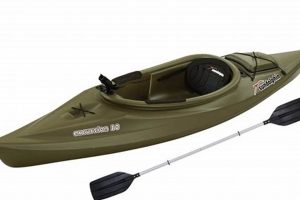
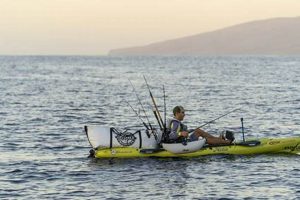
A secure, deployable system for stabilizing a small watercraft in a desired location is essential for anglers. This typically involves a weighted object, a length of rope or chain, and a method of attachment to the kayak. A simple example might include a grapnel anchor connected by rope to a cleat or anchor trolley system on the kayak.
Maintaining a stable position while fishing from a kayak significantly enhances angling success. A well-designed system prevents drift caused by wind, current, or tides, allowing anglers to focus on fishing techniques and target specific locations effectively. Historically, anglers have employed various methods to maintain position, evolving from simple weights to more sophisticated modern anchor systems. The development of specialized kayak anchors and mounting hardware reflects the increasing popularity of kayak fishing.
This article will explore various anchor types, deployment strategies, recommended hardware, and safety considerations relevant to effective anchoring for kayak fishing. Further sections will discuss the selection of appropriate anchor weights, rope materials, and storage solutions.
Tips for Effective Kayak Anchor Deployment
Proper anchoring technique is crucial for a safe and productive fishing experience. The following tips offer guidance for selecting and deploying an anchor system.
Tip 1: Match Anchor Weight to Kayak Size and Conditions. Heavier anchors are required for larger kayaks and stronger currents. Consider environmental factors like wind and water depth when selecting anchor weight.
Tip 2: Choose Appropriate Anchor Type. Grapnel anchors are versatile and suitable for most bottoms. Folding anchors offer compact storage. River anchors are designed for strong current.
Tip 3: Utilize an Anchor Trolley System. An anchor trolley allows adjustment of anchor position based on wind or current, minimizing kayak swing and maximizing fishing coverage.
Tip 4: Deploy Anchor from the Bow or Stern. Deploying from the bow offers stability in wind, while stern anchoring is preferable in current. Consider prevailing conditions when choosing deployment location.
Tip 5: Use Adequate Anchor Line. Anchor line length should be several times the water depth. This allows the anchor to set properly and provides flexibility in varying depths.
Tip 6: Secure the Anchor Line Properly. Utilize a cleat or quick-release mechanism to secure the anchor line. Ensure the attachment point is strong and easily accessible.
Tip 7: Practice Anchor Deployment and Retrieval. Familiarize oneself with the chosen system before venturing onto the water. Smooth deployment and retrieval contribute to efficient angling.
Adherence to these tips contributes to a stable, efficient, and secure anchoring experience, allowing for focused and uninterrupted fishing.
By understanding the nuances of anchor selection, deployment, and retrieval, anglers can maximize their time on the water and improve overall fishing success.
1. Anchor Choice

Anchor choice significantly impacts the effectiveness of a fishing kayak anchor setup. Selecting the appropriate anchor type hinges on several factors, including bottom composition, water conditions, and fishing style. An incorrect choice can lead to anchor drag, difficulty in retrieval, or even anchor loss, compromising fishing effectiveness and potentially posing safety risks. For instance, a lightweight mushroom anchor may prove inadequate in strong currents or rocky bottoms, whereas a heavier grapnel anchor might be excessively cumbersome for use in shallow, weedy areas. Understanding the characteristics of different anchor types is therefore essential for optimizing a fishing kayak anchor setup.
Several anchor types are commonly used in kayak fishing. Grapnel anchors, with their multiple flukes, excel in gripping a variety of bottom substrates, from rocks and weeds to sand and mud. Folding anchors, while generally less effective in holding power, offer the advantage of compact storage, a significant consideration given the limited space on a kayak. River anchors, specifically designed for strong current environments, provide superior holding power in flowing water. Furthermore, specialized kayak anchors, often incorporating features like collapsible flukes and increased surface area, are designed for optimal performance in kayak fishing scenarios. The selection process necessitates careful evaluation of the intended fishing environment and conditions.
Choosing the correct anchor type is fundamental to a successful fishing kayak anchor setup. This decision directly influences holding power, ease of deployment and retrieval, and overall fishing experience. Careful consideration of bottom conditions, current strength, and kayak size allows anglers to select an anchor that maximizes stability and minimizes disruption, contributing to a more productive and enjoyable fishing trip. Neglecting the importance of anchor choice can lead to frustration, lost fishing time, and potential safety hazards. A well-informed decision regarding anchor selection is thus an essential component of a comprehensive and effective fishing kayak anchor setup.
2. Anchor Line

Anchor line selection is integral to a functional fishing kayak anchor setup. The line connects the anchor to the kayak, transmitting the holding force and dictating the anchor’s interaction with the water body. Line properties influence deployment, retrieval, and overall anchoring effectiveness. An improperly chosen line can negate the benefits of even the best anchor, leading to issues like excessive drift, anchor loss, or difficulty in retrieval. For example, a line too thin may break under strain, while a line too thick adds unnecessary weight and bulk to the kayak.
Several factors govern anchor line selection. Material, diameter, and length each play a crucial role. Common materials include nylon, polypropylene, and polyethylene. Nylon offers high strength and elasticity, absorbing shock loads and reducing stress on the anchor system. Polypropylene, known for its buoyancy, helps prevent the line from snagging on underwater obstructions. Polyethylene provides a balance of strength and affordability. Line diameter dictates strength and holding capacity; thicker lines generally offer greater strength. Line length must accommodate water depth and potential changes in water level or current. Sufficient length allows the anchor to set properly and provides flexibility in positioning the kayak. In a tidal estuary, for instance, longer line accommodates changing water depths, while in a fast-flowing river, extra length allows the anchor to dig in effectively upstream.
Effective anchor line management contributes significantly to a secure and efficient fishing experience. Proper coiling prevents tangles and ensures smooth deployment and retrieval. Use of a dedicated anchor line storage system keeps the line organized and readily accessible. Regular inspection and maintenance of the anchor line, checking for wear or damage, proactively addresses potential failures. Understanding the nuances of anchor line selection and management is essential for maximizing the performance of a fishing kayak anchor setup. This knowledge contributes to a safer, more productive, and ultimately more enjoyable experience on the water.
3. Trolley System

A kayak anchor trolley system is a crucial component of an effective fishing kayak anchor setup, providing versatility and control over anchor position. It allows anglers to adjust the anchor’s connection point along the kayak’s length, optimizing boat positioning relative to wind, current, and fishing targets. Without a trolley system, kayak positioning becomes limited, potentially hindering fishing effectiveness and even posing safety risks in challenging conditions.
- Positional Adjustment
The primary function of a trolley system is to facilitate positional adjustments. By sliding the anchor connection point along the side of the kayak, anglers can control the angle of pull from the anchor. This allows for precise boat positioning, minimizing swing and maximizing fishing coverage of a specific area. For example, in windy conditions, adjusting the trolley allows the angler to position the kayak optimally for casting into the wind, maintaining stability, and preventing excessive drift.
- Controlled Drift
In certain fishing scenarios, controlled drift is desirable. A trolley system allows anglers to manage the drift speed and direction by adjusting the anchor connection point. This can be particularly advantageous when fishing along a shoreline or structure, allowing the angler to cover water methodically. By finely tuning the anchor’s pull, the kayak can be allowed to drift slowly downstream, presenting lures or bait naturally along a specific path.
- Improved Stability
A trolley system enhances kayak stability by distributing the anchor’s force along the hull. This reduces the likelihood of tipping or capsizing, especially in challenging conditions like strong currents or wind gusts. By adjusting the trolley position, anglers can optimize weight distribution and maintain balance, even in turbulent water. This is particularly important in larger kayaks or when fishing from a standing position.
- Simplified Retrieval
While primarily focused on deployment, a trolley system can also simplify anchor retrieval. By bringing the anchor connection point closer to the angler, retrieval becomes easier and less strenuous, particularly in deeper water or when using heavier anchors. This reduces the risk of strain or injury and contributes to a more efficient and enjoyable fishing experience.
The benefits of a trolley system directly contribute to an enhanced fishing experience from a kayak. By providing control over kayak position, drift speed, and stability, a trolley system allows anglers to focus on fishing technique and target selection, rather than constantly battling wind, current, or an unwieldy anchor. Its integration into a fishing kayak anchor setup elevates angling efficiency and safety, making it an invaluable asset for kayak anglers of all skill levels.
4. Deployment Strategy

Deployment strategy is a critical aspect of a fishing kayak anchor setup, directly influencing angling effectiveness and safety. Effective deployment involves a nuanced understanding of environmental factors, including wind, current, water depth, and bottom composition. A well-considered strategy ensures the anchor sets firmly, holds the kayak securely in the desired location, and minimizes disruptions to fishing activities. Conversely, a poorly executed deployment can lead to anchor drag, instability, and potentially hazardous situations.
Several deployment strategies cater to various fishing scenarios. In calm water with minimal current, a straightforward vertical drop suffices. However, in windy conditions or moving water, more advanced techniques become necessary. Deploying the anchor upstream in a river, for example, allows the current to assist in setting the anchor firmly. In windy conditions, positioning the anchor off the bow or stern minimizes kayak swing and maximizes stability. Water depth also dictates deployment; in shallow water, a shorter scope (ratio of anchor line to water depth) may suffice, while deeper water requires a longer scope to allow the anchor to dig in effectively. Matching deployment strategy to specific conditions is crucial for optimal anchoring performance.
A comprehensive understanding of deployment strategy contributes significantly to a successful and safe kayak fishing experience. This knowledge enables anglers to adapt to changing environmental conditions, maintain optimal kayak position, and minimize disruptions to fishing activities. Mastery of deployment strategies, coupled with appropriate anchor selection and line management, transforms the fishing kayak anchor setup from a simple collection of equipment into a finely tuned system that enhances angling efficiency and enjoyment.
5. Secure Attachment

Secure attachment points are fundamental to a reliable fishing kayak anchor setup. A secure connection between the anchor line and the kayak ensures effective anchoring, preventing unintentional release and potential loss of the anchor. The attachment point’s strength and reliability directly influence the overall safety and success of kayak fishing expeditions. Compromised attachment points can lead to equipment failure, disrupting fishing and potentially creating hazardous situations.
- Anchor Trolley System Integration
Integrating the anchor line with a trolley system allows dynamic positioning while maintaining a secure connection. The trolley system distributes the anchor’s load along the kayak’s length, minimizing stress on any single point. A properly installed trolley provides a robust and adaptable attachment solution, enhancing both fishing efficiency and safety.
- Cleat Selection and Placement
Cleats offer a quick and secure method for attaching anchor lines. Selecting appropriately sized cleats and positioning them strategically on the kayak ensures efficient line management and a strong connection. Cleats placed within easy reach allow for rapid adjustments and anchor retrieval. Durable, corrosion-resistant cleats are essential for long-term reliability in harsh marine environments.
- Carabiner and Quick-Release Mechanisms
Carabiners and quick-release mechanisms offer convenient anchor attachment and detachment options. High-strength, marine-grade carabiners provide a secure link between the anchor line and the kayak. Quick-release mechanisms allow for rapid anchor deployment and retrieval, a crucial feature in dynamic fishing situations or emergencies. Regular inspection of these components is essential to ensure continued reliability.
- Reinforced Attachment Points
Reinforcing attachment points on the kayak strengthens the connection and prevents failure under load. Adding backing plates or reinforcing existing attachment points distributes stress and improves durability. This is particularly important for kayaks subjected to challenging conditions, such as strong currents or rocky environments. Reinforcement enhances the overall integrity of the anchor setup, contributing to long-term reliability and safety.
The security of the anchor attachment point is integral to the overall effectiveness and safety of a fishing kayak anchor setup. A robust and reliable connection ensures the anchor performs as intended, holding the kayak securely in position while minimizing the risk of equipment failure. Careful selection and proper installation of attachment hardware contribute significantly to a successful and enjoyable kayak fishing experience.
6. Retrieval Method

Efficient anchor retrieval is a critical component of a well-rounded fishing kayak anchor setup. Retrieval method impacts not only the speed and ease of repositioning or concluding a fishing session but also overall safety and equipment longevity. A cumbersome retrieval process can lead to frustration, wasted fishing time, and potential damage to both the anchor system and the kayak itself. Smooth, efficient retrieval contributes to a more streamlined and enjoyable angling experience. For example, a tangled or snagged anchor line can necessitate time-consuming and potentially dangerous maneuvers to free it, jeopardizing both equipment and the angler.
Several factors influence the choice and effectiveness of anchor retrieval methods. Water depth, anchor type, anchor line material and length, and the presence of underwater obstructions all play a role. In shallow water, a simple vertical pull may suffice. However, deeper water or challenging bottom conditions may necessitate the use of a retrieval buoy, anchor retrieval system, or specialized techniques. A retrieval buoy, attached to the anchor line near the anchor, provides a convenient point to pull from, reducing strain and minimizing the risk of entanglement. Similarly, an anchor retrieval system uses a separate line and pulley to create mechanical advantage, facilitating retrieval of heavier anchors or those lodged in difficult terrain. Understanding these methods and adapting them to specific conditions is crucial for efficient and safe anchor retrieval. For instance, when fishing near coral reefs or heavy vegetation, a careful, controlled retrieval minimizes the risk of damaging the ecosystem or losing the anchor.
A streamlined retrieval process minimizes disruption to fishing activities and contributes to a more positive overall experience. Selecting an appropriate retrieval method, combined with diligent line management and regular equipment maintenance, ensures a swift and efficient conclusion to each fishing trip. Careful consideration of these factors optimizes the fishing kayak anchor setup, transforming what could be a frustrating chore into a seamless transition between fishing spots or back to shore. This attention to detail ultimately enhances angling enjoyment and promotes responsible kayak fishing practices.
7. Safety Considerations

Safety considerations are paramount when planning and implementing a fishing kayak anchor setup. Overlooking these aspects can lead to equipment damage, personal injury, or even life-threatening situations. A comprehensive understanding of potential hazards and preventative measures is essential for responsible kayak angling. For example, an improperly secured anchor line can entangle a paddler during a capsize, while an inadequate anchor in strong currents can lead to uncontrolled drift and collisions with obstacles. The connection between safety considerations and the anchor setup is inextricably linked; each decision regarding equipment selection, deployment strategy, and retrieval method impacts angler safety.
Several key safety considerations warrant attention. Always inspect equipment prior to each outing, ensuring anchors, lines, and attachment points are free from damage or wear. Carry a sharp knife or cutting tool readily accessible for quick release of the anchor line in emergencies. Understand and adhere to local boating regulations regarding anchoring. Communicate float plans to others, including intended fishing locations and estimated return times. Wearing a personal flotation device (PFD) is non-negotiable and can prove life-saving in a capsize or unexpected immersion. Furthermore, awareness of weather conditions and potential changes is crucial. Sudden shifts in wind or current can create hazardous situations, particularly for anchored kayaks. Adapting anchoring strategies to prevailing conditions and knowing when to retrieve the anchor and seek safer waters are essential skills for responsible kayak angling.
Prioritizing safety within a fishing kayak anchor setup transforms the activity from potentially hazardous to controlled and enjoyable. A proactive approach to risk management, combined with a thorough understanding of equipment and environmental factors, empowers anglers to make informed decisions and minimize potential hazards. This conscious integration of safety considerations enhances not only personal well-being but also the overall angling experience, fostering a culture of responsible kayak fishing.
Frequently Asked Questions
This section addresses common inquiries regarding fishing kayak anchor setups, providing concise and informative responses to facilitate informed decision-making and enhance on-the-water safety and efficiency.
Question 1: What type of anchor is most suitable for kayak fishing?
Anchor suitability depends on factors like bottom composition and current. Grapnel anchors offer versatility across various substrates. Folding anchors prioritize compact storage. River anchors excel in strong currents. Specialized kayak anchors often incorporate features optimized for small watercraft.
Question 2: How much anchor line is necessary for kayak fishing?
Line length should be several times the water depth to ensure proper anchor setting and accommodate depth fluctuations or current. Consider prevailing conditions and potential changes when determining appropriate length.
Question 3: What are the advantages of using an anchor trolley system?
Anchor trolley systems provide positional adjustment flexibility, enabling anglers to adapt to changing wind or current. This minimizes kayak swing, maximizes fishing coverage, and improves stability by distributing anchor force along the hull. Trolleys also simplify anchor retrieval.
Question 4: How does one choose the correct anchor weight?
Anchor weight selection depends on kayak size, environmental conditions, and anticipated fishing locations. Larger kayaks and stronger currents necessitate heavier anchors. Consider wind, water depth, and bottom composition when selecting appropriate weight.
Question 5: What safety precautions should one take when anchoring a fishing kayak?
Essential safety precautions include equipment inspection prior to each outing, carrying a cutting tool for emergency anchor line release, adhering to local boating regulations, communicating float plans, wearing a PFD, and monitoring weather conditions for potential changes. Adapting anchoring strategies to prevailing conditions is crucial for safe kayak angling.
Question 6: What are common mistakes to avoid when setting up a kayak anchor?
Common errors include using inadequate anchor weight, insufficient anchor line length, neglecting anchor trolley system benefits, improper anchor deployment strategies, insecure attachment points, and inefficient retrieval methods. Addressing these potential pitfalls enhances safety and fishing effectiveness.
Understanding these fundamental aspects of fishing kayak anchor setups enhances angling safety, efficiency, and overall enjoyment. Careful consideration of these elements contributes to a more productive and rewarding on-the-water experience.
The subsequent section will delve into specific product recommendations and reviews for various components of a fishing kayak anchor setup.
Conclusion
Effective anchoring is paramount for successful kayak fishing. This article explored key aspects of fishing kayak anchor setups, emphasizing the interconnectedness of anchor selection, line management, trolley systems, deployment strategies, secure attachment, retrieval methods, and safety considerations. Each element contributes significantly to overall system performance, influencing stability, efficiency, and angler safety. Understanding these components empowers anglers to tailor their setups to specific fishing environments and conditions, maximizing both productivity and enjoyment on the water. From selecting the appropriate anchor type and weight for a given substrate and current to employing efficient deployment and retrieval techniques, a well-planned anchor setup minimizes disruption and allows for focused angling.
Mastery of a fishing kayak anchor setup elevates the angling experience from one of potential frustration to one of controlled precision and enhanced enjoyment. Continuous refinement of anchoring techniques, coupled with a commitment to safety protocols, contributes not only to individual angling success but also to the broader culture of responsible kayak fishing. As kayak angling continues to grow in popularity, prioritizing safe and effective anchoring practices ensures the sustainability and enjoyment of this rewarding pursuit for generations to come.