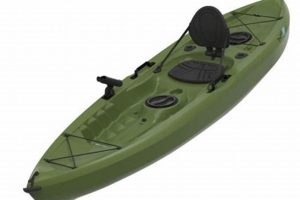
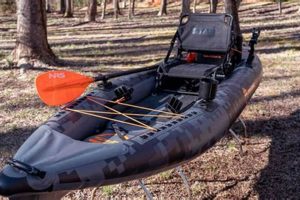
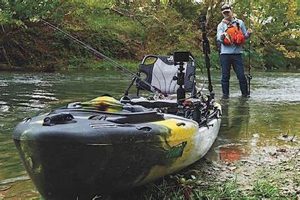
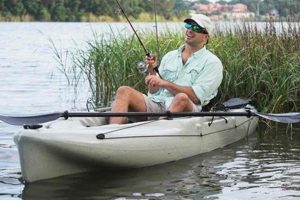
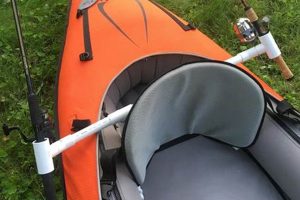
This specific model is a sit-on-top vessel designed for angling. Characterized by its compact size and stability, the design prioritizes maneuverability in calm waters, such as ponds, lakes, and slow-moving rivers. Common features often include molded-in rod holders, storage compartments, and a comfortable seating system.
Smaller kayaks like this one offer advantages for anglers seeking portability and ease of use. Their lighter weight simplifies transport and launch, making them suitable for individuals with limited storage space or those who prefer to fish in less accessible locations. The shorter length contributes to enhanced maneuverability, allowing anglers to navigate tight spaces and respond quickly to changing fishing conditions. This type of watercraft often serves as an entry point for individuals new to kayak fishing.
The subsequent sections will delve further into specific design elements, performance characteristics, and potential drawbacks of compact fishing kayaks, offering a detailed analysis for prospective buyers. Topics covered will include stability, tracking, storage capacity, and recommended accessories. Furthermore, comparisons with similar models will provide valuable context for evaluating the overall suitability and value proposition of smaller fishing kayaks in this category.
Tips for Small Kayak Fishing
Proper preparation and technique enhance the fishing experience, particularly with smaller kayaks. These tips focus on optimizing stability, safety, and angling success.
Tip 1: Weight Distribution: Balanced loading is crucial for stability. Gear should be distributed evenly, with heavier items placed low and centrally. Avoid overloading, as this compromises stability and maneuverability.
Tip 2: Paddle Selection: A paddle of appropriate length and blade shape improves efficiency and reduces fatigue. Shorter paddles are generally recommended for smaller kayaks.
Tip 3: Safety Gear: A personal flotation device (PFD) is essential. A whistle, signaling device, and basic first-aid kit should also be carried. Check local regulations for required safety equipment.
Tip 4: Anchor System: A lightweight anchor and appropriate line help maintain position in windy conditions or when fishing in current. Ensure the anchor trolley or cleat is properly installed.
Tip 5: Fishing Gear Organization: Keeping fishing rods, tackle, and other gear organized maximizes space and efficiency. Utilizing rod holders, tackle boxes, and storage compartments is essential.
Tip 6: Practice Launching and Landing: Practicing launch and landing techniques in shallow, calm water builds confidence and reduces the risk of capsizing, especially in challenging conditions.
Tip 7: Weather Awareness: Check weather forecasts before heading out and avoid fishing in adverse conditions such as strong winds, lightning, or rough waters. Smaller kayaks are particularly susceptible to wind and waves.
Adhering to these guidelines enhances safety and fishing success. Planning and preparation contribute significantly to an enjoyable and productive experience on the water.
The following section will offer a comprehensive conclusion, summarizing the key points discussed and providing final recommendations for individuals considering a compact fishing kayak.
1. Compact Size

The compact size of the Old Town 106 fishing kayak is a defining characteristic that significantly influences its suitability for specific angling scenarios and user demographics. This characteristic directly impacts transportability, storage, maneuverability, and overall user experience. Understanding the implications of this compact design is crucial for prospective buyers.
- Transportation and Storage
The shorter length and lighter weight of the 106 simplify transport on vehicle roof racks or in truck beds. Its smaller footprint requires less storage space in garages or sheds. This portability expands access to diverse fishing locations, particularly those inaccessible to larger vessels. For individuals with limited storage or transport capacity, the compact size presents a significant advantage.
- Maneuverability
The shorter hull length enhances maneuverability in confined spaces, such as narrow creeks, shallow coves, and areas with dense vegetation. This agility allows anglers to navigate tight turns and quickly reposition for optimal casting angles. In environments where precision and responsiveness are crucial, the compact size offers a distinct benefit.
- Stability vs. Capacity
While the 106’s compact dimensions contribute to stability, they also limit weight capacity and onboard storage. This factor influences the amount of gear and the size of anglers the kayak can comfortably accommodate. Understanding this trade-off between stability and capacity is crucial for selecting appropriate gear and ensuring a safe and balanced fishing experience. Individuals seeking to carry substantial amounts of gear or larger fishing companions may find the limited capacity a constraint.
- Suitability for Calm Water
The 106’s compact size makes it well-suited for calm water environments like ponds, lakes, and slow-moving rivers. Its design prioritizes stability and maneuverability over speed and tracking in open water or rough conditions. Anglers targeting species in these calmer settings will find the 106’s compact design advantageous. However, individuals seeking a kayak for larger bodies of water or challenging conditions may find its performance limitations a drawback.
The compact size of the Old Town 106 presents a combination of advantages and limitations that directly impact its suitability for various fishing scenarios. Careful consideration of these factors, including transportation, maneuverability, capacity, and target fishing environment, is essential for making an informed purchase decision. Comparing the 106’s dimensions and capabilities with other kayak models further clarifies its position within the broader market and helps determine its suitability for individual angling needs.
2. Sit-on-top Design

The Old Town 106 fishing kayak utilizes a sit-on-top design, a key feature influencing its functionality and target user. This design choice offers several advantages and disadvantages compared to traditional sit-inside kayaks, impacting stability, ease of entry and exit, and overall fishing experience. The open cockpit allows for greater freedom of movement, facilitating casting and reeling. Self-bailing scupper holes contribute to inherent buoyancy and dryness, even in choppy conditions or after a splash. This design is particularly suited to warmer climates and calmer waters, where accidental submersion presents less risk. The sit-on-top configuration makes re-entry easier after a swim, a significant safety consideration. An angler unexpectedly overboard can quickly and easily remount the kayak.
However, the sit-on-top design also presents limitations. Anglers are exposed to the elements, lacking the protection from wind and spray offered by sit-inside kayaks. This exposure can be uncomfortable in colder conditions or during extended periods on the water. While scupper holes drain water, anglers often still get wet from splashes or paddling. The open cockpit provides less storage for gear compared to sit-inside models. This constraint requires careful gear selection and organization, especially for longer fishing trips. Despite these drawbacks, the sit-on-top design provides distinct advantages for certain types of fishing and user preferences. For anglers prioritizing stability, ease of access, and freedom of movement, particularly in warm and calm waters, this design offers significant benefits.
In conclusion, the sit-on-top design of the Old Town 106 directly contributes to its accessibility for beginners and suitability for recreational fishing. The ease of entry and exit, enhanced stability, and self-bailing capabilities create a user-friendly experience, particularly in calmer waters. While considerations regarding weather protection and storage limitations exist, the inherent advantages of the sit-on-top design align with the intended purpose and target user of this specific kayak model. Understanding this design choice and its implications is fundamental for prospective buyers evaluating the Old Town 106 against alternative kayak configurations.
3. Stability

Stability is a critical performance characteristic of the Old Town 106 fishing kayak, directly influencing angler comfort, safety, and fishing effectiveness. Several design elements contribute to the 106’s stability profile. The relatively wide hull provides a stable platform, particularly beneficial for novice kayakers or those fishing in challenging conditions. The sit-on-top design further enhances stability by lowering the center of gravity. This design allows anglers to sit higher, promoting a more balanced and secure feel. The hull design typically incorporates chines, which are angled edges along the bottom of the hull. Chines enhance stability by increasing the kayak’s resistance to tipping, particularly during turns or when encountering waves or wakes.
Enhanced stability facilitates various fishing activities. Standing to cast or sight fish becomes less precarious, expanding angling possibilities. The stable platform also simplifies tasks like landing fish, changing lures, and operating electronics. For anglers who prioritize comfort and security, particularly those new to kayak fishing, the 106’s stability offers significant advantages. For example, an angler can confidently stand to cast in shallow water without fear of capsizing, or quickly shift positions to fight a hooked fish without destabilizing the kayak.
While the 106 exhibits commendable stability for its size, certain limitations exist. Its compact size renders it more susceptible to wind and waves compared to larger, heavier kayaks. Overloading the kayak with gear or exceeding its weight capacity can compromise stability. Understanding these limitations and operating the kayak within its intended parameters is crucial for maintaining a safe and stable fishing experience. Therefore, while the 106 excels in calm water environments, caution is advised in windy conditions or rough waters. Careful weight distribution and adherence to manufacturer recommendations are essential for maximizing stability and ensuring angler safety.
4. Maneuverability
Maneuverability is a defining characteristic of the Old Town 106 fishing kayak, significantly impacting its suitability for various fishing environments and techniques. The kayak’s ability to navigate tight spaces, change direction efficiently, and respond effectively to changing water conditions directly influences angling success. Several design elements contribute to the 106’s maneuverability profile, impacting its performance in different on-the-water scenarios.
- Hull Design and Length
The 106’s shorter hull length contributes significantly to its maneuverability. The shorter the kayak, the easier it is to turn and navigate tight spaces. This characteristic is particularly advantageous when fishing in narrow creeks, maneuvering around vegetation, or targeting fish in confined areas. The hull design itself, often featuring a shallow-V or flat bottom, also plays a role in turning responsiveness.
- Rudder vs. Skeg
The Old Town 106 typically does not come equipped with a rudder or skeg. While a rudder offers enhanced directional control, especially in windy conditions, its absence on the 106 further contributes to its maneuverability by reducing drag and maintaining a lighter, more responsive feel. A skeg, while aiding tracking in open water, can hinder maneuverability in tight spaces. The lack of either system prioritizes agility in calmer waters, where the 106 is intended to perform optimally.
- Weight and Waterline Length
The 106’s lighter weight contributes to its nimble handling and responsiveness. Combined with the shorter waterline length inherent in its compact size, the kayak requires less effort to accelerate, decelerate, and change direction. This characteristic is beneficial for anglers who frequently reposition or need to react quickly to fish activity.
- Impact on Fishing Techniques
The 106’s maneuverability is well-suited to certain fishing techniques. Casting accuracy and precision benefit from the ability to easily adjust positioning. Techniques requiring frequent repositioning, like flipping and pitching or sight fishing, are enhanced by the kayak’s nimble handling. However, the 106’s maneuverability-focused design might be less suited for trolling or covering long distances in open water, where tracking performance becomes more critical.
The Old Town 106’s maneuverability is a key strength, directly influencing its suitability for specific fishing environments and techniques. The interplay between hull design, length, weight, and the absence of a rudder or skeg contributes to its agile and responsive handling. While this design prioritizes maneuverability over tracking performance in open water, it makes the 106 an excellent choice for anglers seeking nimble navigation in calmer, more confined waters.
5. Molded-in Rod Holders

Molded-in rod holders are integral components of the Old Town 106 fishing kayak, designed to securely hold fishing rods while anglers engage in other activities, such as paddling, adjusting tackle, or landing fish. These integrated holders are typically positioned strategically throughout the kayak to accommodate various fishing styles and preferences. Their incorporation directly influences angling efficiency, safety, and overall fishing experience. Unlike removable rod holders, molded-in versions offer a permanent, more robust solution, eliminating concerns about detachment or repositioning during use. This integration streamlines the fishing process, allowing for quick transitions between paddling and casting, and reducing the risk of losing or damaging rods. For example, an angler trolling can securely store a second rod in a molded-in holder, ready for immediate use when a fish strikes.
The positioning of molded-in rod holders impacts their practical utility. Flush-mounted holders keep rods closer to the kayak’s deck, minimizing interference with paddling and reducing the likelihood of snagging overhead branches. Angled rod holders, positioned towards the rear of the kayak, facilitate trolling or still-fishing techniques, allowing lines to trail freely behind the vessel. The quantity of molded-in holders also influences fishing versatility. Multiple holders accommodate different rod setups, allowing anglers to quickly switch between techniques or target various species without needing to re-rig. For instance, having two angled holders at the rear allows for trolling two lines simultaneously, maximizing fishing coverage. Furthermore, the robust nature of molded-in rod holders provides a secure mounting point for rod leashes or other safety devices, preventing rod loss in the event of a capsize or unexpected strike.
Understanding the function and strategic placement of molded-in rod holders enhances fishing effectiveness and safety. The integration of these holders within the Old Town 106’s design reflects a focus on practical angling functionality. By providing secure and accessible rod storage, molded-in holders contribute significantly to a more streamlined and efficient fishing experience. Consideration of rod holder placement and quantity is crucial when evaluating the 106’s suitability for specific fishing styles and individual preferences. This understanding, combined with appropriate rod and tackle selection, contributes to a more productive and enjoyable experience on the water.
6. Storage Capacity
Storage capacity significantly influences the practicality and versatility of the Old Town 106 fishing kayak. Adequate storage facilitates organized gear management, enhances fishing efficiency, and contributes to overall on-the-water comfort. Understanding the storage features and limitations of the 106 is crucial for anglers planning trips of varying durations and requiring different gear configurations.
- Tank Well Storage
The rear tank well, a common feature on sit-on-top kayaks, provides open storage space for larger items like tackle crates, coolers, or dry bags. Bungee cords typically secure these items, preventing shifting or loss during transport or while maneuvering. While convenient for bulky gear, the open nature of the tank well exposes stored items to the elements, requiring waterproof storage solutions for sensitive equipment. The tank well’s size and configuration influence its capacity and the types of items it can accommodate effectively.
- Front Hatch or Storage Compartment
Many 106 models feature a forward hatch or storage compartment, offering enclosed protection for smaller items susceptible to water damage, such as phones, wallets, or fishing licenses. This compartment often utilizes a waterproof seal or cover to safeguard contents from splashes or submersion. The size and accessibility of the front storage influence its practicality for storing essential gear within easy reach.
- Side Storage and Mounting Options
Additional storage options on the 106 might include side-mounted pockets, pouches, or rigging tracks for attaching accessories. These features provide convenient access to frequently used items like pliers, line cutters, or small tackle boxes. Their inclusion expands storage versatility and allows for personalized gear organization tailored to individual fishing styles.
- Capacity Limitations and Considerations
The compact size of the 106 inherently limits its overall storage capacity compared to larger kayaks. Anglers planning extended trips or requiring specialized gear should carefully evaluate storage limitations and potentially prioritize essential items. Weight distribution considerations are crucial, as overloading the kayak compromises stability and performance. Understanding the balance between storage capacity and kayak performance ensures a safe and efficient fishing experience.
The storage capacity of the Old Town 106 directly influences its practicality for various fishing scenarios. While offering sufficient storage for day trips and essential gear, the 106’s compact design necessitates careful gear selection and organization for longer excursions. Evaluating the types and placement of storage features, alongside capacity limitations, allows anglers to assess the 106’s suitability for their specific fishing needs and preferences. Understanding the balance between storage and performance contributes significantly to a more productive and enjoyable on-the-water experience.
7. Target User

The Old Town 106 fishing kayak demonstrates a design philosophy oriented towards beginner anglers. Several key features align with the needs and priorities of those new to kayak fishing. The kayak’s stability, derived from its hull design and sit-on-top configuration, fosters confidence and reduces apprehension for those unfamiliar with navigating on the water. Ease of entry and exit, characteristic of sit-on-top kayaks, simplifies launching and landing, minimizing the risk of capsizing and promoting a more comfortable initial experience. The 106’s compact size and lighter weight contribute to manageable transportation and handling, reducing the logistical barriers sometimes associated with larger, heavier kayaks. This ease of transport allows novice anglers to explore diverse fishing locations without the challenges of transporting bulkier vessels. For example, a beginner can easily load the 106 onto a car roof rack without assistance, facilitating independent access to various fishing spots.
Furthermore, the 106’s affordability often aligns with the budgetary constraints of beginners exploring the sport. The inclusion of essential features like molded-in rod holders and basic storage options provides a functional platform without requiring significant additional investment in accessories. This accessible price point allows newcomers to experience kayak fishing without a substantial initial financial commitment, encouraging participation and exploration of the activity. Moreover, the 106’s straightforward design minimizes complexity, allowing beginners to focus on fundamental fishing skills rather than navigating intricate kayak features. This simplified approach reduces the learning curve and contributes to a more enjoyable and rewarding initial experience. For instance, the intuitive layout of the cockpit and readily accessible storage compartments eliminate distractions, allowing novice anglers to concentrate on casting, retrieving, and enjoying the experience.
In conclusion, the Old Town 106 fishing kayak caters specifically to the needs and preferences of beginner anglers. The combination of stability, ease of use, affordability, and straightforward design creates an accessible entry point into the world of kayak fishing. This targeted approach encourages participation by minimizing barriers to entry and fostering a positive initial experience, contributing to the growth and accessibility of the sport. While experienced anglers might seek kayaks with more advanced features or specialized performance characteristics, the 106 serves as an ideal platform for those taking their first steps into kayak fishing. Recognizing this targeted design philosophy provides valuable context for prospective buyers evaluating the 106’s suitability for their individual skill levels and angling objectives.
Frequently Asked Questions
This section addresses common inquiries regarding the Old Town 106 fishing kayak, providing concise and informative responses to assist prospective buyers in making informed decisions.
Question 1: What is the weight capacity of the Old Town 106?
The weight capacity typically ranges between 250 and 325 pounds, depending on the specific model year and configuration. Consulting the manufacturer’s specifications for the particular model of interest is recommended.
Question 2: Is the Old Town 106 suitable for ocean use?
While the 106 can handle calm bays or protected coastal waters, it is primarily designed for lakes, ponds, and slow-moving rivers. Its compact size makes it less suitable for open ocean conditions or rough waters.
Question 3: What is the warranty coverage for the Old Town 106?
Warranty coverage varies depending on the specific model and purchase location. Checking with authorized dealers or the manufacturer directly provides accurate warranty information for the kayak in question.
Question 4: What are compatible accessories for the Old Town 106?
Numerous accessories enhance the functionality of the 106, including paddles, rod holders, anchor systems, and storage solutions. Compatibility varies based on the kayak’s specific features and mounting options. Consulting with retailers or referencing the manufacturer’s recommendations ensures proper fit and compatibility.
Question 5: How does the Old Town 106 perform in windy conditions?
Due to its compact size and lighter weight, the 106 is more susceptible to wind drift than larger kayaks. Exercise caution in windy conditions and consider using an anchor or drift sock to maintain position. Prioritizing calm water environments maximizes performance and safety.
Question 6: Can the Old Town 106 be transported on a car roof rack?
Yes, the 106’s compact size and lighter weight generally allow for transport on standard car roof racks. Utilizing appropriate tie-down straps and ensuring proper rack capacity are essential for safe and secure transport.
Addressing these frequently asked questions clarifies key aspects of the Old Town 106, enabling informed purchase decisions. Consideration of individual needs and intended usage remains crucial for selecting the appropriate kayak and maximizing on-the-water experiences.
The following section offers a comprehensive review of the Old Town 106 fishing kayak, summarizing key features, benefits, and potential drawbacks to aid prospective buyers in their evaluation process.
Old Town 106 Fishing Kayak
The Old Town 106 fishing kayak presents a compelling option for anglers seeking a stable, maneuverable, and user-friendly platform, particularly suited for calm water environments. Its compact size facilitates easy transport and storage, while the sit-on-top design enhances stability and accessibility. Integrated features such as molded-in rod holders and strategically placed storage compartments contribute to a streamlined and efficient fishing experience. While limitations regarding storage capacity and performance in rough water conditions exist, the 106’s strengths lie in its simplicity, stability, and maneuverability, making it an ideal choice for beginners and anglers prioritizing these attributes. Careful consideration of individual needs, intended usage, and budgetary constraints remains essential in determining the suitability of the Old Town 106 for specific angling pursuits.
The Old Town 106 occupies a specific niche within the broader kayak fishing market. Its targeted design caters to a particular segment of anglers, prioritizing ease of use and stability over speed and open-water performance. Potential buyers are encouraged to thoroughly evaluate the kayak’s features and limitations in relation to their individual fishing styles, target environments, and experience levels. A comprehensive understanding of the Old Town 106’s capabilities empowers informed purchase decisions and contributes to enhanced on-the-water experiences.