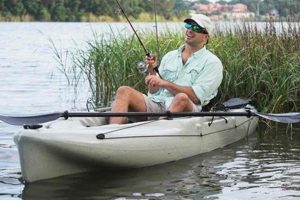
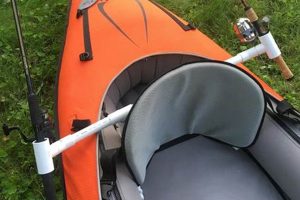
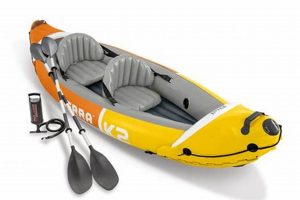
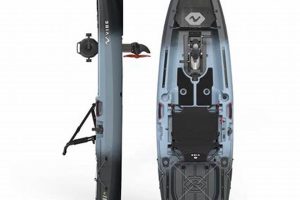
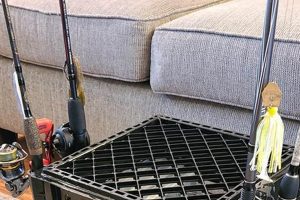
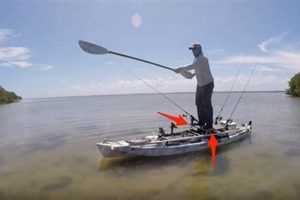
A portable, insulated container designed for use in kayaks serves as onboard cold storage for anglers. These specialized coolers maintain the quality of catches, beverages, and bait during fishing trips. They often feature secure closures, tie-down points, and designs maximizing limited kayak space. For example, some models may be narrow and long to fit behind a seat, while others are designed to fit within designated wells.
Maintaining a low temperature onboard is essential for preserving the freshness of caught fish. This is especially crucial in warm climates and during extended fishing excursions. Beyond preserving the catch, such coolers also enhance the overall fishing experience by providing easy access to cold drinks and snacks. Historically, anglers may have relied on simple buckets or less specialized coolers, but the rise in kayak fishing popularity has driven innovation in purpose-built insulated containers, leading to more durable, efficient, and space-saving options.
This article explores the key features to consider when selecting a suitable onboard cooler for kayak fishing, including size, insulation, mounting options, and specific design elements tailored for aquatic environments. Further discussion will cover various types available, popular brands, and recommended practices for optimizing cooler performance and extending the life of both the cooler and its contents.
Tips for Selecting Onboard Coolers for Kayak Angling
Choosing appropriate cold storage is crucial for successful kayak fishing trips. These tips offer guidance on selecting and utilizing onboard coolers effectively.
Tip 1: Prioritize Insulation and Ice Retention: Superior insulation is paramount. Consider coolers with thicker walls and robust lid seals to maximize ice retention, especially in warmer climates. Look for manufacturers’ ice retention ratings for comparison.
Tip 2: Size and Capacity Considerations: Balance capacity needs with available kayak space. Oversized coolers can hinder stability and maneuverability. Carefully assess storage requirements based on typical trip length and catch size.
Tip 3: Secure Mounting and Stability: Ensure the cooler is securely fastened to the kayak to prevent shifting or tipping during paddling and angling. Utilize tie-down points and consider non-slip surfaces on the cooler’s base.
Tip 4: Durability and Construction: Opt for rugged, impact-resistant coolers built to withstand the demands of the marine environment. UV resistance is essential for prolonged exposure to sunlight.
Tip 5: Drainage and Cleaning: Efficient drainage systems simplify cleaning and prevent water accumulation. Look for drain plugs that are easy to access and operate.
Tip 6: Feature Considerations: Features like integrated cutting boards, cup holders, and tie-down points enhance convenience and functionality. Evaluate these features based on individual needs and preferences.
Tip 7: Pre-Chilling for Extended Performance: Pre-chill the cooler and its contents for several hours before departure to maximize ice retention and overall cooling efficiency.
By carefully considering these factors, anglers can select onboard coolers that enhance their fishing experience by preserving catches and providing convenient access to refreshments.
This guidance aims to equip anglers with the knowledge necessary to make informed decisions about onboard cold storage for kayak fishing. The subsequent section offers concluding remarks on cooler maintenance and safe handling practices.
1. Capacity

Cooler capacity significantly impacts kayak fishing practicality and efficiency. Appropriate storage volume directly influences trip duration, catch limits, and onboard comfort. Careful consideration of capacity needs is crucial for maximizing fishing success and overall enjoyment.
- Storage Volume:
Measured in quarts or liters, storage volume dictates the amount of fish, bait, food, and beverages a cooler can hold. A smaller capacity (e.g., 20 quarts) suits short trips targeting smaller species, while larger capacities (e.g., 70 quarts) accommodate longer expeditions and larger catches. Overestimating capacity can lead to wasted space and increased weight, while underestimating limits trip duration and potential catch.
- Physical Dimensions:
External dimensions determine cooler fit within the kayak. Length, width, and height must be compatible with available storage space, considering factors like legroom and kayak stability. Longer, narrower coolers often fit better behind seats, while shorter, wider coolers might suit dedicated wells. Incorrect sizing can compromise balance and paddling efficiency.
- Usable Space:
While overall volume matters, usable space considers internal design and layout. Features like dividers, trays, and baskets enhance organization and maximize storage efficiency. Coolers with inefficient layouts can waste valuable space, limiting practical storage capacity despite a large overall volume.
- Weight Capacity:
Weight capacity, distinct from storage volume, refers to the maximum weight a cooler can safely support. This is crucial for coolers used as seating or casting platforms. Exceeding weight limits can damage the cooler or compromise kayak stability. Weight capacity should align with intended use and angler weight.
Balancing these capacity-related factors optimizes kayak fishing experiences. Selecting a cooler with appropriate storage volume, suitable dimensions, efficient internal layout, and adequate weight capacity ensures successful and enjoyable fishing trips. Careful consideration of individual needs and fishing styles is essential when determining ideal cooler capacity.
2. Insulation

Insulation performance is paramount for ice chests intended for kayak fishing. Effective insulation directly correlates with ice retention, a critical factor in preserving catch freshness, especially during extended trips in warm climates. Insulation quality dictates how well the cooler resists external temperature fluctuations, thereby influencing the longevity of stored ice and the overall effectiveness of the cooler. For example, a poorly insulated ice chest may only hold ice for a few hours on a hot day, rendering it inadequate for preserving a day’s catch, while a well-insulated model can maintain ice for several days, ensuring the quality and safety of stored food and fish.
Several factors influence insulation effectiveness. Cooler construction plays a key role, with rotomolded coolers generally offering superior insulation compared to those constructed from thinner, less durable materials. Insulation thickness and material type also contribute significantly. Thicker insulation typically provides better temperature regulation, while materials like polyurethane foam offer higher insulating properties compared to less dense alternatives. Lid seals and closures are equally critical, preventing warm air from entering and cold air from escaping. A tight, secure seal is essential for maintaining a consistent internal temperature and maximizing ice retention.
Understanding the relationship between insulation and ice chest performance enables informed purchasing decisions. Investing in a well-insulated ice chest, even at a higher initial cost, often proves more economical and practical in the long run. Superior insulation minimizes ice replenishment needs, reducing both expense and logistical challenges during fishing trips. Furthermore, it ensures the quality and safety of stored items, preventing spoilage and maximizing the enjoyment and success of kayak fishing excursions. Prioritizing insulation performance is an essential consideration for anglers seeking reliable and efficient onboard cold storage.
3. Durability

Durability is a critical factor for ice chests used in kayak fishing. The demanding marine environment, characterized by exposure to sunlight, saltwater, and physical impacts, necessitates a robust construction. A durable ice chest withstands these conditions, maintaining its structural integrity and insulating properties over extended periods. For example, dropping a cheaply made cooler onto a rocky shore might result in cracks and impaired insulation, while a rugged, rotomolded cooler would likely remain unscathed. This resilience translates directly to sustained performance and a longer lifespan, reducing replacement costs and ensuring consistent functionality during fishing trips.
Several factors contribute to ice chest durability. Material selection plays a primary role. Rotomolded polyethylene, commonly used in high-end coolers, offers exceptional impact resistance and UV protection. Hardware, such as hinges, latches, and handles, should be equally robust, constructed from corrosion-resistant materials like stainless steel. Furthermore, construction techniques, such as seamless molding and reinforced corners, enhance overall structural integrity. A well-designed cooler incorporates these elements to withstand the rigors of kayak fishing, ensuring reliable performance season after season.
Understanding the importance of durability empowers informed purchasing decisions. While initial costs for durable ice chests might be higher, the long-term benefits outweigh the upfront investment. A robust cooler provides reliable service, minimizing the risk of failures during critical moments. This reliability translates to preserved catches, extended ice life, and ultimately, a more successful and enjoyable kayak fishing experience. Prioritizing durability ensures a worthwhile investment, contributing to both performance and peace of mind on the water.
4. Portability

Portability is a critical consideration when selecting an ice chest for kayak fishing. Kayak anglers often traverse varying terrain to reach launch points, necessitating manageable cooler transport. Furthermore, limited onboard space requires efficient use of every cubic inch. A portable ice chest facilitates convenient movement on land and optimal storage within the kayak, enhancing overall fishing experience and efficiency.
- Weight and Dimensions:
Ice chest weight and dimensions directly impact portability. A lighter, more compact cooler is easier to carry over long distances and maneuver into tight spaces. For example, a smaller, lightweight cooler with integrated carrying handles is ideal for navigating uneven terrain leading to a remote fishing spot, while a bulky, heavier cooler might prove cumbersome. Careful consideration of weight and dimensions ensures comfortable transport and efficient kayak storage.
- Carrying Features:
Ergonomic features enhance portability. Padded shoulder straps, comfortable handles, and integrated wheels facilitate easier transport, reducing strain and fatigue. For instance, a cooler with a telescoping handle and rugged wheels simplifies transport across sand or gravel, whereas a cooler lacking such features becomes challenging to manage, especially when fully loaded. Prioritizing ergonomic design promotes comfortable and convenient cooler transport.
- Shape and Design:
Ice chest shape and design contribute to portability and efficient space utilization. Low-profile coolers maximize kayak stability, while specialized shapes designed to fit specific kayak compartments optimize onboard storage. A cooler designed to fit snugly within a kayak’s bow well, for example, maximizes available deck space, whereas a standard rectangular cooler might obstruct movement or limit storage options. Strategic shape selection enhances both portability and kayak space utilization.
- Securing Mechanisms:
Integrated tie-down points or straps secure the cooler within the kayak, preventing shifting during paddling or angling. Secure mounting enhances both safety and stability. For example, a cooler with integrated tie-down loops easily secures to kayak deck fittings, preventing movement in rough water, while a cooler lacking such features risks sliding around, potentially compromising kayak stability. Prioritizing secure mounting features contributes to a safer and more efficient fishing experience.
Prioritizing portability in ice chest selection significantly enhances kayak fishing experiences. A portable cooler simplifies transport to and from the water, optimizes onboard space utilization, and ensures convenient access to essential items during fishing trips. Careful consideration of weight, carrying features, shape, and securing mechanisms enables anglers to select the most suitable ice chest for their specific needs and fishing style.
5. Secure Mounting
Secure mounting of an ice chest is paramount for safe and effective kayak fishing. An unsecured cooler poses significant risks, including shifting cargo, compromised kayak stability, and potential damage to both the cooler and its contents. Proper mounting ensures the ice chest remains stable during paddling, angling, and navigating various water conditions, contributing to a safer and more productive fishing experience. This section explores the key facets of secure mounting for ice chests in kayak fishing.
- Mounting Locations:
Strategic placement within the kayak maximizes stability and accessibility. Common locations include behind the seat, in front of the footwell, or within dedicated recessed areas. The optimal location depends on kayak design, cooler size, and angler preference. For example, positioning a larger cooler behind the seat enhances stability by centering weight, while a smaller cooler in the front provides easier access. Careful consideration of mounting location optimizes balance and convenience.
- Securing Mechanisms:
Various methods exist for securing ice chests. Bungee cords, straps with cam buckles, and dedicated tie-down systems offer varying levels of security and convenience. For instance, bungee cords provide quick attachment but may lack the strength of ratchet straps for rough conditions. Dedicated track systems offer the most secure and customizable mounting solutions. Selecting appropriate securing mechanisms ensures the cooler remains firmly in place.
- Kayak Compatibility:
Kayak design significantly influences mounting options. Some kayaks feature integrated mounting points, tracks, or recessed areas specifically designed for coolers. Understanding kayak compatibility is crucial for selecting appropriate mounting hardware and ensuring secure attachment. For example, a kayak with pre-installed tracks simplifies cooler mounting using compatible accessories, while kayaks lacking such features might require more creative solutions. Assessing kayak compatibility ensures optimal mounting solutions.
- Environmental Considerations:
Anticipating environmental conditions, such as rough water or strong currents, is essential for selecting appropriate mounting strategies. Reinforced tie-down points and heavy-duty straps offer increased security in challenging environments. For instance, while simple bungee cords might suffice for calm lake fishing, stronger straps and multiple attachment points are necessary for navigating choppy coastal waters. Adapting mounting strategies to environmental factors enhances safety and prevents cooler displacement.
Secure mounting contributes significantly to safe and efficient kayak fishing. Careful consideration of mounting location, securing mechanisms, kayak compatibility, and environmental factors ensures the ice chest remains stable and accessible, enhancing both safety and enjoyment on the water. By prioritizing secure mounting, anglers minimize risks and maximize the effectiveness of their onboard cold storage.
6. Ease of Access
Ease of access is a critical aspect of ice chest design for kayak angling. Efficient retrieval of items, especially while on the water, directly impacts fishing efficiency and safety. Difficult access necessitates awkward reaching or maneuvering, potentially compromising kayak stability. For example, retrieving a beverage from a cooler wedged deep within the stern requires shifting body weight, potentially leading to capsizing, whereas a cooler positioned within easy reach allows quick access without disrupting balance. Furthermore, readily accessible bait and tackle streamlines fishing processes, allowing anglers to focus on the activity rather than struggling with storage. This seamless access ultimately contributes to a more efficient and enjoyable fishing experience.
Several design elements contribute to enhanced accessibility. Lid design and closure mechanisms play a significant role. A single-handed latch or hinged lid allows quick access without requiring both hands, which is crucial when managing a fishing rod or paddle simultaneously. Cooler placement and mounting systems further influence access. A strategically positioned cooler, securely mounted within easy reach, minimizes the need for excessive movement. Features like sliding trays or internal compartments provide organized storage and facilitate quick identification and retrieval of specific items. Optimizing these design features directly translates to improved access and enhanced on-the-water efficiency.
Understanding the relationship between ease of access and ice chest design empowers informed purchasing decisions. Prioritizing accessibility features reduces on-the-water challenges, enhances safety, and contributes to a more streamlined and enjoyable fishing experience. While capacity and insulation remain crucial, overlooking accessibility can compromise the practicality of even the most high-performing ice chests. By considering access as a key design element, kayak anglers can select ice chests that optimize both functionality and overall fishing performance.
Frequently Asked Questions
This section addresses common inquiries regarding ice chests designed for kayak fishing, providing concise and informative responses to facilitate informed decision-making and enhance on-the-water experiences.
Question 1: What size ice chest is recommended for kayak fishing?
Appropriate ice chest size depends on individual needs, including trip duration, target species size, and storage requirements beyond catch. Smaller coolers (20-40 quarts) suffice for shorter trips and smaller catches, while larger coolers (50-70+ quarts) accommodate extended expeditions and larger fish. Kayak size and available storage space also influence cooler dimensions.
Question 2: What type of insulation is best for kayak fishing ice chests?
Rotomolded coolers generally offer superior insulation compared to traditional coolers. Rotomolding creates a seamless, airtight construction that maximizes ice retention. Look for coolers with thick insulation and robust lid seals. Consider manufacturers’ ice retention ratings when comparing models.
Question 3: How does one securely mount an ice chest in a kayak?
Secure mounting methods vary depending on kayak design and cooler type. Common methods include bungee cords, cam straps, and dedicated track systems. Ensure the cooler is firmly attached to prevent shifting during paddling or angling. Utilize existing kayak features like D-rings or install aftermarket mounting points.
Question 4: What features should one look for in a kayak fishing ice chest?
Essential features include durable construction, UV resistance, secure latches, comfortable carrying handles, and efficient drainage. Additional features like integrated cutting boards, cup holders, and tie-down points enhance convenience. Prioritize features based on individual needs and fishing style.
Question 5: How can ice retention be maximized in a kayak fishing ice chest?
Pre-chilling the cooler and its contents before departure significantly extends ice life. Using block ice, rather than cubed ice, also maximizes retention. Minimizing lid openings and ensuring a tight seal further contribute to preserving ice. Consider using reflective covers or insulating sleeves to reduce heat absorption.
Question 6: How does one clean and maintain a kayak fishing ice chest?
Regular cleaning prevents odor and bacterial growth. Empty the cooler after each trip, rinse thoroughly with fresh water, and allow it to air dry completely. Mild soap and water can be used for more thorough cleaning. Avoid harsh chemicals or abrasive cleaners. Periodically inspect seals and hardware for wear and tear.
Addressing these common questions equips kayak anglers with the knowledge necessary to select and utilize appropriate ice chests effectively. Prioritizing factors like size, insulation, mounting, and maintenance ensures optimal performance and enhances the overall fishing experience.
The following section delves into specific ice chest models recommended for kayak fishing, providing detailed reviews and comparisons to further assist anglers in their selection process.
Conclusion
Selecting appropriate onboard cold storage is crucial for successful kayak angling. This article explored key considerations, including capacity, insulation, durability, portability, secure mounting, and ease of access. Balancing these factors ensures preserved catches, convenient refreshment access, and enhanced overall fishing experiences. Prioritizing cooler selection based on individual needs and fishing styles optimizes performance and maximizes enjoyment on the water.
Investing in a suitable ice chest contributes significantly to responsible fishing practices by preserving catch quality and minimizing waste. As kayak fishing continues to grow in popularity, advancements in cooler technology promise even greater efficiency and convenience. Careful consideration of the factors presented in this article empowers anglers to make informed decisions, ensuring successful and sustainable fishing practices for years to come.