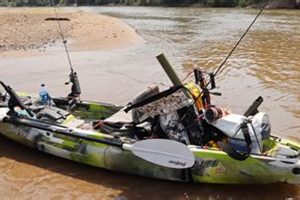
Securing a catch while kayak fishing requires a reliable method to keep fish alive and fresh until returning to shore. A stringer, a length of cord or wire with clips or points for attaching fish, offers a practical solution. Typically, one end of the stringer attaches to the kayak itself, either through a designated anchor point or by looping it around a secure fixture. The other end, equipped with a weight or pointed tip, allows for easy piercing and stringing of the fish through the gills or jaw. The weighted end then hangs in the water, keeping the fish submerged and alive.
This method provides a crucial advantage for anglers practicing catch-and-release, ensuring the well-being of released fish. It also keeps harvested fish fresh in the water, preserving their quality for later consumption. While stringers have been employed for generations by anglers in various settings, their adaptability to the kayak fishing environment makes them an indispensable tool for managing catches effectively and responsibly. The portability and simplicity of a stringer complement the minimalist nature of kayak fishing.
Several factors contribute to successful stringer usage from a kayak. These include selecting an appropriate stringer type, understanding different attachment techniques to minimize risks to both the kayak and the angler, and employing best practices for fish handling to ensure humane treatment and preservation of the catch. Proper stringer management also encompasses safety considerations and awareness of local regulations.
Tips for Stringer Use in Kayaks
Effective stringer usage requires careful consideration of various factors to ensure both fish safety and angler convenience. These tips offer guidance on best practices.
Tip 1: Choose the Right Stringer. Stainless steel or coated wire stringers are generally preferred for their durability and resistance to corrosion in saltwater environments. Avoid nylon stringers as they can be easily cut by fish. Consider stringer length and clip size appropriate for the target species.
Tip 2: Securely Attach the Stringer. Utilize designated attachment points on the kayak if available. Alternatively, securely loop the stringer around a stable part of the kayak’s frame, ensuring it does not interfere with paddling or other equipment. Avoid attaching it to loose items or areas prone to movement.
Tip 3: Handle Fish Carefully. Minimize handling time and stress on the fish. Quickly and firmly insert the stringer clip through the lower jaw and out through a gill opening. Avoid piercing the fish’s eyes or damaging vital organs.
Tip 4: Keep the Stringer Submerged. The weighted end of the stringer should always remain submerged, ensuring adequate oxygen flow for the fish. Avoid dragging the stringer across dry surfaces or exposing the fish to air for prolonged periods.
Tip 5: Monitor the Stringer Regularly. Periodically check the stringer to ensure fish remain secure and the attachment point on the kayak is stable. Adjust the stringer position as needed to accommodate changing water conditions or kayak movement.
Tip 6: Be Mindful of Regulations. Familiarize oneself with local fishing regulations regarding stringer usage and possession limits. Some areas may have specific requirements for stringer types or restrict their use altogether.
Tip 7: Consider Alternatives for Larger Fish. For larger, more powerful fish, a floating cooler or livewell may offer a safer and more humane method of retention, minimizing the risk of the fish escaping or injuring itself on the stringer.
Adhering to these practices ensures humane fish handling, responsible angling, and preservation of catch quality. Proper stringer management contributes to a positive and successful kayak fishing experience.
By implementing these recommendations, anglers can confidently incorporate stringer usage into their kayak fishing practices while prioritizing fish welfare and responsible resource management. This sets the stage for concluding remarks on enhancing the overall kayak fishing experience.
1. Secure Attachment

Secure attachment of a fish stringer to a kayak is paramount for preserving the catch, protecting the kayak’s integrity, and ensuring angler safety. An improperly secured stringer can detach, resulting in the loss of caught fish. Furthermore, a loose stringer can snag on underwater obstacles or vegetation, potentially capsizing the kayak. A dangling stringer also poses a tripping hazard, particularly during entry and exit. For instance, an angler standing in shallow water to re-enter their kayak could trip over a loose stringer, leading to injury or equipment damage. Conversely, a securely attached stringer allows for efficient fish management, minimizing disruptions and maximizing fishing time.
Several methods offer secure attachment points. Kayaks often feature designated attachment points specifically designed for accessories like stringers. Utilizing these designated points ensures optimal stability and minimizes the risk of interference with paddling strokes. If designated points are unavailable, securely looping the stringer around a stable structural component of the kayak, such as a seat mount or carrying handle, provides a reliable alternative. It is crucial to avoid attaching the stringer to loose items or areas prone to movement, such as paddle leashes or fishing rod holders. Such attachments offer minimal stability and increase the likelihood of detachment. For example, attaching a stringer to a fishing rod holder could result in the stringer being pulled loose when a fish strikes or when the rod is adjusted.
Proper stringer attachment techniques form a cornerstone of responsible kayak fishing. This practice contributes to a safer and more efficient angling experience. By understanding the potential consequences of insecure attachment and employing appropriate securing methods, anglers can safeguard their catch, preserve their equipment, and mitigate potential hazards. This attention to detail allows for a more focused and enjoyable fishing experience, free from the distractions and risks associated with a poorly secured stringer.
2. Appropriate Stringer Type

Stringer selection significantly impacts the effectiveness and ethical implications of kayak fishing. Stringer material, length, and clip size must align with the target species and fishing environment. An inappropriate stringer can lead to fish loss, injury, or mortality. For example, a thin, nylon stringer might be suitable for small panfish in freshwater but would be inadequate for larger, more powerful saltwater species. These species could easily break a nylon stringer, resulting in lost fish and a potential hazard to other marine life from the discarded line. Conversely, a heavy-duty stainless steel stringer, while appropriate for larger fish, might be excessively cumbersome and damaging for smaller, delicate species.
Material selection dictates stringer durability and resistance to environmental factors. Stainless steel stringers resist corrosion in saltwater environments, ensuring longevity and minimizing the risk of breakage. Coated wire stringers offer a balance of strength and flexibility. Nylon or braided cord stringers, while lightweight and less expensive, are susceptible to abrasion and cutting, making them less suitable for challenging conditions or larger fish. Clip size also factors into appropriate stringer selection. Larger clips accommodate the thicker jaws of larger fish, while smaller clips are better suited for smaller species, minimizing injury and ensuring a secure hold. For instance, using an oversized clip on a small fish could cause gill damage, while a small clip might not securely hold a larger fish.
Appropriate stringer selection demonstrates responsible angling practices. Matching the stringer to the target species and environment minimizes fish stress and injury, promotes healthy catch-and-release practices, and ensures a safe and efficient fishing experience. Choosing a suitable stringer type constitutes an essential component of successful and ethical kayak fishing, contributing to the overall well-being of the catch and the preservation of aquatic resources. Careful consideration of stringer material, length, and clip size optimizes fish handling and minimizes negative impacts, supporting sustainable fishing practices.
3. Careful Fish Handling
Careful fish handling is integral to responsible stringer use in kayaks. Minimizing air exposure, reducing handling time, and employing proper stringing techniques contribute significantly to fish welfare and survival, particularly for catch-and-release practices. Improper handling can cause undue stress, injury, or even mortality. For instance, excessive squeezing can damage internal organs, while prolonged air exposure can desiccate gills, hindering respiration. Stringing a fish through delicate gill filaments rather than the firmer, bony structure of the lower jaw can cause bleeding and increased susceptibility to infection. Conversely, careful handling, such as wetting hands before touching the fish, supporting its weight during the stringing process, and minimizing contact, promotes fish health and increases post-release survival rates.
The connection between careful fish handling and stringer use becomes particularly crucial in the confined space of a kayak. The angler must maintain balance and stability while handling the fish and the stringer. A thrashing fish, coupled with clumsy handling, can lead to injury for both the fish and the angler. A secure grip on the fish, combined with swift and precise stringing, mitigates these risks. Furthermore, in a kayak environment, the potential for dropping a fish back into the water after stringing it is higher. Careful handling minimizes this risk, ensuring the strung fish remains secured and viable, whether for later consumption or release.
Ultimately, careful fish handling optimizes stringer effectiveness as a fish-holding tool in kayak fishing. It preserves fish health, promotes ethical angling practices, and contributes to the sustainability of fish populations. This practice aligns with the principles of responsible resource management and ensures a positive and respectful approach to the aquatic environment. By prioritizing fish welfare through careful handling, anglers enhance their overall kayak fishing experience and contribute to the long-term health of the fishery.
4. Regular Monitoring
Regular monitoring of a fish stringer is a critical aspect of responsible kayak fishing. It ensures the well-being of the catch, maintains the integrity of the equipment, and contributes to a safe and efficient fishing experience. Neglecting regular checks can lead to fish loss, equipment damage, or potential entanglement hazards. Consistent observation allows for timely intervention, preventing these negative outcomes and maximizing the effectiveness of the stringer as a fish-holding tool.
- Stringer Integrity Checks
Periodic inspection of the stringer itself is essential. This includes checking for signs of wear, fraying, or damage to the clips. A weakened stringer can break, leading to the loss of the entire catch. For example, a sharp edge on a kayak component could gradually abrade the stringer material, weakening it over time. Regular checks allow for timely replacement, preventing such losses and ensuring the stringer’s continued reliability.
- Fish Condition Assessment
Regularly assessing the condition of the strung fish is crucial, especially for catch-and-release angling. This involves observing fish for signs of stress, injury, or mortality. Fish exhibiting excessive bleeding, erratic behavior, or lack of movement should be promptly released or, if regulations permit, humanely dispatched. Ignoring signs of distress compromises fish welfare and undermines ethical angling practices. Regular monitoring enables anglers to make informed decisions regarding the disposition of their catch, promoting responsible resource management.
- Attachment Point Security
The stringer’s attachment point on the kayak requires frequent verification. Ensuring the stringer remains securely fastened to the kayak prevents accidental detachment and subsequent fish loss. Changing water conditions, kayak movement, or accidental bumps can loosen the stringer’s attachment. Regular checks allow for prompt readjustment or reinforcement, maintaining the stringer’s stability throughout the fishing trip. For example, shifting weight distribution in the kayak could alter the tension on the stringer’s attachment point, potentially loosening it over time.
- Environmental Awareness
Regularly scanning the surrounding environment for potential entanglement hazards further enhances stringer security. Underwater obstacles, vegetation, or other debris can snag the stringer, leading to fish loss, equipment damage, or even kayak instability. Periodic observation allows anglers to identify and avoid such hazards, maneuvering the kayak and stringer away from potential entanglement points. This proactive approach minimizes risks and ensures a smooth, uninterrupted fishing experience.
These facets of regular monitoring collectively contribute to the safe and effective use of a fish stringer on a kayak. They demonstrate a commitment to responsible angling, fish welfare, and the preservation of aquatic resources. By incorporating these monitoring practices, anglers enhance their overall fishing experience while upholding ethical and sustainable fishing principles.
5. Legal Compliance

Legal compliance forms an essential aspect of responsible stringer use in kayak fishing. Adherence to regulations ensures the sustainability of fish populations, protects vulnerable species, and contributes to the overall health of the aquatic environment. Ignoring legal frameworks can lead to fines, legal repercussions, and damage to fragile ecosystems. Understanding and complying with relevant regulations is therefore crucial for ethical and sustainable kayak fishing practices.
- Possession Limits
Possession limits dictate the maximum number of fish of a particular species an angler can legally retain. These limits vary by jurisdiction and often depend on factors such as species, season, and fishing location. Exceeding possession limits, even when using a stringer, constitutes a violation and can result in penalties. For example, if the possession limit for trout is five fish, an angler with six trout on their stringer would be in violation, even if they intend to release some later. Respecting possession limits ensures responsible harvesting and prevents overfishing, contributing to the long-term health of fish populations.
- Size Restrictions
Size restrictions prescribe the minimum or maximum size of fish that anglers can legally keep. These regulations aim to protect juvenile fish, allowing them to reach maturity and reproduce, and to preserve larger breeding individuals. Using a stringer to retain undersized or oversized fish is illegal, even if the angler intends to release them later. Accurate measurement and immediate release of fish outside the legal size range is essential for compliance. For example, if the minimum size for bass is 14 inches, any bass shorter than 14 inches on a stringer would be a violation, regardless of the angler’s intent. Adhering to size restrictions protects vulnerable fish populations and ensures the sustainability of the fishery.
- Closed Seasons and Areas
Closed seasons and areas prohibit fishing for specific species during certain times of the year or in designated locations. These regulations protect fish during spawning periods or in critical habitats, safeguarding vulnerable populations. Using a stringer in closed areas or during closed seasons is illegal, regardless of the target species. Anglers must be aware of these restrictions and plan their fishing trips accordingly. For instance, fishing for salmon in a designated spawning stream during a closed season, even if only using a stringer for temporary holding, would constitute a violation. Respecting closed seasons and areas contributes to the long-term health and viability of fish populations.
- Stringer Regulations
Some jurisdictions have specific regulations regarding stringer use itself. These regulations might stipulate the type of stringer permitted, such as requiring non-metallic materials to minimize injury to fish, or they might restrict stringer use altogether in certain areas. Anglers must familiarize themselves with local regulations concerning stringer types and usage restrictions to ensure compliance. For example, a regulation requiring the use of barbless hooks on stringers aims to reduce injury to released fish. Ignoring such regulations not only constitutes a violation but also potentially undermines conservation efforts. Understanding and adhering to specific stringer regulations demonstrates responsible angling practices and contributes to fish welfare.
By understanding and adhering to these legal frameworks, anglers contribute significantly to responsible kayak fishing practices. Legal compliance not only avoids legal repercussions but also aligns with the principles of conservation and resource management, ensuring the sustainability of fish populations and the preservation of aquatic environments for future generations. This responsible approach enhances the overall kayak fishing experience, fostering a deeper appreciation for the sport and its connection to the natural world.
Frequently Asked Questions
This section addresses common inquiries regarding the use of fish stringers in the context of kayak fishing. Clarity on these points promotes safe and responsible angling practices.
Question 1: What is the safest way to attach a stringer to a kayak?
Utilizing designated attachment points on the kayak provides the most secure method. If unavailable, securely looping the stringer around a stable structural element, such as a seat mount or carrying handle, offers a reliable alternative. Avoid attaching the stringer to loose items or areas prone to movement.
Question 2: Are there regulations specific to stringer use while kayak fishing?
Regulations vary by jurisdiction. Some areas may restrict stringer types, materials, or usage in certain locations. Consulting local fishing regulations prior to embarking on a kayak fishing trip ensures compliance.
Question 3: How can one prevent fish loss from a stringer while kayaking?
Regular monitoring of the stringer’s attachment point and fish condition is crucial. Using appropriately sized clips and a robust stringer material minimizes the risk of breakage or escape. Selecting an appropriate location for the submerged stringer, away from obstacles and strong currents, further reduces the risk of fish loss.
Question 4: What materials are recommended for stringers used in saltwater kayak fishing?
Corrosion-resistant materials such as stainless steel or coated wire are preferred for saltwater environments. These materials withstand the harsh conditions and maintain their integrity over time, reducing the risk of breakage and fish loss.
Question 5: How should one handle fish to minimize stress and injury while using a stringer?
Minimizing handling time, wetting hands before contact, supporting the fish’s weight, and quickly securing the stringer clip through the lower jaw and out a gill opening reduces stress and potential injury. Avoiding contact with delicate gill filaments and internal organs is essential.
Question 6: What are alternatives to stringers for retaining fish caught while kayak fishing?
Floating coolers or livewells offer alternatives, particularly for larger or more sensitive species. These options provide a controlled environment, reducing stress and maintaining fish viability for extended periods compared to stringers.
Understanding these aspects of stringer use promotes responsible kayak fishing practices. Careful consideration of these points enhances both angler safety and fish welfare.
Beyond these frequently asked questions, additional considerations regarding stringer use in kayaks contribute to a more comprehensive understanding. These include proper disposal of used stringers and best practices for catch-and-release techniques.
Conclusion
Effective stringer deployment in a kayak environment necessitates a comprehensive understanding of several key factors. Secure attachment methods, appropriate stringer selection based on target species and fishing conditions, careful fish handling techniques, regular monitoring of both fish and equipment, and adherence to all applicable regulations are crucial components of responsible stringer use. These practices ensure the safety of the angler, the well-being of the catch, and the preservation of aquatic ecosystems.
Stringer use, when practiced responsibly, allows for efficient fish management while kayak fishing. Careful consideration of these factors contributes not only to a successful fishing experience but also to the sustainable management of aquatic resources. Continued education and adherence to best practices ensure the ethical and effective utilization of stringers within the evolving landscape of kayak angling.