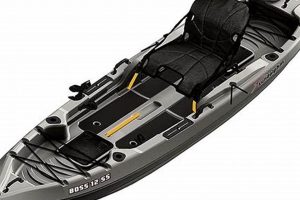
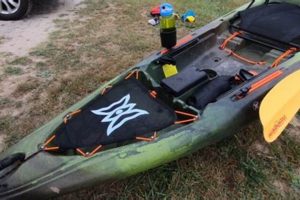
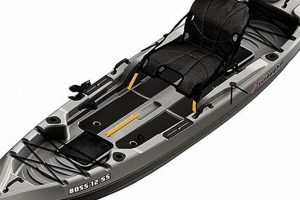
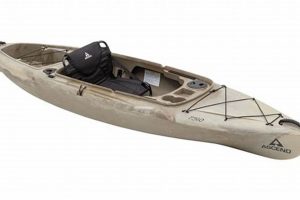
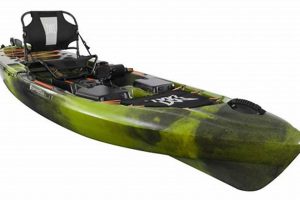
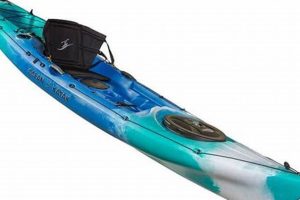
This specific type of watercraft designates a kayak measuring approximately 12 feet in length, designed for fishing and featuring a sit-on-top configuration. This design allows the angler to sit above the waterline, offering greater stability and ease of entry and exit compared to traditional sit-inside kayaks. These vessels are commonly equipped with specialized features like rod holders, tackle storage, and often anchor trolleys, catering specifically to the needs of anglers.
The popularity of this style of kayak stems from several key advantages. The open design provides enhanced mobility and comfort, particularly in warmer climates. Self-bailing scupper holes drain water quickly, making them exceptionally stable and resilient even in choppy conditions. The elevated seating position offers improved visibility for spotting fish and casting lines. Historically, fishing from kayaks has ancient roots, but the modern sit-on-top design has revolutionized the sport, making it more accessible and enjoyable for a wider range of individuals.
The subsequent sections will delve into various aspects of these versatile fishing platforms, covering topics such as selecting the right model, essential gear and accessories, popular fishing techniques, and important safety considerations.
Tips for Selecting and Using a Fishing Kayak
Careful consideration of several factors contributes significantly to a successful and enjoyable fishing experience from a kayak. These tips offer valuable guidance for both novice and experienced anglers.
Tip 1: Consider Weight Capacity: Ensure the kayak’s weight capacity comfortably accommodates the combined weight of the angler, gear, and potential catch. Exceeding the limit compromises stability and performance.
Tip 2: Evaluate Hull Design: A wider, flatter hull offers greater stability, while a longer, narrower hull provides better tracking and speed. Select a design that aligns with the intended fishing environment and personal preferences.
Tip 3: Prioritize Comfort and Ergonomics: A comfortable seat and adjustable footrests are crucial for long hours on the water. Test the kayak’s seating and adjustability before purchase, if possible.
Tip 4: Assess Storage Options: Adequate storage for tackle, gear, and personal items is essential. Consider the size, location, and accessibility of storage compartments.
Tip 5: Factor in Transportation and Storage: Account for the kayak’s size and weight when considering transportation and storage options. Roof racks, trailers, or dedicated storage space may be necessary.
Tip 6: Practice Paddling and Maneuvering: Familiarize oneself with the kayak’s handling characteristics before venturing into open water. Practice basic paddling strokes, turning techniques, and self-rescue procedures.
Tip 7: Prioritize Safety Equipment: Always wear a personal flotation device (PFD) and carry essential safety gear, including a whistle, signaling device, and first-aid kit.
By adhering to these guidelines, individuals can enhance their safety, comfort, and overall fishing success from a kayak. These considerations contribute significantly to a rewarding experience on the water.
The following section concludes this exploration by addressing frequently asked questions and offering additional resources for prospective kayak anglers.
1. Stability

Stability represents a critical performance attribute in a 12-foot sit-on-top fishing kayak, directly influencing angler safety and fishing efficacy. A stable platform facilitates casting accuracy, fish fighting control, and overall confidence on the water. This section explores key facets contributing to kayak stability.
- Hull Design:
Hull design plays a pivotal role in stability. Wider hulls generally provide enhanced primary stability, resisting initial tipping. A flatter hull bottom contributes to secondary stability, aiding recovery from larger destabilizing forces. Specific hull designs, such as pontoon hulls or catamaran configurations, further augment stability. The chosen hull design should align with the intended fishing environment; calmer waters may favor maneuverable, narrower hulls, while challenging conditions necessitate wider, more stable platforms.
- Center of Gravity:
The kayak’s center of gravity and its relationship to the angler’s position significantly influence stability. Lower centers of gravity promote stability. Sitting closer to the waterline lowers the combined center of gravity of the angler and kayak system. Proper weight distribution within the kayak further optimizes stability, minimizing rocking or tipping tendencies. Even weight distribution is particularly crucial when navigating rougher waters or engaging with larger fish.
- Kayak Width and Length:
Width directly impacts stability. Wider kayaks offer greater initial stability, making them less prone to tipping. Length contributes to directional stability, influencing tracking and resistance to turning. A 12-foot length generally offers a balance between stability and maneuverability suitable for diverse fishing environments. The interplay between width and length must be carefully considered based on angler preference and intended use.
- Water Conditions:
Prevailing water conditions significantly affect perceived stability. Calm, flat water enhances stability, while choppy or windy conditions introduce destabilizing forces. Kayak stability should be assessed relative to the intended fishing environment. Anglers frequently fishing in rougher waters require kayaks with inherently greater stability to compensate for external forces. Understanding the limitations of a kayak’s stability in varying conditions is essential for safe operation.
The convergence of these facets contributes to the overall stability profile of a 12-foot sit-on-top fishing kayak. Careful consideration of hull design, center of gravity management, and the interplay between kayak dimensions and water conditions ensures a safe and effective fishing platform. Prioritizing stability enhances angler confidence, facilitates fishing techniques, and ultimately contributes to a more rewarding on-the-water experience.
2. Maneuverability

Maneuverability in a 12-foot sit-on-top fishing kayak directly impacts its effectiveness in various fishing scenarios. The ability to precisely position the kayak, navigate tight spaces, and efficiently cover water significantly influences fishing success. Several factors contribute to this crucial performance characteristic.
Hull design plays a pivotal role. Longer, narrower hulls generally track straighter and glide more efficiently, covering distance quickly. Shorter, wider hulls offer enhanced turning capabilities, enabling sharper turns and quicker changes in direction. A moderate 12-foot length often represents a compromise, balancing tracking and maneuverability. The presence of a keel, or tracking channels molded into the hull, improves straight-line tracking but may slightly reduce turning responsiveness. Furthermore, the angler’s paddling technique influences maneuverability. Efficient paddle strokes and proper body positioning contribute to controlled movement and precise maneuvering. Experience and familiarity with the specific kayak further enhance control.
Consider a scenario where an angler needs to navigate through a dense patch of reeds or around submerged obstacles. A highly maneuverable kayak allows precise adjustments, minimizing disturbance and maximizing stealth. Conversely, when paddling across open water to reach a distant fishing spot, efficient tracking becomes paramount. Understanding the interplay between hull design, paddling technique, and environmental factors contributes to effective kayak selection and optimized on-water performance. Maneuverability, therefore, represents a critical consideration, influencing fishing success and overall enjoyment on the water. Appropriate selection and skilled operation contribute significantly to a positive angling experience.
3. Storage Capacity
Storage capacity in a 12-foot sit-on-top fishing kayak directly impacts its practicality and effectiveness for angling excursions. Adequate storage facilitates organized transport of essential gear, ensuring readily accessible tackle and equipment. This organized approach maximizes fishing time and minimizes on-water logistical challenges. This section examines key facets of storage capacity relevant to these specialized kayaks.
- Types of Storage:
Various storage types cater to different needs. Open storage wells, often located behind the seat, accommodate larger items like tackle boxes or coolers. Smaller, sealed hatches safeguard valuables from water intrusion. Dedicated rod holders secure fishing rods during transport and while actively fishing. Bungee cord systems on the deck offer additional storage for readily accessible items. The availability and configuration of these storage options should align with individual angler preferences and anticipated gear requirements.
- Storage Capacity and Kayak Size:
Kayak size influences overall storage volume. A 12-foot length typically provides a reasonable balance between storage capacity and maneuverability. Longer kayaks may offer increased storage but can be less agile in tight spaces. Shorter kayaks, while more maneuverable, may compromise storage volume. The optimal balance depends on the angler’s fishing style and target species. Kayak width also contributes to storage potential, with wider hulls generally offering more spacious storage areas.
- Weight Distribution and Storage:
Strategic gear placement within storage compartments influences kayak balance and performance. Distributing weight evenly enhances stability and tracking. Concentrating heavier items closer to the center of gravity minimizes rocking and improves maneuverability. Understanding the impact of weight distribution within the kayak’s storage areas is crucial for optimal performance and safety.
- Accessibility of Storage:
Ease of access to stored items is essential for efficient fishing. Conveniently located hatches and readily accessible storage wells minimize disruption during fishing. Well-designed storage systems allow anglers to retrieve tackle and equipment without compromising stability or requiring awkward movements. Prioritizing accessibility enhances on-water efficiency and overall fishing enjoyment.
The interplay of these storage-related considerations significantly influences the overall utility of a 12-foot sit-on-top fishing kayak. Careful evaluation of storage types, capacity, weight distribution implications, and accessibility ensures a well-equipped and efficient fishing platform. Optimizing storage solutions contributes to a more organized, productive, and enjoyable angling experience.
4. Fishing Features
Specialized fishing features distinguish a 12-foot sit-on-top fishing kayak from recreational models, enhancing its utility and effectiveness for angling pursuits. These features are integral to the overall design and contribute significantly to angler success and enjoyment. Cause and effect relationships exist between these features and on-water performance. For example, strategically placed rod holders allow hands-free operation during lure retrieval or while managing other equipment. Similarly, integrated fish finders enhance the ability to locate fish, directly impacting catch rates. The presence and quality of these features fundamentally transform the kayak from a simple watercraft into a dedicated fishing platform.
Consider a scenario where an angler trolls for fish using multiple rods. Flush-mounted rod holders secure the rods, preventing loss or damage while allowing the angler to focus on boat control and observation. An integrated anchor trolley system further enhances control, allowing precise positioning in a current or desired fishing area. Without these specialized features, managing multiple rods and maintaining position effectively becomes significantly more challenging. These real-life applications underscore the practical importance of dedicated fishing features in a 12-foot sit-on-top kayak. They are not merely add-ons but essential components that elevate the angling experience.
In summary, the integration of specialized fishing features directly influences the effectiveness and practicality of a 12-foot sit-on-top fishing kayak. These features, ranging from rod holders and anchor trolleys to fish finders and live wells, enhance angler control, efficiency, and overall success. Understanding the function and practical application of these features is crucial for informed kayak selection and optimized on-water performance. Their presence fundamentally distinguishes a dedicated fishing kayak from recreational models, equipping anglers with the tools necessary for a productive and enjoyable fishing experience.
5. Weight Capacity

Weight capacity represents a critical factor influencing the performance and safety of a 12-foot sit-on-top fishing kayak. This specification dictates the maximum combined weight of the angler, gear, and potential catch the kayak can safely support. Understanding and adhering to weight capacity limits is paramount for maintaining stability, maneuverability, and preventing potentially hazardous situations. The following facets explore the components, implications, and real-world examples related to weight capacity in these kayaks.
- Total Weight Limit:
Each kayak model possesses a specified total weight limit, typically expressed in pounds or kilograms. This limit encompasses the combined weight of all items onboard, including the angler, fishing gear, personal belongings, and any caught fish. Exceeding this limit compromises stability, reduces freeboard (the distance between the waterline and the deck), and increases the risk of capsizing. For instance, a kayak with a 350-pound weight capacity carrying a 200-pound angler, 50 pounds of gear, and a 120-pound catch exceeds the limit, creating a potentially unsafe scenario.
- Impact on Performance:
Operating a kayak near or exceeding its weight capacity significantly impacts performance. Reduced freeboard increases susceptibility to wave action and splashing, potentially leading to water intrusion. Maneuverability suffers due to increased draft (the depth of the hull below the waterline), making paddling and turning more challenging. Tracking (the kayak’s ability to maintain a straight course) can also be negatively affected. These performance degradations compromise fishing effectiveness and overall enjoyment.
- Stability Considerations:
Weight capacity directly influences stability. An overloaded kayak sits lower in the water, raising the center of gravity and increasing the risk of tipping. Maintaining stability is crucial for casting, fighting fish, and navigating varied water conditions. Exceeding weight limits compromises this stability, creating a potentially hazardous environment, particularly in rough water or when encountering unexpected movements.
- Calculating Weight Capacity Needs:
Accurately assessing individual weight capacity needs is essential for safe kayak operation. Anglers should consider their body weight, the estimated weight of all fishing gear (rods, reels, tackle boxes, etc.), personal items (clothing, food, water), and the potential weight of the target fish species. Overestimating weight allowances can lead to dangerous situations. Conservative estimations, erring on the side of caution, are recommended to ensure a safe margin within the kayak’s specified weight limit.
Weight capacity, therefore, is not merely a technical specification but a critical safety and performance parameter for 12-foot sit-on-top fishing kayaks. Understanding its implications and adhering to specified limits ensures a stable, maneuverable, and safe fishing platform. Careful consideration of individual weight requirements, combined with accurate estimations of gear and potential catch weights, allows anglers to select appropriately sized kayaks, maximizing both safety and on-water performance.
6. Comfort
Comfort plays a pivotal role in the overall enjoyment and effectiveness of fishing from a 12-foot sit-on-top kayak. Extended periods on the water necessitate a comfortable and supportive environment to minimize fatigue and maximize focus on the fishing experience. A comfortable angler is a more effective angler, capable of concentrating on fishing techniques and responding efficiently to changing conditions. This section explores key facets contributing to comfort in these specialized kayaks.
- Seating Design and Adjustability:
The seat design significantly influences comfort levels. A well-designed seat provides adequate back support, cushioning, and adjustable features to accommodate individual preferences. High-back seats offer enhanced lumbar support, reducing strain during prolonged periods of sitting. Adjustable straps or mechanisms allow customization of the seat position, catering to varying body types and fishing styles. An uncomfortable seat can lead to fatigue, discomfort, and decreased fishing effectiveness.
- Legroom and Footrests:
Adequate legroom and adjustable footrests are essential for maintaining a comfortable and stable posture. Sufficient legroom allows anglers to shift position and stretch, reducing stiffness and promoting circulation. Adjustable footrests provide support and leverage for paddling and bracing, further enhancing stability and control. Proper leg positioning contributes to overall comfort and minimizes fatigue during extended fishing trips.
- Kayak Stability and Comfort:
Kayak stability indirectly influences comfort. A stable platform minimizes rocking and swaying, reducing anxiety and promoting a sense of security. This stability allows anglers to focus on fishing rather than maintaining balance, enhancing comfort and confidence. Conversely, an unstable kayak can create tension and discomfort, detracting from the overall fishing experience. Therefore, stability contributes significantly to perceived comfort and overall enjoyment.
- Environmental Factors:
Environmental factors, such as temperature and weather conditions, significantly influence comfort. Appropriate clothing and gear, such as breathable fabrics in warm weather or insulated layers in colder conditions, contribute significantly to comfort. Protection from sun, wind, and rain further enhances the on-water experience. Consideration of these external factors is essential for maintaining comfort and maximizing enjoyment during fishing trips.
These interconnected facets collectively contribute to the overall comfort profile of a 12-foot sit-on-top fishing kayak. Prioritizing comfort through informed selection and appropriate adjustments enhances the overall fishing experience. A comfortable angler is a more focused, effective, and ultimately more successful angler, capable of enjoying extended periods on the water and maximizing the potential of each fishing excursion.
Frequently Asked Questions
This section addresses common inquiries regarding 12-foot sit-on-top fishing kayaks, providing concise and informative responses to facilitate informed decision-making and enhance understanding of these specialized watercraft.
Question 1: What are the advantages of a 12-foot length for a fishing kayak?
A 12-foot length generally balances stability and maneuverability, making it suitable for various fishing environments. This length offers sufficient storage capacity for gear and provides reasonable tracking performance while remaining manageable for transport and storage.
Question 2: How does one choose between a sit-on-top and a sit-inside kayak for fishing?
Sit-on-top kayaks offer superior stability, ease of entry and exit, and self-bailing capabilities, making them ideal for warmer climates and calmer waters. Sit-inside kayaks provide better protection from the elements and greater speed, suiting colder conditions or longer-distance paddling.
Question 3: What essential safety gear should accompany anglers in these kayaks?
Essential safety gear includes a personal flotation device (PFD), a whistle, a visual signaling device (such as a mirror or flare), a first-aid kit, and a communication device (e.g., waterproof cell phone or VHF radio).
Question 4: How does one transport a 12-foot kayak?
Transportation options include roof racks specifically designed for kayaks, trailers for larger vehicles, or dedicated kayak cradles. Secure tie-down straps are essential for safe transport, regardless of the chosen method.
Question 5: What are the key considerations when choosing a paddle for a 12-foot sit-on-top kayak?
Paddle selection depends on factors such as angler height, kayak width, and paddling style. Longer paddles are generally suitable for wider kayaks, while shorter paddles offer greater control. Lightweight materials, such as fiberglass or carbon fiber, reduce fatigue during extended paddling sessions.
Question 6: What are the maintenance requirements for these kayaks?
Maintenance includes regular rinsing with fresh water after each use, especially after exposure to saltwater. Periodic inspection of hulls, fittings, and hardware for damage or wear is recommended. Proper storage in a shaded, dry location prolongs the kayak’s lifespan.
Careful consideration of these frequently asked questions facilitates informed purchasing decisions and promotes safe and enjoyable kayak fishing experiences. Understanding these aspects contributes to a more rewarding and productive time on the water.
The following section offers a concluding summary of key takeaways and further resources for prospective kayak anglers.
Conclusion
This exploration of 12-foot sit-on-top fishing kayaks has provided a comprehensive overview of key aspects influencing their selection and utilization. From stability and maneuverability to storage capacity, fishing-specific features, weight capacity, and comfort, each facet contributes significantly to the overall performance and suitability of these specialized watercraft. Understanding these elements empowers informed decision-making, ensuring appropriate kayak selection aligned with individual angler needs and preferences. Emphasis on safety considerations, including weight capacity adherence and proper safety equipment usage, underscores the importance of responsible kayak operation for a secure and enjoyable experience.
The evolving landscape of kayak fishing continues to drive innovation in design and features. As technology advances and angler preferences evolve, further refinements in hull designs, materials, and integrated features can be anticipated. This continuous evolution promises enhanced performance, increased comfort, and expanded fishing opportunities for anglers seeking to explore the waters from the unique perspective offered by these versatile fishing platforms. Diligent research and careful consideration of individual needs remain paramount for harnessing the full potential of 12-foot sit-on-top fishing kayaks and experiencing the rewarding pursuit of angling from these specialized watercraft.