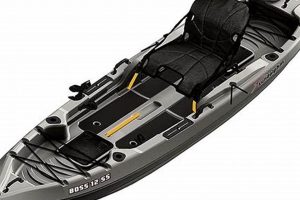
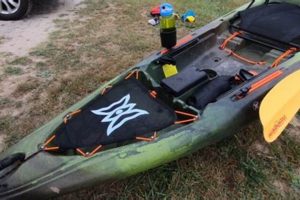
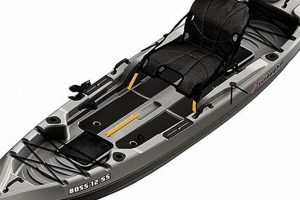
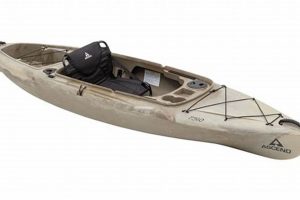
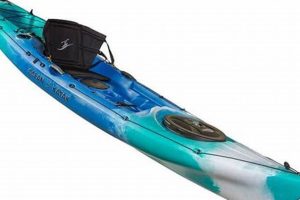
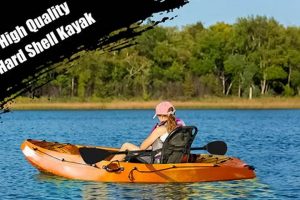
This style of angling involves using a specific type of kayak one with a molded-in seat on top of the hull rather than a cockpit to access fishing areas. These kayaks offer stability and ease of entry and exit, making them suitable for various water conditions, from calm lakes to coastal waters. Anglers can cast lines, troll, or even sight fish from these platforms.
The accessibility and adaptability of this approach have broadened the sport of fishing, allowing more individuals to participate, regardless of experience level. Previously inaccessible fishing grounds, like shallow flats and rocky coastlines, are now within reach. This method’s popularity has spurred innovation in kayak design and specialized fishing gear, contributing to its widespread adoption for both recreational and professional fishing.
The following sections will delve deeper into specific aspects, covering topics such as kayak selection, essential gear, effective techniques, and important safety considerations for a successful and enjoyable experience.
Tips for Kayak Angling
Maximizing success and safety on the water requires careful planning and execution. These tips offer guidance for a productive and enjoyable fishing experience.
Tip 1: Stability is Paramount: Choose a kayak design appropriate for the intended fishing environment. Wider hulls offer greater stability, especially for beginners, while longer, narrower kayaks are better suited for covering distance and speed.
Tip 2: Essential Gear Selection: A well-organized and readily accessible tackle box is crucial. Prioritize essential gear, including appropriately weighted lures, sharp hooks, and a reliable landing net. A personal flotation device (PFD) is mandatory.
Tip 3: Paddle and Rod Management: Employ a secure rod holder to keep fishing rods organized and protected while paddling. Practice efficient paddling techniques to minimize fatigue and maximize maneuverability.
Tip 4: Weather Awareness: Check weather forecasts before embarking on any fishing trip. Avoid venturing out in strong winds, lightning storms, or other hazardous conditions. Inform someone of your planned route and estimated return time.
Tip 5: Navigation and Location: Research potential fishing spots in advance and utilize navigational tools like GPS or charts. Consider using a fish finder to identify promising underwater structures and fish concentrations.
Tip 6: Respectful Angling Practices: Adhere to all local fishing regulations, including catch limits and size restrictions. Practice catch-and-release whenever possible to conserve fish populations. Leave no trace by packing out all trash and debris.
Tip 7: Anchoring Techniques: Employ appropriate anchoring methods based on the water depth and bottom conditions. A drift sock can be useful for controlling drift speed in currents or wind.
By adhering to these guidelines, anglers can enhance their chances of success, minimize potential risks, and foster a deeper appreciation for the sport.
The following section will offer concluding thoughts and additional resources for pursuing this exciting fishing method.
1. Kayak Selection

Appropriate kayak selection is fundamental to a successful sit-on-top fishing experience. The vessel serves as the angler’s primary platform and impacts stability, maneuverability, and overall fishing effectiveness. Choosing the right kayak requires careful consideration of several key factors.
- Hull Design and Stability
Hull design significantly influences stability. Wider, flatter hulls offer greater initial stability, making them suitable for beginners or calm water conditions. However, they may sacrifice maneuverability and speed. Longer, narrower hulls provide better tracking and speed but require more experience to maintain balance. Specialized hull designs, such as pontoon-style hulls, offer exceptional stability but may be less efficient for paddling longer distances. Considering the intended fishing environment and the angler’s skill level is crucial when evaluating hull design.
- Length and Weight Capacity
Kayak length and weight capacity are intertwined. Longer kayaks generally have higher weight capacities, accommodating heavier anglers and gear. Shorter kayaks are easier to maneuver and transport but may have limited weight capacity. Anglers should factor in their body weight, the weight of fishing gear, and any additional cargo when determining the appropriate length and weight capacity. Exceeding the recommended weight capacity compromises stability and performance.
- Features and Accessories
Modern fishing kayaks often incorporate specialized features and accessories. Rod holders, tackle storage compartments, and anchor trolleys enhance fishing functionality. Paddle holders, comfortable seating, and adjustable footrests improve comfort and efficiency. Some kayaks even feature integrated fish finders or GPS systems. The presence and quality of these features contribute to the overall fishing experience and should be considered during the selection process.
- Material and Durability
Kayaks are typically constructed from polyethylene, fiberglass, or composite materials. Polyethylene kayaks are durable and affordable but may be heavier. Fiberglass and composite kayaks offer lighter weight and increased performance but are generally more expensive. The intended usage and storage conditions should influence material selection. Exposure to harsh elements or frequent transport may necessitate a more durable construction.
By carefully evaluating these facets of kayak selection hull design, length and weight capacity, features, and material anglers can choose a vessel that optimizes performance, enhances comfort, and ultimately contributes to a more successful and enjoyable sit-on-top fishing experience. A well-chosen kayak serves as a stable and efficient platform, allowing anglers to focus on the pursuit of their target species.
2. Paddle Choice

Paddle choice significantly impacts sit-on-top kayak fishing effectiveness and enjoyment. An appropriate paddle enhances efficiency, reduces fatigue, and improves maneuverability, allowing anglers to focus on fishing rather than paddling. Several factors influence optimal paddle selection.
Blade Shape and Size: Blade shape affects paddling performance. Wider blades generate more power per stroke, suitable for moving heavier kayaks or paddling against currents. Narrower blades are more efficient for long-distance paddling and require less effort. Blade size should be proportional to angler strength and paddling style. Larger blades offer more power but can be tiring over extended periods, while smaller blades conserve energy but require a higher cadence.
Shaft Length and Material: Correct shaft length is crucial for efficient paddling. Factors influencing shaft length include kayak width, angler height, and paddling style. Shorter shafts are suitable for narrower kayaks and lower paddling angles, while longer shafts accommodate wider kayaks and higher paddling angles. Shaft material affects paddle weight and stiffness. Aluminum shafts are durable and affordable, while fiberglass and carbon fiber shafts are lighter and offer improved performance but come at a higher cost.
Feathering Angle and Grip: Paddle feathering, the offset angle between the blades, reduces wind resistance and improves paddling efficiency. Feathering angle is adjustable and depends on individual preference and paddling conditions. Grip design contributes to comfort and control. Ergonomic grips reduce hand fatigue and improve grip security, especially in wet conditions. Asymmetrical grips promote proper hand placement and reduce strain.
Selecting an appropriate paddle is an investment that pays dividends in terms of increased fishing enjoyment and reduced physical strain. By considering blade shape and size, shaft length and material, and feathering angle and grip, anglers can optimize their paddling performance and focus on the primary objective: catching fish.
3. Fishing Gear

Specialized fishing gear enhances effectiveness and enjoyment in this distinct angling style. Gear selection hinges on target species, fishing environment, and personal preferences. Rods, reels, lines, lures, and terminal tackle must function seamlessly within the constraints of a kayak’s limited space and mobility. Lightweight yet durable rods, typically shorter than those used in shore or boat fishing, facilitate casting and maneuvering within the kayak’s confines. Spinning and baitcasting reels, chosen for their versatility, must balance line capacity and retrieval speed, accommodating various fishing techniques and target species. Line selection considers strength, abrasion resistance, and visibility, influenced by water clarity and fishing conditions. Lures and terminal tackle, tailored to target species and fishing techniques, should be organized efficiently within limited storage space. Practical examples include using weedless lures in heavily vegetated areas or employing braided lines for increased sensitivity in deeper water. A well-organized tackle system maximizes efficiency and minimizes time spent searching for gear.
Effective gear selection directly impacts fishing success and overall experience. A balanced rod and reel setup enables precise casts and effective fish fighting within the kayak’s stability parameters. Choosing appropriate lines and lures maximizes catch potential while minimizing line tangles and snags. Efficient tackle organization ensures quick access to necessary equipment, optimizing fishing time. For example, employing a crate system or specialized tackle bags designed for kayak fishing facilitates gear management and reduces clutter. Understanding the interplay between gear selection and kayak fishing dynamics is essential for a productive and enjoyable outing. Choosing gear solely based on shore fishing practices can lead to frustration and decreased efficiency on the water.
Appropriate fishing gear is integral to successful sit-on-top kayak angling. Careful consideration of rod and reel combinations, line selection, lure choices, and tackle organization significantly impacts fishing outcomes and overall satisfaction. Matching gear to the specific demands of kayak fishing optimizes performance and enhances the angler’s ability to target desired species effectively within the unique constraints of this fishing platform. Challenges such as limited space and mobility require strategic gear choices, underscoring the importance of specialized kayak fishing equipment.
4. Safety Equipment

Safety equipment is paramount in sit-on-top kayak fishing, mitigating inherent risks associated with open water activities. The instability of a kayak, coupled with potential environmental hazards, necessitates specific safety measures. A personal flotation device (PFD) is non-negotiable; its buoyancy provides essential support in the event of capsizing or unexpected immersion. A whistle, securely attached to the PFD, enables signaling for assistance in emergencies. A waterproof first-aid kit, containing essential supplies for treating minor injuries and addressing potential medical issues, is crucial. These core elements form the foundation of essential safety equipment. Neglecting these precautions increases the risk of serious injury or worse. For instance, an angler experiencing a capsize in cold water without a PFD faces significant risk of hypothermia and drowning. A readily available first-aid kit can address immediate concerns such as hook injuries or minor cuts, preventing complications while on the water.
Beyond the core essentials, additional safety equipment enhances preparedness and mitigates specific risks. A paddle leash prevents paddle loss in rough conditions or after a capsize. A bilge pump or sponge assists in removing water from the kayak after swamping. Navigation lights, especially important in low-light conditions or when fishing near boat traffic, enhance visibility and prevent collisions. Carrying a communication device, such as a VHF radio or a waterproofed mobile phone, enables contact with emergency services or shore support if needed. These supplementary items contribute to a comprehensive safety strategy. Consider a scenario where a kayak takes on water due to rough waves. A bilge pump allows the angler to quickly remove the water, maintaining stability and preventing a potential capsize. Similarly, having a communication device can be crucial for summoning assistance if an angler becomes injured or disoriented while fishing in remote locations.
Careful consideration and proper utilization of safety equipment are indispensable for responsible sit-on-top kayak fishing. Understanding the specific risks associated with this activity and selecting appropriate safety measures significantly reduces the potential for accidents and injuries. Consistent adherence to safety protocols, including regular equipment checks and proper usage, fosters a culture of preparedness and promotes a safe and enjoyable experience on the water. Ignoring these precautions not only jeopardizes individual safety but also undermines the overall enjoyment and sustainability of the sport. By prioritizing safety, anglers contribute to a positive and responsible image of kayak fishing, fostering its continued growth and accessibility.
5. Location Scouting

Effective location scouting is a critical pre-fishing planning stage for maximizing fishing success and overall experience. Unlike shore or boat fishing, kayak angling presents unique access opportunities and challenges. Thorough location scouting optimizes these advantages while mitigating potential limitations. Pre-fishing research, including studying maps, nautical charts, and online resources, allows anglers to identify promising fishing grounds and understand potential hazards. Evaluating access points, water conditions, and local regulations ensures a smooth and productive outing.
- Access Points and Launch Sites
Identifying suitable launch sites is crucial for efficient kayak deployment. Factors to consider include parking availability, shoreline accessibility, and water entry points. Launching from a crowded boat ramp can be challenging, while a secluded beach with calm waters offers a more manageable entry. Understanding tidal influences and potential obstacles, such as rocks or submerged debris, ensures a safe and efficient launch.
- Water Conditions and Currents
Assessing prevailing water conditions and currents influences kayak positioning and fishing strategy. Strong currents or tidal flows can impact kayak control and drift, requiring adjustments in anchoring or paddling techniques. Understanding water depth and bottom structure, crucial for species targeting, informs lure selection and fishing approach. For example, fishing in shallow, weedy areas necessitates weedless lures and a different retrieval technique compared to fishing in deeper, open water.
- Target Species and Habitat
Researching target species and their preferred habitats is fundamental to successful fishing. Understanding fish behavior and feeding patterns dictates fishing location and technique. Identifying key habitat features, such as submerged structures, vegetation beds, or drop-offs, increases the likelihood of encountering target species. For instance, targeting bottom-dwelling fish requires focusing on areas with rocky bottoms or ledges, while seeking pelagic species may involve trolling in open water.
- Regulations and Restrictions
Adhering to local fishing regulations, including licensing requirements, catch limits, and size restrictions, is crucial for responsible angling. Awareness of restricted areas, such as protected habitats or designated swimming zones, ensures compliance and avoids potential penalties. Understanding specific regulations related to kayak fishing, such as required safety equipment or permitted fishing methods, promotes a positive image of the sport and contributes to its long-term sustainability.
Thorough location scouting empowers kayak anglers to make informed decisions, maximizing fishing success and promoting a safe and enjoyable experience. By considering access points, water conditions, target species, and local regulations, anglers optimize their time on the water and contribute to responsible fishing practices. Investing time in pre-fishing planning is essential for a successful and fulfilling kayak fishing outing. This preparation distinguishes a well-planned trip from a potentially frustrating or even hazardous one, highlighting the critical link between location scouting and enjoyable sit-on-top kayak fishing.
6. Technique Refinement

Technique refinement is crucial for successful sit-on-top kayak fishing. The confined space and inherent instability of a kayak demand specialized techniques distinct from shore or boat fishing. Casting accuracy and efficiency become paramount due to limited casting angles and the need to maintain balance. A controlled casting motion, adapted to the kayak’s instability, minimizes the risk of capsizing while maximizing lure placement accuracy. For example, practicing a sidearm or underhand cast can be more effective than a traditional overhead cast in a seated position. Similarly, adapting retrieval techniques to account for the kayak’s drift and the angler’s limited mobility improves lure presentation and hookset effectiveness. Effectively fighting and landing fish from a kayak also requires specialized skills. Maintaining balance while exerting pressure on a hooked fish necessitates strategic rod positioning and body movements. Utilizing the kayak’s maneuverability to steer the fish away from obstacles or other hazards becomes essential. These refined techniques contribute significantly to successful kayak angling.
Consider the scenario of fishing in windy conditions. A refined paddling technique, employing corrective strokes and bracing maneuvers, maintains kayak position and minimizes drift, allowing for precise lure presentation. Similarly, anchoring techniques become crucial in areas with current or wind. Deploying a drift sock or utilizing a stake-out pole stabilizes the kayak, enabling targeted fishing in specific locations. Adapting to changing conditions, such as shifting winds or tidal flows, requires continuous assessment and technique adjustment. For instance, switching to a heavier lure or adjusting retrieval speed compensates for increased current or wind drift, maintaining effective lure presentation. Understanding these nuances and applying refined techniques enhances fishing success and promotes overall safety on the water. Failure to adapt techniques to these specific conditions can lead to frustration, decreased catch rates, and potentially hazardous situations.
Refined techniques are integral to productive and safe sit-on-top kayak fishing. Adapting casting, retrieving, fish fighting, and boat control techniques to the unique challenges of kayak fishing optimizes efficiency and maximizes success. Continuous practice and adaptation to varying environmental conditions further enhance skill development and contribute to a safe and rewarding fishing experience. This understanding underscores the critical link between technique refinement and maximizing the potential of sit-on-top kayak fishing, highlighting its importance as a distinct and specialized angling discipline.
7. Environmental Awareness

Environmental awareness is essential for responsible and sustainable sit-on-top kayak fishing. Direct interaction with the aquatic environment necessitates understanding ecological fragility and potential human impact. Awareness translates into practical actions that minimize negative consequences and promote conservation. Understanding weather patterns, tidal flows, and water conditions ensures angler safety and informs strategic fishing decisions. Respecting aquatic habitats, avoiding sensitive areas like spawning grounds or seagrass beds, preserves ecosystem integrity. Minimizing disturbance to wildlife, observing from a safe distance and refraining from harassing animals, reduces stress on local populations. Proper waste disposal, including removing all fishing line and gear, prevents pollution and protects aquatic life. For example, discarding fishing line can entangle marine animals, causing injury or death. Similarly, disturbing nesting birds can lead to nest abandonment and reduced breeding success. These actions demonstrate a direct link between environmental awareness and responsible kayak fishing practices.
Practical applications of environmental awareness extend beyond immediate actions on the water. Supporting conservation initiatives, participating in waterway cleanups, and advocating for responsible fishing regulations contribute to broader environmental protection efforts. Educating fellow anglers about environmentally sound practices amplifies positive impact. Choosing eco-friendly fishing gear, opting for biodegradable lures and avoiding lead sinkers, minimizes toxic contamination of waterways. Understanding the interconnectedness of aquatic ecosystems, recognizing that actions in one area can have far-reaching consequences, fosters a holistic approach to conservation. For instance, runoff from land-based activities can pollute coastal waters, impacting fish populations and overall ecosystem health. Supporting sustainable fisheries management practices ensures the long-term viability of fish stocks and the health of aquatic environments. These broader perspectives demonstrate the significant role of environmental awareness in promoting sustainable kayak fishing.
Environmental awareness is not merely an abstract concept but a practical necessity for ethical and sustainable sit-on-top kayak fishing. Understanding the interconnectedness of natural systems and minimizing human impact are crucial for preserving the very environments that support this activity. By integrating environmental awareness into every aspect of kayak fishing, from pre-trip planning to post-fishing practices, anglers contribute to the long-term health of aquatic ecosystems and ensure the future enjoyment of this sport. This understanding underscores the inseparable link between environmental stewardship and the sustainability of sit-on-top kayak fishing. Failing to prioritize environmental awareness jeopardizes not only the health of aquatic ecosystems but also the future of the sport itself.
Frequently Asked Questions
This section addresses common inquiries regarding sit-on-top kayak fishing, providing concise and informative responses to clarify potential uncertainties and promote informed participation.
Question 1: What are the advantages of sit-on-top kayaks for fishing?
Sit-on-top kayaks offer inherent stability, ease of entry and exit, and self-bailing capabilities, making them suitable for various fishing environments and angler experience levels. Their open design facilitates casting and maneuverability.
Question 2: What essential safety gear is required?
A personal flotation device (PFD), a whistle, and a waterproof first-aid kit are fundamental safety essentials. Additional safety equipment, such as a paddle leash, bilge pump, and communication device, enhances preparedness.
Question 3: How does one choose the right kayak for fishing?
Kayak selection depends on factors such as intended fishing environment, angler experience, and desired features. Hull design, length, weight capacity, and storage options should align with individual needs and preferences.
Question 4: What fishing techniques are effective from a sit-on-top kayak?
Various techniques, including casting, trolling, and still fishing, can be adapted for kayak angling. Technique refinement, considering kayak stability and maneuverability, maximizes effectiveness.
Question 5: How does one transport and store a sit-on-top kayak?
Roof racks, trailers, or dedicated kayak carts facilitate transportation. Storage options include horizontal or vertical placement, considering available space and environmental factors to prevent damage.
Question 6: What are the environmental considerations for kayak fishing?
Minimizing environmental impact through responsible waste disposal, respecting wildlife, and adhering to local regulations are crucial for sustainable kayak fishing practices. Awareness of sensitive habitats and potential disturbances promotes conservation.
Careful consideration of these frequently asked questions promotes safe and responsible kayak fishing practices, contributing to a positive and sustainable angling experience.
The subsequent section offers concluding remarks and further resources for those interested in exploring this engaging fishing method.
Conclusion
Sit-on-top kayak fishing offers a unique and accessible approach to angling, blending outdoor recreation with the pursuit of aquatic species. Successful engagement requires careful consideration of several key elements. Kayak selection, based on individual needs and intended fishing environments, forms the foundation of a productive experience. Appropriate gear selection, safety equipment utilization, and refined fishing techniques maximize success and ensure angler well-being. Thorough location scouting and an understanding of environmental factors contribute to responsible and sustainable fishing practices. Integrating these elements fosters a rewarding and enriching experience on the water.
The adaptability and increasing popularity of this fishing method underscore its potential for continued growth and evolution. As technology advances and angler understanding deepens, sit-on-top kayak fishing will likely continue to refine and redefine the angling experience. Embracing responsible practices, prioritizing safety, and fostering environmental awareness will ensure the long-term sustainability and enjoyment of this dynamic and engaging approach to fishing.