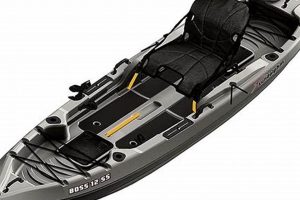
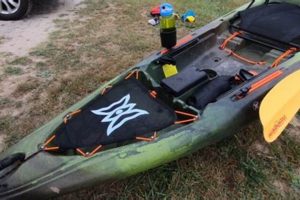
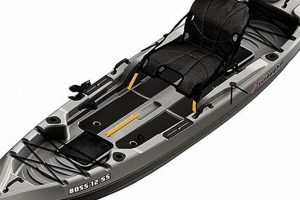
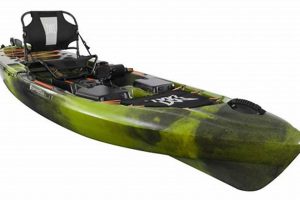
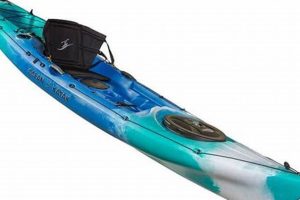
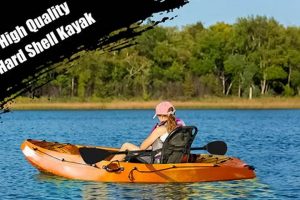
This style of kayak features an open cockpit, allowing the paddler to sit on top of the hull rather than inside it. This design offers a comfortable and stable platform ideal for anglers, particularly in warmer climates. An open cockpit facilitates easy entry and exit, especially helpful for those with mobility limitations. These vessels are typically wider and more stable than their sit-inside counterparts, providing a secure platform for casting and reeling.
The elevated seating position improves visibility for spotting fish and navigating shallow waters. The open design promotes better ventilation, preventing overheating during extended fishing trips. Historically, simpler versions of this style have been used for centuries in various cultures, often for fishing and transportation. Modern iterations incorporate specialized features like rod holders, tackle storage, and even pedal-powered propulsion systems, enhancing the angling experience.
This article will further explore specific design features, materials, and considerations for selecting the appropriate vessel for different fishing environments and angler needs. Further discussion will cover essential safety equipment and techniques for a successful and enjoyable fishing excursion.
Tips for Kayak Fishing
Careful planning and preparation are essential for a safe and successful fishing trip using this type of watercraft. The following tips offer guidance for both novice and experienced anglers.
Tip 1: Prioritize Stability: Vessel stability is paramount, especially when casting or reeling. Wider hulls generally offer greater stability compared to narrower designs.
Tip 2: Choose Appropriate Propulsion: Paddle propulsion provides a quiet, maneuverable approach suitable for shallow waters. Pedal-driven systems offer hands-free fishing and increased speed for covering larger distances.
Tip 3: Organize Tackle and Gear: Efficient organization of fishing rods, tackle boxes, and other essential gear is crucial. Utilize built-in storage compartments or compatible accessories to keep equipment within easy reach and prevent clutter.
Tip 4: Dress for the Environment: Appropriate attire enhances comfort and safety. Consider quick-drying clothing, sun protection, and a personal flotation device (PFD).
Tip 5: Plan for Water and Weather Conditions: Monitor weather forecasts and water conditions before embarking on a fishing trip. Adapt clothing and gear choices accordingly, and postpone outings if conditions are unsafe.
Tip 6: Respect Wildlife and the Environment: Practice Leave No Trace principles by packing out all trash and avoiding disturbance of natural habitats.
Tip 7: Check Local Regulations: Research and comply with local fishing regulations, including licensing requirements and catch limits.
Tip 8: Practice Safe Launching and Landing Techniques: Choose suitable launch sites and practice safe entry and exit techniques to avoid capsizing or damaging the vessel.
Adherence to these guidelines promotes a safer and more enjoyable experience, enabling anglers to focus on the thrill of the catch.
These insights provide a foundation for informed decision-making when planning a kayak fishing excursion. Additional resources can offer further guidance based on specific fishing styles and locations.
1. Stability

Stability forms a cornerstone of a successful fishing experience in a sit-on kayak. A stable platform permits anglers to cast, reel, and land fish without compromising balance or risking capsize. This stability derives from several design elements, including hull width and shape, weight distribution, and the angler’s center of gravity. Wider hulls inherently offer greater initial stability, resisting tipping. However, hull design also influences secondary stability the ability to remain upright when leaned. A shallow, flat-bottomed hull provides excellent initial stability but can feel tippy when leaned. Conversely, a deeper, V-shaped hull may feel less stable initially but offers greater secondary stability, inspiring confidence in rougher conditions. Anglers frequently shift weight while casting or retrieving, highlighting the importance of balanced weight distribution for maintaining equilibrium. Kayaks designed with lower centers of gravity enhance stability, reducing the likelihood of tipping. Consider a scenario where an angler hooks a large fish. A stable platform becomes critical for maneuvering and successfully landing the catch without capsizing. Similarly, fishing in windy or choppy conditions necessitates enhanced stability to maintain balance and prevent the kayak from being overturned.
Practical applications of understanding stability extend to kayak selection and modification. Choosing a kayak with appropriate stability characteristics for the intended fishing environment is crucial. Anglers fishing in calm, protected waters may prioritize maneuverability over extreme stability. However, those venturing into open water or challenging conditions should prioritize a stable platform. Aftermarket additions, such as outriggers or stabilizers, can enhance stability, providing additional security for anglers. Proper weight distribution within the kayak itself further contributes to overall stability. Distributing gear evenly and avoiding overloading the vessel are essential practices. Understanding how weight distribution affects stability can prevent potentially dangerous situations, particularly in dynamic water conditions.
In conclusion, stability stands as a critical factor influencing the safety and effectiveness of fishing from a sit-on kayak. Hull design, weight distribution, and the angler’s center of gravity play interconnected roles in determining stability. Selecting a kayak with appropriate stability characteristics and employing proper weight management practices ensures a secure and enjoyable angling experience. This understanding empowers informed decisions, contributing significantly to angler safety and success on the water.
2. Comfort

Comfort significantly impacts the overall fishing experience from a sit-on kayak. Extended periods on the water necessitate a comfortable seating arrangement to minimize fatigue and maximize enjoyment. Discomfort can detract from focus and enjoyment, hindering fishing performance and potentially shortening trips. Several factors contribute to overall comfort, each playing a vital role in angler satisfaction.
- Seat Design and Adjustability
Seat design directly influences comfort. A well-designed seat provides adequate support and cushioning, reducing pressure points and promoting proper posture. Adjustable features, such as backrest angle and seat height, allow customization based on individual preferences and body types. High-backed seats offer superior back support, crucial for long hours on the water. Materials also play a role; breathable fabrics enhance comfort, particularly in warm climates. An uncomfortable seat can lead to back pain, stiffness, and reduced fishing effectiveness, highlighting the importance of a supportive and adjustable seating system.
- Legroom and Footrests
Adequate legroom and adjustable footrests contribute to comfort and paddling efficiency. Sufficient space allows anglers to stretch their legs and shift positions, preventing cramping and discomfort. Adjustable footrests accommodate varying leg lengths and paddling styles. Proper leg positioning enhances stability and power transfer during paddling. Restricted legroom can cause discomfort and hinder paddling efficiency, negatively impacting both fishing performance and overall enjoyment.
- Cockpit Design
Cockpit design influences both comfort and accessibility. A spacious cockpit allows for easy entry and exit, while also providing ample room for movement within the kayak. The cockpit’s shape and size should accommodate the angler’s physique, allowing for comfortable seating and paddling. A well-designed cockpit balances comfort and functionality, providing enough space for fishing activities without compromising stability.
- Padding and Backrests
Padding and backrests contribute significantly to comfort, particularly during extended fishing trips. Adequate padding in the seat and backrest cushions the angler from the hard kayak surface, minimizing pressure points and enhancing comfort. Adjustable backrests allow customization for optimal lumbar support. High-quality padding and adjustable backrests promote proper posture, reducing fatigue and discomfort. Insufficient padding can lead to discomfort and pain, detracting from the overall fishing experience.
These comfort-related factors collectively influence the overall enjoyment and effectiveness of fishing from a sit-on kayak. Selecting a kayak with appropriate features to accommodate individual needs and preferences enhances comfort, promoting longer, more enjoyable, and ultimately more successful fishing excursions. Prioritizing comfort contributes significantly to a positive on-the-water experience.
3. Storage

Ample and well-designed storage is a critical aspect of sit-on fishing kayaks, directly impacting organization, efficiency, and overall fishing success. Efficient storage solutions allow anglers to carry essential gear, keeping equipment readily accessible while maintaining a clutter-free and stable platform. This organized approach maximizes fishing time and minimizes disruptions caused by searching for misplaced items.
- Tank Wells
Tank wells, typically located behind the seat, offer substantial storage for larger items like tackle boxes, crates, and even coolers. Securing these items with bungee cords ensures they remain in place during transit and while maneuvering. A spacious tank well allows anglers to transport a significant amount of gear, crucial for longer trips or diverse fishing styles.
- Hatches and Dry Storage
Watertight hatches provide secure storage for sensitive items like electronics, wallets, and keys, protecting them from water damage. These compartments maintain a dry environment, essential for preserving electronic devices and other valuables susceptible to moisture. Strategically placed hatches offer quick access to frequently used items without requiring extensive rummaging.
- Side-Mounted Rod Holders
Side-mounted rod holders keep fishing rods secure and readily accessible, facilitating quick transitions between casting and reeling. Multiple rod holders allow anglers to carry various rod and reel combinations, catering to different fishing techniques. Securely stored rods minimize the risk of entanglement or damage, promoting efficient fishing practices.
- Built-in Tackle Storage
Kayaks equipped with built-in tackle storage compartments offer convenient organization for lures, hooks, and other small accessories. These compartments keep essential items within easy reach, eliminating the need to constantly access larger tackle boxes. Dedicated tackle storage enhances efficiency and minimizes clutter, contributing to a more focused and enjoyable fishing experience.
The strategic incorporation of these storage solutions significantly enhances the functionality and overall effectiveness of sit-on fishing kayaks. Well-designed storage facilitates efficient organization, promotes a clutter-free environment, and maximizes fishing time. Anglers benefit from quick access to essential gear, contributing to a more streamlined and successful fishing experience. The choice and configuration of storage should align with individual fishing styles and preferences, further optimizing kayak utility and angler satisfaction.
4. Maneuverability

Maneuverability represents a critical performance attribute in sit-on fishing kayaks, significantly influencing angling effectiveness and overall experience. The ability to precisely and efficiently navigate diverse water environments directly impacts access to fishing grounds and the ability to respond to changing conditions or fish behavior. This facet encompasses several interconnected elements impacting kayak control and responsiveness.
- Hull Design and Length
Hull design plays a pivotal role in determining a kayak’s maneuverability. Shorter kayaks generally offer greater agility, enabling tighter turns and quicker directional changes. Longer kayaks, while offering superior tracking and speed in open water, can be less responsive in confined spaces like narrow creeks or vegetation-rich areas. Hull shape also contributes; a flatter hull allows for quicker pivoting, while a more rounded or V-shaped hull enhances tracking but may sacrifice turning responsiveness. Consider navigating a shallow, winding creek; a shorter, flatter-hulled kayak excels, while a longer kayak might prove cumbersome. Conversely, traversing larger bodies of water favors longer kayaks for their speed and stability.
- Waterline Length and Width
The length of the kayak’s waterlinethe portion of the hull in contact with the waterdirectly impacts maneuverability. A shorter waterline promotes greater agility, allowing for rapid turns. Width also plays a role; narrower kayaks tend to be more maneuverable than wider, more stable platforms. The interplay between waterline length and width dictates turning performance and responsiveness to paddle input. A shorter waterline, often found in shorter kayaks, facilitates rapid changes in direction, advantageous for navigating tight spots. A longer waterline, characteristic of longer kayaks, may provide better tracking but compromise maneuverability.
- Rudder or Skeg Systems
Rudders and skegs influence directional control, particularly in windy or current-prone conditions. A rudder, controlled by foot pedals, provides active steering, enabling precise adjustments to maintain course. Skegs, fixed or retractable fins, enhance tracking and minimize yaw (side-to-side movement), improving straight-line performance. Consider paddling in strong winds; a rudder allows for course correction, while a skeg minimizes lateral drift, improving overall control and efficiency.
- Paddler Experience and Technique
While kayak design dictates inherent maneuverability, paddler skill and technique influence practical performance. Effective paddle strokes and body positioning enhance control and responsiveness. Experience in various water conditions further refines maneuvering capabilities. A skilled paddler can maximize a kayak’s inherent maneuverability, efficiently navigating complex environments. Conversely, a novice paddler may find the same kayak more challenging to control.
These interconnected elements collectively determine a sit-on fishing kayak’s maneuverability, directly impacting its suitability for specific fishing environments and techniques. Anglers prioritizing agility in confined spaces will favor shorter, more responsive kayaks. Those fishing larger bodies of water might prioritize tracking and speed offered by longer designs. Understanding these factors empowers informed decisions aligned with individual fishing styles and target environments, maximizing on-the-water efficiency and angling success.
5. Propulsion

Propulsion systems significantly influence the performance and versatility of sit-on fishing kayaks. The chosen method of propulsion directly impacts speed, range, maneuverability, and the overall fishing experience. Various propulsion options cater to diverse fishing styles, environments, and angler preferences. Understanding the characteristics of each system is crucial for informed decision-making.
Traditional paddle propulsion offers a quiet, non-intrusive approach well-suited for shallow-water fishing and navigating areas with dense vegetation. Paddle power relies on angler effort, impacting endurance during long trips. However, paddles provide excellent maneuverability, allowing precise control in tight spaces. Consider fishing in a secluded cove teeming with wildlife; paddle propulsion minimizes disturbance, enhancing stealth and maximizing chances of a successful catch. However, covering larger distances or contending with strong currents may necessitate alternative propulsion methods. Pedal-powered systems offer hands-free operation, enabling anglers to focus on fishing rather than paddling. This advantage proves particularly beneficial for techniques requiring frequent casting and retrieving, such as lure fishing or trolling. Pedal drives offer increased speed and range compared to paddles, facilitating access to distant fishing grounds. However, pedal-powered kayaks often carry a higher price tag and may be less maneuverable in extremely shallow or obstacle-filled waters. Navigating open water or targeting fast-moving pelagic species benefits from the speed and range of a pedal drive. Motorized kayaks provide the greatest speed and range, ideal for covering vast distances or battling strong currents. Electric motors offer quiet operation and environmentally friendly performance, while gasoline-powered motors provide greater range and power. However, motorized kayaks introduce additional considerations, including battery life or fuel consumption, maintenance requirements, and potential environmental impact. Fishing large lakes or reservoirs, where covering significant distances is essential, exemplifies the advantages of motorized propulsion.
Selecting an appropriate propulsion system hinges on carefully evaluating individual fishing styles, target environments, and budgetary constraints. Paddle propulsion suits anglers prioritizing affordability, maneuverability, and a quiet approach. Pedal drives cater to those seeking hands-free fishing and increased speed, while motorized kayaks offer maximum range and power for traversing larger bodies of water. Each system presents distinct advantages and limitations; understanding these nuances empowers informed decisions, optimizing kayak performance and overall fishing experience.
6. Accessibility

Accessibility plays a crucial role in the appeal and usability of sit-on fishing kayaks, particularly for individuals with mobility limitations or those seeking convenient entry and exit. The open cockpit design inherent to these kayaks offers distinct advantages compared to traditional sit-inside kayaks, facilitating easier transitions onto and off the water. This design characteristic expands the user base, making kayaking a more inclusive activity.
- Ease of Entry and Exit
The open cockpit eliminates the need to squeeze into a confined space, simplifying entry and exit. This feature significantly benefits individuals with limited flexibility, back problems, or other mobility challenges. Consider an angler with arthritis; entering and exiting a sit-on kayak presents considerably less difficulty compared to maneuvering into a sit-inside model. This ease of access contributes to a more comfortable and less strenuous experience.
- Elevated Seating Position
The elevated seating position in sit-on kayaks offers several accessibility advantages. It simplifies transitions from a seated to a standing position, helpful for anglers who prefer to stand while fishing or need to adjust their position frequently. This higher vantage point also improves visibility, aiding navigation and fish spotting. An angler with knee problems, for example, may find the elevated seat and ease of standing in a sit-on kayak more accommodating than the lower, more confined seating in a sit-inside kayak.
- Adaptability for Modifications
The open cockpit design lends itself well to modifications for enhanced accessibility. Custom seating systems, adaptive paddling equipment, and outriggers for added stability can be readily integrated. This adaptability expands options for individuals with specific needs, furthering inclusivity. An angler using a wheelchair, for example, might benefit from a transfer system designed for sit-on kayaks, facilitating independent access to the water.
- Stability and Safety
The inherent stability of many sit-on kayak designs contributes to a sense of security, particularly for individuals with balance concerns. The wider hull and open cockpit design often provide a more stable platform compared to sit-inside kayaks, reducing the likelihood of capsizing. This stability promotes confidence and encourages participation from individuals who might otherwise feel apprehensive about kayaking. An angler with limited balance, for example, may find the wider, more stable platform of a sit-on kayak more reassuring than the narrower profile of a sit-inside model.
These accessibility features collectively enhance the usability and appeal of sit-on fishing kayaks for a broader range of individuals. The ease of entry and exit, elevated seating position, adaptability for modifications, and inherent stability contribute to a more inclusive and enjoyable kayaking experience. These characteristics make sit-on kayaks an attractive option for anglers of varying abilities, expanding access to the sport and promoting enjoyment on the water.
Frequently Asked Questions
This section addresses common inquiries regarding sit-on fishing kayaks, providing concise and informative responses to facilitate informed decision-making.
Question 1: What are the primary advantages of a sit-on-top kayak for fishing?
Key advantages include enhanced stability, ease of entry and exit, improved visibility, superior ventilation, and ample storage for fishing gear.
Question 2: Are sit-on-top kayaks suitable for all fishing environments?
While adaptable, they excel in calm to moderately choppy waters. Ocean kayaking or fishing in extreme conditions requires specialized designs and advanced paddling skills.
Question 3: How does one choose the right size and type of sit-on-top fishing kayak?
Selection depends on factors such as angler weight and size, intended fishing environment, storage needs, and desired propulsion method (paddle, pedal, or motor).
Question 4: What essential safety precautions should one take when fishing from a sit-on-top kayak?
Essential precautions include wearing a personal flotation device (PFD), carrying a whistle or signaling device, informing someone of fishing plans, and checking weather conditions prior to departure.
Question 5: What are the typical maintenance requirements for a sit-on-top fishing kayak?
Maintenance involves rinsing the kayak with fresh water after each use, storing it out of direct sunlight, and periodically inspecting for damage or wear. Specific maintenance requirements may vary depending on hull material.
Question 6: What are the approximate costs associated with purchasing a sit-on-top fishing kayak?
Costs vary significantly based on features, materials, and brand reputation. Entry-level models may start around several hundred dollars, while high-end, feature-rich kayaks can exceed several thousand dollars. Additional costs may include paddles, safety gear, and specialized fishing accessories.
Understanding these fundamental aspects contributes to a more informed purchasing decision and a safer, more enjoyable kayaking experience.
For further information, one can consult specialized retailers, online forums, and manufacturer resources.
Conclusion
This exploration of open-cockpit fishing kayaks has highlighted their significant advantages for anglers. Stability, accessibility, and specialized design features contribute to enhanced fishing experiences. From the enhanced visibility afforded by the elevated seating position to the ample storage for tackle and gear, these vessels offer distinct advantages in various fishing environments. Careful consideration of hull design, propulsion systems, and individual angler needs ensures optimal kayak selection. Furthermore, prioritizing safety precautions and proper maintenance practices contributes to responsible and enjoyable use.
The evolution of kayak design continues to refine and enhance angling opportunities. As technology advances and angler preferences evolve, continued innovation promises further improvements in performance, comfort, and specialized features. Choosing an open-cockpit fishing kayak represents an investment in enhanced fishing experiences, fostering closer connections with the aquatic environment and the pursuit of angling success.