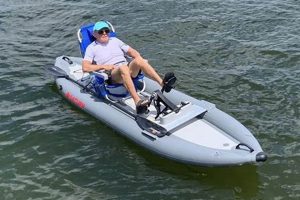
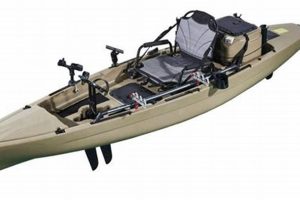
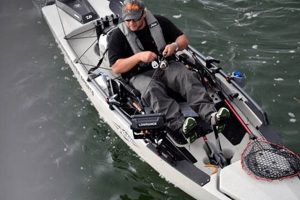
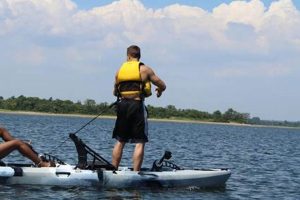
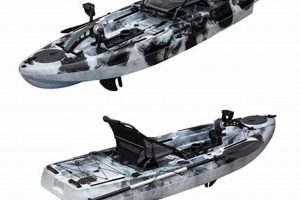
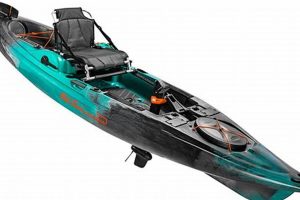
A kayak designed for angling in open waters typically features a specialized hull for stability and tracking in ocean conditions. These vessels are often equipped with rod holders, storage compartments for tackle and gear, and a propulsion system driven by leg power. This pedal-driven mechanism allows anglers to maintain speed and maneuverability while keeping their hands free for fishing. An example would be a sit-on-top design with a rudder controlled by the feet, offering enhanced control in currents and wind.
Hands-free propulsion offers significant advantages in open-water angling. It allows for continuous, subtle adjustments to position and speed, crucial for following fish or maintaining an ideal drift. This advantage translates to increased fishing efficiency and reduced fatigue compared to paddle-powered kayaks. Furthermore, the development of these specialized watercraft reflects an evolution in fishing practices, catering to a growing demand for more specialized equipment and techniques in the pursuit of offshore species.
This article will delve into the key features to consider when selecting such a vessel, including hull design, propulsion systems, and essential accessories. Further exploration will cover safety considerations, appropriate fishing techniques, and recommended locations for optimal ocean kayak fishing experiences.
Tips for Ocean Kayak Fishing
Effective ocean kayak fishing requires careful planning and execution. The following tips offer guidance for a safe and productive experience.
Tip 1: Check Weather and Tide Conditions: Prior to departure, consult marine forecasts for wind speed, wave height, and tidal currents. Avoid venturing out in conditions exceeding one’s skill level. Understanding tidal flows is critical for optimizing fishing strategy.
Tip 2: Prioritize Safety Equipment: Essential safety gear includes a personal flotation device (PFD), a signaling device such as a whistle or flare, and a communication device like a VHF radio. A first-aid kit and a bilge pump are also recommended.
Tip 3: Plan a Float Plan: Inform someone onshore of the intended fishing location, departure time, and expected return. This crucial step allows for timely assistance in case of an emergency.
Tip 4: Practice Pedal Kayak Control: Before venturing offshore, familiarize oneself with the pedal-driven propulsion system in calm waters. Mastering maneuvering and speed control is crucial for safe navigation in open-water conditions.
Tip 5: Understand Local Regulations: Research and adhere to all local fishing regulations, including licensing requirements, catch limits, and size restrictions. Responsible angling ensures the sustainability of fish populations.
Tip 6: Choose Appropriate Fishing Gear: Opt for tackle and equipment suited to target species and the ocean environment. Saltwater-resistant gear is essential for durability and longevity. Consider using heavier lines and lures to handle larger fish and stronger currents.
Tip 7: Employ Effective Anchoring Techniques: A reliable anchor system is crucial for maintaining position in desired fishing areas. Learn appropriate anchoring methods for various ocean floor types and current conditions.
Adhering to these guidelines enhances both safety and fishing success, contributing to a more enjoyable and rewarding experience on the water. Preparedness and responsible angling practices are paramount for successful ocean kayak fishing.
By incorporating these tips, anglers can maximize their chances of a productive and safe fishing trip. The following section will offer concluding thoughts on the overall topic of ocean kayak fishing.
1. Stability

Stability is a paramount consideration in ocean kayak fishing, particularly with pedal-driven systems. The inherent act of fishingcasting, reeling, and landingintroduces movement and shifting weight distribution within the kayak. A stable platform minimizes the risk of capsizing, especially when battling larger fish or encountering unpredictable ocean conditions such as waves or currents. Pedal kayaks designed for ocean fishing often feature wider beams and specialized hull designs (e.g., pontoon hulls, multi-chine hulls) to enhance stability. This design focus provides a secure foundation for anglers, allowing them to confidently engage with the fishing process without compromising balance. For example, a wider, flatter hull design offers increased primary stability (resistance to initial tipping), while a multi-chine hull can enhance secondary stability (resistance to capsizing once tipped beyond the initial point). This robust stability is crucial for maintaining a safe and enjoyable fishing experience in the dynamic ocean environment.
The integration of foot pedals further influences stability considerations. Unlike paddling, which requires shifting body weight and paddle placement, pedal propulsion allows for a more consistent center of gravity. This consistent weight distribution contributes to enhanced balance and control, particularly beneficial in challenging conditions. Furthermore, the hands-free nature of pedal kayaks allows anglers to react quickly to unexpected shifts or movements, further mitigating the risk of capsizing. Consider the scenario of landing a large fish; with hands free, the angler can adjust body position and maintain balance more effectively than if they were also managing a paddle. This capability contributes significantly to angler safety and success.
In summary, stability is intrinsically linked to the effectiveness and safety of ocean fishing kayaks with foot pedals. Specialized hull designs and the inherent stability advantages of pedal propulsion combine to create a secure platform for anglers. Understanding the nuances of stability, particularly in the context of ocean conditions, empowers informed decision-making when selecting a pedal kayak and enhances overall fishing performance and safety. Neglecting stability considerations can lead to dangerous situations, highlighting the critical nature of this element in ocean kayak fishing.
2. Propulsion efficiency
Propulsion efficiency represents a critical factor in the effectiveness of ocean fishing kayaks equipped with foot pedals. Maximizing distance covered with minimal effort directly impacts time spent fishing and access to desirable fishing grounds. This efficiency translates to more opportunities for successful angling and a less physically demanding experience. The following facets highlight key components contributing to propulsion efficiency in these specialized kayaks.
- Biomechanics and Pedal Drive Systems
Pedal-driven systems capitalize on the strength and endurance of leg muscles, generally larger and more powerful than arm muscles used in paddling. This biomechanical advantage allows for sustained propulsion over longer distances with reduced fatigue. Different pedal drive systems, such as propeller-based or fin-based systems, offer varying degrees of efficiency depending on factors like water resistance and gear ratios. For example, fin-based systems often excel in shallow water and offer superior maneuverability around underwater obstacles, while propeller systems can provide greater speed in open water. The choice of drive system influences the overall efficiency and suitability for specific fishing environments.
- Hull Design and Hydrodynamics
Hull design plays a crucial role in minimizing water resistance and maximizing the conversion of pedal power into forward momentum. Kayaks designed for ocean fishing often feature longer, sleeker hulls with minimized wetted surface area to reduce drag. Consider a kayak with a displacement hull designed to efficiently slice through the water, minimizing energy expenditure and maximizing speed. This design characteristic directly contributes to increased range and reduced effort required for propulsion.
- Gear Ratios and Pedal Mechanics
The gear ratio of the pedal drive system influences the speed and effort required for propulsion. Higher gear ratios allow for greater speed with each pedal rotation, but require increased effort. Lower gear ratios provide more torque, beneficial for navigating currents or challenging conditions, but sacrifice top-end speed. Understanding the gear ratio helps anglers select a kayak suited to their preferred fishing style and physical capabilities. For example, a lower gear ratio may be advantageous for trolling or fishing in strong currents, while a higher gear ratio benefits anglers seeking to cover larger distances quickly.
- Maintenance and Optimization
Regular maintenance of the pedal drive system, including lubrication and inspection for wear and tear, ensures optimal performance and longevity. Keeping the drive system clean and free of debris minimizes friction and maximizes power transfer. Similarly, maintaining proper hull cleanliness reduces drag and contributes to overall propulsion efficiency. This proactive approach minimizes performance degradation over time and ensures the kayak operates at peak efficiency.
The interplay of these factors contributes significantly to the overall propulsion efficiency of ocean fishing kayaks with foot pedals. By understanding the impact of biomechanics, hull design, gear ratios, and maintenance, anglers can make informed decisions when selecting a kayak and optimize its performance on the water. This focus on efficiency ultimately enhances the fishing experience by maximizing time spent fishing and minimizing physical exertion. It allows anglers to explore wider areas, reach more distant fishing spots, and ultimately increase their chances of success.
3. Hands-Free Fishing

Hands-free fishing represents a significant advantage offered by ocean fishing kayaks equipped with foot pedals. This capability distinguishes them from traditional paddle kayaks, fundamentally changing the angling experience. By freeing the hands from propulsion duties, pedal kayaks allow anglers to focus entirely on fishing techniques, resulting in increased efficiency and responsiveness. This discussion will explore the multifaceted benefits of hands-free fishing in the context of ocean angling.
- Enhanced Lure Control
Maintaining precise lure presentation is often crucial for attracting target fish species. Hands-free operation allows for constant adjustments to lure depth and action, maximizing effectiveness. Imagine working a jig near a reef structure; with hands free, adjustments to retrieve speed and rod tip action become seamless, enticing strikes and improving hookup ratios. This level of control is difficult to achieve when simultaneously managing a paddle.
- Improved Fight Control
Battling a powerful fish from a kayak requires precise maneuvering and rod handling. Hands-free operation provides the angler full control of the rod and reel, optimizing line tension and pressure throughout the fight. Consider hooking a large pelagic fish; with both hands available, the angler can maintain optimal rod angles and leverage, increasing the likelihood of a successful landing. This advantage is particularly crucial when facing strong currents or challenging sea conditions.
- Increased Situational Awareness
Ocean environments present dynamic conditions requiring constant assessment. Hands-free fishing allows anglers to scan the water for signs of fish activity, observe bird behavior, or monitor approaching weather patterns. This heightened awareness enhances safety and improves decision-making regarding fishing strategy. For example, spotting a flock of diving birds feeding on baitfish allows the angler to quickly position the kayak for optimal casting opportunities. This responsiveness contributes directly to fishing success.
- Efficient Tackle and Gear Management
From changing lures to adjusting tackle configurations, hands-free operation streamlines the entire fishing process. The ability to quickly access and manage gear without pausing propulsion enhances efficiency and maximizes time spent fishing. Consider the scenario of needing to re-tie a leader after a break-off; with hands readily available, the task can be completed quickly, minimizing downtime and maximizing fishing opportunities. This seamless transition between tasks contributes significantly to overall angling efficiency.
These facets highlight the transformative impact of hands-free fishing offered by ocean fishing kayaks with foot pedals. The ability to dedicate full attention to angling techniques, coupled with increased responsiveness and situational awareness, elevates the entire fishing experience. This advantage translates to increased fishing success, enhanced safety, and a more immersive connection with the ocean environment. By removing the limitations imposed by paddling, pedal-powered kayaks unlock a new level of efficiency and enjoyment in the pursuit of offshore species.
4. Ocean Suitability

Ocean suitability constitutes a critical factor differentiating specialized fishing kayaks from recreational models. This suitability encompasses a range of design elements specifically tailored to the demands of the open ocean environment. Features contributing to ocean suitability include enhanced stability for handling waves and currents, robust construction to withstand saltwater exposure, and specialized equipment for navigating and fishing in challenging conditions. A pedal-powered fishing kayak intended for offshore use requires careful consideration of these elements to ensure safe and effective operation.
Cause and effect relationships directly link ocean suitability to the design and functionality of pedal-powered fishing kayaks. The need to navigate unpredictable ocean currents necessitates features like rudders controlled by foot pedals, offering precise steering and maneuverability. The potential for encountering larger waves necessitates enhanced stability features, such as wider hulls and lower centers of gravity. Consider the scenario of fishing offshore reefs; the ability to maintain position against currents and swells while simultaneously managing fishing gear becomes crucial for success and safety. This direct correlation between ocean conditions and kayak design underscores the importance of ocean suitability as a core component. Practical significance becomes evident when considering safety; a kayak lacking sufficient stability in rough seas can compromise angler safety, while a lack of effective rudder control can make navigating challenging currents difficult and potentially dangerous. The impact on fishing effectiveness is also significant; a kayak suited to the ocean environment allows anglers to access more productive fishing grounds and maintain optimal fishing positions, increasing the likelihood of success.
In summary, ocean suitability is not merely a desirable feature but a fundamental requirement for safe and effective offshore kayak fishing. It represents a complex interplay of design elements, material choices, and specialized equipment working in concert to create a vessel capable of handling the rigors of the open ocean. Understanding the practical implications of ocean suitability empowers informed decision-making when selecting a pedal-powered fishing kayak and directly contributes to a more rewarding and, crucially, safer angling experience. Choosing a kayak designed specifically for ocean use enhances both fishing performance and personal safety, highlighting the crucial role of ocean suitability in the overall context of offshore kayak fishing.
5. Specialized Design

Specialized design differentiates ocean fishing kayaks with foot pedals from recreational models, optimizing them for angling effectiveness and safety in demanding offshore environments. These design elements cater specifically to the needs of anglers pursuing pelagic species or navigating challenging coastal waters. The following facets illustrate key aspects of specialized design in these kayaks.
- Rod Holders and Tackle Management
Dedicated rod holders, strategically positioned for easy access and secure storage, are essential for ocean kayak fishing. These specialized holders often feature adjustable angles and configurations to accommodate various fishing techniques, from trolling to bottom fishing. Recessed rod holders prevent lines from tangling during paddling or maneuvering. Integrated tackle storage systems, including compartments for lures, hooks, and other essential gear, keep equipment organized and readily accessible, crucial in the dynamic ocean environment. Consider the example of a kayak equipped with flush-mounted rod holders allowing trolling multiple lines simultaneously, or a dedicated compartment for storing leader material and terminal tackle, streamlining the rigging process. These design features contribute directly to fishing efficiency and organization.
- Hull Design and Stability
Ocean-going fishing kayaks often feature specialized hull designs optimized for stability in waves and currents. Wider beams, flatter bottoms, and multi-chine hull configurations contribute to enhanced primary and secondary stability. This design focus allows anglers to confidently cast, fight fish, and navigate challenging conditions without compromising balance. For example, a tunnel hull design enhances stability while maintaining maneuverability, crucial for navigating shallow coastal waters or handling choppy seas. Specialized hull designs directly impact stability and performance in the ocean environment.
- Pedal Drive Systems and Rudder Control
Foot-pedal propulsion systems are a defining feature, freeing hands for fishing and offering efficient, continuous propulsion. Integrated rudder systems controlled by foot steering enhance maneuverability in currents and wind, crucial for maintaining position and tracking fish. Consider a kayak equipped with a powerful propeller-based pedal drive combined with a responsive rudder system. This combination allows anglers to precisely control speed and direction, essential for navigating dynamic ocean conditions and following schools of fish. The integration of these systems represents a core element of specialized design.
- Mounting Systems and Customization
Modern ocean fishing kayaks offer versatile mounting systems and customization options. Tracks, rails, and strategically placed inserts allow anglers to personalize their setup with fish finders, GPS units, cameras, and other accessories. This adaptability allows for a tailored experience based on individual fishing preferences and target species. For example, mounting a fish finder transducer provides real-time information on water depth and fish location, enhancing angling effectiveness. The ability to customize the kayak’s setup contributes significantly to its versatility and utility in diverse fishing scenarios.
These specialized design elements collectively enhance the functionality and performance of ocean fishing kayaks with foot pedals. By focusing on the unique demands of offshore angling, these design considerations create a platform optimized for effectiveness, efficiency, and safety. The integration of specialized features, from rod holders to rudder control, transforms the kayak into a dedicated fishing vessel capable of handling the challenges and maximizing the opportunities presented by the ocean environment. Choosing a kayak with these features significantly impacts fishing success, safety, and overall enjoyment on the water.
Frequently Asked Questions
This section addresses common inquiries regarding ocean fishing kayaks equipped with foot pedals, providing concise and informative responses.
Question 1: What are the primary advantages of a pedal-driven system over traditional paddling for ocean fishing?
Pedal drives offer continuous propulsion, freeing hands for fishing-related tasks like casting, reeling, and handling tackle. This hands-free operation significantly enhances angling efficiency and responsiveness. Additionally, leg muscles generally offer greater endurance than arm muscles, reducing fatigue during longer fishing trips.
Question 2: How stable are these kayaks in rough ocean conditions?
Ocean fishing kayaks with pedal drives are designed with stability as a priority. Wider beams, specialized hull designs (e.g., pontoon hulls, catamaran hulls), and lower centers of gravity contribute to enhanced stability in waves and currents. However, individual kayak stability varies based on specific design and manufacturer. Careful consideration of anticipated conditions and individual skill level is recommended.
Question 3: What maintenance is required for a pedal drive system in saltwater environments?
Regular rinsing with fresh water after each use is crucial to remove salt and debris. Periodic lubrication of moving parts and inspection for wear and tear are essential for maintaining optimal performance and longevity. Manufacturer guidelines provide specific maintenance recommendations based on the type of pedal drive system.
Question 4: Are specialized fishing kayaks significantly more expensive than recreational kayaks?
Specialized fishing kayaks typically represent a higher investment due to their advanced features, specialized design, and durable construction. However, the enhanced performance, stability, and fishing-specific features often justify the increased cost for serious anglers. A range of price points exists to accommodate varying budgets.
Question 5: What safety precautions should one take when fishing from a kayak in the ocean?
Essential safety measures include wearing a personal flotation device (PFD), carrying a signaling device (whistle, flare), informing someone of the float plan, checking weather forecasts before departure, and carrying a communication device (VHF radio). Adherence to safe boating practices and awareness of ocean conditions are paramount.
Question 6: What are the key features to consider when choosing an ocean fishing kayak with a pedal drive?
Important considerations include hull design (stability, tracking), pedal drive system (efficiency, maintenance), rudder control (responsiveness, precision), storage capacity (tackle, gear), and mounting options (accessories, customization). Individual fishing style, target species, and anticipated conditions influence the optimal choice.
Careful consideration of these frequently asked questions equips prospective buyers with essential knowledge for informed decision-making. Understanding the nuances of ocean fishing kayaks with pedal drives enhances both safety and angling effectiveness.
The subsequent sections will delve into specific models and brands, offering comparative analyses to guide selection.
Ocean Fishing Kayak with Foot Pedals
This exploration has highlighted the multifaceted nature of ocean fishing kayaks equipped with foot pedals. From specialized design features catering to offshore angling to the inherent advantages of hands-free propulsion and enhanced stability, these vessels represent a significant advancement in kayak fishing technology. Key considerations such as hull design, pedal drive systems, and ocean suitability have been examined, emphasizing the importance of informed decision-making when selecting a kayak for offshore use. The discussion encompassed practical aspects, including safety precautions, maintenance requirements, and effective fishing techniques, providing a comprehensive overview of this specialized angling platform.
The evolution of kayak fishing continues to drive innovation in design and technology. As anglers seek more specialized tools for pursuing their passion in challenging offshore environments, the significance of purpose-built vessels like pedal-powered fishing kayaks becomes increasingly apparent. Careful consideration of individual needs, target species, and anticipated conditions remains paramount in selecting the optimal kayak for maximizing both safety and fishing success. The future of ocean kayak fishing promises further advancements, enhancing the angling experience and enabling exploration of increasingly diverse and challenging waters.