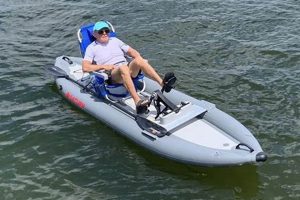
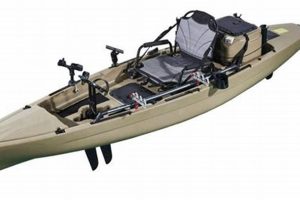
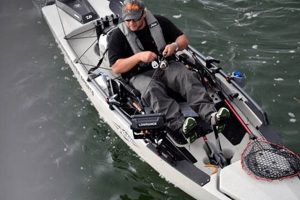
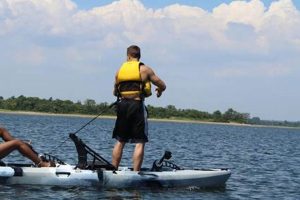
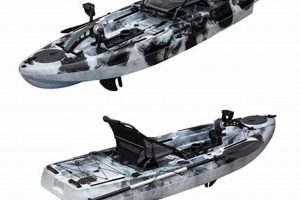
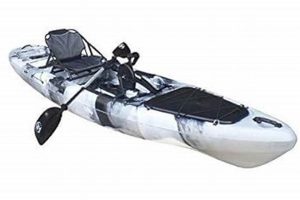
Top-tier pedal-powered fishing kayaks for the 2024 season represent a culmination of advancements in design, technology, and angler-specific features. These watercraft offer hands-free propulsion, enabling anglers to focus on casting, reeling, and landing fish. This propulsion system typically employs either a propeller or fin drive, offering varying degrees of efficiency and maneuverability in different water conditions.
Hands-free navigation offers a significant advantage for anglers. It allows for greater precision in fishing techniques, quieter movement to avoid spooking fish, and the ability to cover more water efficiently. Furthermore, modern designs incorporate features like rod holders, tackle storage, and even live wells, enhancing the overall fishing experience. The evolution of these kayaks reflects a growing demand for vessels that cater specifically to the needs of anglers, offering improved stability, comfort, and specialized functionality compared to traditional paddle kayaks.
This article will delve into the key features to consider when selecting a pedal fishing kayak, including propulsion systems, hull design, and integrated accessories. Further discussion will explore leading models anticipated for the 2024 season and offer guidance on matching specific kayak features to individual fishing styles and target species.
Tips for Selecting a 2024 Pedal Fishing Kayak
Choosing the right pedal-powered fishing kayak requires careful consideration of several factors to ensure optimal performance and angler satisfaction.
Tip 1: Evaluate Propulsion Systems. Assess the advantages and disadvantages of propeller-based versus fin-driven systems. Propeller drives generally offer higher speeds in open water, while fin drives excel in shallow water and areas with potential obstacles like submerged vegetation or rocks.
Tip 2: Prioritize Stability. Consider the hull design and its impact on stability. Wider hulls provide greater initial stability, beneficial for stand-up fishing, while longer, narrower hulls offer better tracking and speed.
Tip 3: Assess Seating Comfort and Adjustability. Prolonged fishing trips demand a comfortable and supportive seat. Look for adjustable seating systems that cater to individual preferences and allow for changes in posture throughout the day.
Tip 4: Examine Storage Capacity. Ample storage space for tackle, gear, and personal items is essential. Evaluate the size, accessibility, and watertightness of storage compartments.
Tip 5: Consider Integrated Features. Features like rod holders, fish finders, and live wells enhance the fishing experience. Determine which features are essential based on individual fishing styles and target species.
Tip 6: Factor in Weight and Portability. The kayak’s weight and ease of transport should align with available transportation methods and launch site accessibility.
Tip 7: Establish a Budget. High-quality pedal fishing kayaks represent a significant investment. Establish a realistic budget and explore models that offer the desired features within that price range.
Careful consideration of these factors will contribute to a well-informed purchase decision, ensuring the selected kayak meets specific fishing needs and enhances on-the-water performance.
By understanding these critical elements, anglers can confidently choose a pedal fishing kayak that optimizes their fishing experience and contributes to a successful 2024 season on the water.
1. Propulsion Efficiency

Propulsion efficiency stands as a critical factor in determining the performance of best pedal fishing kayaks in 2024. Efficient propulsion translates directly into greater speed, extended range, and reduced angler fatigue, allowing for longer and more productive fishing trips. Understanding the nuances of propulsion systems is crucial for selecting a kayak that aligns with specific fishing needs and water conditions.
- Pedal Drive Mechanisms:
Different pedal drive mechanisms offer varying levels of efficiency. Fin drives, known for their weedless design and shallow-water capabilities, provide excellent maneuverability but may sacrifice some top-end speed. Propeller-based systems, on the other hand, generate higher speeds in open water but are more susceptible to entanglement in vegetation. The choice between these systems depends heavily on the intended fishing environment.
- Gear Ratios and Resistance:
Gear ratios within the pedal drive system influence the amount of effort required to propel the kayak. Higher gear ratios provide more speed with each pedal stroke but demand increased exertion. Lower gear ratios require less effort but result in lower speeds. Internal resistance within the drive system also plays a role in overall efficiency. Well-maintained, lubricated systems minimize friction and maximize power transfer.
- Hull Design and Water Resistance:
The kayak’s hull design significantly impacts propulsion efficiency. Longer, narrower hulls generally track better and slice through the water with less resistance, promoting higher speeds. Wider hulls offer increased stability but create more drag, reducing overall efficiency. The hull material also influences performance, with lighter materials typically requiring less energy to propel.
- Maintenance and Optimization:
Regular maintenance of the pedal drive system is essential for maintaining optimal propulsion efficiency. Keeping the drive system clean, lubricated, and free of debris minimizes friction and ensures smooth operation. Periodic inspection and replacement of worn components, such as bearings and seals, can significantly extend the life and performance of the system.
Ultimately, the most effective propulsion system for a 2024 pedal fishing kayak depends on a balance between desired speed, maneuverability, and the specific fishing environment. A thorough understanding of these factors allows anglers to make informed decisions and select a kayak that maximizes their time and success on the water.
2. Stability and Tracking

Stability and tracking are paramount for pedal fishing kayaks, particularly in the context of 2024 models designed for enhanced performance and angler experience. These characteristics directly influence boat control, casting accuracy, and overall fishing success. A stable and predictable kayak provides a secure platform for casting, fighting fish, and maneuvering in various water conditions.
- Primary Stability:
Primary stability refers to a kayak’s initial resistance to tipping. Wider hulls generally exhibit higher primary stability, making them ideal for stand-up fishing and providing a secure feeling for anglers. This characteristic is crucial for maintaining balance while casting, reeling, and landing fish, especially in challenging conditions such as windy days or choppy water. 2024 models often incorporate design features that maximize primary stability without compromising maneuverability.
- Secondary Stability:
Secondary stability describes a kayak’s resistance to tipping at greater angles of lean. This characteristic comes into play during turns and maneuvers. Kayaks with rounded hulls typically offer greater secondary stability, allowing anglers to lean into turns and maintain control even in rougher waters. This is particularly important for navigating challenging currents or windy conditions. Advanced hull designs in 2024 models strive to balance primary and secondary stability for optimal performance across various fishing scenarios.
- Tracking Performance:
Tracking refers to a kayak’s ability to maintain a straight course with minimal corrective steering. Longer kayaks generally track better than shorter ones. A well-tracking kayak allows anglers to cover greater distances with less effort and maintain a desired course while fishing, especially important in currents or wind. 2024 models often feature design elements, such as fin placements and hull shapes, that enhance tracking performance for efficient and precise navigation.
- Impact of Wind and Current:
Wind and current significantly influence stability and tracking. Kayaks with higher windage (more surface area exposed to wind) are more susceptible to being pushed off course. Similarly, strong currents can challenge a kayak’s tracking ability. 2024 designs often incorporate features like skegs or rudders to mitigate these effects, providing anglers with greater control in challenging conditions and maintaining optimal stability for fishing.
Selecting a 2024 pedal fishing kayak with excellent stability and tracking characteristics is crucial for a comfortable and productive fishing experience. By carefully considering these factors in relation to individual fishing styles and intended water conditions, anglers can choose a kayak that provides the optimal balance of stability, maneuverability, and on-the-water performance.
3. Comfortable Seating
Comfortable seating is integral to the “best pedal fishing kayaks 2024” designation. Extended periods on the water, inherent to fishing, necessitate seating that minimizes fatigue and maximizes angler focus. Discomfort can detract from the fishing experience, hindering performance and enjoyment. Well-designed seating supports proper posture, reducing strain on the back, legs, and core muscles. This allows anglers to maintain focus on fishing rather than physical discomfort, particularly during long outings. Features like adjustable backrests, breathable fabrics, and ample cushioning contribute to enhanced comfort and support. For example, kayaks with high-low seating options cater to different fishing styles and preferences, allowing anglers to choose a position that optimizes comfort and visibility.
The connection between comfortable seating and optimal fishing performance is undeniable. A comfortable angler is a more focused and effective angler. Reduced fatigue translates to greater endurance, allowing for longer fishing trips and increased opportunities for success. Moreover, proper posture facilitated by supportive seating enhances casting accuracy and control, crucial elements in successful angling. The ability to adjust seating position throughout the day also contributes to overall comfort, accommodating changes in fishing techniques and target species. Kayaks equipped with adjustable footrests further enhance ergonomics and comfort, allowing anglers to customize their seating position for optimal stability and control.
In conclusion, comfortable seating is a defining characteristic of the best pedal fishing kayaks in 2024. It directly impacts angler performance, endurance, and overall enjoyment. Prioritizing seating comfort when selecting a kayak is essential for maximizing time on the water and achieving fishing success. The evolution of kayak seating design reflects a growing understanding of ergonomic principles and the importance of angler comfort in achieving optimal fishing performance. This emphasis on comfort distinguishes the leading kayaks of 2024, catering to the needs of serious anglers who demand both performance and comfort in their fishing equipment.
4. Ample Storage Capacity
Ample storage capacity is a defining characteristic of best-in-class pedal fishing kayaks for 2024. The ability to transport essential gear directly impacts fishing success and overall experience. Sufficient storage accommodates tackle boxes, rods, safety equipment, and personal items, ensuring anglers have everything needed for a productive and enjoyable outing. Imagine targeting different species throughout the day adequate storage allows for various rod and tackle combinations without compromising space or organization. This is particularly crucial in tournament fishing or remote expeditions where resupply is impractical. Dedicated compartments for specific items enhance organization and accessibility, further streamlining the fishing process.
The relationship between ample storage and kayak performance extends beyond mere convenience. A well-organized kayak promotes efficient use of time and energy. Easy access to essential gear eliminates time wasted searching for misplaced items, allowing anglers to focus on fishing. Furthermore, proper weight distribution within storage compartments contributes to kayak stability and balance. Uneven weight distribution can negatively impact tracking and maneuverability, hindering performance. Consider a scenario where an angler needs to access a lure quickly readily accessible storage compartments facilitate a swift and seamless transition, maximizing fishing opportunities. This efficiency becomes even more critical in rapidly changing fishing conditions or when targeting fast-moving species.
In summary, ample storage capacity significantly contributes to the overall performance and desirability of top-tier pedal fishing kayaks in 2024. It facilitates organization, optimizes weight distribution, and enhances on-the-water efficiency. This feature allows anglers to carry all essential gear comfortably and access it quickly, leading to a more productive and enjoyable fishing experience. The emphasis on storage solutions reflects a broader trend in kayak design, prioritizing angler needs and optimizing on-the-water performance. Selecting a kayak with ample and well-designed storage is an investment in both convenience and fishing success.
5. Integrated Accessories
Integrated accessories distinguish top-tier pedal fishing kayaks of 2024, elevating them from simple vessels to specialized fishing platforms. These purpose-built additions directly enhance angling effectiveness and overall experience. Consider rod holders: strategically placed holders secure rods, freeing hands for other tasks like paddling, adjusting tackle, or landing fish. This is particularly advantageous when trolling or fishing in areas requiring frequent rod adjustments. Similarly, integrated fish finders offer real-time underwater insights, crucial for locating fish and understanding bottom structure. This information informs strategic decisions about lure choice and fishing location, ultimately increasing the likelihood of success. Furthermore, built-in tackle storage systems maintain organization and readily available gear, eliminating time wasted searching for essential items.
The impact of integrated accessories extends beyond mere convenience. They represent a paradigm shift in kayak design, prioritizing angler-specific needs and maximizing on-the-water efficiency. Integrated features minimize clutter and optimize space utilization, crucial for maintaining balance and stability. A well-organized kayak translates to a more focused and productive angler. For example, strategically placed rod holders prevent tangling and facilitate quick access when a fish strikes. Similarly, readily available tackle storage allows for seamless lure changes, maximizing fishing time and responsiveness to changing conditions. This efficiency can be the difference between a successful fishing trip and a frustrating one, particularly in competitive angling or challenging environments.
In conclusion, integrated accessories are essential components of the best pedal fishing kayaks in 2024. They contribute directly to angler performance, efficiency, and overall enjoyment. These features are not mere add-ons but integral design elements that transform kayaks into purpose-built fishing machines. The continued development of integrated accessories underscores the evolving nature of kayak fishing, catering to the demands of serious anglers who prioritize functionality and performance. Selecting a kayak with well-integrated accessories represents an investment in a more productive and enjoyable fishing experience.
Frequently Asked Questions
This section addresses common inquiries regarding top-performing pedal-powered fishing kayaks anticipated in 2024. Clear and concise responses aim to provide prospective buyers with the information necessary for informed purchasing decisions.
Question 1: What are the primary advantages of pedal kayaks over traditional paddle kayaks for fishing?
Pedal kayaks offer hands-free propulsion, allowing anglers to focus on fishing techniques and maintain precise boat positioning. This is particularly advantageous for techniques like trolling or sight fishing. Additionally, pedal drives often provide greater speed and range compared to paddling, enabling anglers to cover more water efficiently.
Question 2: How do fin-drive and propeller-driven pedal systems compare in terms of performance and maintenance?
Fin drives excel in shallow water and vegetated areas due to their weedless design. Propeller drives generally offer higher top speeds in open water but are more susceptible to fouling. Maintenance requirements are similar for both systems, including regular cleaning and lubrication. However, propeller systems may require more frequent attention due to potential damage from underwater obstacles.
Question 3: What factors should be considered when choosing the hull design for a pedal fishing kayak?
Hull design significantly impacts stability, tracking, and maneuverability. Wider hulls offer enhanced primary stability, beneficial for stand-up fishing. Longer, narrower hulls provide better tracking and speed but may sacrifice some stability. Consider the intended fishing environment and personal preferences when selecting a hull design.
Question 4: How important is seat comfort in a pedal fishing kayak, and what features should one look for?
Seat comfort is paramount, especially for extended fishing trips. Look for adjustable seating systems with ample cushioning and breathable fabrics. Features like lumbar support and high-low seating adjustments can significantly enhance comfort and reduce fatigue.
Question 5: What are the essential integrated accessories to consider for a pedal fishing kayak?
Essential integrated accessories depend on individual fishing styles but often include rod holders, fish finder mounts, and tackle storage compartments. Additional features like live wells, anchor trolleys, and rudder systems can further enhance the fishing experience.
Question 6: What is the typical price range for high-quality pedal fishing kayaks in 2024?
High-quality pedal fishing kayaks typically range in price from [Insert Approximate Price Range]. Pricing varies based on features, materials, and brand reputation. Establishing a budget beforehand can help narrow down options and ensure a suitable investment.
Careful consideration of these frequently asked questions empowers potential buyers to make informed decisions based on individual needs and priorities. Understanding the nuances of pedal fishing kayak features contributes to a satisfying purchase and an enhanced on-the-water experience.
The subsequent section will offer an in-depth analysis of leading pedal fishing kayak models anticipated for the 2024 season.
Conclusion
Selecting a top-tier pedal fishing kayak for the 2024 season requires careful evaluation of key features impacting performance, comfort, and overall fishing success. Propulsion efficiency, stability, seating comfort, storage capacity, and integrated accessories contribute significantly to the optimal angling experience. Understanding the nuances of fin-drive versus propeller systems, hull designs, and available features empowers informed decision-making. Prioritizing individual fishing styles and target species further refines selection criteria, ensuring alignment between angler needs and kayak capabilities.
The 2024 pedal fishing kayak market presents a diverse range of options, catering to various budgets and fishing preferences. Diligent research, coupled with a clear understanding of essential features, allows anglers to navigate this landscape effectively. A well-chosen kayak becomes an extension of the angler’s skillset, enhancing on-the-water efficiency and maximizing the potential for a successful and rewarding fishing season.