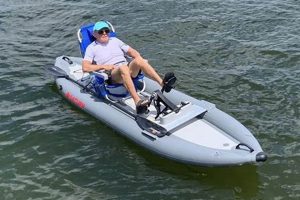
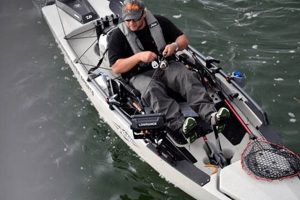
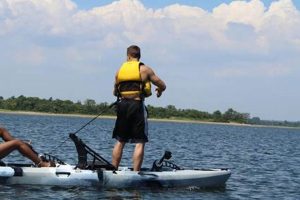
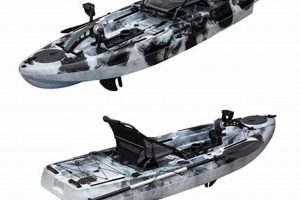
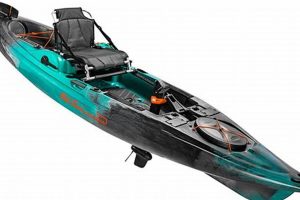
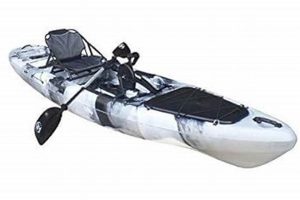
High-quality, foot-powered fishing kayaks offer hands-free propulsion, allowing anglers to focus on casting, reeling, and landing fish. This propulsion system typically employs either a propeller or fin system beneath the hull, controlled by leg movements. This leaves the hands free for fishing activities, offering a significant advantage over paddle kayaks.
Hands-free operation contributes significantly to fishing success, particularly in situations requiring precise boat control or quick reactions. Maintaining position in currents, maneuvering through tight spaces, and following fish become easier and more efficient. This evolution in kayak design stems from a growing demand for more specialized fishing kayaks, reflecting the increasing popularity of kayak fishing. The ability to focus solely on fishing, coupled with the quiet movement of these vessels, contributes to a more productive and enjoyable angling experience.
Factors to consider when selecting a suitable vessel include propulsion system design, hull stability, storage capacity, and comfort features. Subsequent sections will delve into these critical aspects, offering guidance for anglers seeking the most effective watercraft for their fishing needs.
Tips for Selecting a Foot-Powered Fishing Kayak
Choosing the right watercraft for fishing requires careful consideration of several factors. These tips offer guidance for selecting a suitable foot-powered fishing kayak.
Tip 1: Evaluate Propulsion Systems: Propeller-based systems offer speed and efficiency in open water, while fin systems excel in shallow water and offer superior maneuverability around obstacles. Consider the typical fishing environment when evaluating propulsion types.
Tip 2: Prioritize Stability: Hull design significantly impacts stability. Wider, flatter hulls offer greater initial stability, beneficial for stand-up fishing, while longer, narrower hulls provide better tracking and speed.
Tip 3: Assess Storage Capacity: Ample storage space is crucial for carrying fishing gear, tackle boxes, and safety equipment. Consider the duration and style of fishing trips when evaluating storage needs.
Tip 4: Consider Seat Comfort: Long hours on the water demand a comfortable seat. Look for adjustable seating systems with adequate back support and cushioning.
Tip 5: Factor in Weight Capacity: Ensure the kayak’s weight capacity accommodates the angler’s weight, plus the combined weight of gear and potential catches.
Tip 6: Research Reputable Brands: Opt for kayaks from established manufacturers known for quality construction, reliable performance, and robust customer support.
Tip 7: Test Before Purchasing (If Possible): A test drive provides invaluable insights into a kayak’s handling, stability, and comfort. Testing allows anglers to experience the kayak firsthand and make informed decisions.
Careful consideration of these factors ensures selection of a vessel optimized for individual fishing needs and preferences, leading to enhanced fishing experiences.
By understanding these elements, anglers can make informed decisions, leading to greater fishing success and enjoyment on the water. The next section will explore specific models and further refine the selection process.
1. Propulsion System

Propulsion systems represent a defining feature of top-tier foot-powered fishing kayaks, directly impacting performance and fishing effectiveness. Two primary types of propulsion dominate the market: propeller-driven and fin-driven systems. Each offers distinct advantages and disadvantages, influencing suitability for specific fishing environments and styles.
Propeller systems generate substantial thrust, enabling higher speeds and efficient movement across open water. This makes them well-suited for traversing larger lakes and reservoirs or covering significant distances quickly. However, propellers are more susceptible to damage from underwater obstacles like rocks and vegetation, posing limitations in shallow or debris-laden waters. Fin-driven systems, conversely, excel in shallow water and offer superior maneuverability around obstacles. Their underwater profile presents a smaller target for entanglement, allowing navigation through complex environments. While generally slower than propeller systems in open water, fin drives provide precise control for stealthy approaches and positioning in challenging conditions. For example, navigating tight creeks or maintaining position in moving water benefits significantly from the nuanced control afforded by fin propulsion.
Understanding the nuances of each propulsion type is crucial for selecting the most appropriate kayak. Anglers frequently fishing shallow, vegetated areas will likely find fin-driven systems more practical. Those prioritizing speed and open-water performance may favor propeller systems. Ultimately, choosing the optimal propulsion system hinges on careful consideration of individual fishing needs and target environments.
2. Hull Design

Hull design significantly influences the performance and suitability of a foot-powered fishing kayak for specific applications. Understanding the nuances of various hull designs allows informed decisions based on individual fishing styles and target environments. Different hull shapes prioritize stability, speed, maneuverability, and tracking, leading to specialized performance characteristics.
- Pontoon Hulls:
Pontoon hulls, characterized by two separate pontoons connected by a deck, offer exceptional stability, particularly beneficial for stand-up fishing. Their wide stance resists tipping, providing a secure platform for casting and reeling. However, this stability comes at the expense of speed and maneuverability, making them less suitable for covering long distances or navigating tight spaces. Anglers prioritizing stability over speed, especially those fishing in calm waters, might find pontoon hulls ideal.
- Catamaran Hulls:
Similar to pontoon hulls, catamaran hulls feature two hulls, offering excellent stability and a spacious deck. They tend to be faster than pontoon hulls due to reduced water resistance but may still sacrifice some maneuverability compared to other designs. Catamaran hulls provide a balance between stability and performance, making them suitable for diverse fishing environments.
- Flat-Bottom Hulls:
Flat-bottom hulls provide exceptional initial stability, making them ideal for shallow water fishing and stand-up casting. They excel in maneuverability, allowing quick turns and precise positioning in tight spots. However, they track less effectively than other designs and are susceptible to wind drift. This design prioritizes stability and maneuverability over speed and tracking, making them suitable for sheltered waters and sight fishing.
- V-Shaped Hulls:
V-shaped hulls efficiently cut through water, providing superior tracking and speed. They excel in open water and choppy conditions, maintaining a straight course with minimal effort. However, V-shaped hulls sacrifice stability compared to flatter designs, making them less suitable for stand-up fishing. Anglers prioritizing speed and tracking, often fishing larger bodies of water, benefit from the performance of V-shaped hulls.
The interplay between hull design and intended fishing application significantly influences kayak selection. Choosing the appropriate hull design depends on individual fishing styles and target environments. Prioritizing stability for stand-up fishing necessitates different hull characteristics than prioritizing speed for covering long distances. Understanding these design nuances allows informed decisions, optimizing kayak performance and fishing experience.
3. Stability

Stability represents a critical performance attribute in foot-powered fishing kayaks, directly influencing angler safety, comfort, and fishing effectiveness. A stable platform allows anglers to confidently cast, reel, and land fish, even in challenging conditions. It also enables maneuvers like reaching for gear or changing lures without compromising balance. Conversely, instability can lead to discomfort, difficulty fishing effectively, and potentially dangerous situations, especially in rough water or when handling large fish. Stability considerations become particularly crucial for anglers intending to stand while fishing. Stand-up fishing offers improved visibility and casting range but demands a significantly more stable platform. Kayak stability derives from factors like hull design, width, and center of gravity. Wider kayaks generally offer greater stability, while narrower kayaks are more susceptible to tipping. Hull shape plays a significant role, with flatter bottoms providing more initial stability than V-shaped hulls. Lower centers of gravity contribute to enhanced stability, which is why proper weight distribution within the kayak is essential. For instance, a kayak loaded with gear positioned high above the waterline will be less stable than one with the weight distributed lower.
Practical implications of stability considerations extend to various fishing scenarios. Anglers fishing in calm lakes or slow-moving rivers might prioritize stability for comfortable stand-up fishing, while those fishing in rougher conditions or strong currents might favor stability for enhanced safety and control. Consider an angler fighting a large fish; a stable kayak allows the angler to focus on the fight without worrying about capsizing, leading to a safer and more successful outcome. Conversely, an unstable kayak might require the angler to sit down mid-fight, potentially losing the fish or even compromising safety. Understanding the factors contributing to stability empowers anglers to make informed decisions aligning with their fishing needs and target environments.
In summary, stability represents a cornerstone of effective kayak fishing, impacting angler safety, comfort, and fishing effectiveness. Evaluating stability characteristics alongside intended fishing applications is crucial for selecting a kayak optimized for individual needs and target environments. Recognizing the interplay between hull design, width, center of gravity, and practical fishing scenarios allows anglers to choose kayaks providing confident and secure fishing experiences. This understanding contributes significantly to safer and more successful outings on the water.
4. Storage Capacity
Storage capacity directly impacts the practicality and effectiveness of a foot-powered fishing kayak. Sufficient storage accommodates essential gear, enhancing organization and accessibility while maximizing fishing time. A well-designed storage system allows anglers to carry tackle boxes, rods, safety equipment, and personal items without compromising stability or maneuverability. Conversely, inadequate storage can lead to cluttered decks, hindering movement and potentially creating safety hazards. Imagine an angler attempting to land a fish while navigating around loose gear on a cramped deck; the lack of organization could lead to a missed catch or even a lost fish. Conversely, ample, well-organized storage allows for efficient retrieval of necessary tools and equipment, optimizing fishing efficiency.
Consider a scenario involving a multi-day fishing expedition. A kayak with substantial storage capacity can accommodate camping gear, food, and additional clothing, enabling extended trips to remote locations. This expands fishing opportunities, allowing anglers to explore areas inaccessible on shorter outings. For day trips, ample storage allows for carrying various rods and tackle configurations, catering to diverse fishing techniques and target species. Dedicated storage compartments for specific items, like tackle boxes or electronic devices, further enhance organization and protect sensitive equipment from water damage. For example, a waterproof compartment safeguards a fish finder or GPS unit from splashes and rain, ensuring continuous operation throughout the fishing trip.
In summary, adequate storage capacity represents a critical element in evaluating foot-powered fishing kayaks. Sufficient and well-designed storage facilitates organized gear management, improves safety, and enhances overall fishing effectiveness. Whether embarking on multi-day expeditions or short day trips, ample storage allows anglers to carry essential equipment, maximizing fishing opportunities and enjoyment. Evaluating storage solutions alongside individual fishing styles and anticipated needs optimizes kayak selection and contributes significantly to positive on-the-water experiences. This practical consideration directly translates to improved organization, enhanced safety, and ultimately, increased fishing success.
5. Seat Comfort

Seat comfort constitutes a pivotal element in the “best foot pedal fishing kayak” equation. Extended periods on the water, inherent in kayak fishing, necessitate a comfortable and supportive seating system. Discomfort can detract significantly from the fishing experience, reducing focus and potentially leading to premature fatigue. A well-designed seat mitigates these issues, allowing anglers to maintain focus and energy throughout their fishing trip. Consider the scenario of an angler battling a strong fish. A comfortable seat allows for sustained effort and proper leverage, increasing the likelihood of a successful landing. Conversely, an uncomfortable seat can lead to shifting and discomfort, potentially compromising the angler’s ability to control the fish and increasing the risk of losing it.
Several factors contribute to seat comfort. Adjustability is paramount, allowing anglers to customize the seat position to their individual physique and preferences. Adequate lumbar support promotes proper posture and reduces back strain during long hours on the water. Cushioning and breathable materials enhance comfort, particularly in warm weather. High-quality construction ensures durability and resistance to wear and tear, preserving comfort over extended use. For example, a kayak seat constructed with durable, UV-resistant materials withstands the harsh marine environment, maintaining its comfort and support over multiple seasons. A poorly constructed seat, on the other hand, might degrade quickly, leading to discomfort and reduced functionality.
In summary, seat comfort directly impacts the overall fishing experience. A comfortable and supportive seat allows anglers to maintain focus, conserve energy, and fully enjoy their time on the water. Understanding the factors that contribute to seat comfort, such as adjustability, lumbar support, cushioning, and construction quality, empowers anglers to make informed decisions when selecting a foot-powered fishing kayak. Prioritizing seat comfort ensures enhanced fishing performance and contributes significantly to positive and productive on-the-water experiences. This seemingly minor detail can significantly influence the overall enjoyment and success of a fishing trip, reinforcing its importance in defining the “best” kayak.
6. Weight Capacity
Weight capacity represents a critical factor in determining the suitability of a foot-powered fishing kayak, directly impacting performance, safety, and overall fishing effectiveness. A kayak’s weight capacity dictates the maximum combined weight of the angler, gear, and potential catch it can safely support. Exceeding this limit compromises stability, reduces freeboard (the distance between the waterline and the deck), and increases the risk of capsizing, particularly in challenging conditions. Consider an angler venturing into open water with a heavily loaded kayak exceeding its weight capacity; reduced freeboard increases susceptibility to swamping from waves, while compromised stability hinders maneuverability and increases the risk of capsizing, potentially leading to a dangerous situation.
Understanding weight capacity extends beyond mere safety considerations. It directly influences the kayak’s performance characteristics. An overloaded kayak sits lower in the water, increasing drag and reducing paddling efficiency. This translates to increased effort required for propulsion and reduced responsiveness to maneuvering inputs. Furthermore, excessive weight can strain the hull and other components, potentially leading to premature wear and tear. For instance, a kayak consistently overloaded might experience stress fractures in the hull or damage to the drive system, impacting its longevity and performance. Conversely, selecting a kayak with ample weight capacity ensures efficient operation, maintains maneuverability, and preserves the kayak’s structural integrity, contributing to a positive and productive fishing experience.
Careful consideration of weight capacity is essential when selecting a foot-powered fishing kayak. Accurately estimating the combined weight of the angler, gear, and anticipated catch allows for informed decisions aligning with safety and performance requirements. Choosing a kayak with appropriate weight capacity ensures stable and efficient operation, maximizes fishing effectiveness, and contributes to a safe and enjoyable on-the-water experience. This understanding reinforces the importance of weight capacity as a defining characteristic of the “best” foot-powered fishing kayak, underlining its practical significance in optimizing performance, safety, and overall fishing success.
7. Build Quality
Build quality stands as a critical differentiator when discerning the best foot pedal fishing kayaks. A robustly constructed kayak withstands the rigors of the marine environment, ensuring longevity, reliable performance, and angler safety. Inferior construction can lead to premature wear and tear, component failures, and potentially hazardous situations on the water. Evaluating build quality involves assessing materials, construction techniques, and overall design integrity.
- Hull Material
Hull material significantly influences durability and performance. High-density polyethylene (HDPE) offers excellent impact resistance and UV protection, making it a popular choice for fishing kayaks. Thermoformed ABS plastic provides enhanced rigidity and a sleek finish, while composites like fiberglass and carbon fiber offer superior strength and lighter weight but often come at a premium price. Consider a kayak frequently used in rocky or shallow environments; a durable HDPE hull better withstands impacts and abrasions compared to a less robust material, preserving the kayak’s structural integrity and extending its lifespan.
- Hardware and Fittings
Hardware and fittings, including hatches, latches, and seat components, contribute significantly to overall durability and functionality. Marine-grade stainless steel hardware resists corrosion, ensuring long-term performance in saltwater environments. High-quality hatches and latches provide secure seals, protecting stored gear from water damage. Robust seat fittings maintain stability and comfort, even under stress. For example, stainless steel hinges on a hatch maintain smooth operation and resist corrosion, while plastic hinges might become brittle and fail over time, particularly with exposure to saltwater and sunlight.
- Construction Techniques
Construction techniques like welding, riveting, and molding influence the kayak’s structural integrity and resistance to leaks. Properly executed welds create strong, watertight seams, while robust riveting ensures secure attachment of components. Advanced molding techniques optimize hull shape for performance and durability. Consider two kayaks constructed from the same material but using different welding techniques; a kayak with consistently strong, clean welds will likely exhibit greater durability and resistance to leaks compared to one with inconsistent or poorly executed welds.
- Drive System Durability
The pedal drive system, a core component of these kayaks, demands robust construction for reliable performance. High-quality gears, bearings, and seals ensure smooth operation and resistance to wear, particularly in challenging conditions. Durable propellers or fins withstand impacts and maintain efficient propulsion. A well-maintained drive system with robust components ensures consistent performance over time, maximizing fishing effectiveness and minimizing the risk of mechanical failures during critical moments, such as landing a fish or navigating challenging waters.
A thorough assessment of build quality, encompassing hull material, hardware, construction techniques, and drive system durability, proves essential in selecting the best foot pedal fishing kayak. Prioritizing robust construction ensures longevity, reliable performance, and enhanced safety on the water. Investing in a well-built kayak translates to a more enjoyable and productive fishing experience over the long term, justifying its importance as a defining characteristic of a premium fishing platform. This underscores the connection between build quality and overall value, reinforcing its significance in the selection process.
Frequently Asked Questions
This section addresses common inquiries regarding foot-powered fishing kayaks, providing concise and informative responses to facilitate informed decision-making.
Question 1: What are the primary advantages of a foot-powered fishing kayak over a traditional paddle kayak?
Foot propulsion frees hands for fishing activities, enhancing casting, lure retrieval, and fish handling. This hands-free operation contributes significantly to fishing efficiency and responsiveness.
Question 2: How do propeller and fin-driven propulsion systems compare in terms of performance and suitability for different fishing environments?
Propeller systems excel in open water, providing speed and efficient long-distance travel. Fin systems offer superior maneuverability in shallow water and around obstacles, benefiting anglers fishing in tight spaces or vegetated areas.
Question 3: What factors influence the stability of a fishing kayak, and why is stability important for anglers?
Hull design, width, and center of gravity contribute significantly to kayak stability. A stable platform enhances angler safety, facilitates stand-up fishing, and allows for confident casting and fish handling.
Question 4: How does storage capacity impact the practicality and effectiveness of a fishing kayak, and what features should anglers consider regarding storage solutions?
Ample storage accommodates essential fishing gear, enhancing organization and accessibility. Anglers should consider storage compartment size, location, and accessibility when evaluating kayak storage solutions. Dedicated compartments for tackle boxes, rods, and personal items contribute to efficient gear management.
Question 5: Why is seat comfort important, especially for extended fishing trips, and what features contribute to a comfortable seating system?
A comfortable seat minimizes fatigue and maximizes fishing enjoyment during long hours on the water. Adjustability, lumbar support, cushioning, and breathable materials contribute to a comfortable and supportive seating experience.
Question 6: How does weight capacity influence kayak performance and safety, and how can anglers determine the appropriate weight capacity for their needs?
Weight capacity dictates the maximum load a kayak can safely support. Exceeding this limit compromises stability and performance. Anglers should calculate the combined weight of themselves, their gear, and potential catch to determine the necessary weight capacity.
Addressing these common inquiries provides a foundation for informed decision-making. Careful consideration of individual fishing needs, target environments, and desired features ensures selection of a kayak optimized for successful and enjoyable fishing experiences.
Moving forward, the subsequent section will delve into specific kayak models and offer comparative analyses to further guide selection.
Conclusion
Careful evaluation of key attributes differentiates high-performing foot-pedal fishing kayaks from less suitable alternatives. Hull design, propulsion systems, stability, storage capacity, seat comfort, weight capacity, and build quality collectively influence on-the-water performance and long-term satisfaction. Prioritizing these elements ensures a harmonious balance between fishing functionality, comfort, and durability, enabling anglers to maximize their time on the water.
Strategic selection of a foot-powered fishing kayak, informed by thorough research and consideration of individual needs, unlocks enhanced fishing experiences. Investing in a premium vessel, tailored to specific fishing styles and target environments, translates to increased efficiency, improved comfort, and ultimately, greater success on the water. The pursuit of the “best” represents an investment in long-term fishing enjoyment and productivity.