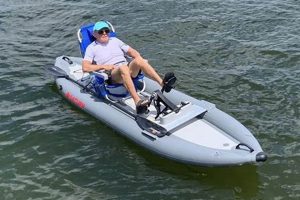
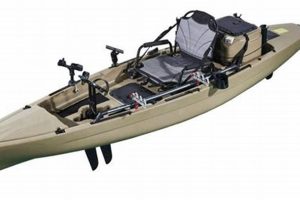
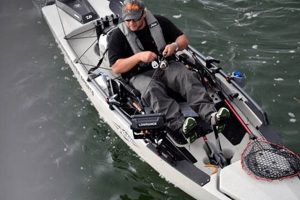
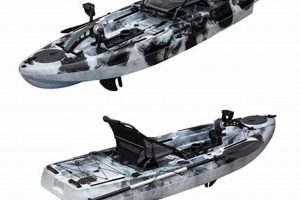
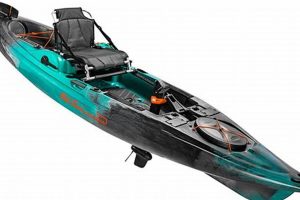
This specific model of watercraft is a human-powered vessel designed for angling. It features a foot-pedal-driven propeller system, offering hands-free operation and maneuverability. This allows anglers to focus on fishing techniques and equipment while navigating waters.
Hands-free propulsion provides a significant advantage for fishing, enabling anglers to maintain position and navigate quietly without disturbing fish. The vessel’s compact size (13 feet) contributes to its portability and suitability for diverse water environments, from lakes and rivers to calm coastal areas. Pedal-powered kayaks also offer a low-impact, environmentally friendly alternative to motorized watercraft.
Further exploration will cover specific features, performance analysis, user experiences, and comparisons with similar watercraft. This information will assist prospective buyers in making informed decisions about this particular model and its suitability for their individual fishing needs.
Tips for Pedal Kayak Fishing
Effective utilization of a pedal-driven fishing kayak enhances angling success and overall experience. The following tips offer guidance for maximizing performance and enjoyment on the water.
Tip 1: Practice Pedal Propulsion: Familiarization with the pedal drive system before venturing onto open water is crucial. Practice maneuvering in a controlled environment to understand steering, speed adjustments, and reverse capabilities.
Tip 2: Plan Fishing Routes Strategically: Pre-plan fishing routes considering water conditions, target fish species, and potential obstacles. Utilize mapping resources and navigational tools to optimize efficiency on the water.
Tip 3: Organize Gear Effectively: Efficient gear organization is essential for maintaining a balanced and stable vessel. Utilize onboard storage compartments and secure loose items to prevent shifting during movement.
Tip 4: Prioritize Safety Precautions: Adherence to safety regulations and precautions is paramount. Always wear a personal flotation device and carry essential safety equipment, including a whistle, signaling device, and first-aid kit. Inform someone of intended fishing locations and estimated return times.
Tip 5: Adjust Seat Position for Comfort and Efficiency: Proper seat adjustment promotes comfort and efficient pedaling. Experiment with different positions to find an optimal balance for long periods on the water.
Tip 6: Maintain and Clean the Pedal Drive System: Regular maintenance and cleaning of the pedal drive system ensure optimal performance and longevity. Rinse the system with fresh water after each use and lubricate moving parts according to manufacturer recommendations.
Tip 7: Utilize Appropriate Anchoring Techniques: Employ effective anchoring techniques to maintain position in desired fishing locations. Consider using a drift sock or anchor trolley system for optimal control in various water conditions.
Adhering to these guidelines will contribute to a safer, more efficient, and ultimately more rewarding fishing experience. Careful preparation and a proactive approach enhance performance and enjoyment on the water.
These insights contribute to a more comprehensive understanding of pedal kayak fishing and its potential benefits. Further exploration will delve into specific model features and comparisons.
1. Pedal-Powered Propulsion

Pedal-powered propulsion constitutes a defining feature of the bkc pk13 fishing kayak, distinguishing it from paddle-driven alternatives. This system employs a bicycle-style pedal drive connected to a propeller, enabling hands-free navigation. This mechanism offers significant advantages for angling, allowing anglers to maintain position, navigate quietly, and focus on fishing techniques rather than paddling. The hands-free operation proves particularly beneficial when trolling, fighting fish, or managing multiple rods. For instance, an angler can maintain a slow, steady troll while simultaneously adjusting lures or preparing bait. Similarly, when a fish strikes, both hands remain free to manage the rod and reel effectively.
The pedal drive’s impact on fishing efficacy extends beyond simple convenience. Quiet operation minimizes disturbance to fish, increasing the likelihood of successful catches. Consider fishing in shallow, clear water where paddling might spook wary fish; the near-silent pedal drive offers a distinct advantage. Moreover, pedal propulsion allows for sustained, consistent speeds over longer distances, expanding fishing range and access to more remote locations. This capability proves particularly valuable in larger bodies of water or when navigating against currents.
In summary, the integration of pedal-powered propulsion significantly enhances the bkc pk13’s functionality as a fishing platform. Hands-free operation, quiet movement, and sustained speed contribute directly to improved fishing efficiency and overall experience. While this technology adds complexity and potential maintenance requirements compared to traditional paddle kayaks, the benefits for dedicated anglers often outweigh these considerations. This understanding highlights the practical significance of pedal propulsion as a key component of the bkc pk13’s design and its contribution to enhanced fishing performance.
2. Fishing-Specific Design

The “fishing-specific design” of the bkc pk13 differentiates it from recreational kayaks, optimizing its utility for angling. This specialized design manifests in several key features. Integrated rod holders provide secure storage and easy access to fishing rods while underway. Strategically placed storage compartments accommodate tackle boxes, gear, and other fishing essentials, maintaining organization and accessibility. Often, these kayaks feature specialized mounts or tracks for fish finders and other electronic accessories, enhancing angling effectiveness. Consider the scenario of an angler trolling with multiple lines; integrated rod holders prevent tangling and allow quick reactions to strikes. Similarly, dedicated storage compartments keep tackle organized, eliminating the need to rummage through loose gear while on the water.
Furthermore, fishing-specific design often considers stability and maneuverability. A wider hull or specialized outriggers might enhance stability, crucial for casting and reeling in fish. The pedal-drive system itself contributes to maneuverability, allowing precise adjustments in position without paddling. Imagine sight-fishing in shallow water; the pedal drive allows quiet, controlled movement to approach fish without disturbing them. Additionally, features like anchor trolleys or specialized mounting points for stake-out poles facilitate anchoring in specific locations, vital for targeting particular fish species or holding position in currents. The cumulative effect of these design elements significantly improves fishing efficiency and overall experience.
In summary, the bkc pk13’s fishing-specific design directly contributes to its efficacy as a fishing platform. Features like integrated rod holders, specialized storage, mounting points for electronics, and enhanced stability collectively enhance the angler’s ability to focus on fishing. While these specialized features may not be necessary for casual kayaking, they provide significant advantages for dedicated anglers seeking to maximize their time and success on the water. Understanding the practical implications of these design choices provides valuable insights for prospective buyers evaluating the suitability of the bkc pk13 for their specific fishing needs.
3. Thirteen-foot length

The 13-foot length of the bkc pk13 fishing kayak represents a design choice balancing several critical performance factors. This length influences maneuverability, speed, stability, and storage capacity, each impacting the kayak’s suitability for specific fishing environments and angler preferences. Shorter kayaks generally offer enhanced maneuverability in tight spaces, such as narrow creeks or vegetation-choked waterways. Longer kayaks, conversely, tend to track straighter and achieve higher speeds, advantageous for covering larger distances or paddling against currents. A 13-foot kayak occupies a middle ground, offering reasonable maneuverability while maintaining adequate tracking and speed. For example, navigating a winding river with overhanging branches would benefit from the moderate maneuverability of a 13-foot kayak. Conversely, traversing a larger lake requires sufficient speed and tracking efficiency, also attainable with this length.
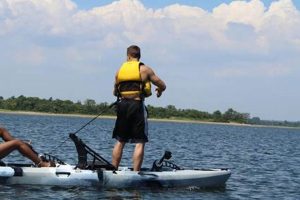
The 13-foot length also impacts stability. While not the sole determinant of stability (hull design plays a significant role), length contributes to the kayak’s overall balance. Longer kayaks generally exhibit greater initial stability, resisting tipping, but can feel less responsive to leaning for turning. The bkc pk13’s 13-foot length likely provides a balance between initial stability and maneuverability, suitable for various fishing situations. Consider standing to cast in a 13-foot kayak; it offers a reasonable platform, balancing stability with the responsiveness needed for accurate casting. Furthermore, storage capacity often correlates with length. A 13-foot kayak typically provides sufficient storage for fishing gear, tackle, and personal items, though less than significantly longer models. An angler planning an extended fishing trip must carefully consider gear storage requirements in relation to the kayak’s length.
In conclusion, the 13-foot length of the bkc pk13 fishing kayak represents a deliberate design choice impacting multiple performance characteristics. This length influences maneuverability, speed, stability, and storage, creating a balanced platform suitable for diverse fishing scenarios. Understanding the interplay of these factors allows anglers to assess the bkc pk13’s suitability for their specific needs and fishing style. Careful consideration of length, alongside other design features, contributes to informed purchasing decisions and ultimately enhances on-the-water experiences.
4. BKC Brand

BKC, as a brand, represents the manufacturer of the pk13 13 pedal drive fishing kayak. This connection signifies that BKC designs, produces, and markets this specific kayak model. Understanding the brand’s reputation, manufacturing processes, and customer support influences consumer perception and purchasing decisions. BKC’s brand identity directly impacts the perceived value, quality, and reliability of the pk13. For instance, a brand known for durable construction and responsive customer service instills greater consumer confidence than a lesser-known brand with limited support. Consider a hypothetical scenario where an angler experiences a mechanical issue with the pedal drive; a reputable brand like BKC might offer readily available replacement parts and efficient warranty service, minimizing disruption to the angler’s fishing activities. Conversely, a less-established brand might lack comprehensive support, potentially leading to prolonged downtime and frustration.
Furthermore, BKC’s brand positioning within the broader kayak market influences consumer perceptions of the pk13. A brand emphasizing innovation and cutting-edge technology might position the pk13 as a premium, high-performance fishing kayak. Alternatively, a brand focusing on affordability and accessibility might present the pk13 as a value-oriented option for budget-conscious anglers. This brand positioning impacts marketing messages, target demographics, and overall product perception. Imagine two anglers researching fishing kayaks; one prioritizing advanced features and performance, the other seeking a reliable, budget-friendly option. BKC’s brand positioning will significantly influence how each angler perceives the pk13’s suitability for their individual needs.
In summary, the “BKC brand” signifies more than simply the manufacturer’s name; it represents a complex interplay of reputation, manufacturing practices, customer support, and market positioning. These factors directly influence consumer perception, purchasing decisions, and ultimately, the overall ownership experience. Understanding the significance of the BKC brand in relation to the pk13 fishing kayak provides valuable context for potential buyers. This knowledge empowers informed decisions based not solely on product specifications, but also on the broader implications of brand identity and its associated values.
5. PK13 Model

The “PK13 model” designation represents a specific product within BKC’s range of fishing kayaks. This model identifier distinguishes the pk13 from other kayaks offered by BKC, highlighting its unique combination of features, dimensions, and intended usage. Understanding the PK13 designation provides crucial context for differentiating this specific model from other kayaks within the BKC lineup and within the broader market.
- Hull Design and Stability
The PK13 model likely features a specific hull design influencing its stability and performance characteristics. Hull design impacts tracking, maneuverability, and resistance to tipping. A wider, flatter hull enhances stability, advantageous for fishing activities like standing to cast or reeling in larger fish. A narrower, more pointed hull improves tracking and speed, beneficial for covering longer distances. The PK13’s hull design represents a balance between these factors, optimized for its intended use as a fishing platform. For example, a shallow-V hull might offer a good compromise between stability and maneuverability.
- Features and Accessories
The PK13 model designation often implies a specific set of included features and accessories. These could include integrated rod holders, storage compartments, mounting points for electronics, and other fishing-specific additions. These pre-installed features differentiate the PK13 from more basic models, offering enhanced functionality for anglers. Consider, for example, the inclusion of adjustable footrests; this seemingly minor feature significantly impacts paddling comfort and efficiency. Similarly, pre-installed tracks for mounting fish finders streamline installation and enhance the kayak’s fishing capabilities.
- Weight Capacity and Dimensions
The PK13 model likely adheres to specific weight capacity and dimensional specifications. These parameters directly influence performance, stability, and storage. Weight capacity dictates the maximum combined weight of the angler, gear, and any additional cargo. Exceeding this limit compromises stability and can lead to unsafe conditions. Dimensional specifications, including length, width, and height, impact storage capacity and maneuverability. For instance, a higher weight capacity allows anglers to carry more gear and heavier catches. Similarly, a longer kayak may offer more storage space but sacrifice maneuverability in tight spaces.
- Target User and Intended Use
The PK13 model’s design targets a specific user profile and intended usage scenario. As a fishing kayak, the PK13 caters to anglers seeking a stable, maneuverable platform equipped for fishing activities. This model may not be suitable for other kayaking disciplines, such as whitewater or long-distance touring, where different design priorities prevail. For example, the PK13’s focus on stability might make it less agile for whitewater kayaking, while its shorter length might limit its efficiency for long-distance touring. Understanding the PK13’s target user and intended use ensures proper application and maximizes user satisfaction.
In summary, the “PK13 model” designation encapsulates a specific set of design features, performance characteristics, and intended usage scenarios within the BKC kayak lineup. Understanding these facets clarifies the PK13’s position within the broader market, aiding consumers in making informed decisions based on individual needs and preferences. The PK13’s unique combination of hull design, features, dimensions, and target user profile collectively contribute to its identity as a specialized fishing kayak within the BKC product range.
6. Stability and Maneuverability

Stability and maneuverability represent critical performance characteristics for fishing kayaks, directly influencing angling effectiveness and overall on-the-water experience. These attributes become particularly relevant when considering the bkc pk13 13 pedal drive fishing kayak, as its design must balance stability for casting and fighting fish with maneuverability for navigating diverse water environments.
- Static Stability
Static stability refers to the kayak’s resistance to tipping when at rest. A wider hull and lower center of gravity contribute to greater static stability, crucial for maintaining balance while casting, reeling, or landing fish. The bkc pk13’s specific hull design influences its static stability, impacting angler comfort and confidence. Consider an angler standing to cast in a shallow estuary; a stable platform prevents accidental tipping, allowing for focused fishing.
- Dynamic Stability
Dynamic stability describes the kayak’s ability to remain upright during movement, especially in response to external forces like waves or currents. Hull shape, length, and weight distribution influence dynamic stability. The bkc pk13’s 13-foot length contributes to reasonable dynamic stability, allowing for confident navigation in moderately challenging conditions. Imagine paddling across a choppy lake; sufficient dynamic stability minimizes the risk of capsizing, ensuring a safe and productive fishing trip.
- Turning Radius and Tracking
Turning radius refers to the kayak’s ability to turn efficiently, while tracking describes its tendency to maintain a straight course. Shorter kayaks generally exhibit tighter turning radii, advantageous for navigating tight spaces or maneuvering around obstacles. The bkc pk13’s moderate length likely provides a balance between maneuverability and tracking performance. Picture navigating a narrow, winding creek; a tight turning radius facilitates precise navigation through complex waterways.
- Influence of the Pedal Drive System
The pedal drive system itself impacts maneuverability. Hands-free propulsion allows for precise adjustments in direction and speed without disrupting fishing activities. This enhanced control contributes to the bkc pk13’s overall maneuverability, particularly in challenging conditions or when precise positioning is crucial. Consider holding position near a submerged structure in a current; the pedal drive allows for subtle adjustments to maintain optimal fishing position without constant paddling adjustments.
In conclusion, the interplay of stability and maneuverability significantly influences the bkc pk13’s performance as a fishing platform. The specific design choices regarding hull shape, length, and the integration of the pedal drive system contribute to a balanced performance profile, optimizing the kayak’s suitability for various fishing environments and angler preferences. Understanding these interconnected factors provides valuable insights for prospective buyers evaluating the bkc pk13’s potential to meet their individual fishing needs.
7. Storage Capacity

Storage capacity directly impacts the practicality and effectiveness of the bkc pk13 13 pedal drive fishing kayak as a fishing platform. Adequate storage facilitates organized gear management, enabling anglers to carry essential equipment, tackle, and personal items comfortably and efficiently. Insufficient storage, conversely, limits carrying capacity, potentially compromising fishing effectiveness and overall experience. The pk13’s specific storage design, including compartments, hatches, and tank wells, directly influences its suitability for various fishing styles and trip durations. Consider a fly fisherman requiring space for multiple fly boxes, waders, and other specialized equipment; ample storage becomes paramount. Similarly, kayak anglers targeting larger species need sufficient storage for larger tackle boxes, landing nets, and other essential gear. Insufficient storage necessitates leaving essential items behind, potentially limiting fishing opportunities or compromising safety.
Several factors influence the practical application of storage capacity. The size and shape of storage compartments dictate the types of items that can be accommodated. Watertight hatches protect sensitive gear from the elements, essential for electronics, cameras, and personal items. Tank wells, typically located behind the seat, provide convenient storage for larger items like coolers or tackle crates. The strategic placement and accessibility of storage compartments impact on-the-water efficiency. Imagine needing to access a lure quickly during a feeding frenzy; easily accessible storage compartments facilitate swift tackle changes, maximizing fishing opportunities. Conversely, poorly designed or inaccessible storage leads to frustration and wasted time, detracting from the fishing experience.
In summary, storage capacity represents a crucial consideration for evaluating the bkc pk13’s suitability for specific fishing needs. Adequate and well-designed storage enhances organization, efficiency, and overall fishing effectiveness. Careful consideration of storage capacity alongside other design features like hull design, stability, and the pedal drive system contributes to informed purchasing decisions and ultimately, a more rewarding on-the-water experience. Understanding the practical implications of storage capacity empowers anglers to select a kayak that effectively supports their individual fishing styles and trip requirements.
Frequently Asked Questions
This section addresses common inquiries regarding the bkc pk13 13 pedal drive fishing kayak, providing concise and informative responses to facilitate informed decision-making.
Question 1: What differentiates the pedal drive system from traditional paddle propulsion?
The pedal drive system allows for hands-free operation, enabling anglers to focus on fishing techniques rather than paddling. This offers significant advantages for trolling, fighting fish, and managing multiple rods. Pedal drives also tend to operate more quietly than paddles, minimizing disturbance to fish.
Question 2: How does the 13-foot length impact performance and suitability for various fishing environments?
The 13-foot length represents a balance between maneuverability and tracking performance. It offers reasonable agility in tighter spaces while maintaining adequate speed and stability in open water. This length generally suits diverse fishing environments, from smaller rivers and lakes to moderately open coastal areas.
Question 3: What weight capacity and storage options does the pk13 offer?
Specific weight capacity and storage details should be confirmed through manufacturer specifications. However, the pk13 generally provides sufficient capacity for an average-sized angler plus fishing gear and equipment. Storage options typically include dedicated compartments and tank wells for accommodating tackle boxes, rods, and other essentials.
Question 4: What maintenance requirements are associated with the pedal drive system?
Regular rinsing with fresh water after each use helps prevent corrosion and damage from saltwater or debris. Periodic lubrication of moving parts, as outlined in the manufacturer’s instructions, ensures smooth operation and prolongs the pedal drive system’s lifespan.
Question 5: How does the pk13 compare to other fishing kayaks in a similar price range?
Direct comparisons require consideration of specific competitor models and individual angler priorities. However, the pk13 generally offers a competitive combination of features, performance, and price within its market segment. Researching competing models and comparing specifications allows for informed evaluations based on individual needs and preferences.
Question 6: What safety precautions should one take when using the pk13 fishing kayak?
Always wear a personal flotation device (PFD) and carry essential safety equipment, including a whistle, signaling device, and first-aid kit. Inform someone of intended fishing locations and estimated return times. Adhere to local boating regulations and exercise caution in changing weather conditions.
These responses provide a general overview of common inquiries. Consulting manufacturer specifications and reputable retailers offers further details and facilitates informed purchasing decisions.
Further sections will delve into specific user experiences, detailed product specifications, and comparisons with competing models.
Conclusion
Analysis of the bkc pk13 13 pedal drive fishing kayak reveals a specialized watercraft designed for angling. Key features include its pedal-powered propulsion system, fishing-specific design elements, and balanced performance characteristics. The 13-foot length offers a compromise between maneuverability and stability, while the BKC brand reputation contributes to consumer perceptions of quality and reliability. Exploration of storage capacity, stability, and maneuverability provides insights into the kayak’s suitability for various fishing environments and angler preferences. Addressing frequently asked questions clarifies common concerns regarding performance, maintenance, and safety.
Careful consideration of these factors empowers informed purchasing decisions. Potential buyers should weigh individual needs, fishing styles, and budgetary constraints against the bkc pk13’s features and capabilities. Further research, including user reviews and comparisons with competing models, contributes to a comprehensive understanding of this specialized fishing kayak’s potential to enhance angling experiences.