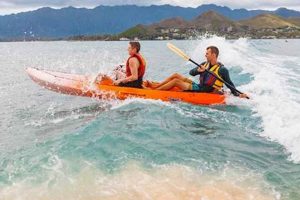
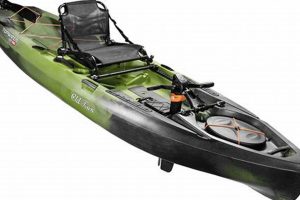
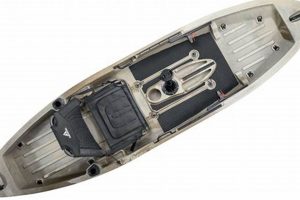
A specialized kayak designed for angling offers stability, specialized storage, and features like rod holders and anchor trolleys. These vessels provide a mobile and efficient platform for accessing various fishing locations, from calm lakes and rivers to coastal waters.
Angling from a kayak provides a unique and immersive experience, allowing close contact with the water and often granting access to shallow or otherwise difficult-to-reach fishing spots. The low profile of a fishing kayak can be advantageous, minimizing disturbance to fish and offering a stealthy approach. Historically, kayaks have been used for fishing and transportation for millennia by indigenous cultures. Modern advancements in materials and design have transformed these simple vessels into sophisticated fishing platforms, catering to diverse angling styles and environments.
This article will explore various aspects of kayak fishing, including selecting the appropriate vessel, essential gear and safety precautions, popular fishing techniques, and responsible angling practices.
Tips for Successful Kayak Angling
Proper planning and execution are crucial for a productive and enjoyable fishing experience from a kayak. The following tips offer guidance for anglers of all skill levels.
Tip 1: Choose the Right Kayak: Kayak selection depends on intended fishing locations and personal preferences. Longer kayaks offer speed and tracking for open water, while shorter, wider kayaks provide greater stability for river fishing or stillwater angling.
Tip 2: Prioritize Safety: Always wear a personal flotation device (PFD) and carry essential safety equipment, including a whistle, signaling device, and first-aid kit. Check weather conditions before embarking and inform someone of your fishing plans.
Tip 3: Organize and Secure Gear: Efficiently storing tackle and equipment is essential in a limited space. Utilize waterproof bags and tackle boxes to protect gear from water damage and maintain a clutter-free environment. Secure rods and paddles to prevent loss.
Tip 4: Master Basic Paddling Strokes: Proficiency in fundamental paddling strokes allows for efficient navigation and precise boat control. Practice maneuvering in various conditions to gain confidence and refine technique.
Tip 5: Understand Fish Behavior and Habitat: Knowledge of target species and their preferred habitats is crucial for successful angling. Research local fish populations and adapt fishing techniques accordingly.
Tip 6: Practice Catch and Release Techniques: Responsible angling practices ensure the sustainability of fish populations. Handle fish gently and minimize air exposure to increase their chances of survival upon release.
Tip 7: Learn Basic Kayak Fishing Knots: Mastering essential fishing knots is vital for rigging tackle and securing catches. Practice tying knots regularly to develop proficiency and ensure reliability.
By adhering to these guidelines, anglers can enhance their safety, efficiency, and overall enjoyment while kayak fishing. Preparation and responsible practices contribute significantly to successful outings and the preservation of aquatic environments.
This information provides a foundational understanding of kayak angling. Further research and experience will contribute to continued growth and enjoyment of this rewarding pursuit.
1. Targeted Species

The targeted species significantly influences all aspects of kayak fishing, from vessel selection and equipment choice to fishing techniques and location. A thorough understanding of the target species’ behavior, habitat, and preferred prey is crucial for a successful angling experience.
- Habitat Preferences
Different species inhabit specific aquatic environments. For example, trout prefer cold, clear streams and rivers, while bass thrive in warmer, vegetated lakes and ponds. Kayak anglers must select locations that align with the target species’ habitat preferences. Understanding these preferences dictates whether a highly maneuverable kayak is needed for navigating tight spaces in rivers or a stable platform is required for open-water fishing in lakes.
- Feeding Habits
The feeding habits of the target species dictate lure and bait selection. Predatory fish like pike are attracted to larger, fast-moving lures that mimic smaller fish, while bottom-feeding species like catfish respond to scented baits placed near the riverbed. Adapting tackle and fishing techniques to the specific feeding habits of the targeted species increases the likelihood of a successful catch.
- Size and Fighting Ability
The size and fighting ability of the targeted species influence the choice of fishing rod, reel, and line strength. Larger, stronger fish like salmon require heavier tackle capable of handling their powerful runs, while smaller panfish can be caught with lighter, more sensitive equipment. Matching tackle to the target species’ size and fighting ability prevents equipment failure and ensures a more enjoyable and manageable fishing experience.
- Seasonal Patterns and Behavior
Fish behavior and location change throughout the year due to factors like water temperature, spawning cycles, and prey availability. Understanding these seasonal patterns is crucial for locating and targeting specific species. For example, during spawning season, certain species migrate to shallower waters, offering anglers unique opportunities for sight fishing.
By carefully considering the targeted species and its unique characteristics, kayak anglers can optimize their approach, enhance their chances of success, and contribute to a more rewarding and sustainable fishing experience. This preparation allows for a more specialized and efficient approach to kayak angling, increasing the chances of a successful and enjoyable outing.
2. Kayak Selection
Kayak selection significantly impacts the effectiveness and enjoyment of fishing from a kayak. The vessel acts as the angler’s primary platform, influencing mobility, stability, and access to fishing grounds. Choosing the right kayak involves careful consideration of several factors directly related to the intended fishing style and environment. For example, a sit-on-top kayak offers superior stability and ease of re-entry after a water landing, making it ideal for fishing in calmer waters and for anglers who prioritize stability. Conversely, a sit-inside kayak provides better protection from the elements and enhanced paddling efficiency, making it a suitable choice for longer expeditions in colder conditions or rougher waters. Matching the kayak’s characteristics to the specific fishing application is crucial for maximizing success and safety.
The length and width of a kayak directly affect its performance on the water. Longer kayaks track straighter and glide more efficiently, making them suitable for covering longer distances in open water. Shorter kayaks, on the other hand, are more maneuverable, allowing anglers to navigate tight spaces in rivers, creeks, and mangrove forests. Wider kayaks offer enhanced stability, which is crucial for stand-up fishing or navigating choppy conditions, but they sacrifice some speed and maneuverability. Narrower kayaks are faster and more agile but offer less stability. Consider a shorter, wider kayak for fishing in protected bays or small lakes, prioritizing stability and maneuverability. Conversely, a longer, narrower kayak suits open-ocean fishing or traversing larger bodies of water, emphasizing speed and tracking. The kayak’s hull design also plays a critical role. A flat-bottom hull provides excellent stability, while a V-shaped hull offers superior tracking and speed.
Selecting the appropriate kayak is fundamental to a successful and enjoyable fishing experience. Evaluating the intended fishing environment, target species, and personal preferences allows anglers to choose a vessel optimized for their specific needs. Careful consideration of these factors ensures a safe, efficient, and productive outing on the water. Understanding the interplay between kayak characteristics and the intended fishing application allows anglers to maximize their potential on the water, contributing to a more rewarding and enriching experience.
3. Essential Gear

The success of a kayak fishing trip hinges significantly on the selection and utilization of essential gear. This equipment serves various functions, from ensuring angler safety to optimizing fishing effectiveness. The confined space of a kayak necessitates careful consideration of gear choices, prioritizing multi-functionality and compact design. A properly outfitted kayak enhances both safety and the likelihood of a successful catch. For example, a well-chosen paddle, optimized for the angler’s physique and paddling style, improves efficiency and reduces fatigue, allowing for longer fishing sessions. Similarly, a comfortable and supportive seat enhances endurance and allows the angler to focus on fishing rather than physical discomfort. Rod holders, strategically placed on the kayak, keep rods organized and readily accessible while freeing the angler’s hands for paddling and other tasks. These seemingly small details contribute significantly to the overall fishing experience.
Safety equipment plays a critical role in kayak fishing. A personal flotation device (PFD) is paramount, providing buoyancy and increasing the chances of survival in the event of a capsize. A signaling device, such as a whistle or air horn, enables communication in emergencies, while a first-aid kit provides essential supplies for treating minor injuries. Navigation tools, including a compass and GPS device, ensure the angler can maintain bearings and return safely, particularly in unfamiliar waters or challenging conditions. A bilge pump or bailer aids in removing water from the kayak, maintaining stability and preventing potential swamping. Appropriate clothing, including layers for warmth and protection from the elements, contributes to both comfort and safety. Sun protection, including sunscreen, a hat, and polarized sunglasses, is crucial for minimizing sun exposure and enhancing visibility on the water. These safety precautions contribute significantly to a secure and enjoyable outing.
Effective fishing from a kayak requires specialized gear tailored to the environment and target species. Rods and reels should be selected based on the type of fish being pursued, considering factors such as line strength and lure weight. A well-organized tackle box containing a variety of lures, hooks, weights, and other terminal tackle allows anglers to adapt to changing conditions and fish behavior. A fish finder provides valuable information about water depth, structure, and fish location, increasing the likelihood of locating productive fishing spots. An anchor or drift sock helps maintain position in currents or wind, allowing anglers to focus on fishing a specific area. A landing net assists in safely retrieving hooked fish, minimizing stress on both the fish and the angler. These tools, combined with appropriate fishing techniques, contribute directly to angling success from a kayak. Understanding the interplay between essential gear and kayak fishing enhances both safety and the likelihood of a productive and enjoyable experience.
4. Fishing Techniques
Effective fishing techniques are crucial for maximizing catch rates from a kayak. The confined nature of a kayak presents unique challenges and opportunities, requiring anglers to adapt their approach. Specialized techniques leverage the kayak’s maneuverability and low profile, enabling access to shallow waters and minimizing disturbance to fish. Understanding these techniques is essential for a successful kayak angling experience.
- Trolling
Trolling involves dragging lures or bait behind a moving kayak. This technique covers a wide area, effectively locating active fish. In a kayak, trolling requires careful speed control and precise boat maneuvering to maintain lure depth and presentation. Various trolling techniques exist, including slow trolling with live bait for species like walleye and faster trolling with crankbaits for aggressive predators such as bass. Kayak anglers often utilize specialized trolling motors or fins for hands-free trolling, allowing them to focus on rod and line management. Effective trolling requires knowledge of fish behavior, water conditions, and lure selection to maximize success.
- Casting
Casting from a kayak demands precise technique and balance. The limited space requires controlled movements to avoid tangles and maintain stability. Various casting techniques, including overhead casting, sidearm casting, and underhand casting, adapt to different target species and environments. Accurate casting is crucial for placing lures near structure, under overhanging vegetation, or in tight pockets where fish may be hiding. Kayak anglers often choose shorter rods designed for confined spaces, optimizing casting control and maneuverability. Mastering casting techniques is essential for presenting lures effectively and provoking strikes from fish in diverse kayak fishing scenarios.
- Drift Fishing
Drift fishing involves allowing the kayak to drift naturally with the current or wind, presenting bait or lures to fish holding in specific areas. This technique is particularly effective in rivers and streams, allowing anglers to cover a wide area with minimal effort. Kayak anglers can use drift socks or anchors to control the speed and direction of the drift, optimizing presentation and maintaining position in the desired fishing zone. Drift fishing can be combined with other techniques like bottom fishing or jigging, increasing its versatility and effectiveness. Understanding water flow, bottom structure, and fish behavior is crucial for successful drift fishing from a kayak.
- Jigging
Jigging involves vertically presenting a weighted lure, mimicking the movement of injured prey. This technique effectively targets fish holding near the bottom or suspended in the water column. Kayak anglers use specialized jigging rods and reels to impart precise movements to the lure, attracting fish with vibrations and flashes. Jigging requires sensitivity to detect subtle strikes and a strong hookset to secure the catch. This technique can be highly effective for species like crappie, walleye, and bass, particularly in deeper water or around structure. Understanding lure selection, jigging cadence, and fish behavior is essential for maximizing success with jigging techniques from a kayak.
These techniques, adapted for the unique characteristics of kayak fishing, offer diverse approaches to targeting different species and exploring various aquatic environments. Mastering these techniques, combined with appropriate kayak selection and gear, contributes significantly to successful and enjoyable kayak angling experiences. The adaptability of these techniques allows anglers to exploit the kayak’s maneuverability and stealth, increasing their chances of landing a catch.
5. Safety Precautions
Safety precautions are paramount in kayak fishing, forming an inextricable link with the activity itself. The inherent risks associated with being on the water, compounded by the specialized nature of fishing from a small, mobile platform, necessitate a comprehensive understanding and rigorous application of safety measures. Neglecting these precautions can lead to serious consequences, ranging from equipment loss to severe injury or even fatality. A stable, properly equipped kayak, while enhancing the fishing experience, does not eliminate the potential for accidents. For instance, an unexpected shift in weight distribution during a vigorous hookset can lead to capsizing, even in calm water. Similarly, changing weather conditions can create challenging situations quickly, emphasizing the need for constant vigilance and preparedness.
Several factors contribute to potential hazards in kayak fishing. Cold water immersion poses a significant threat, leading to hypothermia even in relatively mild temperatures. Strong currents and unexpected waves can destabilize a kayak, particularly for less experienced paddlers. Collisions with submerged objects or other vessels present another risk, especially in low-visibility conditions. Wildlife encounters, while often enriching the experience, can occasionally pose dangers, such as entanglement with fishing lines or defensive actions by startled animals. Understanding these potential hazards is crucial for implementing appropriate safety measures. Carrying essential safety equipment, including a personal flotation device (PFD), signaling devices, and a first-aid kit, is fundamental. Regularly checking weather forecasts and adapting plans accordingly minimizes exposure to adverse conditions. Informing someone of the intended fishing location and estimated return time provides an additional layer of security. Practical experience in handling a kayak in various conditions builds confidence and prepares anglers for unexpected situations.
A proactive approach to safety significantly mitigates risks associated with kayak fishing. Regularly inspecting and maintaining equipment ensures proper functionality when needed. Practicing self-rescue techniques, such as re-entering a capsized kayak, builds essential skills for handling emergencies. Understanding basic navigation principles and carrying appropriate navigational tools minimizes the risk of disorientation, particularly in unfamiliar waters. Ultimately, a comprehensive understanding of potential hazards, combined with diligent preparation and a commitment to safe practices, allows anglers to enjoy the unique rewards of kayak fishing while minimizing risks. This proactive approach fosters a culture of safety, ensuring a sustainable and enjoyable pursuit for all participants.
Frequently Asked Questions
This FAQ section addresses common inquiries regarding kayak fishing, providing concise and informative responses to enhance understanding and promote safe and successful angling practices.
Question 1: What type of kayak is best suited for fishing?
Kayak selection depends on individual needs and fishing environments. Sit-on-top kayaks offer stability and ease of re-entry, while sit-inside kayaks provide better protection from the elements. Longer kayaks excel in open water, while shorter kayaks offer maneuverability in tighter spaces.
Question 2: What essential safety gear is recommended for kayak fishing?
Essential safety gear includes a personal flotation device (PFD), a signaling device (whistle, air horn, or flares), a first-aid kit, navigation tools (compass and GPS), and appropriate clothing for weather conditions.
Question 3: How does one choose appropriate fishing rods and reels for kayak angling?
Rod and reel selection depends on the target species and fishing techniques. Shorter rods offer better control in confined spaces. Line and lure weight should match the target species’ size and fighting ability.
Question 4: What are effective techniques for locating fish from a kayak?
Effective fish-finding techniques from a kayak include using a fish finder, observing natural indicators like bird activity or baitfish schools, and understanding fish behavior in relation to water depth, structure, and temperature.
Question 5: How does one manage fishing lines and tackle efficiently in a kayak?
Efficient line and tackle management involves using a well-organized tackle box, employing line-management tools like clippers and retractors, and practicing proper casting techniques to avoid tangles. Securing rods when not in use prevents loss or damage.
Question 6: What are important considerations for fishing in different water conditions from a kayak?
Adapting to different water conditions requires understanding wind and current patterns, adjusting paddling techniques, and choosing appropriate anchoring or drifting methods. Safety precautions become paramount in challenging conditions like strong winds or rough waters.
Careful consideration of these frequently asked questions enhances angler preparedness and promotes safe and successful kayak fishing experiences. Prioritizing safety and responsible angling practices ensures the continued enjoyment of this rewarding pursuit.
For further exploration, the following section delves into advanced kayak fishing techniques, offering insights into maximizing catch rates and refining angling skills.
Conclusion
This exploration of specialized fishing kayaks has highlighted their significance in accessing diverse fishing locations and enhancing angling experiences. Key considerations include vessel selection based on target species and environment, essential gear for safety and effectiveness, specialized fishing techniques adapted to kayak angling, and rigorous safety precautions for mitigating inherent risks. The multifaceted nature of kayak fishing necessitates careful preparation and a thorough understanding of these interconnected elements.
Responsible angling practices, coupled with continuous skill development, ensure the sustainability of this rewarding pursuit. Further exploration of advanced techniques and a commitment to safety contribute to enriching experiences and fostering a deeper appreciation for the dynamic interplay between angler, kayak, and the aquatic environment.