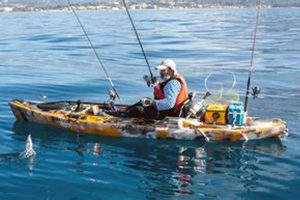
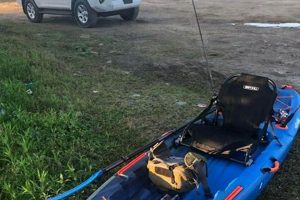
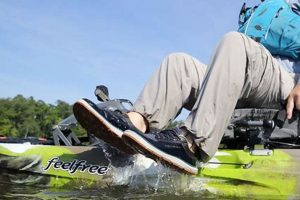
Electrically propelled kayaks designed for angling offer a unique blend of features. These vessels utilize integrated or mountable motorized systems powered by rechargeable batteries, providing hands-free propulsion. This allows anglers to cover more water with less physical exertion, conserving energy for fishing activities. They often feature specialized designs, such as rod holders, tackle storage, and even fish finders, catering specifically to the needs of anglers. A typical example would be a sit-on-top model equipped with a transom-mounted electric motor and a dedicated battery compartment.
The advantages of this type of watercraft are significant. Enhanced maneuverability in challenging currents or winds, coupled with silent operation, improves the fishing experience. Anglers can reach distant fishing spots quickly and quietly, maximizing their time on the water. This technology democratizes the sport by enabling individuals with physical limitations to enjoy kayaking and fishing. While traditional kayaks have long been a staple for anglers, the integration of electric motors has revolutionized the experience, offering unprecedented levels of convenience and efficiency.
This article delves deeper into various aspects of electric fishing kayaks, exploring topics such as motor types, battery life, maintenance, and popular models available on the market. Further sections will also cover safety considerations, legal regulations, and the environmental impact of these vessels, providing a comprehensive guide for anglers considering this innovative approach to their sport.
Tips for Electric Fishing Kayak Use
Effective and safe operation of an electric fishing kayak requires consideration of several key factors. The following tips offer guidance for maximizing the benefits of these vessels.
Tip 1: Battery Management: Regularly charge batteries fully and avoid deep discharges to prolong battery life. Carry a spare battery for extended trips, ensuring compatibility with the motor system.
Tip 2: Weight Distribution: Distribute weight evenly within the kayak, including gear and batteries, for optimal stability and performance. Consider the manufacturer’s recommended weight capacity.
Tip 3: Navigation and Safety: Carry essential navigation tools, such as a GPS device or compass, and be aware of local water regulations. A personal flotation device and safety whistle are mandatory equipment.
Tip 4: Pre-Trip Planning: Research fishing locations and plan routes in advance, taking into account battery range, weather conditions, and potential hazards. Inform someone of your intended itinerary.
Tip 5: Respecting the Environment: Adhere to “Leave No Trace” principles. Avoid disturbing wildlife and sensitive habitats. Properly dispose of any waste or fishing line.
Tip 6: Regular Maintenance: Rinse the kayak and motor with fresh water after each use, especially in saltwater environments. Inspect and lubricate moving parts as recommended by the manufacturer.
Tip 7: Understanding Motor Operation: Familiarize oneself thoroughly with the motor’s controls and features before venturing onto the water. Practice maneuvering in a controlled environment to gain proficiency.
By following these guidelines, users can ensure safe, efficient, and environmentally responsible operation of their electric fishing kayaks, enhancing the overall angling experience.
In conclusion, electric fishing kayaks represent a significant advancement in angling technology. This article has explored various aspects of these vessels, offering a comprehensive overview for prospective buyers and current owners. By understanding the key features, benefits, and operational best practices, anglers can fully appreciate the advantages of this innovative approach to fishing.
1. Electric Motor

The electric motor forms the heart of a battery-powered fishing kayak, providing the crucial thrust that distinguishes it from traditional paddle-powered vessels. Understanding the nuances of electric kayak motors is essential for selecting a craft suited to specific fishing needs and maximizing on-the-water efficiency.
- Motor Type:
Two primary motor types dominate the market: transom-mount and integrated. Transom-mount motors offer portability and ease of installation, often featuring adjustable shafts for varying water depths. Integrated motors, built directly into the kayak’s hull, offer improved hydrodynamics and often include advanced features like GPS integration and autopilot. The choice depends on individual preferences and desired functionality.
- Thrust:
Motor thrust, measured in pounds, dictates the kayak’s ability to overcome water resistance and wind. Higher thrust allows for faster speeds and better performance in challenging conditions like strong currents or headwinds. Anglers fishing larger bodies of water or frequently encountering adverse weather should prioritize higher thrust motors. Conversely, those fishing calm, protected waters may find lower thrust motors sufficient.
- Power Consumption and Battery Life:
Motor power consumption directly impacts battery life. Higher thrust motors generally consume more power, necessitating larger battery capacity for extended trips. Understanding the relationship between thrust, power consumption, and battery capacity is essential for optimizing range and avoiding premature battery depletion. Efficient motor design plays a crucial role in maximizing runtime.
- Propeller Design:
Propeller design influences efficiency and performance. Weedless propellers minimize entanglement in vegetation, a critical feature for anglers frequenting shallow, weedy areas. Two- or three-blade propellers offer varying degrees of speed and maneuverability. Understanding propeller characteristics aids in selecting a motor well-suited to specific fishing environments.
The electric motor, in conjunction with battery capacity and hull design, fundamentally shapes the performance and capabilities of a battery-powered fishing kayak. Careful consideration of these interconnected elements ensures selection of a vessel optimized for individual angling needs, enhancing fishing effectiveness and overall enjoyment on the water.
2. Battery Capacity
Battery capacity, measured in Amp-hours (Ah), directly determines the operational range and runtime of a battery-powered fishing kayak. Adequate battery capacity is crucial for reaching desired fishing locations and returning safely, making it a critical factor in kayak selection and trip planning.
- Range and Runtime:
Higher Ah ratings translate to longer runtimes and extended range. Factors such as motor power consumption, kayak weight, and water conditions influence actual runtime. Anglers planning longer trips or fishing distant locations require higher capacity batteries to avoid premature depletion. Conversely, shorter trips in calm waters may necessitate less capacity.
- Battery Types:
Lithium-ion batteries are increasingly prevalent due to their higher energy density, lighter weight, and longer lifespan compared to traditional lead-acid batteries. However, lithium-ion batteries typically come at a higher initial cost. Understanding the trade-offs between battery types informs cost-benefit decisions.
- Charging Time and Methods:
Battery charging time varies depending on capacity and charger specifications. Access to charging infrastructure and available time for recharging influence battery choice. Some kayaks offer onboard charging capabilities, while others require removal and charging of the battery separately.
- Weight and Portability:
Battery weight contributes to the overall weight of the kayak, impacting portability and handling. Larger capacity batteries generally weigh more. Balancing capacity needs with portability considerations is essential, particularly for anglers transporting kayaks manually or over longer distances.
Battery capacity represents a critical factor influencing the usability and effectiveness of a battery-powered fishing kayak. Careful consideration of range requirements, battery types, charging logistics, and weight implications ensures selection of a power system that aligns with individual fishing needs and maximizes on-the-water experience.
3. Hull Design

Hull design significantly influences the performance and suitability of a battery-powered fishing kayak for specific angling environments and styles. Understanding the nuances of hull design is crucial for selecting a kayak that optimizes stability, maneuverability, tracking, and overall efficiency on the water.
- Stability:
Hull stability, crucial for casting, reeling, and landing fish, depends on factors like width, hull shape, and center of gravity. Wider, flatter hulls generally offer greater primary stability (resistance to initial tipping), benefiting anglers prioritizing a stable platform, especially in calmer waters. Kayaks with a narrower beam and more rounded hull provide superior secondary stability (resistance to capsizing after initial tipping), advantageous in rougher conditions. Pontoon hulls, featuring increased buoyancy and stability, are emerging as another option.
- Maneuverability:
Maneuverability dictates the kayak’s responsiveness to steering input. Shorter kayaks with a rockered hull (upward curve at the bow and stern) turn more quickly, ideal for navigating tight spaces like creeks and mangroves. Longer kayaks with less rocker track straighter and glide more efficiently, suitable for open water paddling. The presence of a rudder or skeg can enhance directional control, particularly in windy conditions.
- Tracking:
Tracking refers to the kayak’s ability to maintain a straight course. Longer kayaks with a pronounced keel or tracking fin excel in tracking, minimizing the need for constant corrective strokes. This characteristic is particularly beneficial for covering long distances efficiently or paddling in windy conditions. Shorter, wider kayaks, while more maneuverable, may require more effort to maintain a straight line.
- Speed and Efficiency:
Hull design influences speed and efficiency. Sleek, streamlined hulls minimize water resistance, maximizing speed and range from the battery power. Displacement hulls (V-shaped) cut through the water efficiently, suitable for longer distances. Planing hulls (flatter bottom) rise up and skim across the water at higher speeds, but require more power. Considerations of hull design must align with desired fishing style and expected water conditions.
The interplay of stability, maneuverability, tracking, and efficiency determines the overall performance and suitability of a battery-powered fishing kayak for specific fishing applications. Careful consideration of these factors in relation to intended usage ensures selection of a kayak that optimizes on-the-water performance and enhances angling success.
4. Weight Capacity

Weight capacity constitutes a critical factor influencing the performance, safety, and suitability of a battery-powered fishing kayak. This specification, typically expressed in pounds or kilograms, represents the maximum combined weight of the angler, gear, and accessories the kayak can safely support without compromising stability or performance. Exceeding this limit can lead to decreased freeboard (distance between the waterline and the top edge of the hull), reduced maneuverability, and increased risk of capsizing, particularly in challenging conditions.
The weight of the battery system itself contributes significantly to the overall load. Larger capacity batteries, necessary for extended range, typically weigh more. This added weight must be factored into the overall weight calculation, alongside the angler’s weight, fishing gear (rods, reels, tackle boxes), and any additional accessories like fish finders or coolers. For instance, a kayak with a 400-pound weight capacity and a 50-pound battery system leaves 350 pounds of capacity for the angler and their gear. Understanding this interplay is essential for making informed decisions regarding battery selection and overall gear load.
Careful consideration of weight capacity is paramount for ensuring safe and effective operation. Overloading a kayak compromises stability, increases the risk of water ingress, and diminishes performance. Reduced freeboard increases susceptibility to swamping in waves or rough water. Furthermore, exceeding the weight capacity can strain the hull and potentially lead to structural damage. Practical application of this understanding involves accurately assessing the combined weight of all intended cargo and selecting a kayak with ample capacity to accommodate the load safely, ensuring optimal performance and a secure on-the-water experience.
5. Fishing Features
Specialized fishing features distinguish battery-powered fishing kayaks from recreational models, optimizing them for angling effectiveness and convenience. These integrated design elements enhance the angler’s experience, streamlining essential tasks and maximizing time spent actively fishing. Careful consideration of these features is crucial for selecting a kayak tailored to specific angling styles and preferences.
- Rod Holders:
Integrated rod holders secure fishing rods, freeing hands for other tasks like paddling, navigating, or handling tackle. Flush-mounted rod holders minimize interference with casting, while adjustable rod holders offer flexibility for different fishing techniques. The number and placement of rod holders influence angling versatility, accommodating multiple lines or specialized setups.
- Tackle Storage:
Dedicated storage compartments, often designed for tackle boxes, keep essential gear organized and readily accessible. Dry storage compartments protect sensitive items from water damage, while open storage areas offer quick access to frequently used tools or lures. The volume and configuration of storage compartments influence carrying capacity and organizational efficiency.
- Fish Finders and Electronics:
Integrated mounting points and power sources accommodate fish finders, GPS units, and other electronic devices, enhancing angling precision and situational awareness. Pre-wired transducer mounts streamline fish finder installation, while dedicated battery compartments provide power for electronics without compromising the primary propulsion system. The availability of these features facilitates advanced angling techniques and improves fishing success.
- Other Specialized Features:
Additional features, such as anchor trolleys, live wells, bait tanks, and paddle clips further enhance angling convenience. Anchor trolleys control anchor position, maintaining optimal fishing position in current. Live wells keep caught fish fresh. Bait tanks provide ready access to live bait. Paddle clips secure paddles when not in use, preventing loss or interference with fishing activities. The presence and design of these specialized features further tailor the kayak to specific angling needs and preferences.
The integration of these fishing-specific features directly enhances the utility and effectiveness of battery-powered fishing kayaks, transforming them from simple watercraft into specialized angling platforms. Careful consideration of these features, alongside hull design, motor performance, and battery capacity, ensures selection of a kayak optimized for individual angling styles and target species, ultimately maximizing on-the-water success and enjoyment.
6. Maintenance Needs

Regular maintenance is essential for ensuring the longevity, performance, and safety of a battery-powered fishing kayak. Neglecting routine upkeep can lead to premature wear, decreased efficiency, and potentially hazardous malfunctions. The specific maintenance requirements vary depending on the kayak’s components, materials, and usage environment. However, several key areas require consistent attention.
The electric motor, a core component of these vessels, benefits from regular inspection and care. Rinsing the motor with fresh water after each use, particularly in saltwater environments, prevents corrosion and salt buildup. Periodic lubrication of moving parts, as recommended by the manufacturer, ensures smooth operation and minimizes wear. Inspecting the propeller for damage or entanglement and promptly addressing any issues prevents performance degradation and potential motor damage. For example, a bent or damaged propeller reduces efficiency and can strain the motor, leading to premature failure. Similarly, neglecting saltwater rinsing can corrode electrical connections and shorten the motor’s lifespan.
Battery maintenance is equally crucial. Proper charging practices, such as avoiding overcharging or deep discharging, prolong battery life and maintain performance. Storing batteries in a cool, dry place away from direct sunlight prevents degradation and extends their useful life. Regularly inspecting battery terminals for corrosion and cleaning them as needed ensures reliable electrical connections. Failing to adhere to these practices can significantly shorten battery lifespan and necessitate costly replacements. Furthermore, neglecting battery maintenance can lead to unexpected power loss on the water, potentially creating a hazardous situation.
Maintaining the kayak’s hull and other components also contributes to its overall longevity and performance. Regularly rinsing the kayak with fresh water removes dirt, salt, and other debris that can degrade the hull material over time. Inspecting the hull for cracks, scratches, or other damage and promptly repairing any issues prevents further deterioration and maintains structural integrity. Similarly, inspecting and lubricating moving parts, such as rudder or skeg mechanisms, ensures smooth operation and prevents premature wear. Consistent attention to these maintenance needs preserves the kayak’s value and ensures safe and reliable operation for years to come. Addressing these maintenance needs proactively minimizes the risk of unexpected failures and maximizes the lifespan of the investment, ensuring continued enjoyment and performance on the water.
Frequently Asked Questions
This section addresses common inquiries regarding battery-powered fishing kayaks, providing concise and informative responses to facilitate informed decision-making and optimal usage.
Question 1: What is the typical range of a battery-powered fishing kayak?
Range varies significantly depending on battery capacity, motor efficiency, kayak weight, water conditions, and speed. A fully charged battery can typically provide a range of several miles to upwards of 20 miles or more under ideal conditions. Consulting manufacturer specifications and real-world user reviews provides more precise range estimations for specific models.
Question 2: How long does it take to recharge a battery?
Recharge time depends on battery capacity and charger output. Generally, charging times range from a few hours to overnight. Using a charger specifically designed for the battery type optimizes charging efficiency and minimizes charging time.
Question 3: Are battery-powered fishing kayaks suitable for saltwater use?
Many models are designed for saltwater use, featuring corrosion-resistant components and sealed electrical systems. Thoroughly rinsing the kayak and motor with fresh water after each saltwater use is crucial for preventing corrosion and maximizing lifespan.
Question 4: What maintenance is required for a battery-powered fishing kayak?
Regular maintenance includes rinsing the kayak and motor with fresh water after each use, lubricating moving parts, inspecting and cleaning battery terminals, and periodically checking the hull for damage. Adhering to manufacturer-recommended maintenance schedules ensures optimal performance and longevity.
Question 5: How much do battery-powered fishing kayaks cost?
Costs vary significantly based on features, materials, motor power, and battery capacity. Entry-level models may cost around a thousand dollars, while high-end kayaks equipped with advanced features can exceed several thousand dollars. Battery replacements represent an additional recurring cost factor.
Question 6: Are there any legal restrictions on using battery-powered fishing kayaks?
Regulations regarding electric motor use on waterways vary by jurisdiction. Consulting local boating authorities ensures compliance with applicable regulations regarding registration, permitted usage areas, and operational restrictions.
Understanding these key aspects of battery-powered fishing kayaks facilitates informed purchasing decisions and promotes safe and responsible usage, maximizing the benefits of this evolving angling technology.
For further information, consult the subsequent sections detailing specific model reviews, comparison charts, and advanced usage tips.
Conclusion
Battery powered fishing kayaks represent a significant evolution in angling technology, offering distinct advantages over traditional paddle-powered kayaks. This exploration has highlighted key aspects of these vessels, encompassing motor characteristics, battery considerations, hull design variations, weight capacity implications, specialized fishing features, and essential maintenance requirements. Understanding these elements empowers informed decision-making, enabling anglers to select kayaks optimized for individual needs and fishing styles. The interplay of these factors ultimately dictates on-the-water performance, impacting efficiency, range, stability, and overall fishing success.
The continued advancement of battery technology and kayak design promises further refinement of these vessels, enhancing their capabilities and broadening their appeal. As technology progresses, anglers can anticipate increased range, improved performance, and enhanced integration of electronic features. Careful consideration of individual needs, coupled with a thorough understanding of the factors highlighted within this analysis, will ensure selection of a battery powered fishing kayak that maximizes angling potential and delivers a rewarding on-the-water experience for years to come.