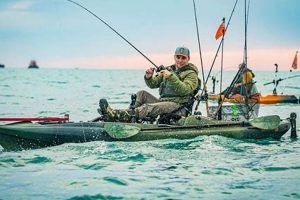
An analysis of the Gul Flying Fish kayak typically covers aspects such as performance on the water, build quality, comfort, features, and overall value. Such evaluations often include detailed descriptions of the kayak’s handling in various conditions, its stability, speed, and suitability for different paddling styles and user experience levels. Examples of information found in these analyses might include assessments of the kayak’s tracking, maneuverability, storage capacity, and the comfort of its seating system.
Evaluations of this specific kayak provide prospective buyers with valuable information to make informed purchasing decisions. They offer insights beyond manufacturer specifications, often drawing on real-world experiences and offering a more nuanced perspective. This can be particularly helpful for discerning the suitability of a kayak for specific needs and paddling environments. Historically, these reviews played a crucial role in the evolution of kayak design, providing feedback to manufacturers and influencing subsequent product development.
This information assists consumers in comparing the Gul Flying Fish kayak against similar models, understanding its strengths and weaknesses, and ultimately determining if it aligns with their individual paddling requirements and budget. Subsequent sections will delve into the specific features, performance characteristics, and user feedback related to this kayak model.
Tips for Researching Kayak Reviews
Before purchasing a kayak, thorough research is essential. These tips provide guidance on effectively using reviews to inform purchase decisions.
Tip 1: Consult Multiple Sources: Relying on a single review can provide a skewed perspective. Consulting various sources, including online forums, retailer websites, and independent review platforms, offers a more comprehensive understanding.
Tip 2: Consider Reviewer Experience: Note the paddling experience and skill level of the reviewers. Align reviews with one’s own paddling style and experience for greater relevance.
Tip 3: Focus on Specific Features: Identify key features and prioritize reviews that address those aspects. For example, if storage capacity is crucial, prioritize reviews that detail storage options and their practicality.
Tip 4: Evaluate the Kayak’s Intended Use: Determine the kayak’s intended purpose recreational paddling, fishing, touring and prioritize reviews that assess performance in relevant conditions.
Tip 5: Be Wary of Overly Positive or Negative Reviews: Exercise caution when encountering exclusively positive or negative reviews. Seek balanced perspectives that acknowledge both strengths and weaknesses.
Tip 6: Look for Verified Purchases: When possible, prioritize reviews from verified purchasers. This increases the likelihood of genuine, unbiased feedback.
Tip 7: Consider the Date of the Review: Kayak designs and features evolve. Prioritize recent reviews to ensure information relevance and accuracy.
By following these tips, potential buyers can effectively utilize reviews to assess kayak suitability and make informed decisions aligned with individual needs and preferences.
These research strategies empower informed decision-making, ultimately enhancing paddling enjoyment and overall satisfaction with the chosen kayak.
1. Performance

Performance evaluations within a Gul Flying Fish kayak review significantly influence purchasing decisions. Analyses typically examine speed, tracking (the kayak’s ability to maintain a straight line), and maneuverability. These factors are interconnected and contribute to the overall paddling experience. For example, a review might describe the kayak’s performance in windy conditions, noting its susceptibility to weathercocking (turning into the wind) due to its hull design, thus impacting tracking. Another review could highlight efficient glide and speed, making it suitable for longer distances.
The importance of performance metrics stems from their direct impact on the kayak’s suitability for different paddling styles and environments. A kayak designed for recreational use on calm lakes will prioritize stability over speed, whereas a touring kayak requires efficient tracking and glide for covering long distances. Reviews often provide comparative data, allowing consumers to assess performance relative to other kayaks in the same category. Practical applications of this information include determining the suitability of the kayak for specific activities like fishing, exploring, or racing. A kayak demonstrating sluggish maneuverability may be unsuitable for navigating narrow waterways.
In summary, performance is a crucial component of Gul Flying Fish kayak reviews. Understanding the interplay between speed, tracking, and maneuverability provides valuable insights into the kayak’s capabilities and limitations. This information enables informed decisions aligned with individual paddling goals and intended usage scenarios. Consideration of these factors contributes to overall user satisfaction and a more enjoyable paddling experience.
2. Stability
Stability is a critical factor in kayak reviews, particularly for the Gul Flying Fish, as it directly impacts user confidence and safety. Analyses typically differentiate between primary stability (initial resistance to tipping) and secondary stability (resistance to capsizing once tilted). Understanding these nuances is essential for matching the kayak’s stability characteristics to individual paddling styles and water conditions.
- Primary Stability (Initial Stability)
This refers to the kayak’s resistance to tipping when upright. A kayak with high primary stability feels very stable and resists initial tilting, making it suitable for beginners or those seeking a secure platform for activities like fishing or photography. In the context of Gul Flying Fish reviews, assessments of primary stability might highlight its suitability for recreational use on calm water. Conversely, lower initial stability might be noted as a characteristic requiring more experience to manage.
- Secondary Stability (Final Stability)
Secondary stability describes how difficult it is to capsize the kayak once it’s tilted beyond its initial stability. A kayak with strong secondary stability provides a reassuring feeling of support even when leaned, enabling confident maneuvering in waves or rougher conditions. Reviews might describe the Gul Flying Fish’s secondary stability as confidence-inspiring for more adventurous paddling or highlight its limitations in extreme conditions.
- Impact of Hull Design
The hull design significantly influences both primary and secondary stability. Wider, flatter hulls generally provide higher initial stability, while narrower, more rounded hulls offer greater secondary stability but can feel less stable initially. Reviews often analyze the Gul Flying Fish’s hull design, explaining how it contributes to its overall stability profile. For instance, a review might explain how the hull’s shape provides a balance between initial and secondary stability, making it suitable for a range of paddling conditions.
- Stability and Paddling Style
The desired level of stability depends on the intended paddling style. Recreational paddlers prioritize initial stability for a secure and comfortable experience, while more experienced kayakers might prefer the responsiveness and maneuverability offered by kayaks with higher secondary stability. Reviews often relate stability characteristics to specific paddling styles, indicating the Gul Flying Fish’s suitability for different user groups. For example, a review might recommend the kayak for beginners due to its stable platform, or suggest it for intermediate paddlers seeking a balance of stability and performance.
Understanding stability nuances in Gul Flying Fish kayak reviews allows informed choices aligned with individual needs and paddling styles. Considering these factors contributes to safer and more enjoyable paddling experiences, ensuring user confidence and control on the water.
3. Comfort
Comfort is a crucial factor influencing paddling enjoyment and endurance, especially during longer trips. Within Gul Flying Fish kayak reviews, comfort assessments provide valuable insights into the kayak’s suitability for extended use and overall user experience. These evaluations consider various elements, including the seat design, adjustability, legroom, and storage options.
- Seat Design and Adjustability
The seat’s design significantly impacts comfort. Reviews often analyze the seat’s padding, back support, and adjustability. For example, a review might highlight the ergonomic design of the Gul Flying Fish’s seat, providing ample lumbar support for long paddling sessions. Conversely, a review might note limitations in adjustability, potentially affecting comfort for paddlers of varying sizes. These details allow prospective buyers to assess the seat’s suitability for their individual needs and preferences.
- Legroom and Cockpit Dimensions
Adequate legroom and a well-designed cockpit contribute to overall comfort, particularly for taller paddlers. Reviews often describe the cockpit dimensions and available legroom, indicating the kayak’s suitability for individuals of different heights and builds. A review might highlight the Gul Flying Fish’s spacious cockpit as a benefit for larger paddlers or note its limitations for those with longer legs. This information allows users to evaluate cockpit compatibility with their physique.
- Storage and Accessibility
Convenient storage options enhance comfort by allowing easy access to essential gear and supplies. Reviews typically assess the availability and accessibility of storage compartments, hatches, and deck rigging. A review might commend the Gul Flying Fish’s ample storage capacity for multi-day trips or critique the placement of hatches if they interfere with paddling comfort. These details provide practical insights into the kayak’s storage capabilities and their impact on the overall paddling experience.
- Overall Ergonomics and Fit
The kayak’s overall ergonomics, encompassing the seat, cockpit, and deck layout, contribute to long-term comfort. Reviews often consider how these elements work together to create a comfortable and efficient paddling position. A review might praise the Gul Flying Fish’s ergonomic design, promoting a natural and comfortable posture, or suggest modifications for improved fit. This holistic perspective allows potential buyers to assess the kayak’s overall comfort and suitability for their individual needs.
Comfort assessments in Gul Flying Fish kayak reviews offer crucial insights for prospective buyers. Understanding the interplay between seat design, cockpit dimensions, storage options, and overall ergonomics empowers informed decisions, contributing to enhanced paddling enjoyment and long-term comfort on the water.
4. Durability

Durability is a critical aspect of kayak ownership, directly influencing the kayak’s lifespan and overall value. Within the context of Gul Flying Fish kayak reviews, durability assessments provide crucial insights into the kayak’s construction, material quality, and resistance to wear and tear. These evaluations often inform purchasing decisions, particularly for those seeking a kayak capable of withstanding varied conditions and extended use.
- Construction and Materials
Kayak construction methods and materials significantly impact durability. Reviews often analyze the type of plastic used (e.g., polyethylene, ABS), the layering process, and the overall build quality. For example, a review might highlight the Gul Flying Fish’s robust polyethylene construction as a key factor contributing to its durability. Another review might compare different grades of polyethylene used in various kayak models, explaining how this impacts resistance to impact and abrasion.
- UV Resistance and Degradation
Exposure to sunlight can degrade kayak materials over time, leading to fading, cracking, and reduced structural integrity. Reviews often address UV resistance, particularly in kayaks intended for frequent use in sunny climates. A review might mention the Gul Flying Fish’s UV-resistant coating as a protective measure against sun damage, or note its susceptibility to fading after prolonged exposure. This information is crucial for potential buyers who plan to store their kayaks outdoors.
- Impact and Abrasion Resistance
Kayaks inevitably encounter impacts and abrasion from rocks, logs, and other obstacles. Reviews often evaluate the kayak’s ability to withstand such impacts without sustaining significant damage. A review might describe the Gul Flying Fish’s performance in rocky environments, highlighting its resistance to scratches and dents. Alternatively, a review might note areas of vulnerability, such as the keel or hull, where damage is more likely to occur.
- Hardware and Fittings
The quality and durability of hardware components, such as handles, hatches, and deck rigging, also contribute to the kayak’s overall longevity. Reviews often assess the robustness of these fittings, their resistance to corrosion, and their overall functionality. A review might commend the Gul Flying Fish’s durable stainless-steel hardware, or note concerns about plastic fittings prone to breakage. These details provide valuable insights into the long-term reliability of the kayak’s components.
Durability assessments in Gul Flying Fish kayak reviews provide valuable insights into the kayak’s long-term performance and resistance to wear and tear. Understanding these factors allows informed purchasing decisions, ensuring the kayak’s suitability for intended usage and contributing to overall satisfaction and long-term value. By considering construction, materials, UV resistance, impact resistance, and hardware quality, potential buyers can confidently choose a kayak that meets their durability requirements and provides years of reliable service.
5. Value

Value, within the context of Gul Flying Fish kayak reviews, represents the relationship between the kayak’s price and its overall offering, encompassing performance, features, durability, and brand reputation. Assessing value is crucial for informed purchasing decisions, ensuring that the investment aligns with the kayak’s capabilities and intended usage. Understanding value requires considering various factors beyond the initial price tag.
- Price-to-Performance Ratio
This facet examines the kayak’s performance characteristics relative to its cost. A high-value kayak offers strong performance capabilities at a competitive price point. For example, a review might highlight the Gul Flying Fish’s excellent tracking and stability at a price comparable to or lower than similar kayaks, indicating a favorable price-to-performance ratio. Conversely, if the kayak’s performance is deemed average but its price is high, the value proposition might be questioned. Understanding this ratio allows consumers to maximize performance benefits within their budget.
- Features and Inclusions
Value assessments also consider the included features and accessories. A kayak offering a comprehensive package of features, such as adjustable seating, ample storage, and integrated rudder systems, might represent higher value compared to a basic model lacking these amenities, even if the prices are similar. Reviews often detail the included features and compare them to competing models, allowing potential buyers to assess the overall value proposition based on the kayak’s equipped features and functionalities.
- Durability and Long-Term Cost
Durability significantly influences long-term value. A kayak built with high-quality, durable materials might have a higher initial price but offer greater long-term value due to its extended lifespan and reduced need for repairs or replacements. Reviews often consider the kayak’s construction and materials when assessing value, highlighting the potential for long-term cost savings associated with a more durable kayak. This perspective allows consumers to evaluate value beyond the initial purchase price, considering long-term ownership costs.
- Brand Reputation and Resale Value
Brand reputation contributes to perceived value and can influence resale value. Established brands with a history of producing quality kayaks often command higher prices and retain their value better over time. Reviews might mention the brand’s reputation as a factor contributing to the kayak’s overall value proposition. This is particularly relevant for buyers who anticipate reselling their kayak in the future, as a reputable brand can enhance resale potential and minimize depreciation.
Understanding value in the context of Gul Flying Fish kayak reviews requires a comprehensive assessment encompassing price, performance, features, durability, and brand reputation. By considering these interconnected factors, prospective buyers can make informed decisions that align with their budget and paddling requirements. Analyzing value ensures a worthwhile investment, maximizing benefits and long-term satisfaction with the chosen kayak.
Frequently Asked Questions
This section addresses common inquiries regarding the Gul Flying Fish kayak, providing concise and informative responses based on typical review findings.
Question 1: How does the Gul Flying Fish perform in windy conditions?
Reviews often mention that the Flying Fish can be susceptible to weathercocking due to its hull design. Performance in wind depends on wind strength and paddling experience. Some users recommend using a rudder or skeg in challenging conditions.
Question 2: Is the Gul Flying Fish suitable for beginners?
The Flying Fish is generally considered suitable for beginners due to its relatively stable platform. Its initial stability provides a reassuring feel, though some reviewers suggest practicing basic paddling techniques before venturing into rougher waters.
Question 3: What is the weight capacity of the Gul Flying Fish?
Weight capacity varies depending on the specific model (e.g., standard vs. XL). Consulting manufacturer specifications is recommended for precise weight limits. Exceeding the recommended capacity can compromise stability and performance.
Question 4: How does the Gul Flying Fish compare to other recreational kayaks in its price range?
Reviews often position the Flying Fish as a competitively priced recreational kayak offering a good balance of performance, stability, and features. Comparisons often highlight its strengths relative to competitors, considering factors like tracking, comfort, and storage capacity.
Question 5: What are the storage options available on the Gul Flying Fish?
The Flying Fish typically features front and rear storage hatches, along with deck rigging for securing additional gear. Reviewers often comment on the accessibility and practicality of these storage options, highlighting their suitability for day trips or shorter overnight excursions.
Question 6: How durable is the Gul Flying Fish kayak?
The Flying Fish is generally considered a durable kayak due to its robust polyethylene construction. Reviews often mention its resistance to impacts and abrasion. However, proper care and maintenance are essential for preserving its longevity, including appropriate storage practices and avoiding excessive exposure to sunlight.
Addressing these frequently asked questions aims to provide a clearer understanding of the Gul Flying Fish kayak’s capabilities and suitability for various paddling needs. Consulting multiple reviews and manufacturer specifications offers a comprehensive perspective, empowering informed purchasing decisions.
The following section will provide concluding remarks regarding the Gul Flying Fish kayak, summarizing key findings and offering final recommendations for prospective buyers.
Conclusion
Analyses of the Gul Flying Fish kayak generally reveal a recreational kayak suitable for a variety of paddling environments. Key strengths frequently cited include stability, comfortable seating, and ample storage. Performance characteristics, such as tracking and maneuverability, are typically deemed adequate for recreational use, though some limitations in windy conditions may be noted. Durability assessments often highlight the kayak’s robust construction and resistance to wear and tear. Value assessments vary based on specific model configurations and pricing, but the Flying Fish is often considered a competitively priced option within its category. Potential buyers should prioritize specific needs and paddling styles when evaluating the kayak’s suitability.
Thorough research, encompassing multiple reviews and manufacturer specifications, remains crucial for informed purchasing decisions. Understanding the nuances of performance, stability, comfort, durability, and value empowers informed choices, aligning individual paddling preferences with the Gul Flying Fish kayak’s capabilities. This comprehensive evaluation process contributes to enhanced paddling enjoyment and long-term satisfaction with the chosen kayak.