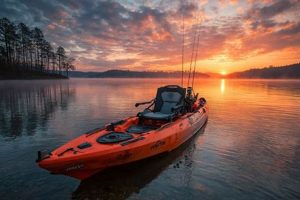
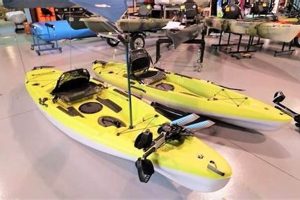
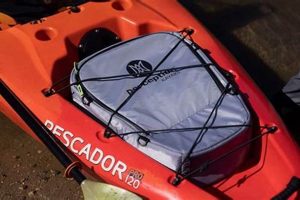
A kayak designed for fishing, typically constructed of durable materials intended for extended use, measuring approximately ten feet in length offers anglers a stable and maneuverable platform for freshwater or saltwater fishing. These vessels often feature specialized design elements such as rod holders, storage compartments, and comfortable seating to enhance the angling experience.
Compact vessels of this size provide anglers with improved access to smaller bodies of water and easier transportability compared to larger boats. The promise of durability suggests a long-term investment, minimizing replacement costs. The focus on fishing implies features tailored to angling needs, offering a more efficient and enjoyable fishing experience. This type of watercraft can be an excellent entry point for novice anglers due to the manageable size and relative stability.
The following sections will explore various aspects of selecting and using such a kayak, covering topics such as hull design, material construction, essential features, and recommended accessories.
Tips for Selecting and Using a Fishing Kayak
Choosing and utilizing a fishing kayak effectively involves careful consideration of several factors to maximize performance and enjoyment on the water.
Tip 1: Consider Hull Design: Kayak hull designs impact stability and maneuverability. A flatter hull offers greater stability, ideal for calmer waters and stand-up fishing. A V-shaped hull provides better tracking and speed, suited for open water and covering longer distances.
Tip 2: Evaluate Material Construction: Polyethylene kayaks are durable and affordable, while composite materials offer lighter weight and enhanced performance but often come at a higher cost. Durability is crucial for long-term use.
Tip 3: Prioritize Essential Features: Rod holders, storage compartments, and a comfortable seat are vital for a positive fishing experience. Adjustable seating allows for optimal comfort and paddling efficiency.
Tip 4: Choose Appropriate Paddle Length: Paddle length depends on factors such as torso height and kayak width. A properly sized paddle enhances paddling efficiency and reduces fatigue.
Tip 5: Select a Suitable Personal Flotation Device (PFD): A comfortable and properly fitting PFD is essential for safety and should always be worn while on the water. Consider one designed specifically for fishing with convenient pockets.
Tip 6: Practice Basic Paddling Techniques: Learning fundamental paddling strokes improves maneuverability and control, essential for navigating various water conditions.
Tip 7: Research Local Regulations: Familiarize oneself with local fishing regulations and licensing requirements before heading out on the water.
By considering these tips, anglers can select the right kayak and equipment, ensuring a safe, comfortable, and productive fishing experience.
The concluding section will offer further guidance on maintenance and care to prolong the lifespan of fishing kayaks.
1. Length

The ten-foot length of a fishing kayak represents a balance between maneuverability and stability, a critical consideration for anglers. Shorter kayaks, while easier to transport and maneuver in tight spaces, can be less stable, particularly in challenging conditions. Conversely, longer kayaks offer increased tracking and speed but sacrifice agility in confined areas like creeks or shallow waters. A ten-foot length provides a compromise, allowing anglers to navigate diverse environments while maintaining a stable platform for casting and reeling. This length is often favored for its versatility in various fishing scenarios, from calm lakes to slow-moving rivers.
For instance, navigating narrow, overgrown waterways requires a kayak capable of turning quickly and efficiently. A ten-foot kayak generally possesses sufficient maneuverability for such environments, unlike longer, less agile counterparts. Simultaneously, this length provides adequate stability for standing and casting, a crucial aspect of many fishing techniques. Consider a scenario where an angler encounters a submerged log or sudden change in current. A ten-foot kayak offers a better chance of maintaining balance and avoiding capsizing compared to a significantly shorter vessel. The practical significance of this length becomes evident in real-world fishing situations where stability and maneuverability are paramount.
In summary, the ten-foot length contributes significantly to the overall effectiveness of a fishing kayak. It represents a deliberate design choice optimizing maneuverability and stability, key factors influencing angling success. While individual preferences and specific fishing styles may necessitate adjustments, the ten-foot length remains a popular and versatile option for diverse fishing environments. This understanding allows for informed selection and contributes to a more productive and enjoyable fishing experience.
2. Lifespan

The “extended lifespan” attribute associated with a 10ft fishing kayak directly correlates with material selection and construction quality. Durability is paramount, considering the demanding nature of fishing environments. Exposure to UV radiation, saltwater corrosion, and potential impacts necessitates robust materials capable of withstanding wear and tear. High-grade polyethylene, renowned for its impact resistance and UV stability, often serves as the primary construction material. Alternatively, composite materials like fiberglass or Kevlar offer enhanced strength and lighter weight, albeit at a higher price point. This extended lifespan translates to a long-term investment, minimizing replacement costs and ensuring consistent performance over time. A kayak intended for extended use requires robust construction to maintain structural integrity and prevent premature deterioration.
Consider the scenario of frequent saltwater fishing expeditions. Constant exposure to saltwater can corrode inferior materials, leading to cracks, leaks, and ultimately, a shortened lifespan. A kayak built with marine-grade hardware and high-quality, UV-resistant polyethylene, however, withstands such conditions, maintaining functionality for an extended period. Similarly, navigating rocky rivers or shallow waters presents risks of impacts and abrasion. A durable hull material minimizes damage, preserving the kayak’s integrity and extending its usable life. The practical implications of this extended lifespan are evident in reduced maintenance requirements, minimized replacement costs, and consistent performance throughout the product’s life cycle. This durability allows anglers to focus on the fishing experience rather than equipment concerns.
In summary, the “extended lifespan” attribute is a crucial factor in evaluating a 10ft fishing kayak. It signifies a commitment to durability and quality construction, ensuring long-term performance and minimizing the need for frequent replacements. Understanding this connection allows informed purchasing decisions, ultimately leading to a more satisfying and cost-effective ownership experience. The selection of appropriate materials and construction techniques directly impacts the lifespan and overall value of the investment. This focus on durability aligns with the practical demands of fishing and contributes to a more sustainable approach to equipment acquisition.
3. Purpose
The core purpose of a 10ft lifetime fishing kayakfishingdictates its design and features, differentiating it from recreational or touring kayaks. This specialization enhances angling effectiveness and overall experience. Understanding this core purpose provides a framework for evaluating design choices and their practical implications on the water.
- Stability
Stability is paramount for fishing kayaks. A stable platform allows anglers to cast, reel, and land fish without compromising balance. The 10ft length offers a reasonable compromise between stability and maneuverability, suitable for various fishing styles and water conditions. Imagine standing to cast in a shallow riverbed: stability ensures safety and effective angling. This stability is often enhanced by a wider hull design and a lower center of gravity.
- Storage and Organization
Dedicated storage compartments and specialized features like rod holders and tackle organizers are integral to a fishing kayak. These features keep essential gear readily accessible, minimizing clutter and maximizing efficiency. Consider a scenario where an angler needs to quickly change lures or access fishing line. Organized storage facilitates swift adjustments, optimizing fishing time. The inclusion of such features directly addresses the practical needs of anglers.
- Maneuverability
Navigating diverse water environments requires appropriate maneuverability. A 10ft kayak provides adequate maneuverability for navigating smaller rivers, creeks, and shallow waters, unlike longer touring kayaks. Visualize maneuvering through lily pads or around submerged logs: a shorter, more agile kayak excels in such situations. The balance between maneuverability and stability influences fishing effectiveness in specific environments.
- Durability and Longevity
The “lifetime” aspect emphasizes durability, crucial for withstanding the rigors of fishing environments. Exposure to sunlight, saltwater, and potential impacts necessitates robust construction. A durable kayak ensures long-term performance and minimizes replacement costs, aligning with the investment inherent in specialized fishing equipment. Consider frequent use in harsh conditions: a durable kayak withstands wear and tear, providing consistent performance over time.
These facets demonstrate how the “fishing” purpose directly influences the design and features of a 10ft lifetime fishing kayak. Each element contributes to a specialized vessel optimized for angling effectiveness and long-term performance. This purposeful design enhances the overall fishing experience, allowing anglers to focus on their passion rather than equipment limitations. The convergence of these features results in a specialized tool designed to meet the unique demands of angling.
4. Type
The “kayak” designation within the context of a “10ft lifetime fishing kayak” signifies a specific type of watercraft designed for individual use, propelled by a double-bladed paddle. This fundamental classification distinguishes it from other watercraft like canoes, paddleboards, or motorized boats, each possessing distinct characteristics influencing performance and suitability for fishing. Understanding the inherent attributes of a kayak clarifies its advantages for angling and informs the selection process.
- Hull Design and Stability
Kayak hull designs significantly influence stability, a crucial factor for fishing activities. Common hull types include flat-bottom, V-shaped, and pontoon hulls. A flatter hull provides enhanced primary stability, ideal for calm waters and stand-up fishing. Imagine casting a line while standing in a shallow lake: a stable platform is essential. V-shaped hulls prioritize tracking and speed, beneficial for open water and covering longer distances efficiently. Pontoon hulls maximize stability but sacrifice maneuverability. The chosen hull design impacts fishing effectiveness in specific environments.
- Sit-on-Top vs. Sit-Inside Configuration
Kayaks generally fall into two configurations: sit-on-top and sit-inside. Sit-on-top kayaks offer enhanced stability and ease of entry/exit, advantageous for beginners and warmer climates. Picture re-entering a kayak after a brief swim: a sit-on-top design simplifies the process. Sit-inside kayaks provide better protection from the elements and enhanced paddling efficiency in colder conditions but require more skill for entry and exit. The chosen configuration influences comfort and practicality based on individual needs and environmental factors.
- Maneuverability and Tracking
Kayak length and hull design directly impact maneuverability and tracking. Shorter kayaks excel in maneuverability, crucial for navigating tight spaces like narrow creeks or shallow, obstacle-filled waters. Envision maneuvering through dense vegetation: a shorter kayak proves more agile. Longer kayaks offer superior tracking, maintaining a straighter course over longer distances, beneficial for open water paddling. The balance between maneuverability and tracking depends on the intended fishing environment.
- Portability and Storage
Kayaks, particularly those around 10ft in length, generally offer reasonable portability and storage options compared to larger vessels. This portability facilitates transport to various fishing locations, expanding angling opportunities. Consider transporting a kayak on a car roof rack: a 10ft length often proves manageable. Storage considerations also influence practicality, particularly for individuals with limited space. The ease of transport and storage contributes to the overall convenience and accessibility of kayak fishing.
These facets of “Type: Kayak” directly influence the performance and suitability of a 10ft lifetime fishing kayak. Understanding these characteristics allows for informed selection, ensuring alignment with individual fishing styles, target environments, and overall needs. Recognizing the inherent advantages of a kayak clarifies its role as a versatile and effective platform for fishing activities. This understanding allows anglers to maximize their experience on the water.
5. Material

Durability, a critical attribute of a 10ft lifetime fishing kayak, directly influences its longevity and resilience in demanding environments. Material selection dictates this durability, impacting resistance to UV radiation, abrasion, impacts, and saltwater corrosion. Understanding the relationship between material properties and kayak performance is crucial for informed purchasing decisions and ensuring long-term functionality.
- High-Density Polyethylene (HDPE)
HDPE, a common material for kayak construction, offers excellent impact resistance and UV stability. This robust material withstands bumps against rocks, submerged logs, and accidental impacts during transport and storage. Imagine dragging a kayak across a rocky shoreline: HDPE minimizes potential damage. This resilience contributes to the “lifetime” aspect, ensuring the kayak remains functional despite regular use in challenging environments. HDPE’s UV resistance prevents degradation from prolonged sun exposure, a significant factor for kayaks frequently used in open waters.
- Cross-Linked Polyethylene (XLPE)
XLPE represents a further refinement of HDPE, offering enhanced durability and stiffness. The cross-linking process creates a denser molecular structure, increasing impact resistance and reducing susceptibility to warping or deformation under stress. Consider a scenario where a kayak is stored outdoors in extreme temperatures: XLPE better maintains its structural integrity compared to standard HDPE. This enhanced durability contributes to a longer lifespan and consistent performance over time.
- Composite Materials (Fiberglass, Carbon Fiber, Kevlar)
Composite materials like fiberglass, carbon fiber, and Kevlar offer superior strength-to-weight ratios compared to polyethylene. This translates to lighter, more responsive kayaks, beneficial for paddling efficiency and maneuverability. Picture paddling against a strong current: a lighter kayak requires less effort. While generally more expensive, composite kayaks offer enhanced performance and durability against punctures and abrasion. However, they can be more susceptible to impact damage than polyethylene.
- UV Resistance and Saltwater Compatibility
Regardless of the chosen material, UV resistance and saltwater compatibility are crucial for long-term durability. UV protection prevents material degradation from sun exposure, while saltwater compatibility minimizes corrosion of hardware and hull materials. Consider frequent saltwater fishing trips: a kayak built with marine-grade stainless steel hardware and UV-resistant materials will withstand harsh conditions, extending its usable life. These factors directly contribute to the “lifetime” designation, ensuring sustained performance in demanding environments.
Material selection directly correlates with the durability and longevity of a 10ft lifetime fishing kayak. Choosing appropriate materials suited for the intended fishing environment ensures long-term performance, minimizes maintenance requirements, and maximizes the return on investment. The careful consideration of material properties contributes significantly to the overall value and usability of a fishing kayak, aligning with the demands of frequent use and exposure to challenging conditions. The selection of durable materials ensures the kayak remains a reliable tool for years to come.
6. Stability
Stability forms a cornerstone of effective kayak fishing, particularly in a 10ft lifetime fishing kayak. This attribute directly influences angling success, safety, and overall enjoyment on the water. A stable platform allows anglers to focus on fishing techniques, minimizing concerns about balance and maximizing casting and reeling efficiency. The following facets explore the multifaceted nature of stability and its crucial role in the context of a 10ft fishing kayak designed for extended use.
- Primary Stability: At Rest
Primary stability refers to a kayak’s inherent resistance to tipping when at rest. A wider hull and lower center of gravity contribute to greater primary stability, essential for activities like still fishing or casting in calm waters. Imagine an angler sitting still, waiting for a bite: primary stability ensures the kayak remains balanced and predictable, minimizing the risk of tipping. This facet is particularly crucial for beginners or anglers who prefer a secure and stable platform.
- Secondary Stability: Underway/Leaning
Secondary stability dictates a kayak’s behavior when leaning or underway. This dynamic stability influences maneuverability and the kayak’s ability to recover from leans or external forces. Visualize an angler leaning to one side to retrieve a fish: secondary stability dictates how the kayak responds to this shift in weight and its ability to return to an upright position. This attribute becomes increasingly important in moving water or when encountering waves or wakes.
- Impact of Kayak Length and Design
The 10ft length of a fishing kayak influences both primary and secondary stability. Shorter kayaks tend to be more maneuverable but may sacrifice some stability. Longer kayaks generally offer better tracking but can be less responsive to quick turns. The 10ft length represents a balance between these characteristics, providing adequate stability while maintaining reasonable maneuverability. This length is often favored for its versatility in various fishing environments, from calm lakes to slow-moving rivers. The specific hull design, including features like chines or a flatter bottom, further influences stability characteristics.
- Influence on Angling Activities
Stability directly impacts various angling activities, from casting and reeling to landing fish and even standing to sight-fish in shallow waters. A stable platform allows anglers to confidently perform these actions without compromising balance or risking capsizing. Consider the scenario of fighting a large fish: adequate stability is crucial for maintaining control and successfully landing the catch. The level of stability required depends on the specific fishing style and target species. Anglers targeting larger fish or fishing in rougher conditions will prioritize stability over extreme maneuverability.
The essential nature of stability in a 10ft lifetime fishing kayak becomes evident when considering its impact on angling effectiveness, safety, and overall enjoyment. The interplay between primary and secondary stability, influenced by kayak length and design, directly affects performance in various fishing scenarios. Understanding these facets allows anglers to select a kayak with stability characteristics aligning with their individual needs and fishing style, ultimately maximizing their experience on the water. A stable kayak allows for confident and efficient angling, enhancing both safety and enjoyment.
7. Features

Specialized features distinguish a 10ft lifetime fishing kayak from recreational or touring models, optimizing its functionality for angling. These purpose-driven design elements enhance efficiency, comfort, and overall fishing success. Examining these specialized features provides insights into their practical applications and contributions to the angler’s experience.
- Rod Holders
Integrated rod holders, often adjustable and strategically positioned, secure fishing rods, freeing hands for paddling, baiting hooks, or landing fish. Multiple rod holders accommodate diverse fishing techniques, allowing anglers to switch between setups efficiently. Imagine trolling with one rod while another is rigged for casting: rod holders maintain organization and prevent tangling. Secure rod storage minimizes the risk of losing valuable equipment overboard, a critical consideration in dynamic fishing environments.
- Storage Compartments
Dedicated storage compartments, including hatches, tank wells, and dry storage areas, accommodate tackle boxes, fishing gear, safety equipment, and personal items. Waterproof hatches protect sensitive electronics and other essentials from water damage. Consider a scenario where an angler needs to access different lures or tackle: organized storage facilitates quick retrieval, maximizing fishing time. Ample storage capacity allows anglers to carry necessary supplies for extended trips, enhancing self-sufficiency and preparedness.
- Seating and Comfort
Adjustable seating systems, often featuring ergonomic designs and breathable materials, contribute to comfort during long hours on the water. Proper back support and adjustable footrests enhance paddling efficiency and minimize fatigue. Visualize spending several hours paddling and fishing: a comfortable seat significantly impacts the overall experience. Enhanced comfort allows anglers to focus on fishing rather than physical discomfort, maximizing enjoyment and endurance.
- Other Specialized Features
Additional specialized features might include anchor trolleys for controlled drift fishing, paddle parks for convenient paddle storage, and integrated mounting systems for fish finders or other electronics. These features further enhance the kayak’s functionality and adaptability to specific fishing techniques. An anchor trolley system, for example, allows precise positioning in current, optimizing fishing effectiveness. These specialized additions cater to specific angling needs and contribute to a more customized and productive fishing experience.
These specialized features collectively contribute to the effectiveness and enjoyment of a 10ft lifetime fishing kayak. They transform a basic watercraft into a purpose-built fishing platform, optimized for efficiency, comfort, and success on the water. The thoughtful integration of these features reflects a focus on the practical needs of anglers, enhancing their ability to pursue their passion effectively and comfortably. The presence of these specialized features reinforces the kayak’s intended purpose and distinguishes it from general-purpose recreational kayaks, showcasing its value as a dedicated fishing platform.
Frequently Asked Questions
This section addresses common inquiries regarding 10ft fishing kayaks designed for extended use, providing concise and informative responses to facilitate informed decision-making.
Question 1: What advantages does a 10ft length offer for a fishing kayak?
A 10ft length balances maneuverability and stability, making it suitable for various fishing environments. This length allows for easier navigation in tighter spaces like creeks and rivers while providing adequate stability for casting and reeling, even in moderate chop.
Question 2: What materials contribute to the “lifetime” durability claim?
Durable materials like high-density polyethylene (HDPE) or cross-linked polyethylene (XLPE) contribute to extended lifespan. These materials resist UV degradation, impacts, and abrasion, ensuring long-term performance in demanding environments. Composite materials, while more expensive, offer enhanced strength and lighter weight.
Question 3: How does a fishing kayak differ from a recreational kayak?
Fishing kayaks feature specialized design elements like rod holders, storage compartments for tackle and gear, and often, adjustable seating systems designed for comfort during extended fishing trips. These features enhance angling efficiency and overall experience.
Question 4: What weight capacity should one consider when selecting a fishing kayak?
Weight capacity considerations should encompass the angler’s weight, anticipated gear, and any potential additional passengers or cargo. Exceeding the specified weight capacity compromises stability and performance. Selecting a kayak with ample weight capacity ensures safe and efficient operation.
Question 5: What maintenance is required for a 10ft lifetime fishing kayak?
Regular rinsing with fresh water after each use, especially in saltwater environments, minimizes corrosion and prolongs lifespan. Periodic inspections for damage and appropriate storage practices further contribute to maintaining the kayak’s condition. Proper care ensures long-term performance and minimizes potential issues.
Question 6: Are there specific safety considerations for using a fishing kayak?
Wearing a properly fitted personal flotation device (PFD) is paramount. Awareness of weather conditions, water currents, and potential hazards is essential for safe operation. Carrying necessary safety equipment, such as a whistle, signaling device, and first-aid kit, enhances preparedness. Prioritizing safety ensures a positive and secure fishing experience.
Understanding these key aspects contributes to informed decision-making and promotes safe and enjoyable kayak fishing experiences.
The following section offers a concluding perspective on selecting and utilizing a 10ft lifetime fishing kayak.
Conclusion
Exploration of the 10ft lifetime fishing kayak reveals key attributes contributing to its efficacy as a specialized angling platform. Maneuverability within confined waterways, coupled with sufficient stability for casting and reeling, underscores the versatility inherent in this kayak’s length. Durability, often achieved through high-quality materials like HDPE or XLPE, ensures long-term performance, minimizing replacement costs and maximizing the value of the investment. Specialized features, including rod holders, ample storage compartments, and adjustable seating, distinguish fishing kayaks from recreational counterparts, optimizing functionality and angler comfort. Careful consideration of these elements facilitates informed selection processes.
Successful integration of design, material selection, and specialized features positions the 10ft lifetime fishing kayak as a valuable tool for anglers seeking efficient and enjoyable experiences on the water. Prioritizing stability and durability ensures not only angling success but also safety and longevity of use. Ultimately, understanding the interplay of these factors empowers informed choices, aligning kayak selection with individual angling needs and fostering a deeper appreciation for the specialized design considerations inherent in effective fishing kayaks.