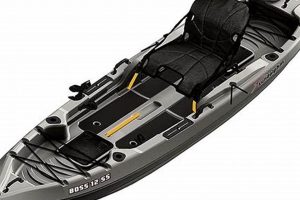
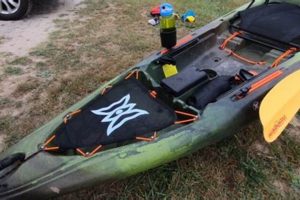
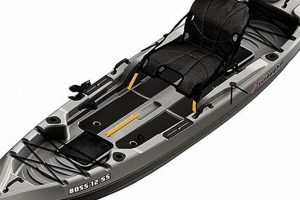
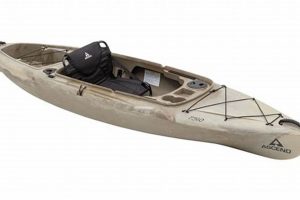
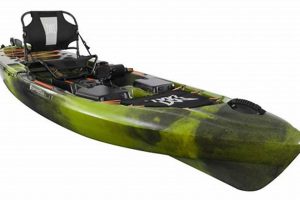
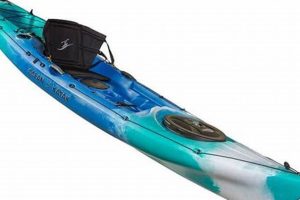
A compact, easily-portable fishing vessel designed for stability and ease of use, a lightweight sit-on-top kayak offers anglers improved access to shallow waters and remote fishing locations. These kayaks prioritize user-friendliness, often featuring simplified designs and comfortable seating arrangements. They are typically constructed from lightweight materials such as high-density polyethylene or composites, minimizing transport challenges and maximizing maneuverability.
Reduced weight significantly impacts an angler’s experience. Portability is enhanced, making launching and loading simpler, especially for individuals with physical limitations. This ease of transport expands fishing possibilities, granting access to previously inaccessible areas like small ponds, creeks, and protected shorelines. Furthermore, lighter kayaks often require less effort to paddle, conserving energy for the fishing itself. This evolution in kayak design reflects a growing demand for accessible and efficient fishing platforms.
This discussion will explore the key factors to consider when selecting such a kayak, including material construction, weight capacity, stability, and essential features. Subsequent sections will delve into popular models, maintenance tips, and safety precautions for an enjoyable and productive fishing experience.
Tips for Choosing a Lightweight Sit-On-Top Fishing Kayak
Selecting a suitable lightweight sit-on-top fishing kayak requires careful consideration of several factors. The following tips offer guidance for making an informed decision.
Tip 1: Evaluate Hull Design: Hull design significantly influences stability and maneuverability. A wider, flatter hull offers superior stability, while a longer, narrower hull provides better tracking and speed. Consider the intended fishing environment and choose a hull design accordingly.
Tip 2: Assess Weight Capacity: Weight capacity dictates the maximum combined weight of the angler, gear, and any potential catch. Exceeding the weight capacity can compromise stability and safety. Choose a kayak with ample capacity.
Tip 3: Consider Material Construction: Common materials include high-density polyethylene (HDPE) and composites. HDPE offers durability and affordability, while composites provide lighter weight and increased rigidity. Each material presents distinct advantages and disadvantages.
Tip 4: Examine Seating and Comfort: A comfortable seat is essential for extended fishing trips. Look for adjustable seating systems, ample back support, and sufficient legroom. Consider factors like seat height and padding.
Tip 5: Inspect Storage Options: Adequate storage space is crucial for carrying fishing gear, tackle boxes, and personal items. Evaluate the size, location, and accessibility of storage compartments, including hatches, tank wells, and bungee cords.
Tip 6: Factor in Transportation and Storage: The kayak’s overall dimensions and weight will impact transportation and storage. Consider vehicle capacity, storage space availability, and ease of loading and unloading.
Tip 7: Research Additional Features: Features like rod holders, paddle clips, anchor systems, and mounting tracks can enhance fishing functionality. Prioritize features that align with specific fishing needs and preferences.
By carefully considering these factors, anglers can select a lightweight sit-on-top fishing kayak that optimizes performance, comfort, and overall fishing experience.
The following section will delve into a comparison of popular models currently available on the market.
1. Portability

Portability represents a defining characteristic of the lightest sit-on-top fishing kayaks. Reduced weight directly translates to easier transport, enabling anglers to access remote fishing locations often unreachable with heavier vessels. This ease of transport extends from car topping to carrying the kayak over short distances, crucial for navigating uneven terrain or launching from unimproved shorelines. Consider an angler seeking to fish a secluded mountain lake; a lightweight kayak becomes essential for traversing the trail leading to the water’s edge. This benefit also applies to individuals with physical limitations, expanding their fishing opportunities significantly.
The impact of portability extends beyond initial transport. Loading and unloading a lightweight kayak onto a vehicle becomes a simpler, less strenuous task. This can be particularly advantageous for solo anglers or those fishing frequently. Furthermore, compact dimensions often associated with lighter kayaks contribute to easier storage, whether in a garage, shed, or even within a smaller apartment. The practical implications of this enhanced portability are far-reaching, allowing for spontaneous fishing trips and expanding access to a wider range of fishing environments.
In summary, portability serves as a cornerstone of the lightweight sit-on-top fishing kayak’s appeal. It unlocks access to remote locations, simplifies transport logistics, and broadens fishing possibilities for a wider range of individuals. While other factors such as stability and capacity remain important, portability directly influences the overall fishing experience, making it a key consideration for anglers seeking versatility and ease of use.
2. Maneuverability
Maneuverability represents a critical performance attribute directly influenced by a kayak’s weight. Lighter kayaks exhibit increased responsiveness to paddle strokes, enabling swift changes in direction and precise navigation through complex environments. This agility proves invaluable when targeting fish in tight spaces, such as along weed lines, beneath overhanging branches, or within narrow creeks. Consider a scenario where an angler encounters a school of fish suddenly surfacing near a cluster of submerged logs. A lighter, more maneuverable kayak allows for rapid adjustments in position, maximizing the opportunity to present a lure or bait effectively.
The relationship between weight and maneuverability extends beyond simple responsiveness. Reduced weight translates to less inertia, requiring less effort to initiate and maintain movement. This efficiency becomes particularly significant in situations demanding frequent course corrections or sustained paddling against currents or wind. Imagine an angler fishing in a river with varying currents and obstacles. A lightweight kayak facilitates effortless navigation through these dynamic conditions, conserving energy and enhancing overall fishing performance. This efficiency also contributes to a more enjoyable experience, reducing fatigue and allowing anglers to focus on the task at hand.
In summary, the enhanced maneuverability offered by lighter kayaks presents a distinct advantage in diverse fishing scenarios. From navigating intricate waterways to capitalizing on fleeting fishing opportunities, responsiveness and reduced inertia contribute significantly to angling success and overall enjoyment. This characteristic, combined with other attributes such as portability and stability, reinforces the value of lightweight design in sit-on-top fishing kayaks. Understanding the impact of weight on maneuverability empowers anglers to make informed decisions aligned with their specific fishing styles and target environments.
3. Stability
Stability constitutes a critical factor influencing the performance and safety of a lightest sit-on-top fishing kayak. While lightweight design prioritizes portability and maneuverability, it also presents potential challenges regarding stability. Understanding the factors affecting stability and how design elements mitigate these challenges is essential for informed kayak selection.
- Center of Gravity
A lower center of gravity contributes significantly to stability. Design features like a wider hull and a lower seating position help lower the center of gravity, reducing the likelihood of tipping. Consider an angler casting a fishing rod from a seated position. A lower center of gravity minimizes the destabilizing effect of the casting motion, maintaining balance and preventing capsizing. Conversely, a higher center of gravity, often found in narrower or taller kayaks, increases susceptibility to tipping, particularly during dynamic movements like casting or retrieving a fish.
- Hull Design
Hull design plays a crucial role in stability. Wider, flatter hulls generally offer greater initial stability, making them less prone to tipping when stationary or during slow movements. This design characteristic is particularly advantageous for anglers fishing in calm waters or engaging in activities requiring stability, such as standing to cast. However, wider hulls often compromise maneuverability and speed. Alternatively, narrower hulls sacrifice some initial stability for increased tracking and speed, making them suitable for paddling longer distances or navigating currents.
- Weight Distribution
Proper weight distribution within the kayak enhances stability. Distributing gear evenly and storing heavier items lower in the hull lowers the center of gravity and improves balance. Imagine an angler with a heavy tackle box placed at the rear of the kayak. This uneven weight distribution can create instability, increasing the risk of tipping, particularly during sudden turns or in rough water. Careful consideration of weight distribution is crucial for maintaining optimal stability.
- Secondary Stability
Secondary stability refers to a kayak’s ability to resist capsizing when tilted beyond its initial stable position. Kayaks with rounded or flared hulls often exhibit good secondary stability, providing a sense of security and the ability to recover from larger leans. This feature becomes crucial in rough water or when encountering unexpected waves. A kayak with poor secondary stability might capsize easily once tilted past a certain point, whereas a kayak with good secondary stability will resist capsizing, providing the angler time to regain balance.
In conclusion, stability considerations are paramount when selecting a lightweight sit-on-top fishing kayak. Balancing lightweight design with stability requires careful evaluation of factors such as center of gravity, hull design, weight distribution, and secondary stability. Understanding these factors empowers anglers to choose a kayak that offers both portability and a secure, stable platform for a safe and enjoyable fishing experience.
4. Material (HDPE, Composite)

Material selection significantly influences the weight and performance of a lightest sit-on-top fishing kayak. High-Density Polyethylene (HDPE) and composite materials represent the most common choices, each offering distinct advantages and disadvantages. HDPE kayaks are renowned for durability and affordability. The material’s inherent resistance to impact and UV degradation ensures a long lifespan with minimal maintenance. However, HDPE’s density contributes to a heavier overall weight compared to composite counterparts. This weight difference can impact portability and maneuverability, particularly for smaller individuals or those transporting kayaks over longer distances. For example, an angler frequently accessing remote fishing spots might find the weight of an HDPE kayak cumbersome during portages. Conversely, composite kayaks, typically constructed from materials like fiberglass, carbon fiber, or Kevlar, offer significant weight savings. This reduced weight enhances portability and maneuverability, facilitating easier transport and on-the-water agility. However, the advanced manufacturing processes and specialized materials associated with composite construction often translate to a higher price point. An angler prioritizing lightweight performance might justify the increased cost of a composite kayak, recognizing the benefits of reduced fatigue and enhanced maneuverability during long fishing trips.
The choice between HDPE and composite materials extends beyond simple weight considerations. Material properties also affect performance characteristics like stiffness and impact resistance. HDPE exhibits excellent impact resistance, making it suitable for navigating rocky shorelines or shallow waters. However, HDPE’s flexibility can compromise performance in rough conditions, resulting in hull deformation and reduced tracking efficiency. Composites, due to their inherent stiffness, offer superior tracking and responsiveness in challenging waters. This stiffness translates to more efficient energy transfer from paddle strokes to forward momentum, enhancing speed and overall performance. However, composite kayaks are more susceptible to damage from impacts, requiring greater care during transport and handling. For instance, an angler navigating rocky terrain might choose a durable HDPE kayak, while an angler prioritizing speed and efficiency in open water might opt for a stiffer composite construction.
In summary, the selection of HDPE or composite materials represents a critical decision point influenced by individual needs and priorities. HDPE offers durability and affordability, while composites prioritize lightweight performance and stiffness. Understanding the inherent trade-offs between weight, durability, cost, and performance allows anglers to make informed decisions aligned with their specific fishing styles and target environments. The ideal material depends on factors such as frequency of use, transport logistics, intended fishing locations, and budget constraints. Balancing these considerations ultimately determines the optimal material selection for a lightest sit-on-top fishing kayak.
5. Weight Capacity

Weight capacity represents a critical factor influencing the performance and safety of a lightest sit-on-top fishing kayak. It dictates the maximum combined weight the kayak can safely support, encompassing the angler, gear, and any potential catch. Understanding the implications of weight capacity is crucial for ensuring stability, preventing submersion, and maintaining optimal performance on the water. Exceeding the specified weight capacity can compromise stability, reduce freeboard (the distance between the waterline and the top of the kayak’s side), and increase the risk of capsizing.
- Angler’s Weight
The angler’s body weight constitutes a significant portion of the total load. Accurately assessing one’s weight, including clothing and personal items, is essential for determining suitable kayak options. An angler weighing 200 pounds, for example, requires a kayak with a significantly higher weight capacity than an angler weighing 150 pounds. Selecting a kayak with insufficient weight capacity for the angler alone can lead to instability and a higher risk of capsizing.
- Gear and Equipment
Fishing gear, including rods, reels, tackle boxes, and other accessories, contributes significantly to the overall weight. Realistically estimating the weight of all intended gear is crucial for accurate weight capacity calculations. An angler carrying multiple rods, a large tackle box, and a cooler adds considerable weight compared to an angler with minimal gear. Failing to account for gear weight can lead to exceeding the kayak’s capacity and compromising stability.
- Potential Catch
While often overlooked, the weight of potential catches should be factored into weight capacity considerations. Landing a large fish adds substantial weight, potentially exceeding the kayak’s limits if not accounted for. Imagine an angler hooking a large fish in a kayak already near its maximum capacity. The added weight of the fish could destabilize the kayak, increasing the risk of capsizing or submersion. Choosing a kayak with ample reserve capacity allows for the safe and successful retrieval of larger catches.
- Performance Implications
Weight capacity directly impacts kayak performance. A kayak loaded near its maximum capacity sits lower in the water, increasing drag and reducing maneuverability. This reduced performance becomes noticeable when paddling against currents or wind, requiring greater effort to maintain speed and direction. Furthermore, a heavily loaded kayak responds less readily to paddle strokes, compromising agility and responsiveness in dynamic fishing situations. Selecting a kayak with ample weight capacity ensures optimal performance and maneuverability, even when carrying substantial gear or landing a large fish.
In conclusion, careful consideration of weight capacity is paramount when selecting a lightest sit-on-top fishing kayak. Accurately assessing the combined weight of the angler, gear, and potential catch ensures stability, safety, and optimal performance on the water. Choosing a kayak with sufficient weight capacity prevents submersion, enhances maneuverability, and allows anglers to focus on the fishing experience rather than managing precarious balance or struggling against excessive drag. Prioritizing weight capacity contributes significantly to a safe, enjoyable, and successful fishing outing.
6. Fishing Features
Specialized fishing features distinguish a purpose-built fishing kayak from recreational models. These features directly impact angling effectiveness and overall experience, particularly within the context of a lightest sit-on-top fishing kayak where weight optimization influences design choices. Integrated rod holders, for instance, secure fishing rods, freeing hands for paddling, baiting hooks, or landing fish. Consider a scenario where an angler needs to quickly adjust position while simultaneously managing a fishing rod. Integrated rod holders provide a secure location for the rod, preventing loss or damage while enabling necessary maneuvers. Similarly, strategically placed tackle storage compartments keep essential gear organized and readily accessible, minimizing time spent searching for lures or tools. This organized approach enhances efficiency, allowing anglers to focus on fishing rather than managing equipment, a crucial aspect when fishing from a lightweight, space-constrained platform.
Further enhancing functionality, features like anchor trolleys and mounting tracks for fish finders or GPS units contribute to a more specialized and productive fishing experience. An anchor trolley system allows for precise anchor positioning, crucial for maintaining position in currents or wind, a particularly relevant feature when fishing from a lightweight kayak susceptible to drift. Mounting tracks offer versatility, enabling customization with accessories tailored to specific fishing styles. An angler targeting specific species might mount a specialized rod holder or fish finder, enhancing effectiveness and overall success. These features, while adding minimal weight, significantly amplify the utility of a lightest sit-on-top fishing kayak, transforming it from a simple platform into a dedicated fishing vessel. This integration of specialized features directly addresses the needs of anglers seeking lightweight portability without compromising fishing functionality.
In summary, specialized fishing features represent an integral component of a lightest sit-on-top fishing kayak. These features, ranging from rod holders and tackle storage to anchor trolleys and mounting tracks, enhance efficiency, improve angling effectiveness, and contribute to a more productive and enjoyable fishing experience. Balancing lightweight design with essential fishing features presents a unique challenge, requiring careful consideration of weight, functionality, and user needs. Successfully integrating these features distinguishes a purpose-built fishing kayak, maximizing its utility within the constraints of lightweight design. This understanding allows anglers to appreciate the significance of fishing features when selecting a lightweight sit-on-top kayak, ensuring a platform optimized for both portability and fishing performance.
7. Price Point
Price point represents a significant consideration when selecting a lightest sit-on-top fishing kayak. The cost of these specialized kayaks varies considerably, influenced by factors such as material, features, and brand reputation. Understanding the relationship between price and these contributing factors empowers informed purchasing decisions aligned with individual budgets and performance expectations.
- Material Construction Costs
Material selection significantly influences the final price. Kayaks constructed from high-density polyethylene (HDPE) generally occupy the lower end of the price spectrum due to the material’s affordability and widespread availability. Conversely, composite materials like fiberglass or carbon fiber, known for their lighter weight and enhanced performance characteristics, command a premium price due to higher manufacturing costs and specialized production processes.
- Feature Set and Associated Costs
The inclusion of specialized fishing features directly impacts price. Kayaks equipped with integrated rod holders, advanced seating systems, multiple storage compartments, and other fishing-specific features often come at a higher price point compared to more basic models. The complexity and manufacturing costs associated with integrating these features contribute to the overall price increase.
- Brand Reputation and Pricing
Brand reputation and perceived quality play a role in pricing. Established brands with a history of producing high-quality, durable kayaks often command higher prices. This price premium reflects not only the quality of materials and construction but also the brand’s reputation for performance, innovation, and customer service.
- Balancing Cost and Performance
The ultimate decision regarding price involves balancing cost with desired features and performance characteristics. A higher price point often correlates with lighter weight, enhanced durability, and specialized fishing features. However, budget-conscious anglers can find well-equipped HDPE kayaks offering excellent value and performance without exceeding financial constraints. Carefully evaluating individual needs and priorities helps determine the optimal balance between cost and desired features.
In conclusion, the price of a lightest sit-on-top fishing kayak reflects a complex interplay of material costs, feature sets, and brand reputation. Understanding these contributing factors enables informed decision-making, allowing anglers to select kayaks that meet both performance requirements and budgetary constraints. Careful evaluation of individual fishing styles, target environments, and desired features empowers anglers to make informed purchases, maximizing value and ensuring a satisfying fishing experience.
Frequently Asked Questions
This section addresses common inquiries regarding the selection and use of lightweight sit-on-top fishing kayaks.
Question 1: How does the weight of a kayak impact its performance on the water?
Weight significantly influences kayak performance, affecting speed, maneuverability, and portability. Lighter kayaks accelerate and decelerate more readily, requiring less effort to paddle and maneuver. They are also easier to transport and launch.
Question 2: Are lightweight kayaks suitable for larger individuals or heavier loads?
Weight capacity, not necessarily overall kayak weight, determines suitability for larger individuals or heavier loads. Lightweight kayaks are available in various weight capacities, some accommodating substantial combined weights of angler, gear, and potential catch.
Question 3: What are the primary advantages of choosing a composite kayak over an HDPE kayak?
Composite kayaks typically offer significant weight savings compared to HDPE kayaks, enhancing portability and maneuverability. They also tend to exhibit greater stiffness, improving tracking and efficiency in the water.
Question 4: How does hull design affect the stability of a lightweight fishing kayak?
Hull design significantly influences stability. Wider, flatter hulls generally offer greater initial stability, while longer, narrower hulls prioritize speed and tracking. Features like chines and hull shape contribute to secondary stability, or the kayak’s ability to resist capsizing when leaned.
Question 5: What essential features should one look for in a lightweight fishing kayak?
Essential features include integrated rod holders, ample storage compartments for tackle and gear, comfortable seating arrangements, and potentially features like anchor trolleys or mounting tracks for accessories.
Question 6: How does one maintain a lightweight fishing kayak and prolong its lifespan?
Proper maintenance includes rinsing the kayak after each use, especially in saltwater environments, storing it out of direct sunlight, and addressing any scratches or damage promptly to prevent further deterioration.
Careful consideration of these frequently asked questions equips prospective buyers with the knowledge necessary for selecting the appropriate lightweight sit-on-top fishing kayak based on individual needs and preferences.
The subsequent section will explore a selection of popular lightweight fishing kayak models currently available.
Conclusion
Careful evaluation of key attributesportability, maneuverability, stability, material construction, weight capacity, specialized fishing features, and price pointinforms optimal selection of lightweight sit-on-top fishing kayaks. Balancing these interconnected factors ensures a harmonious blend of performance, practicality, and personalized angling requirements. Understanding material nuances, from the durability of HDPE to the performance-driven advantages of composites, empowers informed decisions aligned with individual fishing styles and target environments. Prioritizing appropriate weight capacity safeguards stability and ensures safe operation, while integrated fishing features enhance on-the-water efficiency and angling success.
The pursuit of the lightest sit-on-top fishing kayak represents an evolution in angling accessibility and efficiency. As technology advances and designs refine, these specialized vessels promise to further enhance fishing experiences, expanding opportunities for anglers seeking both lightweight portability and exceptional on-the-water performance. Continued exploration of materials, design innovations, and feature integration will undoubtedly shape the future of lightweight fishing kayaks, driving advancements that benefit anglers of all skill levels and fishing styles.