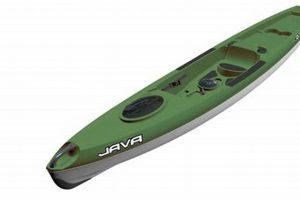
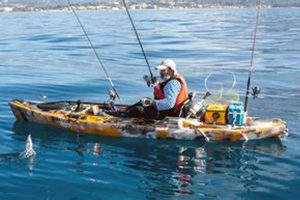
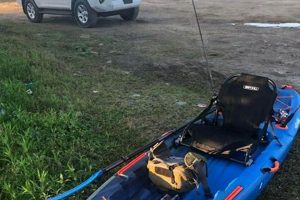
A specialized container designed for use in kayaks, typically providing organized and waterproof storage for tackle, gear, and personal items essential for angling. These containers are often designed to fit specific kayak models or to be universally compatible, and may be integrated into the kayak’s structure or function as removable units.
Secure and readily accessible stowage is crucial for a successful and enjoyable fishing experience from a kayak. Dedicated containers protect equipment from the elements, prevent loss overboard, and enhance angler safety by maintaining a clutter-free cockpit. The evolution of these specialized containers reflects the growing popularity of kayak fishing and the increasing demand for purpose-built equipment. Historically, anglers adapted generic storage solutions, but contemporary designs offer improved functionality, durability, and integration with kayak angling systems.
This article will delve into the various aspects of selecting and using these essential components of kayak fishing, covering topics such as materials, mounting systems, features, and organization strategies.
Tips for Effective Storage in Kayak Fishing
Optimizing storage solutions contributes significantly to a successful kayak fishing excursion. Careful planning and selection of appropriate containers enhance both safety and efficiency on the water.
Tip 1: Prioritize Waterproof Containers: Protecting gear from water damage is paramount. Select containers with reliable seals and consider waterproof liners for additional protection.
Tip 2: Utilize a Variety of Sizes: Employing a combination of small, medium, and large containers allows for efficient organization of different items, from small hooks and lures to larger pieces of equipment.
Tip 3: Consider Container Accessibility: Place frequently accessed items in easily reachable locations. Prioritize quick access to essential safety gear.
Tip 4: Secure Containers Properly: Ensure all containers are securely fastened to the kayak to prevent shifting or loss during movement or adverse conditions. Utilize bungee cords, straps, or integrated locking mechanisms.
Tip 5: Label and Organize Contents: Clearly label containers to facilitate quick identification of contents. Implement an organizational system that suits individual needs and fishing styles.
Tip 6: Distribute Weight Evenly: Balance the weight of loaded containers throughout the kayak for optimal stability and performance. Avoid concentrating heavy items in one area.
Tip 7: Regularly Inspect and Maintain Containers: Periodically check containers for wear and tear, ensuring seals remain intact and closures function correctly. Replace damaged containers promptly.
By adhering to these guidelines, anglers can maximize storage capacity, improve safety, and enhance overall fishing experience.
These practical tips contribute to a more organized and efficient approach to kayak fishing, allowing anglers to focus on the sport itself.
1. Durability

Durability is a critical factor in selecting a kayak fishing storage box. These containers are subjected to harsh conditions, including exposure to saltwater, UV radiation, and physical impacts. A durable container safeguards valuable equipment and ensures long-term functionality. Choosing a robust material, such as high-impact plastic or marine-grade aluminum, directly impacts the container’s lifespan and resistance to damage. For instance, a poorly constructed box might crack under stress, leading to water damage or loss of equipment. A durable container, conversely, withstands regular use and the rigors of the kayak fishing environment.
The practical implications of durability extend beyond simple equipment protection. A broken storage box can disrupt a fishing trip, leading to lost time and potential safety hazards. A robust container contributes to peace of mind, allowing anglers to focus on fishing rather than worrying about gear integrity. Furthermore, investing in a durable storage solution minimizes the need for frequent replacements, representing a long-term cost saving. Different materials offer varying degrees of durability. High-density polyethylene (HDPE) is a popular choice for its impact resistance and UV stability. Marine-grade aluminum offers exceptional strength but can be heavier and more expensive. Choosing the right material depends on individual needs and budget.
In conclusion, durability is a crucial consideration when selecting a kayak fishing storage box. It directly impacts the container’s ability to protect equipment, withstand harsh conditions, and contribute to a safe and enjoyable fishing experience. The choice of material, construction quality, and appropriate usage all play a role in ensuring long-term functionality and value. Considering the investment in fishing gear, selecting a durable storage solution represents a wise decision for any serious kayak angler.
2. Water resistance

Water resistance is paramount for kayak fishing storage boxes. These containers safeguard essential equipment from the inevitable splashes, spray, and occasional submersion inherent to the sport. Compromised water resistance can lead to damaged tackle, electronics malfunction, and even safety risks associated with waterlogged gear. A water-resistant container preserves the integrity and functionality of stored items, contributing to a more successful and enjoyable fishing experience. For example, a waterproof box protects sensitive electronic devices like fish finders and GPS units from water damage, ensuring their continued operation throughout the fishing trip.
The degree of water resistance required depends on the specific conditions and fishing style. While some anglers might encounter only occasional splashes, others regularly navigate through rougher waters or experience unexpected capsizes. Various levels of water resistance exist, ranging from splash-proof designs to fully submersible containers. Understanding these levels and choosing appropriately is crucial for effective gear protection. A simple splash-proof box may suffice for calm lake fishing, whereas a fully submersible container provides essential protection in challenging offshore environments. Furthermore, the type of closure mechanism, gasket material, and overall construction contribute to the container’s ability to repel water.
Selecting a kayak fishing storage box with adequate water resistance is a critical investment in equipment longevity and overall fishing success. Compromising on this feature can lead to costly replacements, disruptions during fishing trips, and potential safety concerns. Anglers should carefully consider their specific needs and environmental conditions when evaluating water resistance levels. Ultimately, a dry storage compartment translates to protected gear, uninterrupted fishing, and peace of mind on the water.
3. Secure Mounting
Secure mounting is essential for kayak fishing storage boxes, ensuring they remain stable and accessible despite the dynamic movements inherent to the sport. A securely mounted container prevents loss or damage to valuable equipment during paddling, navigating rough waters, or unexpected events such as capsizes. Various mounting methods exist, including integrated track systems, straps, and bungee cords. The choice of mounting method depends on the specific kayak model, the box design, and the angler’s preferences. A poorly secured container can shift unexpectedly, interfering with paddling, obstructing access to other gear, or even posing a safety hazard. Conversely, a properly mounted box remains stable, allowing anglers to focus on fishing without concern for equipment stability.
Consider a scenario where an angler navigates through choppy waters. A loosely secured storage box might slide around the deck, potentially damaging the kayak or obstructing access to essential safety gear. In contrast, a securely mounted box remains in place, ensuring readily accessible equipment and a safer, more efficient fishing experience. Different mounting systems offer varying levels of security and convenience. Integrated track systems allow for precise placement and easy adjustment, while straps and bungee cords provide a more versatile, albeit potentially less secure, solution. Understanding the advantages and limitations of each method enables anglers to choose the most appropriate system for their specific needs and fishing style.
The importance of secure mounting extends beyond simple equipment retention. It contributes directly to angler safety and overall fishing efficiency. A stable and accessible storage system minimizes distractions, allowing anglers to concentrate on the task at hand. Furthermore, preventing equipment loss or damage saves both money and potential frustration. Choosing appropriate mounting hardware and employing proper installation techniques ensures a secure and reliable storage solution. Ultimately, secure mounting is a crucial aspect of kayak fishing storage box functionality, contributing to a safer, more organized, and ultimately more successful angling experience.
4. Accessible Placement
Accessible placement of kayak fishing storage boxes is crucial for efficient gear retrieval and overall angler safety. Strategic positioning allows for quick access to essential items without compromising balance or requiring awkward maneuvering. Consider the placement of frequently used items like pliers, lures, or safety equipment. Positioning these within easy reach minimizes disruption and maximizes fishing time. Conversely, storing infrequently accessed items in less accessible locations, such as the stern of the kayak, maintains a clutter-free cockpit and improves stability. For example, placing a tackle box within arm’s reach allows for quick lure changes without requiring the angler to shift position or reach precariously. Positioning a first-aid kit in a readily accessible, yet secure, location ensures rapid response in case of an emergency.
The practical implications of accessible placement extend beyond simple convenience. In critical situations, quick access to safety gear, such as a whistle or signaling device, can be paramount. Fumbling for essential items in a cluttered or poorly organized kayak can lead to delays, increasing risk and compromising safety. Furthermore, accessible placement contributes to efficient fishing practices. Rapid access to tackle and tools allows anglers to capitalize on opportune moments and maximize fishing time. Consider a scenario where an angler hooks a fish and needs to quickly adjust drag or access a landing net. Accessible placement of these items can make the difference between landing the fish and losing it. Therefore, thoughtful consideration of storage box placement enhances both safety and efficiency on the water.
In summary, accessible placement of kayak fishing storage boxes is a critical aspect of effective gear management and overall safety. Strategic positioning of frequently used items within easy reach optimizes fishing efficiency and allows for rapid response in critical situations. Conversely, storing less frequently used items in less accessible locations contributes to a clutter-free cockpit and enhanced stability. By prioritizing accessibility, anglers enhance both their safety and their overall fishing experience.
5. Organized Compartments

Organized compartments within a kayak fishing storage box are essential for efficient tackle management and a streamlined fishing experience. A well-organized system allows anglers to quickly locate specific items, minimizing downtime and maximizing time on the water. This contributes not only to fishing efficiency but also to safety by reducing clutter and preventing distractions. The following facets illustrate the importance of organized compartments within these specialized storage solutions.
- Efficient Tackle Retrieval
Dedicated compartments for different types of tackle, such as hooks, lures, weights, and lines, facilitate rapid retrieval. Imagine needing a specific lure quickly when fish are actively feeding. A well-organized compartment system allows for immediate access, minimizing disruption and maximizing the chances of a successful catch. Conversely, rummaging through a disorganized jumble of tackle wastes valuable fishing time and can lead to frustration. Efficient tackle retrieval directly impacts fishing success and overall enjoyment on the water.
- Preventing Tangle and Damage
Separate compartments prevent hooks, lures, and other tackle from tangling, minimizing damage and extending the lifespan of equipment. Hooks snagged on other items not only waste time but can also lead to broken lines and lost lures. Organized compartments mitigate these risks, preserving tackle integrity and reducing the need for frequent replacements. This is particularly important for delicate items like fishing lines, which can become weakened or unusable if tangled or improperly stored.
- Maximizing Storage Space
Well-designed compartments maximize storage space within the limited confines of a kayak. By utilizing dividers, trays, and specialized compartments, anglers can optimize storage capacity and carry a wider variety of tackle. This is particularly beneficial for longer fishing trips or when targeting multiple species requiring diverse equipment. Efficient use of space contributes to a more streamlined and organized kayak, enhancing both safety and performance on the water.
- Enhanced Safety
Organized compartments contribute to a safer fishing environment by reducing clutter and minimizing the risk of accidents. Loose items rolling around the kayak deck can create tripping hazards or interfere with paddling. Securely storing equipment in designated compartments keeps the cockpit clear and enhances overall stability. This is particularly important in challenging conditions or when navigating through rough waters. A well-organized kayak allows the angler to maintain focus on the surroundings and react quickly to changing conditions, promoting a safer and more enjoyable fishing experience.
In conclusion, the organizational structure of compartments within a kayak fishing storage box is integral to efficient tackle management, equipment preservation, and overall safety. By incorporating these facets into storage solutions, anglers can optimize their fishing experience, maximizing both efficiency and enjoyment on the water.
6. Appropriate Size
Appropriate size is a critical consideration when selecting a kayak fishing storage box. The chosen container must effectively balance storage capacity with the limited space available in a kayak. Oversized boxes impede movement and compromise stability, while undersized containers fail to accommodate essential gear. The ideal size depends on individual fishing styles, target species, and the duration of typical outings. An angler pursuing large game fish offshore requires significantly more storage capacity for heavier tackle and specialized equipment compared to an angler fishing for panfish in a small pond. Similarly, multi-day expeditions necessitate larger storage solutions than short afternoon trips. Selecting an appropriately sized container maximizes storage efficiency without compromising kayak maneuverability or angler safety. For example, a large, bulky container might hinder paddling and create an unstable platform, particularly in challenging conditions. Conversely, a small container may necessitate multiple trips to and from the vehicle, increasing loading time and potentially leaving essential gear behind.
Practical considerations for determining appropriate size include the types of gear typically carried, the frequency of access required, and the overall weight capacity of the kayak. Regularly used items, such as lures and pliers, benefit from readily accessible storage in smaller containers placed within easy reach. Less frequently accessed items, like rain gear or spare clothing, can be stored in larger containers positioned further from the cockpit. Weight distribution also plays a crucial role. Concentrating heavy items in one area compromises stability, while distributing weight evenly maintains balance and enhances maneuverability. Understanding the relationship between container size, weight distribution, and kayak performance is essential for safe and efficient angling. For instance, placing a heavy tackle box in the stern of a sit-on-top kayak might cause the bow to rise excessively, increasing susceptibility to wind and waves.
In summary, selecting an appropriately sized kayak fishing storage box requires careful consideration of individual needs and fishing practices. Balancing storage capacity with available space, accessibility requirements, and weight distribution considerations ensures optimal kayak performance and angler safety. Choosing the right size contributes to a more streamlined, efficient, and ultimately more enjoyable fishing experience. Failing to consider size implications can lead to instability, reduced maneuverability, and compromised safety, ultimately detracting from the overall angling experience.
7. Weight Distribution
Weight distribution plays a crucial role in kayak stability and performance, particularly when carrying gear in storage boxes. Proper weight distribution ensures efficient paddling, maneuverability, and overall safety. Uneven weight distribution can lead to instability, making the kayak difficult to control and increasing the risk of capsizing. Understanding the principles of weight distribution and their relationship to storage box placement is essential for a successful and safe kayak fishing experience.
- Impact on Stability
Proper weight distribution significantly impacts kayak stability. Concentrating weight in one area, such as the stern or bow, creates an imbalance, making the kayak more susceptible to tipping. Distributing weight evenly across the length and width of the kayak enhances stability, allowing for smoother paddling and safer navigation, especially in challenging conditions like wind or waves. For example, placing a heavy storage box directly behind the seat in a sit-on-top kayak can raise the bow, increasing wind resistance and reducing maneuverability. Distributing weight more evenly, by placing lighter items in the bow and heavier items closer to the center, improves stability and control.
- Effect on Maneuverability
Weight distribution directly affects kayak maneuverability. An unevenly loaded kayak becomes sluggish and unresponsive, requiring more effort to turn and maintain course. Balanced weight distribution enhances responsiveness, allowing for quick turns and precise maneuvering. This is particularly important when navigating tight spaces, such as narrow creeks or areas with submerged obstacles. Consider a kayak with a heavy storage box positioned far to one side. Turning the kayak requires significantly more effort, and the kayak might tend to veer off course. Distributing weight evenly improves tracking and responsiveness, making the kayak easier to control.
- Considerations for Storage Box Placement
Storage box placement is integral to weight distribution. Heavier items should be placed lower and closer to the center of the kayak, while lighter items can be stored higher and towards the ends. This principle maximizes stability and maintains efficient paddling dynamics. For instance, heavier tackle boxes should be positioned closer to the seat, while lighter items like rain gear or dry bags can be stored in the bow or stern compartments. Furthermore, securing storage boxes firmly to the kayak prevents shifting during movement, which could further destabilize the vessel. Utilizing appropriate tie-down straps or integrated track systems ensures that storage boxes remain securely in place, contributing to consistent weight distribution and overall safety.
- Relationship to Kayak Type
Weight distribution considerations vary depending on the type of kayak. Sit-on-top kayaks generally offer more flexibility in storage box placement due to their open deck design. Sit-inside kayaks, with their enclosed cockpits, require more careful planning to maintain balance and access. Understanding the specific characteristics and weight capacity of the kayak model is crucial for optimizing storage and weight distribution. For example, longer, narrower kayaks are more susceptible to imbalances than wider, more stable designs. Therefore, careful attention to weight distribution is even more critical in these less stable vessels. Consulting the kayak manufacturer’s recommendations regarding weight capacity and distribution guidelines provides valuable insights for safe and efficient operation.
In conclusion, effective weight distribution, influenced significantly by storage box placement and loading, is paramount for kayak fishing safety and performance. Careful consideration of these principles allows anglers to optimize stability, maneuverability, and overall efficiency on the water, enhancing the fishing experience and mitigating potential risks. Ignoring these principles can lead to instability, difficulty maneuvering, and increased risk of capsizing, ultimately jeopardizing safety and diminishing the enjoyment of kayak fishing. Therefore, understanding and applying the principles of weight distribution is essential for any responsible kayak angler.
Frequently Asked Questions
This section addresses common inquiries regarding kayak fishing storage solutions, providing practical guidance for anglers seeking to optimize their equipment and enhance their on-water experience.
Question 1: What materials are most suitable for kayak fishing storage boxes?
Durable, water-resistant materials are essential. High-density polyethylene (HDPE) offers a balance of durability, UV resistance, and affordability. Marine-grade aluminum provides superior strength but comes at a higher cost and weight. ABS plastic offers a lighter, more budget-friendly option, but may be less durable than HDPE.
Question 2: How does one choose the appropriate size storage box?
Consider the type and quantity of gear typically carried, the frequency of access required, and the kayak’s weight capacity. Prioritize accessible placement for frequently used items. Larger, less frequently accessed items can be stored in the stern or other less accessible locations. Balance storage needs with maintaining kayak stability and maneuverability.
Question 3: What are the most secure mounting methods for kayak storage boxes?
Integrated track systems offer the most secure mounting option, allowing for adjustable positioning and robust attachment. Straps and bungee cords provide versatility but require careful tensioning and periodic inspection to ensure continued security. Consider the specific kayak model and storage box design when selecting a mounting method.
Question 4: How can one maximize storage space in a kayak?
Utilize a combination of different sized containers to accommodate various gear types. Employ organizers, dividers, and trays within storage boxes to maximize internal space utilization. Consider specialized storage solutions designed for specific items like rods, reels, and tackle. Prioritize vertical space and utilize areas under seats or in the bow and stern when feasible.
Question 5: What are the key considerations for weight distribution in a fishing kayak?
Distribute weight evenly across the length and width of the kayak. Place heavier items lower and closer to the center, while lighter items can be stored higher and towards the ends. Secure all storage boxes firmly to prevent shifting during movement. Consider the impact of weight distribution on kayak stability, maneuverability, and paddling efficiency. Consult the kayak manufacturer’s recommendations for weight capacity and distribution guidelines.
Question 6: How does one maintain kayak fishing storage boxes?
Regularly inspect containers for signs of wear and tear, including cracks, loose hardware, and damaged seals. Rinse containers with fresh water after each use, particularly after exposure to saltwater. Store containers in a dry, protected environment away from direct sunlight. Replace damaged or worn-out containers promptly to ensure continued functionality and equipment protection. Periodically lubricate hinges and other moving parts to ensure smooth operation.
Careful consideration of these frequently asked questions contributes to selecting and utilizing appropriate kayak fishing storage solutions. Prioritizing durability, security, accessibility, and proper weight distribution enhances both safety and fishing enjoyment on the water.
This concludes the FAQ section. The next section will offer specific product recommendations based on different fishing styles and budgets.
Conclusion
Effective kayak fishing relies heavily on strategic gear organization. Selecting appropriate storage solutions directly impacts efficiency, safety, and overall enjoyment on the water. Durability, water resistance, secure mounting, accessible placement, organized compartments, appropriate size, and balanced weight distribution are crucial considerations. Prioritizing these factors contributes significantly to a streamlined and productive fishing experience. Addressing these elements ensures valuable equipment remains protected and readily available, allowing anglers to focus on the sport itself. Careful consideration of storage solutions elevates kayak angling from a simple pastime to a well-executed pursuit.
Strategic gear management, facilitated by appropriate storage solutions, transforms kayak fishing into a more rewarding and efficient pursuit. The careful selection and utilization of kayak fishing storage contribute directly to angler safety, optimize on-the-water performance, and ultimately, enhance the overall fishing experience. Investing time and consideration in these seemingly small details yields significant returns in terms of both enjoyment and success. Ultimately, the integration of thoughtful storage solutions elevates kayak fishing, allowing anglers to fully appreciate the sport and the environment in which it is practiced.