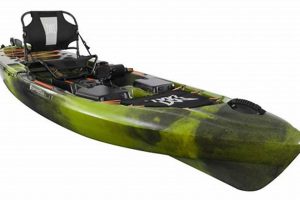
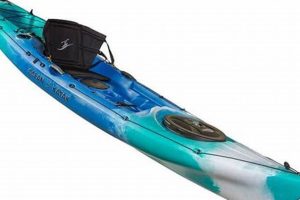
Angling from a self-propelled, small watercraft designed for a seated position offers a unique approach to the sport. This method allows anglers to access shallow or otherwise difficult-to-reach areas, providing a closer connection with the aquatic environment and often increasing the chances of a successful catch. The low profile of these vessels also presents minimal disturbance to fish, enhancing stealth and improving fishing prospects.
This style of fishing has grown in popularity due to the combination of affordability, portability, and versatility offered by these small boats. They provide a stable platform for casting and reeling, while enabling exploration of diverse waterways, from calm lakes and ponds to slow-moving rivers and sheltered coastal areas. The relatively recent development of specialized designs for this purpose has further propelled its adoption within the angling community. This method promotes a quiet, non-motorized experience that allows for a deeper immersion in nature and a reduced environmental impact compared to motorized boating.
Several factors influence the success and enjoyment of this activity, including vessel selection, appropriate gear and tackle, safety considerations, and an understanding of relevant fishing regulations. Furthermore, specific techniques for casting, retrieving, and landing fish from these small platforms are often employed. These topics, along with location selection and strategies for different fish species, will be explored further in the following sections.
Tips for Kayak Fishing
Effective angling from a kayak requires preparation and specialized techniques. The following tips offer guidance for enhancing safety and improving the chances of success.
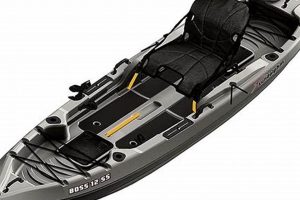
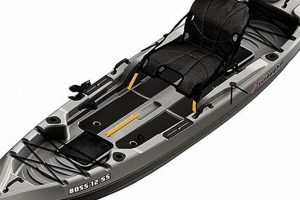
Tip 1: Choose the Right Kayak: Kayak selection depends on intended fishing locations and personal preferences. Longer kayaks offer speed and tracking for open water, while shorter kayaks provide maneuverability in tighter spaces. Consider features like rod holders, storage compartments, and stability.
Tip 2: Prioritize Safety Equipment: A personal flotation device (PFD) is essential. A whistle, signaling mirror, and communication device are recommended. Check weather forecasts before departure and inform someone of the intended fishing location and return time.
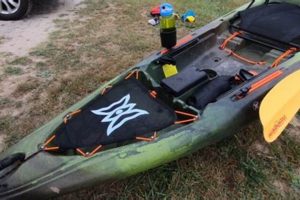
Tip 3: Organize and Secure Gear: Keep essential equipment within easy reach. Utilize deck rigging, dry bags, and tackle boxes to prevent gear loss and maintain a clutter-free cockpit. Distribute weight evenly for optimal stability.
Tip 4: Practice Paddling and Maneuvering: Familiarize oneself with basic paddling strokes and maneuvering techniques before venturing onto the water. Practice entering and exiting the kayak in shallow water. Consider taking a kayaking safety course.
Tip 5: Master Kayak-Specific Fishing Techniques: Adapt casting and retrieving methods for the seated position and limited space. Practice landing fish efficiently and safely without compromising balance.
Tip 6: Respect the Environment and Wildlife: Adhere to Leave No Trace principles. Pack out all trash and fishing line. Avoid disturbing wildlife and nesting areas. Observe local fishing regulations.
Tip 7: Learn Basic Knots and Rigging: Mastering fundamental fishing knots is crucial for attaching lines, hooks, and lures. Understanding rigging techniques allows for adaptation to various fishing conditions and target species.
By adhering to these guidelines, anglers can enhance their safety, improve their fishing success, and minimize environmental impact while enjoying this specialized style of angling.
Understanding and applying these tips will contribute to a more enjoyable and productive experience on the water.
1. Kayak Selection

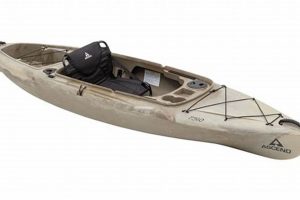
Kayak selection significantly impacts the effectiveness and enjoyment of fishing from this type of vessel. Appropriate vessel choice depends on several factors, including the intended fishing environment (rivers, lakes, oceans), target species, and individual angler needs. For example, shorter kayaks (under 12 feet) offer superior maneuverability in tight spaces like creeks and mangrove tunnels, making them ideal for pursuing species such as bass or snook. Longer kayaks (over 12 feet) provide increased speed and tracking, benefiting anglers targeting pelagic fish in open water or covering greater distances. Sit-in kayaks offer protection from the elements and greater storage capacity, often preferred for colder climates or longer expeditions.
Specific features further differentiate fishing kayaks. Dedicated fishing kayaks frequently incorporate features like rod holders, tackle storage compartments, anchor trolleys, and even livewells. These features enhance angler efficiency and organization. Stability is another critical factor; wider kayaks generally offer greater stability, particularly important for anglers standing to cast or fight larger fish. Weight capacity should accommodate the angler, gear, and potential catch. Considering these factors ensures compatibility between the kayak and the angler’s fishing style and target environment. For instance, an angler targeting large saltwater species from a kayak might prioritize stability and storage capacity over maneuverability in tight quarters.
Careful kayak selection directly influences fishing success and safety. Choosing a kayak suited to the environment and fishing style enhances stability, improves access to fishing grounds, and maximizes angler comfort. Understanding the interplay of these factors allows anglers to make informed decisions, optimizing their fishing experience and promoting safety on the water. Ignoring these considerations can lead to an unstable and potentially unsafe fishing platform, hindering effective angling and posing risks. Therefore, matching the kayak to the specific fishing application is essential for a productive and enjoyable experience.
2. Safety Gear
Safety gear is paramount when fishing from a sit-in kayak due to the inherent risks associated with on-water activities. The potential for capsizing, immersion in cold water, encounters with adverse weather conditions, and navigation hazards necessitates careful consideration of safety precautions. Appropriate safety equipment mitigates these risks, ensuring angler well-being and enabling a focus on the fishing experience. A key element is the Personal Flotation Device (PFD), legally required in many jurisdictions and essential for buoyancy in case of capsize. A communication device, such as a VHF radio or waterproof cell phone, enables contact with emergency services or shore support if needed. A whistle provides an additional signaling method. A first-aid kit addresses minor injuries, while a signaling mirror aids visibility to search and rescue operations. Navigation lights are crucial for low-light conditions, enhancing visibility to other boaters.
Specific scenarios illustrate the practical significance of safety gear. Consider an angler capsizing in cold water; a PFD provides immediate flotation, preventing drowning while a communication device allows for summoning assistance. In the event of unexpected fog or nightfall, navigation lights increase visibility, reducing the risk of collision with other vessels. A first-aid kit provides immediate treatment for hook injuries or minor lacerations. These examples underscore the direct impact of appropriate safety gear on angler well-being and the prevention of potentially life-threatening situations. Carrying essential safety gear isn’t merely a recommendation; it’s a crucial aspect of responsible kayak fishing.
Maintaining safety consciousness while kayak fishing requires consistent attention to potential hazards and adherence to safe practices. Regular inspection and maintenance of safety equipment, including checking PFD condition and ensuring communication devices are functional, is essential. Understanding weather forecasts and water conditions before embarking on a fishing trip allows for informed decision-making and avoidance of potentially dangerous situations. Communicating planned fishing locations and expected return times with someone on shore provides an additional layer of safety. Ultimately, prioritizing safety fosters a more enjoyable and responsible fishing experience, mitigating risks and promoting angler well-being on the water.
3. Gear Organization

Efficient gear organization is crucial for successful and enjoyable kayak fishing. Limited space and the dynamic nature of the activity necessitate a systematic approach to gear storage and accessibility. Effective organization maximizes fishing time, minimizes clutter, and enhances safety by ensuring essential equipment is readily available when needed. A well-organized kayak promotes a more efficient and ultimately more productive fishing experience.
- Accessibility of Essential Equipment:
Frequently used items like pliers, line cutters, and lures should be within easy reach. Utilizing readily accessible storage solutions, such as tackle boxes mounted within arm’s reach or pockets on a fishing vest, minimizes time spent searching for gear. This streamlined approach allows anglers to maintain focus on fishing, maximizing opportunities and response time to fish activity. Fumbling for essential tools during critical moments can lead to missed catches or tangled lines.
- Safe Stowage of Equipment:
Proper stowage prevents gear loss and maintains a stable kayak. Securing equipment using deck rigging, dry bags, and sealed containers safeguards against shifting weight and water damage. A stable kayak is essential for angler safety, particularly in challenging conditions. Loose gear can create tripping hazards or shift the kayak’s center of gravity, increasing the risk of capsize. Proper stowage also protects valuable equipment from the elements, extending its lifespan.
- Weight Distribution and Balance:
Even weight distribution within the kayak is crucial for maintaining stability and maneuverability. Distributing heavier items low and evenly within the hull optimizes kayak performance and reduces the risk of capsize. Uneven weight distribution can significantly impact tracking and make the kayak more susceptible to tipping. Careful consideration of weight placement ensures a balanced and stable platform, enhancing both safety and fishing effectiveness.
- Minimizing Clutter and Maximizing Space:
A clutter-free cockpit improves efficiency and safety. Minimizing unnecessary items and utilizing designated storage areas for specific gear types creates a more organized and functional fishing environment. A tidy cockpit allows for unrestricted movement and reduces the risk of entanglement with fishing lines or other equipment. This streamlined approach enhances both safety and fishing efficiency.
These organizational principles contribute significantly to a positive kayak fishing experience. By prioritizing accessibility, safe stowage, weight distribution, and clutter reduction, anglers can maximize fishing time, enhance safety, and create a more enjoyable and productive environment on the water. The efficiency gained through proper gear organization translates directly to improved fishing success and a more fulfilling experience overall.
4. Paddling Technique
Effective paddling technique is fundamental to successful kayak fishing. It directly influences maneuverability, stealth, and overall efficiency on the water. Precise paddle control enables anglers to position the kayak strategically for optimal casting angles, navigate challenging currents or wind conditions, and approach fishing grounds discreetly without disturbing target species. Mastery of essential paddling strokes contributes significantly to a productive and enjoyable fishing experience.
- Forward Stroke:
The forward stroke propels the kayak efficiently across the water. Proper technique involves a combination of core rotation, arm extension, and a smooth, powerful pull through the water. An efficient forward stroke maximizes speed and minimizes fatigue, allowing anglers to cover greater distances and reach desired fishing locations quickly. For example, a strong forward stroke is essential for navigating against currents or covering long stretches of open water when searching for schools of fish.
- Reverse Stroke:
The reverse stroke stops forward momentum and allows for controlled backward movement. This stroke is crucial for maneuvering in tight spaces, backing away from obstacles, or maintaining position in currents. Precise reverse strokes enable subtle adjustments in kayak position, facilitating accurate casting and lure presentation. For instance, a controlled reverse stroke can prevent drifting into snags or reposition the kayak for a better casting angle when approaching a promising fishing spot.
- Sweep Stroke:
Sweep strokes turn the kayak efficiently. By extending the paddle away from the kayak and sweeping it in a wide arc, anglers can initiate turns without significantly impacting forward momentum. This maneuverability is crucial for navigating around obstacles, adjusting to changing wind or current conditions, and positioning the kayak for optimal casting angles. An angler might use a sweep stroke to quickly turn the kayak and present a lure to a fish spotted near the bank.
- Draw Stroke:
The draw stroke moves the kayak sideways. By placing the paddle vertically in the water and pulling it towards the kayak, anglers can adjust their position laterally without changing the kayak’s heading. This precise control is invaluable for holding position near structure, maneuvering in tight spaces, or subtly adjusting the kayak for a better casting presentation. For example, an angler might use a draw stroke to move closer to a submerged log or rock where fish are likely to hold.
Proficient execution of these paddling techniques significantly enhances kayak fishing effectiveness. Precise boat control enables anglers to position themselves strategically for optimal casting, navigate diverse water conditions efficiently, and approach fish stealthily. Mastery of these skills contributes directly to a more productive and enjoyable fishing experience from a sit-in kayak. Furthermore, efficient paddling conserves energy, allowing for longer fishing trips and reducing fatigue, which can be particularly important in challenging environments.
5. Fishing Adaptations

Fishing from a sit-in kayak necessitates adaptations to conventional angling techniques. The confined space and lower vantage point require modifications in casting, retrieving, and fish handling to maintain effectiveness and safety. Casting techniques must account for the seated position and potential obstructions within the kayak’s cockpit. Underhand or sidearm casts often prove more practical than overhead casts, minimizing the risk of entanglement with the kayak or surrounding gear. Retrieving techniques also require adaptation, with careful line management crucial to prevent tangles and maintain control of the fish. The angler’s lower position relative to the water surface necessitates adjustments in rod angles and retrieval speed to effectively work lures or present bait.
Adapting fish-handling techniques is critical for maintaining balance and preventing capsize. Landing larger fish requires careful maneuvering and secure grips to avoid sudden shifts in weight that could destabilize the kayak. Utilizing specialized tools like lip grips or landing nets facilitates safer and more efficient fish handling within the confined space. For example, landing a large, energetic fish alongside a kayak without appropriate adaptations could easily lead to capsize, highlighting the practical significance of these modifications. Similarly, adjusting casting techniques prevents snagging hooks on the kayak or surrounding gear, preserving fishing time and minimizing potential damage. These adaptations are not merely recommended practices; they are essential for effective and safe kayak angling.
Understanding and implementing these fishing adaptations significantly improves angling success and safety in a sit-in kayak. These adjustments optimize casting efficiency, enhance lure presentation, and facilitate safe fish handling within the constraints of the kayak’s environment. Ultimately, adapting techniques to the unique challenges of kayak fishing allows anglers to maximize their effectiveness on the water while prioritizing safety and maintaining control in a dynamic environment. Failure to adapt can lead to decreased fishing success, compromised safety, and increased frustration, underscoring the importance of mastering these specialized techniques.
6. Environmental Awareness

Environmental awareness represents a crucial aspect of responsible kayak fishing. The low-impact nature of human-powered watercraft offers advantages for minimizing disturbance to aquatic ecosystems compared to motorized vessels. However, anglers must actively practice Leave No Trace principles to fully realize this potential. Discarded fishing line poses a significant entanglement hazard to wildlife; responsible anglers retrieve and properly dispose of all used line. Avoiding disturbance of nesting areas and respecting riparian vegetation preserves habitat integrity. Minimizing noise pollution contributes to a healthier environment for both wildlife and fellow anglers. For example, encountering a nesting bird colony requires maintaining a respectful distance to avoid stressing the birds, potentially causing nest abandonment. Similarly, refraining from playing loud music respects the natural soundscape and the experience of other individuals enjoying the environment. These conscious actions demonstrate a commitment to preserving the natural integrity of fishing locations.
Understanding the fragility of aquatic ecosystems further underscores the importance of environmental awareness. Kayak anglers often access shallow, sheltered areas crucial for fish spawning and juvenile development. Disturbing these sensitive habitats can negatively impact fish populations. Proper disposal of human waste and avoidance of chemical pollutants, such as sunscreen and insect repellent, protects water quality. Furthermore, awareness of invasive species and their potential impact empowers anglers to take preventative measures, such as cleaning kayaks and gear to prevent their spread. For instance, failing to clean a kayak after fishing in a water body known to contain invasive mussels can facilitate their introduction to a new, uninfected environment, potentially causing significant ecological damage. These proactive measures demonstrate a commitment to long-term ecosystem health.
Ultimately, environmental awareness enhances the sustainability of kayak fishing. By minimizing environmental impact, anglers contribute to the preservation of healthy aquatic ecosystems, ensuring future generations can enjoy the same opportunities. Responsible angling practices not only protect the environment but also enhance the overall fishing experience. Appreciating the interconnectedness of human actions and environmental health fosters a deeper connection with nature, enriching the angling experience. The practical application of environmental awareness embodies responsible stewardship, promoting the long-term health and accessibility of cherished fishing destinations. This commitment to sustainability ensures the continued enjoyment of kayak fishing for generations to come.
Frequently Asked Questions
This section addresses common inquiries regarding angling from sit-in kayaks, providing concise and informative responses to facilitate informed decision-making and enhance the overall fishing experience.
Question 1: What are the advantages of fishing from a sit-in kayak?
Sit-in kayaks offer several advantages, including enhanced stability, protection from the elements, and greater storage capacity. These features are particularly beneficial in colder climates or choppy water conditions. The lower center of gravity contributes to stability, while the enclosed cockpit reduces exposure to wind and water.
Question 2: What essential safety gear is recommended for kayak fishing?
Essential safety gear includes a Personal Flotation Device (PFD), a whistle, a communication device (VHF radio or waterproof cell phone), a first-aid kit, and navigation lights. A signaling mirror and a paddle leash are also recommended. Checking weather conditions before departure is crucial.
Question 3: How does one choose the right sit-in kayak for fishing?
Kayak selection depends on intended fishing locations and target species. Shorter kayaks offer maneuverability in tight spaces, while longer kayaks provide speed and tracking in open water. Consider features like rod holders, storage compartments, and weight capacity.
Question 4: What fishing techniques require adaptation when fishing from a kayak?
Casting and retrieving techniques often require modification due to the seated position and limited space. Underhand or sidearm casts are frequently employed. Fish handling also necessitates adaptation to maintain balance and prevent capsize.
Question 5: How can anglers minimize their environmental impact while kayak fishing?
Adhering to Leave No Trace principles minimizes environmental impact. Retrieving all fishing line, avoiding disturbance of wildlife and nesting areas, and properly disposing of waste are crucial practices.
Question 6: What are the benefits of proper gear organization in a fishing kayak?
Proper gear organization maximizes space, enhances safety, and improves fishing efficiency. Keeping essential equipment within easy reach and securing gear to prevent loss or shifting weight contributes to a more productive and enjoyable experience.
Understanding these frequently asked questions equips individuals with essential knowledge for a safe, successful, and environmentally responsible kayak fishing experience.
Further exploration of specific techniques and location-based strategies will enhance proficiency and enjoyment of this specialized angling method.
Conclusion
Successfully angling from a sit-in kayak involves a nuanced understanding of equipment selection, safety protocols, specialized techniques, and environmental stewardship. From selecting an appropriate vessel and organizing gear efficiently to mastering paddling techniques and adapting fishing strategies, each element contributes significantly to a productive and rewarding experience. Prioritizing safety through proper gear usage and adherence to established protocols ensures angler well-being, while embracing Leave No Trace principles minimizes environmental impact, preserving the integrity of aquatic ecosystems.
This specialized pursuit offers a unique connection with nature, fostering an appreciation for the tranquility and challenge inherent in human-powered angling. Continued learning and refinement of techniques enhance proficiency, fostering deeper engagement with this rewarding pastime. Ultimately, responsible and informed participation ensures the sustainability of kayak fishing, preserving its enjoyment for future generations.