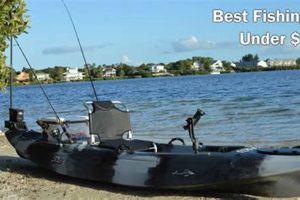
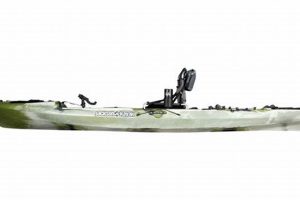
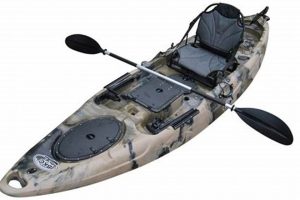
Top-rated fishing kayaks in 2024 are designed to provide anglers with optimal stability, maneuverability, and storage for a successful fishing experience. These specialized watercraft often feature rod holders, tackle storage compartments, and comfortable seating arrangements tailored for long hours on the water. Examples include sit-on-top models for enhanced stability and ease of entry/exit, and sit-inside designs for better protection from the elements and increased speed.
Choosing the right fishing kayak is crucial for both comfort and effectiveness on the water. A well-selected vessel enhances anglers’ ability to reach desired fishing spots, remain stable while casting and reeling, and transport necessary equipment efficiently. Historically, fishing kayaks have evolved from basic recreational designs into highly specialized platforms incorporating advanced materials and features to improve performance and angler comfort. This progression underscores the growing recognition of kayaking as a valuable method for accessing diverse fishing environments.
Factors influencing kayak selection include hull design, length, weight capacity, and propulsion system. Subsequent sections will delve into these considerations and provide detailed guidance for selecting the most appropriate fishing kayak based on individual needs and intended uses.
Tips for Selecting a Fishing Kayak in 2024
Choosing a fishing kayak requires careful consideration of various factors to ensure optimal performance and angler satisfaction. The following tips provide valuable guidance for navigating the selection process.
Tip 1: Consider Hull Design: Kayak hull designs significantly impact stability and maneuverability. A wider, flatter hull offers greater stability, ideal for calm waters and stand-up fishing. A longer, narrower hull provides better tracking and speed, suited for traversing larger bodies of water and covering greater distances.
Tip 2: Evaluate Length and Weight: Longer kayaks generally track better and offer more storage space, but are heavier and less maneuverable. Shorter kayaks are easier to transport and maneuver, but may compromise tracking and storage capacity. Consider the intended fishing environment and transportation logistics.
Tip 3: Assess Weight Capacity: Ensure the kayak’s weight capacity accommodates the angler’s weight, fishing gear, and any additional equipment. Exceeding the weight capacity can compromise stability and performance.
Tip 4: Choose a Propulsion System: Paddle kayaks offer a traditional, eco-friendly experience and are generally more affordable. Pedal kayaks offer hands-free fishing and increased speed, but are typically more expensive. Motorized kayaks provide the fastest speeds and longest range, but require battery maintenance and may be restricted in certain areas.
Tip 5: Examine Storage Options: Ample storage space is essential for carrying fishing rods, tackle boxes, and other gear. Look for kayaks with dedicated compartments, hatches, and bungee cords for secure storage.
Tip 6: Prioritize Comfort and Ergonomics: A comfortable seat with adjustable back support is crucial for long hours on the water. Consider features like adjustable footrests and thigh braces for enhanced comfort and control.
Tip 7: Set a Budget: Fishing kayaks range in price from budget-friendly models to high-end, feature-rich options. Determine a realistic budget and prioritize essential features within that range.
By carefully considering these factors, anglers can select a fishing kayak that aligns with their individual needs, fishing style, and budget. This ensures a comfortable and productive fishing experience on the water.
Ultimately, the best fishing kayak is the one that best suits individual needs and preferences. The next section will offer a concluding overview of the key considerations and encourage informed decision-making.
1. Stability

Stability forms a cornerstone of effective fishing kayak design, directly impacting angler safety and fishing success. A stable platform allows for comfortable casting, reeling, and landing fish without the constant threat of capsizing. This is particularly crucial in challenging conditions such as windy days or when encountering boat wakes. Kayak stability is influenced by hull design, width, and weight distribution. Wider, flatter hulls generally provide greater primary stability (resistance to initial tipping), while longer kayaks with deeper hulls often offer superior secondary stability (resistance to further tipping once initially tilted). For instance, a wider sit-on-top kayak provides a stable platform for stand-up fishing, a technique gaining popularity for sight casting in shallow waters.
Compromised stability necessitates constant adjustments and corrections, diverting focus from fishing and increasing fatigue. Furthermore, an unstable kayak limits the angler’s ability to utilize certain fishing techniques effectively, such as fighting larger fish or casting in windy conditions. A stable kayak enables anglers to confidently reach for gear, change lures, and land fish without compromising their balance. This contributes significantly to overall fishing enjoyment and success. For example, a kayak angler targeting large game fish like tuna or marlin requires a highly stable vessel capable of withstanding the powerful runs and sudden changes in direction characteristic of these species.
In summary, stability is not merely a desirable feature but a fundamental requirement for top-performing fishing kayaks. Prioritizing stability when selecting a kayak significantly enhances angler safety, comfort, and fishing effectiveness. Understanding the factors influencing kayak stability empowers anglers to choose a vessel suited to their specific fishing needs and target environments. This ensures a more enjoyable and productive fishing experience, enabling anglers to fully focus on the pursuit of their target species.
2. Maneuverability

Maneuverability is a critical attribute of top-performing fishing kayaks, especially in 2024, given the increasing demand for versatile and adaptable watercraft. It directly influences an angler’s ability to navigate complex waterways, position effectively for optimal casting angles, and respond efficiently to changing fish behavior or water conditions. This attribute is particularly relevant for anglers targeting specific locations, such as tight creeks, shallow flats, or areas with heavy vegetation. For instance, navigating narrow mangrove tunnels or swiftly changing positions to follow schooling fish requires a highly maneuverable kayak. The relationship between maneuverability and fishing success is causal: enhanced maneuverability directly increases the angler’s control over the kayak’s position and movement, thus improving fishing effectiveness.
Kayak maneuverability is affected by hull design, length, and the presence of a rudder or skeg. Shorter kayaks with a rounded or shallow V-hull generally offer superior maneuverability compared to longer kayaks with a deeper V-hull. A rudder or skeg enhances tracking and directional control, particularly in windy conditions or strong currents. Consider a scenario where an angler needs to quickly reposition their kayak to take advantage of a fleeting feeding opportunity. A highly maneuverable kayak allows for rapid adjustments, maximizing the chances of a successful hookup, whereas a less maneuverable kayak might cause the angler to miss the opportunity. Similarly, when fishing in tight quarters around submerged structures or fallen trees, precise maneuvering is essential to avoid snags and maintain optimal line control.
In conclusion, prioritizing maneuverability when selecting a fishing kayak in 2024 is crucial for maximizing fishing effectiveness and adapting to diverse on-the-water situations. Understanding the factors affecting maneuverability empowers anglers to select a kayak that aligns with their target fishing environments and techniques. This contributes to a more productive and satisfying fishing experience, allowing anglers to navigate challenging waters and position themselves strategically for success.
3. Storage Capacity

Ample storage capacity is a defining characteristic of top-tier fishing kayaks in 2024. The ability to securely transport essential gear directly impacts fishing success and overall experience. Adequate storage facilitates organized tackle management, allowing anglers to quickly switch lures, access necessary tools, and carry additional equipment like safety gear, electronics, and personal items. Insufficient storage capacity necessitates difficult choices regarding gear selection, potentially limiting fishing versatility and preparedness for diverse scenarios. For example, an angler targeting multiple species might require a variety of rods, reels, and tackle, necessitating significant storage space. Conversely, limited storage could restrict lure choices, hindering adaptation to changing fish behavior or water conditions. This direct correlation between storage capacity and fishing effectiveness underscores its importance in selecting a premium fishing kayak.
Practical considerations regarding storage capacity extend beyond mere volume. Well-designed storage solutions incorporate features like waterproof compartments, strategically placed hatches, and integrated bungee systems. These features safeguard valuable equipment from water damage, ensure easy access, and maximize deck space for unobstructed fishing. For instance, a dedicated dry storage compartment protects electronics and personal items, while readily accessible tackle storage within arm’s reach streamlines lure changes and minimizes disruptions during critical fishing moments. Furthermore, the strategic organization of gear within the kayak contributes to improved balance and stability, enhancing overall performance. Consider a scenario where an angler needs to quickly access a specific lure in response to changing fish behavior. Well-organized storage enables rapid retrieval, maximizing fishing opportunities, while disorganized storage could lead to fumbled searches and missed chances.
In summary, evaluating storage capacity remains a crucial aspect of selecting a high-performing fishing kayak in 2024. Adequate and well-designed storage directly influences fishing success by enabling efficient gear management, enhancing preparedness, and maximizing on-the-water efficiency. Prioritizing storage capacity contributes to a more organized, productive, and ultimately, more enjoyable fishing experience. Understanding the practical implications of storage solutions allows anglers to select a kayak that aligns with their specific needs and fishing style, ensuring they have the right gear readily available when it matters most.
4. Propulsion System
Propulsion systems represent a critical differentiator among fishing kayaks in 2024, directly influencing on-the-water performance and angler experience. Optimal propulsion selection hinges on factors such as fishing style, target environment, and desired speed and range. Traditional paddle kayaks offer affordability and a full-body workout, while pedal-powered kayaks provide hands-free operation, enhancing casting and fish-fighting capabilities. Motorized kayaks deliver unmatched speed and extended range, enabling access to distant fishing grounds. The choice of propulsion system directly affects fishing effectiveness; for instance, a pedal kayak allows anglers to maintain position in moving water while focusing on fishing, while a motorized kayak facilitates quick transitions between distant fishing spots. Understanding the interplay between propulsion system and fishing technique is essential for informed decision-making.
Consider a scenario where an angler targets species in shallow, weedy areas. A paddle kayak might prove advantageous due to its shallow draft and quiet operation, minimizing disturbance to fish. Conversely, anglers trolling open water for pelagic species benefit from the speed and range of a motorized kayak. Similarly, navigating strong currents or windy conditions might favor a pedal-driven system, allowing anglers to maintain position and focus on fishing rather than constantly paddling against the elements. These real-world examples illustrate the practical significance of propulsion system selection. The impact extends beyond mere convenience; the right propulsion system directly contributes to increased fishing opportunities and overall success.
In summary, careful consideration of propulsion systems is paramount when selecting a fishing kayak in 2024. Each system presents unique advantages and disadvantages, influencing speed, maneuverability, stealth, and angler fatigue. Evaluating these factors in relation to individual fishing styles and target environments ensures optimal performance and maximizes on-the-water enjoyment. Recognizing the direct correlation between propulsion choice and fishing success empowers anglers to make informed decisions that elevate their fishing experience.
5. Comfort Features

Comfort features represent a pivotal aspect of top-performing fishing kayaks in 2024, directly influencing angler endurance, focus, and overall fishing success. Extended periods on the water necessitate ergonomic design and adjustable components to mitigate fatigue and maximize fishing effectiveness. Features such as adjustable seating systems, supportive backrests, foot braces, and thigh pads contribute significantly to angler comfort, enabling prolonged fishing sessions without physical strain. The relationship between comfort and performance is demonstrably causal: enhanced comfort allows anglers to maintain focus and energy, resulting in improved reaction time, casting accuracy, and overall fishing proficiency. For example, an angler experiencing back pain due to an uncomfortable seat is less likely to maintain optimal casting technique or effectively fight a strong fish.
Consider an angler engaged in a full-day fishing excursion. A well-designed, adjustable seat with lumbar support minimizes back strain, enabling sustained focus on fishing rather than physical discomfort. Similarly, adjustable foot braces enhance paddling efficiency and stability, contributing to reduced fatigue and improved boat control. The practical implications of these comfort features extend beyond mere convenience; they directly impact the angler’s ability to effectively utilize fishing techniques, react to changing conditions, and ultimately, maximize their chances of success. Conversely, inadequate comfort features can lead to premature fatigue, diminished focus, and a compromised fishing experience. For instance, an angler experiencing numb feet due to poorly positioned footrests might be hesitant to stand up for sight casting or struggle to maintain balance while reeling in a fish.
In summary, prioritizing comfort features remains a crucial factor in selecting a high-performance fishing kayak in 2024. Ergonomic design and adjustable components contribute directly to angler endurance, focus, and overall fishing success. Understanding the causal relationship between comfort and performance empowers anglers to make informed decisions, ensuring a more enjoyable, productive, and physically sustainable fishing experience. Investing in a kayak with well-designed comfort features is an investment in long-term fishing enjoyment and sustained on-the-water effectiveness.
6. Durability
Durability stands as a critical factor in determining the long-term value and performance of fishing kayaks, especially for the demanding requirements of 2024. A durable kayak withstands the rigors of regular use, including impacts with rocks, submerged debris, and transportation stresses. This resilience translates directly into extended lifespan and sustained performance, ultimately impacting the overall cost-effectiveness of the kayak. Inferior durability leads to premature wear and tear, requiring frequent repairs or even replacement, thereby diminishing the return on investment. For example, a kayak constructed from robust, UV-resistant materials maintains its structural integrity and color vibrancy over time, even with exposure to harsh sunlight and saltwater environments. Conversely, a less durable kayak might exhibit cracking, fading, and decreased structural integrity, potentially compromising safety and performance.
The practical implications of durability extend beyond mere longevity. A robust kayak instills confidence in anglers, allowing them to explore challenging environments without fear of damage. This translates to greater fishing versatility, enabling anglers to access remote areas and confidently navigate complex waterways. For instance, a kayak designed with reinforced hulls and impact-resistant components can withstand accidental collisions with rocks or submerged logs, preserving its functionality and ensuring angler safety. Moreover, durable construction minimizes maintenance requirements, freeing up time and resources for actual fishing. Consider an angler navigating a rocky riverbed or dragging their kayak across a sandy beach. A durable kayak withstands these abrasive encounters, while a less durable one might sustain damage requiring repairs, potentially interrupting fishing trips or incurring unforeseen expenses.
In conclusion, durability represents a non-negotiable attribute for top-tier fishing kayaks in 2024. It directly influences a kayak’s lifespan, performance consistency, and overall cost-effectiveness. Prioritizing durability ensures long-term reliability, expands fishing versatility, and minimizes maintenance demands. Understanding the practical significance of durable construction empowers anglers to make informed decisions, selecting kayaks that can withstand the rigors of regular use and provide years of reliable performance on the water. This investment in durability ultimately translates to enhanced fishing enjoyment and minimized long-term costs.
Frequently Asked Questions
This section addresses common inquiries regarding the selection and use of top-performing fishing kayaks in 2024.
Question 1: What are the primary differences between sit-on-top and sit-inside kayaks for fishing?
Sit-on-top kayaks offer enhanced stability, easier entry and exit, and superior self-bailing capabilities, making them suitable for warmer climates and calmer waters. Sit-inside kayaks provide better protection from the elements and increased speed, making them preferable for colder conditions or longer-distance paddling.
Question 2: How does kayak length influence fishing performance?
Longer kayaks generally track better and offer more storage space but are less maneuverable in tight spaces. Shorter kayaks are easier to maneuver but may compromise tracking and storage capacity. Optimal length depends on intended fishing environments and individual preferences.
Question 3: What is the significance of weight capacity in fishing kayak selection?
Weight capacity dictates the maximum combined weight of the angler, gear, and equipment the kayak can safely support. Exceeding weight capacity compromises stability and performance, potentially leading to safety risks. Accurate weight estimation is crucial for appropriate kayak selection.
Question 4: What are the advantages and disadvantages of different propulsion systems?
Paddle propulsion offers affordability and exercise but requires physical exertion. Pedal propulsion provides hands-free fishing but increases cost and complexity. Motorized propulsion delivers speed and range but introduces battery maintenance and potential environmental regulations. Propulsion system selection hinges on individual fishing styles, target environments, and budgetary constraints.
Question 5: What essential features should anglers consider for comfortable long-duration fishing trips?
Essential comfort features include adjustable seating systems with lumbar support, padded backrests, adjustable foot braces, and thigh pads. These elements minimize fatigue and maximize angler comfort during extended fishing excursions, contributing to enhanced focus and overall fishing success.
Question 6: How does hull design impact kayak stability and maneuverability?
Wider, flatter hulls generally offer greater primary stability, ideal for calm waters and stand-up fishing. Longer, narrower hulls provide better tracking and speed, suitable for traversing larger bodies of water. Hull design significantly influences kayak performance and should be carefully considered based on intended fishing environments.
Careful consideration of these frequently asked questions facilitates informed decision-making and contributes to a more productive and enjoyable fishing kayak experience.
The following section offers a concluding perspective on selecting the optimal fishing kayak in 2024.
Best Kayaks for Fishing 2024
Careful selection from among the best kayaks for fishing in 2024 requires a thorough understanding of individual needs and intended uses. Key considerations encompass hull design influencing stability and maneuverability, propulsion systems impacting speed and range, storage capacity affecting gear organization, and comfort features contributing to endurance and focus. Prioritizing these factors ensures optimal performance and a positive fishing experience. Matching specific kayak attributes to target fishing environments and species further enhances effectiveness on the water.
Ultimately, choosing a top-performing fishing kayak empowers anglers to explore diverse waterways, access prime fishing locations, and maximize their chances of success. An informed purchase decision translates to years of enjoyment and productive fishing experiences. Continued advancements in kayak design and technology promise further enhancements in performance, comfort, and fishing-specific features for years to come. Diligent research and careful consideration pave the way for rewarding fishing adventures in 2024 and beyond.