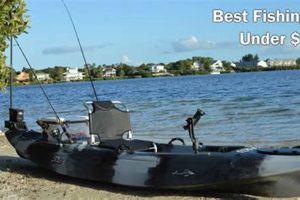
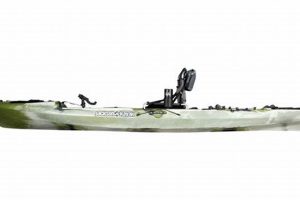
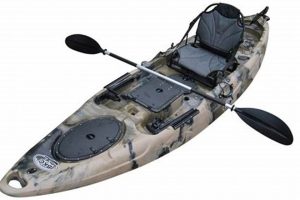
A premium, purpose-built watercraft designed for anglers and hunters offers stability, stealth, and specialized features like rod holders, gear tracks, and camouflage. Such vessels prioritize maneuverability in shallow water and often incorporate features for carrying hunting or fishing equipment securely.
Choosing an appropriate watercraft significantly impacts the success and enjoyment of angling and hunting excursions. Superior stability enhances safety and casting accuracy, while quiet movement allows hunters and anglers to approach wildlife undisturbed. Specialized storage solutions and hands-free operation contribute to a more organized and efficient experience on the water. The increasing popularity of these activities has driven innovation in kayak design, resulting in vessels specifically tailored to meet the demands of these pursuits.
This article will explore critical factors to consider when selecting a suitable vessel for these combined activities, including hull design, propulsion systems, and essential accessories. Further discussion will cover safety precautions and responsible practices for hunting and fishing from a kayak.
Tips for Selecting a Kayak for Hunting and Fishing
Choosing an appropriate vessel for combined hunting and fishing expeditions requires careful consideration of several key factors. These tips offer guidance for selecting a kayak that maximizes both safety and success on the water.
Tip 1: Prioritize Stability: A stable platform is crucial for casting, retrieving, and landing fish, as well as for taking safe and accurate shots. Wider hulls and outriggers enhance stability, especially in challenging conditions.
Tip 2: Consider Propulsion: Paddle kayaks offer stealth and affordability, while pedal-driven versions allow for hands-free operation and increased range. Motorized options provide the greatest speed and range, but may be less stealthy.
Tip 3: Evaluate Storage Capacity: Ample storage is essential for carrying gear, game, and safety equipment. Consider integrated storage compartments, bungee cords, and gear tracks for secure and organized transport.
Tip 4: Choose Camouflage Wisely: Camouflage patterns help hunters and anglers blend seamlessly into their surroundings. Select a pattern appropriate for the specific environment and season.
Tip 5: Invest in Essential Accessories: Rod holders, fish finders, anchor trolleys, and comfortable seating enhance functionality and enjoyment. Consider accessories specific to hunting, such as gun mounts or game carriers.
Tip 6: Check Weight Capacity: Ensure the kayak’s weight capacity accommodates the combined weight of the user, gear, and any potential game. Exceeding the weight limit can compromise stability and safety.
Tip 7: Test Before You Buy: Whenever possible, try out different kayak models before making a purchase. This allows for assessing stability, comfort, and maneuverability firsthand.
By carefully considering these factors, hunters and anglers can select a kayak that optimizes performance, safety, and overall enjoyment on the water. A well-chosen vessel contributes significantly to successful and memorable outings.
The following section will discuss further considerations, like legal regulations and ethical practices for responsible hunting and fishing from a kayak. These aspects are crucial for ensuring sustainable enjoyment of these outdoor activities.
1. Stability

Stability forms a cornerstone of a successful hunting and fishing kayak. A stable platform is paramount for various activities, including casting, reeling, landing fish, and taking accurate shots. Compromised stability not only hinders accuracy but also presents safety risks, particularly in challenging conditions such as windy weather or choppy water. An unstable kayak can easily lead to capsizing, jeopardizing equipment and potentially causing harm. For instance, attempting to stand for a better casting angle or quickly shifting position to track a fish can become precarious without sufficient stability. Similarly, the recoil from a shotgun when waterfowl hunting requires a stable platform to maintain balance and aim.
Several factors influence kayak stability. Hull design plays a critical role; wider, flatter hulls generally offer greater initial stability, resisting tipping. However, they may sacrifice maneuverability in tight spaces. Longer kayaks tend to track straighter but can be less responsive to turning. The kayak’s center of gravity, influenced by weight distribution and the paddler’s position, also significantly affects stability. Lowering the center of gravity, often achieved by sitting lower in the kayak, enhances stability. Features like outriggers and stabilizers can further augment stability, providing additional support and reducing the likelihood of capsizing. Understanding these factors allows for informed decisions when selecting a kayak suited to specific hunting and fishing needs.
Prioritizing stability ultimately enhances safety and effectiveness during on-the-water excursions. A stable platform provides a confident base for various activities, enabling precise casting, secure retrieval, and stable shooting. It reduces the risk of capsizing and allows for greater freedom of movement within the kayak. Therefore, stability remains a crucial consideration when evaluating potential hunting and fishing kayaks, ensuring both a successful and safe experience.
2. Maneuverability

Maneuverability represents a critical attribute in kayaks designed for hunting and fishing. Navigating intricate waterways, shallows, and vegetation-rich areas demands a vessel capable of responsive and precise movements. Restricted maneuverability can limit access to prime fishing spots and hunting grounds, reducing opportunities for success. A highly maneuverable kayak allows anglers to effortlessly position themselves for optimal casting angles, navigate around obstacles, and follow fish through complex environments. Hunters benefit from the ability to quietly and efficiently approach game in shallow water or dense cover. For instance, pursuing waterfowl in marshy environments requires a kayak capable of navigating tight channels and shallows without disturbing the birds. Similarly, accessing secluded fishing holes often necessitates maneuvering through fallen trees or around rocky outcroppings.
Several design elements contribute to kayak maneuverability. Shorter kayaks generally turn more quickly, while longer kayaks offer superior tracking in open water. Hull shape also plays a significant role; a kayak with a pronounced rocker (upward curve at the bow and stern) tends to turn more easily but may sacrifice tracking performance. A flatter hull, conversely, tracks well but may be less responsive to turning inputs. The placement of the seat and the paddler’s weight distribution can also influence maneuverability. Features such as rudders and skegs can enhance tracking and directional stability, particularly in windy conditions or strong currents. Understanding these factors allows for informed decision-making when selecting a kayak suited to specific hunting and fishing environments.
Ultimately, maneuverability directly impacts the effectiveness and efficiency of hunting and fishing expeditions. Enhanced maneuverability allows for greater access to productive areas, facilitates precise positioning for casting and shooting, and reduces effort expended navigating challenging waters. The ability to quietly and efficiently move through diverse aquatic environments contributes significantly to successful outings. Therefore, careful consideration of maneuverability is essential when evaluating potential hunting and fishing kayaks.
3. Storage Capacity
Ample storage capacity is integral to the functionality of a best hunting and fishing kayak. These specialized vessels require space for a variety of equipment beyond standard paddling gear. Fishing rods, tackle boxes, nets, anchors, and potentially even small livewells must be accommodated securely and accessibly. Hunting excursions necessitate space for firearms, ammunition, game bags, and other specialized gear. Insufficient storage can lead to cluttered decks, hindering movement and potentially compromising safety. A disorganized vessel impedes efficient retrieval of essential items, impacting both hunting and fishing success. For example, a tangled fishing line caused by inadequate storage can result in a missed catch. Similarly, difficulty accessing a firearm quickly due to limited storage could lead to a missed hunting opportunity. Proper storage facilitates organization, enabling smooth transitions between paddling, fishing, and hunting activities.
Several storage solutions contribute to the effectiveness of a hunting and fishing kayak. Integrated storage compartments offer protection from the elements and secure storage for sensitive items like electronics and ammunition. Bungee cord systems provide quick and easy access to frequently used items, while gear tracks allow for customized mounting of rod holders, fish finders, and other accessories. Tank wells, typically located at the bow and stern, offer larger storage areas suitable for bulky items like coolers or game bags. The strategic placement of these storage features optimizes weight distribution and balance, crucial for maintaining stability and maneuverability. Consider, for instance, storing heavier items closer to the center of the kayak to enhance stability. Similarly, positioning frequently used items within easy reach reduces the need for disruptive movements.
Adequate storage capacity directly impacts the success and enjoyment of combined hunting and fishing expeditions. Efficient organization of gear contributes to a streamlined and focused experience, minimizing wasted time and maximizing opportunities. A well-designed storage system enhances safety by reducing clutter and ensuring quick access to essential equipment. Therefore, careful consideration of storage solutions is paramount when selecting a kayak for these combined pursuits. Prioritizing storage capacity ensures a vessel equipped to handle the diverse gear requirements of hunting and fishing, contributing to a more productive and enjoyable experience on the water.
4. Propulsion System
Propulsion system selection significantly influences the effectiveness and versatility of a hunting and fishing kayak. Different propulsion methods offer distinct advantages and disadvantages, impacting speed, range, stealth, and maneuverability. Paddle propulsion, the most traditional method, relies solely on human power. While offering excellent control and quiet operation, ideal for stealthy approaches, it can limit range and speed, particularly in challenging conditions like strong currents or wind. Carrying hunting or fishing gear can further restrict paddling efficiency.
Pedal-powered kayaks offer a compelling alternative. Hands-free propulsion allows anglers to maintain casting readiness and hunters to keep firearms at the ready. Increased speed and range compared to paddling enhance access to distant fishing grounds or hunting locations. However, pedal systems can add weight and complexity, potentially affecting maneuverability in shallow water or dense vegetation. Furthermore, the underwater mechanisms of some pedal drives can occasionally become entangled in weeds or debris, requiring clearing.
Motorized kayaks provide the greatest speed and range, allowing for efficient travel over long distances and access to remote areas. Electric motors offer quiet operation, minimizing disturbance to wildlife, while gasoline-powered motors provide greater range and power. However, motors add significant weight and cost, and regulations regarding motorized watercraft access may restrict usage in certain areas. Careful consideration of environmental impact is also necessary, particularly regarding noise and potential water pollution from gasoline engines.
Optimal propulsion system selection depends on individual needs and intended usage. Prioritizing stealth favors paddle or electric motor propulsion. Maximizing range and speed points towards pedal or gasoline motor options. Maneuverability in shallow or vegetated areas may necessitate paddle or carefully chosen pedal systems. Evaluating these factors in relation to the specific hunting and fishing environment ensures selection of the most effective propulsion system for a given situation. Ultimately, understanding the nuances of each propulsion method empowers informed decision-making, maximizing the functionality and versatility of the hunting and fishing kayak.
5. Stealth

Stealth plays a crucial role in the effectiveness of a hunting and fishing kayak. Minimizing noise and visual disturbance significantly increases the likelihood of successful approaches to wildlife. A stealthy approach allows anglers to get closer to fish without spooking them, resulting in more effective presentations and increased catch rates. Similarly, hunters benefit from stealth by remaining undetected by game, improving opportunities for accurate shots. Compromised stealth can alert both fish and game, leading to missed opportunities and potentially disrupting the natural environment.
- Noise Reduction
Minimizing noise generation is paramount for maintaining stealth. Paddle strokes, hull slap against the water, and equipment rattling can alert wildlife. Kayaks designed for stealth often feature quieter hull designs and paddling techniques that minimize splashing. For example, using a feathered paddle stroke reduces noise and water disturbance. Choosing a kayak with a smooth hull finish can also minimize friction and subsequent noise. Furthermore, securing gear and equipment to prevent rattling contributes to overall noise reduction.
- Visual Concealment
Visual camouflage is equally critical for a stealthy approach. Kayak color and pattern should blend with the surrounding environment. Earth tones, such as greens, browns, and grays, are often effective in natural settings. Camouflage patterns that mimic vegetation or water patterns further enhance concealment. Anglers and hunters often choose camouflage clothing and gear to complement the kayak’s camouflage, reducing visual detection. Avoiding bright colors and reflective surfaces also minimizes visual disturbance. For instance, a hunter pursuing waterfowl in a marsh would benefit from a kayak camouflaged in muted greens and browns to blend with the reeds and grasses.
- Movement Control
Controlled and deliberate movements contribute significantly to maintaining stealth. Sudden or jerky movements can create ripples and vibrations that alert wildlife. Smooth, fluid paddle strokes and slow, deliberate maneuvering minimize disturbance. Avoiding sudden changes in direction and speed also reduces the likelihood of detection. Hunters and anglers often practice slow, controlled movements to approach their targets without creating undue disturbance. For instance, an angler sight-fishing for redfish in shallow water benefits from slow, deliberate movements to avoid spooking the fish.
- Low Profile
Maintaining a low profile on the water enhances concealment. Sit-in kayaks generally offer a lower profile than sit-on-top kayaks, reducing visibility to fish and game. Minimizing the amount of gear stored on the deck also reduces the overall profile. A lower profile can be particularly advantageous in open water or when approaching wildlife from a distance. For instance, a hunter pursuing ducks in open water benefits from a low profile to remain less visible against the horizon.
These facets of stealth, when combined effectively, significantly enhance the success rates of hunting and fishing from a kayak. A stealthy approach allows for closer proximity to wildlife, increasing opportunities for accurate casting and shooting. By minimizing disturbance, hunters and anglers can experience a more natural and immersive connection with the environment. Ultimately, prioritizing stealth contributes not only to successful outings but also to responsible and respectful interaction with the natural world.
6. Comfort
Comfort plays a pivotal role in the overall experience of hunting and fishing from a kayak. Extended periods on the water, often in challenging conditions, necessitate a comfortable and supportive environment. Discomfort can detract from focus and enjoyment, hindering performance and potentially shortening excursions. A comfortable kayak allows anglers and hunters to maintain concentration, react quickly, and fully appreciate the experience. Conversely, an uncomfortable vessel can lead to fatigue, distraction, and potentially even pain, compromising safety and diminishing the overall quality of the outing.
- Seating System
A well-designed seating system forms the foundation of kayak comfort. Adjustable seating allows for customization to individual body types and preferences. Features like lumbar support, padded backrests, and adjustable foot braces contribute to proper posture and reduce strain on the back and legs. High-quality materials, such as breathable mesh or padded cushions, enhance comfort, particularly during long hours on the water. A comfortable seating system promotes better circulation, reduces fatigue, and allows for greater freedom of movement, essential for casting, paddling, and shooting.
- Deck Space and Layout
Ample deck space and an ergonomic layout contribute significantly to comfort and efficiency. Sufficient space allows for easy movement and access to gear, minimizing awkward reaches and contortions. A well-organized deck facilitates smooth transitions between paddling, fishing, and hunting activities. Designated areas for storing gear and equipment prevent clutter and enhance safety. Features like recessed rod holders and integrated cup holders further streamline the experience, promoting comfort and convenience. Adequate deck space also allows for stretching and shifting positions, reducing stiffness and fatigue during long outings.
- Stability and Handling
Kayak stability and handling characteristics directly impact comfort. A stable platform minimizes rocking and swaying, reducing anxiety and promoting a sense of security. Predictable and responsive handling allows for effortless maneuvering, reducing fatigue and enhancing enjoyment. A kayak that tracks well and responds readily to paddle input contributes to a smoother and more comfortable paddling experience. Features such as rudders or skegs can further enhance tracking and reduce the need for constant corrective strokes, conserving energy and promoting comfort.
- Environmental Protection
Protection from the elements enhances comfort and extends time on the water. Features like spray skirts and integrated canopies shield paddlers from rain, wind, and sun. These protective measures help maintain body temperature and prevent discomfort from excessive exposure to the elements. Consideration of weather conditions and appropriate protective gear ensures a comfortable and enjoyable experience regardless of the weather. For example, wearing appropriate layers of clothing helps regulate body temperature in fluctuating conditions, while a wide-brimmed hat and polarized sunglasses protect from sun glare and enhance visibility.
Prioritizing comfort in a hunting and fishing kayak directly translates to enhanced enjoyment and increased time on the water. A comfortable vessel allows for greater focus on the activities at hand, maximizing opportunities for success and creating a more immersive and rewarding experience. Careful consideration of seating, deck layout, stability, and environmental protection ensures a kayak optimized for comfort, contributing significantly to the overall quality of hunting and fishing excursions.
Frequently Asked Questions
This section addresses common inquiries regarding the selection and use of kayaks designed for combined hunting and fishing activities.
Question 1: What hull design is most suitable for combined hunting and fishing?
Stable hull designs, such as pontoon or wide, flat-bottom hulls, are generally preferred. These provide a stable platform for casting, shooting, and landing fish, while also offering sufficient capacity for gear. However, maneuverability in tight spaces might be somewhat compromised. A moderate rocker can improve maneuverability while maintaining reasonable stability.
Question 2: How does one choose between a sit-on-top and a sit-inside kayak for these activities?
Sit-on-tops offer superior stability and ease of entry/exit, advantageous for fishing and retrieving game. Sit-ins provide better protection from the elements and a lower profile for enhanced stealth, beneficial for hunting. The choice depends on individual priorities and typical environmental conditions.
Question 3: What safety precautions are essential when hunting and fishing from a kayak?
Wearing a personal flotation device (PFD) is paramount. Carrying a communication device, informing someone of the planned route and return time, and understanding local regulations are crucial safety practices. A first-aid kit and essential safety gear should always be on board.
Question 4: Are there specific regulations regarding hunting and fishing from a kayak?
Regulations vary by location and may include licensing requirements, catch limits, permitted hunting seasons, and restricted areas. Consulting local wildlife agencies is essential for understanding applicable regulations and ensuring compliance.
Question 5: What essential accessories enhance the functionality of a hunting and fishing kayak?
Rod holders, anchor trolleys, fish finders, and comfortable seating are beneficial for fishing. Gun mounts, specialized storage for ammunition, and game carriers are advantageous for hunting. Dry bags protect essential gear from water damage.
Question 6: How does one maintain and care for a hunting and fishing kayak?
Regular rinsing with fresh water after each use removes saltwater and debris, prolonging the kayak’s lifespan. Proper storage out of direct sunlight and extreme temperatures prevents material degradation. Periodic inspection and maintenance of moving parts, such as pedal drives or rudders, ensures optimal performance.
Careful consideration of these frequently asked questions equips individuals to make informed decisions, select appropriate equipment, and prioritize safety during combined hunting and fishing kayak excursions.
This information serves as a comprehensive guide to understanding the key aspects of selecting and using a best hunting and fishing kayak. The next section will explore advanced techniques for maximizing success in these combined pursuits.
Conclusion
Careful selection of a premium hunting and fishing kayak hinges upon a thorough understanding of key features impacting performance and safety. Prioritizing stability, maneuverability, storage capacity, propulsion system, stealth, and comfort ensures a vessel tailored to individual needs and specific hunting and fishing environments. Understanding the interplay of these elements empowers informed decision-making, leading to a more productive and enjoyable experience on the water. Furthermore, adherence to safety regulations and ethical practices promotes responsible enjoyment of these outdoor pursuits.
Investing in a well-equipped, purpose-built watercraft unlocks the full potential of combined hunting and fishing adventures. A properly chosen vessel enhances not only success rates but also the overall connection with nature, fostering a deeper appreciation for the outdoors. As technology continues to advance, further innovation in kayak design promises even greater specialization and enhanced experiences for hunters and anglers seeking the optimal platform for pursuing their passions.