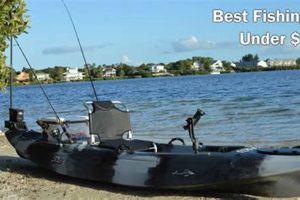
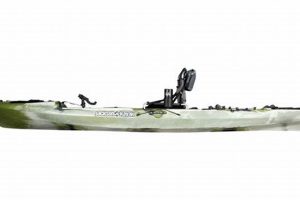
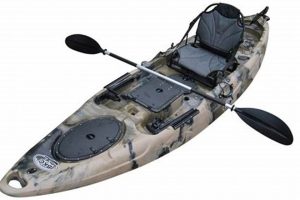
A high-quality, portable watercraft designed for anglers offers convenience and performance on the water. Such kayaks are typically constructed from durable, lightweight materials that can withstand the rigors of fishing, while also being compact enough for easy transport and storage. These kayaks often include features specifically tailored for angling, such as rod holders, gear tracks, and ample storage space.
Portable fishing kayaks have revolutionized angling accessibility. Their compact nature allows anglers to reach remote fishing spots previously inaccessible with traditional, larger boats. Furthermore, the ease of storage and transportation eliminates the need for trailers and large storage spaces, making kayak fishing more practical for individuals with limited space. This has broadened the appeal of the sport, making it easier and more enjoyable for many.
This article will delve into crucial factors to consider when selecting a portable fishing kayak, including material durability, weight capacity, portability features, and essential fishing-specific design elements. Additionally, various top-rated models will be reviewed to provide prospective buyers with a comprehensive understanding of the market landscape.
Tips for Selecting a Portable Fishing Kayak
Choosing a suitable portable fishing kayak requires careful consideration of various factors to ensure optimal performance, safety, and enjoyment on the water. The following tips offer guidance for making an informed decision.
Tip 1: Prioritize Hull Design: Consider the hull design based on intended fishing locations. A flat-bottomed hull offers excellent stability for calm waters, while a V-shaped hull provides better tracking and performance in choppy conditions. A hybrid hull attempts to balance stability and tracking.
Tip 2: Evaluate Weight Capacity: Ensure the kayak’s weight capacity accommodates the angler’s weight, fishing gear, and any potential catch. Exceeding the weight limit compromises stability and safety.
Tip 3: Assess Portability Features: Examine the kayak’s packed size and weight for ease of transport and storage. Consider features like backpack straps or carrying handles.
Tip 4: Inspect Material Durability: Opt for durable materials, such as high-density polyethylene or reinforced PVC, to withstand punctures and abrasion. Consider the material’s resistance to UV damage and overall lifespan.
Tip 5: Examine Fishing-Specific Features: Look for integrated rod holders, gear tracks, and ample storage compartments designed for fishing accessories and equipment. Consider specialized features like anchor trolleys or transducer mounts.
Tip 6: Research Reputable Brands and Reviews: Research established brands known for quality and reliability. Consult online reviews and forums for insights from other anglers.
Tip 7: Consider Budgetary Constraints: Establish a budget before beginning the search. High-quality portable fishing kayaks are available at various price points, allowing anglers to find suitable options within their budget.
By considering these tips, anglers can select a portable fishing kayak that meets their individual needs and enhances their fishing experience. A well-chosen kayak will provide years of reliable service and facilitate access to a wide range of fishing locations.
This information provides a solid foundation for making an informed purchase decision. The following section will explore specific recommended models, further assisting in the selection process.
1. Portability

Portability stands as a defining characteristic of foldable kayaks designed for fishing, directly impacting accessibility and convenience. The ability to transport and store these kayaks easily expands fishing opportunities and simplifies logistical considerations. This section will explore the key facets of portability as they relate to selecting the optimal foldable fishing kayak.
- Packed Size and Weight
The packed dimensions and weight of a foldable kayak dictate ease of transport and storage. Smaller, lighter kayaks are easier to handle, especially for individuals with limited storage space or those who need to transport the kayak over longer distances. Consider the packed size in relation to available vehicle space and the overall weight in relation to personal carrying capacity. Some models offer backpack-style carrying systems for enhanced portability.
- Setup and Breakdown Time
The time required to assemble and disassemble a foldable kayak significantly impacts the overall fishing experience. Quick and easy setup and breakdown minimize preparation time, allowing anglers to spend more time on the water. Look for models with intuitive assembly systems and clear instructions. Practice setup and breakdown before heading to the fishing spot to ensure familiarity with the process.
- Carrying Systems and Accessories
Integrated carrying systems, such as backpack straps, wheels, or carrying handles, contribute to ease of transport. Consider the terrain and distance to the fishing location when evaluating carrying systems. Some models offer dedicated carrying bags or carts for enhanced convenience. These accessories can significantly improve portability, especially over longer distances or uneven terrain.
- Storage Considerations
The compact nature of foldable kayaks allows for convenient storage in smaller spaces, such as apartments, closets, or car trunks. Consider the packed dimensions in relation to available storage space. Some models offer storage bags or straps that further optimize storage efficiency. This ease of storage eliminates the need for dedicated storage solutions required for traditional rigid kayaks.
Prioritizing portability in foldable fishing kayak selection significantly broadens angling opportunities and simplifies logistical challenges. By carefully evaluating packed size, setup time, carrying systems, and storage considerations, anglers can select a kayak that aligns seamlessly with their individual needs and enhances their overall fishing experience. Ultimately, a highly portable kayak facilitates access to a wider range of fishing locations and promotes spontaneous fishing excursions.
2. Durability

Durability represents a critical factor in evaluating foldable fishing kayaks, directly influencing the lifespan and overall value of the investment. A durable kayak withstands the rigors of regular use, including abrasion, impacts, and exposure to various environmental conditions. This section explores key facets of durability related to selecting a high-quality foldable fishing kayak.
- Material Selection
The materials used in construction significantly impact a foldable kayak’s durability. High-quality materials like reinforced PVC or heavy-duty Hypalon fabrics offer superior resistance to punctures, tears, and abrasion. These materials also exhibit better resistance to UV degradation, extending the kayak’s lifespan. For instance, kayaks constructed with multiple layers of PVC with a dense drop-stitch core offer enhanced rigidity and durability compared to single-layer designs.
- Seam Construction and Reinforcement
The construction and reinforcement of seams play a vital role in overall durability. Welded seams generally provide superior strength and watertightness compared to glued seams. Look for kayaks with reinforced seams in high-stress areas, such as the bow and stern, to prevent leaks and tears. Double-stitched or reinforced seams offer additional protection against wear and tear in critical areas prone to stress.
- Frame Construction
The frame provides structural integrity and influences a foldable kayak’s ability to withstand impacts and maintain its shape. Aluminum frames offer a balance of strength and lightweight portability, while other high-strength alloys may offer increased rigidity. The frame design should distribute weight evenly and provide a stable platform for fishing. A robust frame minimizes flexing and ensures the kayak maintains its shape even under load.
- Resistance to Environmental Factors
Durability extends beyond physical impacts to encompass resistance to environmental elements. UV resistance protects the kayak from sun damage, preventing material degradation and discoloration. Resistance to saltwater corrosion is essential for saltwater fishing environments. Kayaks designed for use in diverse environments often incorporate specialized coatings or treatments to enhance resistance to UV rays, saltwater, and other environmental factors.
Investing in a durable foldable fishing kayak ensures long-term performance and minimizes the risk of premature wear and tear. Prioritizing durable materials, robust seam construction, a strong frame, and resistance to environmental factors contributes to a reliable and long-lasting kayak. Ultimately, a durable kayak maximizes the return on investment and provides years of reliable service in various fishing environments.
3. Stability

Stability forms a cornerstone of a positive fishing kayak experience, directly influencing safety, comfort, and angling effectiveness. A stable kayak provides a secure platform for casting, reeling, and landing fish, minimizing the risk of capsizing, especially in challenging conditions. This inherent stability allows anglers to focus on fishing rather than constantly managing balance. For example, in windy conditions or when battling a strong fish, a stable kayak provides the necessary platform to maintain control and prevent an accidental overturn. Conversely, an unstable kayak can detract from the fishing experience, requiring constant adjustments and creating a heightened risk of capsizing, potentially leading to gear loss or personal injury.
Several factors contribute to kayak stability, including hull design, width, and length. Wider kayaks generally offer greater primary stability (initial resistance to tipping), making them ideal for calm waters and stand-up fishing. Longer kayaks tend to track better in moving water but may sacrifice some maneuverability. Hull design also plays a crucial role. Flat-bottomed hulls maximize stability, while V-shaped hulls enhance tracking and performance in choppy water. Inflatable kayaks, due to their construction, often exhibit excellent secondary stability (resistance to tipping once tilted), contributing to a reassuring feeling on the water. Understanding the interplay of these factors allows anglers to select a kayak with stability characteristics suited to their individual needs and intended fishing environments. For instance, an angler planning to fish in calm lakes or rivers might prioritize a wider, flat-bottomed hull for maximum stability, while an angler fishing in coastal areas might opt for a longer, V-shaped hull for better performance in waves and currents. The choice of hull design, length, and width should align with the anglers fishing style and anticipated water conditions.
The practical significance of stability in a fishing kayak cannot be overstated. Enhanced stability translates directly into increased safety and comfort, allowing for a more focused and enjoyable fishing experience. This understanding empowers anglers to make informed decisions regarding kayak selection, ultimately contributing to a safer and more rewarding time on the water. Compromising stability can lead to increased risk, especially in dynamic fishing situations, whereas prioritizing stability enhances confidence and allows anglers to fully engage in the pursuit of their catch. Selecting a kayak with appropriate stability characteristics becomes paramount in ensuring a successful and enjoyable outing. This awareness underscores the vital role of stability in defining the “best” foldable kayak for fishing.
4. Fishing Features
Specialized features distinguish a standard foldable kayak from one optimized for fishing. These features enhance angling efficiency, convenience, and overall success on the water. Careful consideration of these features is essential when selecting the best foldable kayak for fishing. They contribute directly to a more productive and enjoyable fishing experience, differentiating a purpose-built fishing kayak from a general-purpose recreational model.
- Rod Holders
Integrated rod holders secure fishing rods, freeing hands for other tasks like paddling, handling tackle, or landing fish. Flush-mounted rod holders minimize interference while trolling or paddling, while adjustable rod holders offer versatility for different fishing techniques. Multiple rod holders allow anglers to employ various setups simultaneously. For example, an angler might use one rod for trolling and another for casting, maximizing fishing opportunities. The presence, type, and placement of rod holders significantly impact fishing efficiency and convenience.
- Gear Tracks and Mounting Points
Gear tracks and mounting points provide versatile platforms for attaching accessories like fish finders, GPS units, camera mounts, and other essential fishing equipment. These adaptable systems allow for customized setups tailored to individual angling preferences. For example, a gear track allows for precise placement of a fish finder transducer for optimal sonar performance. The availability and placement of these features directly influence the ability to integrate essential electronics and accessories, enhancing fishing effectiveness.
- Storage Options
Dedicated storage compartments accommodate tackle boxes, fishing gear, and personal items, ensuring organization and accessibility. Dry storage compartments protect sensitive electronics and other valuables from water damage. Large storage wells or tank wells accommodate larger items like coolers or livewells. Ample, well-designed storage contributes to efficient organization and reduces clutter, allowing anglers to focus on fishing. The type, size, and accessibility of storage compartments are key considerations for anglers carrying substantial amounts of gear.
- Specialized Features
Certain foldable fishing kayaks incorporate specialized features like anchor trolleys, rudder systems, or transducer mounts. An anchor trolley system allows for controlled anchoring and drift fishing, while a rudder system enhances maneuverability and tracking in challenging conditions. Integrated transducer mounts facilitate easy installation of fish finders. These specialized features cater to specific fishing styles and techniques, enhancing performance and efficiency in targeted fishing scenarios. For example, an angler targeting specific depths or structures benefits from a precisely mounted transducer and a rudder system for maintaining position. The presence of these specialized features distinguishes kayaks optimized for specific fishing techniques and environments.
The inclusion of well-designed fishing features distinguishes a purpose-built fishing kayak from a standard recreational model. These features enhance angling efficiency, convenience, and overall success on the water. Prioritizing these features in the selection process ensures a more productive and enjoyable fishing experience, ultimately contributing to the identification of the best foldable kayak for fishing.
5. Weight Capacity

Weight capacity represents a critical factor in selecting the best foldable kayak for fishing. It directly impacts safety, performance, and the kayak’s ability to handle the combined weight of the angler, gear, and potential catch. Insufficient weight capacity compromises stability, maneuverability, and can even lead to capsizing. Understanding weight capacity and its implications is crucial for making an informed purchase decision.
- Maximum Load
The maximum load specifies the total weight a kayak can safely support. This includes the angler’s weight, all fishing gear, and any potential catch. Exceeding this limit significantly compromises stability and increases the risk of capsizing, especially in challenging conditions. Manufacturers provide this specification, and it should be a primary consideration when selecting a kayak. For example, an angler weighing 200 pounds with 50 pounds of gear needs a kayak with a minimum weight capacity of 250 pounds. Choosing a kayak with ample weight capacity ensures safe and stable operation.
- Performance Impact
Weight capacity influences performance beyond just preventing capsizing. A kayak loaded near its maximum capacity sits lower in the water, increasing drag and reducing maneuverability. This can make paddling more strenuous and impact tracking performance, especially in currents or wind. Conversely, a kayak with ample weight capacity for the intended load performs optimally, providing efficient paddling and responsive handling. Understanding the relationship between load and performance is essential for selecting a kayak suited to individual needs and fishing styles.
- Stability Considerations
Weight distribution within the kayak also affects stability. Evenly distributing weight enhances balance and minimizes the risk of tipping. Concentrating weight at either end can compromise stability, making the kayak more susceptible to tipping. Proper weight distribution becomes particularly critical in inflatable kayaks, where balance plays a significant role in overall stability. Understanding weight distribution principles and practicing proper loading techniques contribute to a safer and more stable fishing experience.
- Practical Implications
Consider the anticipated weight of typical fishing gear, including rods, reels, tackle boxes, coolers, and any other accessories. Factor in the potential weight of a catch when determining the necessary weight capacity. Overestimating weight requirements ensures ample capacity for various fishing scenarios and prevents exceeding the kayak’s limits. This proactive approach safeguards against potential stability issues and ensures a safe and enjoyable fishing experience, even when returning with a substantial catch.
Selecting a foldable fishing kayak with appropriate weight capacity is paramount for safety, performance, and overall fishing enjoyment. Careful consideration of maximum load, performance impact, stability considerations, and practical implications ensures a stable, efficient, and safe platform for pursuing fishing adventures. A kayak with insufficient weight capacity compromises safety and performance, while a kayak with ample capacity enhances stability and allows for a more focused and enjoyable fishing experience. Therefore, weight capacity serves as a foundational element in determining the best foldable kayak for any angler.
6. Price Point

Price point significantly influences the selection of a foldable fishing kayak, often reflecting the kayak’s features, materials, and overall quality. While budget constraints are a practical consideration, understanding the relationship between price and value is crucial for making informed purchasing decisions. A higher price point doesn’t necessarily guarantee the “best” kayak, but it often correlates with enhanced durability, advanced features, and superior performance. Conversely, budget-friendly options may compromise certain aspects, requiring careful evaluation of trade-offs. Analyzing price point in relation to features provides a comprehensive understanding of value and facilitates selection of a kayak that aligns with both angling needs and budgetary limitations.
- Budget-Friendly Options
Entry-level foldable kayaks offer affordability for anglers on a tight budget. These kayaks typically utilize less expensive materials and may lack some advanced features found in higher-priced models. While suitable for casual recreational fishing, compromises in durability and performance may be apparent. For example, a budget-friendly kayak might use a thinner PVC material, potentially reducing its lifespan compared to a more robust, higher-priced option. Careful consideration of intended use and long-term value is essential when evaluating budget-friendly kayaks.
- Mid-Range Kayaks
Mid-range foldable kayaks represent a balance between affordability and performance. These kayaks often incorporate higher-quality materials, improved construction techniques, and some specialized fishing features. They offer enhanced durability and performance compared to budget-friendly options while remaining accessible to a wider range of anglers. For instance, a mid-range kayak might feature reinforced seams and a more robust frame, contributing to increased longevity and better handling. This category caters to anglers seeking a balance of value and performance.
- High-End Models
High-end foldable fishing kayaks represent the pinnacle of performance, durability, and features. These kayaks utilize premium materials, advanced construction methods, and often incorporate cutting-edge fishing-specific features. While commanding a higher price, they offer superior performance, enhanced durability, and specialized features catering to serious anglers. A high-end kayak might incorporate lightweight, high-strength materials like carbon fiber or advanced hull designs for optimal performance in demanding conditions. These kayaks prioritize performance and longevity, justifying the higher investment for dedicated anglers.
- Value Assessment
Assessing value involves considering the kayak’s features, materials, performance, and longevity in relation to its price. A higher price doesn’t always equate to better value. Carefully evaluating the features offered against the price determines whether a kayak represents a worthwhile investment. For example, a mid-range kayak offering essential fishing features and durable construction might represent better value than a high-end kayak with superfluous features for a casual angler. Understanding individual needs and prioritizing essential features facilitates informed value assessment and ultimately guides selection of the best kayak within a given budget.
Price point serves as a significant factor in the selection process, reflecting the quality, features, and overall value of a foldable fishing kayak. While budget constraints play a practical role, understanding the relationship between price and value allows anglers to make informed decisions. By carefully evaluating features, materials, and performance in relation to price, anglers can select the best foldable kayak for their fishing needs and budgetary limitations. Ultimately, the “best” kayak represents the optimal balance of desired features, performance characteristics, and affordability, ensuring a satisfying and productive fishing experience.
Frequently Asked Questions
This section addresses common inquiries regarding foldable fishing kayaks, providing concise and informative responses to facilitate informed decision-making.
Question 1: How durable are foldable fishing kayaks compared to traditional hard-shell kayaks?
Foldable kayaks utilize durable materials like reinforced PVC or Hypalon, offering considerable resistance to punctures and abrasion. While not as inherently rigid as hard-shell kayaks, high-quality foldable kayaks demonstrate surprising resilience in various water conditions. Durability depends significantly on material quality and construction techniques.
Question 2: How stable are foldable kayaks for fishing, especially when standing to cast?
Stability varies depending on the kayak’s design, width, and length. Wider, flat-bottomed designs generally offer greater stability, making them suitable for stand-up fishing. However, careful consideration of weight distribution remains essential for maintaining balance, particularly in inflatable models.
Question 3: Are foldable kayaks difficult to transport and set up?
Foldable kayaks are designed for convenient transport and storage. Most fold into compact packages easily carried in a backpack or storage bag. Setup typically involves unfolding the kayak and inflating or assembling the frame, often achievable within minutes with practice.
Question 4: What fishing-specific features should one look for in a foldable kayak?
Essential features include rod holders, gear tracks for mounting accessories, ample storage compartments for tackle and gear, and potentially specialized features like anchor trolleys or rudder systems, depending on individual fishing styles and preferences.
Question 5: How does the weight capacity of a foldable kayak affect performance and safety?
Weight capacity dictates the maximum combined weight of the angler, gear, and potential catch. Exceeding this limit compromises stability and performance, potentially leading to capsizing. Selecting a kayak with adequate weight capacity is crucial for safety and efficient operation.
Question 6: What is the typical price range for a quality foldable fishing kayak?
Prices vary significantly depending on features, materials, and brand reputation. Budget-friendly options are available, but higher-end models offering superior durability, performance, and specialized features command a premium. Evaluating features against price point aids in determining optimal value.
Careful consideration of these frequently asked questions equips prospective buyers with essential knowledge for selecting the foldable fishing kayak best suited to their individual needs and fishing preferences. Understanding these key aspects facilitates informed decision-making, ultimately leading to a more satisfying and productive fishing experience.
For a deeper understanding of specific models and their features, the subsequent section will offer detailed reviews of top-rated foldable fishing kayaks available in the market.
Conclusion
Optimal selection hinges on a comprehensive understanding of individual angling needs and priorities. Factors such as portability, durability, stability, fishing-specific features, weight capacity, and price point contribute significantly to the overall value and suitability of a foldable fishing kayak. Careful evaluation of these elements ensures a kayak aligns seamlessly with intended fishing styles, target species, and budgetary constraints. Prioritizing key features like rod holders, gear tracks, and ample storage enhances on-the-water efficiency and enjoyment. Understanding material durability and construction techniques ensures long-term performance and resistance to wear and tear. Finally, recognizing the critical role of weight capacity and stability safeguards against potential safety hazards and ensures a comfortable and balanced fishing experience.
The pursuit of the best foldable kayak for fishing represents an investment in enhanced angling opportunities and enjoyment. Thorough research, informed decision-making, and prioritization of essential features empower anglers to select a kayak that elevates their fishing experience. This ultimately facilitates greater access to diverse fishing locations, promotes efficient angling practices, and contributes to a more rewarding and fulfilling pursuit of this timeless sport.