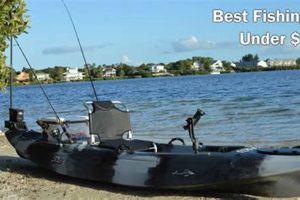
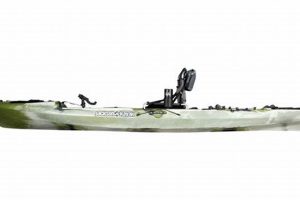
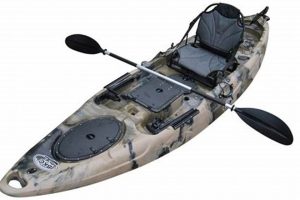
A kayak designed for angling, typically measuring approximately three meters, offers a stable and maneuverable platform for freshwater and inshore saltwater fishing. These vessels often feature specialized amenities such as rod holders, storage compartments for tackle, and anchor trolleys. Shorter than their touring counterparts, these compact watercraft prioritize stability and ease of handling in calmer waters.
The compact size provides anglers with excellent control and maneuverability, particularly in confined spaces like creeks, ponds, and sheltered bays. Their relatively lightweight nature allows for easier transport and launching, making them accessible to a broader range of individuals. Historically, fishing from small, human-powered watercraft dates back centuries. Modern designs incorporate advanced materials and construction techniques, resulting in durable, efficient vessels well-suited to the demands of angling. This segment of the kayak market serves a critical function in providing accessible and purpose-built options for fishing enthusiasts.
Further exploration will cover key aspects of selecting, outfitting, and utilizing such watercraft effectively, addressing topics such as hull design, propulsion options, and essential safety considerations.
Tips for Utilizing a Compact Fishing Kayak
Effective use of a smaller fishing kayak maximizes enjoyment and safety on the water. The following recommendations offer guidance for anglers seeking to improve their experience.
Tip 1: Prioritize Stability: Consider hull design and weight capacity. Wider, flatter hulls generally offer greater primary stability. Ensure the kayak’s capacity comfortably accommodates the angler’s weight plus gear.
Tip 2: Optimize Storage: Utilize available storage compartments effectively. Dry bags or waterproof containers protect essential gear from water damage. Distribute weight evenly within the kayak for balanced performance.
Tip 3: Practice Paddling Technique: Efficient paddling conserves energy and enhances maneuverability. Consider a shorter, lighter paddle appropriate for smaller vessels.
Tip 4: Choose Suitable Waters: Select fishing locations appropriate for the kayak’s size and stability characteristics. Avoid challenging conditions like strong currents or open ocean unless the vessel is specifically designed for such environments.
Tip 5: Employ an Anchor or Stake-Out Pole: Maintaining position in desired fishing areas requires an effective anchoring system. Consider lightweight, easily deployable anchors or stake-out poles suited for the bottom type.
Tip 6: Prioritize Safety Equipment: Carry essential safety gear, including a personal flotation device (PFD), whistle, and signaling devices. A first aid kit and communication device enhance preparedness.
Tip 7: Check Weather Conditions: Consult weather forecasts before each outing. Avoid paddling in inclement weather or when conditions are likely to deteriorate.
Implementing these recommendations contributes to a safe, productive, and enjoyable fishing experience. Proper planning and preparation enable anglers to maximize their time on the water.
By following these guidelines, individuals can confidently and effectively utilize compact fishing kayaks to explore diverse fishing opportunities.
1. Length

Maneuverability, a critical performance attribute in kayaks designed for fishing, is significantly influenced by length. Shorter kayaks, such as those in the 10-foot range, generally offer enhanced maneuverability compared to longer counterparts. This characteristic proves particularly advantageous when navigating confined waterways, such as narrow creeks, shallow rivers, and vegetation-dense areas often frequented by target fish species. A shorter length allows for quicker turns and adjustments in direction, enabling anglers to efficiently navigate obstacles and position themselves optimally for casting. Consider a scenario where an angler encounters a fallen tree obstructing a promising fishing spot; a shorter kayak facilitates nimble maneuvering around the obstacle, maximizing access to potentially productive areas.
The relationship between length and maneuverability extends beyond simple turning radius. Shorter kayaks often exhibit greater responsiveness to paddle strokes, translating to more precise control and placement within the fishing environment. This precision becomes crucial when targeting specific structures or presenting lures with accuracy. For instance, when sight fishing in shallow water, a shorter kayak allows for subtle adjustments, minimizing disturbance and maximizing chances of a successful hookup. The reduced water resistance inherent in shorter hulls also contributes to improved maneuverability, requiring less effort to change direction or maintain position in currents.
While shorter lengths enhance maneuverability, they can sometimes compromise tracking, the kayak’s ability to maintain a straight course. However, modern hull designs and features, such as strategically placed keels or chines, often mitigate this trade-off in 10-foot fishing kayaks. Ultimately, understanding the dynamic between length and maneuverability empowers anglers to select a kayak best suited to their target fishing environments and preferred angling techniques. The enhanced maneuverability of a shorter kayak opens up possibilities for exploring diverse waterways and approaching fish from advantageous angles, contributing to a more productive and enjoyable angling experience.
2. Width

Stability, a paramount concern for anglers, particularly in smaller watercraft, is directly influenced by kayak width. Wider hulls generally provide enhanced stability compared to narrower designs. This relationship becomes especially critical in fishing kayaks, where anglers frequently shift weight for casting, landing fish, and retrieving gear. Understanding the impact of width on stability is essential for selecting a 10 ft fishing kayak appropriate for individual needs and fishing styles.
- Primary Stability: At Rest
Primary stability refers to a kayak’s resistance to tipping when at rest. A wider hull provides a larger base of support, resulting in greater initial stability. This characteristic is crucial for anglers who prefer to stand while fishing or frequently shift their weight within the kayak. Imagine an angler reaching for a dropped lure; a wider kayak offers a more secure platform, minimizing the risk of capsizing.
- Secondary Stability: When Leaning
Secondary stability describes a kayak’s resistance to tipping when leaned or tilted. While wider hulls offer greater primary stability, they may exhibit less secondary stability compared to narrower designs. This means a wider kayak might feel initially stable but become less so as it leans further. Understanding this dynamic allows anglers to choose a kayak that balances initial stability with the ability to lean for maneuvering or bracing in currents.
- Impact on Performance
Width influences not only stability but also paddling performance. Wider kayaks generally provide more stability but may sacrifice some speed and maneuverability compared to narrower designs. A 10 ft fishing kayak often prioritizes stability over speed, recognizing the importance of a secure platform for angling activities. Consider an angler paddling against a light wind; a wider kayak will be less affected by wind drift, offering a more stable fishing platform.
- Matching Width to Fishing Style
The optimal width depends on the angler’s fishing style and intended use. Anglers who prioritize stability for stand-up fishing or require ample space for gear should consider wider hulls. Those who value maneuverability in tight spaces or prefer a faster paddling experience might opt for slightly narrower designs. The 10 ft length presents unique challenges in balancing stability and maneuverability, making width a crucial consideration in kayak selection.
Careful consideration of width in relation to stability is essential for anglers seeking a 10 ft fishing kayak. Balancing stability, maneuverability, and personal fishing preferences ensures a safe and productive experience on the water. The insights provided illuminate the complex relationship between these factors, empowering informed decision-making and ultimately enhancing angling success.
3. Weight

Portability, a key factor influencing the accessibility and usability of a fishing kayak, is directly linked to its weight. Lighter kayaks are inherently easier to transport, launch, and store, making them more practical for individuals with limited physical strength or those lacking convenient access to launch sites. In the context of 10 ft fishing kayaks, weight becomes a crucial consideration due to the inherent limitations of this size category. While shorter than touring kayaks, they still require a degree of physical handling, and weight directly impacts this aspect of ownership and use.
The relationship between weight and portability extends beyond simple carrying. Lighter kayaks often require less effort to load onto vehicle roof racks or transport on trailers. Consider an individual launching a kayak from a remote shoreline; a lighter vessel significantly reduces the physical strain involved in carrying it from a vehicle to the water’s edge. This ease of handling translates to increased accessibility for individuals of varying physical capabilities and simplifies the logistics of accessing diverse fishing locations. Furthermore, lighter kayaks often maneuver more easily in shallow water or when navigating obstacles, enhancing their overall usability in a range of fishing environments. For instance, a lighter kayak allows for easier maneuvering through dense vegetation or over shallow, rocky areas, expanding access to prime fishing spots.
Minimizing weight in a 10 ft fishing kayak, while maintaining structural integrity and capacity, presents design challenges. Manufacturers utilize lightweight materials, such as rotomolded polyethylene or composite constructions, to achieve optimal weight-to-performance ratios. However, reducing weight often necessitates careful consideration of features and accessories. Anglers must prioritize essential features and minimize unnecessary additions to maintain a manageable overall weight. Ultimately, achieving an optimal balance between weight and portability significantly enhances the usability and enjoyment of a 10 ft fishing kayak, expanding fishing opportunities and promoting greater accessibility for a wider range of anglers.
4. Hull Design
Hull design significantly influences a kayak’s tracking abilityits tendency to maintain a straight course. In the context of a 10 ft fishing kayak, tracking performance presents unique considerations due to the inherent design trade-offs associated with shorter watercraft. Shorter kayaks, while generally more maneuverable, can exhibit less inherent tracking ability than longer kayaks. This characteristic arises from the shorter waterline length and reduced surface area interacting with the water, making them more susceptible to turning and less efficient at maintaining a straight line. Understanding how specific hull design elements impact tracking is crucial for anglers seeking efficient paddling and precise boat control in a 10 ft kayak.
Several key hull design features influence tracking performance. A pronounced keel, extending along the centerline of the hull, acts like a fin, enhancing directional stability and improving tracking. Similarly, hard chines, the angled edges where the hull sides meet the bottom, contribute to directional stability by providing defined points of contact with the water. Conversely, a flatter hull bottom, while enhancing initial stability, may compromise tracking performance, making the kayak more prone to yawing or wandering off course. Consider a scenario where an angler paddles across a lake with a steady breeze; a kayak with a pronounced keel or hard chines will maintain its course more effectively than one with a flatter bottom. Furthermore, the shape of the bow and stern, the front and rear sections of the kayak, can influence how water flows around the hull, affecting tracking and overall efficiency.
The interplay between hull design, tracking, and overall kayak performance represents a critical consideration for anglers selecting a 10 ft fishing kayak. While maneuverability is often prioritized in this size category, effective tracking remains essential for efficient paddling and precise boat control. Understanding how specific hull design elements influence tracking allows anglers to choose a kayak that balances maneuverability with the ability to maintain a desired course, maximizing fishing efficiency and overall enjoyment on the water. Ultimately, the optimal hull design depends on the specific fishing environment and the angler’s individual preferences, balancing the need for nimble maneuvering with the desire for predictable and efficient forward movement.
5. Features

A 10 ft fishing kayak distinguishes itself from recreational models through specialized features designed to enhance angling effectiveness and convenience. These features cater specifically to the needs of anglers, optimizing the kayak for fishing-related activities and improving overall on-the-water performance. Understanding these angler-specific features is crucial for making informed decisions during kayak selection.
- Rod Holders
Integrated rod holders, strategically positioned for easy access and secure rod storage, represent a fundamental feature in fishing kayaks. These holders allow anglers to keep rods readily available while paddling, trolling, or managing multiple lines. Flush-mounted rod holders minimize interference with paddling strokes, while adjustable rod holders accommodate various rod lengths and angling techniques. For instance, trolling requires rod holders positioned to keep lines clear of the kayak and other obstacles, while still allowing for quick retrieval when a fish strikes. The number and placement of rod holders are important considerations when selecting a 10 ft fishing kayak, reflecting the angler’s preferred fishing style and target species.
- Storage Compartments
Dedicated storage compartments, designed to accommodate tackle boxes, fishing gear, and personal items, contribute significantly to the functionality of a fishing kayak. Dry storage compartments protect sensitive gear from water damage, while readily accessible storage areas facilitate efficient tackle management during active fishing. Consider an angler needing to quickly change lures; a well-organized storage system allows for rapid access to the necessary equipment without disrupting the fishing flow. The size, location, and accessibility of storage compartments are crucial considerations in evaluating a 10 ft fishing kayak, reflecting the angler’s storage needs and organizational preferences.
- Anchor Systems
Anchor systems, often integrated into 10 ft fishing kayaks, provide a means of maintaining position in desired fishing locations. These systems typically include anchor trolleys, cleats, and designated anchor storage areas. An anchor trolley allows for controlled deployment and retrieval of the anchor, facilitating adjustments to position based on wind or current. Consider an angler fishing in a river; an anchor trolley allows them to maintain a desired position relative to the current, optimizing presentation of bait or lures. The type and configuration of the anchor system are important considerations, influenced by the specific fishing environment and the angler’s anchoring preferences.
- Specialized Seating and Footrests
Enhanced seating and adjustable footrests contribute significantly to angler comfort and stability, particularly during extended fishing trips. Elevated seating positions improve visibility and casting range, while adjustable footrests allow for customized positioning and improved paddling leverage. Consider an angler spending several hours on the water; a comfortable and supportive seat minimizes fatigue and enhances overall fishing enjoyment. The design and adjustability of the seating and footrests are crucial factors influencing comfort and performance, reflecting the angler’s physical characteristics and fishing style.
These specialized features, tailored to the specific demands of angling, transform a 10 ft kayak into a dedicated fishing platform, enhancing both efficiency and enjoyment on the water. Careful consideration of these features ensures the selection of a kayak optimized for individual fishing needs, contributing to a more productive and fulfilling angling experience. By prioritizing these angler-centric design elements, manufacturers cater specifically to the needs of fishing enthusiasts, recognizing the importance of specialized equipment in maximizing success on the water.
Frequently Asked Questions
This section addresses common inquiries regarding kayaks designed for fishing, specifically those approximately 10 feet in length. Clear and concise responses aim to provide practical information for prospective purchasers and current owners.
Question 1: What are the advantages of a 10-foot length for fishing kayaks?
The 10-foot length offers a balance between maneuverability and stability, making it well-suited for navigating smaller waterways and accessing sheltered fishing spots. This size often provides sufficient storage for essential gear while remaining relatively easy to transport.
Question 2: Are 10-foot kayaks suitable for ocean fishing?
While some 10-foot kayaks can handle calm inshore waters, they are generally not recommended for open ocean conditions. Their shorter length makes them more susceptible to wave impact and wind drift compared to longer, sea-specific kayaks.
Question 3: What weight capacity should one consider in a 10-foot fishing kayak?
Weight capacity is crucial for safety and performance. One should consider combined weight of the angler, gear, and any potential catch. Exceeding the manufacturer’s specified weight capacity can compromise stability and performance.
Question 4: What features should one prioritize when selecting a 10-foot fishing kayak?
Essential features include rod holders, storage compartments, an anchor system, and a comfortable seat. Adjustable footrests and specialized features like paddle clips and fish finder mounts further enhance functionality.
Question 5: How does hull design affect the performance of a 10-foot fishing kayak?
Hull design significantly influences stability, maneuverability, and tracking. Wider hulls generally enhance stability, while a defined keel improves tracking. Flatter bottoms enhance maneuverability but may compromise tracking in open water.
Question 6: What safety precautions should be taken when using a 10-foot fishing kayak?
Always wear a personal flotation device (PFD). Check weather conditions before embarking. Inform someone of your intended route and return time. Carry essential safety equipment, including a whistle, signaling device, and first aid kit.
Careful consideration of these frequently asked questions provides valuable insights into the selection, use, and capabilities of 10-foot fishing kayaks. Understanding these aspects ensures a safe and productive fishing experience.
The following section will delve into specific models and manufacturers of 10-foot fishing kayaks, offering further guidance in the selection process.
Conclusion
Optimal selection of a 10 ft fishing kayak requires careful consideration of various interconnected factors. Length and width influence maneuverability and stability, impacting performance in specific fishing environments. Weight affects portability and ease of transport, while hull design dictates tracking and efficiency. Angler-specific features, such as rod holders and storage compartments, enhance functionality and on-the-water effectiveness. Understanding these elements empowers informed decision-making, aligning kayak choice with individual needs and fishing styles.
The 10 ft fishing kayak segment offers diverse options catering to a range of angling preferences and budgets. Diligent research and consideration of individual requirements will yield a vessel that enhances fishing experiences, providing a stable, efficient, and enjoyable platform for pursuing aquatic quarry. Ultimately, the right kayak becomes an extension of the angler, facilitating exploration, enhancing connection with nature, and maximizing the pursuit of angling success.