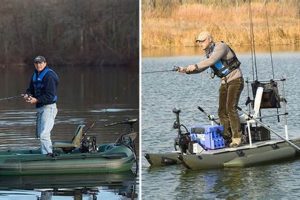
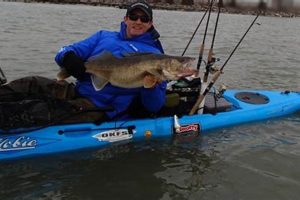
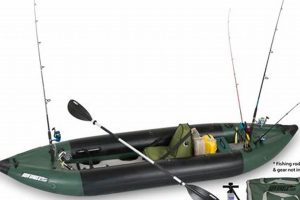
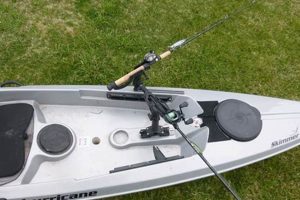
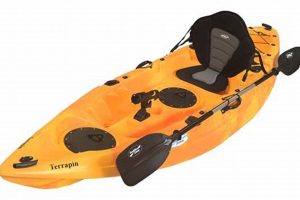
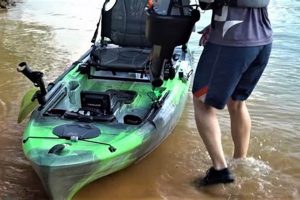
Competitive angling from specialized kayaks involves high-level skill and specialized equipment. Participants often target specific species using techniques optimized for their chosen vessels. Tournaments can range from small local events to large national or international competitions, with significant prizes and sponsorships at stake.
This specialized sport offers numerous advantages. It grants access to shallow or otherwise inaccessible waters, promoting a close-to-nature experience. The low environmental impact compared to motorized boats is another key benefit. The growing popularity has led to advancements in kayak design and fishing technology, further enhancing the sport’s appeal and competitiveness. This evolution has also fostered a strong sense of community among enthusiasts.
This article will further explore the various facets of competitive kayak angling. Topics covered will include essential gear and tactics, leading tournament circuits, prominent figures, conservation efforts, and the future trajectory of this exciting sport.
Tips for Competitive Kayak Angling
Success in tournament kayak fishing requires meticulous preparation and strategic execution. The following tips offer guidance for anglers seeking to elevate their competitive performance.
Tip 1: Master Kayak Control: Precise boat positioning is paramount. Anglers should practice maneuvering in various conditions, including wind and current, to maintain optimal casting angles and presentation.
Tip 2: Optimize Tackle Selection: Rods, reels, lines, and lures should be chosen based on target species and fishing environment. A streamlined and efficient tackle system is crucial in a kayak’s limited space.
Tip 3: Utilize Electronics Effectively: Fish finders and GPS units provide valuable data on water depth, structure, and fish location. Understanding how to interpret this information is vital for locating productive areas.
Tip 4: Prioritize Safety: Wearing a personal flotation device (PFD) is non-negotiable. Carrying essential safety equipment like a whistle, signaling device, and first-aid kit is also crucial.
Tip 5: Understand Tournament Rules: Familiarize yourself with all regulations, including permitted fishing areas, catch limits, and size restrictions. This knowledge avoids penalties and ensures fair competition.
Tip 6: Practice Catch and Release Techniques: Proper handling and release methods minimize stress on fish, promoting healthy fish populations and ensuring the sustainability of the sport.
Tip 7: Network and Learn from Others: Engaging with experienced anglers offers valuable insights into successful techniques and strategies. Participating in local fishing clubs or online forums can provide a supportive learning environment.
By implementing these strategies, anglers can significantly improve their competitive edge and overall enjoyment of tournament kayak fishing.
These tips provide a foundation for competitive success. The following section will discuss advanced techniques and strategies for serious tournament contenders.
1. Skill

Skill in professional kayak angling differentiates elite competitors from recreational participants. It represents a culmination of knowledge, technique, and experience honed through dedicated practice and competition. Mastery of several key skill sets is essential for consistent success.
- Boat Control:
Precise maneuvering is fundamental. Navigating currents, wind, and complex water features efficiently allows anglers to position themselves optimally for casting and fish retrieval. A skilled angler can hold a kayak in position against a strong current while simultaneously presenting a lure with pinpoint accuracy.
- Casting Accuracy and Presentation:
Effective lure presentation is crucial for enticing fish. Skilled anglers can cast accurately to targets, manipulate lures realistically, and adjust their techniques based on fish behavior and environmental conditions. This might involve skipping a lure under overhanging branches or subtly twitching a jig to mimic injured prey.
- Fish Fighting and Landing:
Successfully landing a fish from a kayak requires specialized techniques. Maintaining balance and leverage while managing a hooked fish is challenging. Experienced anglers understand how to apply appropriate pressure, control the fish’s movements, and efficiently use landing tools like nets or grips.
- Knowledge of Fish Behavior and Habitat:
Understanding fish behavior, preferred habitats, and feeding patterns is crucial. Skilled anglers can analyze environmental factors like water temperature, clarity, and structure to predict fish location and activity. This knowledge informs lure selection, retrieval speed, and overall fishing strategy.
These interconnected skills contribute significantly to a competitive angler’s success. Mastering these facets, combined with strategic decision-making, ultimately determines performance outcomes in professional kayak fishing.
2. Strategy

Strategic thinking is paramount in professional kayak angling, differentiating consistently successful competitors. It encompasses pre-fishing planning, in-tournament adaptability, and efficient time management. A well-defined strategy maximizes opportunities and enhances competitive performance.
- Pre-Fishing Scouting and Planning:
Thorough pre-fishing scouting is essential. Analyzing maps, researching historical data, and physically exploring potential fishing areas provides valuable insights. This information informs decisions regarding target species, lure selection, and location prioritization during the tournament. For example, identifying a creek channel with submerged vegetation during pre-fishing might lead an angler to target that area with weedless lures during the competition.
- In-Tournament Adaptability:
Conditions change rapidly during tournaments. Adapting to shifting weather patterns, fish behavior, and competitor pressure is crucial. A flexible strategy allows anglers to adjust their approach, ensuring they remain effective despite unforeseen circumstances. An angler might switch from targeting shallow flats to deeper drop-offs if wind creates unfavorable conditions in the shallows.
- Efficient Time Management:
Tournament time is limited. Maximizing fishing time while minimizing unproductive periods requires careful planning and execution. Efficiently navigating between fishing spots, minimizing tackle changes, and quickly releasing fish are essential time management skills. An angler might choose to focus on a few high-probability areas rather than spending time traveling between numerous less promising spots.
- Pattern Recognition and Adjustment:
Successful anglers identify patterns in fish behavior and adjust their tactics accordingly. Observing subtle clues like water clarity changes, baitfish activity, or bird behavior can provide valuable insights into fish location and feeding patterns. If an angler notices several fish caught near a specific type of structure, they might prioritize similar areas throughout the competition.
These strategic elements, combined with refined angling skills and effective equipment utilization, create a framework for consistent success in professional kayak fishing. A well-defined and adaptable strategy increases the likelihood of positive outcomes in the competitive arena.
3. Equipment

Specialized equipment plays a crucial role in professional kayak angling, significantly impacting performance and competitive success. The correct gear enhances an angler’s ability to locate fish, present lures effectively, and ultimately land more fish. The following facets highlight the critical connection between equipment and competitive kayak fishing.
- Kayak Selection:
Kayak choice is paramount. Stability, maneuverability, and storage capacity are key considerations. Purpose-built fishing kayaks offer features like rod holders, tackle storage, and anchor trolleys. A stable platform is crucial for casting accuracy and fighting fish effectively, while maneuverability allows anglers to navigate diverse water environments. Tournament anglers often choose kayaks optimized for speed and efficiency in covering water.
- Rods and Reels:
Rod and reel selection depends on target species and fishing techniques. Lightweight yet powerful rods are preferred, allowing for precise casts and effective fish control. Reels should be durable, corrosion-resistant, and matched to the chosen line and lure weight. Baitcasting reels are often favored for their power and control, while spinning reels offer versatility for various lure types.
- Electronics and Navigation:
Fish finders, GPS units, and electric trolling motors enhance an angler’s ability to locate fish and navigate efficiently. Fish finders provide detailed information about water depth, bottom structure, and fish location, while GPS units aid in marking productive areas and navigating safely. Electric trolling motors offer hands-free propulsion, allowing anglers to focus on fishing. Integrating these technologies provides a significant competitive advantage.
- Safety and Personal Gear:
Safety equipment is paramount. Personal flotation devices (PFDs), whistles, signaling devices, and first-aid kits are essential. Appropriate clothing and sun protection are also crucial for enduring long days on the water. Prioritizing safety ensures angler well-being and allows for focused fishing without unnecessary distractions.
The strategic selection and effective utilization of these equipment components contributes significantly to success in professional kayak fishing. Investing in high-quality, purpose-built gear, and understanding its capabilities, provides a distinct advantage in the competitive arena. The interplay between angler skill and specialized equipment ultimately determines tournament outcomes.
4. Competition

Competition forms the core of professional kayak angling, driving innovation, skill development, and the overall growth of the sport. It provides a structured platform for anglers to test their abilities, compare performance, and establish rankings. The competitive landscape encompasses various tournament formats, each with unique challenges and rewards. These events range from local club competitions to nationally recognized circuits with substantial prize purses and sponsorship opportunities. The inherent pressure of tournament fishing pushes anglers to refine techniques, optimize equipment choices, and develop advanced strategies. This competitive drive fuels continuous improvement within the sport. For instance, the Hobie Bass Open Series, a prominent kayak bass fishing circuit, draws anglers from across the country, fostering a competitive environment that accelerates skill development and promotes innovation in kayak fishing techniques. The pursuit of victory in such high-profile events necessitates meticulous preparation, strategic decision-making, and the ability to perform under pressure.
The competitive structure also fosters camaraderie and a sense of community among participants. While anglers strive for individual success, the shared passion for kayak fishing creates a supportive environment for knowledge exchange and mutual respect. Post-tournament discussions often involve analyzing strategies, sharing successful techniques, and fostering a collective pursuit of improvement. This collaborative spirit contributes to the overall growth and development of the sport. Furthermore, competition provides a valuable platform for sponsors to connect with a dedicated audience. Tournament visibility offers marketing opportunities for companies within the fishing industry, furthering the economic growth of the sport and supporting the development of innovative products. The competitive arena serves as a testing ground for new equipment and technologies, leading to advancements that benefit both professional and recreational anglers.
In summary, competition is not merely a component of professional kayak fishing; it is the driving force behind its evolution and continued success. It elevates skill levels, promotes innovation, fosters community, and provides a platform for economic growth within the sport. Understanding the multifaceted role of competition provides valuable insight into the dynamics and future trajectory of professional kayak angling. The challenges faced by anglers in competitive settingsadapting to changing conditions, making strategic decisions under pressure, and continually refining their techniquesare integral to the sport’s ongoing development. These challenges, met with dedication and sportsmanship, solidify competition as the cornerstone of professional kayak fishing.
5. Sponsorship

Sponsorship plays a vital role in the professional kayak fishing landscape, providing crucial financial support for anglers and driving the growth of the sport. The symbiotic relationship between sponsors and anglers fuels competitive pursuits, technological advancements, and broader public awareness. This intricate connection warrants examination to understand its significance within the professional sphere.
- Financial Support:
Sponsors provide essential financial backing, enabling anglers to cover tournament entry fees, travel expenses, equipment upgrades, and other costs associated with competitive fishing. This support allows anglers to dedicate more time to honing their skills and participating in high-level events. Without sponsorship, the financial burden of professional angling would be prohibitive for many individuals. For example, a prominent kayak angler might receive sponsorship from a fishing tackle company, covering the costs of new rods, reels, and lures in exchange for promoting their products during tournaments and online.
- Equipment and Technology Advancements:
Sponsorship often involves providing anglers with cutting-edge equipment and technology. This access to top-tier gear enhances performance and fuels innovation within the sport. Anglers provide valuable feedback to sponsors, contributing to product development and refinement. This collaborative process drives continuous improvement in kayak design, fishing tackle, electronics, and other specialized equipment. A kayak manufacturer might sponsor an angler with a prototype fishing kayak, incorporating feedback on its design and performance before launching it to the wider market.
- Marketing and Brand Promotion:
Sponsors leverage the visibility of professional kayak anglers to market their products and enhance brand awareness. Anglers serve as brand ambassadors, promoting products through tournament appearances, social media engagement, and content creation. This mutually beneficial relationship exposes brands to a dedicated audience of fishing enthusiasts, generating market interest and driving sales. An angler wearing a sponsor’s logo during a televised tournament offers valuable brand exposure to a large audience.
- Sport Growth and Development:
Sponsorship contributes significantly to the overall growth and development of professional kayak fishing. Increased financial investment raises the profile of the sport, attracting new participants and expanding media coverage. This broader exposure leads to larger tournament prize purses, greater media attention, and heightened public interest, further solidifying the sport’s legitimacy and fostering its continued evolution. A major outdoor retailer sponsoring a national kayak fishing tournament enhances the sport’s credibility and attracts new participants.
These interconnected facets of sponsorship highlight its critical role within professional kayak fishing. The financial support, equipment advancements, marketing opportunities, and overall growth facilitated by sponsorships are essential for the continued success and evolution of the sport. The collaborative relationship between anglers and sponsors creates a dynamic ecosystem that benefits all stakeholders, from individual competitors to the industry as a whole. The continued growth of sponsorship within professional kayak fishing is a key indicator of the sport’s health and its potential for future expansion.
6. Conservation

Conservation is integral to the long-term viability of professional kayak fishing. The sport’s dependence on healthy aquatic ecosystems necessitates a strong commitment to environmental stewardship. This connection manifests in various ways, impacting both individual angler practices and broader industry initiatives. Cause and effect relationships are clearly evident; responsible angling practices directly contribute to resource preservation, ensuring future generations can enjoy the sport. Conversely, neglecting conservation principles jeopardizes the very foundation upon which professional kayak fishing is built.
The importance of conservation as a component of professional kayak fishing is underscored by real-life examples. Many professional anglers actively champion conservation efforts, advocating for responsible fishing practices, habitat restoration projects, and sustainable fisheries management. Organizations like the Kayak Bass Fishing Association and Heroes on the Water demonstrate this commitment through initiatives promoting catch-and-release fishing, proper fish handling techniques, and awareness campaigns addressing pollution and habitat degradation. These efforts reflect a growing understanding of the interconnectedness between a healthy environment and the future of the sport. Practical applications of this understanding include promoting selective harvest strategies, minimizing the use of plastics and other pollutants, and participating in waterway cleanups. Leading figures in professional kayak fishing often use their platforms to educate and inspire others to adopt environmentally responsible practices, demonstrating the practical significance of integrating conservation principles into the sport.
A healthy environment is paramount for the sustainability of professional kayak fishing. Challenges such as pollution, habitat loss, and invasive species pose significant threats to aquatic ecosystems. Addressing these challenges requires collective action, from individual anglers adopting responsible practices to industry-wide initiatives promoting sustainable resource management. Professional kayak fishing’s future is inextricably linked to the health of the waters it depends on. A continued focus on conservation ensures that the sport can thrive for generations to come. This commitment not only safeguards the environment but also strengthens the foundation of professional kayak fishing, ensuring its continued growth and success. The proactive integration of conservation principles into all facets of professional kayak fishing demonstrates a deep understanding of the sport’s reliance on healthy aquatic ecosystems and a commitment to long-term sustainability.
Frequently Asked Questions
This section addresses common inquiries regarding professional kayak angling, providing concise yet comprehensive responses to clarify potential misconceptions and offer further insight into the complexities of the sport.
Question 1: What distinguishes professional kayak anglers from recreational participants?
Professional kayak anglers demonstrate a higher level of skill, strategic thinking, and dedication. They possess advanced knowledge of fish behavior, habitat, and effective fishing techniques. Significant time investment, specialized equipment, and consistent participation in competitive tournaments further differentiate professionals.
Question 2: How does one become a professional kayak angler?
The path to professional status involves consistent tournament participation, demonstrating competitive success, building a strong reputation within the angling community, and often securing sponsorships. Continuous skill development and strategic refinement are essential for advancement.
Question 3: What are the primary costs associated with professional kayak angling?
Significant costs include tournament entry fees, travel expenses, specialized kayak and fishing equipment, electronics, safety gear, and maintenance. Sponsorships can offset some expenses, but initial investment is substantial.
Question 4: What are the major kayak fishing tournament circuits?
Prominent circuits include the Hobie Bass Open Series, the Bassmaster Kayak Series, and various regional and local tournaments. Each circuit has specific rules, regulations, and target species.
Question 5: What role does conservation play in professional kayak fishing?
Conservation is paramount. Professional anglers often advocate for responsible fishing practices, habitat preservation, and sustainable fisheries management. Catch-and-release fishing, proper fish handling techniques, and minimizing environmental impact are crucial.
Question 6: What is the future of professional kayak fishing?
The sport is experiencing rapid growth, with increasing participation, expanding media coverage, and growing sponsorship interest. Continued technological advancements, enhanced conservation efforts, and greater public awareness suggest a bright future for professional kayak angling.
Understanding these key aspects of professional kayak angling provides a solid foundation for further exploration of this demanding yet rewarding sport. The dedication, skill, and conservation ethic required at the professional level contribute significantly to the broader angling community and the preservation of aquatic resources.
The next section will delve into the specific techniques and strategies employed by leading professional kayak anglers.
Conclusion
Competitive kayak angling demands a high level of skill, strategic thinking, specialized equipment, and a deep respect for the environment. From mastering boat control and optimizing tackle selection to understanding fish behavior and adapting to tournament pressures, success requires dedication and continuous refinement. The evolving landscape of professional competition, coupled with increasing sponsorship opportunities and growing public interest, underscores the sport’s dynamic nature and its potential for continued growth.
The future of competitive kayak angling hinges on a collective commitment to conservation. Protecting the health of aquatic ecosystems ensures the sustainability of this demanding yet rewarding sport. As the sport evolves, embracing sustainable practices and fostering a culture of environmental stewardship will be crucial for preserving the resources that underpin its very existence. The pursuit of excellence in competitive kayak angling must always be balanced with a profound respect for the natural world that sustains it.