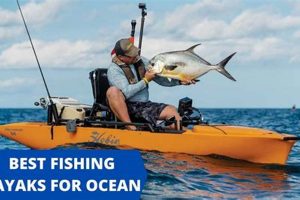
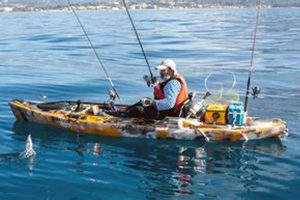
A specialized mount designed for securing fishing rods to Sun Dolphin kayaks facilitates hands-free operation and convenient access to tackle and equipment. These mounts are typically constructed from durable materials like plastic or metal and are engineered to withstand the marine environment. Various designs exist, including flush-mounted, adjustable, and rotating models, each offering specific advantages for different fishing styles.
Integrating rod holders significantly enhances angling experiences aboard these popular recreational watercraft. They contribute to improved safety by preventing rod loss and tangling, enabling anglers to focus on navigation and fish-fighting. The ability to position rods strategically optimizes trolling and still-fishing techniques. This accessory’s development reflects a growing demand for kayak-specific fishing equipment, aligning with the increasing popularity of kayak angling as a recreational pursuit.
Further exploration will delve into specific types of mounts available for Sun Dolphin kayaks, installation methods, and compatibility with different rod types and fishing styles. Considerations for selecting appropriate holders based on individual angling needs will also be addressed.
Tips for Utilizing Fishing Rod Holders on Sun Dolphin Kayaks
Proper utilization of fishing rod holders enhances safety and fishing efficacy. The following tips provide guidance for maximizing their benefits.
Tip 1: Choose Appropriate Holder Type: Flush-mount holders offer a low profile suitable for trolling or storing rods, while adjustable and rotating holders provide versatility for various fishing techniques.
Tip 2: Consider Placement: Position holders within easy reach, accounting for paddling and casting movements. Avoid placement that obstructs navigation or creates entanglement hazards.
Tip 3: Secure Installation: Ensure holders are securely mounted to the kayak using appropriate hardware and installation techniques. Regular inspection and maintenance are crucial.
Tip 4: Match Holder to Rod and Reel: Select holders compatible with the size and weight of intended rods and reels. Oversized rods in undersized holders can lead to damage or loss.
Tip 5: Practice Rod Retrieval: Familiarize oneself with quickly and safely retrieving rods from holders, especially in challenging conditions.
Tip 6: Secure Rods When Not in Use: Utilize rod leashes or straps to secure rods in holders when not actively fishing to prevent loss due to unexpected movements or rough water.
Tip 7: Regular Maintenance: Periodically inspect holders for wear and tear, tightening any loose hardware and addressing any corrosion. This ensures continued safe and effective operation.
Adhering to these guidelines promotes a safer and more productive fishing experience, maximizing enjoyment on the water.
These tips highlight the practical considerations for incorporating rod holders into kayak angling. The following section will conclude with overall best practices for safe and successful kayak fishing excursions.
1. Mounting Location

Mounting location significantly impacts the effectiveness and safety of fishing rod holders on Sun Dolphin kayaks. Strategic placement optimizes angler performance while minimizing interference with paddling and navigation. Positioning holders too far forward can create difficulties in retrieving rods, particularly in challenging conditions. Conversely, placement too far aft may hinder casting and increase the risk of entanglement. Ergonomics plays a vital role; holders should be within easy reach to minimize strain and maximize responsiveness. For example, angling for larger species often necessitates quick rod access, therefore, positioning near the cockpit facilitates efficient retrieval. Conversely, trolling benefits from holders positioned further forward, allowing lines to trail effectively without interfering with paddling.
Practical considerations extend beyond angler convenience. Mounting location influences line management and minimizes tangling, a crucial factor when multiple rods are deployed. Careful consideration of potential obstruction points, such as hatches, seats, and other onboard equipment, is essential during installation. Stability also warrants attention; holders mounted on less stable sections of the kayak might compromise rod security, particularly during rough water conditions. Opting for reinforced mounting points, when available, enhances stability and longevity. For instance, mounting near pre-existing structural supports on the kayak provides a more secure foundation than mounting on flexible areas.
Effective mounting location balances accessibility, stability, and interference avoidance. Analysis of individual fishing styles and target species informs optimal placement. Prioritizing these elements ensures that rod holders enhance, rather than hinder, the overall fishing experience. Understanding the interplay between mounting location and other factors, such as kayak design and anticipated water conditions, allows for informed decisions that maximize both safety and angling success.
2. Holder Material

Holder material significantly influences the longevity, performance, and overall value of a Sun Dolphin kayak fishing pole holder. Material selection dictates resistance to environmental factors, load-bearing capacity, and compatibility with kayak construction. Common materials include plastic, aluminum, and stainless steel, each presenting distinct characteristics. Plastic offers affordability and corrosion resistance but may lack the strength required for heavier rods and reels. Aluminum provides a balance of strength and light weight, although susceptibility to corrosion necessitates careful maintenance. Stainless steel represents the premium option, offering exceptional strength and corrosion resistance, albeit at a higher cost. Material choice impacts long-term durability. For instance, a plastic holder exposed to prolonged UV radiation may become brittle and prone to failure, whereas stainless steel withstands such conditions effectively.
The interplay between holder material and kayak material warrants consideration. Certain materials may react with specific kayak constructions, potentially leading to corrosion or degradation. For example, direct contact between dissimilar metals, like aluminum and stainless steel, can accelerate corrosion in saltwater environments. Employing insulating materials or opting for compatible metal types mitigates this risk. The practical implications of material choice extend beyond durability. Weight influences kayak performance, with heavier holders potentially impacting maneuverability and speed. Furthermore, holder material affects the overall aesthetics of the kayak setup, a factor considered by some anglers. High-quality stainless steel holders often convey a sense of durability and sophistication, while plastic holders may appear less robust.
Careful consideration of holder material, encompassing factors like strength, corrosion resistance, weight, and compatibility, ensures a suitable choice. Balancing performance requirements, environmental conditions, and budget constraints informs optimal material selection. Choosing a material aligned with the intended fishing style and kayak type ensures long-term satisfaction and value. For instance, anglers frequently fishing in saltwater environments benefit from investing in stainless steel holders, despite the higher initial cost, due to superior corrosion resistance. Ultimately, understanding the properties and limitations of various holder materials empowers informed decision-making, leading to a more enjoyable and productive kayak fishing experience.
3. Rod Compatibility

Rod compatibility is a critical factor when selecting fishing pole holders for Sun Dolphin kayaks. A mismatch between holder and rod can lead to instability, equipment damage, and a compromised fishing experience. Proper compatibility ensures secure rod placement, efficient retrieval, and overall angling success. Understanding the nuances of rod compatibility empowers informed decisions, maximizing both safety and enjoyment on the water.
- Rod Diameter:
Holders are designed to accommodate specific rod diameters. Using a rod too large for the holder can lead to insecure placement and potential slippage, while a rod too small might rattle within the holder, causing wear and noise. Matching rod diameter to holder specifications ensures a snug and secure fit. For example, a holder designed for a 1-inch diameter rod will not securely hold a 1.5-inch diameter rod. This can result in the rod dislodging during a strike or while navigating rough water.
- Rod Length and Weight:
Longer and heavier rods exert greater leverage on holders. Using an inadequately sized holder for a long, heavy rod can strain the holder and potentially damage the kayak. Conversely, a short, lightweight rod in a large holder may not be adequately secured. Matching holder size to rod length and weight ensures stability and prevents stress on the kayak’s mounting points. A heavy surfcasting rod requires a robust holder designed for its length and weight, unlike a lighter freshwater spinning rod.
- Reel Type:
Certain holders are designed for specific reel types. Spinning reels, baitcasting reels, and fly reels have different profiles and mounting requirements. Using an incompatible holder can interfere with reel operation or prevent secure placement. Selecting a holder compatible with the intended reel type ensures optimal functionality and prevents equipment damage. A spinning reel requires a holder that accommodates the reel foot and prevents rotation, while a baitcasting reel might require a holder with a lower profile.
- Fishing Style:
Different fishing styles necessitate specific rod and holder configurations. Trolling requires holders that position rods at an appropriate angle for line retrieval, while still-fishing benefits from holders that allow for vertical rod placement. Matching the holder to the intended fishing style optimizes rod positioning and enhances angling effectiveness. A kayak angler targeting large pelagic fish might require a heavy-duty rod holder capable of withstanding substantial forces, unlike a lighter setup for inshore fishing.
Considering these facets of rod compatibility ensures the chosen Sun Dolphin kayak fishing pole holder effectively secures the fishing rod, promoting safety and enhancing angling success. Neglecting compatibility can lead to frustration, equipment damage, and potentially hazardous situations on the water. Prioritizing compatibility contributes to a more enjoyable and productive kayak fishing experience.
4. Installation Stability

Installation stability is paramount for Sun Dolphin kayak fishing pole holders. A secure mount ensures the holder remains firmly affixed to the kayak, preventing dislodgement during use. This stability directly impacts angling success and safety. An unstable holder can lead to lost rods, damaged equipment, and potentially hazardous situations, particularly when battling larger fish or navigating challenging waters. Several factors influence installation stability, including the type of mounting hardware used, the kayak’s structural integrity at the mounting point, and the installation process itself. For example, using corrosion-resistant screws specifically designed for marine environments and reinforcing the mounting area with backing plates significantly enhances stability. Conversely, inadequate hardware or improper installation techniques can compromise stability, even with a high-quality holder. Consider a scenario where an angler hooks a large fish; a securely mounted holder provides a stable anchor point, allowing the angler to focus on the fight. An unstable holder, however, risks dislodging under pressure, potentially resulting in lost tackle and a missed opportunity.
Further enhancing installation stability involves assessing the kayak’s structure. Sun Dolphin kayaks feature various mounting options, including track systems, molded-in inserts, and flat surfaces. Each presents distinct stability characteristics. Track systems offer versatility but require compatible mounts. Molded-in inserts provide designated, often reinforced, mounting points. Flat surfaces allow for flexible placement but might necessitate additional reinforcement depending on the kayak’s material and structure. Choosing appropriate mounting locations and hardware specific to the kayak model optimizes stability. For instance, mounting a holder on a thin-walled section of the kayak without reinforcement may lead to instability, while utilizing a reinforced area or adding backing plates distributes the load more effectively, increasing stability and longevity.
A stable fishing pole holder installation contributes significantly to a safe and productive kayak angling experience. Proper hardware selection, appropriate mounting location considerations, and meticulous installation techniques are crucial for maximizing stability. Understanding the interplay between these factors, coupled with an awareness of the kayak’s structural characteristics, empowers informed decisions that ensure a secure and reliable platform for fishing. This ultimately translates to enhanced angling performance and mitigates risks associated with unstable equipment, contributing to a more enjoyable and successful time on the water.
5. Adjustability Features
Adjustability features in fishing rod holders designed for Sun Dolphin kayaks significantly enhance versatility and angling effectiveness. These features enable anglers to customize rod positioning, optimizing presentations for various fishing techniques and target species. Adjustable holders offer control over rod angle, both vertically and horizontally, and often include features like rotation and extension. The ability to fine-tune rod placement is crucial for techniques like trolling, where precise line angles are essential for lure presentation and depth control. For instance, adjusting the rod holder to a lower angle facilitates deeper trolling, while a higher angle keeps lures closer to the surface. Similarly, in still-fishing scenarios, adjustability allows for precise bait placement and optimal hooksets. A vertically positioned rod might be ideal for bottom fishing, whereas a more angled position suits suspended baits. The range of adjustability directly influences the holder’s adaptability to diverse fishing styles.
The practical implications of adjustability extend beyond technique-specific advantages. Consider an angler targeting different species throughout a single outing. Adjustable holders facilitate seamless transitions between setups, eliminating the need to reposition or remount holders. This adaptability saves valuable time and allows anglers to respond quickly to changing conditions or fish behavior. Furthermore, adjustability contributes to angler comfort and efficiency. Positioning rods at optimal angles reduces strain during extended fishing sessions and facilitates quick rod retrieval when a fish strikes. For example, a holder with adjustable height and rotation can be customized to match an angler’s reach and preferred casting position, promoting ergonomic efficiency and reducing fatigue. Similarly, in situations requiring multiple rods, adjustable holders prevent line tangling and optimize spacing within the kayak’s cockpit.
In summary, adjustability features in Sun Dolphin kayak fishing pole holders represent a critical element for maximizing versatility and effectiveness on the water. The ability to customize rod positioning enhances technique-specific presentations, facilitates seamless transitions between fishing styles, and promotes angler comfort and efficiency. Investing in holders with robust and well-designed adjustment mechanisms represents a valuable investment for anglers seeking to optimize their kayak fishing experience. The range and precision of these features directly influence the holder’s adaptability, ultimately contributing to greater success and enjoyment on the water.
6. Corrosion Resistance

Corrosion resistance is a critical factor influencing the longevity and performance of Sun Dolphin kayak fishing pole holders. The constant exposure to saltwater, freshwater, and UV radiation necessitates holders constructed from materials that withstand these harsh elements. Compromised corrosion resistance leads to structural weakening, impacting holder functionality and posing safety risks. Understanding the factors influencing corrosion and selecting appropriately resistant materials ensures long-term reliability and value.
- Material Selection
The inherent corrosion resistance of the holder’s material plays a primary role. Marine-grade stainless steel, known for its high chromium content, forms a passive protective layer, offering superior corrosion resistance. Aluminum, while lighter, requires protective coatings or anodization to enhance its resistance. Plastic holders, while generally corrosion-resistant, can degrade from prolonged UV exposure. Choosing a material inherently resistant to the intended environment is paramount. For example, a stainless steel holder will outperform an untreated aluminum holder in saltwater environments.
- Hardware and Fasteners
Corrosion also affects mounting hardware and fasteners. Using stainless steel or corrosion-resistant alloys for screws, bolts, and other fasteners is crucial for maintaining overall holder stability. Dissimilar metal contact can accelerate corrosion, therefore, ensuring compatibility between holder material and fasteners is essential. For instance, using stainless steel fasteners with an aluminum holder requires careful consideration of galvanic corrosion potential.
- Environmental Factors
Environmental factors significantly influence corrosion rates. Saltwater environments are particularly corrosive due to the high chloride ion concentration. Exposure to freshwater, while less aggressive, can still lead to corrosion over time, especially with less resistant materials. UV radiation, particularly in sunny climates, degrades certain plastics and coatings, compromising their protective properties. Understanding the intended environment informs material selection. Frequent saltwater exposure necessitates higher corrosion resistance than occasional freshwater use.
- Maintenance and Care
Regular maintenance mitigates corrosion. Rinsing holders with freshwater after each use, particularly in saltwater environments, removes corrosive residues. Periodic inspection for signs of corrosion, such as pitting or discoloration, allows for timely intervention. Applying protective coatings or lubricants to metal components further inhibits corrosion. Diligent maintenance prolongs holder lifespan and maintains functionality. Neglecting routine cleaning and maintenance accelerates corrosion, especially in harsh marine environments.
Prioritizing corrosion resistance in Sun Dolphin kayak fishing pole holders ensures long-term reliability, safety, and value. Selecting appropriate materials, utilizing compatible hardware, and implementing regular maintenance practices are crucial for mitigating corrosion’s detrimental effects. Understanding the interplay between these factors empowers informed decisions, leading to a more durable and dependable fishing setup, essential for maximizing enjoyment and success on the water.
7. Overall Durability
Overall durability is a critical aspect of Sun Dolphin kayak fishing pole holders, directly impacting their lifespan, performance, and safety. A durable holder withstands the rigors of kayak fishing, including exposure to the elements, stresses from fighting fish, and the general wear and tear of regular use. Durability considerations encompass material strength, construction quality, and resistance to environmental factors. Investing in a durable holder minimizes replacement costs and ensures reliable performance over time.
- Material Strength
The inherent strength of the holder’s material determines its ability to withstand stress and resist deformation. High-strength materials, such as reinforced plastics, marine-grade aluminum, and stainless steel, offer superior durability compared to less robust materials. Material strength directly influences the holder’s ability to secure the rod during challenging conditions, such as battling strong currents or large fish. For example, a stainless steel holder will typically exhibit greater resistance to bending and breakage than a plastic holder under similar stress.
- Construction Quality
Construction quality encompasses aspects like welding integrity, joint strength, and overall design. Well-constructed holders feature robust joints, smooth finishes, and reinforced stress points, contributing to overall durability. Poor construction, evidenced by weak welds or flimsy components, compromises longevity and increases the risk of failure. High-quality construction ensures the holder remains functional and secure throughout its lifespan. A holder with precisely aligned and securely fastened components indicates superior construction compared to one with misaligned parts or loose connections.
- Environmental Resistance
Environmental factors, such as UV radiation, saltwater exposure, and temperature fluctuations, significantly impact holder durability. Materials and coatings resistant to these elements are essential for long-term performance. UV-resistant plastics and corrosion-resistant metals ensure the holder maintains its structural integrity and functionality in harsh marine environments. For instance, a powder-coated aluminum holder offers enhanced corrosion resistance compared to an uncoated aluminum holder. Similarly, UV-stabilized plastic resists degradation from prolonged sun exposure, extending its lifespan.
- Hardware and Fasteners
The durability of mounting hardware and fasteners contributes to the overall durability of the fishing pole holder system. Corrosion-resistant stainless steel fasteners are essential for maintaining a secure and long-lasting installation. Using high-quality hardware prevents rust and degradation, ensuring the holder remains firmly attached to the kayak. For example, marine-grade stainless steel screws will provide superior corrosion resistance compared to standard steel screws in saltwater environments, preserving the integrity of the mounting system.
Prioritizing overall durability in Sun Dolphin kayak fishing pole holders is essential for long-term performance, safety, and value. Selecting holders constructed from robust materials, featuring high-quality construction, and exhibiting resistance to environmental factors ensures reliable performance over time. A durable holder withstands the demanding conditions of kayak fishing, providing a secure platform for angling and enhancing the overall experience on the water. Investing in a durable holder minimizes the need for frequent replacements, ultimately proving more cost-effective and contributing to a more enjoyable and productive time on the water.
Frequently Asked Questions
This section addresses common inquiries regarding fishing rod holders designed for Sun Dolphin kayaks, providing concise and informative responses.
Question 1: Are all fishing rod holders compatible with all Sun Dolphin kayak models?
Compatibility varies depending on kayak model and holder design. Consult the kayak’s specifications and the holder manufacturer’s guidelines to ensure compatibility before purchase.
Question 2: What materials are most suitable for saltwater environments?
Marine-grade stainless steel and UV-resistant plastics offer optimal corrosion and degradation resistance in saltwater conditions.
Question 3: How many fishing rod holders can be installed on a Sun Dolphin kayak?
The number of holders depends on the kayak’s design and available mounting points. Avoid overloading the kayak, which could compromise stability.
Question 4: Can fishing rod holders be installed on inflatable Sun Dolphin kayaks?
Installation on inflatable kayaks requires specialized mounting techniques and adhesives. Consult the kayak manufacturer’s recommendations for appropriate methods.
Question 5: What maintenance is recommended for fishing rod holders?
Regular rinsing with fresh water, especially after saltwater exposure, and periodic inspection for signs of wear or corrosion are recommended. Tighten loose hardware as needed.
Question 6: How does holder placement affect kayak stability?
Improper placement, particularly of heavier rods, can negatively impact kayak stability. Distribute weight evenly and avoid excessive overhang.
Addressing these common questions aims to provide a clearer understanding of fishing rod holder selection, installation, and maintenance for Sun Dolphin kayaks. Careful consideration of these aspects ensures a safe and productive fishing experience.
The following section will provide concluding remarks and recommendations for optimizing kayak fishing setups.
Conclusion
Effective integration of fishing rod holders significantly enhances angling experiences aboard Sun Dolphin kayaks. Careful consideration of factors such as mounting location, material selection, rod compatibility, installation stability, adjustability features, corrosion resistance, and overall durability ensures optimal performance and longevity. Understanding the interplay of these elements empowers informed decisions, leading to a safer and more productive fishing experience. Addressing potential challenges proactively, such as corrosion mitigation and stability optimization, safeguards equipment and contributes to angler safety.
Strategic selection and utilization of appropriate fishing rod holders transform Sun Dolphin kayaks into highly effective fishing platforms. Prioritizing informed decision-making based on individual angling needs and environmental conditions maximizes the benefits of these specialized accessories, elevating kayak fishing pursuits. Continued exploration of advancements in kayak fishing equipment promises further enhancements to this increasingly popular recreational activity.