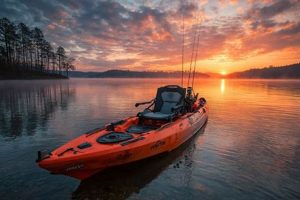
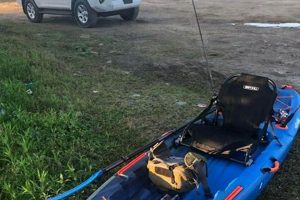
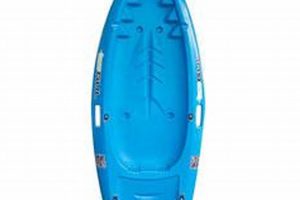
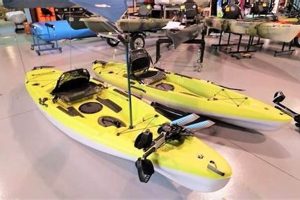
These vessels combine the portability of inflatable crafts with features tailored for angling. Imagine a compact package that unfolds into a stable platform equipped with rod holders, storage compartments, and even anchor systems. This design allows anglers to access remote fishing spots from secluded ponds and small rivers to larger lakes often unreachable by traditional, hard-shell kayaks.
The portability and ease of storage offer significant advantages. Deflated, these boats occupy minimal space, fitting easily in car trunks, closets, or even backpacks, eliminating the need for roof racks or trailers. This convenience opens up angling opportunities for individuals with limited storage or transportation options. Historically, accessing remote fishing locations often required significant logistical planning and investment; these modern designs democratize access to these previously challenging spots.
This discussion will delve deeper into several key aspects, including selecting the right model, essential accessories, safety considerations, proper inflation and deflation techniques, maintenance, and popular fishing locations suited for this type of watercraft.
Tips for Inflatable Fishing Kayaks
Proper use and maintenance ensure optimal performance and longevity of inflatable fishing kayaks. The following tips offer guidance for maximizing the angling experience.
Tip 1: Choose the Right Size and Type: Consider the intended fishing environment (calm lakes, rivers, or open water) and the angler’s weight and gear when selecting a model. Longer kayaks offer better tracking, while wider kayaks provide enhanced stability.
Tip 2: Inflate to the Recommended Pressure: Proper inflation is crucial for performance and safety. Use a pressure gauge to ensure accurate inflation to the manufacturer’s specified PSI. Overinflation can damage the seams, while underinflation compromises stability and tracking.
Tip 3: Utilize Proper Inflation and Deflation Techniques: Follow manufacturer instructions carefully. Ensure valves are closed securely after inflation. Use the appropriate deflation adapter and store the deflated kayak properly to prevent damage.
Tip 4: Invest in Essential Accessories: Consider a high-quality pump, a repair kit, and a comfortable personal flotation device (PFD). Other useful accessories include a dry bag for electronics, a fishing rod holder, and an anchor system.
Tip 5: Prioritize Safety: Always wear a PFD. Check weather conditions before embarking on any fishing trip. Inform someone of your fishing location and expected return time. Carry a whistle or signaling device for emergencies.
Tip 6: Regular Maintenance: Rinse the kayak with fresh water after each use, especially after exposure to saltwater. Allow the kayak to dry completely before storing. Inspect for any damage or wear and tear and address issues promptly.
Tip 7: Practice Proper Paddling Techniques: Efficient paddling conserves energy and enhances maneuverability. Learn basic paddle strokes and practice entering and exiting the kayak safely.
Adhering to these tips will ensure safe and enjoyable fishing excursions, prolonging the life of the inflatable fishing kayak and maximizing its potential on the water.
By understanding these key points, anglers can confidently choose and utilize their inflatable fishing kayak for a successful and rewarding fishing experience.
1. Portability

Portability stands as a defining feature of inflatable fishing kayaks, significantly impacting their appeal and practicality. This characteristic enables access to remote fishing locations previously unreachable with traditional hard-shell kayaks. The following facets explore the components and implications of portability within this context.
- Compact Storage:
Deflated, these kayaks occupy minimal storage space, fitting easily in car trunks, closets, or even backpacks. This eliminates the need for specialized storage solutions like roof racks or trailers, appealing to those with limited storage capacity. For example, an angler living in an apartment can easily store an inflatable kayak without requiring dedicated storage space.
- Ease of Transport:
The lightweight and compact nature simplifies transportation. Carrying the packaged kayak to remote fishing spotswhether a mountain lake or a secluded riverbankbecomes significantly easier. Consider an angler hiking into a remote alpine lake; an inflatable kayak allows access otherwise impossible with a heavier, rigid hull.
- Simplified Launching and Retrieval:
Inflating and deflating on-site streamlines the launching and retrieval process. This eliminates the need for boat ramps or trailers, broadening access to diverse waterways. An angler can easily inflate their kayak on the bank of a river, paddle upstream, and then deflate it for transport back to their vehicle.
- Travel Versatility:
Inflatable kayaks offer greater travel versatility. They can be easily packed for air travel or camping trips, expanding fishing opportunities beyond local waterways. An angler traveling by plane can check their inflatable kayak as luggage, opening up fishing possibilities at their destination.
These facets of portability collectively enhance the accessibility and versatility of inflatable fishing kayaks. By eliminating the logistical constraints of traditional kayaks, they provide a convenient and efficient means of exploring diverse fishing locations, ultimately enriching the angling experience.
2. Stability

Stability represents a critical performance characteristic in inflatable fishing kayaks, directly influencing angler safety and fishing effectiveness. Multiple factors contribute to the stability of these vessels, impacting their suitability for various water conditions and angling styles. Understanding these factors allows for informed decision-making and safer on-water experiences.
Hull design significantly influences stability. Wider beams generally provide greater initial stability, resisting tipping when at rest or under minimal movement. However, wider kayaks can sacrifice maneuverability and tracking performance. Conversely, narrower hulls offer increased speed and maneuverability but compromise initial stability. Anglers fishing in calm waters might prioritize initial stability offered by wider beams, while those navigating rivers or windy conditions might favor the maneuverability of narrower designs. The presence of multiple air chambers also contributes to stability. These chambers provide additional buoyancy and compartmentalization, mitigating the impact of punctures and enhancing overall stability.
Furthermore, kayak material and construction play a crucial role. High-quality, drop-stitch construction enhances rigidity and resists deformation under pressure, contributing to a more stable platform. Lower-quality materials or construction methods can result in flex and instability, compromising angler safety and comfort. Proper inflation pressure is also essential for maintaining optimal stability. Underinflation compromises rigidity and stability, while overinflation can stress seams and lead to premature failure. Anglers should always adhere to manufacturer-recommended inflation pressures for optimal performance and safety. Additional features like inflatable floors and outriggers can further enhance stability, particularly in challenging conditions. These additions provide supplementary buoyancy and increase the kayak’s overall footprint on the water, enhancing stability and reducing the likelihood of capsizing.
Choosing an inflatable fishing kayak with appropriate stability characteristics requires careful consideration of intended use and water conditions. Understanding the interplay between hull design, construction materials, inflation pressure, and additional stability features empowers anglers to make informed decisions, maximizing both safety and fishing effectiveness. Neglecting these factors can compromise safety and hinder angling success, highlighting the critical importance of stability in inflatable fishing kayak selection and utilization.
3. Durability
Durability represents a crucial factor influencing the lifespan and overall value of an inflatable fishing kayak. Material selection, construction techniques, and usage practices significantly impact a kayak’s resistance to punctures, abrasion, and UV degradation. Understanding these elements allows for informed purchasing decisions and promotes responsible kayak ownership.
- Material Selection
Modern inflatable kayaks utilize advanced materials designed for demanding outdoor environments. PVC (Polyvinyl Chloride) and Hypalon are common choices, offering varying degrees of puncture resistance, abrasion resistance, and UV resistance. Heavier-gauge PVC offers enhanced durability compared to lighter-gauge options, though it adds weight. Hypalon, while more expensive, provides superior resistance to abrasion and UV degradation, making it a preferred choice for harsh conditions.
- Construction Techniques
Construction methods significantly influence overall durability. Drop-stitch construction, utilizing thousands of internal threads connecting the top and bottom layers, creates a rigid and durable structure. Multiple air chambers enhance safety and provide redundancy in case of punctures. Reinforced seams and high-frequency welding contribute to leak-proof performance and long-term durability.
- Environmental Factors
Environmental conditions play a crucial role in an inflatable kayak’s lifespan. Exposure to sunlight, saltwater, and extreme temperatures can accelerate material degradation. Proper care, including rinsing with fresh water after use and storing in a cool, dry place, mitigates these effects. Avoiding dragging the kayak across rough surfaces minimizes abrasion and potential punctures.
- User Practices
Responsible usage practices extend the life of an inflatable kayak. Avoiding overloading the kayak prevents excessive stress on seams and materials. Proper inflation and deflation techniques minimize wear and tear on valves and seams. Regular inspections and prompt repairs of any damage, such as punctures or abrasions, prevent further deterioration and ensure continued performance.
Careful consideration of material selection, construction techniques, environmental factors, and user practices contribute significantly to the long-term durability of an inflatable fishing kayak. Prioritizing these elements ensures a sound investment and maximizes the kayak’s useful life, enabling countless fishing adventures.
4. Capacity (Weight)

Weight capacity represents a critical specification for inflatable fishing kayaks, dictating the maximum combined weight of the angler, gear, and any additional cargo the vessel can safely support. Understanding and adhering to this limit is paramount for safety and optimal performance. Exceeding the specified capacity compromises stability, maneuverability, and can lead to potentially dangerous situations on the water. This section explores the various facets of weight capacity and its implications for inflatable fishing kayak usage.
- Understanding Listed Capacity
Manufacturers provide a weight capacity rating for each kayak model. This rating represents the maximum safe load, encompassing the combined weight of the angler, fishing gear, personal belongings, and any other items carried on board. It is crucial to accurately estimate the total weight and select a kayak with a capacity exceeding this estimate. A safety margin is recommended to account for unforeseen circumstances or additional gear.
- Impact on Performance
Operating within the specified weight capacity ensures optimal kayak performance. An overloaded kayak sits lower in the water, increasing drag and reducing maneuverability. This makes paddling more strenuous and reduces responsiveness to changing water conditions. Maintaining a safe margin below the maximum capacity preserves the kayak’s intended performance characteristics.
- Safety Implications
Exceeding the weight capacity compromises stability and increases the risk of capsizing. An overloaded kayak becomes more susceptible to tipping, particularly in rough water or during sudden movements. This poses a serious safety risk, especially in cold water or remote locations. Respecting the weight limit is paramount for safe and enjoyable on-water experiences.
- Selecting the Right Kayak
Choosing a kayak with appropriate weight capacity requires careful consideration of individual needs and intended use. Anglers carrying substantial gear or planning extended trips should prioritize kayaks with higher weight capacities. Conversely, those prioritizing portability and ease of handling might opt for lighter kayaks with lower capacities, ensuring they remain within safe operational limits. Understanding the relationship between weight capacity and intended use is crucial for selecting the right kayak for individual needs.
Weight capacity serves as a fundamental parameter influencing the safety, performance, and suitability of an inflatable fishing kayak for specific applications. Careful consideration of weight requirements and adherence to manufacturer specifications are essential for responsible kayak ownership and enjoyable on-water experiences. Neglecting these considerations can compromise safety and diminish the overall fishing experience, underscoring the importance of understanding weight capacity limitations.
5. Fishing Features

Specialized features distinguish inflatable fishing kayaks from recreational models, enhancing angling effectiveness and overall experience. These features cater specifically to the needs of anglers, facilitating efficient fishing practices and improving comfort during extended outings. Integrated rod holders secure fishing rods, freeing hands for other tasks like paddling, baiting hooks, or landing fish. Multiple rod holders allow anglers to employ diverse fishing techniques simultaneously. Consider a fly fisherman who can keep a second rod rigged with a dry fly while actively nymphing. Similarly, a bass angler can troll with one rod while having another ready for casting to visible structure.
Storage options, including dedicated compartments and bungee systems, securely hold tackle boxes, dry bags, and other essential gear. Well-designed storage keeps equipment organized and accessible, maximizing efficiency and minimizing clutter. Imagine an angler needing quick access to a specific lure without having to rummage through a disorganized pile of gear. Furthermore, integrated mounting points accommodate fish finders, GPS units, and other electronic devices, enhancing navigational capabilities and fish-finding precision. These technologies provide real-time information about water depth, bottom structure, and fish location, significantly improving angling success. For example, an angler can utilize a fish finder to identify submerged drop-offs or locate schools of baitfish, increasing the probability of a successful catch.
These integrated features elevate the inflatable fishing kayak from a simple flotation device to a specialized angling platform. The careful selection and utilization of these features significantly enhance fishing effectiveness and overall enjoyment on the water. While factors like portability and stability contribute to accessibility and safety, it is the dedicated fishing features that truly transform the inflatable kayak into a purpose-built tool for angling success. Understanding the role and application of these features empowers anglers to maximize their time on the water, resulting in a more productive and rewarding fishing experience.
6. Price Range

Price range significantly influences purchasing decisions regarding inflatable fishing kayaks. Understanding the factors affecting price allows for informed evaluation and selection of a kayak that aligns with budget and performance expectations. Various factors contribute to the overall cost, impacting material quality, features, and overall performance. Exploring these factors provides a comprehensive understanding of how price relates to value and long-term satisfaction.
- Material and Construction
Material quality directly impacts price. Kayaks constructed from durable, high-quality materials like heavy-gauge PVC or Hypalon typically command higher prices than those made from less robust materials. Advanced construction techniques, such as drop-stitch construction, also contribute to higher costs due to increased manufacturing complexity. While these higher initial costs might seem daunting, investing in durable materials and construction translates to a longer lifespan, potentially offsetting the initial investment over time. For instance, a kayak made with thicker PVC will likely withstand more abrasion from rocks and logs compared to a thinner, less expensive alternative.
- Features and Accessories
Integrated features significantly influence price. Kayaks equipped with multiple rod holders, ample storage compartments, integrated mounting points for accessories, and advanced seating systems generally come at a premium compared to basic models. Similarly, included accessories such as paddles, pumps, and repair kits contribute to the overall cost. Evaluating the necessity of these features and accessories based on individual fishing styles and needs helps determine their value proposition. An angler prioritizing minimalist fishing might opt for a basic model, while someone seeking enhanced comfort and functionality might justify the higher cost of a feature-rich kayak. For example, an angler frequently fishing in remote locations might value a high-pressure pump for quicker inflation and deflation.
- Size and Capacity
Kayak size and weight capacity influence price. Larger kayaks capable of carrying heavier loads generally cost more due to increased material usage and more complex construction. Similarly, longer kayaks designed for better tracking and speed often come with higher price tags. Balancing size and capacity requirements against budget constraints is essential for selecting a kayak that meets specific needs without unnecessary expense. An angler primarily fishing small ponds might find a shorter, less expensive kayak perfectly adequate, while someone targeting larger bodies of water might require a longer, more stable, and potentially more expensive model.
- Brand and Reputation
Brand reputation and warranty coverage can affect price. Established brands with a history of producing high-quality kayaks often command higher prices. These brands often offer extended warranties and reliable customer support, adding value beyond the initial purchase. While lesser-known brands might offer budget-friendly options, researching their reputation for quality and customer service is crucial before making a purchase. A longer warranty can provide peace of mind and protect against potential manufacturing defects, justifying a higher initial investment in some cases. For example, a well-respected brand known for durable kayaks and excellent customer service might justify a higher price point compared to a less established brand with an unknown track record.
Understanding the interplay of these factors empowers informed decisions, ensuring the selected inflatable fishing kayak aligns with both budgetary constraints and performance expectations. Evaluating the trade-offs between cost, features, and durability allows anglers to maximize their investment and choose a kayak that provides long-term satisfaction on the water. A well-informed purchase decision results in a valuable tool that enhances the fishing experience for years to come.
Frequently Asked Questions
This section addresses common inquiries regarding inflatable fishing kayaks, providing concise and informative responses to facilitate informed decision-making and promote safe and effective kayak usage.
Question 1: How durable are inflatable fishing kayaks compared to hard-shell kayaks?
While hard-shell kayaks generally offer greater inherent durability against sharp objects, modern inflatable kayaks constructed with durable materials like heavy-gauge PVC or Hypalon demonstrate remarkable resistance to punctures and abrasion. Proper care and maintenance ensure comparable lifespans for inflatable models.
Question 2: Are inflatable fishing kayaks stable enough for fishing?
Stability depends on design factors like width, hull shape, and construction. Many inflatable fishing kayaks offer excellent stability, particularly wider models designed specifically for angling. Proper inflation and adherence to weight capacity guidelines ensure optimal stability on the water.
Question 3: How easy are inflatable fishing kayaks to transport and store?
Portability represents a key advantage of inflatable kayaks. Deflated, they pack down compactly, fitting easily in car trunks, closets, or even backpacks. This eliminates the need for roof racks or trailers, facilitating transport and storage.
Question 4: How long does it take to inflate and deflate an inflatable fishing kayak?
Inflation and deflation times vary depending on kayak size and pump type. High-quality pumps can inflate a kayak within minutes. Deflation typically takes even less time. Practice and efficient techniques streamline both processes.
Question 5: What essential accessories are recommended for inflatable fishing kayaks?
Essential accessories include a high-quality pump, a repair kit for addressing punctures, and a personal flotation device (PFD). Other beneficial accessories include a dry bag for electronics, a fishing rod holder, and an anchor system.
Question 6: Can inflatable fishing kayaks be used in saltwater environments?
Many inflatable fishing kayaks are designed for both freshwater and saltwater use. However, rinsing the kayak thoroughly with fresh water after each use in saltwater is crucial to prevent corrosion and extend its lifespan. Check manufacturer recommendations regarding saltwater compatibility for specific models.
Addressing these common concerns clarifies the capabilities and limitations of inflatable fishing kayaks, empowering potential users to make informed decisions based on individual needs and preferences. Thorough research and consideration of these factors contribute to a safe and rewarding on-water experience.
The following sections delve deeper into specific aspects of inflatable fishing kayak selection, usage, and maintenance, providing comprehensive guidance for prospective buyers and experienced anglers alike.
Conclusion
Inflatable fishing kayaks offer a compelling blend of portability, performance, and affordability, democratizing access to diverse fishing locations. From compact storage and ease of transport to specialized features like rod holders and integrated mounting points, these vessels cater specifically to angling needs. Understanding factors such as material durability, weight capacity, stability considerations, and price variations empowers informed purchasing decisions, ensuring alignment between individual needs and kayak capabilities. Proper maintenance and adherence to safety guidelines maximize lifespan and ensure safe, enjoyable on-water experiences.
The continued evolution of materials, construction techniques, and design innovations promises further advancements in inflatable fishing kayak technology. As these advancements unfold, anglers can anticipate enhanced performance, increased durability, and expanded possibilities for exploring the world’s waterways. The future of inflatable fishing kayaks points towards greater accessibility, enhanced versatility, and continued growth in popularity within the angling community.