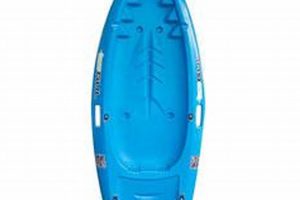
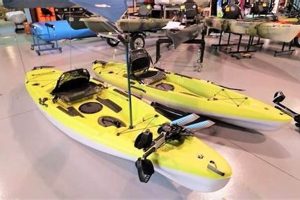
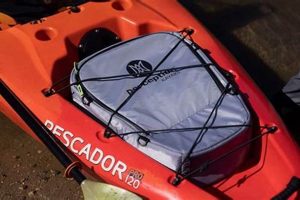
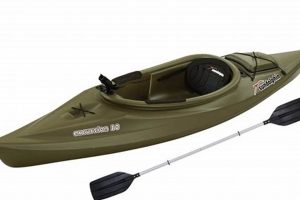
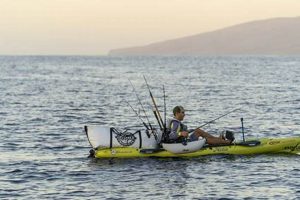
The upper surface area of a fishing kayak, specifically designed for angling activities, provides a stable platform for anglers. This area is often customized with features like rod holders, gear tracks, and fish finders. A well-equipped example might include recessed tackle storage and a standing platform for improved casting and sight fishing.
A properly outfitted platform contributes significantly to angler success and safety. It allows for efficient organization of equipment, quick access to essential tools, and improved stability. Historically, anglers adapted general-purpose kayaks for fishing. However, the development of specialized platforms has revolutionized the sport, enabling greater comfort, efficiency, and ultimately, a more productive and enjoyable fishing experience.
This discussion will further explore key features, design considerations, and customization options for optimizing a fishing kayak’s workspace for diverse angling styles and environments.
Tips for Optimizing a Kayak Fishing Platform
An optimized platform enhances fishing efficiency and safety. Careful consideration of layout and equipment placement contributes significantly to a successful and enjoyable experience.
Tip 1: Prioritize Stability: A stable platform is paramount. Consider kayak width and hull design for balance, particularly when standing or reaching.
Tip 2: Strategic Gear Placement: Frequently used items like pliers, knives, and lures should be within easy reach. Less frequently accessed gear can be stored in hatches or under-deck storage.
Tip 3: Rod Holder Selection: Choose rod holders suited to the target species and fishing style. Flush-mount holders maximize deck space while adjustable holders offer versatility.
Tip 4: Fish Finder Integration: Integrating a fish finder into the platform provides crucial underwater insights. Ensure transducer placement allows for optimal readings without interfering with paddling.
Tip 5: Deck Padding: Consider adding padding for comfort and to reduce noise from gear movement. Select non-slip materials for improved footing.
Tip 6: Regularly Evaluate and Adjust: Fishing styles and target species evolve. Regularly reassessing the platform’s layout and making necessary adjustments ensures continued efficiency.
Tip 7: Safety First: Always prioritize safety. Ensure proper weight distribution and secure all gear to prevent loss or entanglement. Wear a personal flotation device and carry essential safety equipment.
Implementing these strategies creates a personalized, efficient, and safe platform, contributing to a more productive and enjoyable fishing experience.
By optimizing the platform, anglers can focus on the essential aspects of fishing strategy, technique, and connection with the environment.
1. Stability

Stability is a critical factor influencing the safety and effectiveness of a kayak fishing deck. A stable platform allows anglers to focus on fishing techniques rather than maintaining balance, contributing significantly to a successful and enjoyable experience. This characteristic is determined by several interconnected factors related to the deck and hull design.
- Center of Gravity
A lower center of gravity enhances stability. Deck design influences weight distribution. Lowering the angler’s position relative to the waterline improves stability, particularly important when standing to cast or sight fish. Kayak hull design also plays a crucial role. Wider, flatter hulls generally offer greater initial stability than narrower, V-shaped hulls, though they may compromise maneuverability.
- Hull Design
Hull shape significantly impacts stability. Wider hulls provide greater initial stability, beneficial for calm waters and standing. Longer, narrower hulls offer better tracking and speed but may feel less stable initially. Specialized hull designs like pontoon hulls offer exceptional stability but may sacrifice maneuverability. Choosing the right hull depends on the intended fishing environment and angler preferences.
- Weight Distribution
Proper weight distribution is essential for maintaining balance. Evenly distributing gear across the deck minimizes rocking and tipping. Securing heavier items lower in the hull lowers the center of gravity, enhancing stability. Uneven weight distribution can compromise stability, making the kayak more susceptible to capsizing, particularly in rough conditions or when making sudden movements.
- Deck Features
Deck features can impact stability, both positively and negatively. Raised platforms for standing can enhance visibility but may also raise the center of gravity. Outriggers or stabilizers can significantly improve stability, especially for smaller kayaks or when fishing in challenging conditions. Adding accessories to the deck impacts weight distribution and should be considered when evaluating overall stability.
These facets of stability directly impact an angler’s ability to fish effectively and safely from a kayak. Prioritizing stability in deck and hull design ensures a comfortable and secure platform, maximizing the fishing experience and minimizing the risk of accidents.
2. Customization
Customization is integral to optimizing a kayak fishing deck for individual needs and fishing styles. Adapting the platform to specific requirements enhances efficiency, comfort, and overall fishing success. Modifying the deck layout and integrating specialized accessories allows anglers to tailor their kayaks to specific fishing techniques and target species.
- Rod Holders
Rod holders are essential for securing rods while paddling, trolling, or fighting fish. Various types exist, including flush-mount, adjustable, and rotating holders. Selecting the appropriate type and placement depends on the fishing style and target species. For example, trolling requires sturdy rod holders positioned for optimal line spread, while sight fishing benefits from easily accessible holders near the angler’s position. Proper rod holder placement enhances fishing efficiency and prevents rod entanglement.
- Gear Tracks
Gear tracks provide versatile mounting points for accessories like fish finders, GPS units, cameras, and rod holders. These tracks allow for customized placement and easy adjustment of equipment, optimizing the deck layout for different fishing scenarios. Anglers can quickly reconfigure their setup based on the specific needs of each trip, maximizing versatility and efficiency.
- Storage Solutions
Storage solutions are crucial for organizing tackle, tools, and safety equipment. Options range from built-in compartments and hatches to aftermarket bags and crates. Customizing storage arrangements keeps essential items readily accessible and maximizes deck space. Dry storage compartments protect sensitive electronics and personal belongings from water damage, contributing to a safe and organized fishing experience.
- Electronics Integration
Integrating electronics like fish finders, GPS units, and communication devices enhances situational awareness and fishing effectiveness. Custom mounts and wiring solutions allow for seamless integration of these essential tools into the deck layout. Positioning electronics for optimal visibility and accessibility improves angler performance and safety.
These customization options allow anglers to create a personalized and efficient fishing platform tailored to their specific needs. A well-customized kayak fishing deck enhances comfort, improves organization, and ultimately increases the chances of a successful and enjoyable fishing trip. The ability to adapt the deck layout to specific fishing techniques and target species maximizes versatility and ensures the angler is well-equipped for any situation.
3. Accessibility

Accessibility on a kayak fishing deck directly impacts angler efficiency and safety. Efficient access to essential gear, tools, and onboard systems contributes significantly to a productive and enjoyable fishing experience. A well-designed deck layout prioritizes ease of reach and minimizes obstructions, allowing anglers to focus on fishing rather than struggling with equipment.
- Reach and Positioning
Essential items, such as pliers, knives, and frequently used lures, should be positioned within easy reach from the seated or standing position. This minimizes unnecessary movement and reduces the risk of losing balance. Proper placement of rod holders, tackle storage, and electronic devices contributes to an efficient and streamlined fishing experience. For example, placing pliers on a retractable leash attached to the angler’s personal flotation device ensures quick access in critical moments.
- Deck Layout and Obstructions
A clutter-free deck maximizes usable space and improves safety. Minimizing obstructions and ensuring clear pathways for movement reduces tripping hazards and facilitates quick access to gear. Careful consideration of equipment placement and storage solutions contributes to an organized and efficient platform. For example, recessed rod holders and flush-mounted electronics minimize tripping hazards and maximize deck space.
- Physical Limitations and Adaptations
Anglers with physical limitations may require specialized adaptations to enhance accessibility. Adjustable seating systems, modified rod holders, and adaptive paddling equipment can improve comfort and functionality. Considering diverse physical needs ensures inclusivity and allows a wider range of individuals to enjoy kayak fishing. For instance, adjustable foot braces accommodate different leg lengths, improving paddling efficiency and comfort.
- Integration with Other Deck Features
Accessibility considerations should be integrated into the overall deck design. Placement of rod holders, storage compartments, and electronics should complement each other and contribute to a streamlined workflow. Integrating accessibility features seamlessly into the deck layout enhances both functionality and aesthetics. For example, incorporating storage compartments within easy reach of a seated position reduces the need to reach or bend excessively.
Prioritizing accessibility on a kayak fishing deck optimizes the angling experience. A well-designed, accessible platform allows anglers to focus on fishing, enhancing efficiency, safety, and overall enjoyment on the water.
4. Organization

Effective organization on a kayak fishing deck is crucial for maximizing efficiency and safety. A well-organized platform allows anglers to quickly locate and deploy essential gear, minimizing wasted time and effort. This contributes significantly to a more productive and enjoyable fishing experience by reducing clutter and streamlining workflow.
- Storage Systems
Strategic storage solutions are essential for maintaining order on a kayak fishing deck. Utilizing waterproof compartments, tackle boxes, and specialized storage bags keeps gear secure, dry, and readily accessible. For instance, storing lures in labeled compartments allows for quick retrieval of the desired lure without disrupting other items. Efficient storage systems maximize deck space and minimize clutter, enhancing both efficiency and safety.
- Equipment Placement
Thoughtful placement of frequently used items, such as pliers, knives, and line cutters, is crucial for optimizing workflow. Positioning these items within easy reach minimizes unnecessary movement and reduces the risk of losing balance. For example, attaching pliers to a retractable leash secured to the deck ensures they are readily available when needed. Strategic equipment placement contributes to a streamlined and efficient fishing experience.
- Deck Layout Planning
Careful planning of the deck layout maximizes space utilization and improves accessibility. Mapping out the placement of rod holders, storage compartments, and other accessories ensures a functional and efficient workspace. For instance, positioning rod holders near the angler’s seat allows for easy access and reduces the need for excessive reaching. A well-planned deck layout streamlines movement and optimizes workflow.
- Regular Maintenance and Decluttering
Regular maintenance and decluttering are essential for maintaining an organized deck. Removing unnecessary items, cleaning storage compartments, and inspecting gear for damage ensures a safe and efficient workspace. For example, periodically removing unused lures and tackle prevents clutter and maximizes storage space. Regular maintenance contributes to a more organized and enjoyable fishing experience.
These organizational strategies contribute significantly to a more efficient and enjoyable kayak fishing experience. A well-organized deck allows anglers to focus on fishing rather than managing gear, maximizing their time on the water and increasing their chances of success. By prioritizing organization, anglers enhance both safety and efficiency, contributing to a more rewarding and productive fishing experience.
5. Material

Material selection significantly influences the performance, durability, and longevity of a kayak fishing deck. The deck material must withstand constant exposure to sunlight, water, and physical stresses. Choosing appropriate materials ensures the deck remains functional and safe throughout its lifespan. Understanding the properties of various materials allows informed decisions based on individual needs and fishing environments.
- Polyethylene (PE)
Polyethylene is a common material due to its affordability, durability, and impact resistance. High-density polyethylene (HDPE) offers increased rigidity and UV resistance, making it suitable for demanding conditions. Rotational molding creates a seamless, one-piece hull and deck, enhancing durability. However, HDPE can be heavier than other materials and more susceptible to scratches. Linear low-density polyethylene (LLDPE) provides greater impact resistance and flexibility but may be less rigid than HDPE. This material is often used in recreational kayaks due to its balance of cost and performance.
- Thermoformed Composites
Thermoformed composites utilize multiple layers of materials like ABS, ASA, and acrylic, bonded together under heat and pressure. These materials offer a higher strength-to-weight ratio than polyethylene, resulting in lighter and more responsive kayaks. They also exhibit excellent UV resistance and maintain color well over time. Thermoforming allows for intricate hull designs and precise shaping of the deck. However, these materials can be more expensive than polyethylene and potentially more susceptible to cracking under extreme impact.
- Fiberglass
Fiberglass kayaks combine woven fiberglass cloth with a resin matrix, creating a strong, lightweight, and stiff structure. This material allows for precise shaping and customization of the deck layout. Fiberglass kayaks offer excellent performance and responsiveness, making them suitable for a variety of fishing styles. However, they require more maintenance than polyethylene and can be more susceptible to damage from impacts. They also tend to be more expensive than polyethylene kayaks.
- Carbon Fiber
Carbon fiber is a premium material known for its exceptional strength-to-weight ratio and stiffness. Carbon fiber kayaks offer superior performance and responsiveness, making them ideal for demanding anglers. However, they are significantly more expensive than other materials and require careful handling to prevent damage. The lightweight nature and stiffness of carbon fiber enhance speed and maneuverability, making them popular among tournament anglers. The material’s high cost often limits its use to high-performance applications.
The choice of deck material directly impacts the kayak’s performance, durability, and cost. Matching the material to individual fishing needs and budget ensures a suitable platform for a safe and enjoyable experience. Considering factors like weight, stiffness, impact resistance, and UV resistance allows anglers to make informed decisions that align with their specific requirements and intended use.
6. Space Utilization

Effective space utilization is paramount in kayak fishing deck design. Limited surface area necessitates careful consideration of layout and equipment placement to maximize functionality without compromising stability or maneuverability. Efficient space utilization directly impacts angler efficiency and safety, enabling quick access to essential gear and minimizing clutter. For example, integrating flush-mounted rod holders and recessed tackle storage maximizes usable deck space while maintaining a clean, uncluttered platform.
Optimizing space utilization requires a strategic approach to equipment selection and placement. Prioritizing essential gear and minimizing superfluous items reduces clutter and improves workflow. Multi-functional tools and modular storage systems further enhance space efficiency. For instance, a combination knife-pliers tool reduces the need for two separate items, saving valuable space. Similarly, modular tackle boxes allow anglers to customize storage configurations based on specific needs, maximizing space efficiency and organization. Careful consideration of angler ergonomics also contributes to effective space utilization. Positioning frequently used items within easy reach minimizes unnecessary movement and improves overall efficiency. For example, locating rod holders and tackle storage within arm’s reach of the seated position reduces the need for excessive stretching or bending, improving both comfort and functionality.
Maximizing space utilization on a kayak fishing deck significantly enhances the overall angling experience. An efficiently designed deck contributes to a more organized, productive, and ultimately safer fishing environment. Strategic planning and careful consideration of equipment placement are crucial for optimizing limited deck space and ensuring a comfortable and efficient fishing platform. Challenges related to limited space can be addressed through careful planning, innovative storage solutions, and a focus on essential gear. By prioritizing space utilization, anglers can enhance their overall fishing experience, maximizing efficiency, comfort, and safety on the water.
7. Safety Integration
Safety integration within a kayak fishing deck design is paramount for mitigating risks inherent in the sport. A secure and well-planned deck contributes significantly to angler well-being and facilitates a focused fishing experience. Integrating safety features seamlessly into the deck layout enhances both functionality and angler confidence.
- Personal Flotation Device (PFD) Accessibility
Ready access to a PFD is crucial. Deck designs should accommodate comfortable wearing and quick retrieval of a PFD without hindering movement. A PFD’s accessibility influences its consistent use, a critical factor in angler safety. For example, a dedicated PFD pouch or attachment point on the deck ensures it remains readily available in case of an emergency.
- Deck Traction and Stability
Non-slip surfaces and strategically placed deck padding enhance stability, reducing the risk of slips and falls, particularly in wet conditions. A stable footing is crucial for casting, retrieving, and landing fish safely. For example, textured deck surfaces or strategically placed grip pads improve traction and minimize the risk of accidents. Secure footing also allows for more confident movement on the kayak, particularly in challenging conditions.
- Equipment Leashes and Securing Points
Leashes and designated securing points prevent loss of essential gear, such as paddles, rods, and tools, in the event of a capsize. Securing equipment also minimizes clutter and enhances deck organization. For example, attaching paddles to the deck with leashes prevents loss in rough water, while securing rods to rod holders protects them from damage and prevents entanglement. Secure gear contributes to a safer and more organized fishing experience.
- Visibility and Signaling Devices
Integrating high-visibility elements, like reflective tape or lights, and readily accessible signaling devices, such as whistles or flares, enhances angler visibility in low-light conditions or emergencies. Enhanced visibility increases the likelihood of being seen by other boaters or rescue personnel, improving safety in various situations. For example, attaching reflective tape to the kayak’s hull and deck improves visibility at night, while a readily accessible whistle allows for signaling in case of distress.
These integrated safety features contribute significantly to a secure and productive kayak fishing experience. A well-designed deck prioritizes safety without compromising functionality, allowing anglers to focus on fishing with confidence, knowing that essential safety measures are in place. Prioritizing safety integration transforms the kayak fishing deck from simply a platform into a secure and functional workspace that enhances both angler confidence and overall fishing enjoyment.
Frequently Asked Questions about Kayak Fishing Decks
This section addresses common inquiries regarding kayak fishing decks, providing concise and informative responses to assist anglers in making informed decisions.
Question 1: What are the primary advantages of a specialized fishing kayak deck compared to a standard kayak deck?
Specialized fishing kayak decks offer enhanced stability, integrated features like rod holders and gear tracks, and improved storage solutions tailored to angling needs. These features enhance fishing efficiency, comfort, and safety compared to standard kayak decks.
Question 2: How does deck material influence performance and durability?
Deck material significantly impacts kayak performance and longevity. Polyethylene offers affordability and durability, while composites provide a lighter, stiffer platform. Fiberglass and carbon fiber offer premium performance but require greater investment and maintenance.
Question 3: What factors should be considered when choosing a kayak fishing deck layout?
Key considerations include fishing style, target species, preferred casting methods (sitting or standing), and required gear storage. Analyzing these factors helps determine the optimal layout for individual needs and maximizes fishing efficiency.
Question 4: How can deck clutter be minimized to improve safety and efficiency?
Strategic storage solutions, such as waterproof compartments and tackle boxes, coupled with thoughtful equipment placement, minimize clutter and improve workflow. Regular deck maintenance and removal of unnecessary items further enhance organization and safety.
Question 5: What safety features should be integrated into a kayak fishing deck?
Essential safety features include readily accessible personal flotation devices (PFDs), non-slip deck surfaces, equipment leashes, and high-visibility elements or signaling devices. These features mitigate risks and enhance angler safety on the water.
Question 6: How does proper weight distribution affect stability on a kayak fishing deck?
Evenly distributing weight across the deck and securing heavier items lower in the hull improves stability. Uneven weight distribution can compromise balance and increase the risk of capsizing, especially during movement or in rough conditions.
Understanding these key aspects of kayak fishing decks enables informed decisions that contribute to a safer, more efficient, and ultimately more enjoyable fishing experience. Prioritizing stability, organization, and safety integration enhances overall performance and angler confidence on the water.
The next section will delve into specific customization options for kayak fishing decks, offering practical advice and guidance for optimizing your platform.
Kayak Fishing Deck
This exploration has highlighted the multifaceted nature of the kayak fishing deck, emphasizing its crucial role in angler safety, efficiency, and overall fishing success. From material selection and layout optimization to safety integration and customization options, the deck’s design and configuration significantly influence the fishing experience. Key considerations include stability, accessibility, organization, and the strategic integration of essential gear and safety features.
A well-designed platform transforms the kayak into a personalized, highly effective fishing vessel. Continued advancements in materials, technology, and design promise further enhancements to kayak fishing decks, enabling anglers to push the boundaries of the sport while prioritizing safety and maximizing their connection with the aquatic environment.