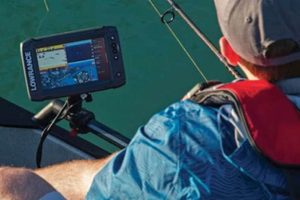
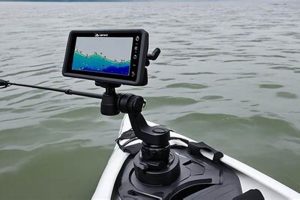
A secure and stable platform designed specifically for attaching sonar devices to small watercraft facilitates the use of electronic fish-finding technology. These platforms, often adjustable and durable to withstand aquatic conditions, allow anglers to position their sonar displays for optimal viewing while keeping the device safe and operational. For example, an adjustable arm mount can be affixed to the kayak and hold the fish finder display, allowing for adjustments in viewing angle and reach.
Equipping a kayak with a stable sonar platform significantly enhances the angling experience. Accurate fish finding improves catch rates and allows for more strategic angling. Secure mounting also protects valuable electronic equipment from damage due to water exposure or impacts. Historically, anglers relied on experience and intuition to locate fish. Modern electronics provide a significant advantage, and the ability to securely mount these devices on kayaks opens up a world of fishing possibilities in previously inaccessible areas.
The following sections will explore various aspects of selecting and using these specialized mounting systems, including considerations for different kayak types, specific device compatibility, installation best practices, and popular options available on the market.
Tips for Selecting and Installing Fish Finder Mounts
Choosing and installing a fish finder mount requires careful consideration to ensure optimal performance and longevity of the equipment. The following tips offer guidance for a successful installation.
Tip 1: Compatibility is Key: Verify compatibility between the chosen mount, the specific fish finder model, and the kayak. Manufacturers often provide compatibility charts or lists. Using incompatible components can lead to instability and potential damage.
Tip 2: Consider Kayak Type: Different kayaks require different mounting solutions. Sit-on-top kayaks offer more flexibility, while sit-inside kayaks may require specialized mounts or adapters.
Tip 3: Prioritize Stability and Adjustability: Opt for mounts that provide a stable platform for the fish finder, minimizing vibration and maximizing clarity. Adjustability allows for personalized viewing angles.
Tip 4: Material Matters: Select mounts constructed from durable, marine-grade materials to withstand harsh aquatic environments. Stainless steel and high-impact plastics are common choices.
Tip 5: Plan Cable Routing: Carefully plan the transducer cable route to avoid interference with paddling and to protect the cable from damage. Secure cables with clips or ties.
Tip 6: Use Proper Installation Techniques: Follow manufacturer instructions precisely during installation. Ensure all screws and bolts are tightened securely to prevent movement.
Tip 7: Consider Power Source Proximity: Position the fish finder mount within reach of the power source, whether it’s a battery or a powered kayak system. This simplifies wiring and ensures easy access.
Tip 8: Test Before Full Installation: Before permanently affixing the mount, conduct a test fit with the fish finder to ensure proper positioning and functionality.
By following these guidelines, anglers can ensure a stable, secure, and functional fish finder setup, enhancing their on-the-water experience.
These tips offer a strong foundation for selecting and installing a fish finder mount. The following section will discuss specific mounting options and provide further guidance.
1. Stability

A stable mounting platform is paramount for effective fish finder operation, particularly in the dynamic environment of a kayak. A stable mount ensures accurate sonar readings by minimizing vibrations and maintaining consistent transducer orientation. Without stability, the fish finder’s performance is compromised, leading to inaccurate readings and a diminished fishing experience.
- Minimized Vibration
Vibration, often caused by paddling or water movement, significantly impacts sonar readings. A stable mount effectively dampens these vibrations, allowing the transducer to send and receive clear signals. For example, a rigid mount constructed from robust materials minimizes transducer bounce, resulting in a sharper, more consistent sonar image. This clear image is crucial for accurate fish identification and bottom structure analysis.
- Consistent Transducer Orientation
Maintaining the transducer’s intended orientation is essential for accurate depth readings and bottom tracking. A stable mount prevents unwanted movement or rotation of the transducer, ensuring consistent data acquisition. For instance, a well-designed mount will secure the transducer firmly, preventing it from tilting or swiveling due to water pressure or kayak movement. This consistent orientation ensures accurate depth readings even in challenging conditions.
- Enhanced User Experience
A stable mount improves the overall user experience by providing a clear and reliable display. Reduced vibration and consistent transducer orientation contribute to a stable sonar image, allowing anglers to focus on interpreting the data rather than battling a shaky screen. A stable platform also improves the longevity of the fish finder by reducing stress on the device and its components.
- Improved Safety
A stable mount contributes to safety by reducing the risk of equipment damage or loss. A secure mounting system prevents the fish finder from detaching during use, protecting valuable electronics from water damage or impact. This is particularly important in rough water conditions where a loose fish finder could pose a safety hazard.
Ultimately, stability is a fundamental requirement for a successful kayak fishing setup. A stable mount ensures optimal fish finder performance, enhancing the angling experience and contributing to overall safety. Choosing a mount specifically designed for kayak use, with features that prioritize stability, is a critical investment for any serious angler.
2. Durability
Durability is a critical factor in selecting a mount for electronic devices used in kayak fishing. Kayak environments subject equipment to constant stress from water exposure, UV radiation, and physical impacts. A durable mount ensures the fish finder remains secure and functional, maximizing its lifespan and protecting the investment. A mount constructed from inferior materials may corrode, crack, or break, leading to equipment failure and potential safety hazards. For example, a mount made from marine-grade stainless steel or high-impact plastic resists corrosion and withstands impacts, ensuring long-term reliability in harsh marine environments. Conversely, a mount made from less durable materials may fail prematurely, requiring frequent replacements and potentially jeopardizing valuable electronic equipment.
The practical significance of durability extends beyond mere longevity. A durable mount provides peace of mind, allowing anglers to focus on fishing rather than worrying about equipment failure. A robust mount withstands the rigors of repeated use and exposure to the elements, ensuring consistent performance and minimizing the risk of losing or damaging the fish finder. Furthermore, a durable mount contributes to safety by ensuring the fish finder remains securely attached to the kayak, even in challenging conditions. This prevents the device from becoming a projectile in the event of a capsize or collision, reducing the risk of injury to the angler.
Choosing a durable fish finder mount is an essential investment for any serious kayak angler. While initial costs may be higher for robust materials and construction, the long-term benefits of reliability, safety, and peace of mind far outweigh the expense. Careful consideration of materials, construction, and manufacturer reputation ensures a durable and dependable mounting solution that enhances the fishing experience and protects valuable electronics.
3. Compatibility
Compatibility is paramount when selecting a mount for a Garmin fish finder intended for kayak use. This involves ensuring compatibility not only between the mount and the specific Garmin fish finder model but also with the kayak itself. Using an incompatible mount can lead to instability, damage to the fish finder, and a compromised user experience. For instance, a mount designed for a larger, heavier fish finder might not provide adequate support for a smaller, lighter model, leading to excessive vibration and inaccurate readings. Conversely, attempting to use a mount designed for a different brand of fish finder might not align with the Garmin device’s mounting points, resulting in a precarious and potentially damaging setup.
Kayak compatibility is equally crucial. Different kayaks have varying mounting points and configurations. Some kayaks offer integrated track systems, while others may require specialized adapters or mounting plates. Selecting a mount that is not compatible with the kayak’s design can necessitate modifications, compromise stability, and even damage the kayak’s structure. For example, attempting to force a mount onto an incompatible track system can damage the tracks or the mount itself. Similarly, drilling holes in the kayak to accommodate a non-compatible mount can compromise the kayak’s structural integrity and void any warranties.
Understanding compatibility requirements ensures a secure, functional, and safe fish finder setup. Consulting compatibility charts provided by mount manufacturers and referencing the specific Garmin fish finder model’s specifications are crucial steps in the selection process. This careful consideration minimizes the risk of compatibility issues and maximizes the fish finder’s performance and lifespan. Ultimately, prioritizing compatibility ensures a seamless integration of the fish finder into the kayak fishing system, enhancing the angling experience and contributing to a more productive and enjoyable time on the water.
4. Adjustability
Adjustability in a Garmin fish finder mount is crucial for optimizing viewing angles and user comfort, directly impacting the effectiveness and enjoyment of kayak fishing. A fixed mount restricts viewing options, potentially leading to glare, neck strain, and difficulty interpreting the display. An adjustable mount, however, allows anglers to customize the fish finder’s position to suit individual preferences and varying light conditions, maximizing visibility and usability.
- Viewing Angle Optimization
Optimal viewing angles minimize glare from sunlight or other light sources, ensuring clear visibility of the fish finder’s display. An adjustable mount allows anglers to tilt and rotate the fish finder to eliminate glare and maintain optimal screen visibility regardless of the sun’s position or other environmental factors. This is particularly important in bright, sunny conditions where glare can render a fixed-position screen unreadable.
- User Comfort and Ergonomics
Adjustability contributes significantly to user comfort, reducing strain on the neck, back, and eyes. An adjustable mount allows anglers to position the fish finder at a comfortable viewing distance and angle, reducing the need for awkward postures or prolonged straining. This is especially important during long fishing trips where sustained discomfort can detract from the overall experience. A comfortable angler is a more focused and effective angler.
- Adaptability to Different Kayaks and Users
Kayaks vary in design and layout, and anglers differ in height and preferences. An adjustable mount accommodates these variations, allowing for customized positioning based on individual needs and the specific kayak setup. For instance, a taller angler in a sit-on-top kayak might prefer a higher mounting position, while a shorter angler in a sit-inside kayak might require a lower and closer setup. Adjustability provides the flexibility to accommodate these diverse requirements.
- Enhanced Safety and Functionality
Adjustability can improve safety by allowing anglers to position the fish finder within easy reach, minimizing the need to lean or reach awkwardly. This reduces the risk of losing balance and capsizing, particularly in challenging conditions. Furthermore, adjustability allows for quick adjustments to accommodate changing conditions or fishing techniques. For example, an angler might reposition the fish finder for optimal viewing while trolling versus casting.
In conclusion, adjustability is a key feature to consider when selecting a Garmin fish finder mount for a kayak. It enhances user comfort, optimizes viewing angles, accommodates various kayak and user configurations, and contributes to overall safety. By prioritizing adjustability, anglers can maximize the effectiveness of their fish finder and enhance their overall fishing experience.
5. Installation Ease

Simplified installation procedures are essential for a positive user experience with a Garmin fish finder mount for kayaks. Complex installations requiring specialized tools or extensive modifications can lead to frustration, improper setup, and potential damage to the kayak or the electronics. A well-designed mount should prioritize ease of installation, allowing for quick and straightforward setup without compromising stability or functionality. For example, a mount utilizing a readily available track system requires minimal tools and effort for installation, compared to a mount necessitating drilling into the kayak hull. This ease of installation translates to more time spent fishing and less time wrestling with complex mounting hardware. Furthermore, simplified installation reduces the risk of errors that could compromise the mount’s stability or damage the kayak, ensuring a secure and reliable platform for the fish finder.
The practical significance of easy installation extends beyond initial setup. A mount that is easy to install is also typically easy to remove or adjust, providing flexibility for different fishing scenarios or kayak configurations. This adaptability is particularly valuable for anglers who frequently change locations or fishing styles, or who share their kayak with others. A mount that can be quickly removed also facilitates storage and transport, protecting the fish finder and preventing damage during off-the-water handling. Moreover, simple installation procedures empower anglers to maintain their own equipment, reducing reliance on professional installers and saving time and expense.
In summary, ease of installation is a crucial consideration when selecting a Garmin fish finder mount for a kayak. It directly influences user satisfaction, setup efficiency, and long-term usability. Prioritizing mounts with intuitive designs and straightforward installation procedures contributes to a more enjoyable and productive kayak fishing experience, allowing anglers to focus on what matters most: finding and catching fish. Choosing a mount that aligns with the angler’s technical skills and the kayak’s specific features ensures a secure, functional, and hassle-free installation process.
Frequently Asked Questions
This section addresses common inquiries regarding selecting and utilizing specialized mounting systems for sonar devices on kayaks.
Question 1: What materials are best suited for kayak fish finder mounts?
Marine-grade materials, such as stainless steel and high-impact plastics, are recommended due to their corrosion resistance and durability in harsh aquatic environments. These materials withstand prolonged exposure to saltwater, UV radiation, and physical impacts, ensuring the mount’s longevity and the fish finder’s security.
Question 2: Are universal fish finder mounts suitable for all Garmin models?
While some mounts are designed for universal compatibility, it’s crucial to verify compatibility between the specific mount, the Garmin fish finder model, and the kayak itself. Using an incompatible mount can compromise stability and potentially damage the device. Consulting manufacturer specifications is recommended.
Question 3: How does kayak type influence mount selection?
Kayak design significantly influences mount selection. Sit-on-top kayaks offer greater flexibility in mounting locations, while sit-inside kayaks may necessitate specialized mounts or adapters. The kayak’s hull material and available mounting points should be considered.
Question 4: What are the key considerations for stable mount installation?
Stability is paramount. Selecting a rigid mount constructed from durable materials minimizes vibration and ensures consistent transducer orientation. Proper installation, following manufacturer guidelines, and ensuring secure attachment points are critical for maximizing stability.
Question 5: How can transducer cable interference be minimized during installation?
Careful cable routing is essential. The transducer cable should be routed away from paddling areas and secured with clips or ties to prevent entanglement or damage. Planning the cable route before installation helps avoid potential interference.
Question 6: What are the long-term maintenance requirements for kayak fish finder mounts?
Regular inspection and cleaning of the mount are recommended to ensure continued performance and longevity. Checking for loose screws, corrosion, or signs of wear and tear can prevent potential problems and extend the lifespan of the mount. Rinsing the mount with fresh water after each use helps remove salt and debris.
Careful consideration of these frequently asked questions assists in informed decision-making regarding the selection, installation, and maintenance of kayak fish finder mounts, contributing to a more productive and enjoyable fishing experience.
The next section explores popular mounting options and provides further guidance on selecting the ideal setup for specific needs and kayak configurations.
Conclusion
Effective integration of electronics significantly enhances kayak fishing. Careful selection of a robust and compatible mounting system ensures optimal performance and longevity of Garmin fish finders in demanding aquatic environments. Prioritizing stability, durability, compatibility, adjustability, and ease of installation ensures a secure, functional, and user-friendly setup. Strategic cable management and adherence to best practices during installation maximize the system’s effectiveness and minimize potential issues. Regular maintenance and inspection contribute to long-term reliability and uninterrupted performance.
Investing in a suitable mounting solution empowers anglers to fully leverage the capabilities of their Garmin fish finders, ultimately leading to a more informed, productive, and enjoyable kayak fishing experience. Understanding the nuances of these specialized mounting systems allows for strategic decision-making, ensuring seamless integration of technology and maximizing on-the-water success. This knowledge translates to a more enriching and rewarding pursuit of angling excellence.