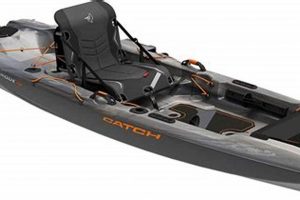
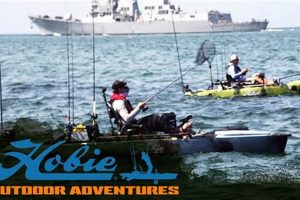
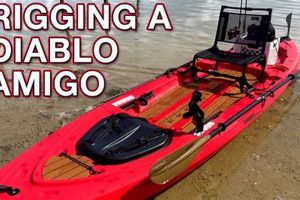
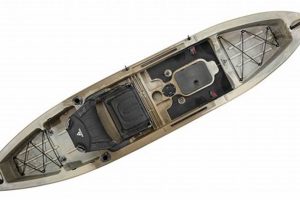
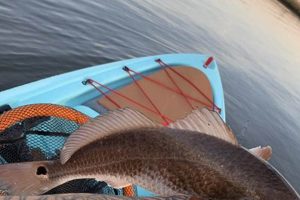
A small, maneuverable vessel designed specifically for angling in freshwater environments where the esocid fish species thrives is a popular choice among enthusiasts. These specialized watercraft offer stability and features tailored to the pursuit of this predatory fish, often including rod holders, storage compartments for tackle and gear, and comfortable seating arrangements suitable for extended periods on the water. Specific models are often chosen for their adaptability to various water conditions, from calm lakes to slow-moving rivers.
The advantage of such specialized equipment lies in its ability to access shallow, weedy areas often favored by the target species, providing anglers with a distinct advantage over shore fishing or larger, less agile boats. This targeted design allows for stealthy approaches and precise lure presentations, crucial for enticing wary fish. Historically, the evolution of fishing watercraft has mirrored the pursuit of efficiency and effectiveness in angling. Purpose-built designs like this represent a culmination of these advancements, offering a dedicated platform for a specific fishing style and target species.
Further exploration of specific features, popular models, and techniques associated with this type of angling equipment will enhance understanding of its role in modern fishing practices. Discussions surrounding material selection, propulsion systems, and accessory integration offer valuable insights for both novice and experienced anglers.
Tips for Effective Pike Fishing from a Kayak
Successfully targeting pike from a kayak requires a combination of appropriate equipment selection, strategic location choices, and refined angling techniques. The following tips offer guidance for maximizing success and enjoyment on the water.
Tip 1: Prioritize Stability and Maneuverability: Opting for a kayak design that balances stability with ease of movement is essential. Wider hulls generally provide greater stability, while shorter lengths enhance maneuverability in tight spaces, particularly beneficial when navigating weedy areas or pursuing fish around structure.
Tip 2: Equip with Essential Gear: Rod holders, anchor systems, and readily accessible storage for tackle and tools are critical components of a well-equipped fishing kayak. Consider mounting a fish finder to identify promising locations and track fish activity.
Tip 3: Focus on Shallow, Vegetated Areas: Pike often ambush prey in shallow, weedy locations. Targeting these zones increases the likelihood of encounters. Utilizing weedless lures or shallow-diving crankbaits minimizes snags and allows effective presentation.
Tip 4: Employ Varied Retrieval Techniques: Experimenting with different retrieval speeds and actions can entice strikes. Slow, steady retrieves mimic injured prey, while erratic movements can trigger aggressive responses. Observe prevailing conditions and adjust techniques accordingly.
Tip 5: Utilize Stealth and Observation: Approach fishing locations quietly and minimize disturbances. Observe the water for signs of activity, such as baitfish movement or surface disturbances, which can indicate pike presence.
Tip 6: Practice Proper Catch and Release: Handling pike with care ensures their survival and preserves the fishery. Use appropriate tools like pliers and lip grips to minimize stress during hook removal. Support the fish horizontally while releasing it back into the water.
Tip 7: Plan for Weather Conditions: Check weather forecasts before venturing out and dress appropriately. Be prepared for changing conditions and prioritize safety by carrying essential safety equipment, including a personal flotation device and a communication device.
By implementing these strategies, anglers can significantly enhance their chances of a successful and rewarding pike fishing experience from a kayak. Careful preparation and informed decision-making contribute to both effectiveness and enjoyment on the water.
This guidance provides a foundation for optimizing pike fishing endeavors from a kayak, enabling anglers to refine their techniques and maximize their success on the water. Continued learning and adaptation are key to mastering this exciting angling pursuit.
1. Maneuverability

Maneuverability is a critical factor in a fishing kayak designed for targeting pike, directly influencing angling success. Effective navigation through complex environments, characterized by vegetation, submerged structures, and shallow water, is paramount for presenting lures effectively and reaching prime pike habitats. A highly maneuverable vessel allows anglers to exploit these areas, increasing the likelihood of encounters with their target species.
- Hull Design and Length
Shorter kayak hulls generally offer greater maneuverability, enabling tighter turns and quicker directional changes. This characteristic proves particularly advantageous when navigating confined spaces within weed beds or around fallen trees, common ambush points for pike. Conversely, longer kayaks excel in tracking and speed across open water but sacrifice agility in tight quarters. Selecting a hull design optimized for maneuverability enhances an angler’s ability to position the kayak precisely for optimal casting angles and lure presentations.
- Paddle Type and Technique
Paddle choice and paddling technique contribute significantly to kayak maneuverability. Shorter, wider paddles provide quicker, more responsive strokes, facilitating rapid turns and adjustments. Advanced paddling techniques, such as sweep strokes and draws, further enhance control and precision in maneuvering. Proficient paddle usage enables anglers to navigate complex environments efficiently and maintain optimal positioning relative to target areas.
- Impact of Water Conditions
Water conditions, including current and wind, directly impact kayak maneuverability. Strong currents or winds can challenge even the most maneuverable vessels, requiring adjustments in paddling technique and positioning strategy. Understanding how prevailing conditions affect kayak control is crucial for maintaining precise boat positioning and maximizing fishing effectiveness. In windy conditions, a kayak with a lower profile reduces wind resistance and improves handling.
- Relationship with Stealth
Maneuverability plays a crucial role in maintaining a stealthy approach, a key element in successful pike fishing. Precise and controlled movements minimize disturbance, allowing anglers to approach target areas without alerting wary fish. Quiet paddling and efficient maneuvering combine to optimize stealth, increasing the likelihood of successful presentations and strikes.
The interplay between these facets underscores the significance of maneuverability in a pike fishing kayak. A well-designed and properly handled kayak, optimized for maneuverability, empowers anglers to navigate challenging environments, access prime fishing locations, and maintain a stealthy approach, ultimately increasing the probability of successful engagements with pike.
2. Stability

Stability is a paramount consideration in a fishing kayak designed for targeting pike. A stable platform is crucial not only for angler safety but also for effective fishing. The act of casting, retrieving, and battling a strong fish like a pike requires a stable base to maintain balance and control. Compromised stability can lead to difficulty in casting accurately, potential line tangles, and even capsizing, particularly when handling a large, active fish. Understanding the factors that contribute to kayak stability is essential for selecting the right vessel and maximizing angling success.
- Hull Design and Width
Hull design significantly influences kayak stability. Wider hulls generally provide greater initial stability, resisting tipping more effectively than narrower designs. Flat-bottomed hulls offer excellent primary stability, making them suitable for calm waters and activities like casting and still fishing. However, they can feel less stable in choppy conditions. Conversely, V-shaped hulls provide better secondary stability the ability to resist capsizing when leaned making them more suitable for rougher water but potentially less stable for stationary activities like fishing.
- Center of Gravity and Weight Distribution
The kayak’s center of gravity and weight distribution play a crucial role in stability. Keeping weight low and centered enhances stability. Anglers should distribute gear evenly within the kayak, avoiding excessive weight at either end. Sitting position also influences stability; maintaining a balanced posture contributes to overall kayak stability.
- Impact of Water Conditions
Water conditions significantly affect kayak stability. Calm, flat water presents fewer stability challenges than choppy or windy conditions. Currents and waves can destabilize a kayak, requiring greater attention to balance and positioning. Anglers should be mindful of changing water conditions and adjust their fishing strategies accordingly.
- Relationship with Fishing Activities
Specific fishing activities influence stability requirements. Casting, particularly with two-handed rods or heavier lures, necessitates a stable platform. Fighting a strong fish like a pike requires even greater stability to manage the fish’s power and movements without compromising balance. Selecting a kayak with sufficient stability for the intended fishing techniques enhances safety and effectiveness on the water.
The relationship between stability and angling success in a pike fishing kayak is undeniable. A stable platform allows anglers to focus on their technique, maximizing casting accuracy and effectively managing fish during the fight. Choosing a kayak that provides adequate stability for the intended water conditions and fishing style significantly contributes to a safer and more rewarding angling experience.
3. Storage Capacity

Adequate storage capacity is a critical feature in specialized fishing kayaks designed for pursuing pike. The nature of pike fishing often requires a variety of lures, tackle, and equipment to effectively target these predatory fish. Insufficient storage can lead to disorganized gear, limiting lure choices and hindering efficient tackle management. Moreover, carrying essential safety gear, such as a first-aid kit, extra clothing, and navigation tools, necessitates sufficient storage space. A well-organized and accessible storage system allows anglers to adapt to changing conditions and maximize fishing time by eliminating the need to return to shore for forgotten items. For example, an angler might carry a selection of topwater lures, spinnerbaits, crankbaits, and soft plastics, each designed for specific conditions or depths. Ample storage ensures these options remain readily available, optimizing the angler’s ability to adapt to pike behavior and environmental changes.
Practical considerations regarding storage capacity extend beyond simply carrying a large volume of gear. Organization and accessibility are equally important. Dedicated compartments for specific items, such as tackle boxes, rods, and safety gear, enhance efficiency and prevent tangles or damage. Waterproof storage compartments protect sensitive electronics and other essential items from water damage. Furthermore, the positioning of storage compartments within the kayak influences balance and stability. Distributing weight evenly throughout the kayak, by strategically placing heavier items lower and closer to the center, enhances stability and maneuverability. Kayaks designed with integrated storage systems, like recessed compartments and tank wells, offer a balance between capacity and streamlined design, minimizing the risk of snags and maximizing fishing efficiency.
In summary, adequate and well-designed storage capacity contributes significantly to the effectiveness and enjoyment of pike fishing from a kayak. It facilitates organized tackle management, allows for carrying essential safety equipment, and contributes to overall kayak balance and stability. Prioritizing storage capacity when selecting a fishing kayak enhances preparedness, adaptability, and ultimately, angling success in targeting pike.
4. Stealth

Stealth plays a crucial role in successful pike fishing from a kayak. Pike possess excellent vision and are easily spooked by excessive noise or overt movement. A stealthy approach maximizes the angler’s chances of approaching pike without detection, increasing the likelihood of a successful presentation and hookup. Kayaks offer an inherent advantage in stealth compared to larger, motorized boats. Their smaller profile and quieter operation minimize disturbance, allowing closer approaches to target areas. Consider the scenario of a kayak angler quietly paddling through shallow, weedy water, compared to a motorized boat approaching the same area. The noise and vibrations from the motor would likely scatter pike before the angler could even cast a line. The kayak’s quiet approach allows the angler to reach prime fishing locations undetected, significantly increasing the odds of a successful encounter.
Several factors contribute to kayak stealth. Hull design plays a significant role; kayaks with a streamlined profile and minimal surface area above the waterline create less disturbance as they move through the water. Color choice is also important. Neutral colors, such as greens, browns, and grays, blend in with natural surroundings, making the kayak less conspicuous to fish. Angler behavior is crucial. Quiet paddling, minimizing sudden movements, and avoiding splashing all contribute to a stealthy approach. Using a kayak designed for fishing, with features like recessed rod holders and integrated storage compartments, further minimizes noise and visual distractions. For example, an angler wearing brightly colored clothing while fishing from a brightly colored kayak would be far more visible to pike than an angler wearing subdued clothing and fishing from a camouflaged kayak.
The practical significance of stealth in pike fishing from a kayak cannot be overstated. It directly impacts the angler’s ability to approach and present lures effectively, influencing the overall success of the fishing trip. While skill in lure selection and retrieval technique remains important, a stealthy approach significantly enhances the effectiveness of these techniques. The quiet nature of kayak fishing allows anglers to access areas inaccessible to larger boats, further maximizing the advantage of a stealthy approach. This understanding of stealth as an integral component of kayak fishing enhances angler effectiveness and contributes to a more rewarding experience on the water. It reinforces the importance of not only selecting appropriate equipment but also practicing mindful angling techniques that minimize disturbance and maximize opportunities for successful encounters with pike.
5. Durability
Durability is a critical factor in evaluating fishing kayaks, especially those designed for targeting pike. These kayaks are frequently subjected to harsh conditions, including impacts with submerged logs, rocks, and abrasive vegetation. A durable kayak withstands such encounters, minimizing the risk of damage and ensuring longevity. Construction materials play a crucial role in determining durability. High-density polyethylene (HDPE) is a common choice due to its impact resistance and resilience. Other materials, such as rotomolded plastic and composites, also offer varying degrees of durability. Consider a scenario where a kayak strikes a submerged log while navigating a shallow, weedy area. A durable kayak might emerge with minor scratches, while a less durable one could sustain significant structural damage, potentially compromising its seaworthiness. The long-term cost-effectiveness of a durable kayak is evident in reduced repair and replacement expenses.
Beyond material selection, construction techniques also influence kayak durability. Reinforced seams, robust hull designs, and quality hardware contribute to overall structural integrity. Features such as skid plates and keel guards provide additional protection against abrasion and impact. Regular maintenance, including cleaning and proper storage, further extends the lifespan of a fishing kayak. For instance, rinsing the kayak after each use prevents the buildup of corrosive elements, while storing it away from direct sunlight prevents UV degradation. Understanding the factors that contribute to kayak durability allows anglers to make informed purchasing decisions, selecting kayaks built to withstand the rigors of pike fishing environments. This understanding also emphasizes the importance of proper maintenance practices in preserving kayak integrity and maximizing its useful life.
The practical significance of durability in a pike fishing kayak extends beyond mere longevity. A durable kayak provides a reliable and safe platform for angling, allowing anglers to confidently navigate challenging environments and focus on fishing. It minimizes the risk of disruptions due to damage, ensuring uninterrupted fishing sessions. Moreover, a durable kayak retains its value over time, making it a sound investment for serious anglers. Ultimately, durability contributes significantly to the overall angling experience, enhancing safety, reliability, and long-term cost-effectiveness. This understanding allows anglers to select kayaks that meet the demands of pike fishing and provide years of reliable service.
6. Comfort
Comfort is a crucial factor influencing the overall experience and effectiveness of pike fishing from a kayak. Extended periods on the water, often in varied weather conditions, necessitate a comfortable seating arrangement and overall kayak design. Discomfort can lead to fatigue, reduced focus, and a diminished ability to react quickly to strikes, ultimately impacting angling success. Consider an angler spending hours on the water in a cramped, uncomfortable kayak. Back pain, stiff legs, and general discomfort can distract from the task at hand, reducing responsiveness to fish activity and hindering the ability to effectively fight a hooked pike. Conversely, a comfortable and ergonomic setup allows the angler to maintain focus and react swiftly, maximizing the chances of a successful catch. The relationship between comfort and angling effectiveness is particularly significant during lengthy fishing sessions, where sustained concentration and physical stamina are essential.
Several elements contribute to kayak fishing comfort. A well-designed seat, providing adequate back support and cushioning, is paramount. Adjustable seating systems allow anglers to customize the seating position to their individual preferences and body type. Sufficient legroom and space for movement within the kayak are also crucial for preventing cramping and maintaining circulation. Features such as adjustable footrests and thigh braces further enhance comfort and stability. Consider a kayak equipped with a high-back, adjustable seat, ample legroom, and strategically placed footrests. This setup allows the angler to maintain a comfortable and stable posture throughout the fishing trip, minimizing fatigue and maximizing enjoyment. In contrast, a kayak with a cramped seating area and limited adjustability can lead to discomfort and hinder performance, particularly during long hours on the water. The practical significance of comfort becomes even more apparent when considering the physical demands of battling a large, powerful fish like a pike. A stable and comfortable platform enhances leverage and control, contributing to a successful outcome.
The impact of comfort on pike fishing success extends beyond mere physical well-being. A comfortable angler is a more focused and attentive angler, better equipped to observe subtle signs of fish activity and react quickly to strikes. Enhanced comfort also contributes to overall enjoyment on the water, fostering a positive and productive angling experience. Investing in a comfortable and ergonomic kayak setup is an investment in long-term angling success and enjoyment. It acknowledges the physical demands of kayak fishing and prioritizes the angler’s well-being, ultimately leading to a more rewarding and productive time on the water. Understanding the direct correlation between comfort and fishing effectiveness emphasizes the importance of prioritizing ergonomic considerations when selecting and outfitting a pike fishing kayak.
Frequently Asked Questions
Addressing common inquiries regarding specialized fishing kayaks designed for targeting pike clarifies key considerations for anglers seeking effective and enjoyable experiences on the water.
Question 1: What key features distinguish a kayak specifically designed for pike fishing from recreational kayaks?
Kayaks optimized for pike fishing prioritize stability for casting and fighting fish, maneuverability in shallow or weedy environments, and ample storage for tackle and gear. They often include specialized features like rod holders, anchor systems, and transducer mounts. Recreational kayaks, while versatile, may lack these specific features.
Question 2: How does kayak length influence pike fishing effectiveness?
Shorter kayaks generally offer enhanced maneuverability in tight spaces, ideal for navigating weedy areas or confined waterways where pike often reside. Longer kayaks provide better tracking and speed across open water but may sacrifice agility in close quarters. The optimal length depends on the specific fishing environment and angler preferences.
Question 3: What safety precautions should be considered when kayak fishing for pike?
Wearing a personal flotation device (PFD) is paramount. Carrying a whistle, signaling device, and communication device enhances safety. Checking weather forecasts before embarking and being aware of potential hazards like changing water conditions and submerged obstacles is crucial. Informing someone of fishing plans and estimated return time adds an extra layer of safety.
Question 4: What are the advantages of using a kayak for pike fishing compared to shore fishing or larger boats?
Kayaks grant access to shallow, weedy areas often inaccessible to larger boats, bringing anglers closer to prime pike habitats. They offer a stealthier approach than motorized vessels, minimizing disturbance and increasing the chances of approaching pike undetected. Compared to shore fishing, kayaks expand the angler’s reach and allow exploration of a wider range of fishing locations.
Question 5: How does one choose the appropriate paddle for a pike fishing kayak?
Paddle selection considers kayak width and angler height. Shorter paddles offer quicker strokes for maneuverability, while longer paddles provide more power for covering distance. Paddle material and blade shape also influence performance. A paddle appropriate for kayak dimensions and angler physique maximizes efficiency and comfort.
Question 6: How does one maintain and store a fishing kayak to ensure its longevity?
Regular cleaning with mild soap and water removes dirt, grime, and corrosive elements. Proper storage in a shaded area, away from direct sunlight and extreme temperatures, prevents material degradation. Inspecting and addressing any damage promptly, such as scratches or cracks, ensures the kayak remains in optimal condition for years of service.
Careful consideration of these frequently asked questions equips anglers with essential knowledge for making informed decisions regarding kayak selection, fishing techniques, and safety practices, ultimately contributing to successful and enjoyable pike fishing experiences.
Exploring specific kayak models and rigging techniques further enhances preparedness for targeting pike from a kayak, refining approaches and maximizing success on the water.
Conclusion
Exploration of specialized fishing kayaks designed for targeting pike reveals the critical interplay of design, features, and angler knowledge in maximizing success on the water. Maneuverability within complex environments, coupled with a stable platform for casting and fighting fish, proves essential. Ample and well-organized storage capacity facilitates efficient tackle management, while a stealthy approach allows anglers to reach prime fishing locations undetected. Durability ensures long-term reliability and safety, while comfort enhances focus and endurance throughout extended fishing sessions. Understanding these key elements empowers anglers to make informed decisions regarding equipment selection and technique, significantly impacting their ability to successfully pursue pike.
The pursuit of pike from a specialized kayak offers a unique blend of challenge and reward. Careful consideration of the factors discussed herein, combined with continued refinement of angling techniques, unlocks the full potential of this exciting fishing style. The future of pike fishing from kayaks rests on the anglers commitment to responsible practices, respect for the environment, and the ongoing pursuit of knowledge and skill enhancement.