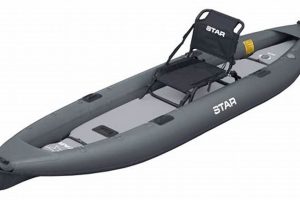
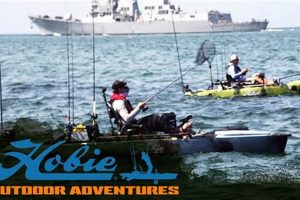
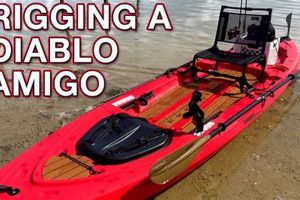
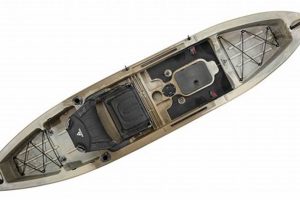
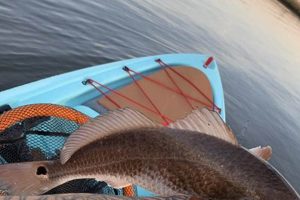
This specific model of recreational watercraft is designed for angling. Characteristically lightweight and compact, the vessel offers stability and maneuverability, catering to diverse fishing styles in various aquatic environments. Often equipped with specialized features like rod holders, storage compartments, and anchor systems, it provides anglers with a dedicated platform for pursuing their sport.
The increasing popularity of kayak fishing underscores the utility of such vessels. They offer a cost-effective and readily accessible means of reaching fishing grounds otherwise difficult to access by larger boats. Furthermore, the low profile of a kayak allows anglers a closer connection with the water, facilitating a more immersive and engaging angling experience. This evolution in fishing equipment directly responds to the angler’s desire for both efficiency and intimate interaction with nature.
The following sections will explore the design, performance characteristics, key features, and potential benefits of this type of personal fishing craft in greater detail. Further discussion will cover suitable environments, essential accessories, and practical advice for prospective owners.
Tips for Kayak Fishing
Effective kayak angling requires preparation and understanding of specific techniques. The following tips offer guidance for maximizing success and safety on the water.
Tip 1: Prioritize Stability: Weight distribution plays a crucial role in kayak stability. Centering gear within the hull minimizes the risk of capsizing. Low seating positions further enhance balance.
Tip 2: Master Paddling Techniques: Efficient paddling conserves energy and facilitates precise maneuvering. Learning basic strokes allows anglers to navigate currents and reach desired locations effectively.
Tip 3: Utilize Anchor Systems: Maintaining position in currents or over fishing grounds necessitates a reliable anchor system. Deploying and retrieving the anchor smoothly prevents entanglement and ensures a secure hold.
Tip 4: Choose Appropriate Fishing Gear: Shorter rods and specialized tackle accommodate the confined space of a kayak. Selecting gear suited to the target species enhances fishing success.
Tip 5: Practice Water Safety: Wearing a personal flotation device is paramount. Carrying a communication device and informing someone of fishing plans are essential safety precautions.
Tip 6: Respect Wildlife and the Environment: Adhering to catch-and-release practices conserves fish populations. Proper disposal of fishing line and other waste minimizes environmental impact.
Tip 7: Check Weather Conditions: Prior to embarking on a fishing trip, consulting weather forecasts is crucial. Avoid venturing out in adverse conditions such as high winds or lightning storms.
By implementing these strategies, anglers can enhance their kayak fishing experience, prioritizing both safety and effectiveness. These practices contribute to a rewarding and environmentally responsible angling approach.
The concluding section will reiterate key takeaways and offer additional resources for prospective kayak anglers.
1. Stability

Stability is a paramount consideration for any fishing kayak, directly influencing angler safety, comfort, and fishing effectiveness. For the Catch Mode 110, stability is a defining characteristic, impacting its suitability for various fishing styles and water conditions. The following facets explore key components contributing to the kayak’s stable performance.
- Hull Design:
The Catch Mode 110 typically features a wider, flatter hull design. This broader base increases stability by providing greater surface area contact with the water. This design element minimizes rocking and tipping, allowing anglers to confidently cast, reel, and land fish, even in choppy conditions or when shifting weight within the kayak. Wider hulls often sacrifice some maneuverability for enhanced stability, a trade-off prioritizing angler security.
- Center of Gravity:
A low center of gravity further enhances stability. The Catch Mode 110’s design positions the angler closer to the waterline, minimizing the potential for tipping. Careful weight distribution within the kayak further lowers the center of gravity. Evenly distributing gear and avoiding excessive weight at higher points contributes significantly to overall balance and reduces the likelihood of capsizing.
- Weight Capacity:
The kayak’s specified weight capacity dictates the maximum combined weight of the angler, gear, and any catch. Exceeding this limit compromises stability and increases the risk of swamping or capsizing. Adhering to the Catch Mode 110’s weight capacity ensures optimal performance and maintains a safe margin of stability.
- Water Conditions:
While the Catch Mode 110 offers inherent stability, prevailing water conditions significantly influence on-the-water performance. Calm lakes and slow-moving rivers provide ideal environments for maximizing stability. In contrast, rougher conditions, strong currents, or ocean swells present greater challenges. Anglers must assess water conditions and exercise caution, recognizing the impact of external forces on kayak stability.
Understanding these contributing factors allows anglers to maximize the Catch Mode 110’s inherent stability. By considering hull design, managing weight distribution, respecting weight capacity limits, and adapting to prevailing water conditions, anglers can enhance safety, improve fishing effectiveness, and enjoy a more confident and comfortable on-the-water experience. This emphasis on stability makes the Catch Mode 110 a suitable platform for diverse fishing styles and environments.
2. Maneuverability

Maneuverability represents a critical performance attribute for fishing kayaks, directly influencing angling effectiveness and overall on-the-water experience. Specifically regarding the Catch Mode 110 fishing kayak, maneuverability dictates how efficiently an angler can navigate various water conditions, position the vessel for optimal casting, and respond to changing fishing scenarios. Several design elements contribute to the Catch Mode 110’s maneuverability profile.
The hull design plays a significant role. While a wider hull enhances stability, it can sometimes compromise maneuverability. The Catch Mode 110 typically balances stability and maneuverability with a hull design that facilitates efficient tracking while retaining sufficient responsiveness for navigating tight spaces or changing directions quickly. The length of the kayak also influences maneuverability. Shorter kayaks generally turn more easily, while longer kayaks offer superior tracking in straight lines. The Catch Mode 110’s length strikes a balance suitable for diverse fishing environments. The kayak’s rudder system, if equipped, further enhances maneuverability, allowing for precise course adjustments and improved control in windy or current-driven situations. For example, navigating through dense vegetation or around submerged obstacles necessitates nimble handling, highlighting the practical significance of maneuverability in real-world fishing scenarios.
Effective paddling technique complements the kayak’s inherent maneuverability. Mastering basic paddle strokes enables efficient turning and precise boat control. The integration of design features and angler skill allows exploitation of the Catch Mode 110’s maneuverability potential. Understanding the interplay of these factorshull design, length, rudder system, and paddling techniqueequips anglers to maximize the kayak’s performance and adapt to varying fishing environments. This knowledge translates directly to enhanced fishing success, improved navigation efficiency, and increased on-the-water confidence.
3. Compact Design
The compact design of the Catch Mode 110 fishing kayak significantly influences its transportability, storage requirements, and overall usability. This characteristic distinguishes it from larger, more cumbersome vessels, offering practical advantages for anglers seeking convenient and versatile fishing platforms.
- Transportation:
The Catch Mode 110’s compact dimensions facilitate easier transport. Its relatively short length and lightweight construction allow for convenient loading and unloading onto vehicle roof racks or trailers, often without requiring specialized equipment. This ease of transport expands access to diverse fishing locations, enabling anglers to explore remote waters or quickly deploy at local launch sites.
- Storage:
Storage considerations often dictate kayak choice. The Catch Mode 110’s compact footprint simplifies storage in garages, sheds, or even within apartments. This compact design reduces the logistical challenges associated with storing larger watercraft, offering a practical solution for anglers with limited storage space.
- Maneuverability in Tight Spaces:
Navigating confined waterways, such as narrow creeks or densely vegetated areas, benefits from a compact design. The Catch Mode 110’s dimensions allow for greater maneuverability in these restricted environments, enabling anglers to access secluded fishing spots often inaccessible to larger boats. This advantage expands fishing opportunities and enhances on-the-water versatility.
- Weight and Handling:
The compact design often translates to a lighter overall weight, facilitating easier handling both on and off the water. This lighter weight simplifies launching and landing, reducing physical strain and enhancing overall user experience. The Catch Mode 110’s manageable weight makes it a suitable choice for anglers of varying physical capabilities.
The Catch Mode 110’s compact design directly contributes to its practicality and user-friendliness. By prioritizing transportability, storage convenience, maneuverability in tight spaces, and ease of handling, this kayak caters to anglers seeking a versatile and accessible fishing platform. This emphasis on compact design aligns with the growing demand for efficient and user-friendly angling equipment, expanding fishing opportunities and enhancing on-the-water experiences.
4. Fishing Features
Specialized fishing features distinguish the Catch Mode 110 fishing kayak from recreational paddling kayaks, directly impacting angling effectiveness and overall on-the-water experience. These integrated features enhance functionality, organization, and angler convenience, contributing significantly to a productive and enjoyable fishing outing. Flush-mounted rod holders secure fishing rods while paddling or trolling, freeing hands for other tasks. Recessed tackle storage compartments protect essential gear from the elements and maintain organized access to lures and terminal tackle. An integrated anchor trolley system allows controlled anchoring and drift fishing, enhancing positional precision in various water conditions. For example, an angler targeting specific structures can deploy the anchor trolley to maintain optimal position relative to the target area, maximizing fishing effectiveness. A spacious tank well provides secure storage for larger items like tackle boxes or coolers, expanding carrying capacity and facilitating longer fishing trips.
The strategic placement and design of these fishing features underscore the Catch Mode 110’s purpose-built nature. Ergonomic considerations influence rod holder positioning, ensuring comfortable access and retrieval. Tackle storage compartments offer efficient organization and protection from water damage. The anchor trolley system facilitates controlled anchoring, enhancing fishing precision. The tank well’s ample storage capacity expands carrying options, accommodating diverse angling needs. Consider an angler navigating a river system; the anchor trolley allows controlled drift fishing along productive seams, maximizing fishing opportunities. Alternatively, on a calm lake, flush-mounted rod holders secure rods while the angler prepares tackle or enjoys a momentary break. These practical applications illustrate the functional significance of integrated fishing features.
The integration of specialized fishing features directly contributes to the Catch Mode 110’s effectiveness as a dedicated angling platform. These features enhance organization, improve fishing efficiency, and contribute to a more comfortable and productive on-the-water experience. Understanding the function and practical application of these features empowers anglers to maximize their fishing potential and fully utilize the Catch Mode 110’s capabilities. This understanding translates directly to enhanced fishing success and a more rewarding angling experience.
5. Weight Capacity

Weight capacity constitutes a critical specification for the Catch Mode 110 fishing kayak, directly impacting safety, performance, and overall usability. This metric represents the maximum combined weight the kayak can safely support, encompassing the angler, gear, and any catch. Exceeding this limit compromises stability, increases the risk of capsizing, and potentially damages the kayak’s structure. Understanding and adhering to the specified weight capacity is essential for responsible and safe kayak operation. Consider an angler packing excessive gear for a multi-day fishing trip; exceeding the weight capacity could lead to instability, especially in challenging conditions. Conversely, an angler operating within the specified limit maintains a safe margin of buoyancy and stability, even with a substantial catch. This understanding highlights the practical significance of respecting the Catch Mode 110’s weight capacity.
The weight capacity influences various aspects of the on-the-water experience. Stability, directly linked to weight distribution, is paramount for safe and effective angling. Overloading compromises stability, increasing the risk of tipping or capsizing, particularly in rough water or when making sudden movements. Performance also suffers under excessive weight. Maneuverability decreases, paddling efficiency diminishes, and tracking becomes more challenging. Furthermore, exceeding the weight capacity can stress the kayak’s hull, potentially leading to structural damage or premature wear. For instance, an overloaded kayak may sit lower in the water, creating greater drag and reducing paddling efficiency. This practical consideration underscores the importance of weight management for optimal performance.
Adhering to the Catch Mode 110’s specified weight capacity is fundamental for safe and effective kayak operation. Careful consideration of gear selection, packing practices, and potential catch weight ensures optimal performance and minimizes safety risks. Understanding the direct relationship between weight capacity, stability, and performance empowers anglers to make informed decisions and enjoy a safe and productive fishing experience. Failure to respect weight limitations can compromise safety and diminish the kayak’s performance characteristics. Therefore, responsible kayak operation necessitates diligent attention to weight management and adherence to manufacturer specifications. This proactive approach ensures a safe, enjoyable, and productive on-the-water experience.
6. Durability
Durability represents a critical factor influencing the lifespan and overall value of the Catch Mode 110 fishing kayak. A durable kayak withstands the rigors of regular use, including exposure to various environmental conditions and potential impacts associated with transport, launching, and on-the-water navigation. Understanding the factors contributing to the Catch Mode 110’s durability informs purchasing decisions and guides proper care and maintenance practices, ultimately maximizing the kayak’s lifespan and ensuring long-term enjoyment.
- Material Selection:
The choice of construction material significantly impacts kayak durability. The Catch Mode 110 typically utilizes high-density polyethylene (HDPE), a robust and UV-resistant plastic known for its impact resistance and ability to withstand harsh environmental conditions. HDPE’s inherent durability contributes to the kayak’s long-term structural integrity, minimizing the risk of cracks, punctures, or other damage from impacts, abrasion, or prolonged sun exposure. For example, HDPE can withstand minor collisions with rocks or submerged obstacles without sustaining significant damage.
- Construction Quality:
Manufacturing processes and quality control measures directly influence a kayak’s durability. Properly molded seams, reinforced stress points, and high-quality hardware contribute to overall structural integrity and resistance to wear and tear. Consistent construction quality ensures the Catch Mode 110 maintains its structural integrity over time, minimizing the risk of leaks, cracks, or component failures. Precise molding techniques, for instance, ensure watertight seams and minimize weak points susceptible to stress cracking.
- UV Resistance:
Prolonged exposure to ultraviolet radiation from sunlight can degrade certain materials, leading to fading, brittleness, and reduced structural integrity. The Catch Mode 110’s UV-resistant construction minimizes these effects, ensuring long-term colorfastness and structural integrity even after extended periods under the sun. This resistance prevents premature aging and maintains the kayak’s aesthetic and functional qualities over time. For example, the color remains vibrant and the material retains its strength even after years of use in sunny climates.
- Maintenance and Care:
Proper maintenance practices play a crucial role in preserving a kayak’s durability. Regular cleaning, rinsing with fresh water after saltwater use, and proper storage practices minimize wear and tear and extend the kayak’s lifespan. Diligent care mitigates the effects of environmental factors and prevents premature degradation. For instance, rinsing the kayak after use in saltwater prevents corrosion of metal components and minimizes the damaging effects of salt buildup.
The Catch Mode 110’s durability stems from a combination of material selection, construction quality, UV resistance, and proper maintenance practices. These factors contribute to the kayak’s ability to withstand regular use, environmental exposure, and potential impacts, ensuring long-term performance and value. Investing in a durable kayak minimizes the need for frequent repairs or replacements, offering a cost-effective and reliable platform for angling adventures. Understanding these durability factors allows informed purchasing decisions and promotes responsible ownership practices, maximizing the kayak’s lifespan and ensuring years of enjoyable fishing experiences. This long-term perspective emphasizes the significance of durability as a key consideration for prospective kayak anglers.
7. Affordability
Affordability often plays a decisive role in kayak selection, particularly for anglers entering the sport or seeking a cost-effective fishing platform. The Catch Mode 110 fishing kayak frequently occupies a niche within the market characterized by a balance of features, performance, and price point. This affordability expands accessibility, enabling a wider range of individuals to participate in kayak fishing without incurring substantial financial barriers. Several factors contribute to the Catch Mode 110’s affordability. Material selection, manufacturing processes, and distribution networks influence the final cost. Utilizing readily available materials like high-density polyethylene (HDPE) helps manage production costs. Efficient manufacturing processes and established distribution channels further contribute to cost-effectiveness. For example, a streamlined manufacturing process minimizes waste and reduces labor costs, directly impacting the final retail price. This focus on cost-effective production strategies enables a competitive price point without significantly compromising essential features or performance characteristics.
The Catch Mode 110’s affordability does not necessarily equate to compromised quality or performance. Manufacturers often prioritize essential features and durable construction while maintaining a competitive price point. This balance allows anglers to access a functional and reliable fishing platform without exceeding budgetary constraints. Consider an angler on a limited budget seeking entry into kayak fishing. The Catch Mode 110 offers a viable option, providing essential features like rod holders and storage compartments without the premium price tag associated with higher-end models. This accessibility expands participation in the sport and provides a cost-effective pathway to experience kayak angling. Furthermore, the affordability of the Catch Mode 110 may allow anglers to allocate budget towards essential accessories like paddles, personal flotation devices, and fishing gear, enhancing overall safety and fishing effectiveness.
The Catch Mode 110’s affordability distinguishes it as an accessible option within the fishing kayak market. This affordability expands participation in the sport, providing a cost-effective entry point for novice anglers and a budget-conscious choice for experienced anglers seeking a reliable backup or secondary vessel. While affordability remains a significant advantage, prospective buyers should carefully evaluate the kayak’s features, performance characteristics, and suitability for their specific fishing needs and target environments. Balancing affordability with performance and functional requirements ensures a satisfactory and productive angling experience. Understanding the relationship between affordability and value empowers informed purchasing decisions and aligns expectations with the Catch Mode 110’s intended purpose as a practical and accessible fishing platform.
Frequently Asked Questions
This section addresses common inquiries regarding the Catch Mode 110 fishing kayak, providing concise and informative responses to assist prospective buyers and current owners.
Question 1: What is the maximum weight capacity of the Catch Mode 110?
Weight capacity specifications can vary slightly depending on the specific model year and configuration. Consulting the manufacturer’s official documentation provides precise weight capacity information.
Question 2: Is the Catch Mode 110 suitable for ocean use?
While the Catch Mode 110 performs well in calm bays and estuaries, it is generally not recommended for open ocean conditions due to its smaller size and limited stability in rough seas. It excels in calmer inland waters such as lakes and rivers.
Question 3: What materials are used in the Catch Mode 110’s construction?
High-density polyethylene (HDPE) is the primary construction material, chosen for its durability, impact resistance, and UV resistance. This material contributes to the kayak’s longevity and ability to withstand various environmental conditions.
Question 4: How does the Catch Mode 110 perform in windy conditions?
The kayak’s relatively low profile can make it susceptible to wind drift. Utilizing an anchor or drift sock can mitigate wind impact and maintain desired positioning. Paddling experience also influences effective wind management.
Question 5: What essential accessories are recommended for the Catch Mode 110?
Essential accessories include a personal flotation device (PFD), a paddle, an anchor system, and appropriate fishing gear. Additional accessories like rod holders, dry bags, and storage crates enhance functionality and organization.
Question 6: What maintenance is required for the Catch Mode 110?
Regular cleaning with mild soap and water, rinsing with fresh water after saltwater exposure, and proper storage practices contribute to the kayak’s longevity. Periodic inspection of hardware and hull integrity ensures optimal performance and safety.
Understanding these commonly addressed questions enhances product knowledge and empowers informed decisions regarding the Catch Mode 110 fishing kayak. Thorough research and careful consideration of individual needs and intended usage contribute to a satisfying and productive angling experience.
The subsequent section will offer concluding remarks and additional resources for prospective kayak anglers.
Conclusion
This exploration of the Catch Mode 110 fishing kayak has provided a comprehensive overview of its key features, performance characteristics, and practical considerations. From its compact and transportable design to its specialized fishing features and durable construction, the Catch Mode 110 presents a compelling option for anglers seeking a dedicated and accessible fishing platform. Discussion encompassed stability considerations, maneuverability nuances, the significance of weight capacity adherence, the durability afforded by material selection and construction quality, and the affordability factor influencing purchasing decisions. Understanding these elements empowers informed evaluation and facilitates optimal utilization on the water. Furthermore, addressing frequently asked questions provides practical guidance for both prospective buyers and current owners.
The Catch Mode 110 fishing kayak offers a gateway to enhanced angling experiences. Its compact design and specialized features facilitate access to diverse fishing environments and promote efficient angling practices. Careful consideration of its capabilities, limitations, and proper usage ensures safe and productive outings. Prospective kayak anglers are encouraged to conduct thorough research and evaluate individual needs to determine if the Catch Mode 110 aligns with their specific fishing style and target environments. Ultimately, informed decision-making contributes to a rewarding and enriching on-the-water experience.