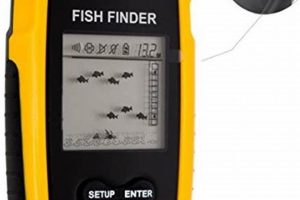
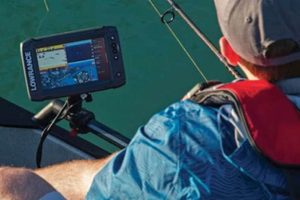
Securing a sonar device to a small, human-powered watercraft allows anglers to locate fish and understand underwater terrain. This involves attaching a transducer to the hull or using a specialized mounting system for the display unit. For example, the transducer might be affixed inside the hull for certain kayaks, while the display unit is often mounted on a track system for easy viewing and adjustment.
This practice enhances angling success by providing real-time information about water depth, fish location, and bottom structure. Historically, kayak anglers relied on intuition and experience. Modern technology offers a significant advantage, allowing for more strategic fishing and increased catch rates. Furthermore, understanding the underwater environment contributes to safer navigation, especially in unfamiliar waters.
The following sections will delve into various mounting techniques, transducer types, display options, power sources, and essential safety considerations for this increasingly popular angling enhancement.
Tips for Fish Finder Installation on Kayaks
Careful planning and execution are crucial for successful fish finder installation on a kayak. These tips offer guidance for a secure and functional setup.
Tip 1: Transducer Placement: Select a location that minimizes interference and turbulence. Inside-hull mounting offers protection but may compromise sensitivity. External mounting requires careful placement to avoid damage. Consider a scupper hole mount or a specialized transducer arm.
Tip 2: Cable Management: Secure cables neatly to prevent tangling and interference with paddling. Use zip ties or clips to route cables along the kayak’s structure, keeping them away from moving parts.
Tip 3: Power Source Selection: Choose a reliable and appropriately sized battery. Consider the fish finder’s power requirements and expected usage time. A dedicated 12V battery is often recommended.
Tip 4: Display Mounting: Position the display unit within easy reach and clear view. Use a mounting arm or track system that allows for adjustments and secure positioning, even in rough conditions.
Tip 5: Waterproofing: Ensure all connections and components are adequately waterproofed. Use marine-grade sealant and connectors to prevent water damage to the fish finder and battery.
Tip 6: Testing and Calibration: Test the fish finder thoroughly after installation. Calibrate the unit according to the manufacturer’s instructions to ensure accurate readings and optimal performance.
Tip 7: Consider Kayak Specific Mounts: Several manufacturers offer kayak-specific mounting solutions that integrate seamlessly with the vessel’s design. These options often simplify installation and provide enhanced stability.
Proper installation ensures reliable operation and maximizes the benefits of the fish finder, contributing to a more productive and enjoyable fishing experience.
With these considerations in mind, one can confidently proceed to choosing specific equipment and executing the installation process.
1. Secure Mounting Location

A secure mounting location is paramount when installing a fish finder on a kayak. Stability ensures consistent sonar readings and protects the equipment from damage during navigation and fishing activities. Improper mounting can lead to equipment failure, inaccurate data, and potential safety hazards. The following facets explore the crucial aspects of secure mounting for optimal fish finder performance and longevity.
- Stability in Varied Conditions
The mounting location must withstand the dynamic forces encountered during kayaking, including waves, wakes, and paddling motions. A stable mount prevents vibration and movement that can disrupt sonar readings and potentially damage the fish finder. For example, mounting the display unit on a rigid, well-supported platform minimizes shaking, ensuring clear and reliable data even in choppy water. This stability is essential for accurate depth readings, fish identification, and bottom structure mapping.
- Accessibility and Ergonomics
While security is paramount, the mounting location must also allow easy access to the fish finder’s controls and display. The angler needs to be able to adjust settings, view readings, and operate the device without hindering paddling or compromising balance. Mounting the display unit within comfortable reach, angled for optimal visibility, ensures efficient operation and enhances the fishing experience. This careful placement balances accessibility with secure mounting, contributing to a more productive and enjoyable angling experience.
- Protection from the Elements and Impacts
Exposure to water, sun, and potential impacts necessitates a mounting location that safeguards the fish finder. Choosing a position that minimizes direct exposure to harsh elements and potential collisions helps protect the device from damage. For example, mounting the display unit under the deck or utilizing a protective cover shields it from spray and impacts. Similarly, carefully routing cables and connections prevents water damage and ensures long-term reliability.
- Compatibility with Kayak Design
The mounting location must complement the kayak’s design and not interfere with its stability or performance. Consider the kayak’s hull shape, deck layout, and available mounting points when choosing a location. Utilizing existing features, such as track systems or designated mounting areas, often provides a secure and convenient solution. This integration ensures the fish finder enhances the angling experience without compromising the kayak’s performance or structural integrity.
By carefully considering these facets, anglers can ensure the fish finder is securely mounted and optimally positioned for effective operation. This careful planning and execution contributes to a safer, more productive, and ultimately more enjoyable kayaking experience. A stable, accessible, and well-protected fish finder provides valuable information about the underwater environment, enhancing angling success and contributing to a more informed and engaging experience on the water.
2. Transducer Placement
Transducer placement significantly influences the effectiveness of a fish finder mounted on a kayak. The transducer, responsible for transmitting and receiving sonar signals, requires careful positioning to ensure optimal performance. Incorrect placement can lead to inaccurate readings, interference, and reduced sensitivity. Several factors influence ideal transducer placement, including kayak hull design, transducer type, and intended fishing environment. For example, on a sit-on-top kayak, a common approach involves mounting the transducer inside the hull, utilizing a sealant to ensure proper acoustic coupling. This method protects the transducer while minimizing drag. Conversely, on a sit-inside kayak, an external mount might be preferred, allowing for greater sensitivity and easier access for adjustments. The chosen placement affects the sonar cone’s angle and coverage, directly impacting the area of the underwater environment effectively scanned.
Different transducer types, such as transom-mount, thru-hull, and in-hull, further influence placement considerations. A transom-mount transducer, while less common on kayaks, requires a flat surface near the stern for proper mounting. Thru-hull transducers offer excellent performance but require careful installation to maintain hull integrity. In-hull transducers offer convenience but can be affected by hull thickness and material. Understanding these variables is crucial for optimizing transducer placement. Consider a scenario where a transducer is placed too close to a scupper hole or an area of turbulent water flow. The resulting interference can disrupt sonar signals, leading to inaccurate depth readings and difficulty identifying fish or bottom structure. Proper placement mitigates these issues, ensuring the transducer operates effectively in its intended environment.
Effective transducer placement is integral to successful fish finder integration on a kayak. Careful consideration of kayak design, transducer type, and potential interference sources optimizes sonar performance. Proper placement maximizes the accuracy and range of the fish finder, providing crucial information for navigation and angling success. Challenges such as turbulence and hull interference can be mitigated through informed placement decisions. Ultimately, correct transducer placement allows anglers to leverage the full potential of their fish finder, enhancing their understanding of the underwater environment and contributing to a more informed and successful fishing experience.
3. Power Supply Management

Effective power supply management is crucial for reliable fish finder operation on a kayak. Insufficient power or poorly managed connections can lead to interruptions, inaccurate readings, and premature battery failure. Understanding power requirements, battery selection, and wiring best practices ensures consistent performance and maximizes fishing time. This involves selecting an appropriate battery type and capacity, employing proper wiring techniques, and incorporating safety measures to prevent electrical hazards.
- Battery Selection
Fish finders require a stable power source. A dedicated 12V deep-cycle marine battery is often recommended for its ability to provide sustained power over extended periods. Battery capacity should align with the fish finder’s power consumption and anticipated usage duration. Amp-hour ratings provide a measure of capacity; higher amp-hour ratings indicate longer run times. Selecting a battery with sufficient capacity ensures uninterrupted operation throughout the fishing trip. For example, a fish finder with a higher power draw may require a larger capacity battery than a lower-powered model. Understanding these requirements ensures the angler has adequate power for the chosen fish finder and planned fishing duration.
- Wiring and Connections
Proper wiring and secure connections are essential for reliable power delivery and preventing electrical issues. Marine-grade wiring, connectors, and fuses protect against corrosion and ensure stable current flow. Fuses act as safety devices, interrupting the circuit in case of overloads or short circuits. Connections should be tight and waterproofed to prevent corrosion and ensure consistent performance. Neglecting these aspects can lead to intermittent power loss, damage to the fish finder, or even safety hazards.
- Power Consumption and Battery Life
Fish finder power consumption varies based on model and features. Understanding the device’s power draw helps determine the required battery capacity and expected run time. Manufacturers typically provide power consumption specifications. Calculating estimated usage time based on these specifications assists in selecting the appropriate battery and managing power effectively during the fishing trip. For example, a fish finder with a higher power consumption rate will deplete a battery faster than a model with lower power requirements.
- Charging and Maintenance
Regular battery charging and maintenance are vital for long-term reliability and optimal performance. Using a suitable charger designed for marine batteries ensures proper charging cycles and extends battery life. Periodically checking battery terminals for corrosion and ensuring secure connections prevents power loss and potential damage. Proper battery maintenance maximizes battery lifespan and ensures reliable power for the fish finder.
Careful power supply management is essential for maximizing fish finder performance and ensuring a productive fishing experience from a kayak. A reliable power source, proper wiring, and attention to power consumption contribute to uninterrupted operation. Neglecting these considerations can compromise fish finder performance and curtail fishing time. By addressing these aspects diligently, anglers ensure they can rely on their fish finder to provide crucial information for navigation and angling success.
4. Cable routing and securing
Effective cable routing and securing are integral to a successful fish finder installation on a kayak. Proper cable management not only ensures the fish finder’s functionality but also contributes to safety and the longevity of the equipment. Unsecured cables can become entangled, damaged, or create tripping hazards. Furthermore, exposure to the elements can lead to corrosion and premature cable failure. Strategic cable routing minimizes these risks. For example, routing cables along the kayak’s gunwales, secured with clips or zip ties, keeps them organized and protected from paddles and fishing gear. This approach also minimizes the risk of snags and ensures cables remain clear of moving parts. Another example involves using cable grommets to protect cables passing through the kayak’s hull, preventing chafing and water intrusion. These practices safeguard the fish finder’s power and data connections, contributing to reliable operation and extending the lifespan of the equipment.
Practical implications of neglecting proper cable management extend beyond mere inconvenience. A tangled or damaged cable can interrupt power to the fish finder, rendering it useless at a critical moment. Loose cables can also interfere with paddling, creating a safety hazard in challenging conditions. Water intrusion through poorly sealed cable entries can damage the fish finder’s internal components, leading to costly repairs or replacement. Conversely, meticulous cable routing and securing contribute to a seamless and enjoyable kayaking experience. Well-secured cables minimize distractions, allowing the angler to focus on fishing. Protected cables remain functional even in demanding environments, ensuring consistent data acquisition and enhancing angling success. Investing time in proper cable management ultimately contributes to a safer, more efficient, and ultimately more rewarding experience on the water.
In summary, cable routing and securing are not merely minor details in the process of mounting a fish finder on a kayak; they are crucial steps that directly impact the functionality, safety, and longevity of the equipment. Proper cable management contributes to a clutter-free and efficient cockpit, minimizes the risk of equipment damage, and enhances overall safety. Addressing this aspect with care ensures a more productive and enjoyable kayaking experience, allowing anglers to fully utilize their fish finder’s capabilities and focus on the pursuit of their target species.
5. Display Visibility and Accessibility
Optimal display visibility and accessibility are critical factors in maximizing the utility of a fish finder mounted on a kayak. Effective use of the device requires clear sightlines to the screen and easy access to controls, without compromising paddling efficiency or stability. Strategic placement of the display unit significantly influences the angler’s ability to interpret data, adjust settings, and ultimately, make informed decisions based on the information provided by the fish finder.
- Minimizing Glare and Maximizing Contrast
Sunlight reflecting off the water’s surface can significantly impair display visibility. Positioning the display unit to minimize glare, or utilizing a screen with anti-glare properties, enhances readability in bright conditions. Furthermore, a display with high contrast ensures crucial information, such as depth readings and fish icons, remains easily discernible against the background. For example, angling the display slightly downward can reduce direct glare, while a high-contrast screen ensures data remains clear even in challenging lighting conditions. These factors contribute to accurate interpretation of the fish finder’s output, allowing for more informed decision-making during the fishing trip.
- Ergonomic Positioning and Reach
The display unit should be positioned within easy reach, allowing the angler to adjust settings and interpret data without excessive stretching or awkward movements. This ergonomic positioning minimizes distractions and maintains paddling efficiency. Mounting the display on an adjustable arm or utilizing a track system allows for customized positioning based on individual preferences and kayak configuration. For instance, placing the display unit slightly below eye level and within comfortable arm’s reach allows for quick glances and adjustments without disrupting paddling rhythm or compromising balance. This strategic placement enhances both safety and efficiency on the water.
- Integration with Kayak Layout
The display unit’s placement should integrate seamlessly with the kayak’s overall layout, ensuring it does not interfere with paddling, casting, or other essential activities. Careful consideration of the kayak’s design, including deck space and seating arrangements, is essential for optimal placement. For example, mounting the display unit near existing accessories, such as rod holders or paddle clips, can create a streamlined and efficient cockpit layout. This integration maximizes available space and prevents the display unit from becoming an obstruction during fishing activities.
- Impact on Stability and Balance
Adding a fish finder display to a kayak inevitably alters its weight distribution. Positioning the display unit near the kayak’s center of gravity minimizes the impact on stability and balance. Excessive weight on either end of the kayak can compromise handling and increase the risk of capsizing. Therefore, careful consideration of weight distribution is crucial, especially in smaller kayaks or those designed for challenging conditions. For example, mounting the display unit near the seat, rather than at the bow or stern, helps maintain balanced weight distribution and prevents instability.
Careful consideration of display visibility and accessibility is paramount for maximizing the benefits of a fish finder mounted on a kayak. These factors directly influence the angler’s ability to effectively utilize the device, interpret data, and make informed decisions based on the information provided. Proper display placement enhances angling success and contributes to a safer and more enjoyable experience on the water.
Frequently Asked Questions
This section addresses common inquiries regarding fish finder installations on kayaks, providing concise and informative responses to facilitate informed decision-making and successful implementation.
Question 1: What type of transducer is best suited for kayak fishing?
Transducer selection depends on several factors, including hull type and fishing style. In-hull transducers offer convenience and protection, while transom-mount or thru-hull transducers generally provide greater sensitivity. Specific kayak compatibility should always be considered.
Question 2: How does one power a fish finder on a kayak?
A dedicated 12V marine deep-cycle battery is typically recommended for powering fish finders on kayaks. Battery capacity should be chosen based on the fish finder’s power requirements and anticipated usage time.
Question 3: Where should the fish finder display be mounted for optimal viewing?
The display unit should be mounted within easy reach and clear view, minimizing glare and maximizing contrast. Adjustable mounting arms or track systems allow for customized positioning based on individual preferences and kayak configuration.
Question 4: Are there specific mounting considerations for different kayak types?
Yes, kayak hull design influences transducer placement and mounting options. Sit-on-top kayaks often accommodate in-hull transducers, while sit-inside kayaks may require external mounting solutions.
Question 5: How can one protect the fish finder from water damage?
Employing marine-grade wiring, connectors, and sealant protects against water intrusion. Properly sealed cable entries and connections are crucial for preventing damage to the fish finder’s internal components.
Question 6: What safety precautions should be taken when installing a fish finder on a kayak?
Disconnecting the battery before working on electrical connections is essential. Properly fusing the power circuit protects against overloads and short circuits. Ensuring adequate ventilation around the battery compartment prevents the buildup of potentially hazardous gases.
Addressing these common questions ensures a well-informed approach to fish finder installation, maximizing functionality, safety, and enjoyment on the water.
For further information and specific product recommendations, consult reputable retailers and manufacturers specializing in kayak fishing accessories.
Mounting a Fish Finder on a Kayak
Successfully mounting a fish finder on a kayak involves careful consideration of several key factors. Proper transducer placement ensures accurate readings and optimal sonar performance. Secure mounting locations protect equipment and maintain stability. Effective power supply management guarantees reliable operation, while thoughtful cable routing and securing prevent tangles and potential damage. Prioritizing display visibility and accessibility allows for efficient data interpretation and adjustments. Addressing these elements comprehensively ensures a functional and safe integration of this valuable tool.
Strategic integration of electronics enhances angling opportunities from a kayak. Careful planning and execution transform this small vessel into a technologically advanced fishing platform. The ability to interpret underwater terrain and locate fish significantly increases angling success. Ultimately, thoughtful consideration of mounting practices elevates the kayak fishing experience, fostering a deeper understanding of aquatic environments and promoting responsible angling practices.