Compact sonar devices designed for installation on small watercraft provide anglers with real-time underwater information. These units transmit sound waves into the water, interpreting the returning echoes to identify fish, map the bottom contour, and determine depth. This technology empowers anglers to make more informed decisions about where to cast their lines, significantly increasing the chances of a successful fishing trip. For example, an angler might use this technology to locate a drop-off where fish tend to congregate or to identify submerged vegetation that provides cover for their prey.
Portable sonar systems have revolutionized kayak fishing, offering previously unavailable levels of situational awareness. This technology levels the playing field, allowing kayak anglers to compete more effectively with those in larger boats equipped with more sophisticated electronics. The historical development of these compact, yet powerful, units has been driven by advancements in battery technology and miniaturization of electronics, making them increasingly affordable and accessible to a wider range of anglers.
The subsequent sections will delve into specific features, selection criteria, installation techniques, and operational best practices for these essential tools for kayak anglers.
Tips for Utilizing Compact Kayak Sonar
Optimizing the use of compact sonar units enhances angling success from a kayak. The following tips offer practical advice for maximizing the effectiveness of these devices.
Tip 1: Transducer Placement is Key: Correct transducer placement is crucial for accurate readings. Mounting the transducer too close to the kayak’s hull can create interference. Ideally, the transducer should be positioned in clear, undisturbed water.
Tip 2: Understand Sonar Settings: Familiarization with sonar settings, such as sensitivity and frequency, allows for customized performance based on water conditions and target species. Experimenting with these settings can significantly improve results.
Tip 3: Utilize Bottom Contour Mapping: Understanding the underwater terrain is essential. Pay attention to changes in depth, drop-offs, and submerged structures, as these areas often hold fish.
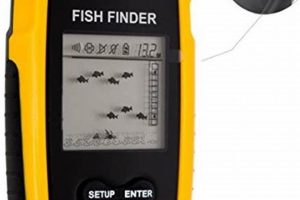
Tip 4: Interpret Fish Arches: Recognizing fish arches on the display takes practice. The shape and strength of the arch can indicate the size and depth of the fish.
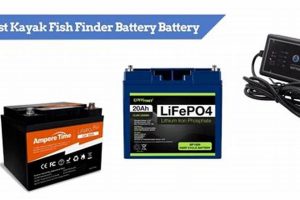
Tip 5: Power Management: Battery life is a critical consideration for kayak anglers. Adjusting screen brightness and utilizing power-saving modes can extend battery life.
Tip 6: Regular Software Updates: Manufacturers frequently release software updates that improve performance and add new features. Keeping the unit’s software up-to-date is recommended.
Tip 7: Protect the Transducer: The transducer is a sensitive component. Care should be taken to avoid impacts with rocks or other obstacles that could damage it.
By implementing these strategies, anglers can significantly improve their understanding of the underwater environment, leading to more productive fishing trips. These tips, combined with practical experience, will unlock the full potential of compact sonar technology.
The concluding section will summarize the key benefits and reinforce the importance of incorporating sonar technology into kayak fishing practices.
1. Compact Design

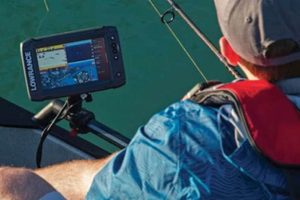
Compact design is a critical feature of fish finders intended for kayak use. Kayaks, by their nature, offer limited space and weight capacity. A smaller, lighter unit facilitates easier installation and minimizes interference with paddling and other on-the-water activities. Bulkier, heavier units designed for larger vessels prove impractical and cumbersome on a kayak. For example, a large, in-dash unit designed for a bass boat would be unsuitable for kayak mounting due to its size and power requirements. The compact design of specialized kayak fish finders addresses these limitations, enabling seamless integration with the kayak’s compact environment.
This emphasis on portability extends beyond the head unit itself. Transducers, the components that send and receive sonar signals, also benefit from compact design. Smaller transducers can be more easily mounted on a kayak’s hull or trolling motor without creating drag or affecting stability. Furthermore, compact designs often incorporate integrated battery packs or compatibility with portable power sources, further enhancing their suitability for kayak use. This portability allows for quick setup and removal, facilitating transport and storage. The compact nature of these units also contributes to their affordability, making advanced sonar technology accessible to a wider range of kayak anglers.
In summary, compact design directly addresses the unique constraints of kayak fishing. The reduced size and weight of these units enhance portability, simplify installation, and minimize impact on kayak performance. This design consideration is fundamental to the effectiveness and practicality of fish finders in a kayak fishing context. Choosing a compact model optimizes the balance between functionality and the practical limitations of kayak angling.
2. Sonar Technology

Sonar technology forms the foundation of a Humminbird kayak fish finder’s functionality. These units employ sound waves to generate detailed underwater images. A transducer emits a sonar pulse, and the unit analyzes the returning echoes to determine the depth, contour of the bottom, and the presence of fish or other objects. Different sonar frequencies offer distinct advantages; higher frequencies provide greater detail in shallower water, while lower frequencies penetrate deeper but offer less resolution. CHIRP sonar, utilized in many Humminbird models, transmits across a range of frequencies simultaneously, providing a more comprehensive and nuanced picture of the underwater environment. For example, CHIRP sonar can differentiate between individual fish within a tightly packed school, a capability traditional single-frequency sonar often lacks.
The effectiveness of sonar technology depends on several factors, including water clarity and the type of bottom. In murky water, sonar signals attenuate more quickly, reducing the effective range. Similarly, soft bottoms absorb more sound energy than hard bottoms, affecting the quality of the returned echoes. Understanding these limitations is crucial for accurate interpretation of the sonar display. Advanced features, such as Down Imaging and Side Imaging, further enhance the information provided by sonar. Down Imaging provides a near-photographic view directly beneath the kayak, while Side Imaging extends the sonar coverage to the sides, allowing anglers to scan a wider area. These features enable anglers to locate submerged structures, vegetation beds, and other fish-holding areas with greater precision.
Ultimately, the integration of advanced sonar technology within a Humminbird kayak fish finder empowers anglers with a significant advantage. The ability to visualize the underwater environment, identify fish, and map the bottom contour dramatically increases fishing success. Overcoming the challenges posed by varying water conditions and bottom types requires an understanding of sonar principles and judicious adjustment of unit settings. Effective utilization of sonar technology unlocks a wealth of information, transforming the kayak fishing experience from one of chance into one of informed decision-making. This enhanced understanding allows for more strategic angling, contributing significantly to improved catches and a deeper appreciation of the aquatic environment.
3. GPS Integration
GPS integration significantly enhances the capabilities of a Humminbird kayak fish finder. This integration allows for precise location tracking, navigation to specific waypoints, and the creation of detailed maps of fishing areas. The ability to mark productive fishing spots, such as submerged structures or drop-offs, and return to them later with pinpoint accuracy offers a considerable advantage. Consider a scenario where an angler locates a school of fish holding near a submerged wreck. GPS integration allows the angler to mark the wreck’s location, ensuring they can easily return to the same spot on subsequent fishing trips, even if external markers are unavailable or visibility is reduced.
Furthermore, GPS integration enables real-time tracking of kayak movement and speed. This information proves valuable for trolling at optimal speeds for specific lure presentations or maintaining position in a current. GPS data can also be used to create custom maps of fishing areas, including depth contours, vegetation boundaries, and other relevant features. These custom maps provide a personalized, detailed representation of the underwater environment, tailored to the angler’s specific fishing needs and preferences. Integrating GPS data with sonar readings allows for a more holistic understanding of the fishing environment, improving decision-making and overall fishing success.
In summary, GPS integration elevates the Humminbird kayak fish finder from a simple depth sounder to a sophisticated navigation and mapping tool. The ability to precisely mark locations, track movement, and create custom maps provides invaluable insights for kayak anglers. This integration optimizes fishing strategies, enhancing efficiency and increasing the likelihood of successful outcomes. Understanding the capabilities and limitations of GPS integration within a Humminbird fish finder is essential for leveraging its full potential and maximizing on-the-water productivity.
4. Mapping Capabilities

Mapping capabilities within a Humminbird kayak fish finder significantly enhance an angler’s understanding of the underwater environment. These devices utilize GPS data, sonar readings, and often pre-loaded charts to create detailed maps of the waterbody being fished. This functionality goes beyond simply displaying location; it provides a visual representation of bottom contours, depth changes, and the presence of submerged structures, such as vegetation beds, drop-offs, and channels. This information proves crucial for identifying potential fish-holding areas and developing effective fishing strategies. For example, an angler targeting bass might use the mapping features to locate a submerged point extending into deeper water, a prime ambush location for predatory fish.
The practical significance of these mapping capabilities becomes apparent in various fishing scenarios. When fishing unfamiliar waters, the mapping features allow anglers to quickly identify promising areas, eliminating unproductive searching and maximizing fishing time. In heavily vegetated areas, mapping capabilities can reveal subtle channels or openings within the vegetation, providing access to otherwise inaccessible fish-holding locations. Furthermore, the ability to save waypoints and create custom maps of productive areas ensures that successful fishing spots can be easily revisited on future trips. These personalized maps become valuable assets, representing accumulated knowledge and experience of specific fishing locations.
In summary, mapping capabilities represent a crucial component of a Humminbird kayak fish finder’s functionality. By providing a detailed visualization of the underwater environment, these features empower anglers with the information necessary to locate fish, develop effective strategies, and maximize their fishing success. Effective utilization of mapping capabilities, combined with a sound understanding of fish behavior and habitat preferences, significantly improves angling outcomes. This technology transforms the kayak fishing experience, shifting reliance from chance encounters to informed decision-making based on a comprehensive understanding of the underwater landscape.
5. Transducer Options

Transducer selection significantly impacts the performance of a Humminbird kayak fish finder. Matching transducer characteristics to specific fishing environments and target species optimizes sonar performance and maximizes the information available to the angler. Various transducer types offer distinct capabilities, influencing factors such as depth penetration, target separation, and bottom detail. Careful consideration of these options is crucial for maximizing the effectiveness of the fish finder.
- Transducer Frequency
Transducer frequency dictates the balance between depth penetration and detail. Higher frequencies, such as 200 kHz, provide excellent detail and target separation in shallower water, making them ideal for locating baitfish and game fish near the surface or in shallow, vegetated areas. Lower frequencies, such as 83 kHz, penetrate deeper but sacrifice some resolution. These frequencies are more effective in deeper water or when searching for bottom-dwelling species. Dual-frequency transducers offer versatility, allowing anglers to switch between frequencies to suit varying conditions.
- CHIRP Technology
CHIRP (Compressed High-Intensity Radar Pulse) technology represents a significant advancement in sonar technology. CHIRP transducers transmit across a wide range of frequencies simultaneously, rather than a single frequency. This provides a much clearer and more detailed image, improving target separation and bottom definition. CHIRP sonar excels at distinguishing individual fish within tight schools and identifying subtle bottom features that might be missed by traditional sonar. The increased information provided by CHIRP significantly enhances angling effectiveness.
- Down Imaging and Side Imaging
Down Imaging and Side Imaging transducers provide additional perspectives on the underwater environment. Down Imaging provides a near-photographic view directly beneath the kayak, ideal for identifying structure, vegetation, and fish holding tight to the bottom. Side Imaging extends the sonar view to the sides of the kayak, allowing anglers to scan a wider area and locate fish or structure beyond the cone of traditional sonar. These advanced imaging technologies significantly enhance situational awareness and improve fish-finding capabilities.
- Mounting Options
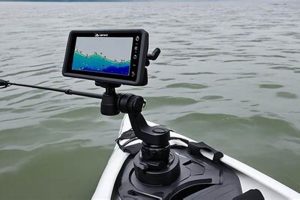
Transducer mounting options influence both sonar performance and kayak maneuverability. Common mounting methods include transom mounting, trolling motor mounting, and through-hull mounting. Transom mounting is generally the easiest option for kayaks, while trolling motor mounting allows for precise transducer positioning. Through-hull mounting provides the cleanest installation and optimal sonar performance but requires more complex installation. Choosing the appropriate mounting method depends on the kayak’s design, the angler’s fishing style, and the desired sonar performance.
Selecting the appropriate transducer is paramount for optimizing the performance of a Humminbird kayak fish finder. By carefully considering factors such as frequency, CHIRP technology, imaging capabilities, and mounting options, anglers can tailor their sonar system to their specific fishing needs and maximize their chances of success. Understanding the strengths and limitations of each transducer type empowers anglers to make informed decisions, leading to more productive and enjoyable kayak fishing experiences.
6. Display Clarity
Display clarity is a critical factor influencing the effectiveness of a Humminbird kayak fish finder. A clear, easily readable display allows anglers to quickly and accurately interpret sonar data, even in challenging lighting conditions often encountered on the water. Screen size, resolution, color palette, and backlight brightness all contribute to overall display clarity. A poorly designed display can render even the most sophisticated sonar technology ineffective, hindering the angler’s ability to identify fish, interpret bottom structure, and navigate effectively.
- Screen Size and Resolution
Screen size directly impacts the amount of information that can be displayed simultaneously and the level of detail visible. Larger screens generally provide a more comprehensive view of the underwater environment, allowing anglers to see more detail and interpret sonar data more effectively. Higher resolution displays offer sharper images, making it easier to distinguish between individual fish, identify subtle bottom features, and interpret complex sonar readings. A high-resolution display is particularly beneficial when using advanced sonar technologies like Down Imaging and Side Imaging, which generate highly detailed images.
- Color Palette and Contrast
The display’s color palette and contrast significantly affect readability and the ability to differentiate between various underwater features. A well-chosen color palette enhances visibility and makes it easier to distinguish between fish, structure, and the bottom. High contrast ensures that these elements stand out clearly against the background, improving interpretation, especially in bright sunlight or glare. Some Humminbird models offer customizable color palettes, allowing anglers to tailor the display to their preferences and specific fishing conditions. For instance, a high-contrast color scheme may prove beneficial in bright sunlight, while a more muted palette might be preferable in low-light conditions.
- Backlight Brightness and Adjustability
Backlight brightness plays a crucial role in display visibility, especially during early morning, late evening, or night fishing. Adjustable backlight brightness allows anglers to optimize the display for varying ambient light conditions. A bright backlight ensures readability in direct sunlight, while a dimmer setting preserves night vision and reduces battery consumption during low-light periods. Automatic backlight adjustment, available on some models, dynamically adjusts screen brightness based on ambient light levels, optimizing visibility and battery life.
- Screen Durability and Resistance
Durability is a key consideration for kayak fish finders, which are exposed to the elements and potential impacts. A scratch-resistant screen ensures that the display remains clear and readable over time, despite exposure to water, dust, and occasional bumps. Water resistance protects the display from rain and splashes, maintaining functionality in wet conditions. A robust, durable display contributes to the overall longevity and reliability of the fish finder.
Display clarity directly impacts the usability and effectiveness of a Humminbird kayak fish finder. Choosing a model with a clear, easily readable display significantly enhances the angler’s ability to interpret sonar data, make informed decisions, and ultimately, increase fishing success. Factors such as screen size, resolution, color palette, backlight, and durability all contribute to the overall quality and effectiveness of the display, and should be carefully considered when selecting a unit.
7. Mounting Solutions

Secure and adaptable mounting solutions are essential for effective utilization of a Humminbird kayak fish finder. The transducer, the component responsible for transmitting and receiving sonar signals, requires precise placement for optimal performance. Mounting solutions must accommodate the unique constraints of a kayak’s design while ensuring the transducer remains stable and properly oriented in the water. A poorly mounted transducer can result in inaccurate readings, interference, and reduced sonar effectiveness. Choosing the right mounting solution ensures reliable data acquisition and maximizes the benefits of the fish finder technology.
- Transom Mounting
Transom mounting offers a convenient and readily adaptable solution for many kayaks. This method involves attaching the transducer to the kayak’s stern using a specialized bracket. Transom mounts are generally easy to install and remove, making them suitable for anglers who frequently switch between kayaks or prefer a non-permanent installation. However, transom-mounted transducers can be more susceptible to turbulence and interference from the kayak’s hull, potentially affecting sonar performance, particularly at higher speeds.
- Trolling Motor Mounting
Mounting the transducer directly to the trolling motor provides several advantages. This placement keeps the transducer submerged and properly oriented, even when the kayak is stationary. Furthermore, trolling motor mounting allows for precise transducer positioning, enabling optimal sonar coverage and minimizing interference. However, this method requires a compatible trolling motor and may not be suitable for all kayak setups. Additionally, extra care must be taken to avoid damaging the transducer when deploying or stowing the trolling motor.
- Through-Hull Mounting
Through-hull mounting involves installing the transducer directly through the kayak’s hull. This method provides the cleanest installation, minimizing drag and maximizing sonar performance. Through-hull mounting ensures consistent transducer depth and orientation, providing the most accurate and reliable sonar readings. However, this method requires more complex installation, potentially involving drilling holes in the kayak’s hull. Professional installation is often recommended for through-hull mounting to ensure proper sealing and avoid compromising the kayak’s structural integrity.
- Portable Mounting Solutions
Portable mounting solutions offer flexibility for anglers who prefer not to permanently mount their fish finder. These solutions often involve suction cup mounts or clamp-on brackets that allow for temporary transducer attachment. Portable mounts are particularly useful for rental kayaks or when using multiple kayaks. While convenient, portable mounts may not provide the same level of stability as permanent installations and require careful positioning to ensure accurate sonar readings. They also necessitate securing the power cable and fish finder display within the kayak, adding to setup time and complexity.
Selecting the appropriate mounting solution is crucial for maximizing the effectiveness of a Humminbird kayak fish finder. The chosen method impacts sonar performance, ease of installation, and overall kayak maneuverability. Carefully evaluating these factors ensures a seamless integration of the fish finder system with the kayak, enhancing the angler’s ability to gather accurate underwater information and improve fishing success. Each mounting option presents distinct advantages and disadvantages, necessitating consideration of individual fishing styles, kayak configurations, and target fishing environments.
Frequently Asked Questions
This section addresses common inquiries regarding the selection, installation, and operation of Humminbird kayak fish finders. Clarity on these points facilitates informed purchasing decisions and optimal utilization of these devices.
Question 1: What differentiates Humminbird fish finders specifically designed for kayaks from other models?
Kayak-specific models typically feature compact designs, portable power options, and specialized mounting solutions suitable for smaller vessels. These units prioritize portability and ease of installation within the limited space of a kayak.
Question 2: How does CHIRP sonar technology enhance fish finding capabilities compared to traditional sonar?
CHIRP sonar transmits across a range of frequencies simultaneously, providing superior target separation, improved bottom definition, and clearer images compared to traditional single-frequency sonar. This enhanced clarity allows for better identification of individual fish, even within tight schools, and a more detailed understanding of the underwater terrain.
Question 3: Which transducer mounting method is recommended for optimal performance on a kayak?
The optimal mounting method depends on individual kayak configuration and fishing style. Through-hull mounting generally provides the best performance but requires more complex installation. Trolling motor mounting offers a balance of performance and ease of installation, while transom mounting provides the most straightforward installation but may be more susceptible to interference. Portable mounting options offer maximum flexibility.
Question 4: What factors should be considered when choosing a transducer for a kayak fish finder?
Key considerations include target species, typical fishing depth, desired level of detail, and compatibility with the fish finder unit. Higher frequencies excel in shallow water, while lower frequencies offer greater depth penetration. CHIRP technology provides enhanced clarity and target separation, while Down Imaging and Side Imaging offer unique perspectives on the underwater environment.
Question 5: How does GPS integration benefit kayak anglers using a Humminbird fish finder?
GPS integration enables precise navigation, marking of waypoints, tracking of kayak movement, and creation of custom maps. These features improve fishing efficiency by allowing anglers to return to productive locations, monitor trolling speed, and develop a comprehensive understanding of their fishing environment.
Question 6: What power options are available for Humminbird kayak fish finders, and how does power consumption affect battery life?
Power options include rechargeable internal batteries, external 12V batteries, and portable power packs. Battery life depends on screen brightness, sonar usage, and other factors. Optimizing power settings and utilizing power-saving modes can extend battery life significantly, ensuring uninterrupted operation throughout a fishing trip.
Understanding these key aspects of Humminbird kayak fish finders enables informed product selection and maximizes the benefits of this technology on the water. A thorough understanding of these principles contributes to enhanced fishing success and a more enjoyable angling experience.
The following section concludes this exploration of Humminbird kayak fish finders with final thoughts and key takeaways.
Humminbird Kayak Fish Finder
This exploration of Humminbird kayak fish finders has highlighted the significant advantages these devices offer anglers. From compact designs tailored for kayak portability to advanced sonar technologies providing detailed underwater insights, these units empower anglers with unprecedented levels of situational awareness. Key features such as GPS integration, mapping capabilities, diverse transducer options, clear displays, and adaptable mounting solutions contribute to enhanced fishing efficiency and success. Careful consideration of these elements during unit selection ensures optimal performance and alignment with individual angling needs and preferences.
Humminbird kayak fish finders represent a significant advancement in angling technology, transforming kayak fishing from an activity reliant on chance encounters to a strategic pursuit informed by real-time data and comprehensive underwater mapping. As technology continues to evolve, these tools will undoubtedly play an increasingly crucial role in the future of kayak fishing, enabling anglers to explore new waters with confidence, maximize their time on the water, and deepen their understanding of the aquatic environment.