Compact sonar devices designed for small watercraft utilize portable power sources to locate fish and map underwater terrain. These units typically include a transducer, display screen, and mounting hardware adaptable to kayak setups.
Portable electronic fish-finding equipment offers anglers increased angling success through improved understanding of underwater environments. Knowing the depth, bottom structure, and fish location allows for more strategic lure and bait presentation. This technology democratizes access to sophisticated fish-finding capabilities previously limited to larger, powered boats. The development of smaller, more efficient electronics and durable, waterproof housings has made these devices increasingly practical and reliable for kayak fishing.
This article will explore key features, selection criteria, and optimal utilization techniques for these valuable tools, empowering kayak anglers to make informed purchasing decisions and enhance their on-the-water experience.
Tips for Utilizing Compact Sonar Devices on Kayaks
Optimizing the use of portable sonar equipment contributes significantly to angling success from a kayak. Careful consideration of the following tips will improve device performance and interpretation of data.
Tip 1: Transducer Placement is Crucial: Ensure the transducer is submerged below the waterline and clear of obstructions. Side-scan capabilities are particularly useful in shallow water, while down-imaging provides detailed bottom structure information.
Tip 2: Battery Management: Carry spare batteries or a portable power source to ensure continued operation during longer outings. Monitor battery levels regularly and adjust screen brightness to conserve power.
Tip 3: Understanding Sonar Readings: Familiarize oneself with the device’s display and interpret fish arches, depth readings, and bottom contour representations accurately. Consult the user manual for device-specific information.
Tip 4: Kayak Stability: Mount the device securely to prevent movement or damage during paddling and fishing. Consider kayak stability when choosing a mounting location.
Tip 5: Interference Awareness: Electrical interference from other onboard electronics can affect sonar performance. Test the devices functionality in the intended kayak setup before deploying.
Tip 6: Regular Maintenance: Keep the transducer clean and free of debris for optimal performance. Inspect cables and connections for damage and store the device in a protective case when not in use.
Tip 7: Environmental Considerations: Be mindful of sensitive underwater habitats and avoid disturbing aquatic vegetation or bottom structures with the transducer. Adhere to local regulations regarding fish-finding technology.
By implementing these practical strategies, anglers can maximize the benefits of compact sonar equipment, gaining a deeper understanding of underwater environments and increasing their chances of a successful fishing trip.
With a clearer picture of how best to utilize these devices, the following section will offer recommendations for specific models and accessories suitable for kayak fishing.
1. Portability

Portability is a defining characteristic of fish finders designed for kayaks, directly influencing their practicality and ease of use. Given the inherent limitations of kayak storage and the need for adaptable equipment, portability considerations are paramount in selecting an appropriate device. This section will explore the multifaceted nature of portability in this context.
- Compact Size and Weight
Compact dimensions and lightweight construction are essential for convenient transport and storage within limited kayak space. Units designed for portability often feature foldable displays or detachable components. This minimizes bulk and allows anglers to stow the fish finder securely when not in use, preventing damage and maximizing available kayak space. For example, a compact unit weighing less than two pounds and featuring a foldable screen can easily be stored in a hatch or dry bag.
- Ease of Installation and Removal
Streamlined installation and removal processes are crucial for portability. Quick-release mounts and integrated battery packs facilitate rapid setup and dismantling, allowing anglers to deploy and stow the device efficiently. This simplifies transitions between fishing locations and enables flexible use of the fish finder across different kayaks. For instance, a unit with a suction cup mount and a built-in battery can be quickly attached and detached without requiring complex wiring or drilling.
- Power Source Integration
Integrated battery compartments or compatibility with portable power packs contribute to portability by minimizing the need for external wiring and bulky battery setups. Self-contained power solutions streamline device operation and reduce clutter within the kayak. A fish finder powered by a rechargeable lithium-ion battery pack, for example, offers a compact and efficient power solution.
- Carrying and Storage Solutions
Dedicated carrying cases or protective covers further enhance portability by providing secure storage and transport options. These accessories protect the fish finder from damage during transport and offer convenient storage solutions when not in use. A padded case with compartments for the transducer, cables, and battery ensures safe and organized transport.
These facets of portability collectively contribute to the overall usability and practicality of a kayak fish finder. The ability to easily transport, install, power, and store the device enhances its value on the water and allows anglers to focus on fishing without cumbersome equipment management. Prioritizing portability ensures a seamless integration of fish-finding technology into the kayak fishing experience.
2. Power Source

Power source selection is a critical aspect of portable sonar unit functionality for kayak anglers. Operational duration and device performance are directly tied to power supply characteristics. Understanding available power options and their implications is essential for informed decision-making.
- Battery Types
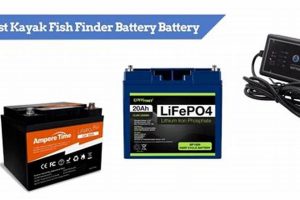
Several battery chemistries are common in portable fish finders, each with distinct performance characteristics. Lead-acid batteries offer high capacity but are heavier. Lithium-ion batteries offer higher energy density and lighter weight but are typically more expensive. Nickel-metal hydride (NiMH) batteries offer a balance between cost and performance. Battery capacity, measured in ampere-hours (Ah), directly influences operational duration.
- Battery Life and Management
Battery life is a critical consideration for extended kayak fishing trips. Factors such as screen brightness, sonar frequency, and temperature affect power consumption. Employing power-saving modes and reducing screen brightness when feasible can significantly extend battery life. Carrying spare batteries or utilizing portable power banks ensures uninterrupted operation. Monitoring battery level indicators is crucial for anticipating power needs.
- Portable Power Banks/Solar Charging
Supplemental power sources, such as portable power banks or solar panels, enhance operational flexibility. Power banks provide readily available backup power, while solar chargers offer a sustainable charging solution, particularly for multi-day trips. Compatibility between the fish finder and the chosen power source is paramount. Cable connections and voltage requirements must align for safe and effective charging.
- Integrated vs. External Batteries
Fish finders may feature integrated, non-removable batteries or accommodate external battery packs. Integrated batteries offer streamlined designs, while external packs provide flexibility in capacity and replacement. Considerations include ease of charging, battery life, and overall unit weight. External battery packs can often be swapped quickly, minimizing downtime during fishing.
Careful consideration of power source characteristics is essential for maximizing the operational efficiency of a battery-powered fish finder in a kayak. Selecting an appropriate power solution ensures uninterrupted operation and enhances the overall fishing experience by providing reliable, accessible power for essential electronics.
3. Transducer Type

Transducer selection significantly impacts the performance and data quality of compact sonar units employed in kayak fishing. Matching transducer characteristics to specific fishing environments and target species enhances underwater visibility and informs angling strategies. Understanding available transducer types and their respective capabilities is crucial for effective sonar utilization.
- Single-Beam Transducers
Single-beam transducers emit a single conical sonar beam, providing depth readings and basic fish identification directly beneath the kayak. These transducers are generally cost-effective and suitable for locating fish in open water or determining bottom depth. Their limitations include a narrower coverage area compared to other transducer types, making them less effective for scanning larger areas or complex underwater structures.
- Dual-Beam Transducers
Dual-beam transducers utilize two conical beamsa narrow, high-frequency beam for detailed information and a wider, lower-frequency beam for broader coverage. This combination provides both precise depth readings and a wider scanning area, enhancing fish detection and bottom contour mapping. They offer improved performance over single-beam transducers, particularly in shallower waters or when targeting specific structures.
- Down-Imaging Transducers
Down-imaging transducers utilize high-frequency sonar pulses to create near-photographic images of the bottom structure directly beneath the kayak. This technology excels at identifying bottom composition, vegetation, and submerged objects. While less effective for identifying fish directly, down-imaging provides valuable insights into habitat and potential fish-holding areas. This detailed bottom mapping aids in understanding underwater terrain and selecting optimal fishing locations.
- Side-Imaging Transducers
Side-imaging transducers emit fan-shaped sonar beams to the sides of the kayak, creating detailed images of the underwater environment extending outward from the kayak’s position. This technology is highly effective for scanning large areas, locating structure, and identifying fish suspended in the water column. Side-imaging provides a wider perspective than down-imaging, enhancing situational awareness and improving fish-finding capabilities in various water depths.
Selecting the appropriate transducer type for a battery-powered fish finder significantly impacts the quality and relevance of collected data. Matching transducer capabilities to specific fishing needs, such as target species, water depth, and bottom structure, maximizes the effectiveness of the sonar unit and empowers informed angling decisions. Careful consideration of these factors enhances the overall kayak fishing experience by providing a clearer understanding of the underwater environment.
4. Display Clarity
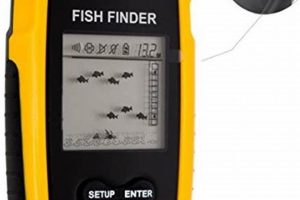
Display clarity is paramount for effective utilization of battery-powered fish finders in kayaks. A clear, easily readable display directly influences an angler’s ability to interpret crucial underwater data, impacting fishing strategy and overall success. Screen resolution, size, color palette, and sunlight readability all contribute to effective data presentation. A high-resolution display allows for finer detail in bottom structure mapping and fish identification, while a well-chosen color palette enhances target separation against the background. Sunlight readability ensures usability in bright outdoor conditions common in kayak fishing. For instance, a high-contrast grayscale display or a color display with adjustable backlighting can significantly improve visibility in direct sunlight. Conversely, a low-resolution display or one with poor contrast can hinder accurate data interpretation, rendering the device less effective. This is particularly critical in kayaks, where space constraints often necessitate smaller displays. The practical significance of display clarity lies in its direct impact on angling decisions. A clear display enables anglers to quickly and accurately identify fish, assess bottom structure, and determine water depth, facilitating informed choices regarding lure selection, retrieval techniques, and fishing location.
Furthermore, display clarity influences situational awareness. A clear presentation of navigational data, such as depth contours and GPS coordinates (if integrated), enhances navigational safety and allows anglers to effectively track their position, especially in unfamiliar waters or challenging conditions. This is especially relevant in kayak fishing, where navigation is often performed visually and in closer proximity to the water surface. The ability to quickly and accurately discern navigational information on the fish finders display can improve safety and efficiency on the water. For example, a clear display of depth contours can prevent grounding in shallow areas, while a readily visible GPS position can aid in returning to a launch point or navigating to specific fishing spots. The practical significance of this heightened situational awareness contributes to both fishing success and overall safety on the water.
In summary, display clarity serves as a critical link between the sonar data collected by a battery-powered fish finder and the angler’s interpretation of that data. Investing in a unit with a clear, readily discernible display enhances data comprehension, improves fishing strategy, and strengthens navigational awareness. The practical implications of display clarity directly contribute to a more informed, successful, and safer kayak fishing experience. Challenges such as screen size limitations in kayak-mounted units and the impact of ambient lighting underscore the importance of prioritizing display quality during device selection.
5. Mounting Options

Secure and adaptable mounting solutions are essential for integrating battery-powered fish finders into kayak setups. Mounting options directly influence device stability, usability, and accessibility, impacting angling effectiveness and overall on-the-water experience. Optimal mounting placement ensures transducer functionality, display visibility, and user convenience without compromising kayak stability or maneuverability. This section explores key considerations for effective fish finder mounting in kayaks.
- Track Systems/Rails
Kayaks equipped with integrated track systems or rails offer versatile mounting points for fish finders and other accessories. These systems provide standardized mounting platforms, allowing for adjustable positioning and secure attachment of compatible mounts. Track systems accommodate a wide range of mounting hardware, facilitating customization and flexibility in device placement. This adaptability is particularly valuable for kayaks used in diverse fishing environments or by multiple anglers with varying preferences. For example, RAM Mounts and YakAttack offer various track-compatible mounting solutions.
- Suction Cup Mounts
Suction cup mounts offer a non-permanent, readily adaptable mounting solution for smooth kayak surfaces. These mounts provide convenient portability and allow for quick installation and removal without requiring drilling or permanent modifications to the kayak. However, suction cup mounts can be susceptible to detachment under certain conditions, such as rough water or impacts. Ensuring a clean, smooth mounting surface is essential for maximizing suction cup adhesion and device stability. These mounts are suitable for temporary installations or for anglers who frequently switch between kayaks.
- Transducer Mounting Considerations
Transducer placement significantly influences sonar performance. Common transducer mounting locations on kayaks include through-hull installations, transom mounts, and trolling motor mounts. Through-hull installations provide optimal sonar performance but require permanent modification of the kayak hull. Transom mounts are suitable for kayaks with a defined transom area. Trolling motor mounts allow for transducer deployment independent of the kayak hull. Selecting an appropriate transducer mounting method depends on kayak design, fishing style, and desired sonar performance. Ensuring the transducer is submerged below the waterline and clear of obstructions is crucial for accurate readings.
- Display Mounting and Ergonomics
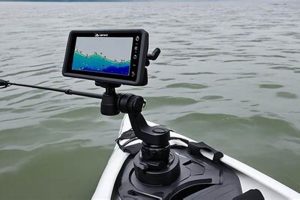
Display mounting location impacts visibility and accessibility. Positioning the display within easy reach and clear line of sight enhances usability and minimizes distractions while paddling and fishing. Adjustable mounts allow for customized viewing angles, optimizing ergonomics and reducing strain during extended use. Consideration of cable routing and management during display installation ensures a clean, organized setup and prevents interference with paddling or fishing activities.
Effective mounting solutions contribute significantly to the successful integration of battery-powered fish finders into kayak fishing systems. Careful consideration of mounting options, including compatibility with kayak design, desired device placement, and transducer mounting requirements, ensures optimal device performance, angler convenience, and overall safety on the water. A well-mounted fish finder enhances situational awareness, improves fishing efficiency, and elevates the overall kayak angling experience. For example, a stable, readily accessible display and a correctly mounted transducer provide crucial real-time data, empowering informed decisions and increasing the likelihood of angling success.
6. Durability/Waterproof
Durability and waterproof construction are critical factors for battery-powered fish finders utilized in kayak fishing environments. Exposure to water, fluctuating temperatures, and potential impacts necessitates robust device construction to ensure reliable operation and extended lifespan. The practical implications of inadequate durability and waterproofing range from minor inconvenience to complete device failure, significantly impacting angling success and safety on the water.
Kayak fishing presents inherent challenges to electronic devices. Water splashes, rain, and even submersion are common occurrences. A waterproof casing and sealed components protect internal electronics from moisture damage, ensuring continued functionality in wet conditions. Furthermore, temperature fluctuations can affect battery performance and electronic component stability. Devices designed for kayak use should tolerate a wide temperature range without performance degradation. Impacts from accidental drops, collisions with obstacles, or jostling during transport can also damage sensitive electronics. Durable construction, including impact-resistant casing and reinforced components, minimizes the risk of damage from such incidents. For example, a fish finder with an IPX7 waterproof rating can withstand temporary submersion, while a ruggedized casing protects against impacts from accidental drops.
The practical significance of durability and waterproofing extends beyond mere device protection. A reliable fish finder provides essential data for navigation, fish location, and bottom structure assessment. Device failure in critical situations can compromise angling success and potentially impact safety. For instance, relying on a malfunctioning fish finder for navigation in unfamiliar waters could lead to disorientation or grounding. Similarly, a device failure during a fishing trip could prevent accurate depth readings, hindering effective lure presentation and reducing the likelihood of success. Therefore, investing in a durable, waterproof fish finder specifically designed for kayak use is a crucial step in ensuring both a productive and safe fishing experience. This investment minimizes the risk of device failure, maximizes data reliability, and enhances the overall value of fish-finding technology in challenging kayak fishing environments.
Frequently Asked Questions
Addressing common inquiries regarding compact, portable sonar devices for kayaks clarifies key features and functionalities, assisting anglers in making informed purchasing decisions.
Question 1: How long does the battery typically last on a portable fish finder for a kayak?
Battery life varies significantly depending on battery type, capacity, device settings, and usage patterns. Lithium-ion batteries generally offer longer runtimes compared to lead-acid or NiMH batteries. Optimizing screen brightness and utilizing power-saving modes can extend battery life. Anglers should consult manufacturer specifications for estimated runtimes and carry spare batteries or portable power banks for extended trips.
Question 2: What is the difference between down-imaging and side-imaging sonar?
Down-imaging provides a detailed view of the bottom structure directly beneath the kayak, while side-imaging creates images of the underwater environment extending outward to the sides. Down-imaging excels at identifying bottom composition and submerged objects, while side-imaging is more effective for scanning larger areas and locating fish in the water column. Choosing the appropriate technology depends on specific fishing needs and target species.
Question 3: Can these units be used in saltwater?
Many compact sonar units are designed for both freshwater and saltwater environments. However, it’s crucial to verify saltwater compatibility before purchase. Saltwater exposure can corrode certain materials, so ensuring the device and transducer are designed for saltwater use is essential for longevity and reliable performance.
Question 4: How does kayak stability affect fish finder use?
Kayak stability is a crucial factor when using portable sonar devices. Adding weight to a kayak, particularly above the waterline, can impact stability. Anglers should consider kayak design, personal balance, and water conditions when choosing a mounting location and using the fish finder. Maintaining a low center of gravity and distributing weight evenly enhances stability.
Question 5: Are these units difficult to install and operate?
Most portable fish finders designed for kayaks are user-friendly and relatively easy to install and operate. Many units feature intuitive menu systems and simplified controls. Consulting the user manual and familiarizing oneself with device functionality before deployment can significantly streamline the learning process.
Question 6: What are the typical mounting options for these devices on a kayak?
Common mounting options include track systems, suction cup mounts, and specialized kayak-specific mounts. Track systems offer versatility and secure attachment. Suction cup mounts provide portability but can be less stable. Transducer mounting methods include through-hull, transom mount, and trolling motor mount. Choosing appropriate mounting solutions depends on kayak design, angler preference, and desired device stability.
Understanding these key aspects of compact sonar units empowers informed decisions and enhances angler preparedness on the water.
This concludes the FAQ section. The next section will delve into specific product recommendations and reviews of leading battery-powered fish finders suitable for kayak fishing.
Conclusion
Compact, battery-powered fish finders represent a significant advancement in kayak fishing technology. Exploration of key features, including transducer types, display clarity, mounting options, and durability considerations, reveals the critical role these devices play in enhancing angling success. Understanding power source options and effective battery management ensures uninterrupted operation in remote fishing locations. Careful selection based on individual fishing needs and kayak compatibility optimizes device performance and angler satisfaction. The analysis of portability highlights the convenience and adaptability of these units for kayak anglers.
Technological advancements continue to refine fish-finding capabilities in compact, portable formats. Kayak anglers stand to benefit significantly from these evolving technologies, gaining deeper insights into underwater environments and enhancing their overall fishing experience. Informed selection and strategic utilization of battery-powered fish finders empower anglers to make the most of valuable on-the-water time.