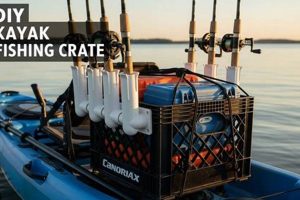
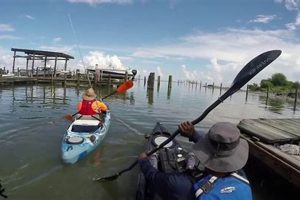
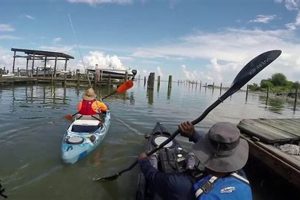
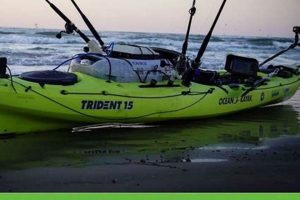
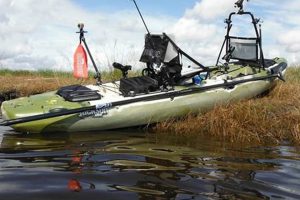
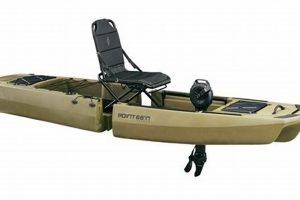
This sit-on-top vessel, manufactured by Wilderness Systems, is a specialized watercraft designed for angling. The “140” designates its approximate length in inches, placing it within the longer range of fishing kayaks, offering enhanced stability and tracking for open water. Its design typically incorporates features like rod holders, gear tracks, and storage compartments tailored to the needs of anglers.
A kayak of this type offers several advantages to fishing enthusiasts. The elevated seating position provides improved visibility for spotting fish and casting lines. Its length contributes to efficient paddling over longer distances and in varied water conditions. Purpose-built features streamline the angling experience, allowing for organized gear storage and hands-free fishing. Furthermore, the popularity of kayak fishing has grown significantly in recent years due to its affordability and accessibility compared to motorized boats, making specialized designs highly sought after.
The following sections will explore the specific design elements, performance characteristics, and target user profile of this particular model in greater detail, providing a comprehensive overview for both prospective buyers and those interested in learning more about modern fishing kayak technology.
Tips for Utilizing a Fishing Kayak
Proper utilization of a fishing kayak enhances safety and maximizes angling success. The following tips offer guidance for leveraging the features and design of such vessels.
Tip 1: Weight Distribution and Balance: Proper weight distribution is crucial for stability. Gear should be evenly distributed throughout the kayak, with heavier items placed low and centrally. Practice entering and exiting the kayak in shallow water to understand its balance point.
Tip 2: Paddle Selection and Technique: Choose a paddle appropriate for one’s height and the kayak’s width. Employ efficient paddling techniques to conserve energy and cover distances effectively. Consider a high-angle paddle stroke for maneuvering in tight spaces and a low-angle stroke for open water.
Tip 3: Safety Gear and Precautions: Always wear a personal flotation device (PFD). Carry a whistle, signaling device, and basic first-aid kit. Check weather conditions before embarking and inform someone of the planned route and return time.
Tip 4: Anchor and Drift Control: Utilize an anchor or drift sock to maintain position in desired fishing areas, especially in currents or windy conditions. Understand proper anchoring techniques to avoid entanglement or damage.
Tip 5: Fish Handling and Release: Practice proper fish handling techniques to minimize stress on the fish and ensure safe release. Use appropriate tools like lip grips and dehookers. Carry a ruler or measuring device for verifying legal catch sizes.
Tip 6: Navigation and Electronics: Familiarize oneself with navigational charts and compass use, or utilize GPS devices for accurate positioning. Consider mounting a fish finder or other electronic devices to enhance fishing success.
Tip 7: Gear Organization and Storage: Utilize designated storage compartments and gear tracks to keep essential equipment readily accessible and prevent clutter. Employ dry bags or waterproof containers to protect sensitive items from moisture.
By adhering to these guidelines, anglers can improve their fishing experience, increase their chances of success, and ensure a safe and enjoyable time on the water.
This information provides a foundational understanding for successful kayak fishing. Subsequent sections will delve into specific techniques and advanced strategies.
1. Stability

Stability is a paramount consideration in kayak fishing, directly influencing angler safety and effectiveness. For a vessel like the Wilderness Systems Thresher 140, designed for diverse fishing environments, understanding its stability characteristics is essential for informed purchase decisions and optimal on-water performance. Stability dictates casting accuracy, comfortable fish fighting, and the ability to stand for sight fishing, all contributing to a more productive and enjoyable angling experience.
- Primary Stability:
This refers to the kayak’s initial resistance to tipping when at rest. A wider hull and lower center of gravity enhance primary stability, offering a secure feeling for anglers while stationary, making tasks like changing lures or landing fish easier. The Thresher 140’s hull design prioritizes this stability, making it less likely to tip during routine fishing activities.
- Secondary Stability:
This describes the kayak’s resistance to capsizing when leaned or tilted. It becomes crucial during maneuvers, encountering waves, or battling larger fish. While a wider hull might offer strong primary stability, it can compromise secondary stability. The Thresher 140’s design seeks to balance both, providing a stable platform that can also handle more dynamic on-water situations.
- Contributing Factors to Stability:
Beyond hull design, factors like weight distribution, seat height, and water conditions significantly influence stability. Properly distributing gear within the Thresher 140 and maintaining a low center of gravity enhances its inherent stability features. Understanding the impact of wind and waves allows anglers to adjust their positioning and techniques for optimal stability.
- Impact on Fishing Activities:
Stability directly impacts the effectiveness and enjoyment of various fishing techniques. Stand-up fishing, increasingly popular among kayak anglers, requires a platform with exceptional stability. The Thresher 140’s design caters to this trend, offering a stable foundation for sight fishing and casting in shallow water. Enhanced stability also simplifies other activities like landing fish, rigging tackle, and navigating varied water conditions.
The stability characteristics of the Thresher 140 significantly contribute to its versatility and effectiveness as a fishing platform. By understanding these elements, anglers can better leverage the kayak’s capabilities and optimize their performance in diverse fishing environments. Its focus on both primary and secondary stability, combined with a design accommodating various fishing techniques, solidifies its standing as a well-rounded fishing kayak.
2. Maneuverability

Maneuverability in a fishing kayak directly impacts its effectiveness in navigating diverse water environments. For the Wilderness Systems Thresher 140, designed for a range of fishing scenarios, understanding its maneuverability characteristics is critical. Efficient movement through tight spaces, responsiveness to changing currents, and the ability to hold position against wind are all crucial aspects influencing fishing success and overall on-water experience.
- Tracking:
Tracking refers to the kayak’s ability to maintain a straight course with minimal corrective strokes. The Thresher 140’s longer length and defined hull contribute to improved tracking, allowing for efficient paddling over longer distances and in open water. This minimizes effort and allows anglers to focus on fishing rather than constant course correction. The integrated rudder system further enhances tracking, particularly in windy conditions or when battling currents.
- Turning and Responsiveness:
The ability to turn quickly and efficiently is essential for navigating tight quarters, such as maneuvering through vegetation or around obstacles. While the Thresher 140’s length contributes to stability and tracking, it can sometimes impact turning radius. The rudder system mitigates this, offering enhanced turning control and responsiveness, enabling swift adjustments to changing water features or fish movement. Proper paddling techniques further enhance turning performance.
- Influence of Water Conditions:
Water conditions significantly impact kayak maneuverability. Currents, wind, and waves can challenge directional control, requiring adjustments in paddling technique and rudder utilization. The Thresher 140’s design features, including its hull shape and rudder system, assist in maintaining control in varied conditions. Understanding how these external factors influence handling allows for proactive adjustments, maintaining maneuverability even in less-than-ideal environments.
- Impact on Fishing Techniques:
Maneuverability is intrinsically linked to specific fishing techniques. Trolling, drift fishing, and navigating tight creeks or rivers demand different levels of control and responsiveness. The Thresher 140’s blend of tracking and maneuverability caters to a variety of fishing styles. Its ability to hold position against current with the assistance of the rudder allows for controlled drifts, while its responsiveness facilitates navigating complex waterways in pursuit of target species.
The maneuverability characteristics of the Thresher 140 play a vital role in its suitability for diverse fishing applications. Understanding these elements, combined with proper paddling techniques and utilization of the rudder system, allows anglers to maximize its on-water performance and effectiveness. The kayak’s ability to balance tracking with turning responsiveness, while also considering the influence of external factors like wind and current, establishes it as a versatile platform capable of handling a broad spectrum of fishing scenarios.
3. Storage Capacity

Storage capacity in a fishing kayak directly correlates with its practicality and effectiveness for extended trips or diverse fishing styles. The Wilderness Systems Thresher 140, designed with a focus on angler needs, addresses this crucial aspect through a combination of integrated storage compartments and strategically placed attachment points. Adequate storage facilitates organized gear management, allowing anglers to carry essential equipment, safety gear, and personal items without compromising stability or maneuverability. This contributes to a more efficient and enjoyable fishing experience, eliminating the need for frequent trips ashore to resupply or reorganize.
Several factors contribute to the Thresher 140’s effective storage solutions. The large rear tankwell, often equipped with bungee cords, accommodates larger items like tackle boxes or coolers. Front hatch storage provides a protected space for sensitive electronics or other valuables. Side-mounted gear tracks offer versatile attachment points for rod holders, fish finders, and other accessories, maximizing deck space and keeping essential tools within easy reach. Recessed storage compartments, often located near the seating area, provide convenient access to smaller items like pliers, knives, or leader material. The thoughtful placement and variety of these storage options distinguish the Thresher 140 as a kayak designed for serious anglers.
The practical significance of ample storage capacity becomes evident in real-world fishing scenarios. Consider a multi-day fishing expedition: the ability to store sufficient food, water, and camping gear directly impacts the trip’s feasibility. Similarly, anglers targeting different species often require specialized equipment, from trolling rods to fly fishing gear; adequate storage allows for carrying diverse setups without sacrificing organization or accessibility. Furthermore, safety gear, including a first-aid kit, signaling devices, and extra clothing, necessitates dedicated storage space. By addressing these needs, the Thresher 140’s storage capacity enhances both the practicality and safety of kayak fishing adventures. Its well-designed storage system contributes to a more streamlined and efficient angling experience, allowing anglers to focus on the pursuit of fish rather than managing gear limitations.
4. Fishing Features
Dedicated fishing features distinguish specialized angling kayaks from recreational models. The Wilderness Systems Thresher 140 incorporates several key features designed to enhance fishing effectiveness and overall experience. These features represent a core component of its design, contributing directly to its suitability for targeted angling activities. Understanding their function and practical application is crucial for leveraging the kayak’s full potential.
Flush-mounted rod holders, strategically positioned for easy access and minimal line interference, allow anglers to troll, drift, or still-fish with multiple lines deployed. Adjustable rod holders accommodate different rod lengths and angling styles. Integrated tackle storage compartments keep essential lures, hooks, and tools organized and readily accessible, minimizing time spent searching for gear and maximizing time spent fishing. Gear tracks, commonly found on the Thresher 140, provide versatile mounting points for fish finders, GPS units, cameras, and other accessories. These tracks allow for personalized customization, tailoring the kayak’s setup to individual angling preferences and target species. Examples include mounting a fish finder transducer for accurate depth readings or attaching a camera mount to capture memorable catches. Furthermore, features like anchor trolleys or stake-out poles facilitate controlled positioning in current or shallow water, enhancing fishing effectiveness in specific environments.
The practical significance of these features becomes apparent in real-world fishing scenarios. Consider a scenario where an angler is trolling for offshore species: The ability to manage multiple lines using rod holders, while simultaneously monitoring depth and fish activity on a mounted fish finder, significantly increases the likelihood of success. Similarly, in a river environment, an anchor trolley allows for precise positioning in a desired current seam, maximizing fishing effectiveness. These integrated features streamline the angling process, allowing for a more focused and productive experience on the water. The Thresher 140’s thoughtful integration of these features reinforces its purpose-built design for serious anglers, offering tangible advantages in various fishing environments and scenarios.
5. Comfort
Comfort plays a pivotal role in the overall fishing experience, particularly during extended trips. Discomfort can detract from focus and enjoyment, impacting performance and potentially curtailing time on the water. The Wilderness Systems Thresher 140 addresses angler comfort through several key design elements, recognizing its importance in maximizing fishing effectiveness and enjoyment. These elements contribute significantly to its suitability for longer outings and demanding fishing conditions.
The seating system significantly influences comfort. The Thresher 140 typically features an adjustable seat, allowing anglers to customize its position for optimal back support and paddling posture. Features like breathable mesh fabric and adjustable lumbar support enhance comfort during prolonged use. Adequate padding minimizes pressure points and reduces fatigue, allowing for extended periods on the water without discomfort. Legroom and footrests also contribute to overall comfort, promoting proper posture and reducing strain. Adjustable footrests accommodate varying leg lengths, ensuring a comfortable and efficient paddling position for a wider range of anglers.
The practical implications of prioritizing comfort become evident during extended fishing trips. Consider a full-day excursion in challenging conditions: an uncomfortable seat can lead to back pain, fatigue, and decreased focus, hindering fishing effectiveness and potentially cutting the trip short. Conversely, a comfortable and supportive seating system allows anglers to maintain focus and energy throughout the day, maximizing their time on the water and increasing their chances of success. The Thresher 140’s emphasis on comfort, through its adjustable seating system and ergonomic design, directly contributes to a more positive and productive fishing experience, particularly during longer outings or demanding fishing conditions. This attention to detail distinguishes it as a kayak designed for serious anglers who prioritize both performance and long-term comfort.
Frequently Asked Questions
This section addresses common inquiries regarding the Wilderness Systems Thresher 140 fishing kayak, providing concise and informative responses to facilitate informed decision-making and enhance understanding of this specialized vessel.
Question 1: What differentiates the Thresher 140 from other fishing kayaks on the market?
The Thresher 140 distinguishes itself through a combination of features designed for serious anglers. Its stability, maneuverability, ample storage, dedicated fishing features, and focus on comfort contribute to a well-rounded fishing platform suitable for diverse environments and techniques.
Question 2: Is the Thresher 140 suitable for beginners, or is it designed for more experienced kayakers?
While its features cater to experienced anglers, the Thresher 140’s stability and user-friendly design make it accessible to beginners. However, novice paddlers should prioritize practicing basic kayak handling skills before venturing into challenging conditions.
Question 3: What is the weight capacity of the Thresher 140, and what factors influence its performance under load?
The Thresher 140 typically boasts a substantial weight capacity, generally exceeding 400 lbs. However, approaching maximum capacity can impact performance and stability. Proper weight distribution is crucial for maintaining optimal performance under load.
Question 4: What types of fishing environments and techniques are best suited for the Thresher 140?
Its versatility makes the Thresher 140 suitable for various environments, including lakes, rivers, and inshore coastal waters. Its design accommodates diverse techniques, from trolling and casting to jigging and fly fishing.
Question 5: What maintenance is required to ensure the longevity and optimal performance of the Thresher 140?
Regular rinsing with fresh water after each use, proper storage out of direct sunlight, and periodic inspection of hardware and hull integrity contribute to the kayak’s longevity and performance.
Question 6: Are there any recommended accessories or upgrades to enhance the functionality of the Thresher 140?
While well-equipped, consider accessories like a fish finder, anchor trolley system, upgraded seat, or additional rod holders to further customize the Thresher 140 to individual fishing preferences and target species.
Understanding these key aspects of the Thresher 140 contributes to informed purchase decisions and optimal utilization of its features. Proper research and consideration of individual needs are essential for maximizing the fishing experience.
Further sections will explore specific techniques and advanced strategies for utilizing the Thresher 140 in diverse fishing scenarios.
Conclusion
This exploration of the Wilderness Systems Thresher 140 fishing kayak has highlighted its key features, including stability, maneuverability, storage capacity, specialized fishing features, and comfort considerations. These elements collectively contribute to a versatile and effective fishing platform suitable for a range of angling styles and environments. The analysis emphasized the practical implications of each feature, demonstrating how they translate to real-world fishing scenarios and contribute to enhanced angling success.
The Thresher 140 represents a significant advancement in kayak fishing technology, offering anglers a well-equipped and thoughtfully designed vessel. Its combination of performance, comfort, and specialized features positions it as a valuable tool for serious anglers seeking to maximize their time on the water. Continued exploration of advanced techniques and individualized customization can further unlock the full potential of this specialized fishing kayak.