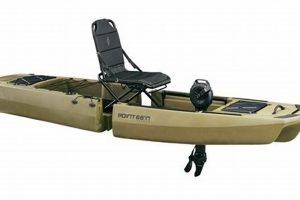
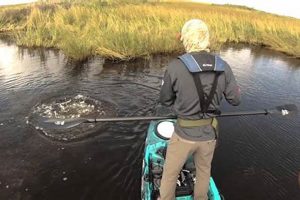
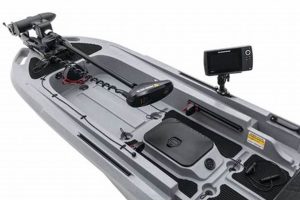
This specific model of personal watercraft is a sit-on-top style vessel designed for angling. Characterized by its stability and specialized features, it offers anglers a platform for accessing various fishing locations, from calm lakes to coastal waters. Its design typically incorporates features like rod holders, storage compartments, and often a comfortable, elevated seating position.
Such specialized kayaks offer significant advantages to fishing enthusiasts. Their stability and open design allow for ease of casting and reeling. Integrated storage options keep essential gear organized and accessible, while the maneuverability inherent in kayaks grants access to shallow or heavily vegetated areas often inaccessible to larger boats. This style of fishing vessel represents a modern evolution in angling, providing a balance of portability, affordability, and specialized functionality.
The subsequent sections will delve into specific aspects of this type of kayak, including construction materials, design features, performance characteristics, and recommended accessories. A detailed analysis will provide potential users with a thorough understanding of its capabilities and suitability for diverse fishing environments.
Tips for Kayak Fishing
Effective kayak angling requires preparation and awareness. The following tips offer guidance for a safe and productive fishing experience.
Tip 1: Prioritize Safety Equipment: Always wear a personal flotation device (PFD). Carry a whistle for signaling and a waterproof communication device in case of emergencies. A first-aid kit should also be readily accessible.
Tip 2: Plan and Research: Check weather forecasts and water conditions before embarking. Familiarize oneself with local regulations and potential hazards such as currents and tides.
Tip 3: Balance and Stability: Distribute weight evenly within the kayak to maintain stability. Avoid sudden movements or leaning too far over the side, especially when casting or reeling.
Tip 4: Effective Paddle Strokes: Learn efficient paddling techniques to conserve energy and navigate effectively. Practice maneuvering in various conditions, including wind and currents.
Tip 5: Anchor Effectively: Utilize a suitable anchor system for stationary fishing. Consider the bottom type and water depth when selecting and deploying an anchor.
Tip 6: Respect Wildlife and the Environment: Practice catch-and-release whenever possible. Properly dispose of fishing line and other waste to preserve the natural environment.
Tip 7: Dress Appropriately: Wear clothing suitable for the weather conditions and water temperature. Consider sun protection, including a hat and sunscreen.
Adherence to these guidelines contributes significantly to a safer and more successful fishing experience. Preparation and responsible practices enhance enjoyment and protect both the angler and the environment.
The concluding section will summarize key information and offer additional resources for those pursuing kayak angling.
1. Sit-on-top Design

The sit-on-top design is a defining characteristic of the Future Beach 124F and contributes significantly to its suitability for fishing. This design eliminates the enclosed cockpit found in traditional sit-inside kayaks, providing several key advantages for anglers. The open deck allows for greater freedom of movement, facilitating casting, fighting fish, and even standing to sight cast. Self-bailing scupper holes drain water quickly, enhancing stability and safety, particularly in choppy conditions or after a wave washes over the deck. This feature is crucial for anglers who may encounter unexpected splashes or need to navigate through shallow, wave-prone areas. The sit-on-top configuration also simplifies re-entry should an angler fall overboard, a critical safety consideration.
This design choice directly impacts the kayak’s practicality for fishing. Anglers can easily enter and exit the kayak from the water or a dock, simplifying launching and landing. The open deck provides ample space for gear storage and customization. Anglers can mount rod holders, fish finders, and other accessories directly to the deck, tailoring the kayak to their specific needs. The increased stability afforded by the sit-on-top design and self-bailing system allows anglers to focus on fishing, rather than constantly managing balance or bailing water. For instance, an angler battling a strong fish benefits from the stability and open deck, allowing for more effective maneuvering and less restricted movement during the fight.
In summary, the sit-on-top design of the Future Beach 124F is integral to its functionality as a fishing platform. This design enhances stability, simplifies entry and exit, facilitates gear customization, and improves safety. These features collectively contribute to a more comfortable, efficient, and secure fishing experience, making the kayak a practical choice for anglers of varying skill levels and fishing styles. This design element is a core factor in the kayak’s overall performance and suitability for its intended purpose.
2. Stability

Stability is a critical performance characteristic in kayaks designed for fishing, directly influencing angler safety, comfort, and fishing effectiveness. For the Future Beach 124F fishing kayak, stability is a key design feature, impacting its suitability for various fishing environments and techniques. This section explores the multifaceted nature of stability in the context of this specific kayak model.
- Primary Stability:
Primary stability refers to the kayak’s initial resistance to tipping when at rest. A wider hull and lower center of gravity contribute to higher primary stability. The Future Beach 124F’s relatively wide hull provides a stable platform for activities such as casting, reeling, and landing fish. This inherent stability instills confidence, particularly for novice anglers or those fishing in calm water conditions. For example, an angler standing to cast in calm water benefits from the kayak’s initial resistance to tipping.
- Secondary Stability:
Secondary stability describes the kayak’s resistance to capsizing when leaning or tilted. This characteristic is crucial when paddling in rougher waters or leaning to reach for a dropped item. The Future Beach 124F’s hull design provides a degree of secondary stability, allowing anglers to lean moderately without feeling overly precarious. This characteristic is important for retrieving gear or maneuvering in currents. An angler reaching over the side to net a fish, for example, relies on secondary stability to prevent capsizing.
- Impact of Weight Distribution:
Proper weight distribution significantly influences a kayak’s stability. Evenly distributing gear and maintaining a low center of gravity enhances both primary and secondary stability. The Future Beach 124F offers various storage compartments to facilitate proper weight distribution. Loading heavier items closer to the center and distributing weight evenly throughout the kayak contributes to a more stable and predictable paddling experience. An angler carefully positioning tackle boxes and other equipment, for example, optimizes the kayak’s stability.
- Influence of Water Conditions:
Water conditions significantly impact a kayak’s perceived stability. Calm water generally allows for greater stability, while wind, waves, and currents can create a more challenging environment. The Future Beach 124F, while stable, is still susceptible to the influences of external forces. Anglers should exercise caution and adjust their fishing techniques accordingly in challenging conditions. An angler fishing in windy conditions, for instance, must anticipate the impact of wind gusts on the kayak’s stability and adjust positioning accordingly.
Understanding these facets of stability as they relate to the Future Beach 124F enhances angler safety and fishing effectiveness. By considering the interplay of hull design, weight distribution, and water conditions, anglers can maximize stability, enabling a more confident and enjoyable fishing experience. This awareness translates to safer navigation, more effective casting and retrieval techniques, and an overall enhanced appreciation of the kayak’s performance capabilities in diverse fishing environments.
3. Fishing Features
Specialized features distinguish fishing kayaks from recreational models. The Future Beach 124F incorporates several key features designed to enhance angling effectiveness and convenience. These features contribute directly to the kayak’s suitability as a dedicated fishing platform, influencing angler success and overall experience. Rod holders, strategically placed throughout the kayak, secure fishing rods, freeing hands for other tasks like paddling, landing fish, or managing tackle. Storage compartments, including a tank well and smaller compartments, accommodate tackle boxes, gear, and personal items, promoting organization and accessibility. These storage solutions contribute to a clutter-free deck and efficient retrieval of essential equipment.
The presence and design of these fishing features directly impact an angler’s experience. For example, flush-mounted rod holders minimize line entanglement and allow for trolling. A spacious tank well can accommodate a cooler or crate for storing catch or additional gear. The strategic placement of these features considers angler workflow and ergonomics, minimizing unnecessary movement and maximizing efficiency. An angler trolling with multiple rods benefits from the secure rod holders, while the readily accessible storage compartment allows for quick retrieval of lures or tackle adjustments. The thoughtful integration of these features directly contributes to a more productive and enjoyable fishing experience.
The efficacy of these fishing features is best evaluated in practical application. An angler navigating through shallow water benefits from the hands-free convenience of rod holders, while the readily accessible storage compartment allows for quick adaptation to changing fishing conditions. These features, combined with the kayak’s stability and maneuverability, create a synergistic system that enhances angler performance and overall enjoyment on the water. The comprehensive integration of specialized fishing features underscores the Future Beach 124F’s purpose-built design for angling, differentiating it from recreational kayaks and solidifying its position as a practical and effective fishing platform.
4. Maneuverability
Maneuverability is a critical performance attribute for fishing kayaks, directly influencing access to fishing grounds and overall angling effectiveness. The Future Beach 124F’s maneuverability stems from a combination of hull design, length, and waterline characteristics. Its relatively shorter length compared to touring kayaks allows for tighter turning radii and more agile navigation in confined spaces. This characteristic is particularly advantageous in environments like creeks, rivers, and mangrove forests where precise maneuvering is essential. For example, navigating through narrow channels or around submerged obstacles requires a kayak capable of quick and responsive turns. The kayak’s design facilitates efficient paddling strokes, translating to precise directional control. This responsiveness enables anglers to position the kayak effectively for casting and presentation, maximizing fishing opportunities in challenging environments.
Several factors contribute to the Future Beach 124F’s maneuverability profile. The hull design, often featuring a shallow-V or flat bottom, enhances tracking and responsiveness to paddle input. This responsiveness allows for quick adjustments in direction and efficient navigation through varying water conditions. The kayak’s length and width also influence maneuverability. While a shorter kayak generally turns more easily, width can impact stability and tracking. The Future Beach 124F strikes a balance between maneuverability and stability, providing anglers with responsive handling while maintaining a secure platform. For example, navigating against a current or in windy conditions requires a kayak that balances maneuverability with stability to maintain control and prevent capsizing.
Understanding the factors influencing the Future Beach 124F’s maneuverability empowers anglers to exploit its capabilities fully. Recognizing the interplay of hull design, length, and width allows anglers to anticipate the kayak’s responsiveness and adjust paddling techniques accordingly. This awareness translates to more effective navigation in complex environments, precise boat positioning for optimal casting angles, and ultimately, enhanced fishing success. The maneuverability of the Future Beach 124F, when combined with its other fishing-specific features, contributes significantly to its overall effectiveness as a dedicated fishing platform, allowing anglers to access diverse fishing locations and effectively target their desired species.
5. Portability

Portability significantly influences the practical usability of a fishing kayak, impacting transportation, launch accessibility, and storage. The Future Beach 124F addresses portability through several design and material choices. Its relatively lightweight construction, often utilizing high-density polyethylene (HDPE), facilitates transport. This material offers a balance of durability and manageable weight, allowing individuals to load and unload the kayak from vehicle roof racks or transport it short distances without specialized equipment. The kayak’s dimensions also contribute to portability, allowing it to fit within standard vehicle configurations and reducing storage space requirements. This consideration is crucial for individuals with limited storage capacity or those who frequently transport their kayaks. For example, the ability to transport the kayak in a standard pickup truck bed or on a compact car roof rack significantly expands accessibility to various launch sites. Additionally, the manageable weight allows for easier handling during loading, unloading, and carrying to and from the water’s edge, particularly in situations where launch sites are not directly accessible by vehicle.
The practical implications of portability extend beyond initial transport. The ease of handling translates to a less cumbersome launch experience, allowing anglers to quickly transition from transport to fishing. This efficiency is particularly valuable in situations with limited access or when fishing conditions are time-sensitive. For example, launching from a remote shoreline or quickly accessing a fleeting fishing opportunity benefits greatly from the kayak’s portability. Furthermore, the kayak’s portability simplifies storage, allowing individuals to store the kayak in garages, sheds, or even apartments without requiring excessive space or specialized storage solutions. This ease of storage contributes to the overall convenience and long-term practicality of owning and maintaining the kayak. Consider an angler living in an apartment complex who can easily store the kayak in a storage unit or even on a balcony due to its compact size and manageable weight. This ease of storage directly impacts the practicality and accessibility of kayak fishing for individuals without dedicated storage space.
In conclusion, the Future Beach 124F’s portability, achieved through its lightweight construction and manageable dimensions, enhances its overall practicality and accessibility. The ease of transport, launch, and storage broadens the range of fishing locations accessible to anglers and simplifies the logistical aspects of kayak ownership. This portability contributes significantly to the kayak’s appeal, particularly for individuals seeking a versatile and convenient fishing platform adaptable to diverse transportation and storage scenarios. The practical significance of this portability extends beyond convenience, impacting the overall fishing experience by enabling access to remote fishing grounds and streamlining the transition from transport to on-the-water angling. This characteristic underscores the Future Beach 124F’s design focus on providing a user-friendly and accessible fishing platform.
6. Durability

Durability is a critical factor influencing the lifespan and overall value of a fishing kayak, especially considering the demanding environments they often encounter. For the Future Beach 124F fishing kayak, durability translates to sustained performance, resistance to wear and tear, and ultimately, a longer service life. This characteristic directly impacts the kayak’s ability to withstand impacts, abrasion, and UV exposure, preserving its structural integrity and functionality over time. The following facets explore the key components contributing to the kayak’s durability.
- Material Selection:
The Future Beach 124F typically utilizes high-density polyethylene (HDPE) in its construction. HDPE offers a balance of impact resistance, abrasion resistance, and UV stability. This material choice contributes to the kayak’s ability to withstand collisions with rocks, submerged obstacles, and other potential hazards encountered in various fishing environments. For instance, an angler navigating through rocky shallows or encountering a submerged log benefits from the impact-resistant properties of HDPE. This material choice minimizes the risk of cracks or punctures, preserving the kayak’s structural integrity.
- Construction Methods:
The construction methods employed in manufacturing the Future Beach 124F influence its overall durability. Rotational molding, a common process used for HDPE kayaks, creates a seamless, one-piece hull with uniform thickness. This construction method eliminates weak points associated with joints or seams, enhancing the kayak’s overall strength and resistance to stress cracking. This seamless construction contributes to the kayak’s long-term durability, minimizing the risk of leaks or structural failures over time. For example, the absence of seams reduces the likelihood of water intrusion, which can lead to delamination or weakening of the hull structure.
- UV Resistance:
Exposure to ultraviolet (UV) radiation from sunlight can degrade the structural integrity of plastics over time. The Future Beach 124F incorporates UV inhibitors in its HDPE formulation to mitigate the detrimental effects of sun exposure. This protection helps prevent fading, cracking, and embrittlement, extending the kayak’s lifespan. An angler frequently fishing in sunny conditions benefits from this UV protection, preserving the kayak’s appearance and structural integrity over extended periods. This resistance to UV degradation contributes to the long-term value and usability of the kayak.
- Hardware and Fittings:
The durability of a kayak also depends on the quality of its hardware and fittings. Rust-resistant hardware, such as stainless steel or anodized aluminum, contributes to the long-term performance and reliability of components like carry handles, D-rings, and rod holders. Durable fittings maintain their functionality over time, resisting corrosion and wear from exposure to saltwater and other environmental factors. An angler relying on securely fastened rod holders or D-rings for attaching gear benefits from the corrosion resistance of quality hardware, ensuring reliable performance even in harsh marine environments.
The durability of the Future Beach 124F fishing kayak, influenced by material selection, construction methods, UV resistance, and hardware quality, directly contributes to its long-term value and performance. These factors collectively enhance the kayak’s ability to withstand the rigors of regular use in diverse fishing environments. This resilience translates to a reliable and dependable fishing platform, capable of providing years of service and enabling anglers to explore their favorite fishing spots with confidence. Investing in a durable kayak like the Future Beach 124F ultimately contributes to a more sustainable and cost-effective approach to kayak fishing.
Frequently Asked Questions
This section addresses common inquiries regarding the Future Beach 124F fishing kayak, providing concise and informative responses to facilitate informed decision-making among prospective purchasers and users.
Question 1: What is the weight capacity of the Future Beach 124F?
The weight capacity typically ranges between 350 and 400 pounds, encompassing angler weight, gear, and any additional cargo. Exceeding this limit can compromise stability and performance.
Question 2: Is the Future Beach 124F suitable for ocean use?
While designed primarily for lakes and rivers, the kayak can handle calmer coastal waters and protected bays. However, open ocean use in challenging conditions is not recommended due to its shorter length and sit-on-top design.
Question 3: What materials are used in the construction of the kayak?
The Future Beach 124F is typically constructed from high-density polyethylene (HDPE), a durable and UV-resistant material known for its impact resistance and relatively low weight.
Question 4: What are the dimensions of the kayak?
The kayak measures approximately 12 feet in length and 31 inches in width. These dimensions contribute to a balance of stability and maneuverability.
Question 5: How many rod holders does the kayak have?
The Future Beach 124F typically includes two flush-mounted rod holders and one adjustable rod holder, providing convenient options for trolling and still fishing techniques.
Question 6: Does the kayak come with a paddle?
While some retailers may offer package deals including a paddle, the standard offering typically does not include a paddle. Paddles are usually purchased separately, allowing users to select a paddle length and style best suited to their individual preferences and paddling style.
Careful consideration of these frequently asked questions provides potential users with a more comprehensive understanding of the Future Beach 124F’s capabilities and limitations. This information empowers informed decisions regarding its suitability for individual needs and intended usage scenarios.
The following section will provide a concluding summary of key features and benefits, offering a concise overview of the Future Beach 124F fishing kayak’s overall value proposition.
Future Beach 124F Fishing Kayak
This exploration of the Future Beach 124F fishing kayak has provided a detailed examination of its key features, benefits, and overall suitability for angling. From its stable sit-on-top design and specialized fishing features to its maneuverability, portability, and durability, the kayak presents a compelling option for anglers seeking a dedicated fishing platform. Key attributes such as strategically placed rod holders, ample storage compartments, and a hull design prioritizing stability contribute to enhanced fishing effectiveness and overall user experience. Its portability facilitates access to diverse fishing locations, while durability ensures long-term performance in demanding environments. The analysis of stability considerations, material selection, and construction methods provides a comprehensive understanding of the kayak’s performance characteristics and contributes to informed decision-making among prospective users.
The Future Beach 124F fishing kayak represents a practical and accessible entry point into the world of kayak angling. Its design effectively balances performance, stability, and specialized features, catering to anglers of varying skill levels and fishing styles. Careful consideration of individual needs, fishing environments, and intended usage scenarios will empower informed purchase decisions and contribute to a satisfying and productive on-the-water experience. Continued exploration of kayak fishing techniques and responsible angling practices will further enhance enjoyment and contribute to the preservation of aquatic ecosystems.