Selecting an appropriate power source for a kayak’s electronic fish finder involves considering the device’s power consumption (typically measured in amps), the intended duration of use, and the battery’s capacity (measured in amp-hours). For example, a fish finder drawing 1 amp and used for 8 hours would necessitate a battery with a minimum capacity of 8 amp-hours. Factors like screen size, sonar features, and GPS functionality influence a fish finder’s power requirements. Choosing a battery with ample capacity ensures uninterrupted operation throughout the fishing trip.
A correctly sized battery is fundamental to a successful kayak fishing experience. Insufficient battery capacity can lead to premature power depletion, interrupting vital navigational and fish-finding capabilities. Conversely, an excessively large battery adds unnecessary weight and cost. Historically, anglers relied on heavier, less efficient lead-acid batteries. Advancements in battery technology now offer lighter, more compact lithium-ion options with significantly higher energy density, allowing for extended use and improved portability.
The following sections will explore various battery types suitable for kayak fish finders, including detailed comparisons of their capacity, lifespan, charging requirements, and cost-effectiveness. Further discussion will cover practical tips for optimizing battery performance and safe handling practices.
Tips for Selecting an Appropriate Power Source for Kayak Fish Finders
Choosing the correct battery is crucial for optimal fish finder performance and an enjoyable kayak fishing experience. These tips offer guidance for selecting a suitable power source.
Tip 1: Calculate Total Power Consumption: Determine the fish finder’s amperage draw and multiply it by the anticipated hours of use. This calculation provides the minimum required amp-hour (Ah) rating for the battery.
Tip 2: Consider Battery Chemistry: Lithium-ion batteries offer superior energy density and lighter weight compared to lead-acid or sealed lead-acid (SLA) batteries, making them ideal for kayaks. However, lithium-ion batteries often come at a higher price point.
Tip 3: Factor in Environmental Conditions: Cold temperatures can reduce battery performance. If fishing in colder climates, consider a slightly larger battery capacity or a battery designed for cold weather operation.
Tip 4: Prioritize Safety: Always use a battery box or case designed for marine environments to protect the battery from water and impacts. Ensure proper ventilation to prevent gas buildup from certain battery types.
Tip 5: Account for Additional Electronics: If powering other devices from the same battery, such as chartplotters, lights, or bilge pumps, calculate their power consumption and add it to the fish finder’s requirements.
Tip 6: Employ a Battery Management System: Consider using a battery management system (BMS) for lithium-ion batteries to protect against overcharging, over-discharging, and short circuits.
Tip 7: Understand Charging Requirements: Different battery chemistries require specific chargers. Ensure compatibility between the chosen battery and the available charging equipment.
Adhering to these guidelines ensures reliable power for electronic devices, maximizing fishing time and enhancing safety on the water.
By understanding the various factors influencing battery selection and following these practical tips, anglers can confidently choose the optimal power source for their kayak fish finders, contributing to a more productive and enjoyable fishing experience. The following section will provide a concluding overview of key takeaways and recommendations.
1. Fish finder power consumption

Fish finder power consumption is a critical factor in determining the appropriate battery size for kayak use. The power draw of a fish finder, typically measured in amperes (amps), dictates the minimum battery capacity required to sustain operation for the desired duration. A direct correlation exists: higher power consumption necessitates a larger battery capacity, measured in amp-hours (Ah). For example, a fish finder drawing 0.5 amps operating for 8 hours requires a minimum battery capacity of 4 Ah (0.5 amps x 8 hours = 4 Ah). Accurately assessing fish finder power consumption, often found in the device’s specifications, forms the foundation of proper battery selection. Overlooking this crucial detail can lead to premature battery depletion, interrupting fishing expeditions and potentially compromising navigational safety.
Several factors influence a fish finder’s power consumption. Screen size, sonar frequency, and additional features like GPS and chartplotting contribute to the overall power draw. Larger, brighter displays and higher-frequency sonar typically demand more power. Integrating multiple functionalities within the fish finder further increases energy requirements. Consequently, selecting a battery solely based on amp-hour rating without considering the specific fish finder’s power consumption is insufficient. Understanding the power demands of the chosen device is paramount for ensuring adequate power supply and uninterrupted operation. For instance, a fish finder with a large, high-resolution display and advanced CHIRP sonar will likely require a significantly larger battery than a basic model with a smaller grayscale screen.
In summary, fish finder power consumption plays a pivotal role in selecting the correct battery size for kayak fishing. Calculating the required capacity based on the device’s amperage draw and intended usage duration is crucial. Furthermore, understanding the factors influencing power consumption, such as screen size and features, allows for informed battery selection. This knowledge ensures uninterrupted fish finder operation, maximizing angling success and enhancing safety on the water.
2. Battery amp-hour (Ah) rating

Battery amp-hour (Ah) rating is a crucial specification when determining the appropriate battery for a kayak fish finder. This rating indicates the amount of current a battery can supply over a specific period. Understanding this metric is fundamental to ensuring adequate power for electronics during fishing expeditions.
- Capacity and Runtime:
The Ah rating directly correlates with the battery’s capacity and runtime. A higher Ah rating signifies a larger capacity, enabling the battery to deliver power for a more extended period. For instance, a 10 Ah battery can theoretically supply 1 amp of current for 10 hours, or 2 amps for 5 hours. This extended runtime is essential for longer fishing trips, eliminating the risk of power loss at critical moments. Choosing a battery with sufficient Ah ensures uninterrupted operation of the fish finder throughout the day.
- Fish Finder Power Consumption:
Matching the battery’s Ah rating to the fish finder’s power requirements is vital. A fish finder’s power consumption, typically measured in amps, dictates the minimum Ah rating required for optimal performance. Calculating the required Ah involves multiplying the fish finder’s amperage draw by the anticipated hours of use. For example, a fish finder drawing 0.5 amps used for 8 hours requires a minimum 4 Ah battery. Overestimating the Ah rating provides a safety margin, while underestimation risks premature power depletion.
- Battery Chemistry and Ah Ratings:
Different battery chemistries offer varying Ah ratings and performance characteristics. Lead-acid batteries, while cost-effective, generally offer lower Ah ratings for a given size and weight compared to lithium-ion batteries. Lithium-ion batteries provide higher energy density, allowing for larger Ah ratings in smaller and lighter packages, ideal for kayak portability. Choosing between different battery chemistries often involves balancing capacity, weight, and cost.
- Additional Electronics and Ah Calculations:
When powering additional devices from the same battery, such as GPS units, lights, or bilge pumps, the cumulative power draw must be considered when determining the required Ah rating. Adding the amperage requirements of all connected devices and multiplying by the intended usage time ensures adequate battery capacity for the entire electronic setup. Neglecting this calculation could lead to insufficient power for all devices.
In conclusion, carefully considering battery Ah rating in relation to fish finder power consumption and the demands of other onboard electronics is crucial. Selecting an appropriately sized battery ensures uninterrupted power for vital equipment during kayak fishing trips. Balancing capacity, weight, cost, and the specific requirements of the electronic setup guarantees optimal performance and a more enjoyable fishing experience.
3. Duration of Fishing Trips

The duration of planned fishing trips directly influences the required battery capacity for kayak fish finders. Longer trips necessitate greater power reserves to ensure continuous operation of essential electronics. Understanding this relationship is crucial for selecting an appropriately sized battery, preventing premature power depletion, and maximizing time on the water.
- Short Fishing Trips (Under 4 Hours):
For shorter excursions, a smaller capacity battery often suffices. A battery with a lower amp-hour (Ah) rating can provide ample power for a few hours of fish finder operation. This approach reduces overall weight and cost, ideal for quick outings where extended power reserves are unnecessary. For example, a 5 Ah battery might be suitable for a half-day trip.
- Medium-Duration Trips (4-8 Hours):
Trips lasting between four to eight hours demand a balance between weight and capacity. Mid-range Ah batteries offer sufficient power for a full day of fishing without excessive bulk. Calculating the fish finder’s power consumption and multiplying it by the anticipated usage time provides the minimum required Ah rating. Adding a safety margin ensures adequate reserves. A 10 Ah battery would generally be suitable for this duration.
- Extended Fishing Trips (8+ Hours):
Extended trips necessitate higher capacity batteries to power electronics throughout the day. Larger Ah batteries, although heavier, provide the necessary power reserves for prolonged use. Lithium-ion batteries, offering higher energy density, are often preferred for longer trips due to their lighter weight compared to equivalent capacity lead-acid batteries. A 15-20 Ah lithium-ion battery, or even larger, could be necessary for these extended durations.
- Multi-Day Expeditions:
Multi-day kayak fishing expeditions require careful power management and often involve multiple charging strategies. Larger capacity batteries are essential, and supplemental charging options, such as solar panels or portable power stations, become vital for maintaining power throughout the trip. Careful calculation of power needs and consideration of charging accessibility are paramount for multi-day adventures.
In summary, selecting the appropriate battery size for a kayak fish finder is intrinsically linked to the anticipated duration of fishing trips. Balancing battery capacity with weight and portability considerations, alongside the use of supplemental charging methods for extended outings, ensures uninterrupted power for essential electronics, contributing to a successful and enjoyable fishing experience. Careful planning based on trip length and power requirements is essential for maximizing time on the water.
4. Type of battery chemistry

Battery chemistry significantly influences the appropriate size and type of battery for kayak fish finders. Different chemistries offer varying energy densities, weight characteristics, lifespans, and cost considerations. Understanding these distinctions is crucial for selecting a battery that balances performance, portability, and budget.
Lead-Acid Batteries: Traditional lead-acid batteries, while cost-effective, possess lower energy density compared to other chemistries. This means a larger, heavier battery is required to achieve the same amp-hour (Ah) rating as a smaller lithium-ion battery. While suitable for shorter trips or less demanding fish finders, their weight can be a drawback for kayak anglers. Furthermore, lead-acid batteries are susceptible to damage from deep discharge and require careful maintenance.
Sealed Lead-Acid (SLA) Batteries: SLA batteries offer a maintenance-free alternative to flooded lead-acid batteries, reducing the risk of spills and leaks. However, they still possess a lower energy density compared to lithium-ion options. SLA batteries are a viable option for anglers seeking a balance between cost and convenience, particularly for shorter fishing trips or smaller fish finders with lower power demands.
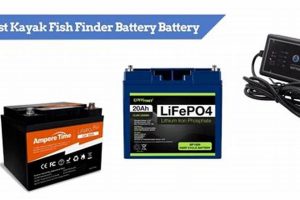
Lithium-ion Batteries: Lithium-ion batteries have become increasingly popular for kayak fish finders due to their superior energy density and significantly lighter weight. These batteries offer a higher Ah rating for a given size and weight compared to lead-acid alternatives, enabling longer runtimes and improved portability. While generally more expensive, their extended lifespan and lighter weight make them a compelling choice for serious kayak anglers. Different lithium chemistries exist within this category, such as Lithium Iron Phosphate (LiFePO4), offering further advantages in terms of safety and cycle life.
Selecting the appropriate battery chemistry requires careful consideration of several factors. Balancing power needs, budget constraints, and weight limitations is crucial. For example, a kayak angler embarking on multi-day expeditions with a power-hungry fish finder might prioritize the lightweight and high capacity of lithium-ion, despite the higher initial cost. Conversely, an angler primarily fishing shorter trips with a basic fish finder might find the affordability of SLA batteries more suitable. Understanding the nuances of each battery chemistry empowers informed decisions, maximizing performance and enjoyment on the water.
5. Additional electronics usage
Additional electronics usage significantly impacts battery sizing considerations for kayak fish finders. Powering devices beyond the fish finder itself, such as chartplotters, GPS units, trolling motors, bilge pumps, and mobile device chargers, increases overall power consumption and necessitates careful battery selection. Neglecting to account for these additional power draws can lead to premature battery depletion, potentially compromising navigation, safety, and the overall fishing experience.
The cumulative amperage draw of all connected devices dictates the required battery capacity. Calculating the total power consumption involves summing the amperage requirements of each device and multiplying by the anticipated usage duration. For instance, a fish finder drawing 0.5 amps, a GPS drawing 0.2 amps, and a bilge pump drawing 2 amps, all used concurrently for 4 hours, necessitate a battery capable of delivering at least 11.6 amp-hours (0.5 + 0.2 + 2) * 4 = 11.6 Ah. Furthermore, selecting a battery with a capacity exceeding the calculated minimum provides a crucial safety margin, accounting for unforeseen circumstances or extended usage.
Practical considerations extend beyond simple capacity calculations. Integrating multiple high-draw devices, such as trolling motors, significantly impacts battery choices. In such scenarios, a dedicated, higher-capacity battery solely for the trolling motor, separate from the fish finder and other electronics, is often advisable. This approach prevents excessive drain on the primary electronics battery, ensuring uninterrupted operation of essential navigation and fish-finding equipment. Moreover, employing efficient power management practices, such as dimming displays and minimizing unnecessary device usage, can extend battery life and optimize overall power utilization. Careful consideration of additional electronics usage is paramount for selecting an appropriately sized battery, enabling a safe and productive kayak fishing experience.
6. Environmental Conditions

Environmental conditions play a crucial role in determining appropriate battery selection for kayak fish finders. Temperature fluctuations, particularly cold weather, significantly impact battery performance and capacity. Understanding these environmental influences is essential for ensuring reliable power for electronics during kayak fishing excursions.
- Temperature Effects on Battery Capacity:
Battery capacity is inversely affected by temperature, particularly in colder environments. Low temperatures reduce the chemical reactions within the battery, diminishing its ability to deliver power effectively. This reduced capacity can lead to shorter runtimes and potentially premature power depletion. For example, a battery rated at 10 Ah at room temperature might only deliver 7 Ah or less in freezing conditions. Consequently, selecting a battery with a higher Ah rating than typically required is advisable for cold-weather fishing.
- Battery Chemistry and Temperature Sensitivity:
Different battery chemistries exhibit varying degrees of temperature sensitivity. Lead-acid batteries are generally more susceptible to cold-weather performance degradation compared to lithium-ion batteries. Lithium-ion chemistries, particularly Lithium Iron Phosphate (LiFePO4), offer better cold-weather performance and retain a larger percentage of their capacity at lower temperatures. This resilience makes lithium-ion batteries a preferred choice for kayak anglers fishing in colder climates.
- Battery Storage and Temperature Considerations:
Proper battery storage is essential for maintaining performance and longevity, particularly during periods of inactivity or extreme temperatures. Storing batteries in a cool, dry environment away from direct sunlight helps prevent degradation. Extreme heat can damage batteries, while freezing temperatures, particularly for lead-acid batteries, can cause irreversible damage. Adhering to recommended storage temperature ranges specified by the manufacturer is crucial for preserving battery health.
- Mitigation Strategies for Cold Weather Operation:
Several strategies can mitigate the effects of cold weather on battery performance. Insulating the battery using neoprene sleeves or specialized battery boxes can help maintain operating temperature. Pre-warming the battery before use, storing it inside a heated vehicle or utilizing a battery warmer, can improve initial performance in cold conditions. Furthermore, minimizing power consumption by dimming displays and reducing non-essential device usage can extend battery life in cold environments.
In summary, careful consideration of environmental conditions, especially temperature, is paramount when selecting a battery for kayak fish finders. Understanding the impact of temperature on battery capacity, selecting appropriate battery chemistries for cold weather operation, practicing proper battery storage, and employing mitigation strategies ensures reliable power for essential electronics during kayak fishing trips in varying climates.
7. Weight and portability
Weight and portability are critical factors influencing battery selection for kayak fish finders. Kayaks, by nature, prioritize lightweight gear to maintain maneuverability and ease of transport. Battery weight significantly impacts overall kayak performance and angler fatigue, particularly during longer trips or portages. Balancing power requirements with weight limitations is essential for a successful kayak fishing experience.
- Battery Chemistry and Weight:
Battery chemistry directly impacts weight. Lead-acid batteries, while cost-effective, are significantly heavier than lithium-ion batteries for an equivalent amp-hour (Ah) rating. Lithium-ion batteries, offering higher energy density, provide more power in a smaller, lighter package. This weight advantage makes lithium-ion the preferred choice for kayak anglers, despite the higher initial cost. The weight difference can be substantial, particularly for larger capacity batteries.
- Battery Size and Kayak Balance:
Battery size and weight affect kayak stability and balance. Larger, heavier batteries can shift the kayak’s center of gravity, potentially compromising stability, particularly in rough water or during quick maneuvers. Distributing weight evenly throughout the kayak is crucial. Positioning a heavier battery lower in the hull can improve stability. Conversely, excessively large batteries can restrict storage space and impede movement within the kayak.
- Transportation and Portability:
Transporting kayaks, especially longer distances or across challenging terrain, requires consideration of overall weight, including the battery. Heavier batteries increase the burden during portages or when loading and unloading kayaks from vehicles. Kayak anglers frequently transport their vessels over significant distances, making battery weight a crucial factor in overall portability. Lighter batteries simplify transport and reduce physical strain.
- Balancing Power Needs and Weight:
Balancing power needs with weight limitations is paramount for kayak anglers. While higher capacity batteries provide longer runtimes, their increased weight can negatively impact kayak performance and maneuverability. Carefully assessing fish finder power consumption, trip duration, and the weight limitations of the kayak and angler’s physical capabilities are essential for selecting the optimal battery size. Oversizing the battery for marginal gains in runtime can be detrimental to the overall kayak fishing experience. A smaller, lighter battery coupled with mindful power management practices can often provide a better balance.
In conclusion, weight and portability are integral considerations when choosing a battery for a kayak fish finder. Battery chemistry, size, and the angler’s transportation needs must be carefully evaluated against power requirements. Prioritizing lighter, more energy-dense batteries, while potentially incurring higher upfront costs, often results in a more enjoyable and efficient kayak fishing experience, particularly for longer trips or challenging terrains. Striking the right balance between power and portability is crucial for maximizing time on the water and minimizing physical strain.
Frequently Asked Questions
This FAQ section addresses common queries regarding battery selection for kayak fish finders, providing concise yet comprehensive answers to facilitate informed decision-making.
Question 1: How long will a 12Ah battery power a fish finder?
The runtime depends on the fish finder’s power consumption (measured in amps). Dividing the battery’s Ah rating (12Ah) by the fish finder’s amperage draw yields the estimated runtime in hours. For example, a fish finder drawing 1 amp would run for approximately 12 hours on a fully charged 12Ah battery. However, various factors like temperature and battery age can influence actual runtime.
Question 2: Can a deep-cycle marine battery be used for a kayak fish finder?
Deep-cycle marine batteries are suitable, particularly for extended use or powering multiple devices. However, their weight and size should be carefully considered for kayak portability. Smaller, lighter alternatives like lithium-ion batteries might be preferable for certain kayak setups.
Question 3: Are lithium batteries safe for kayak use?
Lithium batteries, when used and stored correctly, are generally safe for kayak applications. Using a marine-grade battery box and adhering to manufacturer safety guidelines mitigates potential risks. LiFePO4 (Lithium Iron Phosphate) batteries offer enhanced safety characteristics compared to other lithium chemistries.
Question 4: What factors influence fish finder power consumption?
Screen size, brightness, sonar frequency, and additional features like GPS and chartplotting all contribute to a fish finder’s power consumption. Larger screens and more complex functionalities generally require more power.
Question 5: How often should a fish finder battery be charged?
Charging frequency depends on usage and battery chemistry. Recharging after each fishing trip is generally recommended to maintain battery health and ensure sufficient power for the next outing. Avoid fully depleting batteries, especially deep-cycle or lithium-ion types, as this can shorten their lifespan.
Question 6: Can a car battery power a kayak fish finder?
While technically possible, automotive starting batteries are not designed for deep discharge and can suffer damage if regularly used for powering fish finders. Deep-cycle marine batteries or lithium-ion batteries are better suited for this purpose.
Understanding the factors impacting battery performance and selecting an appropriate battery size are essential for ensuring uninterrupted operation of fish finders and maximizing enjoyment on the water. Careful consideration of power consumption, trip duration, and environmental conditions ensures reliable power for essential electronics.
The next section offers a concluding summary and key recommendations for selecting the optimal power source for kayak fishing electronics.
What Size Battery for Kayak Fish Finder
Determining the appropriate battery for a kayak fish finder requires careful evaluation of several interconnected factors. Fish finder power consumption, measured in amps, dictates the minimum battery capacity. Trip duration directly influences the required amp-hour (Ah) rating. Battery chemistry, encompassing lead-acid, sealed lead-acid (SLA), and lithium-ion options, presents trade-offs between cost, weight, and performance. Additional electronics usage, including GPS units, lights, and trolling motors, necessitates calculating cumulative power draw and adjusting battery capacity accordingly. Environmental conditions, particularly cold temperatures, significantly impact battery performance and necessitate adjustments to capacity calculations. Finally, weight and portability considerations are paramount for maintaining kayak maneuverability and ease of transport.
Careful consideration of these factors ensures reliable power for essential electronics during kayak fishing expeditions. Prioritizing appropriate battery selection based on individual needs and fishing conditions enhances safety, maximizes time on the water, and contributes to a more productive and enjoyable angling experience. Ultimately, informed battery choices empower anglers to focus on the pursuit of their quarry, unhindered by power limitations.