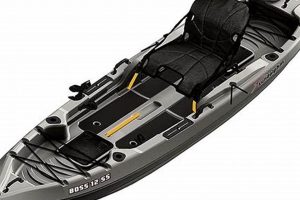
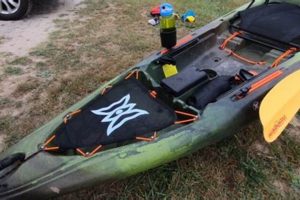
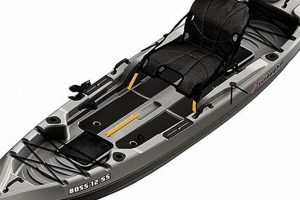
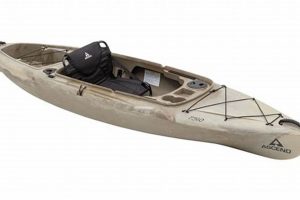
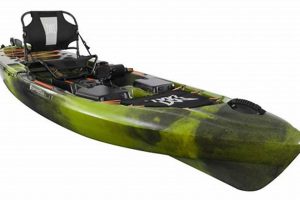
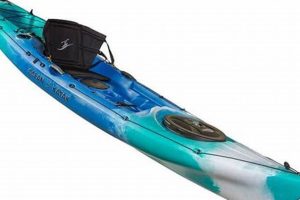
This type of watercraft is designed for anglers seeking a stable and maneuverable platform for fishing in calm, inland waterways. A ten-foot length offers a balance between portability and tracking performance, while the “sit-on-top” design promotes stability and easy access to gear. The “gray swirl” color scheme provides a degree of camouflage in various aquatic environments. These kayaks are typically constructed from durable, lightweight materials like high-density polyethylene (HDPE) and often feature built-in rod holders, storage compartments, and other amenities tailored to the needs of fishing enthusiasts.
Small, stable watercraft like this offer distinct advantages for fishing. Their compact size allows access to shallow waters and tighter spaces often inaccessible to larger boats. The sit-on-top design provides increased stability, making casting and reeling easier, and facilitates quick entry and exit in case of an accidental capsize. The specialized features, such as rod holders and storage compartments, enhance the overall fishing experience by keeping equipment organized and readily accessible. Furthermore, the relatively lightweight nature of these kayaks allows for easy transport and launching, opening up opportunities to explore a variety of fishing locations.
The following sections will explore the advantages of this type of kayak in greater detail, covering topics such as material selection, design considerations, essential features, and recommended accessories. Guidance on proper usage, maintenance, and safety precautions will also be provided.
Tips for Utilizing a Sit-On-Top Fishing Kayak in Lakes and Rivers
Proper preparation and technique enhance safety and enjoyment when using a sit-on-top fishing kayak in calm, inland waterways. The following tips offer guidance for maximizing the experience.
Tip 1: Conduct a Pre-Trip Inspection: Always check the kayak’s hull for any damage or leaks before embarking. Ensure all necessary equipment, including paddles, life vests, and safety gear, are in good working order.
Tip 2: Dress Appropriately: Wear clothing suitable for water activities, including quick-drying fabrics and water shoes. Layering allows for adjustments to changing weather conditions. A wide-brimmed hat and polarized sunglasses offer protection from the sun.
Tip 3: Plan the Route: Research the intended fishing location beforehand. Note potential hazards, such as shallow areas, submerged obstacles, and changing currents. Awareness of weather forecasts and water conditions is crucial.
Tip 4: Practice Proper Paddling Technique: Efficient paddling conserves energy and reduces strain. Maintain a balanced posture and utilize core muscles for power. Consider learning basic kayak maneuvering strokes for enhanced control.
Tip 5: Distribute Weight Evenly: Proper weight distribution contributes to stability. Store heavier items closer to the center of the kayak and avoid overloading. Secure all gear to prevent shifting during movement.
Tip 6: Respect Wildlife and the Environment: Maintain a safe distance from wildlife and avoid disturbing their natural habitats. Adhere to “Leave No Trace” principles by packing out all trash and minimizing environmental impact.
Tip 7: Inform Someone of Your Plans: Share the intended fishing location, route, and estimated return time with a trusted individual. This ensures someone is aware of your whereabouts in case of an emergency.
By following these guidelines, individuals can increase their safety and enhance their overall fishing experience. Preparation and mindful practices contribute to enjoyable and responsible kayak angling.
This information provides a foundation for a successful fishing trip. The subsequent conclusion will reiterate key safety considerations and offer final recommendations for maximizing enjoyment on the water.
1. Stability

Stability is a paramount consideration for any watercraft, particularly for fishing kayaks where balance and a secure platform are essential for casting, reeling, and landing fish. In the context of a 10-foot sit-on-top fishing kayak intended for lakes and rivers, stability directly impacts angler safety and fishing success. This discussion explores key facets contributing to the stability of this type of kayak.
- Hull Design:
The hull design plays a critical role in determining a kayak’s stability. Wider, flatter hulls generally offer greater primary stability (initial resistance to tipping), which is beneficial for calm water fishing. A 10-foot kayak intended for lakes and rivers often incorporates a wider hull design to provide a stable platform for anglers. However, this can compromise secondary stability (the ability to recover from a significant tilt). The specific hull design needs to balance these two aspects of stability for optimal performance.
- Center of Gravity:
A lower center of gravity contributes to increased stability. The sit-on-top design inherently places the angler closer to the waterline, lowering the overall center of gravity compared to sit-inside kayaks. This lower center of gravity enhances stability, particularly in calm water conditions prevalent in lakes and rivers.
- Weight Distribution:
Even weight distribution is crucial for maintaining balance and preventing capsizing. Properly distributing gear and equipment within the kayak optimizes stability. Placing heavier items lower and closer to the center of the kayak minimizes the likelihood of tipping. Anglers must be mindful of weight distribution, particularly when moving around or reaching for objects.
- Water Conditions:
While inherent stability factors contribute significantly, external conditions like wind and current also influence a kayak’s stability. Calm water conditions typically found in lakes and rivers generally present fewer stability challenges compared to rougher waters. However, unexpected gusts of wind or changes in current can still affect stability. Understanding these external factors and adjusting positioning or fishing techniques accordingly are essential for maintaining balance.
The convergence of these factors determines the overall stability of a 10-foot sit-on-top fishing kayak in lakes and rivers. Understanding these elements allows anglers to make informed decisions regarding kayak selection and usage, maximizing safety and optimizing the fishing experience in calm water environments.
2. Maneuverability

Maneuverability is a critical performance characteristic influencing the effectiveness and enjoyment of a fishing kayak, especially within the confines of lakes and rivers. Efficient navigation through varied water conditions, including shallows, vegetation, and narrow passages, depends heavily on a kayak’s responsiveness and ease of control. This discussion examines key facets contributing to the maneuverability of a 10-foot sit-on-top fishing kayak designed for these environments.
- Hull Design:
Hull design significantly impacts maneuverability. Shorter kayaks, like the 10-foot model in question, generally offer greater agility and turning responsiveness than longer kayaks. A moderate rocker (upward curve of the hull) enhances maneuverability in tighter spaces, allowing for easier turns and pivoting. However, excessive rocker can compromise tracking (the ability to maintain a straight course). The hull design must balance maneuverability with tracking for optimal performance in diverse lake and river conditions.
- Length and Width:
The kayak’s dimensions directly influence its handling characteristics. A 10-foot length represents a balance between maneuverability and stability. While shorter kayaks turn more quickly, they may sacrifice some stability. Conversely, longer kayaks offer better tracking but may be less agile in tight spaces. Width also plays a role; narrower kayaks tend to be more maneuverable, while wider kayaks provide enhanced stability.
- Water Conditions:
Prevailing water conditions, including current and wind, significantly impact maneuverability. Calm water conditions, typical of many lakes and rivers, generally allow for greater control and precision maneuvering. However, navigating currents or windy conditions requires additional effort and technique. Understanding how water conditions affect maneuverability is crucial for safe and effective kayak handling.
- Paddling Technique:
Effective paddling technique is fundamental to maximizing maneuverability. Proper paddle strokes and body positioning contribute to efficient turning and maneuvering. Mastering various paddle strokes, such as sweep strokes and draws, allows anglers to precisely control the kayak’s direction and movement, even in challenging environments like narrow channels or around obstacles.
These factors collectively determine the overall maneuverability of a 10-foot sit-on-top fishing kayak in lakes and rivers. Understanding these elements empowers anglers to select and utilize their kayaks effectively, enhancing navigation and optimizing the fishing experience in diverse calm water environments. The interplay between hull design, dimensions, water conditions, and paddling technique ultimately dictates how effectively an angler can position the kayak for optimal fishing success.
3. Portability
Portability significantly influences the practical usability of a fishing kayak, particularly for accessing diverse lakes and rivers. The ease of transport and deployment directly affects an angler’s ability to reach desired fishing locations, especially those inaccessible by larger watercraft. This discussion analyzes the relationship between portability and a 10-foot sit-on-top fishing kayak designed for such environments.
Several factors contribute to the portability of this type of kayak. The relatively short length, typically around 10 feet, makes it easier to handle and transport compared to longer kayaks. Lightweight construction materials, such as high-density polyethylene (HDPE), further enhance portability. A kayak weighing between 40 and 60 pounds can be car-topped, carried short distances, or loaded onto a small trailer with relative ease. This portability expands fishing opportunities, allowing anglers to explore a wider range of lakes and rivers, including those requiring portages or off-road access. For instance, an angler can easily transport a 10-foot kayak to a remote mountain lake inaccessible to larger boats, significantly expanding fishing possibilities. Furthermore, the manageable size and weight facilitate storage, reducing space requirements when not in use.
While portability offers significant advantages, trade-offs exist. Shorter kayaks, while more portable, may sacrifice some tracking ability and speed compared to longer models. Lightweight construction, while aiding portability, might compromise durability in extreme conditions. Understanding these trade-offs allows anglers to make informed choices based on individual needs and fishing preferences. An angler prioritizing easy access to remote locations might prioritize portability over top-end speed, while someone fishing primarily on larger lakes might choose a longer, more stable kayak, accepting reduced portability as a trade-off.
4. Fishing Features
Specialized features distinguish fishing kayaks from recreational models, enhancing angler effectiveness and enjoyment. These features are integral to the design and utility of a lakes and rivers 10 ft gray swirl sit-on fishing kayak, directly impacting its suitability for targeted angling activities.
- Rod Holders:
Integrated rod holders, typically flush-mounted or adjustable, provide secure storage and easy access to fishing rods. Multiple rod holders allow anglers to carry various rod and reel combinations suited for different fishing techniques or target species. For example, an angler might carry one rod rigged for casting lures and another set up for bottom fishing. Secure rod storage prevents loss or damage during transit or while maneuvering in lakes and rivers.
- Storage Compartments:
Dedicated storage compartments, including hatches, tank wells, and dry storage areas, accommodate tackle boxes, fishing gear, and personal items. These compartments keep essential equipment organized and readily accessible, minimizing clutter and maximizing fishing efficiency. Dry storage protects sensitive items like electronics and wallets from water damage, which is particularly important in the often-wet environment of a sit-on-top kayak.
- Paddle Holders/Leashes:
Paddle holders or leashes secure the paddle when not in use, preventing loss and freeing hands for fishing activities. This feature is crucial in lakes and rivers where currents or wind could easily carry away an unsecured paddle. Paddle holders maintain a clear deck space, minimizing interference with fishing lines and equipment.
- Anchor Trolley System:
An anchor trolley system allows controlled anchoring from various points along the kayak, enabling anglers to position the boat optimally for fishing specific areas or maintaining position in current. This feature enhances fishing versatility in different lake and river environments. An angler can precisely position the kayak facing upstream in a river, for example, maximizing fishing effectiveness.
These features, integrated into a 10-foot sit-on-top fishing kayak designed for lakes and rivers, contribute significantly to its specialized functionality. They streamline fishing activities, enhance angler efficiency, and contribute to a more enjoyable and productive experience on the water. The thoughtful inclusion of these features demonstrates the targeted design of this type of kayak for dedicated fishing pursuits in calm water environments.
5. Camouflage (gray swirl)

Camouflage plays a crucial role in fishing by reducing visibility and minimizing disturbance to aquatic life. The “gray swirl” color pattern in a lakes and rivers 10 ft gray swirl sit-on fishing kayak is specifically designed to blend with the natural environment found in these calm freshwater settings. This discussion explores the connection between the gray swirl camouflage and its effectiveness in these specific environments.
- Blending with Natural Surroundings:
The gray swirl pattern mimics the mottled appearance of rocks, shadows, and vegetation commonly found in lake and river environments. This disruptive coloration breaks up the kayak’s outline, making it less conspicuous to fish. For example, in a shallow, weedy river, the gray swirl pattern can blend seamlessly with the dappled light and shadows, reducing the kayak’s visual impact on fish in the vicinity. This camouflage enhances angling success by allowing closer approach to target species.
- Light and Shadow Disruption:
The interplay of gray tones in the swirl pattern effectively disrupts light reflection, further reducing visibility. In varying light conditions, the pattern blends with the interplay of light and shadow on the water’s surface, making the kayak less noticeable from above and below. This is particularly important in clear, shallow water where fish have a greater visual range. The disruptive pattern minimizes the kayak’s silhouette, reducing its potential to spook wary fish.
- Versatility across Environments:
The gray swirl pattern offers versatility across different lake and river environments. Its neutral tones blend effectively with a range of substrates, from muddy bottoms and rocky shorelines to vegetated areas. This adaptability makes the kayak suitable for diverse fishing locations within these calm freshwater ecosystems. Whether fishing in a clear, rocky stream or a murky, vegetated lake, the gray swirl camouflage provides a degree of concealment.
- Enhancing Angling Success:
The primary purpose of the gray swirl camouflage is to enhance angling success. By reducing visibility and minimizing disturbance, the kayak allows anglers to approach fish more closely without detection. This increased stealth contributes to improved catch rates, especially for species sensitive to visual cues. A less conspicuous kayak can be the difference between a successful fishing trip and a frustrating one, particularly in heavily pressured waters.
The gray swirl camouflage pattern, therefore, plays a crucial role in the effectiveness of a lakes and rivers 10 ft gray swirl sit-on fishing kayak. By blending with the natural environment and minimizing visual disturbance, this camouflage pattern enhances angling success in calm freshwater settings. The thoughtful integration of this camouflage into the kayak’s design highlights its purpose-built nature for dedicated fishing pursuits.
6. Sit-on-top Design
The sit-on-top design is a defining characteristic of this specialized fishing kayak, significantly influencing its suitability for lake and river environments. Several key factors highlight the inherent connection between the sit-on-top design and its application in these calm water settings. This design offers distinct advantages related to stability, accessibility, and overall fishing functionality.
Enhanced stability derives from the angler’s lower center of gravity in a sit-on-top configuration. By sitting directly on the kayak’s hull, rather than inside a cockpit, the angler’s weight is positioned closer to the waterline. This lower center of gravity increases stability, particularly beneficial in calm water conditions typical of lakes and rivers. Furthermore, the open design allows for greater freedom of movement, facilitating casting, reeling, and landing fish without the constraints of a traditional cockpit. Consider an angler encountering a sudden gust of wind. In a sit-on-top kayak, the lower center of gravity and open design offer greater resistance to tipping compared to a sit-inside kayak, where the higher center of gravity increases susceptibility to capsize.
The sit-on-top design also promotes easy entry and exit, a significant advantage in shallow water or during unexpected situations. Anglers can quickly and easily enter or exit the kayak without the need to maneuver through a confined cockpit. This feature enhances safety, particularly for less experienced kayakers or those fishing in areas with potential hazards like submerged obstacles or changing water conditions. Furthermore, the self-bailing scupper holes characteristic of sit-on-top kayaks contribute to safety and convenience by allowing water to drain away, preventing accumulation and maintaining buoyancy. This is particularly beneficial in calmer waters where waves are less likely to wash over the deck. The practical significance of this design becomes evident in scenarios such as an angler needing to quickly exit the kayak due to an unexpected encounter with a submerged log or to assist a fellow angler.
The sit-on-top design inherently complements the targeted application of this specialized fishing kayak in lakes and rivers. The enhanced stability, ease of access, and self-bailing capabilities contribute to a safer, more efficient, and ultimately more enjoyable fishing experience in calm water environments. While this design may not be ideal for all kayaking disciplines or extreme water conditions, its advantages for lake and river fishing are significant. The deliberate choice of the sit-on-top design underscores the kayak’s purpose-built nature for dedicated anglers seeking a stable and functional platform for pursuing their passion in calm freshwater settings.
7. Ten-foot Length

The ten-foot length of this specialized fishing kayak represents a deliberate design choice balancing competing performance characteristics relevant to its intended use in lakes and rivers. This length influences maneuverability, stability, and portability, impacting the overall fishing experience. Understanding the implications of this length is crucial for evaluating its suitability for various fishing scenarios within these calm water environments.
- Maneuverability in Confined Spaces:
A ten-foot length contributes to enhanced maneuverability within the often confined spaces encountered in rivers and smaller lakes. Navigating narrow channels, weaving through vegetation, and making tight turns are facilitated by the kayak’s shorter length. This agility allows anglers to access prime fishing spots often inaccessible to larger watercraft. For instance, maneuvering through a densely vegetated backwater or around fallen trees in a narrow river channel becomes significantly easier with a shorter, more responsive kayak.
- Balanced Stability:
While shorter lengths generally enhance maneuverability, they can sometimes compromise stability. However, the ten-foot length, combined with the sit-on-top design and typical hull width of these kayaks, achieves a balance between maneuverability and stability suitable for calm water conditions. This balance allows anglers to maintain a stable platform for casting and reeling while retaining the agility to navigate varied environments. This becomes particularly important when standing to cast in calm, shallow water, where a shorter kayak’s inherent stability becomes advantageous.
- Portability and Transportation:
The ten-foot length contributes significantly to the kayak’s portability. This compact size facilitates transportation on car roof racks, smaller trailers, or even by hand for short distances. This portability expands fishing opportunities by enabling access to remote or difficult-to-reach locations, a key advantage for anglers seeking less pressured waters. Consider accessing a secluded cove on a large lake or carrying the kayak a short distance to a remote pond; the ten-foot length makes such scenarios practically feasible.
- Tracking Performance:
While shorter kayaks excel in maneuverability, they can sometimes exhibit reduced tracking ability (maintaining a straight course). However, the ten-foot length, combined with an appropriate hull design, typically provides adequate tracking performance for calm water conditions typical of lakes and rivers. While not ideal for long-distance open-water paddling, the tracking performance suffices for navigating within the relatively sheltered environments of these inland waterways. This tracking performance becomes relevant when paddling across a calm lake to reach a distant shoreline or when navigating a slow-moving river section.
The ten-foot length, therefore, represents a carefully considered design element integral to the overall performance and utility of the lakes and rivers 10 ft gray swirl sit-on fishing kayak. By balancing maneuverability, stability, portability, and tracking performance, this length optimizes the kayak’s suitability for fishing in calm freshwater environments. The deliberate choice of a ten-foot length underscores the kayak’s targeted design for a specific angling niche, enhancing its effectiveness and appeal for anglers seeking a versatile and practical fishing platform.
Frequently Asked Questions
This section addresses common inquiries regarding 10-foot sit-on-top fishing kayaks designed for lakes and rivers, focusing on practical aspects relevant to anglers.
Question 1: What weight capacity can a typical 10-foot sit-on-top fishing kayak accommodate?
Weight capacities vary by model but generally range from 250 to 350 pounds. Exceeding the specified weight capacity can compromise stability and performance.
Question 2: Are these kayaks suitable for use in saltwater environments?
While primarily designed for freshwater use, many models can tolerate occasional saltwater exposure. Thorough rinsing with fresh water after saltwater use is crucial to prevent corrosion of metal components.
Question 3: What essential safety gear should accompany kayak anglers?
Essential safety gear includes a personal flotation device (PFD), a whistle, a visual signaling device (mirror or flare), and a first-aid kit. Navigation aids like a compass or GPS and communication devices are also recommended.
Question 4: How does one transport a 10-foot kayak without a roof rack?
Small trailers specifically designed for kayaks offer a convenient transport solution without roof racks. Alternatively, some vehicles allow for interior transport with seats folded down. Securing the kayak with straps is essential regardless of transport method.
Question 5: What maintenance is required for a 10-foot sit-on-top kayak?
Regular rinsing with fresh water after each use helps prevent dirt and grime buildup. Periodic inspection for damage, including cracks or deep scratches, is essential. UV protectant spray can help prevent fading and material degradation from sun exposure.
Question 6: Can these kayaks be used for activities other than fishing?
Absolutely. Their stability and maneuverability make them suitable for recreational paddling, nature observation, and photography in calm water environments. However, modifications or additional equipment may be necessary depending on the specific activity.
Addressing these common questions provides a clearer understanding of the practicalities associated with owning and using a 10-foot sit-on-top fishing kayak in lakes and rivers. Careful consideration of these points ensures informed decision-making and contributes to a safer and more enjoyable on-the-water experience.
The subsequent section will delve into advanced techniques for maximizing fishing success from a kayak platform.
Conclusion
This exploration has highlighted the specialized design and features of the 10-foot sit-on-top fishing kayak intended for lakes and rivers, emphasizing its suitability for calm water angling. The analysis encompassed key aspects such as stability, maneuverability, portability, specialized fishing features, the role of the gray swirl camouflage, the advantages of the sit-on-top design, and the rationale behind the ten-foot length. Each element contributes to the kayak’s overall effectiveness and suitability for targeted fishing pursuits in these environments. The discussion also addressed practical considerations, including safety precautions, maintenance requirements, and responses to frequently asked questions, providing a comprehensive overview of this specialized fishing platform.
Careful selection and utilization of appropriate equipment significantly enhance angling success and overall enjoyment on the water. An informed understanding of kayak characteristics empowers anglers to make choices aligned with individual needs and fishing preferences. Continued exploration of advanced paddling techniques, fishing strategies, and safety practices further elevates the kayaking fishing experience. The confluence of appropriate equipment, informed decision-making, and skillful execution contributes to successful and rewarding angling pursuits in the diverse ecosystems of lakes and rivers.