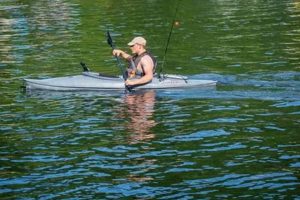
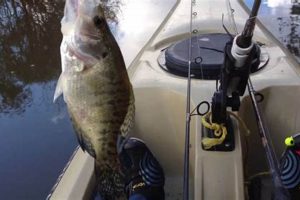
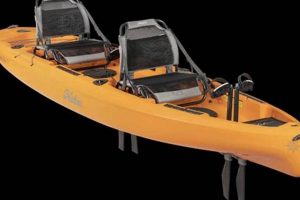
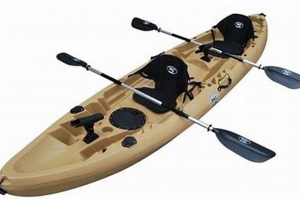
This specific type of watercraft is designed for angling activities, combining stability, maneuverability, and specialized features. Typically constructed from durable materials like high-density polyethylene, these vessels often include features like rod holders, paddle rests, and storage compartments for tackle and gear. Consider a scenario where an angler needs a stable platform to cast from in calm or moderately choppy waters. This type of specialized vessel addresses this need, allowing for hands-free fishing and convenient access to essential equipment.
The popularity of this style of recreational vessel stems from its ability to enhance the fishing experience. Providing a dedicated, mobile platform, it allows anglers to access diverse fishing locations, including shallow waters and areas inaccessible from shore. Historically, fishing from small, human-powered craft has been a common practice. Modern designs, however, incorporate advanced materials and features for improved comfort, safety, and efficiency, catering to the growing demand for specialized angling equipment.
This exploration of key aspects offers a foundation for understanding the significance and functionality of this equipment. Subsequent sections will delve into specific models, features, maintenance requirements, and selection criteria to provide a complete overview.
Tips for Enhanced Angling Experiences
Optimizing on-the-water angling experiences requires careful consideration of various factors, from vessel selection and preparation to safety precautions and efficient fishing techniques. These tips aim to provide a framework for maximizing success and enjoyment.
Tip 1: Stability Assessment: Prioritize stability, especially for beginners. A wider hull generally offers greater stability, crucial for casting and reeling in fish without capsizing. Consider the anticipated water conditions and choose a vessel accordingly. Flat-bottom hulls are suitable for calm waters, while rounded or V-shaped hulls handle choppy conditions better.
Tip 2: Proper Gear Storage: Organize essential gear for easy access and weight distribution. Store heavier items low and centrally to maintain balance. Secure rods and tackle to prevent loss or damage during movement. Utilize dedicated storage compartments effectively.
Tip 3: Pre-Trip Planning: Research potential fishing locations, considering water depth, currents, and fish species. Check weather forecasts and pack accordingly. Inform someone of the planned route and estimated return time. A float plan enhances safety.
Tip 4: Paddle Selection & Technique: Choose a paddle appropriate for body size and kayak width. Employ proper paddling techniques to conserve energy and maximize efficiency. Consider a double-sided paddle or specialized fishing paddle.
Tip 5: Safety Precautions: Always wear a personal flotation device (PFD). Carry a whistle, signaling mirror, and first-aid kit. Be aware of water traffic and navigation rules. Stay hydrated and protect against sun exposure.
Tip 6: Fishing Techniques: Adapt fishing techniques to the specific environment and target species. Employ anchoring strategies for stationary fishing. Utilize drift fishing techniques to cover a wider area. Consider using fish finders and GPS technology.
Tip 7: Respectful Angling Practices: Adhere to catch and release guidelines where appropriate. Minimize environmental impact by properly disposing of fishing line and other waste. Respect other anglers and wildlife.
By implementing these strategies, anglers can enhance safety, improve fishing success, and foster a more rewarding experience on the water.
This comprehensive approach to maximizing angling endeavors paves the way for a more enjoyable and fruitful pursuit. The following conclusion synthesizes key concepts and reinforces the importance of mindful preparation and execution.
1. Stability

Stability forms a cornerstone of effective kayak fishing, directly influencing angler safety, casting accuracy, and overall fishing success. For the Invicta fishing kayak, stability considerations become paramount, impacting performance in various water conditions and influencing the angler’s ability to focus on the task at hand.
- Hull Design and Stability
Hull design significantly influences stability. Wider, flatter hulls generally provide greater initial stability, making them suitable for calmer waters and beginners. In contrast, narrower, V-shaped hulls offer superior secondary stability, performing well in choppy conditions but requiring more experience to balance. Understanding the Invicta’s hull design is essential for choosing the appropriate model for intended fishing environments.
- Center of Gravity and Balance
Maintaining a low center of gravity is crucial for stability. Distributing weight evenly within the kayak, storing heavier items low and centrally, and avoiding sudden movements contribute to a stable platform. The Invicta’s design features, such as seat placement and storage compartments, can influence weight distribution and overall balance.
- Water Conditions and Stability
Water conditions, including currents, wind, and waves, directly impact stability. Calm waters allow for greater stability, while rough conditions require increased vigilance and balance. Selecting an Invicta model suited to the anticipated water conditions is essential for safe and effective fishing.
- Angler Experience and Stability
An angler’s experience level plays a significant role in maintaining stability. Beginners may benefit from wider, more stable platforms, while experienced anglers may prefer kayaks with higher secondary stability for maneuverability. The Invicta line offers models catering to various skill levels.
Considering these facets of stability provides a framework for informed decision-making regarding Invicta kayak selection and usage. Optimizing stability enhances angler safety, improves casting accuracy, and contributes to a more successful and enjoyable fishing experience. By understanding the interplay between hull design, weight distribution, water conditions, and angler experience, users can maximize the stability features of their Invicta fishing kayak.
2. Maneuverability
Maneuverability represents a critical performance attribute in fishing kayaks, directly influencing an angler’s ability to navigate diverse water environments and effectively target fish. Specifically regarding the Invicta fishing kayak, maneuverability considerations become paramount, impacting the angler’s capacity to access shallow coves, navigate tight river bends, or reposition quickly in changing water conditions. This characteristic hinges on several interconnected factors, including hull design, length, and water conditions.
Shorter kayaks generally offer enhanced maneuverability, enabling tighter turns and quicker adjustments in direction. Longer kayaks, while typically offering greater tracking and speed in open water, may prove less agile in confined spaces. Specific hull designs, such as those with a more pronounced rocker (upward curve at the bow and stern), contribute to improved maneuverability in currents and waves. The Invicta kayak lineup offers a range of hull designs and lengths to suit different fishing environments and angler preferences. For example, an angler fishing in a winding creek benefits from a shorter, more maneuverable kayak that allows navigation through narrow passages and around obstacles. Conversely, an angler targeting offshore species may prioritize a longer kayak for speed and stability in open water, accepting a trade-off in maneuverability.
Understanding the relationship between hull characteristics, length, and the intended fishing environment is crucial for selecting the appropriate Invicta kayak model. Evaluating the balance between maneuverability and other performance attributes, such as stability and tracking, ensures informed decision-making aligned with specific angling needs. This knowledge empowers anglers to optimize their fishing experience by choosing a kayak that facilitates efficient navigation and access to target fishing zones. The interplay between maneuverability and other performance characteristics underlines the importance of informed kayak selection for achieving specific fishing goals.
3. Storage Capacity

Storage capacity represents a pivotal aspect of fishing kayak functionality, directly impacting an angler’s ability to carry essential gear, tackle, and safety equipment. Within the context of Invicta fishing kayaks, storage solutions become paramount, influencing organization, accessibility, and overall fishing efficiency. Understanding the nuances of storage capacity facilitates informed decision-making and contributes to a more streamlined and productive on-the-water experience. Ample and well-designed storage allows anglers to focus on fishing rather than managing equipment, optimizing time and effort.
- Types of Storage
Invicta kayaks offer various storage solutions, including rear tank wells, front hatches, and side pockets. Tank wells accommodate larger items like tackle boxes and coolers. Hatches provide secure storage for sensitive gear and electronics. Side pockets offer quick access to frequently used items like pliers and lures. Understanding the types and locations of storage compartments aids in efficient organization.
- Capacity and Weight Distribution
Storage capacity directly influences the amount of gear an angler can carry. However, proper weight distribution remains crucial for stability and performance. Evenly distributing weight throughout the kayak, placing heavier items low and centrally, and avoiding overloading contribute to a balanced and stable vessel, maximizing the Invicta kayak’s performance characteristics.
- Accessibility and Organization
Easy access to stored items enhances fishing efficiency. Well-organized storage compartments minimize time spent searching for gear, allowing anglers to focus on fishing. Features like bungee cords, lidded compartments, and removable storage bags contribute to organized and accessible storage within the Invicta kayak.
- Material and Durability
Storage compartments constructed from durable, waterproof materials safeguard gear against the elements. Robust hatches and latches ensure secure storage even in challenging conditions. Understanding the materials and construction of storage areas contributes to long-term reliability and the protection of valuable equipment during transport and use.
The interplay between these storage capacity considerations underscores the importance of thoughtful kayak selection for achieving specific fishing goals. Evaluating storage types, capacity, accessibility, and material durability allows anglers to select an Invicta kayak model optimized for their individual needs and fishing style. This comprehensive understanding of storage solutions contributes to a more organized, efficient, and ultimately, more successful angling experience.
4. Durability

Durability represents a critical factor in fishing kayak selection, directly influencing the vessel’s lifespan, resilience against environmental factors, and overall performance. Within the context of Invicta fishing kayaks, durability becomes paramount, determining the kayak’s ability to withstand the rigors of regular use, including impacts, abrasion, and exposure to UV radiation and varying water conditions. A durable kayak ensures long-term reliability and value, allowing anglers to focus on fishing rather than equipment maintenance and repair. This exploration delves into the key facets contributing to the durability of Invicta kayaks.
- Material Selection
Material selection plays a crucial role in kayak durability. High-density polyethylene (HDPE) is commonly used due to its impact resistance, UV stability, and overall robustness. Invicta kayaks leverage HDPE’s properties to provide a durable platform capable of withstanding the demands of fishing environments. Alternative materials, like rotomolded plastic, offer varying degrees of durability and impact resistance, influencing the kayak’s ability to withstand collisions with rocks, submerged debris, or other obstacles.
- Construction Methods
Construction methods significantly impact a kayak’s structural integrity. Rotational molding creates a seamless, one-piece hull with uniform thickness, enhancing durability and eliminating potential weak points. Invicta utilizes rotomolding to produce kayaks capable of withstanding stress and pressure without cracking or deforming. Alternative construction methods, like thermoforming, can produce lighter kayaks but may compromise durability in certain applications.
- UV Resistance
UV resistance protects kayaks from the damaging effects of prolonged sun exposure. UV-stabilized materials prevent fading, cracking, and degradation caused by solar radiation. Invicta kayaks incorporate UV-resistant materials to ensure long-term color retention and structural integrity, extending the lifespan of the vessel and preserving its aesthetic appeal even under intense sunlight.
- Hardware and Fittings
Hardware and fittings, such as handles, latches, and rod holders, contribute to overall durability. Corrosion-resistant materials like stainless steel and marine-grade plastics ensure long-term functionality and prevent degradation due to saltwater exposure. Invicta kayaks utilize durable hardware and fittings to maintain performance and reliability over time, minimizing the need for replacements and ensuring smooth operation of essential components.
These facets of durability collectively contribute to the Invicta fishing kayak’s ability to withstand the rigors of angling activities. Material selection, construction methods, UV resistance, and hardware choices influence the kayak’s longevity, resilience, and overall performance. Understanding these elements empowers informed decision-making, ensuring anglers select a kayak capable of enduring the demands of their fishing pursuits and providing years of reliable service.
5. Specialized Features

Specialized features distinguish fishing kayaks from recreational models, enhancing angling efficiency and overall experience. These features, integral to Invicta fishing kayaks, cater specifically to the needs of anglers, optimizing functionality and comfort on the water. Examining these specialized features provides insights into their role in maximizing fishing success and enjoyment.
- Rod Holders
Rod holders, strategically positioned throughout the kayak, secure fishing rods, freeing hands for other tasks like paddling, baiting hooks, or landing fish. Flush-mounted rod holders minimize line entanglement, while adjustable rod holders offer versatile angling options. Invicta kayaks typically incorporate multiple rod holders, catering to diverse fishing styles and allowing anglers to troll multiple lines or switch between different rod setups efficiently.
- Tackle Storage
Dedicated tackle storage compartments within easy reach maintain organization and efficiency. These compartments, often designed with specific dimensions to accommodate tackle boxes, lure trays, and other fishing accessories, streamline access to essential gear. Invicta kayaks frequently incorporate waterproof storage compartments, protecting sensitive equipment from the elements and ensuring readily available gear during fishing excursions.
- Seating Systems
Comfortable seating enhances endurance and focus during long fishing trips. Adjustable seating systems, often featuring ergonomic designs and breathable materials, cater to individual preferences and provide crucial support. Elevated seating positions improve visibility and casting range. Invicta kayaks offer various seating options, from basic framed seats to adjustable high-back seats with lumbar support, prioritizing angler comfort and reducing fatigue during extended periods on the water.
- Paddle/Pedal Propulsion
Invicta kayaks offer diverse propulsion systems to suit individual preferences and fishing styles. Traditional paddle propulsion provides a quiet, non-intrusive approach for stealthy fishing. Alternatively, pedal-driven systems free hands for fishing and offer efficient, continuous movement, ideal for covering larger areas or fighting currents. This versatility in propulsion options allows anglers to tailor their Invicta kayak to specific fishing environments and target species.
These specialized features integrated into Invicta fishing kayaks contribute significantly to angler success and enjoyment. Rod holders, tackle storage, seating systems, and propulsion options enhance efficiency, comfort, and versatility on the water. By understanding the function and benefits of these features, anglers can effectively utilize their Invicta kayak to optimize their fishing experience.
Frequently Asked Questions
This section addresses common inquiries regarding Invicta fishing kayaks, providing concise and informative responses to facilitate informed decision-making and enhance user understanding.
Question 1: What differentiates Invicta fishing kayaks from recreational kayaks?
Invicta fishing kayaks incorporate specialized features like rod holders, tackle storage, and often angler-specific seating systems designed for enhanced fishing functionality. These features distinguish them from recreational kayaks, which prioritize general paddling and exploration.
Question 2: What weight capacity should one consider when selecting an Invicta kayak?
Weight capacity considerations should encompass the combined weight of the angler, fishing gear, and any additional equipment. Exceeding the specified weight capacity can compromise stability and performance. Selecting a model with ample weight capacity ensures safe and efficient operation.
Question 3: What materials are typically used in the construction of Invicta fishing kayaks?
High-density polyethylene (HDPE) is commonly used in Invicta kayak construction due to its durability, impact resistance, and UV stability. This material contributes to the kayak’s longevity and ability to withstand the rigors of fishing environments.
Question 4: How does one maintain and care for an Invicta fishing kayak?
Regular rinsing with fresh water after each use helps prevent saltwater corrosion and the buildup of debris. Storing the kayak out of direct sunlight prolongs its lifespan by minimizing UV degradation. Periodic inspections for damage and prompt repairs ensure continued performance and safety.
Question 5: What safety precautions should be taken when using an Invicta fishing kayak?
Always wear a personal flotation device (PFD). Inform someone of planned fishing locations and estimated return times. Check weather forecasts before embarking on fishing trips. Carry essential safety equipment, including a whistle, signaling mirror, and first-aid kit.
Question 6: Where can one purchase Invicta fishing kayaks and related accessories?
Invicta kayaks are available through authorized dealers, both online and in physical retail locations. Accessories, such as paddles, life vests, and fishing gear, can also be purchased through these channels, ensuring compatibility and optimal performance.
Addressing these frequently asked questions aims to provide a comprehensive understanding of Invicta fishing kayaks, encompassing key features, maintenance considerations, and essential safety practices. This information empowers informed decision-making and fosters a safe and rewarding fishing experience.
The subsequent section will delve into specific Invicta kayak models, outlining their unique characteristics and suitability for various fishing applications.
Conclusion
This exploration has provided a comprehensive overview of vessels designed specifically for angling, encompassing key aspects such as stability, maneuverability, storage solutions, durability, and specialized features. The analysis highlighted the significance of these attributes in optimizing fishing performance and overall user experience. From hull design and material selection to integrated rod holders and adjustable seating systems, each element contributes to the efficacy and adaptability of these specialized watercraft.
Careful consideration of these factors empowers informed purchasing decisions, aligning vessel selection with individual angling needs and preferences. Ultimately, the synthesis of performance, durability, and specialized features positions these kayaks as valuable tools for anglers seeking enhanced efficiency, comfort, and success on the water. The continued evolution of kayak design and technology promises further advancements in angling performance and accessibility.