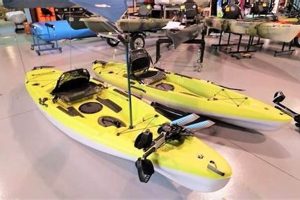
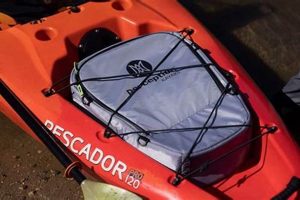
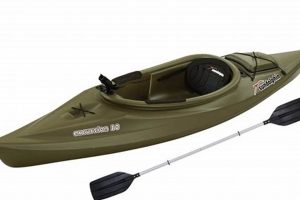
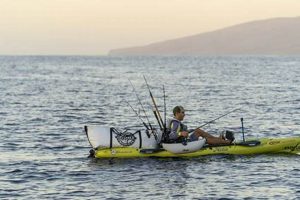
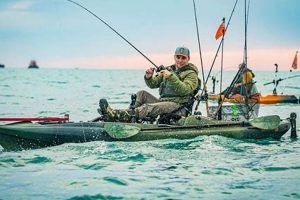
This specific watercraft is a large, sit-on-top vessel designed for angling in a variety of environments. Its substantial size allows for ample storage of fishing gear and provides stability, even in challenging conditions. Typical features include rod holders, specialized compartments, and often, integrated electronics for fish finding.
The stability and storage capacity of this type of kayak offer significant advantages for anglers. The platform provides a comfortable and efficient base for casting and retrieving, while the generous space accommodates tackle, equipment, and even substantial catches. This combination of features contributes to longer, more productive fishing trips. The evolution of kayak design for fishing has led to specialized vessels like this one, which prioritizes stability and load capacity without sacrificing maneuverability.
Further exploration of this watercraft will cover specific design elements, performance characteristics, suitable environments, and recommended accessories for various fishing styles. This information will help anglers of all skill levels determine if this type of vessel aligns with their individual needs and fishing preferences.
Tips for Utilizing Large Fishing Kayaks
Effective use of a large fishing kayak maximizes angler success and safety. These tips offer guidance for optimizing performance and enjoyment on the water.
Tip 1: Weight Distribution: Proper weight distribution is crucial for stability. Gear should be evenly distributed, with heavier items placed low and centrally. This prevents tipping and enhances maneuverability.
Tip 2: Paddle Selection: Choosing the correct paddle length is essential for efficient paddling. Consider torso height and kayak width when selecting a paddle. A properly sized paddle reduces fatigue and improves stroke power.
Tip 3: Safety Gear: Essential safety equipment includes a personal flotation device (PFD), a whistle, and a signaling device. Navigation lights are crucial for low-light conditions. Always check local regulations for required safety gear.
Tip 4: Anchor Positioning: Effective anchor deployment keeps the kayak in the desired fishing location. Consider wind and current when positioning the anchor. A drift sock can also be used for controlled drifting.
Tip 5: Electronics Mounting: Securely mounting fish finders and other electronics enhances their utility. Choose mounts that are compatible with the specific electronics and kayak model. Proper placement minimizes interference with paddling and fishing activities.
Tip 6: Pre-Trip Planning: Researching the fishing location beforehand ensures a productive trip. Consider water conditions, weather forecasts, and potential hazards. Planning access points and potential fishing spots optimizes time on the water.
Tip 7: Practice and Skill Development: Practicing paddling and maneuvering the kayak in various conditions builds confidence and improves control. This is particularly important in wind, current, or challenging environments.
Adhering to these tips promotes efficient handling, increases safety, and enhances the overall fishing experience. Preparation and practice are key to maximizing the advantages of this specialized vessel.
These tips provide a foundation for safe and successful kayak fishing. Further exploration of specific techniques and advanced strategies can enhance angling proficiency.
1. Stability

Stability is a paramount consideration in fishing kayak design, particularly in larger models like the Jackson Big Rig. This vessel’s inherent stability derives from a combination of factors, including its width, hull design, and weight capacity. A wider hull inherently provides a more stable platform, reducing the likelihood of tipping. The specific hull design, often featuring a flat bottom or shallow-V shape, further enhances stability. The high weight capacity allows for substantial loads of gear and anglers without compromising balance. This stability translates to a secure and confident platform for casting, reeling, and landing fish, even in challenging conditions such as wind or chop. For example, anglers can stand comfortably to sight-cast in shallow water or remain balanced while battling larger fish.
The practical significance of this stability extends beyond mere comfort. Enhanced stability contributes directly to angler safety and fishing effectiveness. A stable platform allows for more precise casting and reduces the risk of accidental entry into the water, particularly when handling fish or equipment. It also allows for a more comfortable and less fatiguing fishing experience, enabling longer trips and greater focus on angling. In scenarios where unexpected waves or boat wakes are encountered, the inherent stability of the Big Rig offers a significant advantage, minimizing disruption and maintaining a secure fishing platform.
In summary, the Jackson Big Rig’s focus on stability contributes significantly to its effectiveness as a fishing platform. The combination of design features and high weight capacity delivers a secure and confidence-inspiring experience for anglers, enhancing both safety and fishing performance. This emphasis on stability allows anglers to focus on the task at handcatching fishwithout the constant concern of balance or potential capsizing. Understanding the factors contributing to this stability allows for informed decision-making when selecting a fishing kayak and contributes to safer and more productive angling experiences.
2. Capacity

Capacity, encompassing both weight and storage, is a defining feature of the Jackson Big Rig fishing kayak, directly influencing its suitability for various fishing styles and environments. Understanding the nuances of its capacity is crucial for anglers evaluating its potential for their specific needs.
- Weight Capacity:
The Big Rig boasts a substantial weight capacity, typically exceeding 500 pounds. This allows anglers to carry ample gear, including tackle boxes, rods, coolers, and even camping equipment for multi-day excursions. The generous capacity accommodates larger anglers comfortably, without compromising stability or performance. For example, an angler equipped with a fully loaded tackle box, multiple rods, and a substantial cooler can confidently navigate various waterways without exceeding the kayak’s limits.
- Storage Capacity:
Beyond weight, the Big Rig offers substantial storage space. Multiple compartments, including a large tank well and specialized storage areas for fishing gear, provide organized and accessible storage solutions. This ample storage facilitates longer trips and diverse fishing techniques. For instance, anglers targeting different species can carry a variety of rods and tackle, readily accessible within designated compartments. This eliminates the need for constant repacking and streamlines transitions between fishing techniques.
- Impact on Performance:
While high capacity is advantageous, it’s crucial to consider its impact on performance. A fully loaded Big Rig will draft more water and respond slightly slower to paddling input than a lighter load. Understanding this dynamic allows anglers to adjust their paddling technique and expectations accordingly. In moving water or challenging conditions, strategic packing and weight distribution become essential for optimal performance.
- Comparison with Other Kayaks:
Compared to smaller, lighter kayaks, the Big Rig’s capacity is a significant differentiator. While smaller vessels prioritize speed and maneuverability, the Big Rig excels in carrying capacity, making it ideal for anglers prioritizing extended trips, diverse gear, and larger catches. This trade-off between agility and capacity should be carefully considered based on individual fishing styles and preferences.
In conclusion, the Jackson Big Rig’s capacity is a defining characteristic, setting it apart from other fishing kayaks. Understanding the nuances of its weight and storage capacity, along with the associated performance implications, allows anglers to make informed decisions about its suitability for their specific fishing needs. The ample capacity empowers anglers to pursue diverse fishing adventures with confidence and convenience, carrying all necessary gear and navigating various waterways with ease.
3. Maneuverability
Maneuverability, often perceived as a challenge for larger kayaks, is addressed thoughtfully in the design of the Jackson Big Rig. While its size might suggest otherwise, the Big Rig exhibits a surprising degree of agility. This is achieved through a combination of hull design features, rudder systems, and strategic weight distribution. The hull, while prioritizing stability, incorporates design elements that facilitate turning and tracking. An integrated rudder system further enhances directional control, particularly in windy conditions or moving water. Proper weight distribution within the kayak plays a crucial role in optimizing maneuverability. Evenly distributed weight minimizes drag and allows for more responsive turning. For example, navigating tight creek bends or positioning the kayak precisely for a cast becomes achievable despite the vessel’s size. This balance between stability and maneuverability allows anglers to confidently explore diverse waterways, from open lakes to narrow rivers.
The practical implications of this maneuverability are significant. Anglers can effectively navigate challenging environments, access secluded fishing spots, and position themselves strategically for optimal casting angles. In situations requiring quick adjustments, such as changing currents or unexpected obstacles, the Big Rig’s responsiveness becomes a valuable asset. Consider a scenario where an angler needs to quickly maneuver around submerged logs or navigate through swift currents; the Big Rig’s maneuverability, coupled with its stability, provides the necessary control and confidence. This ability to navigate complex waterways opens up a wider range of fishing opportunities and enhances overall angling effectiveness. Furthermore, the reduced effort required for maneuvering contributes to a less fatiguing experience, allowing for longer fishing trips.
In summary, the Jackson Big Rig’s maneuverability, while seemingly contradictory to its size, is a key attribute contributing to its versatility. The integration of design features, rudder systems, and the understanding of weight distribution principles allows for a surprisingly agile and responsive on-the-water experience. This maneuverability expands the range of accessible fishing environments and enhances angling effectiveness, further solidifying the Big Rig’s position as a comprehensive fishing platform. Overcoming the perceived limitations of size through thoughtful design ultimately contributes to a more rewarding and versatile angling experience.
4. Fishing Features
Dedicated fishing features distinguish the Jackson Big Rig from recreational kayaks, transforming it into a specialized angling platform. These features are not mere add-ons but integrated components designed to enhance fishing effectiveness and efficiency. Consider rod holders, strategically positioned for easy access and varied fishing techniques. Flush-mounted rod holders secure rods during transport and trolling, while adjustable rod holders accommodate different angling styles. Tackle storage compartments, often integrated within easy reach of the seating area, keep essential gear organized and readily available. These compartments may include specialized trays and dividers for lures, hooks, and other small items, minimizing clutter and maximizing efficiency. Other integrated features might include fish finders, mounting systems for electronics, and even livewells for keeping bait or catch fresh. These features work in concert to create a comprehensive and efficient fishing platform, optimized for diverse angling techniques and environments.
The practical implications of these integrated fishing features are substantial. Consider a scenario where an angler needs to quickly switch between different fishing techniques. The readily accessible rod holders and organized tackle storage facilitate seamless transitions, maximizing fishing time and minimizing disruption. In situations requiring precise boat control, such as drifting along a weed line or maintaining position in a current, the integrated rudder system and strategically placed footrests become crucial. For example, an angler battling a strong fish can leverage the stability provided by the hull design and strategically placed footrests to maintain control and leverage during the fight. These features collectively contribute to a more productive and enjoyable fishing experience, allowing anglers to focus on the task at hand rather than logistical challenges. The thoughtful integration of these features underscores the Jackson Big Rig’s purpose-built design for serious anglers.
In summary, the Jackson Big Rig’s fishing-specific features are integral to its functionality and effectiveness as an angling platform. These features are not superficial additions but core components that contribute directly to enhanced fishing performance and overall experience. Understanding the purpose and practical application of these features empowers anglers to maximize their potential and appreciate the thoughtful design that sets the Big Rig apart from standard recreational kayaks. This specialized design caters to the unique demands of angling, providing a distinct advantage in various fishing scenarios and contributing to a more productive and enjoyable time on the water. The integration of these features reflects a deep understanding of angler needs and a commitment to providing a truly specialized fishing platform.
5. Durability
Durability is a critical factor in the Jackson Big Rig fishing kayak’s construction, directly influencing its longevity and overall value. This kayak is designed to withstand the rigors of diverse fishing environments, from rocky rivers to open ocean conditions. The construction process typically employs high-quality materials, such as rotomolded polyethylene, known for its impact resistance and UV stability. This material choice resists punctures, abrasions, and the degrading effects of prolonged sun exposure, ensuring the kayak remains functional and structurally sound over extended periods. Reinforced areas, particularly in high-impact zones like the keel and stern, further enhance durability and protect against damage from collisions with rocks, logs, or other submerged obstacles. Consider a scenario where the kayak is dragged across a rocky shoreline or encounters submerged debris; the robust construction minimizes potential damage and maintains the vessel’s integrity.
The practical implications of this durable construction are significant. A kayak built to withstand harsh conditions offers peace of mind and reduces the risk of unexpected repairs or replacements. This durability translates to a higher resale value and contributes to a lower overall cost of ownership over time. For anglers frequently navigating challenging environments or embarking on multi-day expeditions, the robust construction of the Big Rig becomes an essential feature, ensuring reliable performance and minimizing the risk of disruptions due to damage. For example, anglers navigating rocky rivers or encountering unforeseen obstacles can confidently rely on the kayak’s durability to withstand impacts and maintain structural integrity. Furthermore, the UV-resistant properties of the materials used in construction prevent degradation from prolonged sun exposure, preserving the kayak’s appearance and functionality over time, even in harsh climates.
In summary, the Jackson Big Rig’s emphasis on durability is a key aspect of its design, contributing directly to its long-term value and reliability. The selection of high-quality materials and reinforced construction techniques ensures the kayak withstands the demanding conditions often encountered in fishing environments. This durability translates to a more secure and dependable angling experience, minimizing the risk of damage-related disruptions and maximizing the kayak’s lifespan. The focus on durability reflects an understanding of the practical needs of anglers and a commitment to providing a reliable and long-lasting fishing platform. Ultimately, the durable construction allows anglers to focus on their passion fishing without the constant concern of potential damage or premature wear and tear.
6. Comfort
Comfort is a crucial factor influencing angler effectiveness and enjoyment, especially during extended fishing trips. The Jackson Big Rig fishing kayak addresses comfort through a combination of design elements, including seating systems, adjustability, and ergonomic considerations. These features contribute to a more pleasant and less fatiguing experience, allowing anglers to focus on fishing rather than physical discomfort.
- Seating System
The Big Rig typically features an elevated, adjustable seating system. This design provides crucial back support and promotes proper posture, reducing strain during long hours on the water. High-quality seating materials, often incorporating breathable mesh or padding, further enhance comfort and minimize pressure points. Anglers can fine-tune the seat position to accommodate individual preferences and optimize comfort based on fishing style and water conditions. For example, a higher seat position facilitates sight-casting, while a lower position enhances stability in rougher water.
- Adjustability
Beyond the seating system, the Big Rig offers various adjustable components. Footrests, often adjustable in both position and angle, accommodate different leg lengths and paddling styles. Adjustable backrests provide customized lumbar support, further reducing fatigue and enhancing comfort. The ability to personalize these elements ensures a comfortable fit for a wide range of body types and preferences. This adaptability contributes to a more customized and ergonomic experience, enhancing overall comfort and reducing the likelihood of physical strain.
- Ergonomics
The Big Rig’s design incorporates ergonomic principles to minimize strain and maximize comfort. Strategically placed handles and deck rigging facilitate easy entry and exit, as well as movement within the kayak. Recessed areas for feet and legs promote a natural and comfortable paddling position. These design considerations contribute to a more intuitive and less strenuous paddling experience, reducing fatigue and allowing anglers to cover greater distances with less effort. For example, the ergonomic design of the paddling area minimizes strain on wrists and shoulders, promoting efficient paddling over extended periods.
- Deck Space and Layout
The Big Rig’s spacious deck provides ample room for movement and gear storage, further enhancing comfort and convenience. Anglers can easily shift position, stretch their legs, and access gear without feeling cramped or restricted. This generous deck space also contributes to a safer fishing experience, providing a stable platform for standing or maneuvering within the kayak. The strategic layout of deck features, including rod holders and storage compartments, minimizes the need for excessive reaching or bending, further enhancing comfort and efficiency.
In conclusion, the Jackson Big Rig fishing kayak prioritizes comfort through a combination of features, including an adjustable seating system, ergonomic design, and ample deck space. These features contribute significantly to a more enjoyable and less fatiguing fishing experience, allowing anglers to focus on their passion without the distraction of physical discomfort. The attention to comfort, combined with the kayak’s stability, capacity, and fishing-specific features, positions the Big Rig as a comprehensive and well-designed platform for serious anglers seeking extended time on the water. By prioritizing comfort, the Big Rig enhances not only the enjoyment of fishing but also the angler’s overall effectiveness and endurance.
7. Customization
Customization options are integral to the Jackson Big Rig fishing kayak, allowing anglers to tailor the vessel to individual needs and preferences. This adaptability stems from a modular design incorporating numerous accessory mounting points, interchangeable components, and compatibility with a wide range of aftermarket accessories. Gear tracks, strategically placed throughout the deck, provide a versatile platform for mounting rod holders, fish finders, camera mounts, and other essential equipment. These tracks allow for precise placement and easy adjustment, enabling anglers to configure the kayak for specific fishing techniques and environments. For example, an angler specializing in trolling might configure multiple rod holders along the gunwales, while a bass angler might prioritize mounting a fish finder and shallow water anchor system. Interchangeable components, such as different seat options or rudder systems, further enhance customization, allowing anglers to fine-tune the kayak’s ergonomics and performance characteristics. This inherent adaptability ensures the Big Rig can evolve alongside an angler’s skill and changing fishing preferences.
The practical significance of this customization extends beyond mere personalization. A highly customizable kayak adapts to diverse fishing styles and environments, maximizing its utility and long-term value. Consider an angler transitioning from freshwater lake fishing to saltwater inshore angling. The Big Rig’s adaptability allows for seamless modification, accommodating the specific gear and accessories required for the new environment. This flexibility eliminates the need for purchasing multiple specialized kayaks, representing a significant cost saving and enhancing the overall versatility of the vessel. Further customization, such as adding specialized lighting for night fishing or integrating a livewell for keeping bait fresh, demonstrates the Big Rig’s adaptability to diverse angling needs. This capacity for customization reflects a recognition of the evolving nature of angling pursuits and a commitment to providing a platform that can adapt alongside the angler’s changing requirements.
In summary, the Jackson Big Rigs emphasis on customization significantly enhances its versatility and long-term value. The modular design, incorporating numerous mounting points and interchangeable components, empowers anglers to tailor the kayak to their individual needs and preferences. This adaptability ensures the Big Rig remains a relevant and effective fishing platform, regardless of evolving fishing styles or changing environments. The ability to customize the kayak not only enhances its functionality but also fosters a sense of ownership and personalization, strengthening the connection between angler and vessel. This focus on customization ultimately contributes to a more versatile, personalized, and ultimately, more rewarding fishing experience.
Frequently Asked Questions
This section addresses common inquiries regarding this specialized fishing kayak, providing concise and informative responses to facilitate informed decision-making.
Question 1: What differentiates this kayak from other fishing kayaks on the market?
Key differentiators include its substantial capacity, remarkable stability, and extensive customization options. This combination caters specifically to anglers requiring ample gear storage, a secure platform, and the ability to tailor the vessel to individual fishing styles.
Question 2: Is this kayak suitable for beginners?
While manageable for beginners, its size and features cater more effectively to experienced anglers. Beginners might find smaller, more maneuverable kayaks easier to handle initially. However, with practice, beginners can certainly master this vessel and benefit from its inherent stability.
Question 3: What is the maximum weight capacity of this kayak?
The maximum weight capacity typically exceeds 500 pounds, accommodating larger anglers and substantial gear loads. However, consulting the manufacturer’s specifications for the specific model is always recommended.
Question 4: What type of water is this kayak best suited for?
Its stability and capacity make it suitable for a variety of water types, including lakes, ponds, slow-moving rivers, and even inshore coastal waters. However, extreme whitewater conditions are not recommended.
Question 5: What are the recommended transportation methods for this kayak?
Due to its size and weight, a roof rack system with appropriate kayak carriers is the recommended transportation method. Trailers are also an option for longer distances or multiple kayaks.
Question 6: What maintenance is required for this kayak?
Routine maintenance includes rinsing with fresh water after each use, especially in saltwater environments. Periodic inspection of hull integrity and hardware, along with proper storage, ensures longevity.
Addressing these common questions provides a foundation for understanding the capabilities and limitations of this specialized fishing kayak. Thorough research and consideration of individual fishing needs are essential for selecting the appropriate vessel.
Further exploration of specific features, performance characteristics, and user reviews can provide additional insights for prospective buyers.
Conclusion
Exploration of the Jackson Big Rig fishing kayak reveals a specialized vessel designed for serious anglers. Key attributes include exceptional stability, substantial capacity, surprising maneuverability, integrated fishing features, durable construction, and attention to comfort. Customization options further enhance its adaptability to diverse angling styles and environments. This comprehensive analysis highlights the kayak’s strengths as a dedicated fishing platform, catering to anglers who prioritize stability, storage, and specialized features.
The Jackson Big Rig fishing kayak presents a compelling option for anglers seeking a robust and adaptable platform. Careful consideration of individual needs and preferences, alongside thorough research and potential on-water testing, will empower anglers to determine if this specialized vessel aligns with their fishing aspirations. The evolution of fishing kayak design continues, and vessels like the Big Rig represent a significant advancement in functionality and performance for dedicated anglers.