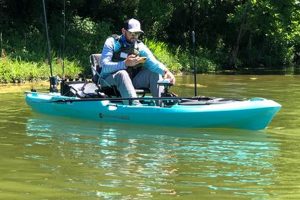
Entry-level fishing kayaks offer anglers a budget-friendly way to experience the sport from the water. These vessels, typically constructed from durable, lightweight materials like high-density polyethylene, provide sufficient stability and functionality for calm waters and shorter fishing trips. A basic, sit-on-top model often includes features like molded-in rod holders and storage compartments, making them practical for beginner anglers.
Affordability opens up the possibilities of kayak fishing to a wider audience. This accessibility fosters a deeper connection with nature and provides a unique perspective for pursuing various fish species. While advanced kayaks may offer enhanced performance and comfort, the simpler designs meet the fundamental needs of recreational fishing and offer an excellent starting point for newcomers. The evolution of kayak fishing, from traditional adaptations to modern, purpose-built designs, has made this pursuit increasingly popular, especially with the rise of cost-effective options.
The following sections will explore key considerations for selecting an appropriate, affordable fishing kayak, including factors such as hull design, material, features, and safety equipment. Further discussion will address essential techniques and best practices for anglers new to kayak fishing.
Tips for Selecting an Affordable Fishing Kayak
Choosing a budget-friendly fishing kayak requires careful consideration of several factors to ensure suitability for individual needs and intended fishing environments.
Tip 1: Prioritize Stability over Speed. Wider, shorter kayaks generally offer greater stability, which is crucial for casting and reeling in fish. While longer kayaks are faster, stability should be the primary concern, especially for beginners.
Tip 2: Consider Sit-on-Top vs. Sit-Inside Designs. Sit-on-top kayaks are generally less expensive and offer better stability and easier access. Sit-inside kayaks provide more protection from the elements but can be more challenging to re-enter if capsized.
Tip 3: Evaluate Essential Features. Rod holders, paddle holders, and storage compartments are essential features for a fishing kayak. Prioritize these necessities over less critical additions like advanced seating systems or rudder controls.
Tip 4: Inspect Construction Materials. High-Density Polyethylene (HDPE) is a common and durable material found in many affordable kayaks. Consider its weight capacity and resistance to impact and UV degradation.
Tip 5: Factor in Transportation and Storage. Consider the kayak’s length and weight regarding transportation and storage limitations. Roof racks, trailers, or accessible storage spaces might be necessary.
Tip 6: Research Used Kayaks. Used kayaks can offer substantial savings. Carefully inspect a used kayak for signs of damage or wear, particularly around seams, hull, and fittings.
Tip 7: Don’t Neglect Safety Equipment. A personal flotation device (PFD), whistle, and appropriate paddling attire are essential safety items, regardless of budget. These should be considered part of the overall cost.
Careful consideration of these tips allows anglers to select an affordable kayak without compromising safety or essential features. A well-chosen kayak provides years of enjoyment on the water.
By focusing on practical needs and smart purchasing strategies, anglers can confidently begin their kayak fishing journey equipped for a rewarding experience.
1. Budget

Budget considerations play a crucial role in selecting a fishing kayak, especially when seeking the most affordable options. The allocated budget directly influences the available choices regarding materials, features, and overall quality. A smaller budget often necessitates prioritizing essential features over premium comfort or advanced functionalities. For instance, a budget-conscious angler might opt for a high-density polyethylene (HDPE) kayak with molded-in rod holders and basic seating over a lighter, more expensive fiberglass model with adjustable seating and integrated electronics. Understanding budgetary limitations allows for realistic expectations and informed decisions, focusing on functionality and safety rather than luxury or top-end performance.
A well-defined budget empowers consumers to navigate the market effectively. Establishing a price range helps narrow the search and facilitates comparisons between different models within the affordable segment. This approach prevents overspending and encourages careful evaluation of features against cost. Researching available options within the budget reveals the trade-offs inherent in lower price points, such as potential limitations in durability, performance, or included accessories. For example, some manufacturers offer budget-friendly packages that bundle a kayak with essential accessories like a paddle and PFD, maximizing value within a constrained budget.
Effectively managing the budget requires prioritizing needs and researching available options. Understanding the relationship between cost and features empowers consumers to make informed decisions, maximizing value without compromising safety or essential functionality. While the pursuit of the absolute cheapest option might lead to sacrifices in quality or longevity, a well-researched purchase within a defined budget can provide a satisfying and rewarding kayak fishing experience. A balanced approach to budget management ultimately ensures long-term enjoyment of the sport.
2. Stability

Stability is a critical factor in selecting a fishing kayak, especially within a limited budget. A stable platform is essential for casting, reeling, and landing fish, impacting both safety and fishing success. Compromising stability for cost savings can negatively affect the overall fishing experience.
- Hull Design and Stability
Hull design significantly influences stability. Wider, flatter hulls generally provide greater initial stability, making them ideal for calmer waters and less experienced paddlers. These designs are often found in less expensive recreational kayaks suitable for beginner anglers. Narrower hulls, while faster and more efficient for paddling longer distances, can be less stable, especially in challenging conditions. For anglers prioritizing stability on a budget, a wider hull is generally preferred.
- Stability and Fishing Activities
Different fishing activities demand varying levels of stability. Standing to cast or fight a fish requires a significantly more stable platform than simply paddling. Budget-friendly kayaks intended for fishing often prioritize stability over speed or maneuverability. Anglers targeting larger species or fishing in moving water should carefully consider stability limitations when selecting a less expensive kayak.
- Weight Capacity and Stability
The kayak’s weight capacity directly relates to its stability. Exceeding the specified weight capacity compromises stability and increases the risk of capsizing. Less expensive kayaks may have lower weight capacities, limiting the amount of gear and angler weight they can safely carry. Careful consideration of the total weight, including angler, gear, and potential catch, is crucial for maintaining stability and safety.
- Center of Gravity and Stability
A lower center of gravity enhances stability. Sitting lower in the kayak and distributing weight evenly improves balance. Higher seats, common in some less expensive sit-on-top models, can raise the center of gravity, making the kayak feel less stable. Understanding how weight distribution affects stability is vital, especially in less expensive kayaks that may not have advanced stability features.
For budget-conscious anglers, prioritizing stability ensures a safer and more enjoyable fishing experience. Understanding the interplay between hull design, fishing activities, weight capacity, and center of gravity allows for informed decisions regarding stability within a limited budget. While cost remains a factor, compromising stability can negatively affect fishing effectiveness and overall safety on the water.
3. Durability
Durability is a crucial consideration when selecting a budget-friendly fishing kayak. While cost savings are attractive, compromising durability can lead to premature wear and tear, repairs, or even replacement, ultimately negating the initial cost advantage. Balancing cost with durability ensures a longer lifespan and better value over time.
- Material Selection
The kayak’s construction material significantly impacts its durability. High-density polyethylene (HDPE) is commonly used in less expensive kayaks due to its impact resistance and affordability. However, different grades and manufacturing processes can affect HDPE’s overall durability. Lower-quality HDPE may be more susceptible to cracking, UV degradation, or punctures. Understanding the specific type of HDPE used in a potential purchase is essential.
- Manufacturing Process
Rotational molding is a common manufacturing process for less expensive kayaks. This process creates a seamless, one-piece hull, enhancing durability and impact resistance. However, variations in the molding process, such as wall thickness and material distribution, can affect the final product’s strength and longevity. Examining the kayak for consistent wall thickness and smooth, even seams can provide insights into the manufacturing quality.
- Hardware and Fittings
Hardware, such as handles, latches, and rod holders, contributes to the kayak’s overall durability. Less expensive kayaks may utilize lower-quality hardware prone to corrosion, breakage, or failure. Stainless steel or marine-grade hardware offers better corrosion resistance and longevity, but typically adds to the cost. Inspecting the quality of hardware and fittings can indicate the kayak’s long-term durability.
- UV Resistance
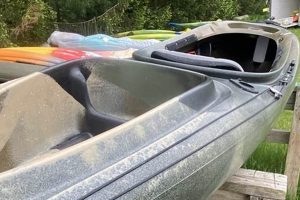
Exposure to sunlight can degrade certain plastics, leading to fading, cracking, and reduced structural integrity. Less expensive kayaks may not include UV inhibitors in their construction, making them more susceptible to sun damage. Storing the kayak out of direct sunlight when not in use and considering kayaks with added UV protection can mitigate this issue.
Evaluating durability in the context of a budget-friendly fishing kayak requires careful consideration of materials, manufacturing processes, hardware quality, and UV resistance. While the initial cost is a primary factor, prioritizing durability ensures a longer-lasting, more reliable vessel, ultimately maximizing value and minimizing potential expenses related to repairs or replacements.
4. Features
Features in a fishing kayak directly influence its functionality and overall fishing experience. While premium kayaks boast advanced features, budget-friendly options often require careful consideration of essential features versus optional upgrades. Prioritizing essential features within a limited budget ensures a functional and enjoyable fishing experience without unnecessary expenses.
- Rod Holders
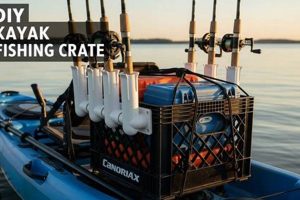
Rod holders are fundamental for fishing kayaks, providing secure storage and easy access to fishing rods. Less expensive kayaks often include molded-in rod holders, which are sufficient for basic fishing. More expensive models might offer adjustable or rotating rod holders for enhanced versatility. Budget-conscious anglers should prioritize the number and placement of rod holders based on their fishing style and needs. Two flush-mounted rod holders behind the seat are a common and practical configuration in affordable kayaks.
- Storage
Storage capacity is crucial for carrying essential fishing gear, tackle boxes, and personal items. Less expensive kayaks may offer basic storage compartments, often a rear tank well or smaller hatches. While larger, more accessible storage is desirable, budget limitations may necessitate prioritizing dry storage for essential items. Anglers should carefully assess storage capacity based on their typical fishing trips and required gear. Utilizing dry bags can further protect equipment from water damage in kayaks with limited dry storage.
- Seating
Seating comfort directly impacts the overall fishing experience, particularly during longer trips. Less expensive kayaks typically feature basic molded-in seats, which might lack padding or adjustability. While upgraded seating enhances comfort, it often comes at a higher cost. Budget-conscious anglers can improve seating comfort with aftermarket cushions or pads. Prioritizing stability over seating comfort might be necessary in the most budget-friendly options, as stability is paramount for fishing.
- Paddle and Accessories
While often overlooked, the included paddle and accessories contribute to the overall value of a budget-friendly kayak. Less expensive kayaks might come with basic aluminum or plastic paddles. While functional, these paddles may be heavier and less efficient than higher-end fiberglass or carbon fiber options. Essential accessories like a paddle leash and bilge pump are sometimes included in budget packages, enhancing value. Anglers should factor in the cost of essential accessories when comparing different kayak options.
Selecting a budget-friendly fishing kayak requires careful evaluation of features based on individual needs and priorities. Focusing on essential features, such as rod holders, adequate storage, and a functional paddle, ensures a practical and enjoyable fishing experience without overspending. While premium features are desirable, prioritizing functionality within a limited budget maximizes value and provides a solid foundation for kayak fishing.
5. Safety
Safety remains paramount regardless of budget when selecting a fishing kayak. While cost is a significant factor, compromising safety for affordability can have severe consequences. A less expensive kayak lacking essential safety features or constructed from subpar materials increases the risk of accidents, injuries, or even fatalities. For example, a kayak with inadequate stability can easily capsize, especially in challenging conditions. Similarly, a kayak lacking proper buoyancy can sink, trapping the angler underwater. Cutting corners on safety equipment, like a personal flotation device (PFD), further elevates risk.
Several factors connect safety and affordability. Less expensive kayaks might lack features like watertight bulkheads or sufficient storage for safety gear. Material quality can also influence safety; lower-grade plastics may be more prone to cracking or damage upon impact. Additionally, budget constraints might lead individuals to neglect essential safety equipment like a whistle, first-aid kit, or communication devices. For example, an angler might choose a less expensive kayak without rod holders, resulting in unsecured rods that can create hazardous situations during a fishing trip. Alternatively, opting out of a PFD due to cost constraints significantly increases the risk of drowning in the event of a capsize.
Understanding the relationship between safety and cost is crucial for making informed decisions when purchasing a fishing kayak. Prioritizing safety features, even within a tight budget, ensures a more secure and enjoyable experience on the water. Investing in essential safety equipment, regardless of the kayak’s price, significantly mitigates potential risks. Thoroughly researching available options and understanding the potential safety implications of various features and materials empower consumers to choose a kayak that balances affordability and essential safety considerations. This informed approach ultimately protects anglers from preventable accidents and promotes responsible enjoyment of kayak fishing.
Frequently Asked Questions
This section addresses common inquiries regarding the selection and use of budget-friendly fishing kayaks.
Question 1: Are inexpensive fishing kayaks safe?
Safety depends more on user behavior and adherence to safety guidelines than price. While more expensive kayaks may offer enhanced stability or additional safety features, even the most affordable kayak can be safe with proper use of safety equipment, including a personal flotation device (PFD), and adherence to safe paddling practices.
Question 2: What essential features should one prioritize in a less expensive fishing kayak?
Essential features include rod holders, sufficient storage for tackle and gear, and a comfortable, stable seat. Prioritize these functionalities over non-essential features like advanced electronics or premium seating materials when working within a limited budget.
Question 3: How does one determine the appropriate size and weight capacity for an affordable fishing kayak?
Consider the angler’s weight, the intended fishing environment, and the anticipated gear load. Ensure the kayak’s weight capacity accommodates the combined weight of the angler, gear, and potential catch. Longer kayaks generally track better in open water, while shorter kayaks offer better maneuverability in tighter spaces.
Question 4: Can one effectively fish from a very inexpensive kayak?
Effective fishing depends on technique and knowledge of the fishing environment rather than the kayak’s price. An affordable kayak equipped with essential features can be highly effective when used correctly in appropriate conditions.
Question 5: What are the potential drawbacks of choosing the absolute cheapest fishing kayak available?
The absolute cheapest options may compromise durability, stability, or essential features. This could lead to a shorter lifespan, reduced performance, or a less enjoyable fishing experience. Balancing cost with essential features and quality construction is recommended.
Question 6: Where can one find reliable reviews and comparisons of affordable fishing kayaks?
Reputable online paddling communities, outdoor gear review websites, and fishing publications often provide valuable insights and comparisons of various kayak models, including budget-friendly options. Consulting these resources aids in informed decision-making.
Careful consideration of these frequently asked questions empowers consumers to make informed decisions when selecting a fishing kayak within a limited budget. Prioritizing safety, essential features, and informed research ensures a rewarding and enjoyable experience on the water.
The next section will offer practical tips and techniques for getting started with kayak fishing, focusing on maximizing the experience with a budget-friendly setup.
Cheapest Kayak for Fishing
Exploring the realm of budget-friendly fishing kayaks reveals that cost-effectiveness need not compromise functionality or safety. Careful consideration of factors like hull design, material durability, essential features, and safety equipment empowers anglers to make informed decisions. Prioritizing stability, storage capacity, and rod holders ensures a practical fishing platform, while understanding the trade-offs associated with lower price points allows for realistic expectations. Ultimately, a well-researched, budget-conscious approach can lead to a rewarding and safe kayak fishing experience.
The pursuit of angling from a kayak offers a unique connection with nature and a distinct perspective on the sport. Entry-level options expand accessibility, inviting a broader audience to experience the tranquility and excitement of fishing from the water. By focusing on informed decision-making and responsible practices, anglers can embark on a fulfilling journey, maximizing enjoyment and minimizing environmental impact, regardless of budget constraints.